Understanding the Landscape: OB GYN Training and J-1 Waivers on the US-Mexico Border
The US-Mexico border region is one of the most unique and medically underserved areas in the United States. For international medical graduates (IMGs) interested in OB GYN residency and later practicing under a J-1 waiver, this region offers both tremendous opportunities and specific challenges.
If you are an IMG in Obstetrics & Gynecology, your long-term plan often has three phases:
- Secure an OB GYN residency (often in a border region program if you want to stay in that environment)
- Complete your training on a J-1 visa
- Transition to a J-1 waiver job (often through Conrad 30 or another underserved area waiver program) so you can remain in the United States to practice.
This guide focuses on how those steps fit together specifically in the US-Mexico border region (especially Texas border residency programs, Southern California, Arizona, and New Mexico), and what strategies OB GYN residents should use—early—to position themselves for a successful J-1 waiver outcome.
Why the US-Mexico Border Region Matters for OB GYN IMGs
The border corridor—especially in Texas—has some of the highest needs for women’s health care in the country. These areas are medically underserved, predominantly Hispanic/Latino, and often low-income. From a J-1 waiver perspective, that combination creates real opportunities for future OB GYNs.
High Need + Underserved Status
Most border counties fall into one or both of these categories:
- HPSAs (Health Professional Shortage Areas)
- MUA/MUPs (Medically Underserved Areas/Populations)
Those designations are critical because:
- Conrad 30 waivers for J-1 physicians generally require you to work in an underserved area.
- OB GYN is considered a core specialty, and in many border states, it is prioritized under primary care–like categories due to high maternity and gynecologic needs.
For an IMG in OB GYN, that means:
- There are relatively more waiver-eligible jobs in the border region (particularly in community hospitals, FQHCs, and safety-net systems).
- States with border regions—Texas, New Mexico, Arizona, California—often have strong demand for women’s health physicians to fill Conrad 30 slots.
Why Border Region OB GYN Residency Programs Can Be Strategic
A border region residency, especially a Texas border residency in OB GYN, gives you:
- Early exposure to underserved populations and health disparities
- Language experience (especially Spanish)
- Local professional networks with hospital systems and clinics that frequently sponsor J-1 waiver jobs
- Credibility with state waiver programs that value commitment to underserved care
Even if you later secure a waiver job in a different state, your residency experience in an underserved border region is strong evidence of your willingness to serve high-need populations.
Core J-1 Waiver Pathways Relevant to Border-Region OB GYNs
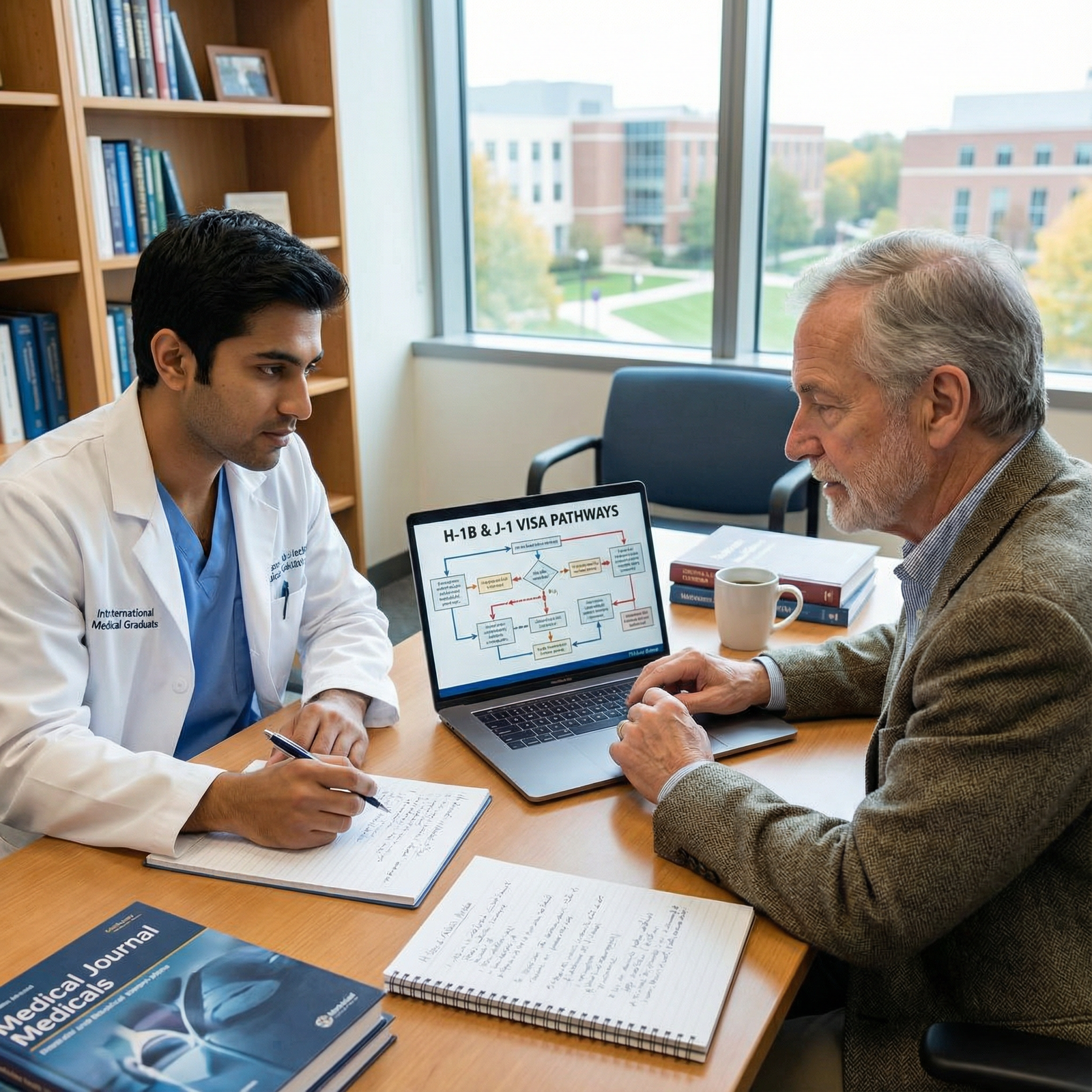
Once you complete your OB GYN residency on a J-1 visa, you must return to your home country for two years unless you obtain a J-1 waiver. The main strategy used by OB GYNs in the border region is the Conrad 30 program, but there are several other federal options.
1. Conrad 30 State Programs
Each state can sponsor up to 30 J-1 waivers per year for physicians through its Conrad 30 program. For border-region OB GYNs, pay particular attention to:
- Texas Conrad 30
- New Mexico Conrad 30
- Arizona Conrad 30
- California Conrad 30
Key common features:
- Employment requirement: Full-time clinical work (usually 40 hours/week) for at least 3 years
- Location: Typically in a HPSA/MUA; some states allow a portion of “flex” slots for employers outside those areas if they serve underserved patients
- Start date: You must begin employment within a specific time frame after waiver approval (often within 90 days of USCIS approval)
OB GYN–specific advantages:
- Many border counties lack sufficient OB coverage, L&D services, or gynecologic surgery capacity.
- Some state Conrad programs explicitly list obstetrics & gynecology as a priority specialty for underserved areas.
State-Level Nuances for Border Regions
While rules can change yearly, you should understand some typical distinctions:
Texas Conrad 30
- Historically high demand but also high volume of applicants and employers.
- OB GYN is often well-represented, especially in the Rio Grande Valley, Laredo, El Paso, and rural West Texas.
- Some slots are reserved for primary care; OB GYN can fit in that space in many underserved communities.
New Mexico & Arizona
- Fewer total applicants overall compared to Texas, which can make OB GYN applicants more competitive.
- Large rural and Native American populations, with significant maternal health needs.
California
- Border-focused jobs may be in the Imperial Valley or San Diego region, often through safety-net clinics or county hospitals.
- Demand is strong; competition can be more intense in coastal urban areas than in inland/border counties.
Action Step:
During your PGY-2 and PGY-3 years, review up-to-date Conrad 30 guidelines for at least 2–3 border states you’d realistically consider. Many programs publish specialty priorities and flex slot policies.
2. Federal Underserved Area Waivers Beyond Conrad 30
Other federal programs are less common for OB GYN but still relevant:
VA (Veterans Affairs) Waivers
- For positions at VA facilities, not necessarily restricted to geographic underserved designations.
- Less common in OB GYN but possible if the VA facility includes women’s health services.
HHS (Department of Health and Human Services) Waivers
- Focused primarily on primary care and mental health, often in FQHCs.
- OB GYN is sometimes eligible where maternal health is central to mission, but this path is much less frequently used for OB GYN than Conrad 30.
Appalachian Regional Commission / Delta Regional Authority
- Not directly relevant to the US-Mexico border, but worth knowing they exist if your career path later moves elsewhere.
For most OB GYNs planning to stay near the US-Mexico border, the Conrad 30 program will be the dominant pathway to a J-1 waiver.
Building a Strategic OB GYN Residency Profile for Future J-1 Waiver Success
Your long-term waiver strategy should start during your OB GYN residency, not in your final year. Border-region programs can be powerful platforms if you approach them intentionally.
Choose a Program That Aligns with Underserved Practice
When comparing OB GYN residency programs in the US-Mexico border region, consider:
- Clinical sites:
- Does the program rotate through safety-net hospitals, FQHCs, border community health centers, or county systems?
- Patient population:
- High proportion of Medicaid/uninsured patients?
- Large Spanish-speaking, migrant, or mixed-status families?
- Institutional mission:
- Strong focus on community health, maternal mortality reduction, or border health issues?
These features all strengthen the narrative that you’re committed to underserved care—a major plus when applying for both waiver jobs and state Conrad 30 sponsorship.
Develop Language and Cultural Competence
For border-region practice, Spanish proficiency is close to essential.
- Start early:
- If your Spanish is rudimentary, invest in structured lessons starting PGY-1.
- Use your clinical environment:
- Ask bilingual colleagues to help you refine medical Spanish, particularly OB terminology (labor instructions, consent discussions, postpartum counseling).
- Show it on paper:
- Mention Spanish proficiency in your CV, personal statements, and later in J-1 waiver job interviews.
States and employers in border regions value physicians who can communicate directly and culturally competently with their patient base.
Lean Toward Generalist Skills (Even if You Like Subspecialties)
Most J-1 waiver positions for OB GYNs in underserved areas are generalist roles:
- Full-scope obstetrics (including labor & delivery, high-risk co-management)
- Bread-and-butter gynecologic surgery
- Outpatient women’s health, preventive care, family planning
If you are aiming for a border-region waiver job:
- Make sure you are strong and independent in:
- Vaginal deliveries
- Cesarean sections and basic operative gynecology
- Common gynecologic procedures (D&C, laparoscopy for ectopic, basic hysterectomy)
- You may still pursue fellowship later, but your first three years post-residency under the waiver will almost always be generalist.
Build Relationships with Potential Future Employers
One of the biggest advantages of training in a border region is proximity to systems that regularly hire J-1 waiver physicians. Use this strategically:
- Ask faculty directly:
- “Have you seen OB GYN graduates here take Conrad 30 or other J-1 waivers?”
- “Which local hospitals or groups sponsor J-1 waivers?”
- Electives and away rotations:
- Seek rotations at community hospitals or clinics likely to sponsor waivers (county hospitals, FQHCs, rural hospitals).
- Conferences & networking:
- Attend state OB GYN society meetings or Texas Medical Association events; employers and recruiters often scout there for waiver candidates.

Timeline & Action Plan: From Residency to Border-Region J-1 Waiver Job
For IMGs aiming to stay in the US-Mexico border region after training, timing is crucial. Below is a practical, year-by-year strategy.
PGY-1: Foundation & Orientation
Goals:
- Understand your visa status and long-term options.
- Confirm that underserved/border-region practice is genuinely the right fit.
Actions:
- Meet early with your program director or GME office:
- Clarify that you are on a J-1 visa.
- Ask whether recent graduates from your program have successfully obtained J-1 waivers (especially via Conrad 30).
- Start documenting:
- Case logs, especially high volumes of deliveries and gynecologic procedures.
- Any community health projects, Spanish-language initiatives, or border health research.
- Get comfortable with border-region clinical realities:
- Limited resources in some settings
- Social determinants of health (immigration status, poverty, transportation, access to prenatal care)
PGY-2: Position Yourself Strategically
Goals:
- Clarify geographic and state-level targets.
- Deepen your underserved care profile.
Actions:
- Research Conrad 30 programs in at least 2–3 states:
- Texas, New Mexico, Arizona, California as primary border states
- Check which require employment offers by certain deadlines
- Note if OB GYN is explicitly listed as a priority or primary care-like specialty
- Seek leadership or continuity roles:
- Lead quality improvement projects in prenatal care, postpartum hemorrhage protocols, or cervical cancer screening.
- Start informal networking:
- Introduce yourself to OB GYN faculty with community ties.
- Attend meetings where local hospital administrators and clinic leaders are present.
PGY-3: Move from Exploration to Concrete Planning
Goals:
- Identify real employers and possible border region residency-to-employer pipelines.
- Begin serious conversations about J-1 waiver sponsorship.
Actions:
- Narrow your target geography:
- Are you aiming for a Texas border residency graduate to stay in Texas, or open to New Mexico/Arizona?
- Consider personal factors: family, cost of living, immigration timeline.
- Start talking to potential employers:
- Community hospitals in McAllen, Brownsville, Laredo, El Paso, Yuma, Las Cruces, Imperial Valley, etc.
- FQHCs with OB services near the border.
- Ask pointed questions:
- “Do you currently—or have you previously—sponsored J-1 waiver (Conrad 30) physicians in OB GYN or related specialties?”
- “Do you have experience working with immigration attorneys for J-1 waiver processing?”
PGY-4 (or Final Year): Execute the Plan
Goals:
- Secure an offer from a waiver-eligible employer.
- Complete the Conrad 30 and USCIS processes in a timely manner.
Actions:
Secure your job offer early
- Ideal: By fall of your final year, especially in competitive states like Texas.
- Ensure the contract includes:
- Full-time clinical work for a minimum of 3 years
- Work site(s) in an HPSA/MUA or qualifying flex site
- Call responsibilities and L&D coverage clearly defined
Coordinate with Employer’s Legal Team
- Many systems work with experienced immigration attorneys.
- Confirm that:
- The employer understands deadlines and state-specific Conrad requirements.
- You have all necessary documentation: CV, diplomas, residency verification, license/board eligibility, etc.
Conrad 30 Application → J-1 Waiver → H-1B (or Similar) Transition
Typical sequence:- Employer applies to a state Conrad 30 program on your behalf.
- If approved, they then file a J-1 waiver request with the Department of State and USCIS.
- After waiver approval, employer files an H-1B (or sometimes O-1) petition so you can start work after residency ends.
Timing can vary, but many border-region OB GYNs try to:
- Submit Conrad applications between fall and early winter.
- Obtain waiver and H-1B approvals by spring or early summer.
Practical Tips Specific to OB GYN in the US-Mexico Border Region
Highlight What Makes You Valuable in This Setting
When interviewing for waiver-eligible jobs, emphasize:
- Experience with:
- High-risk obstetrics (preeclampsia, diabetes, late prenatal care)
- VBAC counseling, cesarean decision-making
- Postpartum hemorrhage protocols and emergent situations
- Comfort with:
- Limited subspecialty backup (e.g., no in-house MFM or Gyn-Onc)
- Transfer logistics to tertiary centers
- Community-oriented mindset:
- Willingness to participate in outreach programs, prenatal education, or mobile clinics along the border
Understand Workload and Lifestyle Realities
Border-region underserved OB GYN jobs can be intense:
- High call frequency, sometimes 1:3 or 1:4 in smaller hospitals
- Large catchment areas with patients traveling long distances
- A mix of inpatient L&D, emergency consults, and outpatient clinic each week
During contract negotiation:
- Ask specifically about:
- L&D volume and cesarean rates
- Backup coverage and subspecialty availability
- Midwife or family medicine OB presence
- Clarify:
- Clinic hours and call pay (if any)
- Expectations for community engagement or outreach
Think Beyond the Waiver: Long-Term Career and Immigration Path
Your 3-year underserved area waiver period is not the end of the story. Consider:
- Green card strategy:
- Many physicians transition from H-1B to permanent residency via:
- Employer-sponsored PERM labor certification
- National Interest Waiver (NIW), especially if your work significantly serves underserved populations
- Many physicians transition from H-1B to permanent residency via:
- Fellowship timing:
- Some OB GYNs plan fellowship after completing the 3-year obligation.
- Border-region experience can strengthen applications to MFM, Gyn-Onc, FPMRS, or minimally invasive gynecologic surgery fellowships.
A strong underserved track record in the border region can support NIW or similar routes, as your work clearly addresses critical public health needs.
Frequently Asked Questions (FAQ)
1. Do I have to do my OB GYN residency in a border region to get a J-1 waiver job there?
No. You can train anywhere in the US and still pursue a J-1 waiver position in the US-Mexico border region. However, border-region residency training (such as a Texas border residency program) makes you more competitive because:
- You already understand the local population, systems, and challenges.
- You may have pre-existing relationships with employers.
- State Conrad 30 programs and hospitals can more easily see your commitment to underserved care.
2. Is OB GYN considered “primary care” for Conrad 30 and underserved area waivers?
Official definitions vary by state. OB GYN is generally not “primary care” in the strictest sense, but in many border-region states, OB GYN is given high priority or treated akin to primary care due to:
- High maternal mortality and morbidity in underserved areas
- Severe shortages of maternity and gynecologic services
You should check each state’s latest Conrad 30 guidelines. Many Texas and other border-state programs explicitly welcome OB GYNs, particularly for underserved area waiver positions.
3. How competitive is it to get a Conrad 30 waiver as an OB GYN in Texas or other border states?
It depends on the year, but in general:
- Demand for OB GYN in border underserved areas is strong.
- Many Conrad 30 slots are filled by primary care and psychiatry, but OB GYN remains a solid, needed specialty.
- Your chances improve if:
- You accept positions in rural or smaller cities rather than large urban centers.
- You bring Spanish skills and clear evidence of dedication to underserved populations.
- Your employer is experienced with J-1 waivers and applies early in the cycle.
4. Can I pursue fellowship immediately after residency if I’m on a J-1 visa?
Not if you want a J-1 waiver right away. The typical J-1 physician pathway requires you to:
- Either: Return to your home country for two years after training, then pursue fellowship or practice
- Or: Obtain a J-1 waiver by working 3 years full-time in an underserved area (such as a border-region OB GYN practice) before moving to fellowship or other practice
Some physicians negotiate creative sequences with additional J-1 training, but this can complicate and delay the waiver timeline. Most OB GYN IMGs who want to stay in the US aim to:
- Finish residency
- Do 3 years in an underserved J-1 waiver position (e.g., border-region OB GYN job via Conrad 30)
- Then consider fellowship or further specialization once their immigration status is more secure
By understanding the intersection of OB GYN residency, obstetrics match strategies, and J-1 waiver pathways in the US-Mexico border region, you can design a realistic, stepwise plan that supports both your professional growth and your long-term immigration goals. Thoughtful planning starting early in residency is the most powerful tool you have to successfully transition from trainee to attending OB GYN in this high-need, impactful region.