
Understanding the Visa Landscape for OB GYN Residency
For international medical graduates (IMGs), securing a position in an OB GYN residency is only half the battle; the other half is successfully navigating U.S. immigration and visa requirements. The connection between your immigration status and your ability to train and eventually practice obstetrics and gynecology in the United States is critical. Planning early—well before you submit ERAS applications—is essential.
In obstetrics & gynecology, many programs are IMG‑friendly, but their willingness to sponsor different visa types varies dramatically. Some offer only J‑1 visas; others offer both J‑1 and H‑1B; some cannot support any visa sponsorship at all. Your competitiveness in the obstetrics match will depend not only on your scores, CV, and clinical experience, but also on how strategically you align your visa situation with program policies.
This guide walks you through:
- The main residency visa options for IMGs
- Key differences between J‑1 vs H‑1B for OB GYN residents
- How visa status affects your competitiveness in the obstetrics match
- Strategies for selecting programs and planning for waivers and long‑term practice
While this article focuses on obstetrics & gynecology, most principles apply broadly to all specialties, with OB GYN–specific nuances highlighted throughout.
Core Visa Options for OB GYN Residency: J‑1 vs H‑1B
When discussing residency visa options for IMGs in OB GYN, two visas dominate: the J‑1 Exchange Visitor (ECFMG Sponsored) and the H‑1B Temporary Worker (Cap‑Exempt). Understanding their structure, limitations, and long‑term implications is foundational.
J‑1 Visa for Residency (ECFMG‑Sponsored)
The J‑1 is the most common visa for IMGs in graduate medical education across all specialties, including OB GYN. It is sponsored by ECFMG (Educational Commission for Foreign Medical Graduates), not by the residency program directly.
Key characteristics:
- Purpose: Graduate medical education (residency/fellowship), not employment
- Sponsorship: ECFMG issues Form DS‑2019, programs participate but do not “own” the visa
- Duration: Theoretically up to 7 years of training time (enough for OB GYN residency plus one fellowship)
- Full‑time training required: You must remain in an accredited training program
Eligibility Requirements for the J‑1
To obtain ECFMG J‑1 sponsorship, you must:
- Have a valid ECFMG Certification
- Hold a contract or official offer letter from an ACGME‑accredited OB GYN residency
- Demonstrate adequate financial support (usually salary stated in your contract)
- Show English proficiency (typically through ECFMG credentials)
- Hold a valid passport from your home country
- Intend to return to your home country upon completion of training (at least as stated in the application)
For OB GYN applicants specifically, this usually means you’ll secure a position in a 4‑year categorical program and ECFMG will issue the initial DS‑2019 for that period, updated annually.
The Two‑Year Home Residence Requirement (212(e))
The most critical aspect of the J‑1 for long‑term planning is the two‑year home‑country physical presence requirement, commonly called 212(e).
If you train on a J‑1:
- You are generally required to return to your home country for a cumulative two years after finishing training, before you become eligible for:
- H‑1B visas
- Immigrant visas or green cards
- Most other long‑term U.S. statuses
However, many physicians avoid physically returning by obtaining a J‑1 waiver (discussed later) that allows them to stay in the United States in H‑1B status, typically in an underserved area.
Advantages of the J‑1 in OB GYN
- Widest availability: Many OB GYN programs only sponsor J‑1; they are more comfortable and familiar with it.
- Simplified process for programs: Programs often prefer J‑1 because ECFMG handles most of the immigration work.
- Clear framework for fellowships: Moving from OB GYN residency to subspecialty fellowship (MFM, REI, Gyn Onc, FPMRS, Complex Family Planning) on J‑1 is straightforward if you stay within the 7‑year limit.
- Cap‑exempt for training: Not subject to lottery like H‑1B cap for training positions.
Disadvantages of the J‑1
- Two‑year home requirement (unless waived)
- Limited moonlighting and outside clinical work (must be explicitly approved by ECFMG and program; usually quite restricted)
- Less flexibility for post‑training employment in major metropolitan areas because most J‑1 waiver jobs are in underserved regions (rural or inner‑city)
- Spouse J‑2 dependents may face employment uncertainty (EAD required; processing times vary)
J‑1 works very well during training, but it shapes your first several years after training, especially in OB GYN, where job opportunities are geographically sensitive.
H‑1B Visa for Residency (Cap-Exempt Sponsorship)
The H‑1B is a dual‑intent employment visa that allows you to work as a physician in training. Only some OB GYN programs sponsor it.
Key characteristics:
- Purpose: Employment (resident physician as a specialty worker)
- Sponsorship: Directly by the residency program (or its affiliated institution)
- Cap‑exempt: Residency positions with university or nonprofit hospital employers are usually exempt from the H‑1B cap and lottery
- Duration: Maximum of 6 years total in H‑1B status (time in residency + fellowship + any prior H‑1B employment)
Eligibility Requirements for the H‑1B in Residency
For an OB GYN resident, you must:
- Have USMLE Step 3 passed before filing the petition (this is crucial)
- Hold a full, unrestricted state medical license OR an appropriate training license, depending on state and employer requirements
- Possess at least the equivalent of a U.S. MD/DO degree
- Have an employment offer (contract) from an H‑1B‑willing program
Because Step 3 is required, planning for an H‑1B path starts early in medical school or during your first application cycle.
Advantages of the H‑1B for OB GYN Residents
- No two‑year home‑country requirement: You can remain in the U.S. after residency and go directly into practice, another H‑1B job, or a green card pathway.
- Dual intent: You may pursue permanent residency (green card) without suggesting immigrant intent problems.
- Typically more flexibility after training, including:
- Jobs in both underserved and non‑underserved areas
- Transition to private groups, hospitals, or academic practices
For OB GYN, this can be significant because many desirable jobs are in community hospitals or suburban practices not structured for J‑1 waiver hiring.
Disadvantages of the H‑1B in Training
- Fewer programs sponsor H‑1B: Many OB GYN departments avoid it due to:
- Legal costs
- Administrative complexity
- Need for Step 3 before residency
- Six‑year total time limit: For example:
- 4‑year OB GYN residency + 3‑year MFM fellowship = 7 years
- This would require strategic management (e.g., moving to O‑1 after residency or during fellowship, or recapturing time outside the U.S.)
- Moonlighting is still controlled by institutional and visa rules; multiple concurrent H‑1B employers require additional petitions.
- Family (H‑4 dependents) generally cannot work (unless they have independent work authorization), which can be a financial and lifestyle challenge.
Direct Comparison: J‑1 vs H‑1B for OB GYN Residency
Below is a conceptual comparison tailored to OB GYN training and career paths:
During OB GYN Residency:
Availability in programs:
- J‑1: Broadly available; many OB GYN programs accept J‑1.
- H‑1B: Limited subset of programs; more common in university or large academic centers.
Pre‑residency requirements:
- J‑1: ECFMG certification, match contract.
- H‑1B: ECFMG certification plus USMLE Step 3 completed pre‑July 1.
Administrative burden (for program):
- J‑1: Lower; ECFMG handles the visa.
- H‑1B: Higher; institutional legal team must file petition.
After Training (for an OB GYN specialist):
J‑1:
- Must either:
- Complete the two‑year home requirement, or
- Obtain a J‑1 waiver job (usually in underserved or rural settings) and move to H‑1B.
- Good fit if you are open to public health or underserved community work early in your career.
- Must either:
H‑1B:
- No home‑return requirement.
- Path to jobs in both urban academic centers and private practices is more straightforward.
- Cap‑subject H‑1B may apply if leaving cap‑exempt academic employment for private practice, but there are timing strategies to manage this.
For many OB GYN IMGs, the choice becomes:
- Maximize match chances now (often J‑1) vs.
- Maximize post‑training flexibility (often H‑1B), which can slightly limit program options.

How Visa Status Affects Your Obstetrics Match Strategy
Visa considerations shape your entire ERAS and NRMP strategy. You are not just applying for an OB GYN residency; you are also applying for a specific immigration pathway.
Step 1: Know Your Current Visa/Status
Common starting points for IMGs include:
- Outside the U.S.: No current U.S. visa; will need a new J‑1 or H‑1B for residency.
- F‑1 (student): U.S. medical graduates or MPH/PhD students; may have limited OPT time.
- H‑4 spouse, L‑2 spouse, or other dependent status
- Work visa holder (H‑1B, L‑1, etc.) with a different employer
Your current status can strongly influence what is most feasible:
- F‑1 with OPT and Step 3 may find it easier to transition to H‑1B.
- Those abroad often find J‑1 processing logistically simpler.
Step 2: Define Your Long‑Term Career Goals in OB GYN
Before locking into a visa pathway, clarify:
- Do you want to stay long term in the U.S., or is returning home acceptable (or even preferred)?
- Are you open to practicing in underserved areas (rural hospitals, community health centers) for a few years after training?
- Do you anticipate doing a fellowship (MFM, REI, Gyn Oncology, FPMRS)?
- J‑1 may handle residency + 1 fellowship within 7 years.
- H‑1B timelines require more careful calculation.
Example:
- If your goal is a long‑term academic career with a subspecialty fellowship and eventual green card sponsorship, both J‑1 (with later waiver in an academic J‑1 waiver program) and H‑1B can work, but the strategy for each will differ.
Step 3: Research OB GYN Program Visa Policies Early
When you build your program list:
- Use FREIDA, program websites, and email communication to determine:
- Whether they sponsor J‑1, H‑1B, or both
- Any requirements for H‑1B (e.g., Step 3 deadline, licensing requirements)
- The program’s historical experience with IMGs and specific visas
Many OB GYN websites will explicitly state:
- “We sponsor J‑1 visas only”
- “We sponsor J‑1 and H‑1B visas”
- “We do not sponsor visas”
If unclear, a concise email can help:
Dear Program Coordinator,
I am an international medical graduate planning to apply to your Obstetrics and Gynecology residency program. Could you please confirm which visa types (e.g., J‑1, H‑1B) your program currently sponsors for incoming residents?
Thank you for your time.
[Name, Credentials, AAMC ID]
Step 4: Align Your Application Strategy with Visa Realities
Based on your goals and circumstances, your approach might look like:
J‑1‑Focused Strategy:
- Apply broadly to programs that accept J‑1.
- Highlight your interest in underserved obstetric care or women’s health equity, which aligns well with eventual J‑1 waiver jobs.
- Begin learning about state Conrad 30 and federal waiver programs during residency.
H‑1B‑Focused Strategy:
- Ensure USMLE Step 3 is completed before rank list deadlines (ideally well before interviews).
- Prioritize OB GYN programs with explicit H‑1B sponsorship.
- Accept that your program list may be smaller but aligned with your long‑term immigration goals.
In practice, many IMGs blend strategies: they apply to both J‑1 and H‑1B–friendly programs, then decide based on interview outcomes and match offers.
J‑1 Waivers and Post-Residency Options for OB GYN Physicians
If you train on a J‑1 visa, planning for a waiver is central to staying in the United States after residency or fellowship. This is particularly important in OB GYN, where there is a high demand for physicians in underserved communities.
Common J‑1 Waiver Pathways for OB GYN
- Conrad 30 State Waivers
- Federal Government Agency Waivers
- Less common humanitarian or hardship waivers (case‑specific)
Conrad 30 State Waivers for OB GYN
Each U.S. state can sponsor up to 30 J‑1 waiver positions per year for physicians who agree to work in a designated medically underserved area for 3 years in H‑1B status.
Why OB GYN is advantaged:
- Many states prioritize OB GYN as a shortage specialty, especially in rural regions and maternity care deserts.
- OB GYN often qualifies under both:
- Primary care definitions in some states
- Specialist shortage in others
Typical requirements:
- Full‑time clinical practice (often 40 hours/week)
- Service in a Health Professional Shortage Area (HPSA) or Medically Underserved Area/Population (MUA/P)
- 3‑year contract with a qualifying employer
- Start work within a certain timeframe (often within 90–180 days of waiver approval)
For an OB GYN finishing residency:
- You secure a job offer from a qualifying hospital/clinic.
- The employer (with their attorney) submits a Conrad waiver application to the state.
- Once the state recommends the waiver, it goes to the U.S. Department of State and then USCIS for final approval and H‑1B change of status.
Federal Waivers Relevant to OB GYN
Some federal agencies sponsor waivers, including:
- U.S. Department of Health and Human Services (HHS) – certain clinical categories
- Veterans Affairs (VA) – for OB GYN positions in VA hospitals
- Other agencies with specific needs
These are less common than Conrad 30 for OB GYN but can be options, particularly in academic or government‑run care settings.
Planning Timeline for J‑1 Waivers
For an OB GYN resident:
- PGY‑2 to PGY‑3: Begin learning about shortage areas and waiver rules.
- PGY‑3 to early PGY‑4:
- Network with alumni and mentors who completed J‑1 waivers.
- Attend talks from hospital recruiters specializing in underserved OB GYN positions.
- Early PGY‑4:
- Secure a job offer at a waiver‑eligible site.
- Start paperwork early; states may have deadlines and fill their 30 slots quickly.
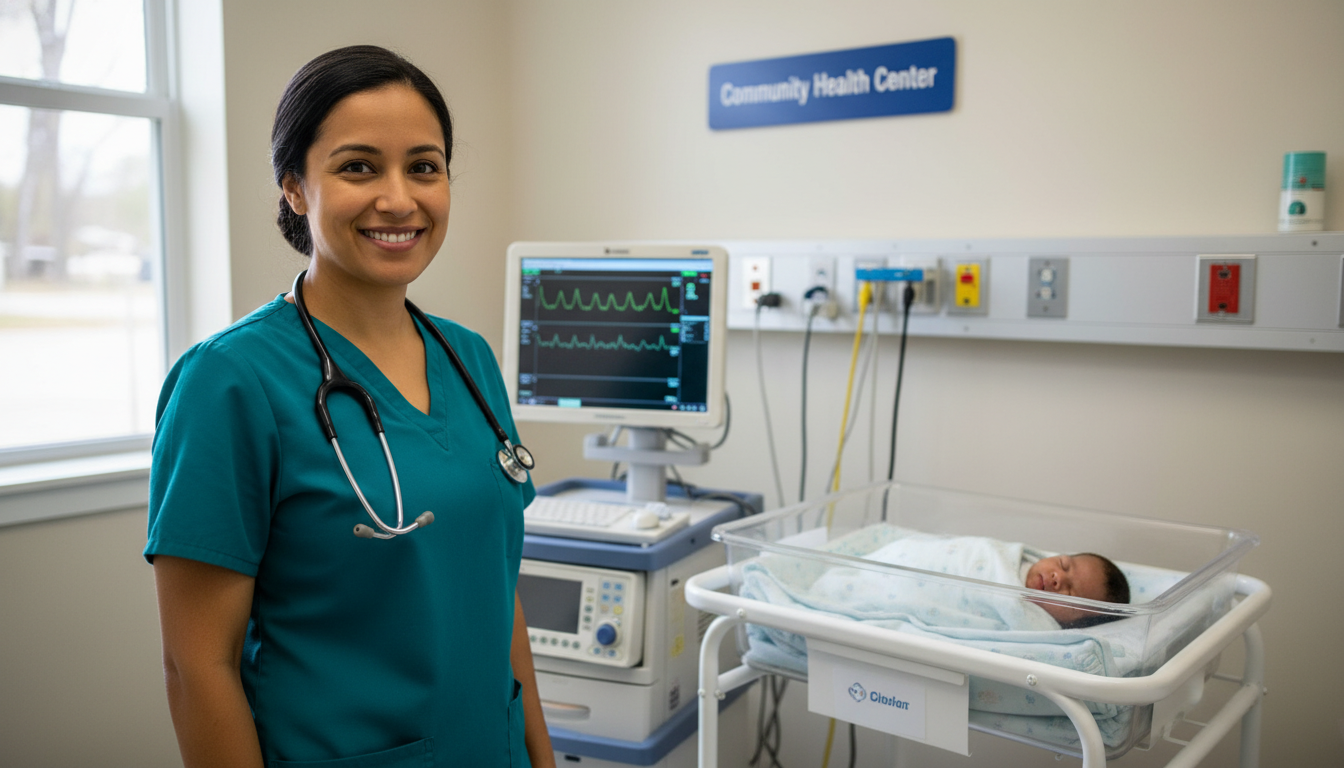
Many OB GYN graduates on J‑1 finish residency and work three years in a rural or inner‑city hospital, often gaining broad operative and L&D volume, then transition to other positions afterward.
Practical Strategies for OB GYN Applicants: Making the Visa Work for You
Beyond understanding theory, you need concrete steps to align your visa situation with your OB GYN career.
1. Decide: Are You Willing to Accept a J‑1?
Ask yourself:
- Would I be comfortable working 3+ years in a rural or underserved urban area after residency?
- Am I open to maternal health advocacy and community‑based OB practice early in my career?
- How important is geographic flexibility immediately after training?
If your answer is “yes” to the first two questions, J‑1 may not be a problem for you and could significantly broaden your obstetrics match options.
If geographic constraints (e.g., family needs, spouse employment) make underserved areas difficult, you might push harder for H‑1B or plan for eventual relocation after waiver service.
2. If Targeting H‑1B: Build the Prerequisites Early
To position yourself for an H‑1B OB GYN residency:
Pass USMLE Step 3 early:
- Ideally during your final year of medical school or early PGY‑1 in another system (if allowed by your current status).
- Remember: many programs want Step 3 results in hand before filing H‑1B, often months before July 1.
Maintain strong communication with target programs:
- Confirm their deadlines for Step 3 and licensing paperwork.
- Clarify if they have limited H‑1B slots or if they prioritize certain candidates (e.g., those already in the U.S.)
Keep your immigration history clean:
- No status violations or unauthorized employment.
- Keep documentation (I‑20s, DS‑2019s, prior visas) organized.
3. Use Your Personal Statement and Interviews Strategically
While you should not turn your OB GYN personal statement into a visa essay, you can:
- Emphasize dedication to women’s health in underserved communities if you foresee J‑1 waiver work.
- Highlight interest in public health, maternal mortality reduction, or immigrant women’s health, which aligns with many waiver‑eligible positions.
- Show stability and long‑term commitment to a region if you later want a Conrad 30 in that state.
In interviews, if asked about visa needs:
- Be clear and concise:
- “I would require J‑1 sponsorship.”
- “I have completed Step 3, and I would be eligible for H‑1B sponsorship if your institution supports it.”
- Demonstrate that you understand the basics and are proactive about planning, without expecting the program to solve all complexities.
4. Consider Fellowship Planning (MFM, REI, Gyn Onc, FPMRS, etc.)
If you anticipate pursuing a fellowship, visa implications differ:
J‑1 path:
- You can typically do OB GYN residency + one ACGME fellowship within 7 years.
- Each DS‑2019 renewal must be justified and approved.
- Your waiver and service commitment will start after all training ends.
H‑1B path:
- You must track total time spent in H‑1B (residency + fellowship must not exceed 6 years unless you switch visas).
- Some fellows transition from H‑1B to O‑1 (extraordinary ability) if needed.
For highly competitive fellowships (e.g., REI, Gyn Oncology), having a clear long‑term visa plan can reassure academic departments that you can stay and contribute long term.
Working with Lawyers, Advisors, and Program Offices
While this guide is educational and not legal advice, one of the best strategies for IMG success is assembling the right support team.
When to Consult an Immigration Attorney
You should seriously consider specialized legal advice if:
- You have complex immigration history (multiple prior visas, previous denials, or overstay).
- You are converting from one non‑immigrant category to another (e.g., F‑1 OPT to H‑1B, or J‑1 to H‑1B via waiver).
- You are planning long‑term steps (e.g., green card through employment or NIW) and want to understand how your OB GYN career choices affect eligibility.
A good physician‑focused immigration lawyer can:
- Help you plan J‑1 waiver strategies
- Advise on H‑1B vs O‑1 vs EB‑2 NIW pathways
- Coordinate with your program’s legal and HR departments
Using Institutional Resources
Most teaching hospitals have:
- A GME office experienced with ECFMG J‑1 sponsorship
- A legal/HR office that handles H‑1B petitions
As an OB GYN applicant or resident:
- Keep communication with these offices clear and timely.
- Respond quickly to document requests (contracts, licenses, transcripts).
- Ask for timelines upfront so you can manage expectations and travel plans.
FAQ: Visa Navigation for OB GYN Residency
1. Does choosing J‑1 vs H‑1B affect my chances in the obstetrics match?
Indirectly, yes. Many OB GYN programs only support J‑1, which means:
- If you insist on H‑1B only, your program list will be smaller, possibly reducing your chances of matching.
- If you are open to J‑1, you can apply to a broader pool of programs, which may improve your overall match odds.
However, your individual competitiveness (scores, experience, letters, interviews) still plays the dominant role. Visa type is one factor among many.
2. Can I switch from J‑1 to H‑1B during residency?
Typically, no, not for the purpose of continuing the same training. Under ECFMG rules, if you begin residency on a J‑1, you are expected to complete that training program on J‑1. Transition to H‑1B usually occurs:
- After finishing your J‑1 training and obtaining a waiver, or
- In rare cases, for distinctly different roles (e.g., research, non‑clinical positions), subject to complex rules.
You should assume your visa type for residency will remain consistent throughout your four years of OB GYN training.
3. Is it harder to get an OB GYN residency as an IMG if I need H‑1B sponsorship?
It can be more challenging because:
- Fewer OB GYN programs sponsor H‑1B.
- Step 3 is required before the H‑1B petition, raising the bar for readiness.
- Institutions may prioritize J‑1 candidates due to simpler logistics.
However, IMGs do match into OB GYN on H‑1B each year—especially in academic centers accustomed to employment‑based sponsorship. Strong scores, robust U.S. clinical experience, and timely completion of Step 3 are key.
4. If I train on J‑1, will I be forced to practice only in very remote locations after residency?
Not necessarily, but many J‑1 waiver jobs are in:
- Rural communities
- Smaller cities
- Underserved inner‑city areas
That said:
- Some mid‑size cities and even suburbs qualify as underserved.
- OB GYN is a sought‑after specialty; some states are flexible to attract you.
- After completing your 3‑year waiver commitment, you have more freedom to move to other locations.
It’s important to view this as a phase of your career, not your permanent destination.
Navigating IMG visa options for OB GYN residency requires early planning, honest self‑assessment of your goals, and careful program selection. By understanding the trade‑offs between J‑1 vs H‑1B, anticipating the implications for the obstetrics match, and strategically aligning training with post‑residency opportunities, you can build both a successful OB GYN career and a sustainable immigration trajectory in the United States.