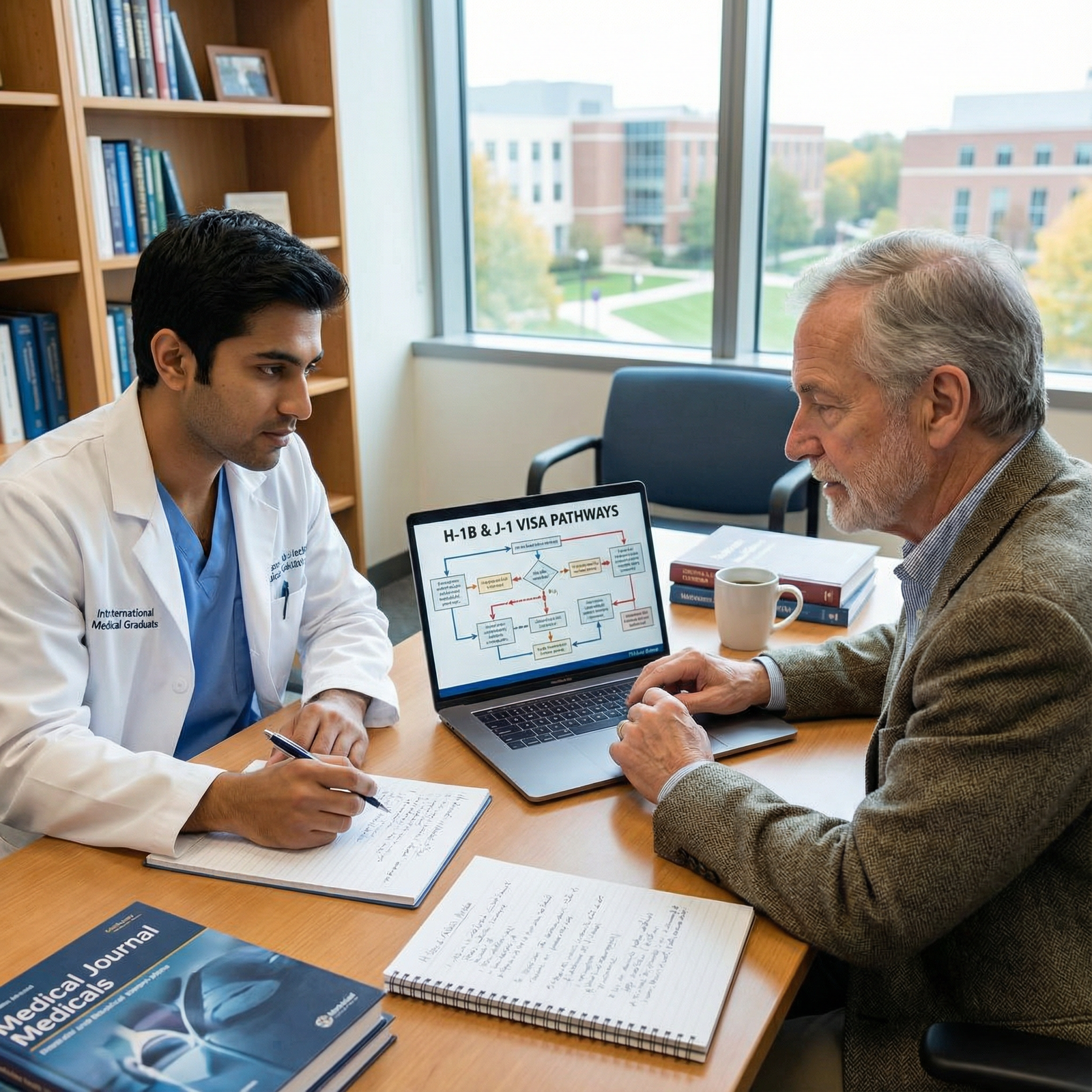
Understanding the Visa Landscape for Caribbean IMGs in the Bay Area
For a Caribbean medical school graduate targeting residency in the San Francisco Bay Area, visa planning is just as important as exam scores and clinical performance. The combination of Caribbean medical school residency pathways, California licensing rules, and complex IMG visa options can be confusing—especially when you’re also trying to understand the J‑1 vs H‑1B decision and what programs in the Bay Area actually sponsor.
This guide is designed specifically for Caribbean IMGs aiming for a San Francisco residency or broader Bay Area residency, with a focus on:
- How your Caribbean medical education affects California eligibility
- The difference between J‑1 and H‑1B visas in residency
- Which Bay Area institutions tend to sponsor which visas
- How to talk about visa needs with programs
- Common pitfalls and practical strategies to improve your chances
Step 1: Clarify Your Eligibility as a Caribbean Graduate in California
Before diving into visa types, you need to confirm that you are licensure-eligible in California. Visa sponsorship is irrelevant if the state medical board will not recognize your medical school.
A. California and International Medical Schools
California previously maintained its own list of “approved” and “disapproved” foreign medical schools. This system has changed with implementation of the WFME (World Federation for Medical Education) recognition requirement, but California still scrutinizes international schools.
For Caribbean medical school residency applicants, the key issues are:
Medical school recognition/accreditation
- Check whether your school is:
- Listed in the World Directory of Medical Schools (WDOMS) with an ECFMG-eligible note
- Accredited by an agency recognized by WFME
- Many major Caribbean schools (e.g., SGU, Ross, AUC, Saba) hold such accreditation.
- Check whether your school is:
California-specific rules and documentation
- Review the Medical Board of California (MBC) website for:
- Any special documentation requirements for graduates trained outside the U.S. and Canada
- Rules on clinical rotations, especially U.S. core clerkships done through your Caribbean school
- Review the Medical Board of California (MBC) website for:
Clinical rotations and California
California is attentive to:- Where and how your core clinicals were done
- Whether there were any unapproved off-site rotations
- Whether your school is considered to provide substantial clinical education, not just “observer-type” experiences
Action Item:
- Visit the Medical Board of California site and confirm:
- You’re eligible (or likely eligible) for licensure after residency
- Your school’s credentialing requirements
- If in doubt, email the Board early with your school name and anticipated completion timeline.
B. ECFMG Certification and Timing
To obtain J‑1 or H‑1B status for residency, you will need ECFMG certification:
- You must pass:
- USMLE Step 1
- USMLE Step 2 CK
- Meet ECFMG’s clinical and credentialing requirements
- ECFMG certification must be completed before residency start (July 1), but for visa processing, the earlier you certify, the better.
For SGU residency match candidates and other Caribbean programs, your school’s administrative office usually helps maintain your ECFMG documentation, but ultimate responsibility is yours.
Practical Tip: Aim to get ECFMG certified by December–January of the Match year to give programs confidence that visa processing will be smooth.

Step 2: J‑1 vs H‑1B – Core Differences for Caribbean IMGs
Understanding J‑1 vs H‑1B is critical for planning your residency visa path in the San Francisco Bay Area.
A. J‑1 Clinical Visa (ECFMG-Sponsored)
What it is:
- A non-immigrant “exchange visitor” category designed for training (residency/fellowship)
- Sponsored by ECFMG, not the hospital directly
Key features:
Duration
- Typically valid for the length of your accredited training (residency + fellowship), with annual renewals
- Usually capped around 7 years total of clinical training
Home Residency Requirement (212(e))
- Most J‑1 physicians are subject to a 2-year home country physical presence requirement at the end of training
- You must return to your country of last legal permanent residence for an aggregate 2 years before:
- Applying for H‑1B
- Applying for a green card (except a few complex exemptions)
Waiver Options
To avoid the 2-year return, J‑1 physicians often seek a J‑1 waiver after training by:- Serving in a medically underserved area (MUA/HPSA) under:
- Conrad 30 program (state-based)
- Federal programs (VA, HHS, etc.)
- Showing persecution or hardship (rarely used, very specific circumstances)
- Serving in a medically underserved area (MUA/HPSA) under:
Pros for Caribbean IMGs
- More widely available: many Bay Area and California programs sponsor only J‑1
- Standardized process: programs are familiar with ECFMG procedures
- No prevailing wage or H‑1B cap issues
Cons
- 2-year home requirement (if no waiver obtained)
- Cannot easily transition directly to H‑1B or green card without waiver
- Spouse receives J‑2, which can have employment authorization, but is subject to the same 212(e) rule
B. H‑1B Temporary Worker Visa (Physician in Specialty Occupation)
What it is:
- A “specialty occupation” work visa
- Sponsored by the hospital or institution directly, not ECFMG
Key features:
Eligibility Requirements
- ECFMG certification and Step 3 passed before H‑1B filing
- License eligibility in California (meet all state rules for IMG physicians)
- Offered salary must meet prevailing wage standards
Duration & Cap
- Up to 6 years total (often in 3-year increments)
- Many academic/teaching hospitals are cap-exempt (they can file H‑1B at any time and are not limited by the national annual cap).
Pros
- No automatic 2-year home residency requirement
- Often considered more favorable for future green card sponsorship
- Spouses receive H‑4; may qualify for work authorization if a green card process is underway
Cons
- Not all programs sponsor H‑1B (many in the Bay Area are J‑1 only)
- Requires Step 3 before residency start (tight timeline)
- More paperwork and cost for the hospital; some programs avoid H‑1B for this reason
C. Strategic Considerations for Caribbean IMGs
When deciding between J‑1 vs H‑1B, think about:
Your Career Timeline
- If your priority is matching into any strong Bay Area residency, J‑1 may be more realistic because:
- More Bay Area programs sponsor J‑1
- H‑1B slots are limited and sometimes prioritized for highly specialized candidates
- If your long-term goal is rapid U.S. permanent residence, H‑1B may align better—but you must find a sponsoring program.
- If your priority is matching into any strong Bay Area residency, J‑1 may be more realistic because:
Your Country of Citizenship vs. Training Location
- Your 2-year J‑1 home requirement applies to your home country, not the Caribbean island where your school is located—important for Caribbean graduates who are citizens of another country.
Timing of USMLE Step 3
- If you are targeting H‑1B, you must pass Step 3 early enough that:
- The result is available before programs need to file H‑1B petitions (commonly by late spring before July 1 start).
- As a Caribbean IMG, schedule Step 3 strategically during your gap months or early in the final year.
- If you are targeting H‑1B, you must pass Step 3 early enough that:
Step 3: Bay Area and San Francisco Residency Programs – What Do They Sponsor?
The San Francisco Bay Area includes programs in San Francisco, Oakland, Berkeley, San Jose, Palo Alto, and surrounding communities. Visa sponsorship policies can vary significantly between institutions and even between departments.
A. Typical Patterns in Major Bay Area Institutions
Without listing specific program names (since policies change frequently), here’s what you are likely to find:
Large Academic Medical Centers (University-Affiliated)
Examples: University-affiliated hospitals in San Francisco, Palo Alto, and the broader Bay Area- Commonly J‑1 friendly, often:
- Accepting a range of IMGs (including Caribbean schools like SGU, Ross, AUC, Saba)
- Having structured immigration support teams
- H‑1B policies:
- Some departments sponsor H‑1B for exceptional, highly competitive specialties or research-heavy roles
- Others restrict H‑1B to fellowship level
- Commonly J‑1 friendly, often:
Community-Based Bay Area Residency Programs
- May be more selective about sponsoring H‑1B due to budget/administrative constraints
- Often sponsor J‑1 but may limit the number of IMG positions
- In primary care (Internal Medicine, Family Medicine, Pediatrics), J‑1 sponsorship is more common than H‑1B
San Francisco Residency Programs Specifically
- SF-based programs often have very high applicant volume
- Many declare “J‑1 only, no H‑1B” in their program descriptions
- For Caribbean medical school residency applicants, this usually means:
- You’ll almost certainly be considered only under J‑1, even with Step 3 in hand
Action Item:
Create a spreadsheet of Bay Area programs including columns for:
- Visa types sponsored (J‑1, H‑1B, none)
- Whether they have current or recent Caribbean IMG residents (look at their resident bios)
- Notes from their websites (e.g., “H‑1B considered only for advanced residency applicants”)
Whenever possible, email the program coordinator with a concise question:
“I am a Caribbean IMG (ECFMG-certified) interested in your Internal Medicine residency for the upcoming Match cycle. Could you please confirm which visa types your program sponsors for categorical residents (J‑1 and/or H‑1B)?”
Keep these responses documented; they will guide where to apply and how to prioritize H‑1B efforts.

Step 4: Application Strategy – Matching as a Caribbean IMG with Visa Needs
Your strategy to secure a San Francisco residency or broader Bay Area residency should integrate both your IMG status and your visa requirements.
A. Tailoring Your ERAS Application for Bay Area Programs
Highlight U.S. Clinical Experience (USCE)
- Preferably direct hands-on sub-internships or core rotations in internal medicine, surgery, pediatrics, family medicine, etc.
- If possible, secure rotations in California or on the West Coast to show regional familiarity.
Emphasize Caribbean School Track Record
- If you are from SGU, mention the strong SGU residency match statistics and prior graduates who matched into California or the Bay Area.
- Programs are often reassured when they recognize your school as a consistent source of trainable residents.
Address Visa in a Focused, Non-Alarmist Way (When Asked)
- You do not need to write an essay on visa needs in your personal statement.
- Keep it simple:
- “As an international medical graduate, I will require visa sponsorship to train in the United States. I am eligible for a J‑1 clinical visa and am on track to complete ECFMG certification this year.”
- If you’re a strong H‑1B candidate (Step 3 passed), you might add:
- “I have completed USMLE Step 3 and would be eligible for H‑1B sponsorship where offered.”
B. Choosing Where to Apply: Balancing Ambition and Realism
For a Caribbean IMG targeting residency in the San Francisco Bay Area:
Tier 1 – Primary Targets (Visa-Friendly, IMG-Open)
- Programs that explicitly:
- Sponsor J‑1
- Have current Caribbean IMGs
- These should form the backbone of your application list.
- Programs that explicitly:
Tier 2 – Stretch Programs (Highly Competitive, IMG-Selective)
- Elite SF Bay Area academic programs that:
- Sponsor J‑1 but are very competitive
- Rarely take Caribbean grads but occasionally do so with exceptional profiles
- Apply if you have strong board scores, honors in clinicals, research, and notable letters.
- Elite SF Bay Area academic programs that:
Tier 3 – Broader California and West Coast Programs
- Widen your geographic scope to:
- Sacramento, Central Valley, Southern California, Pacific Northwest
- These programs can still keep you in the region and may lead to fellowship or job opportunities later in the Bay Area.
- Widen your geographic scope to:
Practical Tip:
Aim for a broad application: 60–100+ programs if you are:
- A Caribbean IMG
- Needing visa sponsorship
- Targeting a competitive metropolitan area like San Francisco
Step 5: Practical Visa Navigation – Timeline, Documents, and Common Pitfalls
A. Typical Timeline for Caribbean IMGs
Assuming you are in your final year of a Caribbean medical school:
January–April (Year Before Match)
- Take Step 2 CK; ensure strong performance
- Confirm ECFMG credentials are in order
- Research Bay Area and California-wide visa policies
May–August
- Build USCE, ideally including some California rotations
- Begin drafting personal statement and CV
- Decide whether you will try to take Step 3 before Match (for H‑1B positioning)
September–December (ERAS Season)
- Submit ERAS with clear mention of ECFMG status
- Be prepared to answer visa questions on supplemental forms
- If Step 3 is planned before January, indicate test date
January–March (Interview and Ranking)
- During interviews, respond succinctly about visa:
- “I will need J‑1 visa sponsorship and am ECFMG certified (or on track).”
- If Step 3 passed: “I am open to both J‑1 and H‑1B where available.”
- Rank programs based on training quality and realistic visa sponsorship
- During interviews, respond succinctly about visa:
Match to July 1
- Once matched, the program (or ECFMG for J‑1) begins visa paperwork
- Respond quickly to document requests:
- Passport copy
- Final diplomas and transcripts
- ECFMG certificate
- Allow time for consular appointment if you need to get your visa abroad
B. Documentation Checklist
For both J‑1 and H‑1B J-1 clinical visa applications, typical documents include:
- Valid passport (with long enough validity)
- ECFMG certificate
- Medical school diploma and official transcripts
- Completed DS-2019 request forms (for J‑1 via ECFMG)
- Residency offer letter / contract
- Proof of financial support (often handled by program documentation)
For H‑1B, additional items:
- USMLE Step 3 score report
- State licensing/permit documents (California postgraduate training license requirements)
- Credential evaluation if requested by employer’s legal team
C. Common Pitfalls and How to Avoid Them
Assuming All Bay Area Programs Sponsor H‑1B
- Reality: Many are J‑1 only.
- Solution: Verify each program’s policy before applying.
Delaying Step 2 CK or ECFMG Certification
- Late scores or incomplete certification can jeopardize your residency visa processing.
- Solution: Aim for early completion; notify programs if there are delays.
Misinformation About J‑1 Waivers
- Some IMGs believe waivers are “automatic” or “easy.” They are not.
- Solution: Learn early about Conrad 30 and other waiver paths; be prepared for a period in underserved areas after training.
Ignoring California Licensing Nuances
- Problems with unapproved rotations or incomplete documentation can surface later, when applying for a full license.
- Solution: Keep a meticulous record of your rotations, locations, and supervising physicians; follow up with your school about compliance with California guidelines.
Weak Communication with Program Coordinators
- Failing to clarify your visa status early can create confusion.
- Solution: Be honest, concise, and proactive in sharing your visa needs when asked.
Step 6: Long-Term Strategy – Beyond Residency in the Bay Area
Thinking beyond residency is critical, especially for a Caribbean IMG navigating visas in the San Francisco Bay Area.
A. If You Train on a J‑1
Plan for J‑1 Waiver Early
- Assume you will need a waiver job in an underserved area, which may not be in the Bay Area.
- Some Northern California or rural areas sometimes qualify for Conrad 30; metropolitan SF rarely does.
After Waiver
- Once you complete the 3-year waiver service on H‑1B, you can pursue:
- Further H‑1B roles in non-shortage areas (including SF Bay Area)
- Green card sponsorship (e.g., EB‑2, NIW, employer-sponsored)
- Once you complete the 3-year waiver service on H‑1B, you can pursue:
B. If You Train on an H‑1B
Potential for Direct Transition
- After residency (and/or fellowship), you may:
- Continue working in the Bay Area on H‑1B with an employer sponsor
- Begin a green card process during training or immediately after
- After residency (and/or fellowship), you may:
Cap-Exempt vs Cap-Subject H‑1B
- If you train in a cap-exempt institution (university-affiliated hospital):
- Transitioning to a private practice or community hospital in the Bay Area may require a cap-subject H‑1B, which is limited and conducted via yearly lottery.
- Plan your employer transitions carefully.
- If you train in a cap-exempt institution (university-affiliated hospital):
C. Building a Bay Area Network
Regardless of your visa type:
- Engage with faculty mentors during residency who work or have connections in Bay Area institutions.
- Attend regional conferences and local professional society meetings (e.g., ACP, AAFP, specialty societies).
- Look for research or quality improvement projects that connect you with faculty across different Bay Area hospitals.
For Caribbean IMGs (including those from SGU and similar schools), establishing a strong professional network can be as important as visa status in securing a long-term role in the San Francisco Bay Area.
Frequently Asked Questions (FAQ)
1. As a Caribbean IMG, is it realistic to match into a San Francisco Bay Area residency if I need visa sponsorship?
Yes, it is realistic but competitive. Many Bay Area programs accept IMGs and sponsor J‑1 visas; some also sponsor H‑1B in selected situations. Your chances improve if you:
- Have strong USMLE scores
- Completed substantial U.S. clinical experience (especially in internal medicine, family medicine, or pediatrics)
- Come from a Caribbean school with a good residency match track record (e.g., SGU residency match outcomes)
- Apply broadly across California and the West Coast, not just SF
2. Should I prioritize J‑1 or H‑1B when applying to Bay Area programs?
For most Caribbean IMGs, J‑1 will be the primary pathway because:
- More Bay Area programs sponsor J‑1 than H‑1B
- You do not need Step 3 before residency to be eligible for J‑1
Pursue H‑1B if:
- You have already passed Step 3
- You are applying to programs that explicitly state they sponsor H‑1B for categorical residents
- Long-term U.S. immigration stability is a top priority and you accept that your program list may be narrower
Many applicants remain open to either and tailor their expectations based on each program’s policy.
3. Does graduating from a big Caribbean school like SGU help with visa sponsorship in the Bay Area?
Indirectly, yes. Programs are often more comfortable sponsoring visas for graduates of Caribbean schools with well-established residency match histories, such as SGU, Ross, AUC, or Saba. For example, strong SGU residency match statistics and current residents from SGU at a given institution signal to program leadership that:
- The school’s curriculum is robust
- The administration is familiar with ECFMG processes
- Prior visa cases have been successfully managed
This does not guarantee sponsorship, but it can make programs more willing to consider you as a viable IMG candidate.
4. Can I switch from J‑1 to H‑1B during residency in San Francisco?
In practice, switching from J‑1 to H‑1B mid-residency is rare and often not feasible due to:
- The 2-year home residency requirement attached to J‑1 (212(e))
- ECFMG and U.S. government policies that expect you to complete your training on the same visa type
There are exceptional cases (complex legal pathways), but you should not plan on switching from J‑1 to H‑1B during residency. Design your long-term strategy assuming you will remain on J‑1 through residency and possibly fellowship, then pursue a J‑1 waiver and later H‑1B or green card options.
By understanding the visa frameworks, California regulations, and Bay Area program patterns early in your planning, you—as a Caribbean IMG—can navigate the complex path to a San Francisco residency or Bay Area residency far more effectively. Thoughtful preparation around J‑1 vs H‑1B, strategic program selection, and proactive communication can turn a daunting immigration landscape into a manageable, stepwise process.