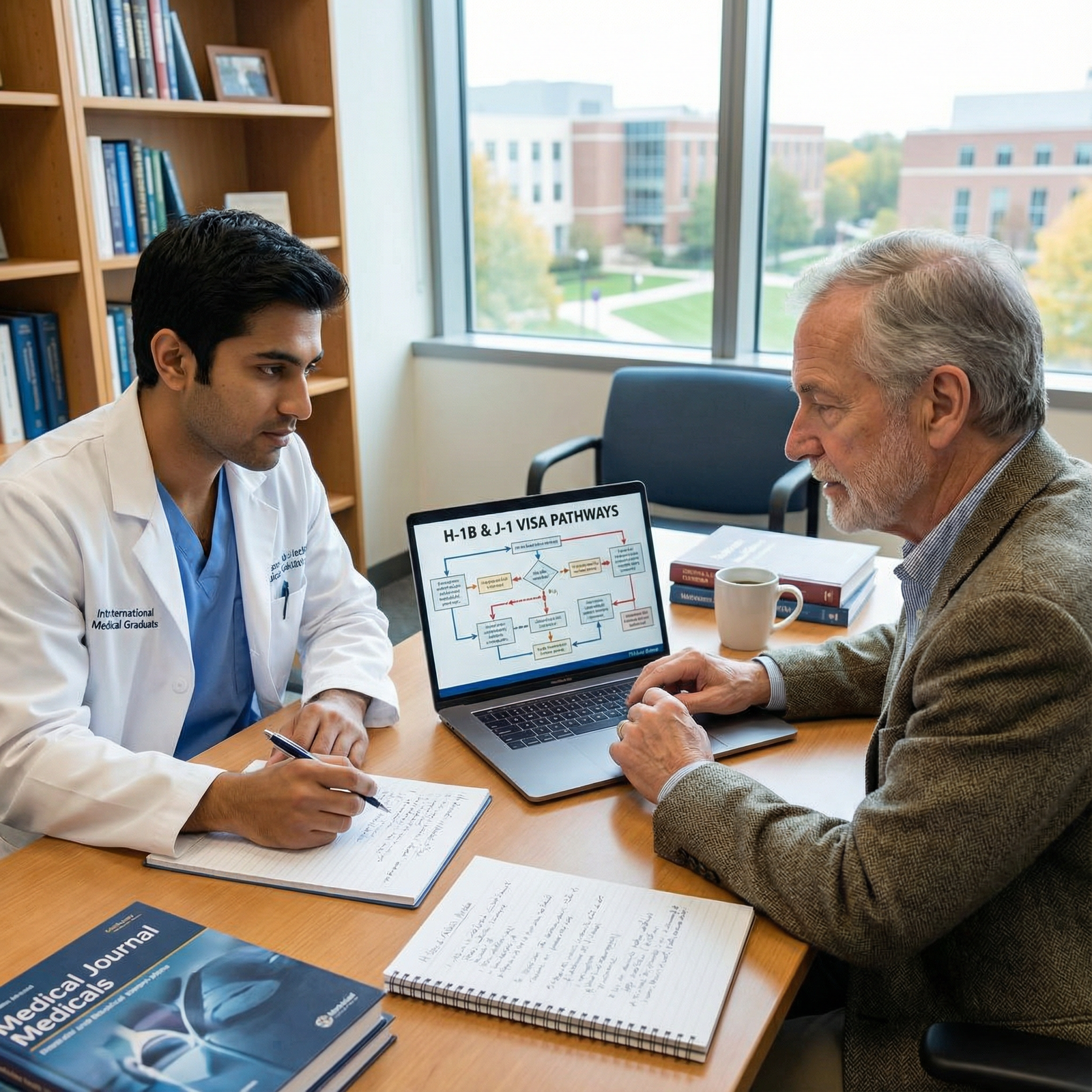
Navigating residency visas in the United States is challenging for any international medical graduate—but as a non-US citizen IMG specifically targeting Denver residency programs, you face a unique combination of immigration, licensing, and program-selection decisions. This guide is designed to walk you through the major IMG visa options, how they play out in Colorado residency, and practical strategies to keep your Match and immigration plans aligned.
Understanding Your Status: Non-US Citizen IMG in Denver Context
Before you can choose a residency visa pathway, you need absolute clarity on your own status and long-term goals.
Who is a “non-US citizen IMG”?
For this article, a non-US citizen IMG (international medical graduate) means:
- You completed medical school outside the United States and Canada, and
- You do not hold US citizenship or permanent residency (green card).
You might currently be:
- Living abroad, preparing to apply to US residencies
- In the US on another status (F-1, F-2, H-4, B-1/B-2, etc.)
- In the US finishing US clinical experience or research
Your status will shape:
- Which residency visa is realistically feasible
- How Denver programs will view your application
- Your post-residency options (e.g., staying in the US vs. returning home)
Denver & Colorado as a training location
Denver is home to several major health systems and teaching hospitals—e.g., University of Colorado (UCHealth), Denver Health, VA Eastern Colorado, and large private systems. As part of a Colorado residency:
- You’ll often be working in urban-academic + community hybrid settings
- Many hospitals have longstanding experience with J-1 visas, somewhat fewer with H-1B
- Some programs may have institution-wide visa policies, decided at the GME (Graduate Medical Education) level rather than by individual programs
Practical implication: when evaluating Denver residency programs, you must research both:
- The program’s stance on IMGs, and
- The institution’s visa sponsorship policies.
Core Visa Pathways: J-1 vs H-1B for Residency
For most non-US citizen IMGs targeting Denver residency programs, the main decision revolves around J-1 vs H-1B. Other categories (F-1 OPT, O-1, TN, etc.) are less typical for residency entry.
The J-1 Exchange Visitor Visa (ECFMG Sponsored)
The J-1 physician visa is the most common residency visa for IMGs in the US.
Key features
- Sponsor: ECFMG (Educational Commission for Foreign Medical Graduates)
- Purpose: Graduate medical education (residency/fellowship)
- Duration: Typically up to 7 years for clinical training
- Work limitation: Authorized only for the specific training program listed in your DS-2019
- Two-year home residency requirement: After training, you are usually required to return to your home country for a cumulative 2 years before being eligible for H or L visas or permanent residency—unless you obtain a J-1 waiver
Pros of J-1 for a foreign national medical graduate
- Widely accepted; most Colorado residency and Denver-based programs are more comfortable with J-1 than H-1B
- Process is well-established and handled in partnership with ECFMG and the GME office
- No USMLE Step 3 required before starting residency
- Often quicker and simpler to secure compared to H-1B
Cons and constraints
- Two-year home residency requirement is a major consideration:
- You must either return home for 2 years, or
- Secure a J-1 waiver (often through service in medically underserved areas or federal agencies)
- Limited ability to moonlight or work outside your program
- J-1 waiver jobs are often in rural or underserved regions, which may or may not be near Denver
- Long-term path to permanent residency can be more complex, especially if you cannot secure a waiver
The H-1B Temporary Worker Visa (for Specialty Occupations)
The H-1B is the second major pathway for residency, less common but attractive to many IMGs who want to minimize the 2-year home requirement issue.
Key features
- Employer-sponsored (the residency program/hospital is the petitioner)
- “Specialty occupation” classification fits physicians
- Typically valid for up to 6 years (often 3 + 3)
- No automatic two-year home residency requirement
- Some programs treat residency positions as cap-exempt H-1Bs (because they’re affiliated with non-profit universities)
Pros for the non-US citizen IMG
- No built-in 2-year home requirement like J-1
- Potentially smoother transition to:
- Post-residency H-1B clinical jobs
- Green card sponsorship by employers
- More flexibility to stay and practice in the US after training without the added step of a J-1 waiver
Cons and constraints
- Not all Denver residency programs sponsor H-1B (many sponsor J-1 only)
- Requires USMLE Step 3 passed before H-1B filing (often before residency start)
- Legal costs and processing logistics can deter programs from offering H-1B
- More complex if you are currently abroad and time is tight
J-1 vs H-1B: How Denver Programs Commonly Approach It
While practices can change year-to-year, some general patterns in Denver residency programs include:
- University-affiliated hospitals (e.g., University of Colorado) often:
- Routinely sponsor J-1
- May sponsor H-1B selectively, often for certain specialties or exceptional candidates
- Community or private programs:
- Some are J-1 only
- A few may allow H-1B but with limited slots or strict internal criteria
Always verify:
- The program’s official visa policy on their website or FREIDA
- Up-to-date info directly from the program coordinator or GME office

Matching Visa Strategy to Your Long-Term Career Plans
Choosing between J-1 vs H-1B is not just about getting into residency; it’s about your 5–10-year plan.
Step 1: Clarify your long-term goals
Ask yourself:
- Do you want to stay in the US to practice after residency?
- Are you open to living/working in rural or underserved areas temporarily after training?
- How important is geographical flexibility (e.g., staying near Denver vs. moving to another state)?
- How quickly do you hope to pursue permanent residency (green card)?
If your priority is flexibility and long-term US practice
You may lean toward H-1B if:
- You are confident you can:
- Pass USMLE Step 3 early
- Target programs in Denver that sponsor H-1B
- You want to:
- Avoid the J-1 two-year rule
- Maximize freedom to choose any location or practice setting after residency
But remember:
- Many excellent Denver residency programs are J-1 only. Insisting on H-1B may drastically narrow your options.
If you are open to returning home or working in underserved areas
You may be comfortable with J-1 if:
- You can return to your home country for 2 years afterward, or
- You are open to a J-1 waiver job (e.g., in rural Colorado or other underserved US regions)
For Denver-focused applicants:
- It is common to do a J-1 residency in Denver, then:
- Take a J-1 waiver job in another Colorado community or nearby states
- Later move back to urban areas like Denver once immigration hurdles are resolved
A balanced approach for the foreign national medical graduate
For many non-US citizen IMGs, a pragmatic strategy is:
- Be open to J-1, especially if targeting competitive or academic Denver programs.
- Simultaneously include some H-1B-friendly programs in your application mix.
- Decide your final visa route based on:
- Which programs invite you to interview
- Which offers you receive
- Program-specific visa policies at the contract stage
Practical Timeline: Visa & Match Planning for Denver Residency
To manage your IMG visa options effectively, you need to align your immigration steps with the residency application cycle.
18–24 months before residency start (early preparation)
- Complete USMLE Step 1 and Step 2 CK
- Obtain ECFMG certification or be on track
- Start learning about:
- ECFMG J-1 requirements
- Program-specific H-1B policies in Denver and Colorado
Key action: Build a spreadsheet of Colorado residency and Denver-area programs, noting:
- Visa types accepted (J-1, H-1B, both, none)
- Minimum USMLE scores, and if Step 3 is required for H-1B
- Prior match history of IMGs
12–15 months before residency start (application season)
- Finalize your ERAS application
- Explicitly mention your visa needs and flexibility in:
- Personal statement (if appropriate)
- Correspondence with program coordinators
- When emailing Denver programs:
- Politely ask about current visa sponsorship policies
- Clarify if non-US citizen IMG applicants are encouraged to apply
For H-1B hopefuls:
- Work toward USMLE Step 3 as early as feasible
- Ensure your test scheduling allows results before your potential H-1B petition filing
6–9 months before residency start (post-Match period)
After Match Day:
- If you matched on a J-1 visa pathway:
- Work closely with ECFMG and your GME office to:
- Prepare DS-2019 documentation
- Schedule your visa interview (if abroad)
- Work closely with ECFMG and your GME office to:
- If you matched with H-1B sponsorship:
- Your hospital’s legal or HR team will:
- File an H-1B petition (often cap-exempt if a university-affiliated hospital)
- You must:
- Provide all required documents (Step 3 results, diplomas, ECFMG certification, licenses as required)
- Your hospital’s legal or HR team will:
Timing tip: For both J-1 and H-1B, start document collection immediately after Match to avoid delays that could threaten your ability to start on July 1.

Specific Considerations for Denver & Colorado Residency Programs
While the core federal visa rules are the same everywhere, regional patterns and institutional culture matter.
Common patterns seen in Denver residency programs
J-1 Dominant Sponsorship
- Many Denver-based and broader Colorado residency programs default to J-1 sponsorship only
- They often have established partnerships with ECFMG and clear internal workflows
Selective H-1B Sponsorship
- Some university-affiliated or larger health systems may:
- Offer H-1B for certain specialties (e.g., internal medicine, some subspecialties)
- Prioritize candidates who already have Step 3 and strong application profiles
- Some university-affiliated or larger health systems may:
IMG-Friendliness
- Programs vary widely in how many IMGs they interview and match
- When you review current residents on program websites, pay attention to:
- Percentage of residents from international schools
- Diversity of countries represented
How to research Denver programs effectively as a non-US citizen IMG
Use FREIDA and program websites
- Look for sections detailing:
- “Visa sponsorship”
- “Eligibility & requirements”
- “International medical graduates”
- Look for sections detailing:
Email program coordinators
- Ask concise, targeted questions, for example:
- “Do you sponsor J-1 visas for non-US citizen IMGs?”
- “Do you sponsor H-1B visas, and if so, are there specific USMLE Step 3 or score requirements?”
- Ask concise, targeted questions, for example:
Connect with current or former residents
- Use LinkedIn or alumni networks to find:
- IMGs currently in Denver residency programs
- Ask specifically about their visa experiences and challenges
- Use LinkedIn or alumni networks to find:
Review state-specific factors for Colorado
- Some J-1 waiver programs are managed at the state level
- Colorado typically participates in the Conrad 30 J-1 waiver program, which can be important if you choose J-1
J-1 Waivers, Post-Residency Options, and Staying in the US
If you train in Denver on a J-1 visa and want to remain in the US, your next key step is usually a J-1 waiver.
What is a J-1 waiver?
A J-1 waiver is a legal mechanism that:
- Waives your two-year home-country physical presence requirement
- Typically requires:
- A job offer in a medically underserved area (MUA, HPSA), often primary care or high-need specialties
- A three-year service commitment in that position
- Support from a state health department or federal program (e.g., Conrad 30, VA, HHS)
Relevance to Denver and Colorado
- If you complete Colorado residency in Denver on J-1:
- You may seek a Conrad 30 waiver position within Colorado
- Many such jobs are not in Denver itself but in smaller cities or rural towns
- After fulfilling the 3-year waiver commitment:
- You may be able to transition to:
- New employers, potentially in or near Denver
- Different visa types or permanent residency
- You may be able to transition to:
Transition pathways after the J-1 waiver
Common paths include:
- H-1B for your waiver job, then employer-sponsored green card
- Later transitions to:
- Different H-1B employers
- Permanent residency through employment or national interest waivers (in some circumstances)
If you begin your career on H-1B (no J-1):
- You skip the waiver step
- You may still need:
- Employer-sponsored green card (EB-2, EB-3)
- To manage H-1B time limits (6 years total, with an extension if green card is pending)
Actionable Tips to Optimize Your Residency Visa Strategy
To make your IMG visa options work in your favor when targeting Denver residency programs, focus on three pillars: information, exam timing, and communication.
1. Information: Know your viable visa routes
- Honestly assess:
- Are you willing to do J-1?
- Can you realistically pass Step 3 early enough for an H-1B?
- Build a personalized list of:
- Denver programs that sponsor J-1 only
- Denver/Colorado programs that may sponsor H-1B
2. Exam timing: USMLE Step 3 strategy
If H-1B is important to you:
- Target Step 3 early (often during or shortly after application season):
- Schedule it so that results are available several months before July 1
- Use Step 3 as a strength in your application, particularly when contacting H-1B-friendly programs:
- Mention in ERAS that Step 3 is completed or scheduled
3. Communication: Be clear but flexible
- In interviews and emails, you might say:
- “I am eligible for J-1 visa sponsorship and am also prepared to pursue H-1B if your institution offers it.”
- Avoid making visa demands that might:
- Signal inflexibility
- Make programs worry about administrative burden
4. Use expert resources
- ECFMG: For J-1 regulations, process steps, and documentation
- Hospital GME offices: For specific program or institutional policies
- Immigration attorneys:
- Especially useful if you have a complex history (e.g., prior US visas, status changes, dependents)
- Can help you understand subtle issues like J-1 vs H-1B tax, travel, and dependents’ work authorization
FAQs: Visa Navigation for Non-US Citizen IMGs in Denver
1. Do most Denver residency programs sponsor J-1 or H-1B?
Many Denver residency programs primarily sponsor J-1 visas, as this is the standard pathway for IMGs and is centrally managed by ECFMG. A subset of programs, often those affiliated with major academic centers, may also sponsor H-1B selectively. As a non-US citizen IMG, you should assume J-1 is more widely available and then identify specific programs offering H-1B if that’s a priority.
2. Is it realistic to insist on H-1B as a non-US citizen IMG?
It is possible but risky to limit yourself to H-1B-only, especially in a geographically specific area like Denver. You will significantly reduce your pool of potential programs. A more realistic strategy is to be open to J-1 while deliberately applying to a number of H-1B-sponsoring programs in Colorado and nationwide, then making a final decision based on where you receive interviews and offers.
3. How does choosing J-1 vs H-1B affect my chances of getting a Denver residency?
Most programs do not reject you solely because you need a visa, but they do care about how complex the process will be. Because J-1 is more streamlined, some programs prefer it and may even label themselves “J-1 only.” Choosing H-1B as your preference can be advantageous in H-1B-friendly programs if you already have Step 3, but it can exclude you from J-1-only programs. Overall, visa type is one factor among many; exam scores, clinical performance, and fit remain central.
4. If I do residency in Denver on a J-1 visa, can I still stay in the US afterward?
Yes, but usually you must address the two-year home-country requirement. The usual path is:
- Complete your Denver residency on J-1
- Obtain a J-1 waiver job (often via state Conrad 30 or similar program)
- Work for three years in that waiver position (often in an underserved area)
- During or after this time, pursue H-1B extensions and permanent residency as appropriate
This means your first job after residency may not be in Denver, but you can often work your way back to cities like Denver once your obligations and immigration status allow.
By understanding the nuances of J-1 vs H-1B, the realities of Denver residency programs, and the long-term implications of each decision, you can construct a visa strategy that supports—not limits—your career as a foreign national medical graduate. Start early, stay informed, and remain flexible, and you’ll be well-positioned to navigate both the Match and the immigration system successfully.