
Understanding the Visa Landscape for Non-US Citizen IMGs in the Mississippi Delta
For a non-US citizen IMG aiming for residency training in the Mississippi Delta, visa planning is just as critical as exam scores and clinical experience. Programs in the Deep South—especially in smaller communities and safety-net hospitals—often welcome international graduates, but they also operate within strict visa and institutional rules that can either open or close doors.
This guide focuses on the realities of visa navigation for a non-US citizen IMG or foreign national medical graduate targeting Mississippi Delta residency positions (e.g., in Mississippi, Arkansas, Louisiana, Tennessee). It explains your IMG visa options, helps you understand J-1 vs H-1B, and shows how to build a strategy that matches both your career goals and the needs of the region.
1. Big Picture: Why Visa Strategy Matters in the Mississippi Delta
The Mississippi Delta and surrounding Deep South area is medically underserved in many specialties—primary care, psychiatry, general surgery, OB/GYN, internal medicine, and family medicine in particular. That reality shapes how residency programs think about visas.
1.1 Underserved Region = Opportunity (With Strings Attached)
Because of persistent shortages, many hospitals and residency programs in the Mississippi Delta:
- Are open to recruiting non-US citizen IMGs
- Have a track record of sponsoring J-1 visas, sometimes H-1B
- View IMGs as a long-term workforce solution—particularly in primary care
However, this often goes hand-in-hand with expectations such as:
- Long-term commitment to the region after training
- Use of waiver programs to fulfill federal/state service obligations
- Preference for candidates who understand the J-1 two-year home requirement and waiver pathways
In other words, visa choice is not just a legal issue; it’s a career and location decision.
1.2 The Two Main Residency Visa Options: J-1 vs H-1B
Most non-US citizen IMGs in US residency are on one of two visas:
- J-1 (Exchange Visitor, sponsored by ECFMG)
- H-1B (Temporary Specialty Worker, sponsored directly by the hospital/university)
Both are viable in the Mississippi Delta, but with very different implications for your future—and for the hospital’s administrative burden.
At a high level:
- J-1:
- Easier for programs to sponsor
- Very common in community-based and smaller academic programs
- Comes with a two-year home-country physical presence requirement after training (unless waived)
- H-1B:
- More complex and expensive for programs
- Often limited to certain specialties or university-based institutions
- No automatic home-country requirement
- Cap-exempt if linked to a university or nonprofit hospital, which many training programs are
Understanding how these play out in this region is the core of your visa strategy.
2. J-1 Visa for Mississippi Delta Residency: Common, Structured, and Tied to Waivers
For a foreign national medical graduate entering residency in the Deep South, the J-1 visa is often the default path—especially in community and hybrid academic-community programs.
2.1 How the J-1 Works for Residency
Key elements of the J-1 IMG visa:
- Sponsor: ECFMG (not the hospital itself)
- Purpose: Graduate medical education (residency and fellowship)
- Duration: Typically covers the length of your training program, with an overall cap (usually 7 years)
- Requirements:
- Valid ECFMG certification
- A contract or offer letter from a US residency program with ACGME accreditation
- Passing USMLE exams (Step 1 and Step 2 CK; Step 3 not required for J-1)
- English proficiency as part of ECFMG certification
Most Mississippi Delta programs that accept IMGs are well-versed in J-1 sponsorship and often specify this clearly on their websites.
2.2 The Two-Year Home Residency Requirement
The major downside of J-1 residency is the two-year home-country physical presence requirement (under INA § 212(e)) after your training ends.
Unless you obtain a waiver, you cannot:
- Change to most other NIV statuses (e.g., H-1B, L-1)
- Obtain an immigrant visa (green card)
- Adjust status to permanent residence inside the US
Without a waiver, you must either:
- Return to your country of nationality or last residence for at least two cumulative years, or
- Spend equivalent time in that country in multiple visits (not required to be continuous, but must total two years)
For a non-US citizen IMG who wants to build a long-term career in the Mississippi Delta, this requirement almost always makes a waiver essential.
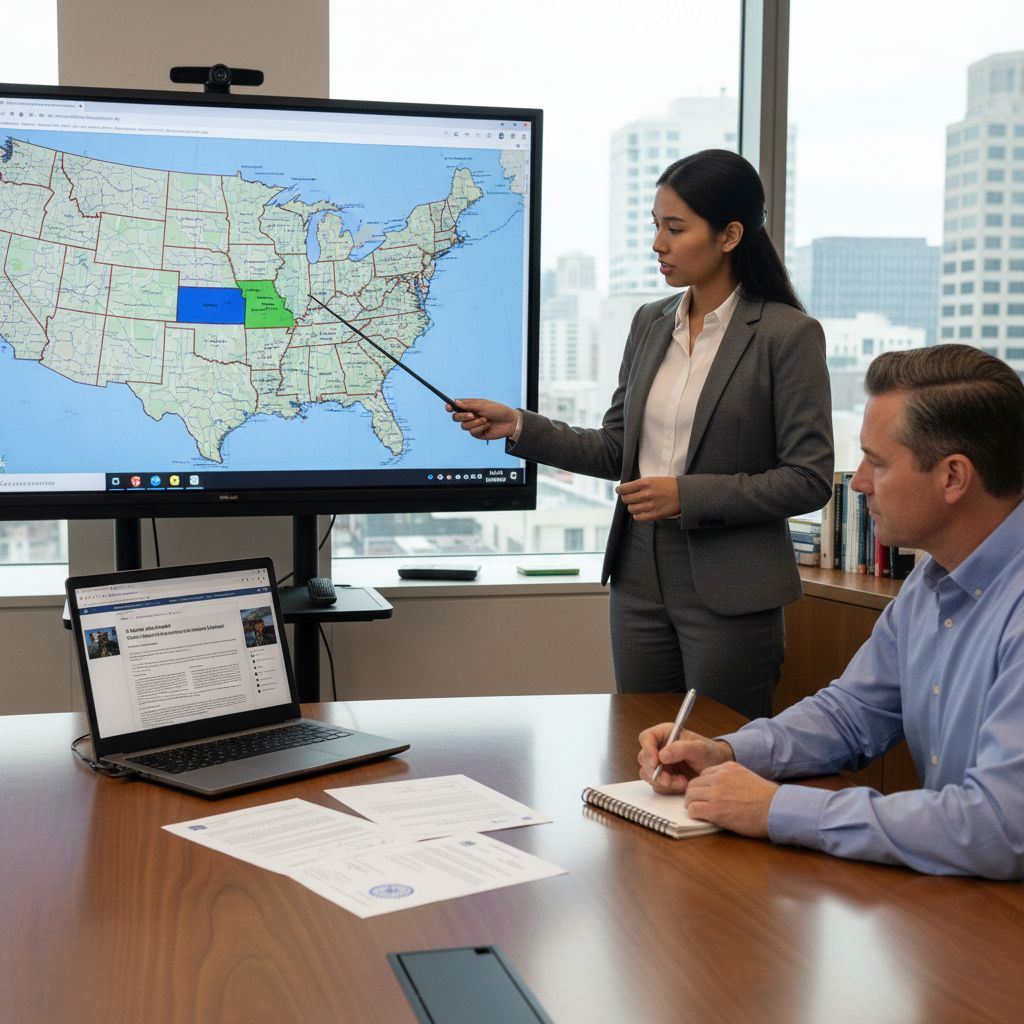
2.3 J-1 Waiver Options Relevant to the Mississippi Delta
Several J-1 waiver pathways exist, but the ones most relevant to the Mississippi Delta are:
Conrad 30 Program (State-based waivers)
- Each US state can recommend up to 30 J-1 waiver physicians per year.
- Requires:
- A job offer in a designated Health Professional Shortage Area (HPSA) / Medically Underserved Area (MUA), or serving an underserved population
- 3-year full-time service commitment (often in primary care, psychiatry, or high-need specialties)
- Mississippi, Arkansas, and Louisiana regularly use their Conrad 30 slots to bring physicians into rural and Delta communities.
- Many Mississippi Delta hospitals actively recruit J-1 alumni finishing residency/fellowship for these roles.
Appalachian Regional Commission (ARC) Waiver
- More relevant for certain parts of the broader South/Appalachia, less so for the heart of the Mississippi Delta, but good to be aware of if your job is near those regions.
Delta Regional Authority (DRA) J-1 Waiver Program
- Directly relevant: The DRA covers portions of 8 states, including most of the Mississippi Delta region (parts of MS, AR, LA, TN, and others).
- Supports J-1 waivers for physicians committed to working in DRA-designated areas.
- Requirements often parallel or supplement Conrad 30, but with DRA’s own criteria.
- This is a strategic advantage for J-1 IMGs planning to remain in the Delta—two separate avenues (state and DRA) can support waiver efforts.
VA, Federal Agencies, and Hardship/Persecution
- Less common in typical Delta paths, but important:
- VA facilities and certain federal agencies can sponsor waivers if you work at a qualifying site.
- No-objection statement, hardship, and persecution waivers are legally complex; consult an immigration attorney if you consider these.
- Less common in typical Delta paths, but important:
Practical implication: If you accept a J-1 visa for residency in the Mississippi Delta, you should start thinking about J-1 waiver strategy by PGY-2, particularly if you plan to remain in the region.
2.4 Pros and Cons of the J-1 Path in the Delta
Pros:
- Widely accepted among community and safety-net programs in the Deep South
- Administered by ECFMG—less legal burden on the hospital
- Does not require USMLE Step 3 at the time of residency start
- Easier to find programs explicitly comfortable with J-1 IMGs
Cons:
- Two-year home-country requirement (unless waived)
- Job search after residency may be restricted to waiver-eligible positions (often in rural/underserved locations—but that fits the Delta)
- Tighter control and reporting requirements over moonlighting and site changes
For someone who is open to practicing long-term in underserved Mississippi Delta communities, the J-1 + waiver route often aligns well with both your career and the region’s needs.
3. H-1B Visa for Delta Residency: Fewer Programs, More Flexibility After Training
While J-1 is more common, some Mississippi Delta residency or nearby academic programs may sponsor H-1B visas for residency, particularly in larger urban centers that still serve Delta populations (e.g., Jackson, Memphis, Little Rock, Baton Rouge).
3.1 How H-1B Works in Residency Settings
Key points:
- Sponsor: The residency institution (hospital or university) directly
- Purpose: Temporary employment in a “specialty occupation” (physician clearly qualifies)
- Duration: Initially up to 3 years, extendable to 6 years total (time in residency counts)
- Cap-exempt status:
- Most teaching hospitals/universities are cap-exempt, meaning they can file H-1Bs at any time and are not limited by the national annual cap (85,000).
- Requirements:
- USMLE Step 3 must be passed before H-1B approval
- Valid medical license or at least eligibility for a training license in the state
- Prevailing wage requirements (hospital must pay at least a specified wage level)
3.2 Benefits of H-1B for a Non-US Citizen IMG
- No automatic two-year home requirement
- Easier transition to:
- Employment-based immigrant visas (e.g., EB-2, EB-3)
- Permanent residency (green card) sponsorship from employers
- More flexibility in:
- Post-residency job search (you are not restricted to waiver-eligible sites)
- Choosing between underserved and non-underserved employers
In the Mississippi Delta context, this can mean:
- You complete residency in the region on H-1B and then:
- Stay in the Delta on an H-1B job that may or may not be underserved
- Move to a larger city or different state without the J-1 waiver constraints
However, many institutions in deeply rural areas do not sponsor H-1B for residency, even if they sponsor H-1B for attending positions. Their policies may be institution-wide or based on prior experience with ECFMG J-1.
3.3 Downsides and Challenges of H-1B in the Deep South
- Fewer residency programs in the Mississippi Delta are willing or able to sponsor H-1B for trainees
- Higher legal and administrative costs for the hospital
- Reliance on your USMLE Step 3 being passed early enough:
- Some programs require Step 3 at the time of ranking or contract signing
- Delays in Step 3 make H-1B timing complicated
- H-1B status time can be “used up” by a long residency + fellowship:
- Example: 3-year IM residency + 3-year cardiology = 6 years (full H-1B time)
- You might need strategies like recapturing time abroad or going directly to permanent residency sponsorship
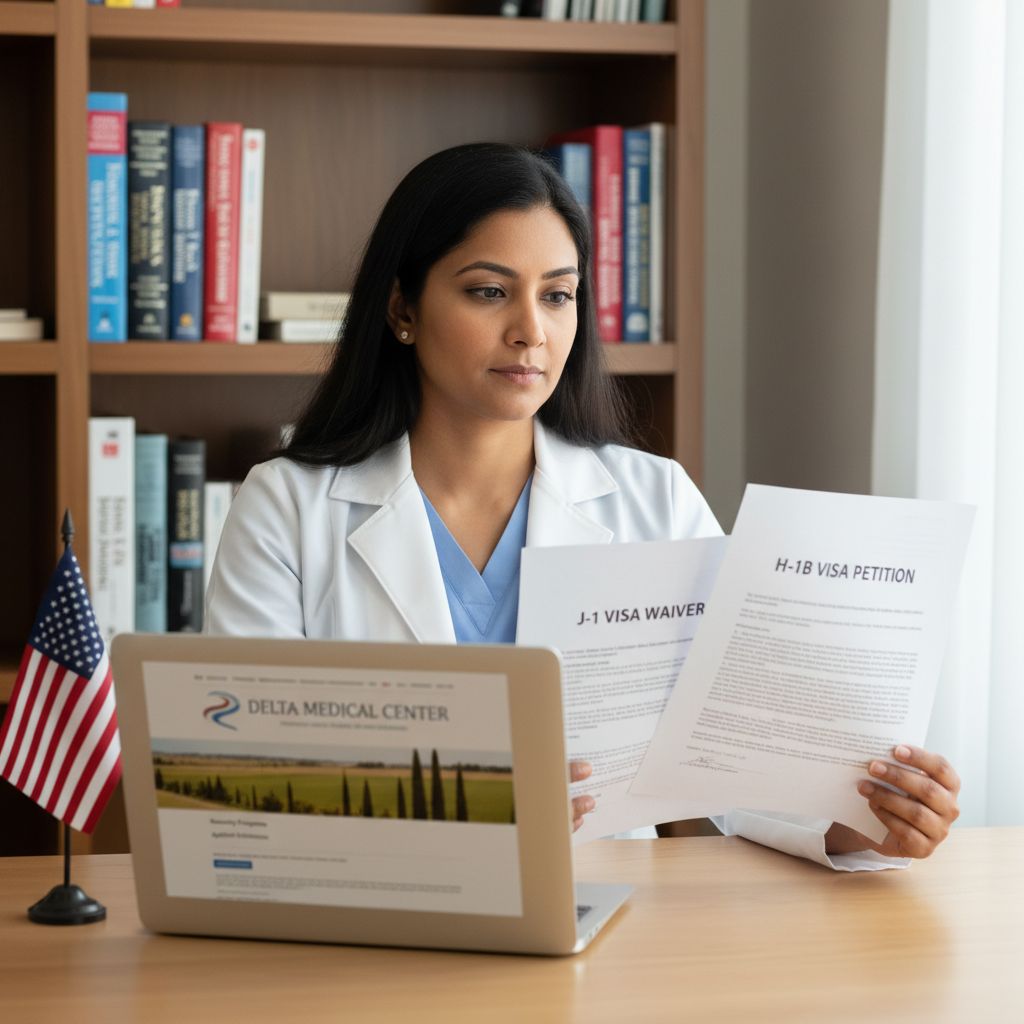
3.4 H-1B vs J-1 in the Mississippi Delta: Strategic Comparison
For a foreign national medical graduate targeting this region:
- If your top priority is maximizing your options after residency (including non-underserved, non-Delta settings), H-1B is generally more flexible.
- If your realistic program options (due to scores, attempts, or graduation year) are mainly community programs that only sponsor J-1, it is often better to accept J-1 and plan for a Conrad 30 or DRA waiver instead of chasing scarce H-1B programs.
- If you already know you want to practice in the Mississippi Delta long-term, J-1 + waiver can be a very natural path, and many employers are prepared to help you navigate it.
4. Application Strategy: Aligning Your Profile with Visa Policies
Understanding IMG visa options is only useful if your application strategy matches the reality of Mississippi Delta programs. Here’s how to build a structured approach.
4.1 Researching Programs’ Visa Policies
When considering a deep south residency or one specifically located in the Mississippi Delta, always:
Check the program website for a “For IMGs” or “Eligibility” section:
- Look for phrases like:
- “We sponsor J-1 visas only”
- “We sponsor J-1 and H-1B visas”
- “We do NOT sponsor visas”
- Some may say “We consider visa sponsorship on a case-by-case basis”—this usually means J-1 is more likely than H-1B.
- Look for phrases like:
Email the program coordinator with a precise question if unclear:
- Example:
- “I am a non-US citizen IMG planning to apply this season. Could you please confirm whether your program sponsors J-1 visas, H-1B visas, or both for incoming residents?”
- Example:
Look at current residents’ backgrounds:
- If most IMGs list “ECFMG J-1” or are clearly recent graduates from abroad, that’s a strong sign of J-1 comfort.
- If you see many IMGs in academic departments with “Assistant Professor” roles after training, those institutions might be more H-1B/green-card savvy.
4.2 Tailoring Your Applications by Visa Preference
Scenario A: You strongly prefer H-1B (to avoid the J-1 home requirement).
In that case:
- Prioritize:
- University-affiliated internal medicine, family medicine, psychiatry, and neurology programs in or adjacent to the Delta (e.g., Jackson, Memphis, Little Rock, Baton Rouge) that explicitly mention H-1B.
- Actions:
- Pass USMLE Step 3 before or very early in application season.
- Mention in your personal statement or communications that you are prepared with Step 3 and interested in H-1B sponsorship where available.
Scenario B: You are open to J-1 and plan a long-term Delta career.
- Apply broadly to:
- Community and university-affiliated programs across Mississippi, eastern Arkansas, northern Louisiana, and western Tennessee.
- Emphasize:
- Interest in underserved medicine
- Long-term commitment to rural or semi-rural practice
- Connection to similar communities in your home country
This reassures programs that the J-1 + waiver pathway aligns with your personal goals.
4.3 Strengthening Your Profile as a Non-US Citizen IMG
Programs that sponsor visas—especially in high-need areas—often receive many IMG applications. To stand out:
- USMLE performance:
- Aim for competitive Step 2 CK scores and no recent exam failures.
- Clinical experience in similar settings:
- US clinical experience in community hospitals, FQHCs, or rural clinics mirrors what you will see in the Mississippi Delta.
- Service-oriented profile:
- Volunteering with underserved populations, rural rotations, or primary care clinics
- A clear story:
- Why the Deep South? Why underserved communities?
- Do you speak languages commonly found in the Delta (e.g., Spanish) that can help local communities?
5. Post-Residency Planning: Staying in the Mississippi Delta
Visa navigation does not end when you match. It continues through residency and into your first attending job—especially if you plan to practice in the Delta.
5.1 If You Trained on a J-1: Planning Your Waiver Early
As early as PGY-2:
- Start exploring:
- Conrad 30 programs in Mississippi, Arkansas, and Louisiana
- DRA J-1 waiver options
- Build relationships:
- Attend local and regional conferences where rural and Delta hospitals recruit.
- Network with alumni from your residency who took J-1 waiver jobs in the area.
Typical timeline:
- PGY-2: Learn about waiver types, attend info sessions, talk with immigration counsel (if you can).
- Early PGY-3: Start serious job search focused on J-1 waiver-eligible positions.
- Mid-to-late PGY-3: Sign a contract with a Delta-area employer; they file your waiver application (Conrad 30 and/or DRA) and later your H-1B once the waiver is approved.
5.2 If You Trained on H-1B: Transitioning to Attending Roles
If you completed residency on an H-1B:
- You have no J-1 home requirement, but you remain on a temporary visa.
- Options include:
- Continuation on H-1B with a new employer (easier if they are also cap-exempt; more complex if for-profit and cap-subject)
- Starting an employment-based green card process (EB-2/EB-3), often easier in underserved areas with strong need
- For Delta employers:
- Many are open to H-1B and green card sponsorship, especially in primary care, psychiatry, and general surgery.
- They may appreciate a candidate with local training and community familiarity.
5.3 How Mississippi Delta Employers View Visa Candidates
Because the region struggles with physician retention, many employers:
- Have established relationships with immigration attorneys
- Understand Conrad 30, DRA, and other waiver programs
- Are eager to support physicians who show:
- Long-term interest (5+ year horizon)
- Commitment to serve a diverse, often low-income and rural population
- Cultural humility and adaptability
Your job search messaging should highlight both your visa awareness and your mission alignment with underserved healthcare.
6. Practical Tips, Red Flags, and Professional Support
6.1 Practical Tips for Visa Navigation
Track all timelines meticulously:
- ECFMG deadlines
- Match schedules
- State license and training permit deadlines
- J-1 waiver or H-1B filing windows
Keep copies of all key documents:
- ECFMG certificate, USMLE scores, degree, translations
- Residency contracts
- Visa approval notices (DS-2019, I-797, etc.)
Communicate early and clearly with programs:
- If you have special situations (previous US visas, prior overstays, status changes), disclose them confidentially to programs and consult an immigration attorney.
Use credible resources:
- ECFMG visa information pages
- Official hospital/medical school GME office websites
- State health department Conrad 30 pages in Mississippi, Arkansas, and Louisiana
- Delta Regional Authority physician recruitment/waiver information
6.2 Red Flags to Watch For
- Programs that say:
- “We have never sponsored a visa, but we are open to trying.”
- This can be risky unless clearly backed by a strong university legal office.
- Employers or recruiters promising:
- “Guaranteed green card in one year” without details
- “We’ll figure out your J-1 waiver later” while lacking experience in waivers
- Outdated or conflicting information on websites vs. coordinator emails:
- Always verify the most recent policy in writing.
6.3 When to Seek Legal Help
While many steps are handleable with program and ECFMG guidance, you should strongly consider an immigration attorney if:
- You previously spent time in the US on another visa (F-1, J-1, B-1/B-2, etc.) with complications
- You are considering non-standard J-1 waivers (e.g., hardship, persecution)
- You are planning long-term permanent residence and want to optimize timing around H-1B, green card, and family immigration
An attorney familiar with physician immigration and Delta/underserved area practice can help connect the dots between visa law and regional workforce programs.
FAQs: Visa Navigation for Non-US Citizen IMGs in the Mississippi Delta
1. As a non-US citizen IMG, which visa is more common for residency in the Mississippi Delta—J-1 or H-1B?
In most of the Mississippi Delta and broader Deep South, J-1 visas are more common for residency, especially in community-based and smaller academic programs. Some larger or university-based programs in nearby urban centers may sponsor H-1B, but these opportunities are fewer. Many Delta-focused institutions are very comfortable with J-1 and J-1 waiver pathways.
2. If I accept a J-1 for residency, can I still stay and work in the Mississippi Delta long-term?
Yes. Many physicians complete residency on a J-1 and then use Conrad 30 and Delta Regional Authority (DRA) waivers to stay in the area. You must work for three years in an approved underserved position, after which you can typically transition to an H-1B or permanent residence. In fact, this is a very common route for primary care and psychiatry in the region.
3. Do I need USMLE Step 3 if I plan to pursue only a J-1 visa for residency?
No. Step 3 is not required for the J-1 visa. However, you will eventually need Step 3 for:
- Independent medical licensure
- H-1B sponsorship in future jobs (if you use a J-1 waiver to move to H-1B)
It is often wise to plan Step 3 during or soon after residency, even if it’s not mandatory for J-1 entry.
4. How early should I think about visa strategy if I want a deep south residency in the Mississippi Delta?
Start before you apply. Decide whether you are open to J-1, aiming for H-1B, or flexible. Then:
- Research and rank programs based on their visa policies
- Take USMLE Step 3 early if you want realistic H-1B options
During residency (by PGY-2), you should begin planning for J-1 waiver or long-term H-1B/green card strategy, especially if you want to remain in the Mississippi Delta after training.
By understanding your IMG visa options, especially J-1 vs H-1B, and how they intersect with Mississippi Delta residency programs and workforce needs, you can make informed decisions that support both your career and the communities you hope to serve.