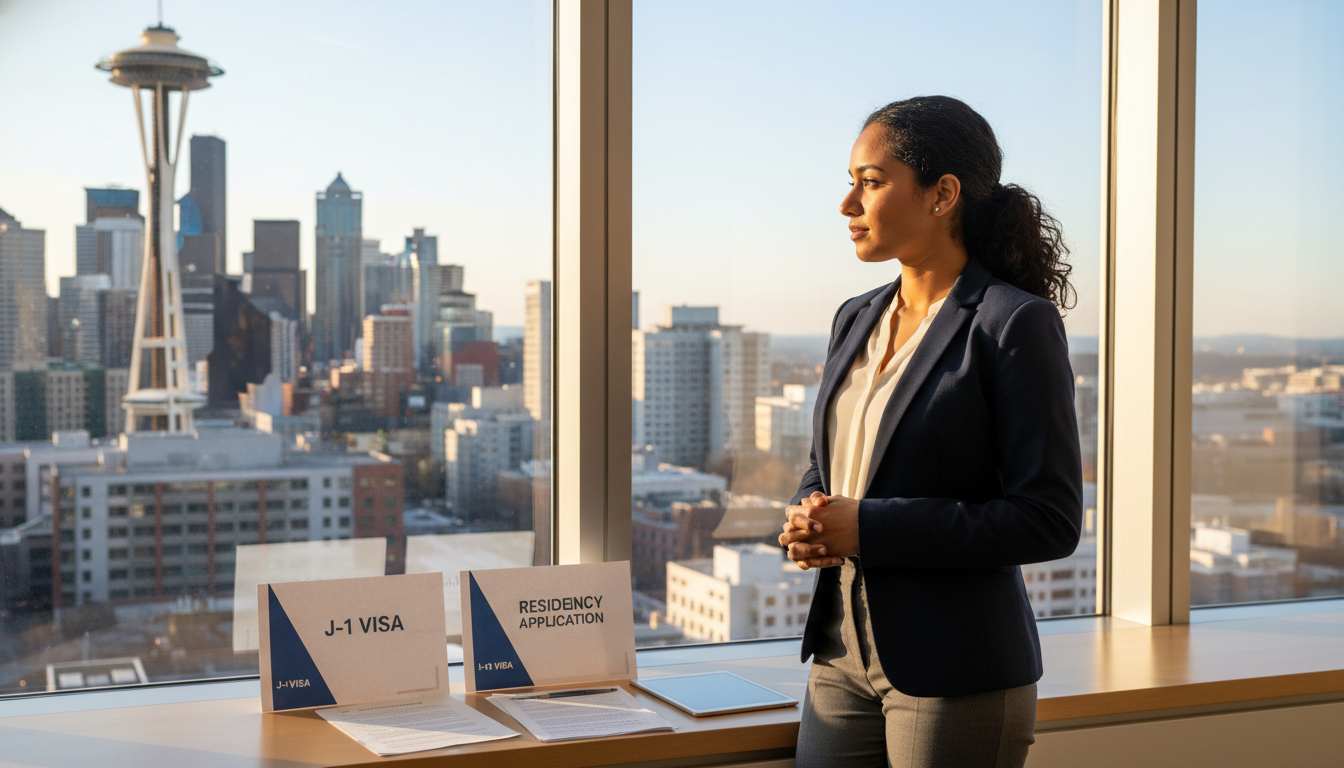
Understanding Visa Navigation for Seattle Residency Programs
Seattle is one of the most attractive training locations in the United States—home to major academic centers, strong community hospitals, and a diverse patient population. For international medical graduates (IMGs), however, matching into Seattle residency programs also means understanding a complex U.S. immigration landscape.
Visa navigation is not just a bureaucratic step; it directly affects:
- Where you can apply
- How long you can train
- Whether you can moonlight or do research
- Your family’s ability to accompany you
- Your long‑term plan to stay in the U.S.
This guide focuses on Visa Navigation for Residency specifically in and around Seattle and Washington state residency programs, with practical advice tailored to IMGs.
Overview of Common Residency Visa Types for IMGs
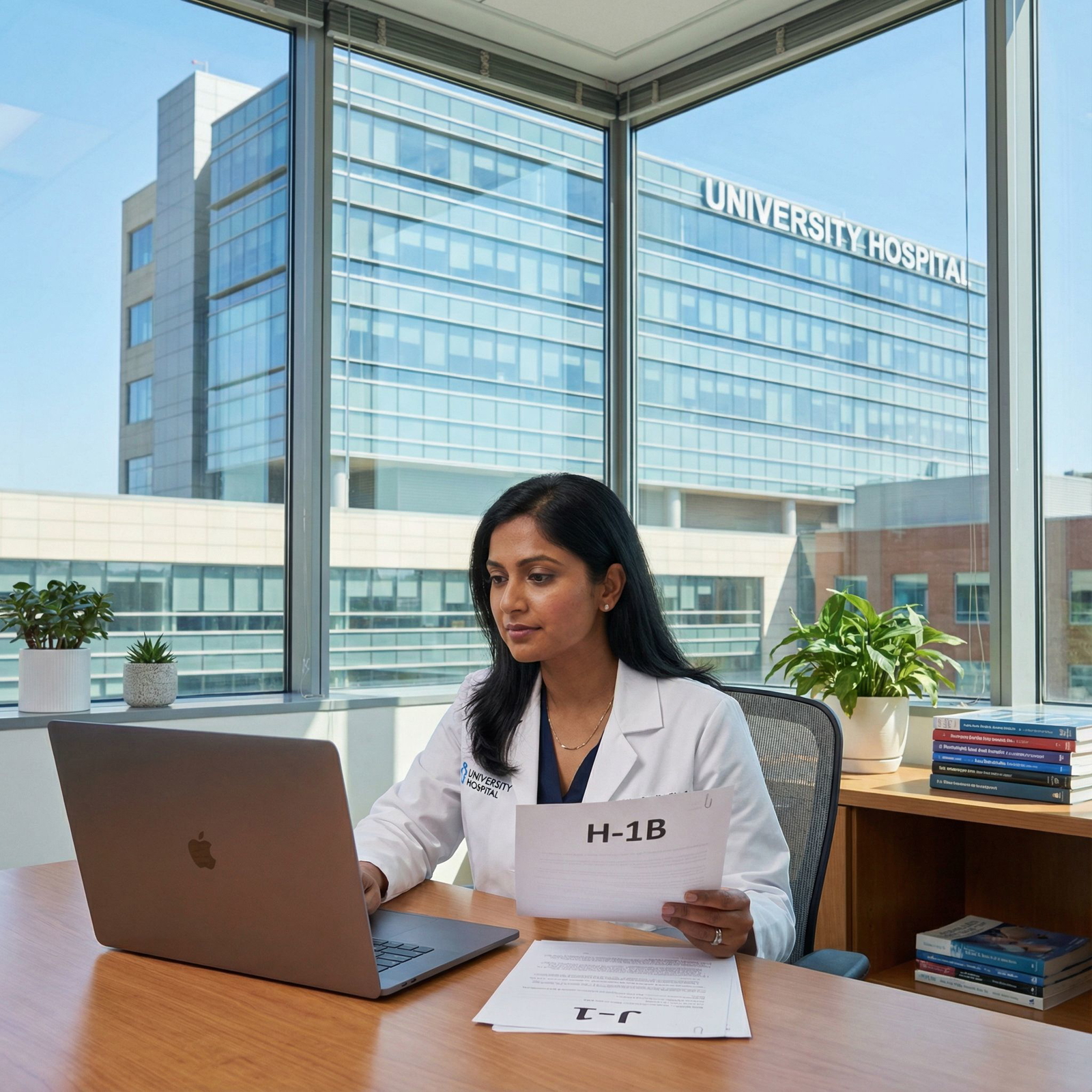
For most IMGs seeking Seattle residency programs, the core question is J‑1 vs H‑1B. Understanding both options early will help you build a smart application strategy.
1. J‑1 Physician Visa: The Default Track for Many IMGs
The J‑1 Exchange Visitor Visa for Physicians is sponsored by the Educational Commission for Foreign Medical Graduates (ECFMG), not by the individual residency program.
Key features:
- Used for: Graduate medical education (residency and fellowship)
- Sponsor: ECFMG
- Typical duration: Length of the training program (renewed annually)
- Requirement: Return-home (two‑year home residency requirement) after training, unless you obtain a waiver
Pros of the J‑1 for Seattle-bound residents:
- Widely accepted: Many Washington state residency programs—especially university-affiliated programs in Seattle—routinely accept J‑1 visa holders.
- Straightforward for programs: They don’t need to handle complex H‑1B paperwork; they rely on established ECFMG processes.
- Faster processing in many cases: Once matched, the ECFMG DS-2019 process is standardized.
Challenges / limitations:
- You must, by default, return to your home country for two years after training, or obtain a J‑1 waiver (e.g., through a service commitment in an underserved area).
- You cannot easily switch to H‑1B or permanent residence (green card) without addressing this two‑year requirement.
- Moonlighting, outside work, or research payments require close compliance with J‑1 rules.
For many IMGs, the J‑1 is the most realistic and accessible path to residency in Seattle, but you must plan ahead for the post‑residency stage, especially if your long-term goal is to stay in the U.S.
2. H‑1B Visa for Residency: More Complex, More Flexible
The H‑1B specialty occupation visa is employer-sponsored, meaning the residency program itself must file and support the petition.
Core features:
- Used for: Employment in a specialty occupation (including residency/fellowship)
- Maximum total duration: 6 years (residency years count toward this cap)
- Exam requirements: Most programs require USMLE Step 3 passed before they can file H‑1B
- Visa type: Dual‑intent (you may actively pursue a green card while on H‑1B)
Pros of H‑1B for Seattle residency:
- No two‑year home residency requirement.
- Smoother transition to jobs after residency; many employers are familiar with H‑1B.
- Easier to move into permanent residency (green card) pathways without needing a J‑1 waiver.
Challenges / limitations:
- Not all Seattle programs offer the H‑1B option; some accept J‑1 visa only.
- Requires Step 3 completed early enough (often by rank list deadline or by the time of H‑1B petition filing).
- Higher cost and administrative burden for the program—so even programs that theoretically sponsor H‑1B might restrict it to exceptional cases.
Given these issues, your strategy should include early identification of which Seattle residency programs are H‑1B-friendly and whether you can realistically complete Step 3 on time.
3. Other Visa Contexts: F‑1, O‑1, and Green Card Holders
Some applicants come from different U.S. statuses:
- F‑1 with OPT: Common among IMGs who completed a U.S. graduate degree (e.g., MPH, MS). You still generally need J‑1 or H‑1B for residency; OPT rarely covers a full training program.
- O‑1 (extraordinary ability): Rare at the residency level; more common in senior academic positions.
- Permanent residents (green card holders): Treated the same as U.S. citizens for visa purposes; your challenge is competitive matching, not visas.
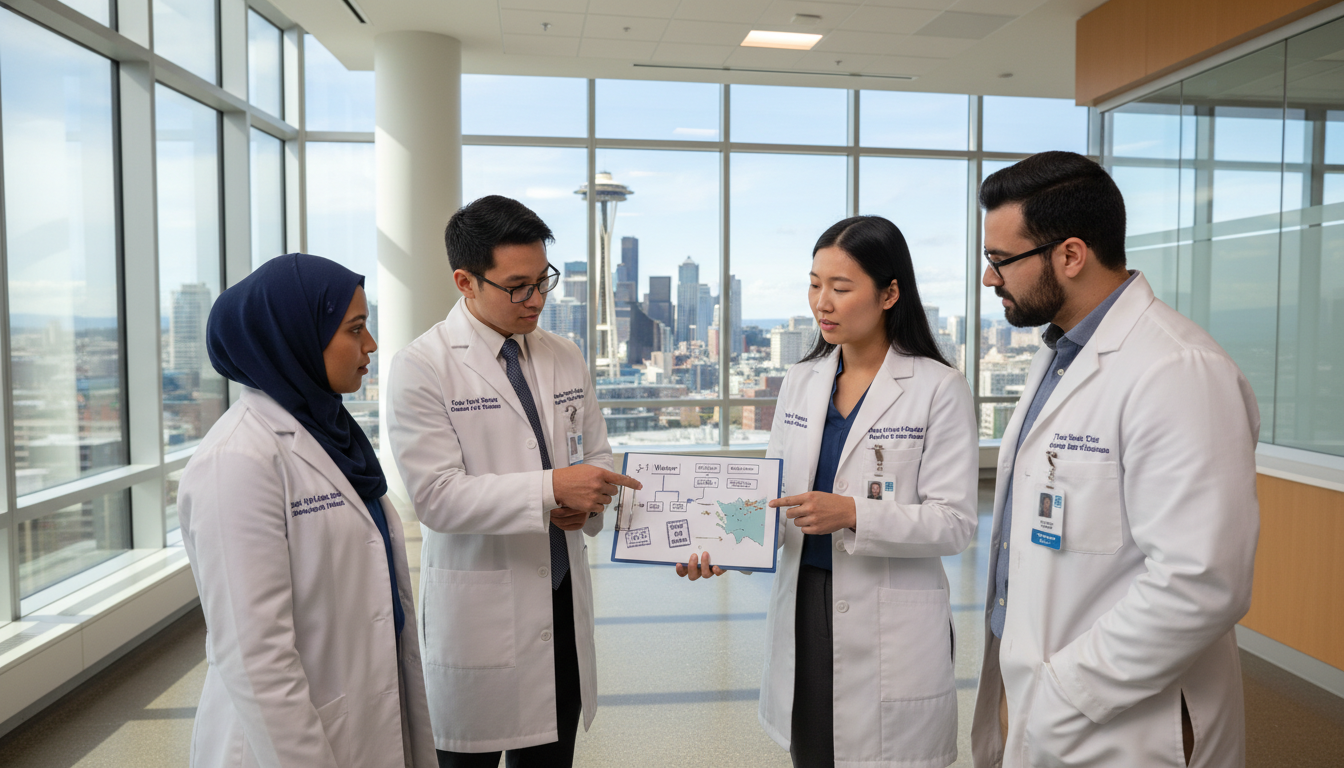
Seattle-Specific Factors in Visa Navigation
Seattle offers a variety of training environments: large academic medical centers, veterans’ hospitals, children’s hospitals, and community-based programs. Each handles Washington state residency visa options differently.
Major Training Institutions in Seattle
While policies can change, these are illustrative examples of the types of institutions you’ll encounter:
- Large academic centers (e.g., major university-affiliated hospitals)
- Children’s and specialty hospitals
- Community-based or suburban programs in the greater Seattle metro area
- VA hospitals (often affiliated with academic centers)
Each institution may:
- Accept J‑1 only
- Accept J‑1 and H‑1B
- Rarely sponsor H‑1B for residents but more for fellows
- Have one policy on paper and another in practice (e.g., “H‑1B possible” but used very sparingly)
How Seattle Programs Often View J‑1 vs H‑1B
Common patterns among Seattle residency programs:
J‑1 as the default
Seattle’s large academic programs often prioritize J‑1 because:- It’s predictable and standardized through ECFMG.
- It doesn’t use up institutional H‑1B caps or legal budgets.
- It aligns well with academic training timelines.
Selective H‑1B sponsorship
Some programs will sponsor H‑1B only if:- The applicant already passed Step 3.
- The program has experience and legal support for H‑1B filings.
- The candidate is considered “mission-critical” (e.g., outstanding match for a difficult‑to‑fill specialty).
Long‑term retention strategies
Seattle’s health systems are increasingly aware of workforce shortages, especially in primary care and underserved areas. Some institutions may:- Prefer J‑1 for residency, then recruit you later on an H‑1B or J‑1 waiver position in Washington state.
- Collaborate with state or local J‑1 waiver programs (e.g., Conrad 30) to retain talent.
Washington State and Regional Considerations
For IMGs targeting Washington state residency and future practice:
Conrad 30 Waiver Program (Washington State)
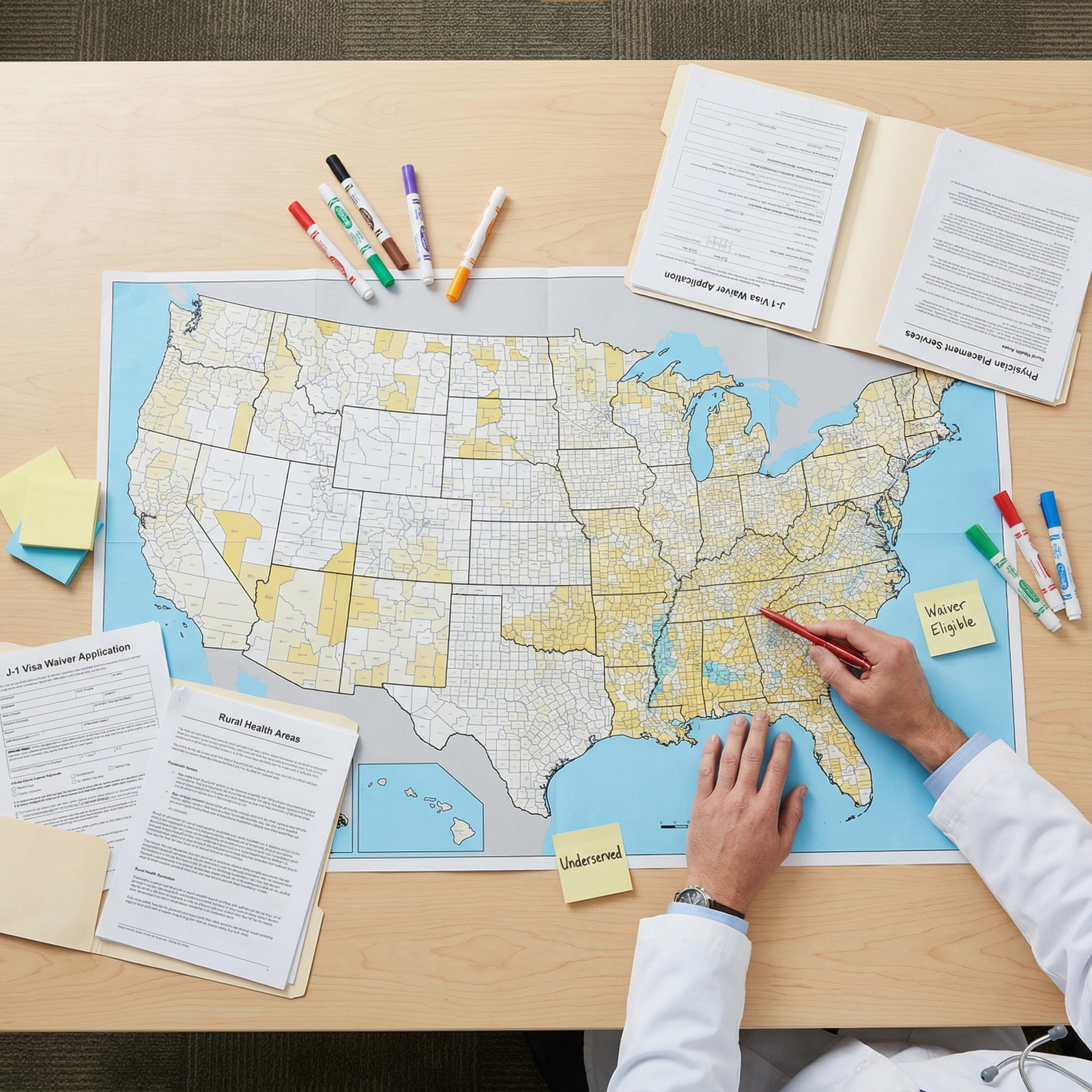
After completing a J‑1 residency/fellowship, you may be able to stay in the U.S. by working in an underserved area in Washington under the Conrad 30 waiver, relocating your J‑1 home-residence requirement into a service commitment (typically 3 years full-time).Strong demand in rural / underserved areas
Many J‑1 waiver jobs are in smaller towns or rural communities in Washington, not in downtown Seattle. Be prepared for:- Training in Seattle
- Post-training work in a more rural or semi-urban setting for your waiver period
This residency visa planning should be done as early as PGY‑1, not during your last month of training.
Step-by-Step Visa Strategy for Applying to Seattle Residency Programs
To navigate Seattle residency programs strategically, you need a structured approach from pre‑application to post‑match.
Step 1: Clarify Your Long-Term Goals
Before thinking about forms and deadlines, answer:
- Do you hope to remain in the U.S. long term after residency?
- Are you open to working in a rural or underserved area for a J‑1 waiver?
- How certain are you about your specialty choice?
- Will you need flexibility for family members (spouse, children), including potential work authorization for a spouse?
If your long‑term goal is permanent U.S. practice and you are not very open to rural service:
- An H‑1B track may align better, if realistically achievable.
- You must be proactive about Step 3, targeted program selection, and timeline.
If you are open to J‑1 waiver service in Washington or elsewhere:
- A J‑1 visa through ECFMG is often the most realistic, especially for first-time applicants to Seattle.
Step 2: Research Program-Specific Visa Policies
Never assume that all Seattle programs treat visa sponsorship the same way. Instead:
Use official program websites and FREIDA
- Check the “Visa” or “International Medical Graduate” sections.
- Look for explicit statements like:
- “Sponsoring J‑1 visa only.”
- “Will consider H‑1B for exceptional candidates with USMLE Step 3.”
- “Do not sponsor visas.”
Email programs early (before ERAS submission if possible)
When policies are unclear, send a concise email to the program coordinator:- Introduce yourself (IMG, graduation year, visa need)
- Ask specifically:
- “Do you sponsor J‑1 visas for residency?”
- “Do you consider H‑1B sponsorship for residents who have passed USMLE Step 3?”
Track responses
Create a spreadsheet with columns:- Program name
- Visa types accepted (J‑1, H‑1B, both, none)
- Requirements for H‑1B consideration (Step 3, prior U.S. training, etc.)
- Notes about past IMGs matched
This step is crucial for targeted application to Seattle residency programs that truly match your visa profile.
Step 3: Align Exam and Timeline with Visa Needs
For J‑1 applicants:
- USMLE Step 3 is not required to obtain a J‑1 for residency.
- You must, however, be ECFMG certified by the time the residency starts.
- Focus on strong Step 1/2 CK scores, clinical exposure, and letters.
For H‑1B-focused applicants:
Plan to take USMLE Step 3 early enough:
- Many programs want Step 3 results before rank list deadline or at least before H‑1B filing.
- Step 3 seats can fill up fast—especially in states near major academic centers—so schedule early.
Consider taking Step 3:
- During a research year or observership period in the U.S.
- While on another status (e.g., F‑1, B‑1/B‑2 converted to appropriate status—consult an immigration lawyer for legality and risk).
Without Step 3, your IMG visa options often narrow to J‑1 only for residency.
Step 4: Prepare for Interviews with Visa Talking Points
During interviews with Seattle programs, visa issues may come up indirectly (or explicitly in later communications).
Prepare to:
- Express clarity: “I am eligible for ECFMG-sponsored J‑1. Long-term, I’m interested in practicing in the U.S. and I am aware of J‑1 waiver options, including service in underserved communities in Washington state.”
- If aiming for H‑1B:
- Demonstrate that Step 3 is done or scheduled with realistic completion dates.
- Communicate respectfully: “I understand H‑1B is more complex for programs; I’d be grateful to be considered if it aligns with your policies and institutional capabilities.”
Avoid sounding demanding or inflexible about visa sponsorship. Instead, be informed, realistic, and appreciative of the program’s policies.
Step 5: Post-Match Visa Logistics
Once you match into a Seattle residency:
For J‑1 visa:
- Program issues a contract and confirms you as an IMG requiring ECFMG J‑1 sponsorship.
- You complete forms via ECFMG’s OASIS system (e.g., Form DS-2019 application).
- After ECFMG approves and issues your DS-2019:
- Schedule a visa interview at a U.S. consulate.
- Prepare documents: contract, DS-2019, SEVIS fee receipt, financial support, etc.
For H‑1B visa:
- Program contacts their legal office/immigration attorney.
- They may request:
- Copy of your Step 3 results
- Medical degree, ECFMG certificate
- Detailed CV and licenses/eligibility
- The institution files the H‑1B petition (Form I‑129).
- After approval (I‑797), you go for your visa interview (if outside the U.S.) or change of status (if inside, depending on your situation).
Always keep multiple copies (digital and physical) of all immigration documents. Seattle institutions are generally organized, but mistakes and delays can still happen.

Long-Term Planning: From Seattle Residency to U.S. Practice
Visa navigation doesn’t end when you start residency. In fact, your PGY‑1 and PGY‑2 years are critical for shaping your long-term immigration outcomes.
For J‑1 Residents in Seattle
If you match into a Seattle residency on a J‑1:
Understand the two‑year home residency requirement
You must, in principle:- Return to your country of last residence or nationality for two years after your training, or
- Obtain a waiver of that requirement.
Explore waiver options early (PGY‑2/3)
Common J‑1 waiver routes for physicians include:- Conrad 30 Waiver (via a state health department, including Washington)
- Federal programs (e.g., VA, HHS, Delta Regional Authority, etc.)
- Hardship or persecution waivers (rare, based on personal/family circumstances)
Consider Washington-specific opportunities
Washington state’s Conrad 30 program may prioritize:- Certain specialties (often primary care, psychiatry, etc.)
- Service in Health Professional Shortage Areas (HPSAs)
- Facilities that provide care to underserved populations
If your ultimate goal is to remain near Seattle, consider:
- Doing residency and/or fellowship in Seattle
- Then accepting a J‑1 waiver position in a community or rural area within Washington
- Possibly returning to Seattle later, post-waiver, on an H‑1B or green card status
For H‑1B Residents in Seattle
If you are on H‑1B during residency:
Monitor the 6‑year maximum
- Combine residency years, fellowship years, and any prior H‑1B time to ensure you don’t exceed the limit.
- Some physicians extend H‑1B beyond 6 years if a green card process (PERM/I‑140) is underway.
Plan fellowship/next job transitions
- Many fellowship programs in Seattle (and elsewhere) also sponsor H‑1B.
- Large hospital systems may sponsor employer-based green cards if you plan to stay long term.
Family and dual‑intent advantages
- Spouses on H‑4 may sometimes qualify for work authorization (EAD) depending on the stage of your green card process.
- You can openly discuss permanent residence with immigration counsel without jeopardizing your status.
Working with Immigration Professionals
Regardless of visa type:
- Consult an immigration attorney for personalized advice, especially when:
- Considering a J‑1 waiver strategy
- Transitioning from J‑1 to H‑1B or green card
- Handling complex situations (gaps in status, dependents, prior U.S. stays)
Many large Seattle institutions have in‑house immigration counsel or contracted law firms. Use them. They know the patterns specific to Seattle residency programs and Washington employers.
Practical Tips for IMGs Targeting Seattle Residency Programs
Here are concrete, actionable strategies as you navigate IMG visa options in the Seattle context:
Segment your program list by visa policy
- Group 1: J‑1 only
- Group 2: J‑1 + H‑1B (with clear Step 3 requirement)
- Group 3: No visa sponsorship
Allocate applications with your competitiveness and visa flexibility in mind.
Prioritize early Step 3 if aiming for H‑1B
- Register and secure a exam date well in advance.
- Use a structured study plan during a research year or between Step 2 CK and graduation.
Use your personal statement to show realistic planning
- Briefly acknowledge that, as an IMG, you are prepared to fulfill visa-related obligations, including J‑1 waiver or service in underserved communities, if applicable.
- Demonstrate awareness, not anxiety.
Network with current residents in Seattle
- Ask them (respectfully) about:
- Which visas are common in the program.
- Whether international residents have successfully transitioned to H‑1B or obtained J‑1 waivers afterward.
- LinkedIn, alumni networks, and virtual open houses are excellent opportunities.
- Ask them (respectfully) about:
Budget time and money for visa logistics
- Visa fees, travel to consulates, document shipping, and potential delays are real.
- Have a plan for contingency (e.g., backup visa interview locations, earlier application submissions).
Always keep documentation organized
- Passports (current and previous)
- Diplomas, transcripts, ECFMG certificate
- USMLE score reports
- Prior visas and I‑20/DS‑2019/I‑797 forms, if applicable
This organization significantly reduces stress when residency deadlines and immigration steps overlap.
FAQs: Visa Navigation for Residency Programs in Seattle
1. Do most Seattle residency programs accept J‑1 or H‑1B visas for IMGs?
Many large Seattle academic programs routinely accept J‑1 visas sponsored by ECFMG. H‑1B sponsorship is more variable—some programs accept both J‑1 and H‑1B, particularly for highly qualified applicants who have already passed Step 3, while others are J‑1 only. Always verify each program’s policy on their website and, if needed, by emailing the program coordinator directly.
2. Is it realistic to match into a Seattle residency program on an H‑1B visa?
It is possible but more challenging than matching on J‑1. You typically must:
- Have USMLE Step 3 completed and reported early.
- Apply to programs that explicitly state they sponsor H‑1B.
- Understand that even H‑1B‑friendly programs may sponsor it only for a limited number of residents. Many IMGs match into Seattle on J‑1 first and then use J‑1 waiver or later H‑1B/green card paths to remain in the U.S.
3. How does the J‑1 two‑year home residency requirement affect my future in Seattle?
Without a waiver, you must return to your home country for two cumulative years before obtaining H‑1B or permanent residency. However, many physicians in Washington state use J‑1 waiver programs (such as Conrad 30) to satisfy this requirement by working in underserved areas for several years after training. You can still complete residency and fellowship in Seattle, then accept a waiver job in Washington or another state and later return to Seattle if you wish.
4. Should I hire an immigration lawyer if I’m matching to a Seattle residency program?
For the initial residency visa (J‑1 or H‑1B), many Seattle institutions have in‑house or contracted immigration experts who will guide you. However, it is wise to consult an independent immigration attorney when:
- You are deciding between J‑1 vs H‑1B and have complex personal circumstances.
- You are planning a J‑1 waiver, switching from J‑1 to H‑1B, or starting a green card process.
- You have prior U.S. visa issues, status violations, or gaps in stay.
An early consultation can prevent mistakes that might limit your long‑term options.
By understanding the nuances of J‑1 vs H‑1B, researching Seattle residency programs’ specific policies, and planning your timeline strategically, you can turn visa navigation from a source of anxiety into a manageable, structured part of your residency journey in Washington state.