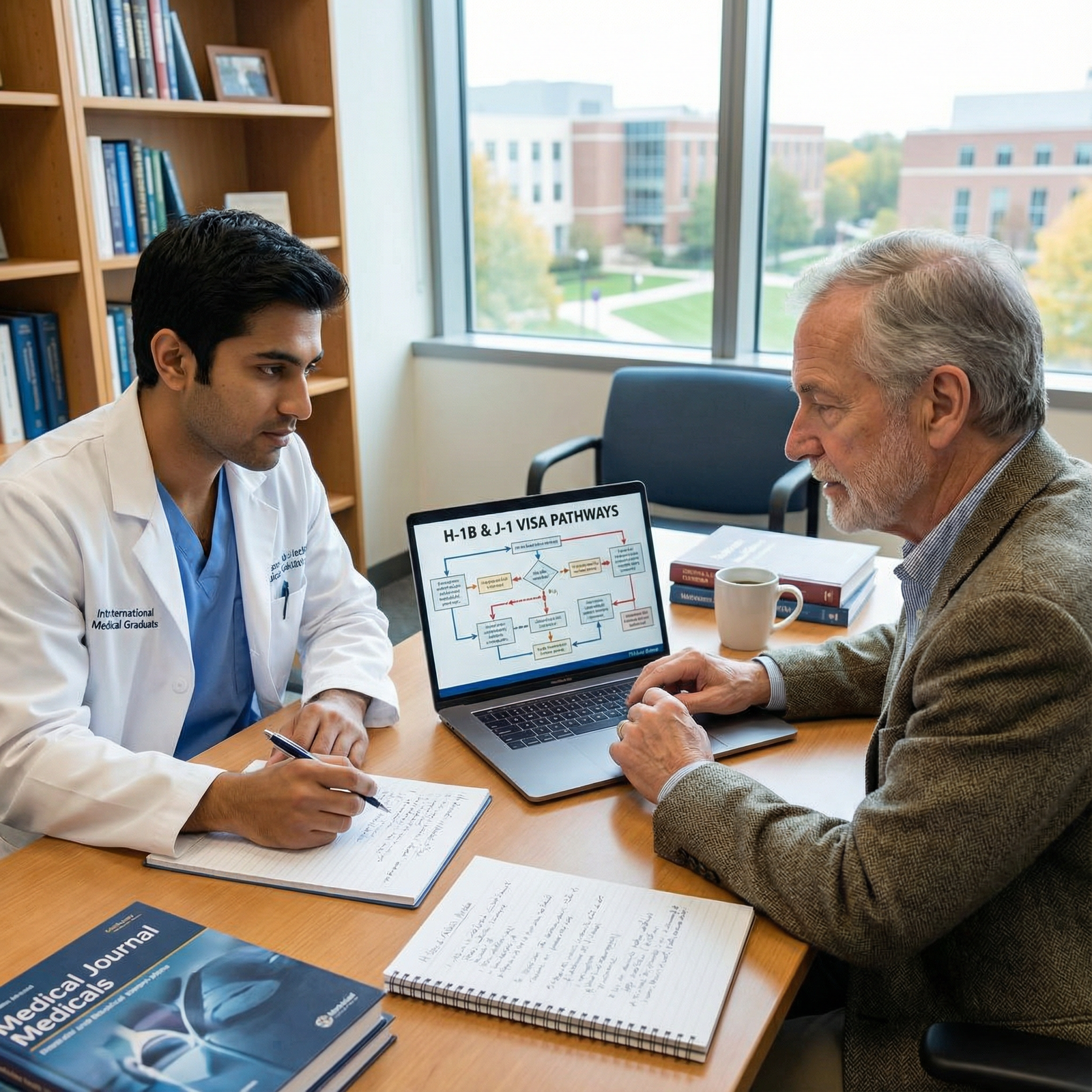
Understanding the Visa Landscape for Southern California Residencies
Southern California is one of the most competitive and diverse regions for graduate medical education in the United States. Major academic centers (UCLA, USC, UCSD, UCI, Loma Linda, Kaiser, Scripps, Cedars-Sinai) and numerous community hospitals attract large numbers of international medical graduates (IMGs) every year. For many applicants, the biggest non-academic hurdle is not the interview or ranking process—it’s visa navigation.
If you are an IMG aiming for a Southern California residency, you must approach visa planning with the same seriousness and strategy as exam preparation. Programs in this region are highly regulated, often risk-averse, and vary significantly in which visas they sponsor. Understanding J-1 vs H-1B, institutional policies, and realistic pathways will directly affect where you apply and how competitive your overall application appears.
This guide walks through:
- Core visa types for residency training
- Specific considerations for SoCal medical training institutions
- Strategic application planning for IMGs
- Practical examples and common pitfalls
- FAQs about residency visa and IMG visa options in Southern California
Core Visa Options for Residency: J‑1 vs H‑1B and Beyond
For graduate medical education (GME), the universe of meaningful visa options is relatively small. Most IMG residents in the U.S. are on either a J‑1 exchange visitor visa (ECFMG-sponsored) or an H‑1B temporary worker visa (employer-sponsored). A minority have permanent residency (green card) or other independent work authorization.
1. J‑1 Exchange Visitor Visa (ECFMG-Sponsored)
For most IMGs, the J‑1 is the default and most common pathway.
Key features
- Sponsor: ECFMG (not the residency program directly)
- Purpose: Physician in a GME training program (clinical residency/fellowship)
- Funding: Can be paid by the hospital; does not require “trainee” stipend only
- Duration: Up to 7 years total for clinical training (with certain exceptions)
- USMLE requirement: USMLE Step 1 and Step 2 CK passed (and OET for ECFMG certification, as applicable to your year of certification)
- Two-year home residency requirement (212(e)):
- Almost all J‑1 physicians are subject to returning to their home country for two years after training or obtaining a waiver before changing to H‑1B or permanent residency status.
Why programs like J‑1
Many Southern California residency programs prefer or exclusively use J‑1 visas:
- ECFMG handles much of the compliance burden
- Cap on training duration is clear
- More predictable review timelines and standardized requirements
- No need to navigate complex H‑1B prevailing wage and Department of Labor processes
Because of this, J‑1 sponsorship is broadly available throughout Southern California, including university and community programs. If you are open to J‑1, your list of potential programs is much larger.
Pros for IMGs
- Widely accepted by Southern California programs
- ECFMG has a clear, standardized process
- You can switch programs or enter fellowships under continued J‑1 sponsorship (within the 7‑year limit)
- Less pressure on Step 3 timing (not required before starting residency)
Cons and limitations
- Two-year home country physical presence requirement after training
- Need a J‑1 waiver job (often in an underserved or rural area) to stay in the U.S. afterward without going home for two years
- Limited moonlighting flexibility depending on institution rules and ECFMG approvals
- Perceived as less flexible than H‑1B for long-term U.S. career planning
For many IMGs targeting Southern California residency, starting on J‑1 and planning a future waiver job (often outside California) is still the most realistic path.
2. H‑1B Temporary Worker Visa for Physicians
The H‑1B is the main alternative for residency training, but it is far less commonly offered in Southern California than J‑1, especially at the categorical residency level.
Key features
- Sponsor: The residency program (employer)
- Purpose: Specialty occupation—resident physician qualifies due to requirement of MD/DO and ECFMG certification
- Duration: Up to 6 years total, including any prior H‑1B periods
- USMLE requirement: Must have passed USMLE Step 3 before filing
- Prevailing wage requirement: Hospital must meet wage and Department of Labor conditions
- Dual intent: Unlike J‑1, H‑1B allows dual intent (temporary worker but can pursue green card without legal conflict)
Why SoCal programs are selective about H‑1B
H‑1B sponsorship involves:
- More complex legal and HR work
- Higher compliance risk and cost
- Need to match the prevailing wage, which can be higher than standard resident salaries in some cases
- Careful timing—Petitions must be filed early enough for approval before July 1 start date
Consequently, many Southern California programs either:
- Do not sponsor H‑1B at all
- Only sponsor H‑1B for fellows or senior residents (e.g., PGY‑2+ in certain specialties)
- Limit H‑1B to highly competitive applicants with exceptional qualifications
Pros for IMGs
- No J‑1 two-year home residency requirement
- Clearer pathway to long-term U.S. practice and green card while remaining in the U.S.
- Often more flexibility with moonlighting and career transition (subject to institutional policies)
Cons and limitations
- Fewer Southern California residency programs sponsor H‑1B for PGY‑1
- USMLE Step 3 must be passed early, usually by fall before the Match (some programs want proof even earlier)
- Requires careful alignment between program start date and H‑1B filing/approval
- Not suitable if you already used several years of H‑1B time in another U.S. job
For IMGs targeting SoCal medical training on H‑1B, you must build your entire application strategy around this preference and recognize you are working with a smaller pool of programs.
3. Other Visa and Status Scenarios
While the J‑1 vs H‑1B debate dominates IMG visa options, other scenarios occasionally apply:
a. Green Card (Lawful Permanent Resident)
If you are already a U.S. permanent resident:
- You do not need a visa for residency
- Programs generally treat you similarly to U.S. citizens
- You may be more competitive because there are no sponsorship costs or complexity
b. U.S. Citizenship or Dual Citizenship
- You apply as any domestic graduate would—no visa restrictions
- Particularly advantageous in highly competitive SoCal programs
c. F‑1 Student Visa with OPT
For some U.S.-based IMGs (e.g., students from Caribbean or international schools who did clinicals while on F‑1 in the U.S.):
- You might have Optional Practical Training (OPT) available, but
- Most residency programs do not rely solely on F‑1/OPT to cover the entire residency because OPT is typically 12 months (plus limited STEM extensions that often do not fit physician roles)
- Programs will usually still need to sponsor a J‑1 or H‑1B
d. Other Rare Cases (TN, E‑2, etc.)
- Some physicians might have independent work authorization through family, prior non-medical employment, or nationality-based visas (e.g., TN for Canadians)
- These cases are rare at the residency level and require specialized legal guidance
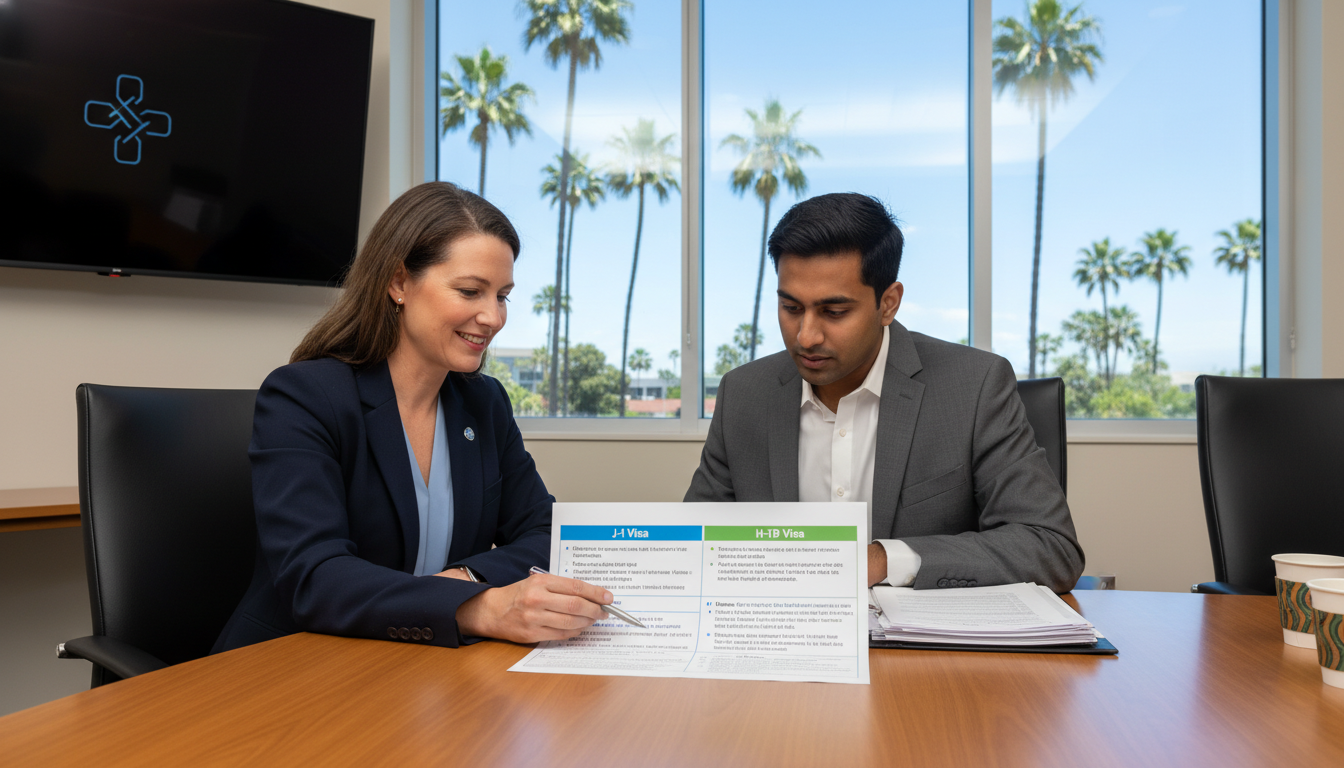
Southern California-Specific Patterns and Realities
The Southern California residency ecosystem is distinct from many other U.S. regions. Understanding local trends helps you target programs effectively.
1. Academic Centers vs Community Hospitals
In SoCal, there is a spectrum of institutions:
- Major academic centers: UCLA, UCSD, UCI, USC, Loma Linda, Kaiser, etc.
- Large private teaching hospitals: Cedars-Sinai, Scripps, Sharp, Hoag, etc.
- Community-based ACGME programs: Numerous county, city, and private facilities across LA, Orange County, San Diego, Inland Empire, and surrounding areas
Visa patterns by institution type (general tendencies, not absolute rules):
- Many large academic centers:
- Sponsor J‑1 broadly for residents and fellows
- May sponsor H‑1B selectively for highly qualified applicants, often more common in fellowships
- Community hospitals:
- Often prefer J‑1 for simplicity
- Some mid-sized systems may sponsor a small number of H‑1Bs
- County systems (e.g., LA County hospitals):
- Historically J‑1 heavy, but some also support H‑1B—policies vary by department and year
Always verify the current policy on the program’s website and by direct email; it can change between application cycles.
2. Competitiveness and Visa Constraints
Southern California is extremely attractive to both U.S. MD/DO and IMGs because of:
- Climate and lifestyle
- Diversity and patient volume
- Academic prestige and fellowship opportunities
When programs are flooded with strong domestic applicants who need no visa, some become more conservative about taking IMG residents—especially those needing H‑1B. That means:
- J‑1 sponsorship is more often available than H‑1B
- Programs that do offer H‑1B might reserve it for top-tier applicants (high scores, extensive research, prior U.S. clinical experience)
Visa status is only one piece of competitiveness, but in SoCal it can be a decisive filter.
3. Institutional and System-Level Policies
Many major SoCal training systems have GME consortia or centralized policies about visas. For instance:
- A GME office may state: “Our institution sponsors only J‑1 visas for residency and fellowship.”
- Another may specify: “We may sponsor H‑1B for candidates who have passed USMLE Step 3 and meet additional institutional criteria.”
Within such systems:
- If the GME office bans H‑1B at the institutional level, individual departments cannot make exceptions.
- If H‑1B is allowed, individual programs may still choose not to use it for financial or administrative reasons.
For SoCal medical training, assume that visa policy is primarily institution-driven, then modulated by each program.
Strategic Planning: Matching Your Profile to Visa Options
Your visa path for a Southern California residency should be planned at least 12–18 months before the Match. Here’s how to approach it step by step.
Step 1: Clarify Your Visa Goal
Ask yourself directly:
- Am I comfortable with J‑1 and accepting the two-year home requirement or waiver job afterward?
- Do I strongly prefer H‑1B because I want to minimize immigration constraints later?
- Do I have independent work authorization (green card, U.S. passport, etc.)?
For many IMGs, the true options are:
- I’ll accept J‑1 or H‑1B (whichever is offered).
- I strongly prefer H‑1B but will accept J‑1 if necessary.
- I will only consider H‑1B.
Your answer will determine your program list and exam timeline.
Step 2: Align Exam Timing (Especially Step 3 for H‑1B)
If you are aiming for H‑1B:
- Plan to take and pass Step 3 by early fall of the application cycle (often by September–October at the latest).
- Many SoCal programs that consider H‑1B will not rank you for H‑1B sponsorship unless Step 3 is passed and reported.
If you are open to J‑1:
- Step 3 is not required to start residency; you can often take it during PGY‑1 or PGY‑2.
- Still, some programs may value that you already passed Step 3, especially in competitive specialties.
Step 3: Build a Targeted Program List
Use the following sources to identify visa policies:
- Program websites (often under “Eligibility & Visa” or “International Medical Graduates”)
- FREIDA/AMA database (visa fields)
- Past residents: Check departmental resident rosters and see which backgrounds they represent
- Direct email to program coordinators (polite, concise inquiry about residency visa types they sponsor)
For H‑1B-seeking IMGs, categorize programs:
- Clearly sponsor H‑1B for residents (explicit on website or confirmed by email)
- Possibly sponsor H‑1B under exceptions (ambiguous or conditional messaging)
- J‑1 only (exclude from H‑1B-only lists)
Aim for a broad list that respects your preferences but also the reality of SoCal competition. Some IMGs aiming only for H‑1B may need to include programs outside Southern California as well to maintain a reasonable Match probability.
Step 4: Strengthen Your Application in Light of Visa Needs
Programs that sponsor visas, especially H‑1B, often expect applicants to be at or above their usual standards.
To stand out:
- USMLE/COMLEX: Target scores above the program’s average, particularly in competitive specialties (Internal Medicine, Anesthesiology, etc.)
- Clinical experience: Seek strong, long-duration U.S. clinical experiences (observerships, externships, sub-internships) with letters that speak to your system familiarity and communication skills
- Research: Particularly valuable at academic centers; can be a differentiating factor for H‑1B sponsorship
- Communication skills: Visa issues magnify any concern about language or communication—strong interview performance is critical
When programs know they must invest more administrative effort to bring you in, they want assurance that you are high-yield academically and professionally.

Practical Examples and Common Pitfalls
Example 1: IMG Comfortable with J‑1, Focused on SoCal Residency
Profile
- Graduate from a non-U.S. medical school
- USMLE Step 1 and 2 CK completed, competitive scores
- No Step 3 yet
- Goal: Internal Medicine or Family Medicine in Southern California
- Open to J‑1 and understands the home-return/waiver requirement
Strategy
- Apply broadly to SoCal community and academic programs that sponsor J‑1
- Focus energy on building strong letters from U.S. clinical experiences in California (if possible)
- Highlight cultural and language skills that add value in diverse communities
- Plan to take Step 3 during PGY‑1 to prepare for future J‑1 waiver jobs or fellowships
Outcome
- High chance of interviews at J‑1 friendly programs
- Realistic pathway to a Southern California residency, with future decision later about staying in the U.S. via J‑1 waiver or returning home temporarily.
Example 2: IMG Requiring H‑1B, Applying to SoCal and Beyond
Profile
- Strong IMG with prior U.S. research and some clinical experience
- Has significant personal or family reasons to avoid J‑1 home residency requirement
- USMLE Step 3 passed by June prior to application
- Specialty: Internal Medicine or Psychiatry
- Preference: Southern California, but open to other U.S. regions
Strategy
- Build a nationwide list of programs that explicitly sponsor H‑1B
- In Southern California, identify a handful of programs (often academic or large private systems) known historically for H‑1B
- Emphasize Step 3 completion and long-term commitment to the institution
- Prepare for the reality that SoCal H‑1B spots are limited; many interviews may come from other regions
Outcome
- May match in a region outside Southern California if SoCal H‑1B positions are saturated
- If SoCal match is achieved, it will likely be at a program accustomed to handling H‑1B complexities.
Example 3: F‑1 Graduate from a Caribbean School Targeting SoCal
Profile
- Attended an offshore Caribbean medical school
- Completed clinical rotations in the U.S. on F‑1
- May have a year of OPT available
- Interested in Family Medicine or Pediatrics in Southern California
Strategy
- Recognize that programs are unlikely to rely on F‑1/OPT alone
- Plan for either J‑1 or H‑1B; clarify on ERAS that you are eligible for ECFMG certification and willing to pursue either visa
- If strongly preferring H‑1B, pass Step 3 early and target the few SoCal programs that sponsor it
- Explicitly ask programs if they accept candidates transitioning from F‑1/OPT to J‑1 or H‑1B
Outcome
- Most likely to enter on J‑1; F‑1/OPT may simply bridge the last few months of status before residency begins, then change of status to J‑1 or H‑1B.
Common Pitfalls to Avoid
Not checking each program’s latest visa policy
- Policies change yearly; never rely solely on older forum posts or word-of-mouth.
Assuming all Southern California programs sponsor H‑1B
- In reality, many do not sponsor H‑1B at all at the residency level.
Taking Step 3 too late for H‑1B
- Passing after rank lists are due or after H‑1B filing deadlines can eliminate H‑1B eligibility for that cycle.
Underestimating the J‑1 two-year rule
- Plan ahead: If you aim to stay in the U.S. long-term, understand waiver job options early.
Vague communication in ERAS or interviews
- Be clear in your CV and interview responses that you understand visa issues and are prepared for the associated steps. This reassures programs that you will not cause avoidable delays.
Actionable Steps for IMGs Targeting Southern California
To bring all of this together into a practical roadmap:
12–24 Months Before Match
- Decide your preferred visa path: J‑1 vs H‑1B vs “either.”
- Map out exam dates, especially Step 3 if aiming for H‑1B.
- Build U.S. clinical experience—ideally including exposure to California systems.
9–12 Months Before Match
- Verify ECFMG requirements and documentation for J‑1 (if applicable).
- Research Southern California programs one by one for their visa policies.
- Reach out to program coordinators when websites are unclear; document responses.
During Application Season (ERAS)
- Clearly indicate your citizenship and visa needs in your application.
- Tailor personal statements to Southern California patient populations and system realities.
- If seeking H‑1B, explicitly mention Step 3 completion and openness to starting paperwork early.
Interview Season
- Be prepared to answer visa questions confidently:
- Whether you’re open to J‑1
- Whether you’ve passed Step 3 (for H‑1B)
- Your long-term professional intentions in the U.S.
- Ask programs directly—but respectfully—about the visas they have sponsored for recent residents.
- Be prepared to answer visa questions confidently:
Post-Match (If Matched)
- For J‑1:
- Work with ECFMG and your program promptly on DS‑2019 issuance.
- Schedule visa interview early, especially if consulates in your region are backlogged.
- For H‑1B:
- Coordinate immediately with your program’s GME and legal office.
- Provide all required documents quickly to avoid delays.
- For J‑1:
If You Do Not Match
- Reassess whether your visa constraints contributed (e.g., H‑1B only in a J‑1-dominated region).
- Consider broadening programs geographically beyond Southern California or adjusting your visa preferences for the next cycle.
FAQs: Visa Navigation for Southern California Residency Programs
1. Do most Southern California residency programs accept IMGs on visas?
Many do, particularly in primary care specialties and certain academic departments. However, visa type matters: J‑1 is widely accepted, while H‑1B is more limited. Some top-tier or oversubscribed programs may prioritize U.S. graduates and green card holders, but many still rank strong IMGs with appropriate visa sponsorship.
2. Is it realistic to get an H‑1B for residency in Southern California?
It is possible but more challenging than in some other regions. Many SoCal programs either do not sponsor H‑1B or reserve it for exceptional candidates. If H‑1B is essential for you, plan for Step 3 early, apply nationwide to H‑1B-friendly programs, and treat a Southern California H‑1B position as a competitive but attainable goal—not a guarantee.
3. If I match on a J‑1 in Southern California, can I stay in the U.S. after residency?
Yes, but usually not immediately in Southern California. To remain in the U.S. without completing the two-year home residency requirement, most J‑1 physicians must obtain a J‑1 waiver job, often in a medically underserved area. These positions are frequently outside major metropolitan areas like Los Angeles or San Diego. After several years in a waiver job (commonly 3 years), you can typically pursue permanent residency and later relocate.
4. Should I mention my visa preference (J‑1 vs H‑1B) in my personal statement or interviews?
You do not need to dedicate major personal statement space to visa specifics, but it is reasonable to:
- Clarify your current status and eligibility
- Reassure programs that you understand the visa you require and are prepared to complete all steps
In interviews, answer honestly and succinctly. For example:
- “I am open to J‑1 sponsorship and familiar with ECFMG requirements,” or
- “I have already passed Step 3 and would be grateful to be considered for H‑1B if the institution sponsors it.”
Being transparent and well-informed about your residency visa needs can actually strengthen programs’ confidence in you, especially in the structured and competitive environment of Southern California residency training.