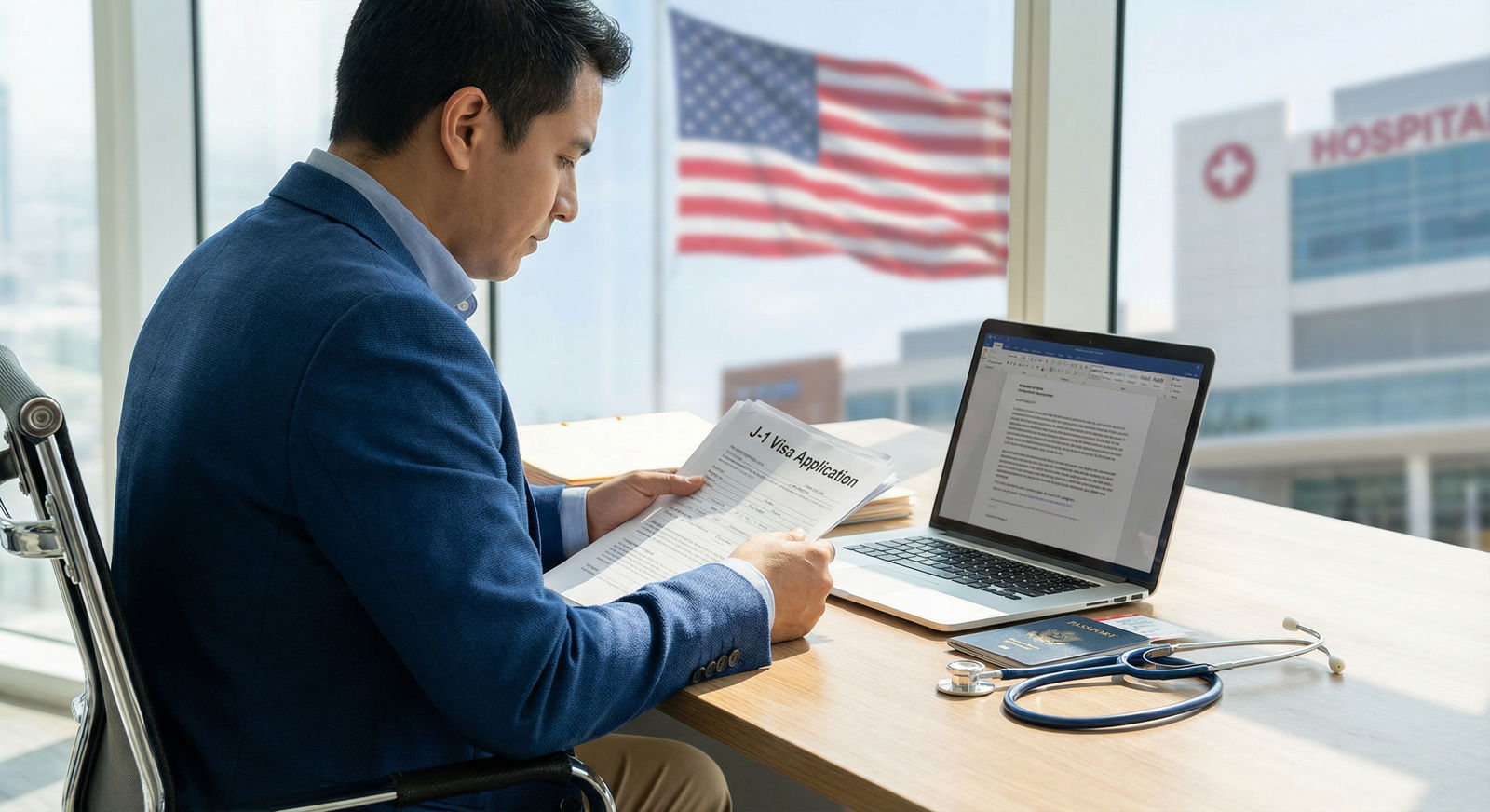
Introduction: Why the J-1 Visa Matters for IMGs
For many International Medical Graduates (IMGs), the J-1 Visa is the primary pathway to participate in U.S. residency training or a medical fellowship. It allows foreign physicians to receive graduate medical education in accredited U.S. programs while participating in the Exchange Visitor Program.
Yet, the U.S. visa application process can be confusing—especially when you’re simultaneously preparing for the Match, licensing exams, and relocation. Understanding the full process early will help you avoid delays, costly mistakes, and unnecessary stress.
This expanded step-by-step guide walks you through every major stage of applying for a J-1 Visa as an IMG—from confirming eligibility and securing a residency or fellowship position, to your visa interview and arrival in the U.S. It also highlights common pitfalls, timelines, and practical tips specific to international physicians.
Understanding the J-1 Visa for International Medical Graduates
Before jumping into forms and fees, it’s essential to understand how the J-1 Visa works for physicians and how it differs from other U.S. visa options.
What Is the J-1 Exchange Visitor Visa?
The J-1 Visa is part of the U.S. Department of State’s Exchange Visitor Program. It is designed to promote cultural and educational exchange by allowing foreign nationals to come to the United States for training, research, and education.
For IMGs, the J-1 Visa category used is typically “Alien Physician”, and the visa is sponsored by the Educational Commission for Foreign Medical Graduates (ECFMG) for graduate medical education and clinical fellowships.
Key benefits for IMGs:
- Access to ACGME-accredited residency training and subspecialty fellowship programs
- Ability to bring eligible dependents (spouse and unmarried children under 21) on J-2 status
- Exposure to U.S. healthcare systems, research, and education, which may strengthen your future career whether you stay abroad or return home
J-1 vs. H-1B for Residency Training
Many IMGs compare the J-1 Visa with the H-1B when planning U.S. training:
- J-1 Visa (IMG/Physician track)
- Sponsored by ECFMG, not directly by the hospital or program
- Includes a two-year home-country physical presence requirement for most IMGs
- Often more commonly used for residency and fellowship positions
- H-1B Visa
- Employer-sponsored work visa (hospital/program must sponsor)
- No automatic 2-year home-residency requirement
- Not all programs sponsor H-1B due to cost, complexity, and limits
Understanding these differences will help you when researching which residency or fellowship programs align with your visa needs and long-term plans.
Step 1: Verify Your Eligibility for the J-1 Visa
Before you invest time and money in the J-1 process, confirm that you meet the core eligibility criteria. ECFMG is the official sponsor for J-1 physicians in residency training and medical fellowship programs, and they maintain detailed requirements.
Core Eligibility Requirements for IMGs
Graduation from a Recognized Medical School
- Your medical school must be listed in the World Directory of Medical Schools (WDOMS) with an ECFMG-eligible note.
- Verify this early—ideally before or during your USMLE preparation—so you know your degree will be accepted.
Examination Requirements
- You must have successfully completed the required USMLE Steps or equivalent exams accepted by ECFMG (typically USMLE Step 1, Step 2 CK, and any current ECFMG certification requirements).
- Ensure all exam scores are reported and verified with ECFMG well before Match Day. Delays in ECFMG certification can delay DS-2019 issuance.
Eligibility for Graduate Medical Education
- Most IMGs pursue the J-1 Visa specifically to start residency training or a clinical fellowship in the United States.
- You must meet all NRMP (National Resident Matching Program) and ERAS requirements and be able to obtain ECFMG certification.
No Disqualifying Immigration History
- Prior U.S. visa violations, overstays, or unlawful presence can complicate or prevent J-1 approval.
- If you’ve previously been in the U.S. on J status (e.g., research), confirm whether you are subject to any existing two-year home residency obligations.
The Two-Year Home Residency Requirement (INA 212(e))
Most J-1 physicians are subject to the two-year home-country physical presence requirement, meaning:
- After completing your residency training or medical fellowship, you must return to your country of last permanent residence for at least two cumulative years before:
- Applying for an H-1B visa
- Applying for an immigrant visa (green card)
- Changing status to many other nonimmigrant categories inside the U.S.
It is possible to apply for a waiver of this requirement under certain conditions (e.g., Conrad 30 waiver, hardship, persecution), but these processes are separate, often complex, and typically considered much later in training. For now, be realistic that this requirement likely applies to you and plan accordingly.
Step 2: Secure a Residency or Fellowship Position
You cannot obtain a J-1 Visa for residency training or medical fellowship without first securing an eligible position.
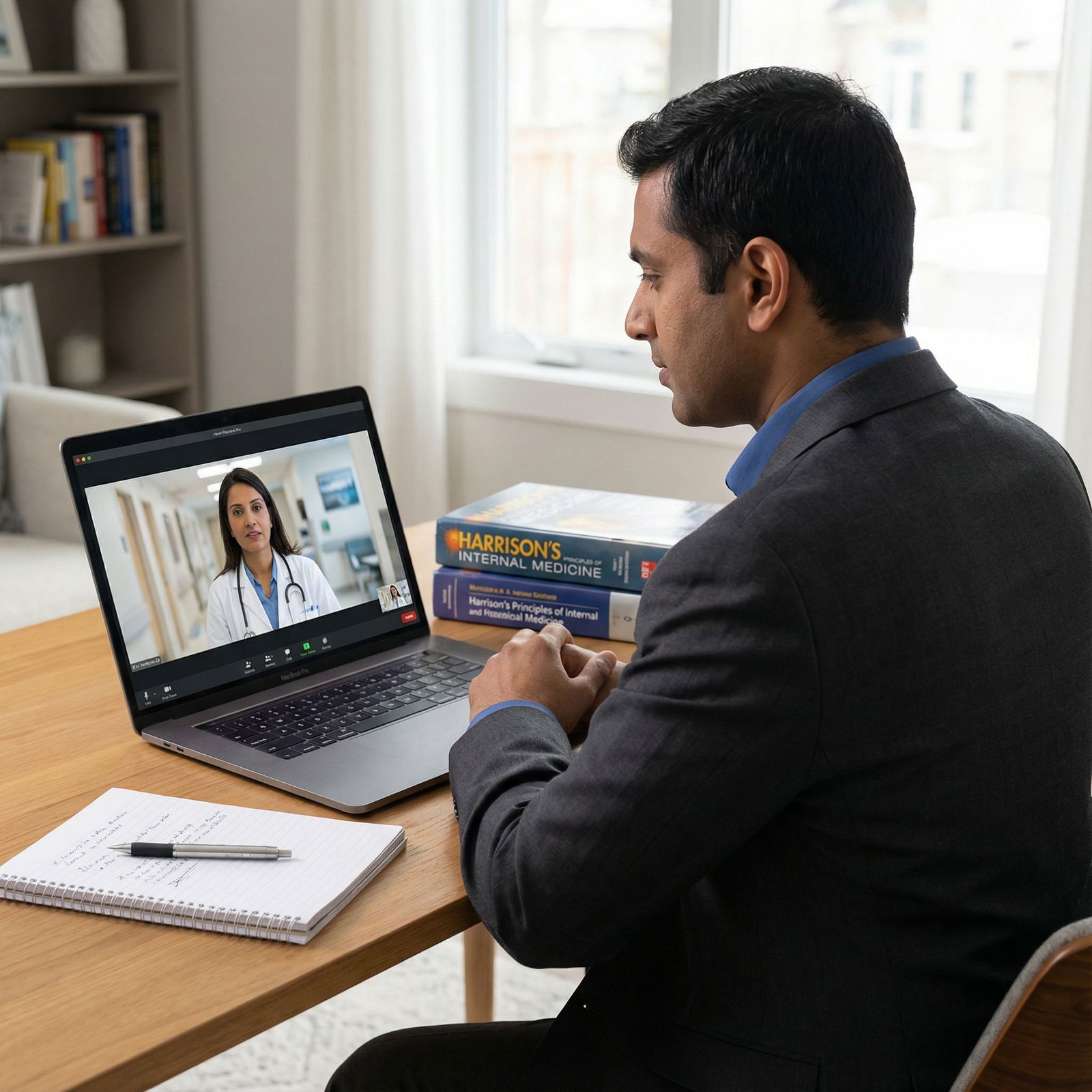
Participating in the Residency Match
For residency training, most IMGs will:
Apply through ERAS (Electronic Residency Application Service)
- Prepare a strong application with competitive USMLE scores, clinical experience, personal statement, and letters of recommendation.
- Pay attention to program visa policies listed in ERAS or on program websites—some explicitly state whether they accept J-1 Visa, H-1B, or both.
Rank Programs Strategically in the NRMP Match
- Prioritize programs that regularly sponsor J-1 Visa physicians.
- Reach out to program coordinators if information is unclear. A short, professional email asking, “Do you sponsor J-1 Visa applicants through ECFMG?” can clarify your options.
For Medical Fellowship Applicants
- Many subspecialty fellowships use ERAS Fellowship and participate in specialty-specific matches.
- As with residency, verify that the fellowship accepts J-1 Visa candidates. Some may prefer J-1 for pure training roles, while others may have institutional policies favoring or limiting H-1B.
Strengthening Your Application as a J-1-Eligible IMG
To maximize your chance of securing a position:
- Research visa-friendly programs: Look for prior match lists, program websites, and forums indicating a track record of accepting International Medical Graduates and J-1 Visa holders.
- Highlight international and cross-cultural experience: Programs value the diversity and global perspective IMGs bring, which aligns with the “exchange” principle of the J-1.
- Demonstrate intent to return and contribute globally: While not always explicitly asked during residency interviews, a clear narrative about how U.S. training fits into your long-term global or home-country contribution can support both program confidence and your eventual visa interview.
Once you match or receive an offer, the program’s GME office or coordinator will typically guide the initial ECFMG sponsorship process, leading to your DS-2019 form.
Step 3: Obtain Your DS-2019 from ECFMG
The Form DS-2019 (Certificate of Eligibility for Exchange Visitor Status) is the foundational document for your J-1 Visa. You cannot schedule your U.S. visa interview without it.
Role of ECFMG as J-1 Visa Sponsor
ECFMG serves as the official U.S. Department of State-designated sponsor for J-1 physicians in graduate medical education. Your residency or fellowship program does not issue the DS-2019 directly; instead:
- The program submits sponsorship paperwork to ECFMG confirming your training offer, program details, and start/end dates.
- You complete ECFMG’s online J-1 sponsorship application and upload required documents via their portal.
Typical Documents Required for DS-2019 Issuance
Requirements may change, so always follow the latest ECFMG instructions, but commonly needed documents include:
- Valid passport (with sufficient validity)
- Medical diploma and transcripts (with certified translations if not in English)
- Proof of ECFMG certification or completion of required exams
- Documentation of English language proficiency (often inherent in ECFMG certification, but follow current rules)
- Proof of financial support (if required), such as:
- Residency/fellowship contract or appointment letter with salary details
- Additional financial documentation if your salary is below ECFMG’s minimum funding requirements
- Completed ECFMG sponsorship forms (signed by you and your training program)
Timelines and Planning
- DS-2019 processing typically begins after Match Day and once you and your program submit all required information.
- Processing can take several weeks, especially during peak seasons (spring–early summer).
- You usually need your DS-2019 in hand before you can:
- Pay the SEVIS fee
- Complete the DS-160
- Schedule your embassy/consulate interview
To avoid delays, respond promptly to any ECFMG or program coordinator requests and monitor your email carefully.
Step 4: Pay the SEVIS I-901 Fee
The SEVIS (Student and Exchange Visitor Information System) fee is mandatory for all J-1 Visa applicants and must be paid before your visa interview.
How to Pay the SEVIS Fee
- Go to the official FMJfee or SEVIS I-901 payment website (linked from the U.S. Department of Homeland Security).
- Enter your SEVIS ID number (found on your DS-2019 form).
- Complete Form I-901 with your personal and program details.
- Pay the fee (commonly around $220 for J-1 exchange visitors, but always confirm the current amount) using:
- Credit or debit card
- Western Union Quick Pay (in some countries)
- Other approved payment methods listed on the site
Keep Proof of Payment
- Print or save the payment confirmation receipt.
- This receipt is required at your embassy/consulate interview and may occasionally be requested upon entry to the U.S.
Step 5: Complete the DS-160 Online Nonimmigrant Visa Application
The Form DS-160 is required for almost all nonimmigrant visa categories, including the J-1 Visa.
Steps to Complete the DS-160
- Visit the Consular Electronic Application Center (CEAC) website.
- Select the appropriate U.S. embassy or consulate where you will apply.
- Start a new DS-160 and save your application ID in a secure place.
Information You Will Need
- Personal details (name, address, nationality, marital status)
- Passport information
- Travel plans and intended date of arrival (you can estimate if not finalized)
- U.S. contact details (your residency program or hospital)
- Previous U.S. travel and visa history (be accurate and consistent)
- Security and background questions
- Photo upload that meets U.S. visa photograph specifications
Tips for Filling Out the DS-160
- Be consistent with all prior forms and documents (ERAS, DS-2019, passport, ECFMG records).
- Answer all questions truthfully—misrepresentation can lead to visa denial or permanent ineligibility.
- Save your application regularly to avoid losing data if the session times out.
- Once complete, submit and print the DS-160 confirmation page with the barcode; you will need this for your interview.
Step 6: Schedule Your U.S. Visa Interview
Once you have your DS-2019, paid the SEVIS fee, and completed the DS-160, you can schedule your J-1 Visa interview.
Booking the Appointment
- Go to the website of the U.S. embassy or consulate in your country or region.
- Create a visa application profile (if required).
- Pay the nonimmigrant visa application fee (MRV fee) as instructed.
- Use your DS-160 confirmation number to book an appointment.
Check estimated wait times as early as possible. In some countries, especially during busy seasons, appointment availability can be several weeks away. If your start date is approaching and appointment slots are limited, follow the local consulate’s instructions for requesting expedited appointments for medical trainees (if allowed).
Documents to Prepare for Your Interview
Commonly required documents include:
- Valid passport (typically valid at least six months beyond your intended stay)
- DS-2019 form (original, signed)
- DS-160 confirmation page (with barcode)
- SEVIS I-901 fee payment receipt
- Visa application fee payment receipt
- Recent passport-size photographs meeting U.S. standards (even if uploaded, some posts require printed photos)
- Residency offer letter or contract stating salary, start and end dates
- Evidence of financial support if not fully covered by salary
- Documentation related to your ties to your home country (e.g., family, property, job offers, future plans) that demonstrate your intent to comply with the J-1 program and home residency requirement
- Any additional documents specified by your local consulate’s requirements
Organize these documents neatly in a folder; being well-prepared can positively influence how your interview proceeds.
Step 7: Attend Your J-1 Visa Interview
The visa interview is where a consular officer will decide whether to issue your J-1 Visa. Their focus is on verifying eligibility, security, and your genuine intent to participate in an exchange program and return home afterward.
How to Present Yourself
- Dress professionally, similar to a residency interview (business or business-casual).
- Arrive early, allowing time for security screening and check-in.
- Keep your responses concise, honest, and clear.
Common Interview Topics
Expect questions such as:
- What is your specialty and where will you train?
- Why did you choose this hospital or program?
- What are your plans after completing residency training or medical fellowship?
- How will you support yourself financially during your stay?
- Do you have family in the U.S.? Where are they?
- How does this training fit with your career plans in your home country?
The consular officer is assessing:
- Whether you are a credible training candidate
- Whether your documentation is consistent and complete
- Whether you intend to comply with J-1 regulations, including the two-year home residency requirement if applicable
Remain calm and answer politely, even if questions feel repetitive or basic.
Step 8: Await the Visa Decision and Passport Return
After your interview, several outcomes are possible:
Approval
- If your visa is approved, your passport is usually kept by the consulate for visa stamping.
- Processing times vary—anywhere from a few days to a few weeks.
- Once processed, your passport with the J-1 Visa foil will be:
- Returned by courier, or
- Available for pick-up, depending on local procedures
Administrative Processing
In some cases, your case may be placed in “Administrative Processing” (221(g)), involving additional security checks or documentation review. While often resolved, it can introduce delays:
- Check the consulate’s website or tracking system for updates.
- Respond immediately to any requests for additional documents.
Denial
If denied, the officer will normally cite a reason (e.g., 214(b) failure to show sufficient ties, or specific ineligibilities). In such cases:
- Clarify exactly why the visa was refused.
- Consult with an immigration attorney experienced in physician visas if you plan to reapply.
- Coordinate with your program about possible start date adjustments or backup plans.
Step 9: Prepare for Your Arrival and Start of Training in the U.S.
Once you have your visa and passport back, you can finalize your travel plans and prepare for relocation.
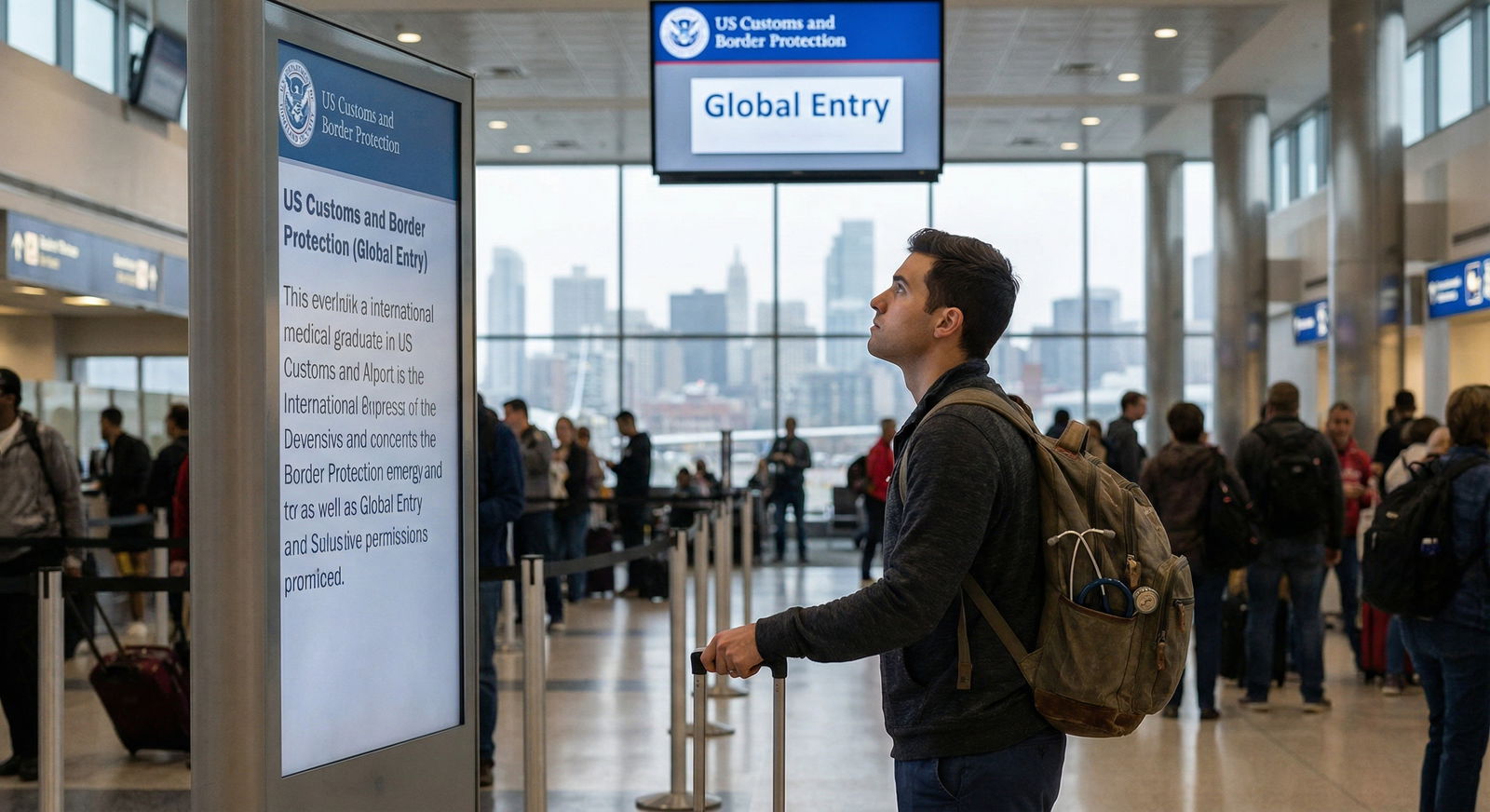
Travel and Entry to the U.S.
- J-1 exchange visitors are typically allowed to enter the U.S. up to 30 days before the start date listed on the DS-2019.
- At the U.S. port of entry, be ready to present:
- Passport with J-1 Visa
- DS-2019 form
- Residency/fellowship offer letter (optional but helpful)
- Confirm that your entry is properly recorded as J-1 in the electronic I-94 system.
Initial Logistics
Once in the U.S.:
- Arrange housing (temporary or long-term) near your hospital or training site.
- Attend your program’s orientation and complete all onboarding requirements (hospital credentialing, occupational health screening, background checks).
- Apply for a Social Security Number (SSN) if eligible, typically after arrival and once your J-1 status is active.
Maintaining J-1 Status During Training
To stay in good standing throughout residency or fellowship:
- Maintain full-time participation in your approved training program.
- Inform your program and ECFMG of any major changes (e.g., leave of absence, change in training site, extensions).
- Renew DS-2019 annually for each additional year of training, as coordinated by your GME office and ECFMG.
- Keep your passport valid and retain copies of all prior DS-2019 forms.
Understanding and complying with these responsibilities is as important as getting the visa itself.
FAQs: J-1 Visa for International Medical Graduates
Q1: How long is the J-1 Visa valid for residency training or fellowship?
The J-1 Visa for physicians is generally valid for the duration of your approved training, as reflected on your DS-2019 and renewed annually. For residency plus fellowship, ECFMG typically allows up to a maximum of seven years of clinical training, though exceptions and extensions may be considered in limited cases for specific subspecialties or academic needs.
Q2: Can my family accompany me to the U.S. on my J-1 Visa?
Yes. Your spouse and unmarried children under 21 are eligible for J-2 dependent visas. They will need their own DS-2019 forms (issued through your sponsor), apply for J-2 visas at the U.S. consulate, and can generally:
- Live with you in the U.S.
- Attend school
- In many cases, a J-2 spouse can apply for work authorization (EAD) after arrival, though this requires a separate application and processing time.
Q3: What happens if I don’t complete the two-year home residency requirement after J-1 training?
If you are subject to the two-year requirement and do not fulfill it or obtain a waiver, you are generally ineligible to:
- Change status in the U.S. to H-1B, L-1, or permanent resident (green card)
- Receive an H-1B, L-1, or immigrant visa at a U.S. consulate
You may still be eligible for certain other nonimmigrant visas (e.g., B-1/B-2 tourist), but your long-term ability to work and settle in the U.S. could be significantly restricted.
Q4: Is it possible to change from a J-1 Visa to an H-1B Visa after residency or fellowship?
Yes, but there are important conditions:
- If you are subject to the two-year home-country residency requirement, you must either:
- Complete the two-year physical presence in your home country, or
- Obtain an approved J-1 waiver (e.g., Conrad 30 waiver, hardship, or persecution-based waiver)
- Once the requirement is satisfied or waived, an employer (often a hospital or clinic) can petition for an H-1B work visa if they are willing and able to sponsor you.
This process is separate from your residency J-1 sponsorship and requires careful planning, frequently with legal guidance.
Q5: What should I do if my J-1 Visa application is denied?
If your J-1 Visa is denied:
- Ask the consular officer (if possible) for the specific reason for denial and any next steps.
- Review your application and documents to identify potential issues (e.g., insufficient ties to home country, missing documentation, security concerns).
- Notify your residency or fellowship program immediately so they’re aware of the situation.
- Consider consulting an experienced immigration attorney who specializes in physician or J-1 cases to evaluate whether:
- Reapplying with stronger documentation is feasible
- Another visa category is realistic (though usually challenging for residency training)
- Any long-term immigration strategy needs to be adjusted
Reapplication may be possible in some cases, but it must address the original concerns cited in the refusal.
By understanding the full J-1 Visa process—from eligibility and securing residency training or medical fellowship positions to visa interviews and maintaining status—you can navigate your U.S. visa application more confidently. With careful planning, accurate documentation, and clear communication with your program and ECFMG, the J-1 Visa can open the door to a transformative period of U.S. residency training and international medical experience.