Understanding the Visa Landscape for Caribbean IMGs Targeting Kaiser Permanente
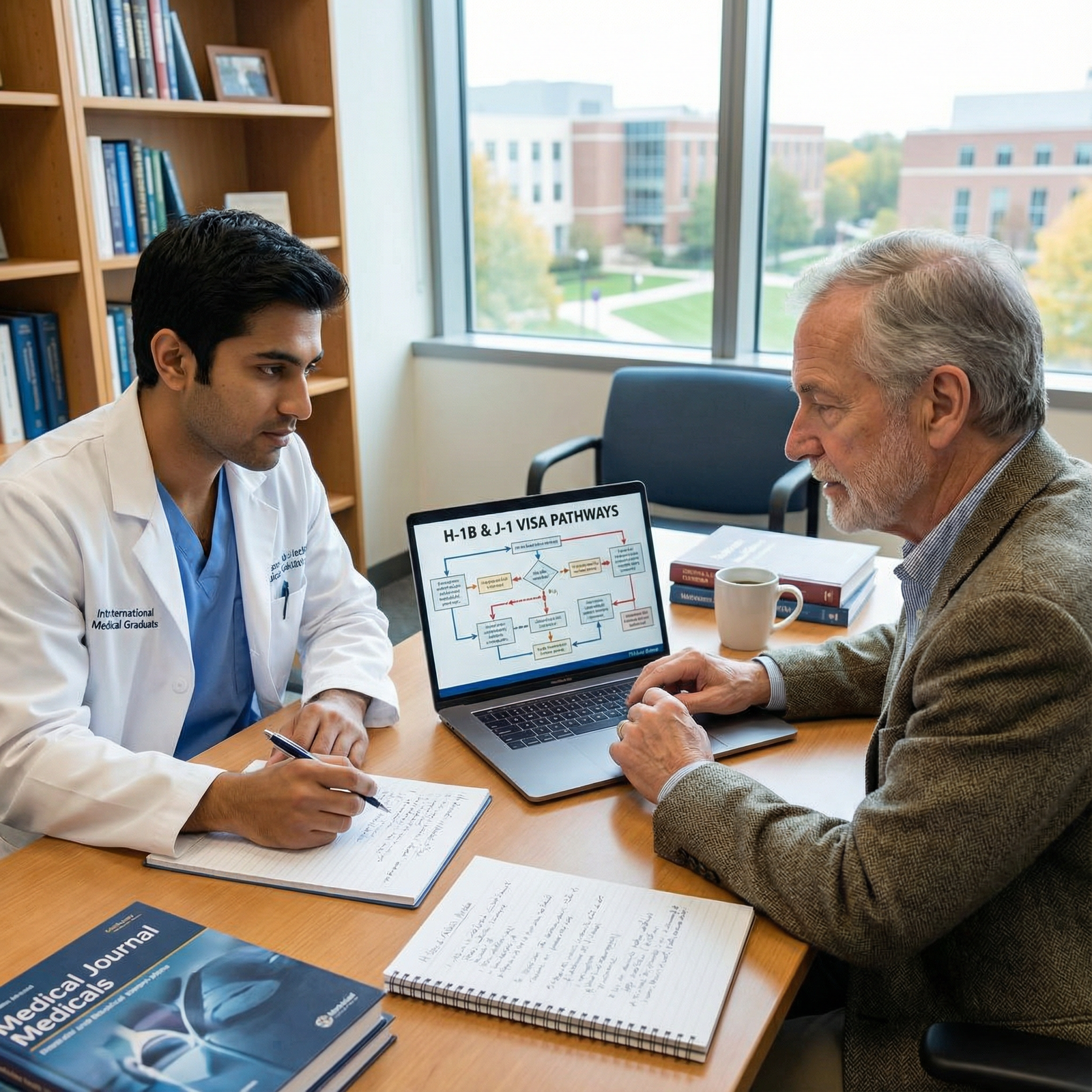
For a Caribbean medical school graduate aiming for a Kaiser residency, visa navigation is almost as important as your USMLE scores and letters of recommendation. As a Caribbean IMG, you must show programs that:
- You are eligible to work and train in the U.S.
- You understand residency visa rules and timelines.
- You can successfully maintain legal status throughout residency and, ideally, beyond.
Kaiser Permanente residency programs are competitive and relatively “system-based,” often with standardized institutional policies on visas. At the same time, policies can differ by region and specialty (e.g., Kaiser Northern California vs Southern California vs Pacific Northwest), and change over time. You must therefore combine:
- Solid general knowledge (J‑1 vs H‑1B, IMG visa options)
- Program‑specific research (what each Kaiser program actually sponsors this cycle)
This article will walk you through the essentials of visa navigation for a Caribbean IMG targeting Kaiser Permanente residency programs, with a special focus on SGU and similar Caribbean medical schools that feed large numbers of graduates into U.S. GME.
Key Visa Types for Caribbean IMGs in Residency
Before looking at Kaiser‑specific issues, you need a clear grasp of the main visa categories that apply to residency.
J‑1 vs H‑1B: The Core Residency Visa Decision
For most Caribbean IMGs, residency comes down to J‑1 vs H‑1B:
- J‑1 Alien Physician Visa (sponsored by ECFMG)
- H‑1B Temporary Worker Visa (sponsored by the residency program)
J‑1 Visa: The Most Common Path for IMGs
The J‑1 is the default residency visa for many U.S. teaching hospitals, and is widely accepted by academic and community programs, including some Kaiser Permanente residencies.
Key points:
- Sponsor: Educational Commission for Foreign Medical Graduates (ECFMG), not the program directly.
- Purpose: Graduate medical education (residency, fellowship).
- Duration: Up to 7 years total for residency + fellowship, with some conditional extensions.
- Home residency requirement: Most J‑1 physicians must return to their home country for two years after training or obtain a waiver (e.g., through a Conrad 30 waiver job in an underserved area).
- Exam requirements:
- USMLE Step 1 and Step 2 CK
- Valid ECFMG certification
- Pros:
- Widely accepted; many programs only sponsor J‑1.
- Predictable process via ECFMG.
- Cons:
- Two‑year home residence rule is a major factor.
- Less flexibility for early transition to U.S. permanent residency (green card) without a waiver.
For a Caribbean IMG who ultimately wants to stay in the U.S., the J‑1 is still often the practical entry point, but you must think several steps ahead about waivers and post‑residency employment.
H‑1B Visa: Less Common but Strategically Powerful
The H‑1B is a work visa that some residency programs use for IMGs, especially for advanced training or when institutional policies support it.
Key points:
- Sponsor: The residency program (employer).
- Duration: Typically 6 years total in H‑1B status (residency + any H‑1B fellowship or job).
- Requirements:
- USMLE Step 3 passed before visa petition (very important)
- Valid ECFMG certification
- State medical training license (or eligibility)
- Pros:
- No two‑year home residency requirement.
- Easier path to transition to green card after residency (if you secure a sponsoring employer).
- Cons:
- Many residencies, including some Kaiser Permanente programs, do not sponsor H‑1B for categorical residents.
- More paperwork and legal fees for the program.
- Strict timelines and cap‑related issues (though many teaching hospitals qualify for cap‑exempt H‑1B).
The J‑1 vs H‑1B debate is central to IMG visa options and will shape how you approach Kaiser Permanente residency programs.
Kaiser Permanente Residency Programs: General Visa Attitudes
Kaiser Permanente is a large integrated health system with multiple GME sites (e.g., Northern California, Southern California, Pacific Northwest, Hawaii, and affiliate programs with university partners). For a Caribbean IMG, this means:
- Policies differ by site and specialty, even within Kaiser.
- Some programs are J‑1 only; some might accept H‑1B; some may not sponsor visas at all.
- Policies can change from year to year, so you must confirm for the current application cycle.
Typical Kaiser Visa Sponsorship Patterns
While you must always verify each program directly, some general patterns can help:
J‑1 Friendly:
Many Kaiser residency programs that accept IMGs emphasize J‑1 sponsorship via ECFMG. They may state: “We sponsor J‑1 visas only” on their website or FREIDA entry.H‑1B Restrictions:
Some Kaiser programs sponsor H‑1B only for fellows, not for categorical residents, or only in rare situations (e.g., an exceptional candidate already in valid H‑1B cap‑exempt status).U.S. Permanent Residents & Citizens Preferred:
A minority of Kaiser-affiliated or partner programs may state they do not sponsor visas but accept applicants if you already have U.S. work authorization (e.g., green card, EAD, or U.S. citizenship).Affiliated University Policies Dominate:
For programs run in collaboration with universities (e.g., UCSF, UCLA, OHSU, etc.), the university GME office’s visa policy usually controls what is possible for the Kaiser track.
Caribbean Medical School Residency & Kaiser
Top Caribbean schools (e.g., SGU, Ross, AUC, Saba) routinely place graduates into Kaiser residency programs, especially in:
- Internal Medicine
- Family Medicine
- Pediatrics
- Psychiatry
- Some preliminary or transitional year slots
For example, SGU residency match lists have included Kaiser Permanente programs in multiple specialties. Reviewing these lists gives you:
- A realistic sense of which specialties at Kaiser historically accept Caribbean IMGs.
- Whether residents from your school (or similar ones) have successfully navigated J‑1 vs H‑1B choices there.
Use your school’s GME office and match lists as a real-world guide to Kaiser residency visa feasibility.
Step-by-Step Visa Planning Timeline for Caribbean IMGs
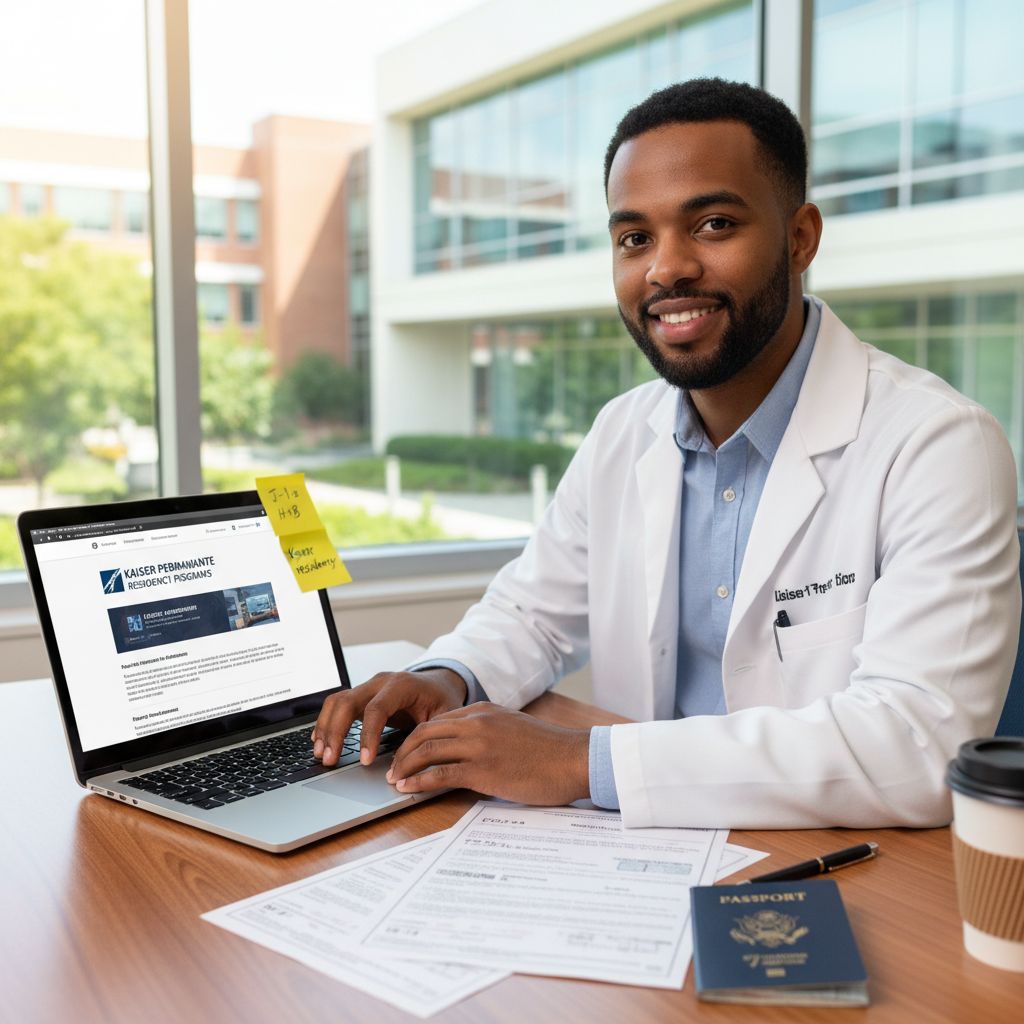
Visa navigation begins long before you get an interview invitation. Here’s how to integrate visa strategy into each phase of your residency application.
1. Early Clinical Years in the Caribbean: Build a Visa‑Friendly Profile
During basic sciences and early clinical rotations:
- Aim for U.S. clinical exposure at teaching hospitals, ideally including integrated systems like Kaiser or other large academic centers.
- Maintain strong academic performance; some programs have minimum Step score cutoffs.
- Ensure you are progressing toward timely ECFMG certification:
- Pass Step 1
- Pass Step 2 CK
- Handle required documentation with your med school and ECFMG carefully.
For H‑1B viability, you must eventually pass Step 3 early enough—this is a major strategic choice:
- If your primary target is a Kaiser residency that may sponsor H‑1B, consider scheduling Step 3 before the NRMP Rank Order List deadline (or, realistically, before programs decide their visa sponsorships for you).
2. Pre‑ERAS Season (6–9 Months Before Application)
As you prepare ERAS materials, begin your Kaiser‑specific visa research:
Create a target list of Kaiser programs by:
- Specialty (e.g., Internal Medicine, Family Medicine, Psychiatry)
- Region (e.g., Kaiser Northern California, Kaiser Southern California, Pacific Northwest, Hawaii)
For each program, identify:
- Visa policy stated online (FREIDA, program websites, AAMC, etc.)
- Whether they have current or recent IMG residents.
- If possible, their history of SGU or other Caribbean med school residents.
Classify each program as:
- J‑1 only
- H‑1B possible (sometimes with restrictions)
- No visa sponsorship (open only to U.S. citizens/PRs or those with independent work authorization)
This classification will influence your personal statement focus and any questions you pose during interviews.
3. ERAS & Interview Season: Communicating About Visas
When you apply to Kaiser residency programs:
ERAS Application:
- Clearly indicate your citizenship and current visa status (e.g., F‑1, none, B‑1/B‑2, etc.).
- Ensure your ECFMG certification timeline is realistic for the start of residency (July 1).
Personal Statement:
- You usually do not need to discuss visa details here, unless:
- You are already in a work‑authorized status (e.g., DACA, asylum, TPS, EAD) that could ease employers’ concerns, or
- You want to reassure programs that you understand J‑1 requirements and plan to practice in underserved areas later (if that matches your true goals).
- You usually do not need to discuss visa details here, unless:
Interview Discussions:
- Ask visa questions strategically and professionally:
- “Can you share your current policies on sponsoring visas for international graduates?”
- “Do your residents train on J‑1 visas, H‑1B visas, or both?”
- Avoid sounding like your only interest is the visa; frame it as logistical planning for a long-term commitment to the program and community.
- Ask visa questions strategically and professionally:
For a Caribbean IMG, spending 1–2 thoughtful questions on visa policies during Kaiser interviews is reasonable, especially if their websites are vague.
4. Post‑Interview & Ranking: Aligning Visa Reality with Career Goals
By the time you create your rank list:
- You should know for each Kaiser program:
- Whether they sponsor J‑1 only or H‑1B is possible.
- Whether they have successfully matched Caribbean IMGs recently.
- Rank programs in a way that balances:
- Program quality and fit
- Visa feasibility and long-term plans (J‑1 waiver, H‑1B to green card, etc.)
If your dream is a Kaiser Permanente residency that only sponsors J‑1, and you want to stay in the U.S. long term, that’s still workable—but you must fully understand the two-year home residence rule and waiver routes (discussed below).
Practical Strategies for J‑1 vs H‑1B Decisions as a Caribbean IMG
For many Caribbean IMGs, especially those from SGU and similar programs, the big question is: Should I aim for J‑1 or H‑1B at Kaiser?
When a J‑1 Visa Makes the Most Sense
A J‑1 is usually the default best option when:
- Your target Kaiser residency only sponsors J‑1, and it’s your best fit or highest‑ranked opportunity.
- You have not taken USMLE Step 3 yet.
- You are okay with:
- Returning to your home country for two years, OR
- Pursuing a J‑1 waiver job after training (e.g., in an underserved U.S. area).
From a practical standpoint:
- Many Caribbean IMG match successes at Kaiser have been through J‑1 sponsorship.
- ECFMG’s standardized process reduces confusion for both you and the program.
If you choose this path, you must:
- Know your home country’s stance on the J‑1 two-year rule (e.g., consular practices, consulate documentation, etc.).
- Start learning about Conrad 30 waivers, VA facilities, and other IMG visa options for J‑1 waiver jobs early in your residency, not at the last minute.
When Pursuing H‑1B Is Strategic
An H‑1B is strategically valuable when:
- A particular Kaiser residency program explicitly sponsors H‑1B for residents.
- You have already passed Step 3 or can realistically pass it before the program must file the petition.
- You have a strong profile (scores, LORs, U.S. experience) to justify the additional effort to the program.
Benefits to highlight in discussions with programs (if they are H‑1B‑friendly):
- You avoid the J‑1 home residence requirement, potentially making you more likely to stay in their system long term after training.
- You can more easily transition to an employment‑based green card, which may align with Kaiser’s interest in retaining well‑trained physicians in their integrated system.
However, never push aggressively for H‑1B if the program clearly prefers J‑1 or is non‑committal. Instead, present yourself as:
“Flexible and open to both J‑1 and H‑1B, but if H‑1B is possible, I am prepared and have passed Step 3.”
After Matching at Kaiser: Visa Execution & Long-Term Planning
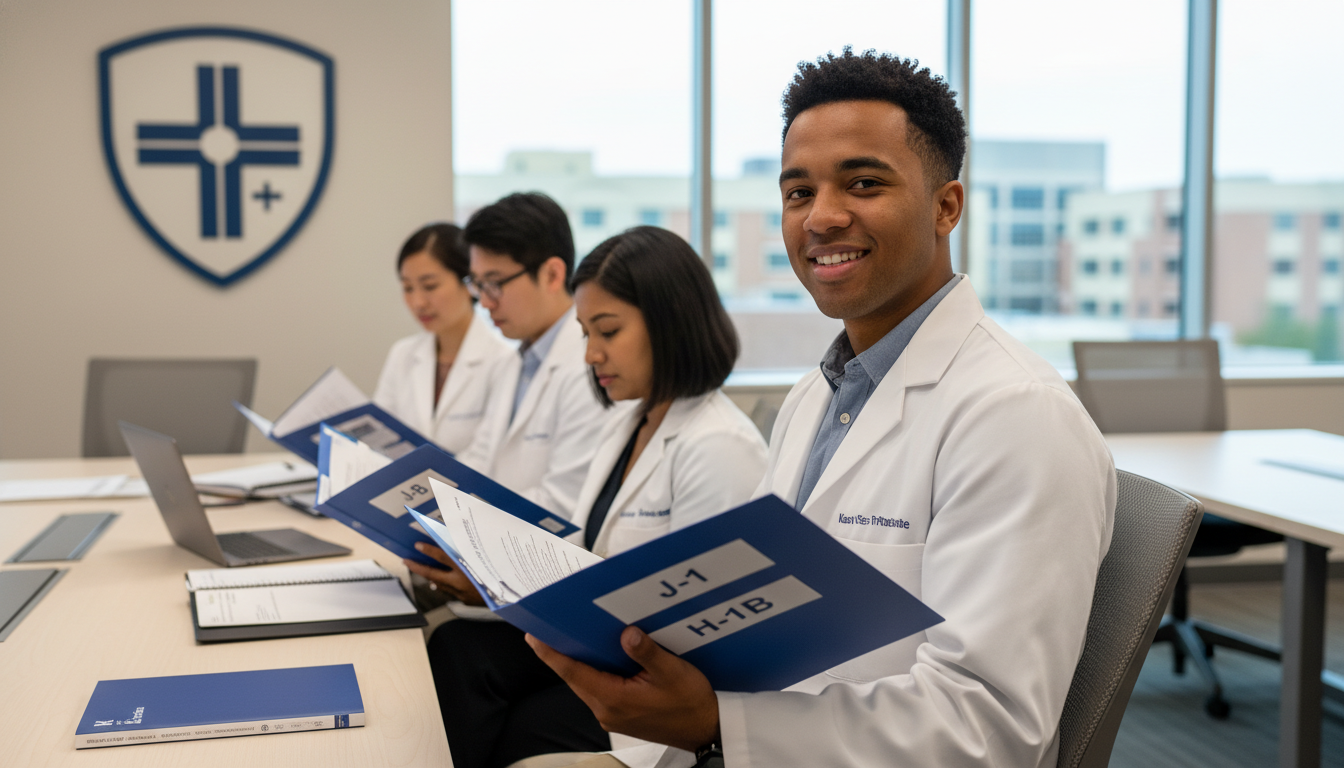
Once you match at a Kaiser residency program as a Caribbean IMG, the visa journey becomes more concrete.
1. Coordinate Early With the GME Office
Immediately after Match Day:
Respond promptly to any information requests from the Kaiser GME office or affiliated university regarding:
- Passport details
- ECFMG certification status
- Previous U.S. visas, I‑94s, SEVIS records (if applicable)
Clarify:
- “Will I be on a J‑1 sponsored by ECFMG or an H‑1B sponsored by the institution?”
- Any timelines for filing documents, especially if you’re outside the U.S. and need consular processing.
Delays in communication can lead to start date complications or, in rare cases, the loss of your position, so be proactive and organized.
2. J‑1 Visa Logistics for Kaiser Residents
If you are on a J‑1 visa at a Kaiser program:
- Work closely with:
- ECFMG’s Exchange Visitor Sponsorship Program (EVSP)
- The Kaiser or university international office
You will need:
- Form DS‑2019 issued by ECFMG
- Visa interview at a U.S. consulate (if abroad)
- Clear documentation of ties to your home country (for consular officers assessing nonimmigrant intent)
Understand from day one:
- Your maximum allowed duration in J‑1 status (residency + any planned fellowship).
- How leaves of absence, research years, or transfers can affect your visa.
- The two-year home residence requirement and preliminary strategies for future waivers, if you plan to remain in the U.S.
3. H‑1B Visa Execution at Kaiser
If your Kaiser residency sponsors you for an H‑1B:
- Expect to provide:
- Proof of USMLE Step 3 pass
- ECFMG certificate
- Medical school diploma and transcripts
- CV and employment offer/contract
The institution’s lawyers will handle the I‑129 petition and LCA (Labor Condition Application), but you must:
- Provide accurate past immigration history (F‑1, J‑1, B‑1/B‑2, etc.).
- Pay your personal portions of fees if required (never pay fees that are legally the employer’s responsibility).
Note that many teaching hospitals, including those affiliated with Kaiser‑linked universities, are H‑1B cap‑exempt, which eases timing pressures.
4. Long-Term Pathways After Kaiser Residency
Your visa choice during residency affects your long-term options:
If You Trained on a J‑1
- You must:
- Either return home for two years
- Or obtain a J‑1 waiver via:
- Conrad 30 programs (state‑sponsored underserved area jobs)
- Federal programs (e.g., VA, certain research agencies)
For a Caribbean IMG, planning a J‑1 waiver job might mean:
- Leaving the Kaiser system temporarily to work in a health professional shortage area (HPSA) or medically underserved area.
- After waiver service, you can often pursue a green card through that employer or a future job.
If You Trained on an H‑1B
- You can often transition directly into:
- Another H‑1B employment (e.g., staff physician position).
- Permanent residency sponsorship (EB‑2 or similar) by your employer.
If Kaiser or an affiliated institution wants to keep you, H‑1B status may make this process smoother, though it is not guaranteed and depends on institutional policies and U.S. immigration law at the time.
Practical Tips & Common Pitfalls for Caribbean IMGs Applying to Kaiser
Practical Tips
Start visa planning early
Think about J‑1 vs H‑1B no later than the beginning of your final year in medical school.Leverage your school’s alumni network
Reach out to SGU residency match alumni (or from your own Caribbean school) who are currently in Kaiser residency programs. Ask:- What visa are they on?
- How supportive was the program with visa paperwork?
- Any specific advice for Caribbean IMGs?
Keep immigration documentation organized
Maintain a personal file with:- All past I‑20s, DS‑2019s, I‑94s, visa stamps
- Copies of every USMLE score report
- ECFMG certificate and med school documents
Be honest and transparent
Never hide prior visa denials, overstays, or other issues. Program GME offices and attorneys need accurate information to help you.
Common Pitfalls to Avoid
Assuming all Kaiser programs have the same policy
Each site and specialty can differ. Always verify.Waiting too long to pass Step 3 (if H‑1B is your goal)
Failing to pass Step 3 in time can force you into a J‑1 even if the program is open to H‑1B.Ignoring long-term consequences of the J‑1 home requirement
Go into a J‑1 with open eyes about your post‑residency pathways.Relying on outdated anecdotal information
Policies change. Cross‑check what you hear from other IMGs or online forums with current official program statements.
FAQ: Visa Navigation for Caribbean IMGs in Kaiser Permanente Programs
1. Do Kaiser Permanente residency programs sponsor visas for Caribbean IMGs?
Many Kaiser programs do sponsor visas and accept IMGs, including Caribbean graduates, but policies vary by location and specialty. Some are J‑1 only, others may sponsor H‑1B (often with Step 3 required), and a few may not sponsor any visas. Always check the specific program website, FREIDA entry, or contact the GME office for the current cycle.
2. Is it realistic to get an H‑1B for a Kaiser residency as a Caribbean IMG?
It can be realistic but is generally less common than J‑1. You need:
- A program that explicitly accepts H‑1B applicants.
- USMLE Step 3 passed early enough for the petition.
- A strong overall application.
Because many Kaiser and affiliate programs are more comfortable with J‑1 sponsorship through ECFMG, you should be flexible and ready to train on J‑1 if that is the program’s policy.
3. I matched to a Kaiser program that only sponsors J‑1. Can I still stay in the U.S. long term after residency?
Yes, but you must plan carefully. With a J‑1, you will typically face a two-year home residence requirement. Your options are:
- Return to your home country for two years; or
- Obtain a J‑1 waiver by working in a federally designated underserved area (e.g., via Conrad 30) or certain federal agencies.
Many IMGs complete a Kaiser residency on J‑1, then obtain a waiver job, and eventually transition to permanent residency.
4. How can I find out which Kaiser programs have accepted Caribbean IMGs before?
Use a combination of:
- Your medical school’s match lists (e.g., SGU residency match data).
- Program websites (resident bios often mention med schools).
- Alumni networks and social media groups for Caribbean IMGs.
If you see multiple residents from Caribbean medical schools in a given Kaiser program, that’s a strong indicator the program is IMG-friendly and has experience handling residency visa issues.
By pairing strong academic preparation with informed visa strategy, a Caribbean IMG can successfully navigate residency visa challenges and build a robust career within Kaiser Permanente residency programs or elsewhere in the U.S. As you move forward, keep reassessing your J‑1 vs H‑1B options, stay in close contact with program GME offices, and use every resource—school advisors, alumni, and official immigration guidance—to ensure your path remains open from Caribbean medical school residency applications all the way to long-term practice in the United States.