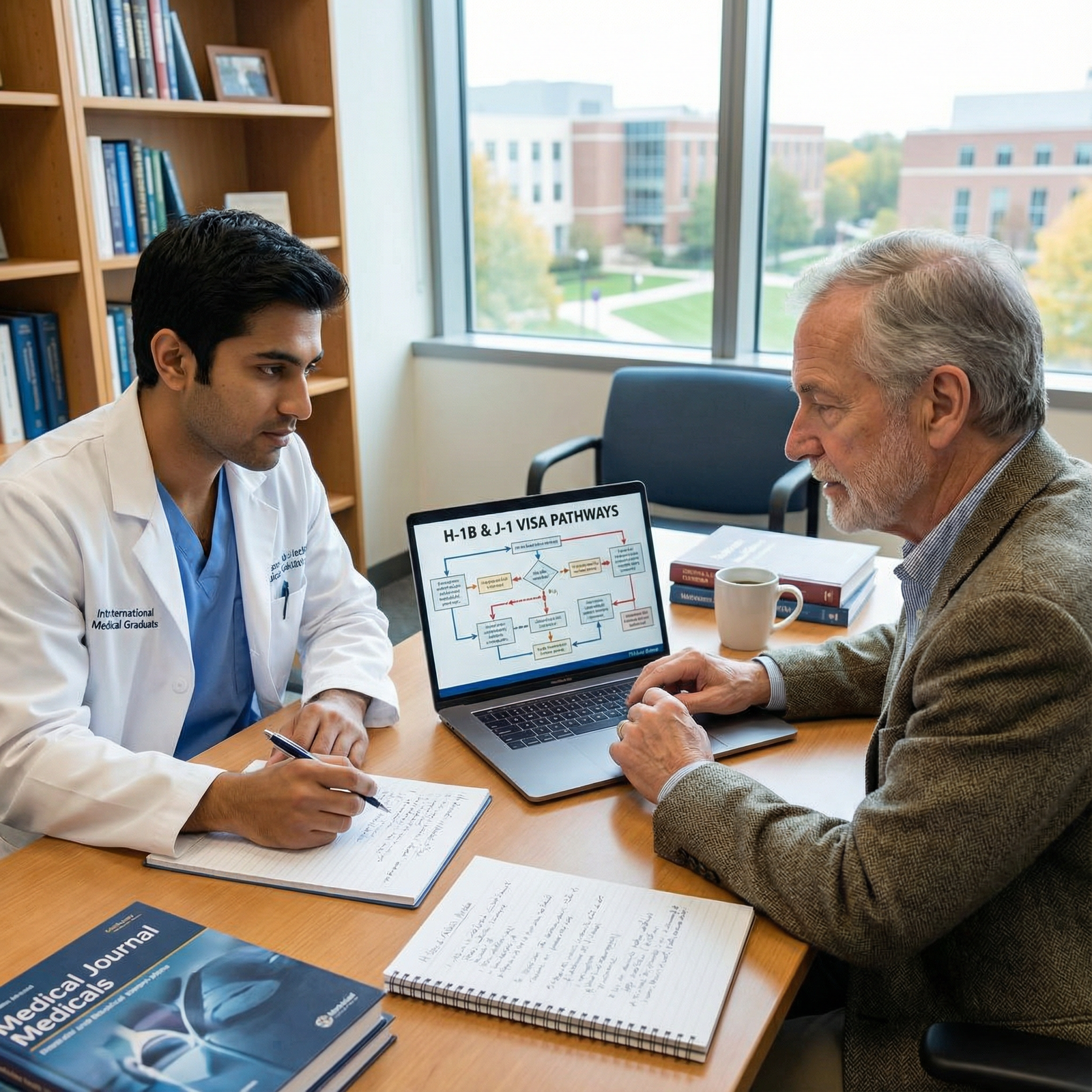
Understanding the Visa Landscape for Central Valley Residency Programs
Visa navigation is one of the most complex parts of applying to residency as an international medical graduate (IMG)—and it’s even more nuanced when you narrow your focus to a specific region such as the California Central Valley. Programs in Fresno, Bakersfield, Modesto, Visalia, and surrounding communities play a critical role in serving underserved and often immigrant-heavy populations. Many of these programs are IMG‑friendly, but each may differ in the types of visas they sponsor and how they interpret federal rules.
This article focuses on how to navigate visa options—especially J‑1 vs H‑1B—for Central Valley residency programs, with a practical emphasis on Fresno residency and similar institutions in the region. We’ll walk through the key visa categories, how they affect your training and long‑term plans, and concrete strategies for presenting yourself as a strong candidate while staying realistic about your visa prospects.
Core Visa Types for Residency: J‑1 vs H‑1B
For most IMGs targeting residency in the California Central Valley, two visa options dominate: the J‑1 exchange visitor visa (ECFMG-sponsored) and the H‑1B temporary worker visa (employer-sponsored). Understanding their differences is essential before you start shortlisting programs.
J‑1 Visa: The Default for Most IMGs
The vast majority of residency programs that sponsor visas—especially in community-based and safety‑net settings like the Central Valley—primarily use the J‑1 clinical exchange visitor visa.
Key features of the J‑1 for residency
- Sponsor: ECFMG (not the hospital directly; the hospital hosts you, ECFMG sponsors you)
- Duration: Up to 7 years for clinical training (combined residency + fellowship), with annual renewals
- USMLE requirement: Must have passed Step 1, Step 2 CK, and OET for ECFMG certification at the time specified by ECFMG/policies
- Two‑year home residency requirement: After you complete training, you must:
- Return to your home country (or country of last permanent residence) for a total of two years, or
- Obtain a J‑1 waiver (commonly by working in a medically underserved area on an H‑1B)
Pros of the J‑1 visa
- Widely accepted and understood by GME offices
- Often the only IMG visa option at safety‑net hospitals and community programs
- Straightforward process once ECFMG requirements are met
- Allows transitions into fellowships under the same overall 7‑year cap
Cons of the J‑1 visa
- The two‑year home residency requirement can be restrictive without a waiver
- Usually no “dual intent”; harder to transition directly to permanent residency without addressing the requirement
- Must secure a waiver job after training if you want to stay in the US directly
In the California Central Valley, J‑1 is the standard route at many programs because:
- The region is rich in federally designated shortage areas, ideal for J‑1 waiver jobs later.
- Programs are often safety‑net institutions serving rural or underserved populations and are accustomed to IMGs on J‑1 visas.
- It aligns with pipelines like the Conrad 30 waiver programs after residency.
H‑1B Visa: Less Common, More Complex
The H‑1B is a temporary worker visa used for specialty occupations, including resident physicians in certain programs. Compared with J‑1, it is less common in the Central Valley and requires more institutional resources and cost.
Key features of the H‑1B for residency
- Sponsor: The residency program/hospital (employer)
- USMLE requirement: Typically must have passed Step 3 before filing for H‑1B (timelines vary by program, but this is a frequent requirement)
- Duration: Up to 6 years total (initial + extensions), subject to complex rules if you continue into fellowship or beyond
- Dual intent: Allows you to pursue permanent residence (green card) without a foreign residency return requirement
Pros of H‑1B
- No J‑1 two‑year home residency requirement
- Dual intent status: easier to pursue a green card during or after training
- Can transition more directly into post‑residency employment in the US
Cons of H‑1B
- Not all programs sponsor it; many Central Valley programs are J‑1 only
- Requires Step 3 early, adding exam pressure during the application cycle
- Higher legal and filing fees for programs; some institutions avoid it for this reason
- Cap‑exempt status for hospitals is common, but planning is still complex
In the Fresno residency and broader Central Valley context, H‑1B sponsorship is selective. A few university‑affiliated or larger systems may offer it, but:
- They often limit H‑1Bs to certain specialties or top candidates.
- Some will convert strong J‑1 residents to H‑1B after a J‑1 waiver job, not for initial training.
How Programs Decide Between J‑1 vs H‑1B
Central Valley residency programs generally fall into three categories regarding visa policies:
J‑1 only
- Most common, especially in community or safety‑net settings
- Often IMGs‑friendly but will explicitly state “J‑1 visa only” or “We do not sponsor H‑1B” on their websites
J‑1 primary, selective H‑1B
- Usually university‑affiliated or larger main teaching hospitals
- May accept H‑1B requests for highly competitive applicants who have Step 3 completed early
- May limit H‑1B sponsorship to specific specialties (e.g., Internal Medicine, Psychiatry) rather than all programs
H‑1B not offered at all
- Some institutions avoid H‑1B entirely due to institutional policy or cost
- They may still be very IMG‑friendly, but only via J‑1
Action step: For each program you consider in the Central Valley, check the GME or residency website and confirm:
- “We sponsor J‑1 only” vs “We sponsor J‑1 and H‑1B” vs “We do not sponsor visas”
- Any stated requirements for H‑1B (e.g., Step 3, timing, prior US experience)

Central Valley Context: Why Visa Strategy Matters Here
The California Central Valley is a unique place to train—clinically, culturally, and in terms of long‑term career paths. Understanding the regional context will help you align your residency visa choice with your broader goals.
Underserved and IMG‑Friendly
The Central Valley is characterized by:
- Large rural and agricultural communities
- High percentages of Medicaid, uninsured, and migrant farmworker populations
- High rates of chronic disease (e.g., diabetes, obesity, respiratory illness)
- Chronic physician shortages in both primary care and specialties
Because of this, many Valley programs actively recruit IMGs:
- They recognize that IMGs often bring strong work ethic and cultural/linguistic diversity.
- They rely on physicians who may later stay in the area on J‑1 waiver or other shortage‑area contracts.
In practice, this means:
- Many Central Valley programs are comfortable with J‑1 visa processes.
- Some are structured to serve as natural pipelines into waiver jobs in the same region.
Geographic Hotspots: Fresno and Beyond
Key Central Valley training hubs include:
- Fresno – Major academic affiliate (e.g., UCSF Fresno), multiple residency and fellowship programs, significant IMG presence, large safety‑net hospitals
- Bakersfield, Modesto, Merced, Visalia, Madera, Stockton – Community and university‑affiliated programs, many serving high‑need populations
For a Fresno residency or other Central Valley program, your visa strategy should consider:
- Are you open to J‑1 followed by a J‑1 waiver job in the same or nearby region?
- Do you strongly prefer H‑1B to avoid the two‑year home requirement, even if it may reduce the number of programs that can sponsor you?
- Are you considering long‑term practice in California’s underserved areas?
Planning a Visa Strategy for Central Valley Residency Applications
Once you understand the basic IMG visa options, the next step is building a realistic, strategic plan that fits the Central Valley’s residency landscape.
Step 1: Clarify Your Long‑Term Goals
Before you focus on paperwork, ask yourself:
- Do I envision long‑term practice in the US, particularly in underserved areas?
- Am I ready to commit a few years to work in a medically underserved or rural area (e.g., Central Valley, other states) after residency?
- How flexible am I about where I practice after training?
If your answer is:
Yes, I could see myself in an underserved US area for several years
→ J‑1 plus a waiver job can be an excellent pathway and aligns well with Central Valley program missions.I’m unsure or I want the most flexibility and potentially a faster route to permanent residency
→ H‑1B may be more aligned with your goals—but is harder to secure and less widely available in this region.
Step 2: Build a Program List Based on Visa Policies
When targeting Central Valley residency programs:
Create three categories in a spreadsheet:
- J‑1 only
- J‑1 + H‑1B possible
- No visa sponsorship
Confirm your findings from multiple sources:
- Official residency or GME website (visa policy section)
- FREIDA (AMA database)
- Email or call the program coordinator if the website is unclear
Aim for a balanced list:
- If you are open to J‑1, prioritize IMG‑friendly programs that clearly state they sponsor J‑1 and have a history of international residents.
- If you are targeting H‑1B, include:
- Central Valley programs that explicitly support H‑1B
- Selected programs from larger California metros (e.g., Bay Area, LA) to broaden your pool
Example:
You are applying in Internal Medicine with strong scores and have passed Step 3 early. You might build:
- 10–15 Central Valley programs that sponsor J‑1, possibly H‑1B for top candidates
- 10–15 California or other US programs known for H‑1B friendliness
- Additional J‑1‑only community programs nationwide to ensure a robust match portfolio
Step 3: Decide Whether to Pursue Step 3 Before Applying
For many IMGs, USMLE Step 3 timing is a strategic decision.
- If your primary goal is H‑1B for residency, Step 3 before applying (or before rank list deadline at the latest) significantly improves your chances of sponsorship.
- If you are comfortable with J‑1, Step 3 can be delayed until later in residency, though it is still advantageous to complete early.
In the Central Valley, where many programs are J‑1‑focused, Step 3 is not strictly required to secure a spot, but it can:
- Make you more competitive if a program selectively sponsors H‑1B
- Signal maturity, readiness, and a proactive attitude
- Provide flexibility in case visa policies change
Step 4: Present Yourself as a Low‑Risk, High‑Value Visa Candidate
Programs evaluate more than just whether you “qualify” for a visa. They consider operational hassle and risk. You can stand out by:
- Having all key documents ready early (ECFMG certification, passport validity, exam scores)
- Demonstrating clear, realistic understanding of J‑1 vs H‑1B; avoid vague or demanding statements like “I only accept H‑1B from all programs.”
- Emphasizing your willingness to work in underserved areas or remain in the Central Valley after training—especially relevant for those planning on J‑1 followed by waiver service
During interviews for Fresno or other Central Valley residencies:
- If asked about visa preference, you might say:
“I understand many programs here primarily sponsor J‑1, and I’m very open to that pathway, especially considering the opportunities for J‑1 waiver service in underserved regions like the Central Valley. If an H‑1B option is available, I’d also be grateful to be considered, but my main goal is to train and serve in this community.”
This kind of answer:
- Signals flexibility
- Aligns with the mission of Central Valley programs
- Reduces concern that you might decline an offer over visa type alone
Post‑Residency Paths: J‑1 Waivers, H‑1B Jobs, and Staying in the US
Your residency visa is only one step in a longer career journey. Especially in a region like the Central Valley, where long‑term workforce needs are high, thinking ahead can help you make informed choices now.
If You Train on a J‑1 Visa
After completing a J‑1‑sponsored residency (and fellowship if applicable), you must either:
- Return home for 2 cumulative years, or
- Obtain a J‑1 waiver of the home residency requirement
Common waiver options relevant to Central Valley graduates:
Conrad 30 State Waiver Programs
- Each US state can recommend up to 30 physicians per year for J‑1 waivers.
- Priority often given to primary care and certain specialties willing to work in Health Professional Shortage Areas (HPSAs) or Medically Underserved Areas (MUAs).
- Many waiver jobs are in regions similar to or including the Central Valley.
Federal agency waivers
- Through agencies such as the Department of Health and Human Services, VA, or others.
- Typically involve service in a federally recognized shortage or safety‑net setting.
Once a waiver is approved, you are usually required to:
- Work 3 years full‑time in the designated area (often on an H‑1B)
- After completing the waiver service, you are typically free to change employers and pursue permanent residency processes more flexibly.
For Central Valley graduates, this can mean:
- Doing residency in Fresno or another Valley city, then:
- Remaining in the region or nearby for a waiver job,
- Or moving to another underserved area in California or another state.
If You Train on an H‑1B Visa
If your Central Valley residency sponsors you on H‑1B:
- You do not have a two‑year home residency requirement.
- You still face a 6‑year H‑1B maximum (with exceptions if you’re in the green card process).
- After residency, many graduates:
- Extend H‑1B status with a new employer (cap‑exempt or cap‑subject depending on job type)
- Begin or continue employment‑based permanent residency (green card) processes
However, keep in mind:
- H‑1B for residency uses up part of your 6‑year total.
- If you do fellowship on H‑1B, you’ll need careful planning to avoid hitting time limits before green card steps are complete.
In some cases, even H‑1B residents later take jobs similar to J‑1 waiver positions—in underserved areas, including the Central Valley—because that is where demand and sponsorship for permanent residency are strongest.
Practical Tips and Common Pitfalls for IMGs Targeting Central Valley Programs
Practical Tips
Start early with research
- Finalize a draft list of Central Valley programs and their visa policies at least 6–9 months before ERAS opens.
- Track any changes annually; visa policies can shift with institutional leadership.
Communicate professionally about visas
- Use concise, respectful emails to program coordinators if you need clarification.
- Example:
“Dear [Coordinator],
I am an IMG applying to [Program Name] and very interested in training in the California Central Valley. I wanted to confirm whether your program sponsors J‑1 and/or H‑1B visas for incoming residents. Thank you for your time and guidance.”
Align your personal statement and experiences
- Emphasize your interest in:
- Serving underserved or rural communities
- Working with diverse, multilingual populations
- Long‑term practice in areas like the Central Valley
- This strengthens your fit, especially if you expect to use J‑1 and potentially pursue a local waiver job.
- Emphasize your interest in:
Plan your timeline
- If you aim for H‑1B: schedule Step 3 strategically (ideally before or early in interview season).
- Keep passports and key documents updated (valid for several years beyond your start date).
Common Pitfalls to Avoid
Ignoring program‑specific visa policies
- Applying broadly without checking if programs actually sponsor your required visa wastes time and application fees.
- Some otherwise attractive Central Valley programs may explicitly say: “US citizens or green card holders only.”
Presenting as “H‑1B or nothing” to J‑1‑focused programs
- This can signal inflexibility and make you less likely to be ranked.
- If you truly cannot accept J‑1 for personal or legal reasons, tailor your list to programs that reliably sponsor H‑1B rather than trying to force the issue.
Underestimating the J‑1 waiver landscape
- Many IMGs assume the two‑year home requirement is an absolute barrier.
- In reality, J‑1 waivers are achievable, especially for those willing to serve in high‑need areas—exactly like much of the Central Valley and similar regions nationwide.
Not thinking beyond residency
- Visa choices have long‑term implications for:
- Where you can work immediately after training
- How quickly you can pursue permanent residence
- Have at least a rough post‑residency plan, especially if you choose the J‑1 route.
- Visa choices have long‑term implications for:
FAQs: Visa Navigation for Central Valley Residency Programs
1. Do Central Valley residency programs generally prefer J‑1 or H‑1B for IMGs?
Most Central Valley residency programs that sponsor visas primarily use the J‑1 visa. A subset—often larger or university‑affiliated programs—may sponsor H‑1B in selected cases, usually for applicants who have already passed Step 3. It’s essential to review each program’s posted policy rather than assuming H‑1B will be available.
2. If I do residency in Fresno on a J‑1, can I stay in the US afterward?
Yes, but you’ll typically need to either return home for two years or get a J‑1 waiver. Many graduates pursue Conrad 30 or similar waivers by working in underserved or rural areas, sometimes even in the California Central Valley itself. After completing the waiver service (often three years on an H‑1B), you can usually transition more freely and pursue permanent residency.
3. Is it worth taking Step 3 before applying to Central Valley programs if I want H‑1B?
If your goal is to maximize your chances for H‑1B sponsorship, then yes—having Step 3 done before or early in the application season is a strong advantage. However, many Central Valley programs are J‑1‑oriented and do not require Step 3 for entry. Even in J‑1‑heavy settings, Step 3 can still strengthen your overall application and keep future options open.
4. Can I switch from J‑1 to H‑1B during residency if my circumstances change?
In general, you cannot simply convert a J‑1 residency visa to an H‑1B without resolving the two‑year home requirement (either by completing it or obtaining a waiver). Some physicians move to H‑1B after securing a J‑1 waiver job. There are a few limited exceptions involving changes of category or special waiver provisions, but these are rare and legally complex. Plan assuming that once you start residency on J‑1, that will remain your status through training.
By understanding J‑1 vs H‑1B, the specific realities of Central Valley residency programs, and the downstream paths like J‑1 waivers, you can make informed, strategic decisions that align with both your training ambitions and long‑term career plans in the United States.