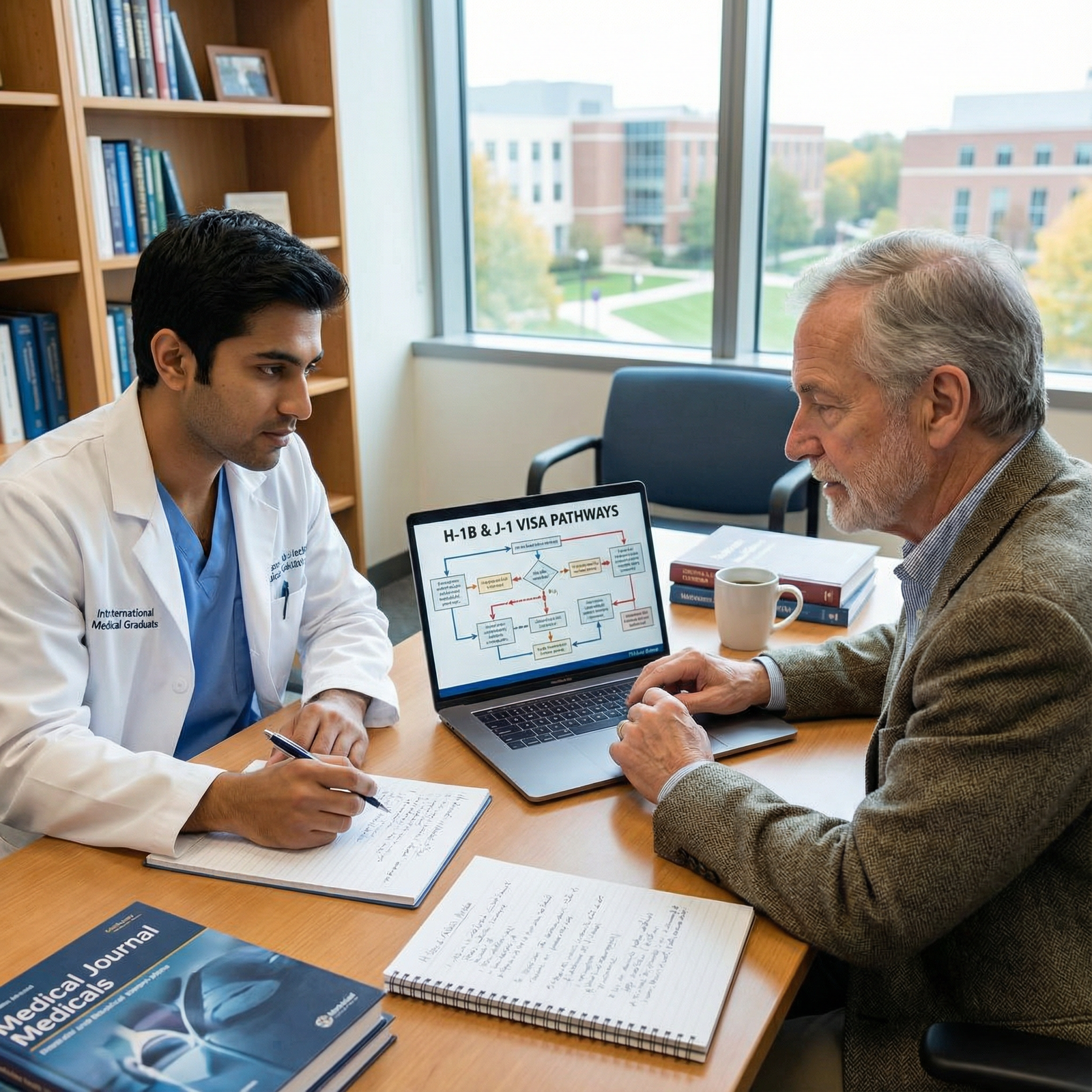
Understanding the Visa Landscape for Non‑US Citizen IMGs in the Great Lakes Region
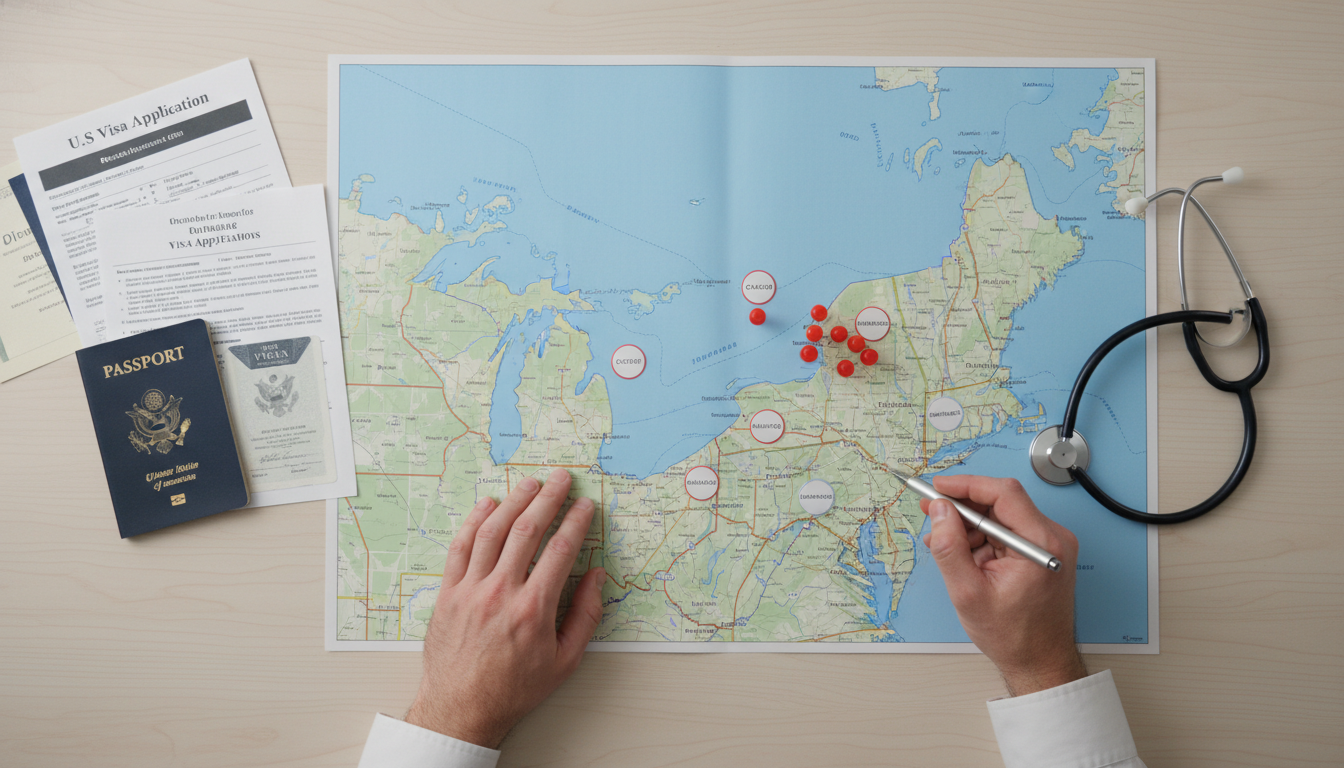
The Great Lakes region—covering states like Illinois, Michigan, Ohio, Wisconsin, Minnesota, Indiana, and sometimes western Pennsylvania and New York—is home to many midwest residency programs that are highly engaged with international medical graduates (IMGs). As a non‑US citizen IMG or foreign national medical graduate, you will find both excellent training opportunities and a complex immigration landscape.
Before you focus on specific hospitals or specialties, you must understand your IMG visa options, how they impact your career long‑term, and how they are handled by programs in the Great Lakes area. Visa navigation is just as strategic as building your CV or writing a personal statement.
This guide will walk you through:
- Core visa types (J‑1 vs H‑1B vs other paths)
- How Great Lakes residency programs typically handle visas
- Step‑by‑step planning from pre‑ERAS through Match
- Common pitfalls and how to avoid visa‑related red flags
- Practical strategies to improve your chances as a non‑US citizen IMG
Core Visa Options for Residency: J‑1 vs H‑1B and Beyond
For graduate medical education (GME), three visa pathways come up most often:
- J‑1 exchange visitor visa (ECFMG sponsored)
- H‑1B temporary worker visa (institution/employer sponsored)
- Other paths (green card, EAD, TN, etc.)
1. J‑1 Visa for Residency (ECFMG‑Sponsored)
The J‑1 is the most common residency visa for foreign national medical graduates entering US GME.
Key features:
- Sponsor: Educational Commission for Foreign Medical Graduates (ECFMG)
- Purpose: Graduate medical education/training
- Duration: Typically length of residency/fellowship, up to 7 years total in most cases
- USMLE requirement: Must have passed USMLE Step 1 and Step 2 CK (or equivalent) and hold a valid ECFMG certification
- Funding: Usually from the residency program (salary/stipend)
- Processing: ECFMG issues a DS‑2019 based on program support; you then apply for a J‑1 visa at a US consulate
Pros:
- Widely accepted by academic centers and community hospitals throughout the Great Lakes residency ecosystem
- Standardized process; most program coordinators and GME offices are very familiar with it
- Generally smoother and faster than H‑1B for first‑time residents
- No need for USMLE Step 3 before starting residency
Cons:
- Two‑year home‑country physical presence requirement (Section 212(e)): After completing training, you must return to your home country for two years OR obtain a J‑1 waiver before changing to H‑1B or permanent residency (green card) in the US.
- J‑1 holders cannot have dual intent (non‑immigrant but cannot formally pursue immigrant intent while holding J‑1 status, unlike H‑1B)
- Your spouse’s employment authorization as a J‑2 can be uncertain and timeline dependent
When J‑1 is likely your main path:
- You do not yet have USMLE Step 3
- You are matching into a university‑based program in the Great Lakes that explicitly says “J‑1 only”
- You want to prioritize maximizing your chance of matching over visa flexibility
2. H‑1B Visa for Residency
The H‑1B is a non‑immigrant “specialty occupation” visa. For physicians, it allows employment in clinical positions, including residency and fellowship.
Key features:
- Sponsor: The hospital or institution running the residency (not ECFMG)
- Purpose: Employment (you are an employee, not an exchange visitor)
- Duration: Up to 6 years total, often issued in 3‑year increments
- USMLE requirement: You must have passed USMLE Step 3 before H‑1B filing
- Prevailing wage requirement: Program must pay at or above DOL‑defined wage levels
Pros:
- No 2‑year home‑country requirement like the J‑1
- Dual intent is allowed (can pursue permanent residency/green card while on H‑1B)
- Often preferred by physicians planning a long‑term US career or wanting to avoid J‑1 waiver complexities
Cons:
- Far fewer midwest residency programs sponsor H‑1B for initial GME than J‑1
- Requires Step 3 passed early enough (ideally before ranking or at least before H‑1B petition deadline)
- More expensive and complex for the institution; some programs avoid H‑1B sponsorship for budget or administrative reasons
- Subject to general H‑1B rules; though many university‑affiliated hospitals are cap‑exempt, community programs may have more constraints
When H‑1B may be realistic:
- You pass USMLE Step 3 well before ERAS or before mid‑interview season
- You apply to programs that clearly state “H‑1B sponsored” on their websites or FREIDA profiles
- You have a strong academic profile and are applying to Great Lakes academic centers known to be IMG‑friendly and experienced with H‑1B
- You have long‑term plans in the US and want to avoid the J‑1 waiver step
3. Other Practical Paths for Non‑US Citizen IMGs
Although this article focuses on J‑1 vs H‑1B, a few other situations matter:
- Green card holders (permanent residents): No residency‑specific visa needed. You apply like US graduates for GME purposes. If you are eligible for a green card through family, marriage, or employment outside medicine, that path may dramatically simplify residency.
- EAD (Employment Authorization Document): Applicants with asylum, TPS, pending adjustment of status, or certain other categories may have EAD. Some programs accept an EAD for residency; others may require or prefer J‑1/H‑1B.
- TN visa (for Canadian and Mexican citizens): Canadian or Mexican non‑US citizen IMGs may be able to use TN status as physicians, but for residency, many institutions still prefer J‑1 or H‑1B. Canadian IMGs commonly use J‑1 or H‑1B in the Great Lakes as well.
- O‑1 visa: For physicians with extraordinary ability (significant research, publications, awards). Rare at the residency level, more common for attending posts.
For most non‑US citizen IMGs targeting Great Lakes residency programs, the crucial comparison is J‑1 vs H‑1B. Every other option is either less likely or already determined by your personal immigration background.
How Great Lakes Residency Programs Handle Visas
The Great Lakes region combines large academic centers, midwest residency programs in smaller cities, and many community hospitals. Visa policies vary widely depending on:
- Institution size and funding
- Academic vs community setting
- Historical experience with IMGs
- Health system‑wide immigration policies
Typical Patterns in the Great Lakes Region
Major Academic Centers (e.g., Chicago, Cleveland, Detroit, Minneapolis–St. Paul)
- Many accept J‑1 as the default for GME.
- Some also sponsor H‑1B for residents and fellows, especially in internal medicine, pediatrics, and certain subspecialties.
- They often have in‑house immigration attorneys or dedicated offices that handle physician visas.
Mid‑sized University‑Affiliated Programs (Toledo, Grand Rapids, Akron, Madison, Rochester MN, etc.)
- Frequently accept J‑1; H‑1B policies are more variable.
- Some will consider H‑1B only for exceptional candidates or certain hard‑to‑recruit specialties.
- Visa sponsorship info is often buried on departmental pages; direct email to program coordinators can clarify details.
Community‑Based Programs (smaller cities across Ohio, Indiana, Wisconsin, Michigan)
- Many sponsor J‑1 only, citing cost and administrative burden for H‑1B.
- A subset does not sponsor any visa, limiting applicants to US citizens/permanent residents.
- Some Great Lakes residency programs may occasionally sponsor H‑1B for senior residents or fellows, but not for PGY‑1.
Where to Find Accurate Visa Information
Do not rely solely on word of mouth. Use:
- Program websites: Look under “Eligibility & Requirements”, “For IMGs”, “International Applicants”, or “Visa Sponsorship”.
- FREIDA (AMA Residency & Fellowship Database): Filter by visa sponsorship (J‑1, H‑1B). Cross‑check with program sites.
- Email: If unclear, send a concise, direct email to the program coordinator:
- Confirm whether they sponsor J‑1 for categorical positions.
- Ask if they sponsor H‑1B and whether Step 3 is required by a specific date.
- Current residents/fellows: Many Great Lakes programs feature resident profiles, where you can see if current trainees are non‑US citizen IMGs on J‑1 or H‑1B.
Example: Different Visa Policies in Similar Settings
Imagine two internal medicine programs in the Great Lakes area:
Program A (Urban Academic Center):
- Website: “We sponsor J‑1 and H‑1B visas for qualified applicants. USMLE Step 3 is required for H‑1B sponsorship.”
- Historically has multiple foreign national medical graduates on both J‑1 and H‑1B each year.
Program B (Urban Community Hospital, University‑affiliated):
- Website: “We accept J‑1 ECFMG‑sponsored visa holders. We do not sponsor H‑1B visas for residency positions.”
- Match lists show mainly J‑1 residents.
For a non‑US citizen IMG aiming for H‑1B, Program A is a realistic target; Program B is not, though it may still be valuable to apply on J‑1.
Strategic Planning: Step‑by‑Step Visa Navigation Timeline
For a successful residency application in the Great Lakes region, you need to plan your visa approach just as carefully as your exam schedule.
18–24 Months Before ERAS Application
1. Clarify your long‑term goals
Ask yourself:
- Do I plan to stay in the US long‑term as an attending?
- Am I willing to work in underserved or rural settings for a J‑1 waiver after residency?
- Do I have any possibility of permanent residency (family, marriage, employment) independent of my training?
If you strongly want long‑term US practice and have no other path to a green card, H‑1B may be more attractive—but don’t sacrifice match chances by insisting on it where it’s unrealistic.
2. Complete USMLE Step 1 and Step 2 CK
- You need these for ECFMG certification and J‑1 sponsorship.
- Your scores will also influence program interest in offering an H‑1B.
12–15 Months Before ERAS (Pre‑Application Year)
3. Decide whether to target H‑1B
If you might pursue H‑1B:
- Schedule USMLE Step 3 so results are available before or during the main interview season (October–January).
- Many programs want a Step 3 pass by rank list time, so earlier is better.
If Step 3 timing is uncertain, you may still mention your interest in H‑1B but be fully open to a J‑1.
4. Build a tailored program list
Divide Great Lakes residency programs into categories:
- Category 1: J‑1 only
- You will apply expecting J‑1 sponsorship.
- Category 2: J‑1 + H‑1B
- Ideal if Step 3 is done. You can indicate your willingness for either J‑1 or H‑1B.
- Category 3: No visa sponsorship (US citizen/green card only)
- Avoid as a non‑US citizen IMG unless you have or will have a green card.
Use FREIDA and program websites to label each program clearly in your spreadsheet.
ERAS Application Season (September–February)
5. Application strategy and ERAS entries
- In the ERAS application, answer all visa questions honestly.
- In your personal statement or program‑specific communications, you can write:
- “As a non‑US citizen IMG, I am open to both J‑1 and H‑1B visa sponsorship, depending on institutional policy.”
- Do not insist on H‑1B in your universal personal statement. You can express that interest selectively in emails or interviews.
6. During interviews
When asked about visas:
- Be clear and concise:
- “I am a foreign national medical graduate and will require visa sponsorship. I am eligible for J‑1 sponsorship through ECFMG. I have passed Step 3 and would be eligible for H‑1B if your institution sponsors it, but I am comfortable with either option based on your policy.”
- Tailor your answer to the program’s known policy:
- For J‑1‑only programs, emphasize your understanding and readiness to pursue a J‑1.
- For dual J‑1/H‑1B programs, you can mention your long‑term goals and how H‑1B might align, while remaining flexible.
Rank List and Match Period
7. Ranking with visa policies in mind
When building your rank list:
- Give higher preference to programs that:
- Clearly sponsor the visa type you are comfortable with.
- Have a proven track record with non‑US citizen IMGs in your preferred visa category.
- If you are open to J‑1, do not lower a strong training program solely because they don’t offer H‑1B; training quality and match success into fellowship/attending roles matter more than the visa label in many cases.
8. Match result and post‑Match visa processing
- If you match into a J‑1 program:
- The program will provide documentation for ECFMG.
- You will submit DS‑160/DS‑2019 processes and schedule your visa interview in your home country.
- If you match into an H‑1B program:
- The GME/HR office will initiate the H‑1B petition with their immigration counsel.
- You may need to provide Step 3 results, credential documents, and evidence of licensing eligibility.

Long‑Term Implications: J‑1 vs H‑1B for Your Career
Visa choice at the residency stage can impact your life for years. You must understand not just the Match, but also post‑residency consequences.
After Residency on a J‑1 Visa
If you train on a J‑1, you are subject to the two‑year home‑country physical presence requirement. To avoid returning home for two years, you usually need a J‑1 waiver.
Common waiver routes:
Conrad 30 Waiver Program (state‑sponsored)
- Each US state can sponsor up to 30 J‑1 physicians per year to work in designated underserved areas.
- Many Great Lakes states (e.g., Michigan, Ohio, Wisconsin, Minnesota, Indiana, Illinois) use this to attract physicians to rural and underserved communities.
- Requirements typically include:
- 3‑year full‑time employment contract in an underserved area
- Mostly outpatient or mixed inpatient/outpatient clinical work
- After waiver approval, you change to H‑1B status to fulfill the 3‑year commitment.
Federal agency waivers (e.g., VA, HHS)
- Less common, usually for specific roles or research/clinical needs.
Exceptional hardship or persecution waivers
- Complex and case‑specific; require strong legal support.
Practical effect:
- J‑1 physicians are highly sought after in underserved areas of the Great Lakes region because they can help address physician shortages while obtaining their waivers.
- If you are open to practicing in smaller cities or rural communities after training, the J‑1 path may be quite compatible with your goals.
After Residency on an H‑1B Visa
If you complete residency and/or fellowship on H‑1B:
- No 2‑year home‑country requirement.
- You can continue in H‑1B as an attending (subject to 6‑year total limit, unless you start the green card process).
- Many Great Lakes health systems are experienced in sponsoring H‑1B for attendings and supporting employment‑based green cards.
However:
- You must manage H‑1B time carefully if you spend multiple years in residency plus fellowship.
- You still need a future employer willing to sponsor a green card, though this is common in many high‑need specialties and locations.
Choosing Between J‑1 and H‑1B in Practice
When J‑1 is usually the better or more realistic choice:
- You don’t have Step 3 by the time decisions are made.
- You’re applying broadly to midwest residency programs and want to maximize interview offers.
- You’re open to working in underserved areas in the Great Lakes region for several years after training.
When H‑1B may be worth actively pursuing:
- You pass Step 3 early.
- You’re competitive for academic or larger community programs that already sponsor H‑1B.
- You strongly prefer not to work under a waiver obligation in an underserved area later on.
- Your family or personal life makes geographic flexibility limited post‑residency.
A pragmatic approach for most non‑US citizen IMGs is:
“Aim to be eligible for H‑1B, but remain fully open to J‑1 and understand its implications.”
Practical Tips to Strengthen Your Application as a Visa‑Needing IMG
Visa needs can be a disadvantage in some programs, so it’s essential to counterbalance that with overall strength.
1. Optimize Exam Performance and Timing
- Aim for above‑average USMLE scores for your target specialty.
- If possible, complete Step 3 before or early in interview season.
- For competitive Great Lakes residency programs, strong clinical evaluations and letters from US rotations are particularly valuable.
2. Be Transparent but Strategic About Visa Preferences
- On all official forms, answer visa questions honestly.
- In interviews, present yourself as flexible (J‑1 or H‑1B) while demonstrating that you understand the implications.
- Avoid ultimatums: don’t tell programs you will only accept H‑1B unless absolutely necessary.
3. Target Programs That Historically Support IMGs
Look for:
- Resident rosters with multiple foreign national medical graduates.
- Faculty who are former non‑US citizen IMGs themselves.
- Departments that explicitly describe IMG‑friendly policies on their websites.
In the Great Lakes region, strong IMG hubs include parts of Illinois (Chicago), Ohio (Cleveland, Toledo, Akron), Michigan (Detroit and surrounding areas), Minnesota (Minneapolis–St. Paul, Rochester), and Wisconsin (Madison, Milwaukee)—but you must still verify each program’s current visa stance.
4. Use Networking Strategically
- Reach out to alumni from your medical school who matched into Great Lakes residency or great lakes residency programs.
- Attend virtual open houses and ask non‑visa questions first (curriculum, support, research), then gently inquire about visa sponsorship.
- Engage with IMG support organizations, online forums, and social media groups that discuss region‑specific visa experiences.
Frequently Asked Questions (FAQ)
1. As a non‑US citizen IMG, should I insist on H‑1B instead of J‑1?
For most applicants, no. Insisting on H‑1B can drastically reduce your pool of potential programs in the Great Lakes region and lower your chance of matching. A more balanced strategy is to:
- Be eligible for H‑1B by passing USMLE Step 3.
- Apply broadly, including to many J‑1‑only programs.
- Express openness to either visa type, while mentioning your interest in H‑1B when appropriate.
2. Can I switch from J‑1 to H‑1B during residency?
Generally, no, unless you first obtain a J‑1 waiver of the 2‑year home‑country requirement or fulfill that requirement by spending two years at home. Simply changing from J‑1 to H‑1B without addressing the 212(e) requirement is not allowed. Most J‑1 physicians complete residency, then secure a waiver position and change to H‑1B for their waiver employment.
3. Do all Great Lakes residency programs sponsor J‑1 visas?
No. While many midwest residency programs and great lakes residency programs are open to J‑1 sponsorship, some:
- Sponsor no visas at all (US citizens and green card holders only), or
- Sponsor J‑1 only and explicitly avoid H‑1B due to costs or policy.
Always verify on the program website and FREIDA, and when unclear, email the program coordinator.
4. I am a Canadian citizen IMG. Do I still need J‑1 or H‑1B?
Often, yes. While Canadians can enter the US without a physical visa stamp for some categories and may be eligible for TN status in certain physician roles, residency and fellowship programs usually prefer standard GME visa structures (J‑1 or H‑1B). Many Canadian IMGs in the Great Lakes region train on J‑1 sponsored by ECFMG or on H‑1B where available. Confirm with each program’s GME office; do not assume TN will be accepted for residency.
Navigating residency visa options as a non‑US citizen IMG in the Great Lakes region is complex but manageable with early planning, accurate information, and a flexible mindset. By understanding J‑1 vs H‑1B, researching each program’s policies, and aligning your long‑term goals with realistic pathways, you can confidently pursue your training in this dynamic and IMG‑friendly part of the United States.