Understanding the Visa Landscape for the Mountain West IMG Applicant
For a non-US citizen IMG aiming for residency in the Mountain West (Colorado, Utah, Wyoming, Montana, Idaho, Nevada, New Mexico), visa strategy is as important as your scores, letters, and personal statement. Programs in this region are often IMG-friendly in selected specialties, but they differ widely in whether they sponsor visas and which types they prefer.
You are navigating three layers at once:
- Immigration rules (J-1, H-1B, and other residency visa categories)
- Graduate medical education (GME) rules (ECFMG sponsorship, state licensure)
- Regional program culture (how Mountain West institutions view and handle IMG visa options)
This article breaks down visa navigation with a special focus on the Mountain West so you can plan strategically, ask the right questions, and avoid preventable pitfalls.
Core Visa Options for Non-US Citizen IMGs
The vast majority of foreign national medical graduates in ACGME-accredited residencies are on one of two visas: J-1 or H-1B. A smaller number may start with other statuses (e.g., F-1 OPT, O-1, TN) but these are less common and often act as bridges to J-1 or H-1B.
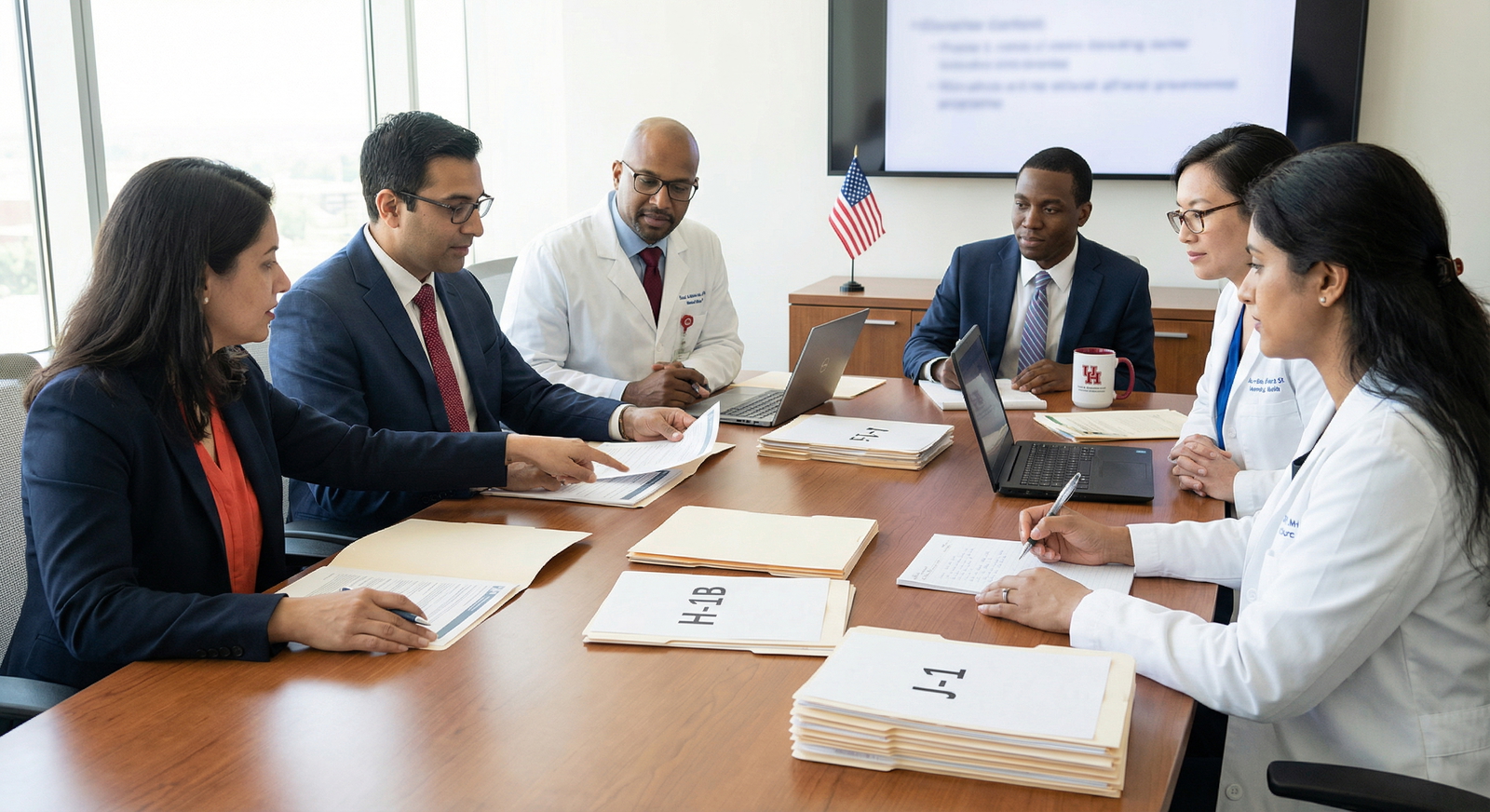
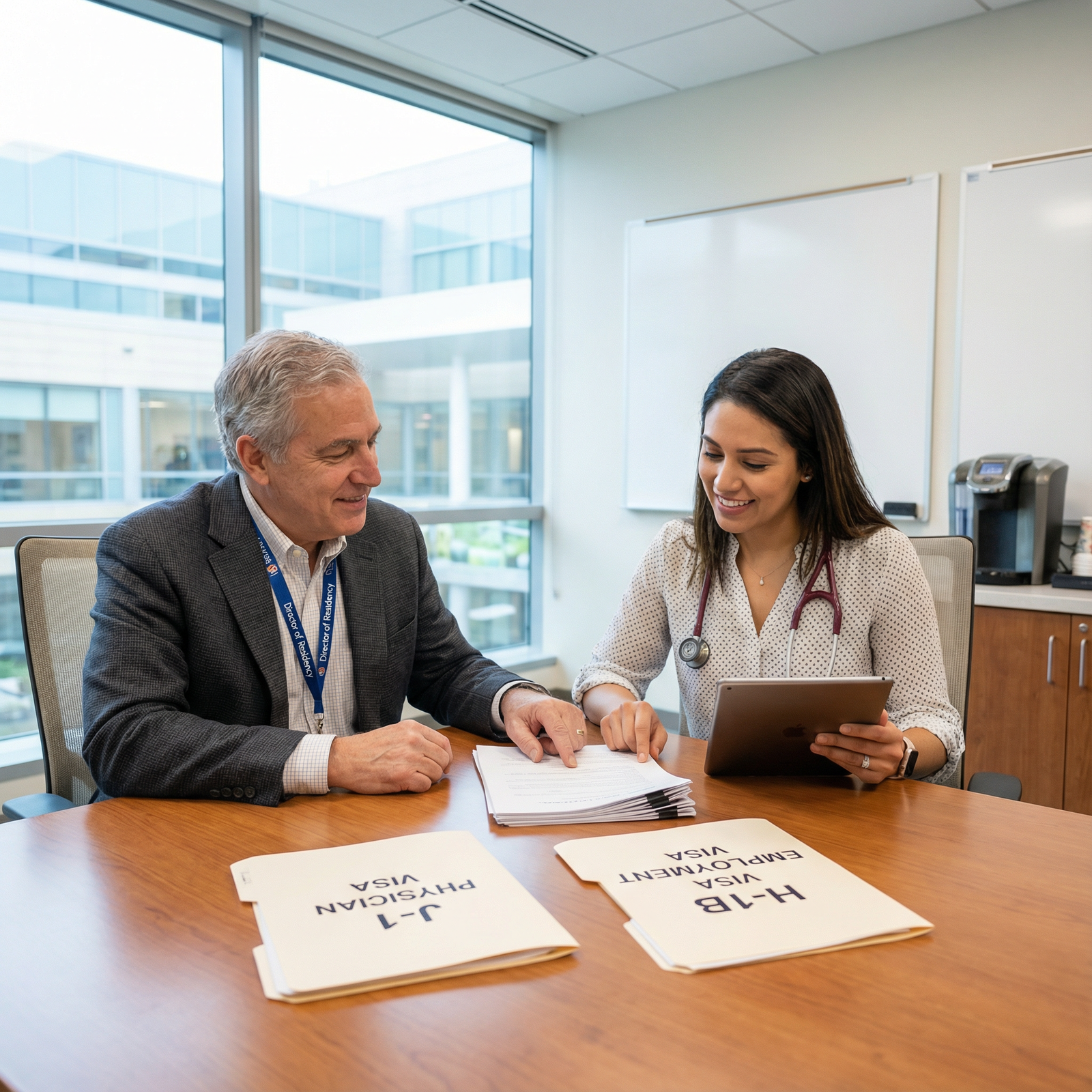
J-1 vs H-1B: Overview for Residency
J-1 (ECFMG-sponsored) for clinical training
- Most common visa overall for IMG residents and fellows
- Sponsored by ECFMG, not by individual programs directly
- Goal: Graduate medical education, not long-term employment
- Comes with a two-year home-country physical presence requirement unless you obtain a waiver
- Maximum duration usually 7 years for clinical training (with exceptions)
H-1B (employment-based)
- Less common in categorical residency but used widely for fellows and some advanced positions
- Sponsored directly by the residency or hospital employer
- Dual intent (easier pathway to permanent residency later)
- Requires passing USMLE Step 3 and meeting state licensure prerequisites at the time of petition
- Limited by H-1B cap unless the employer is cap-exempt (most teaching hospitals are cap-exempt)
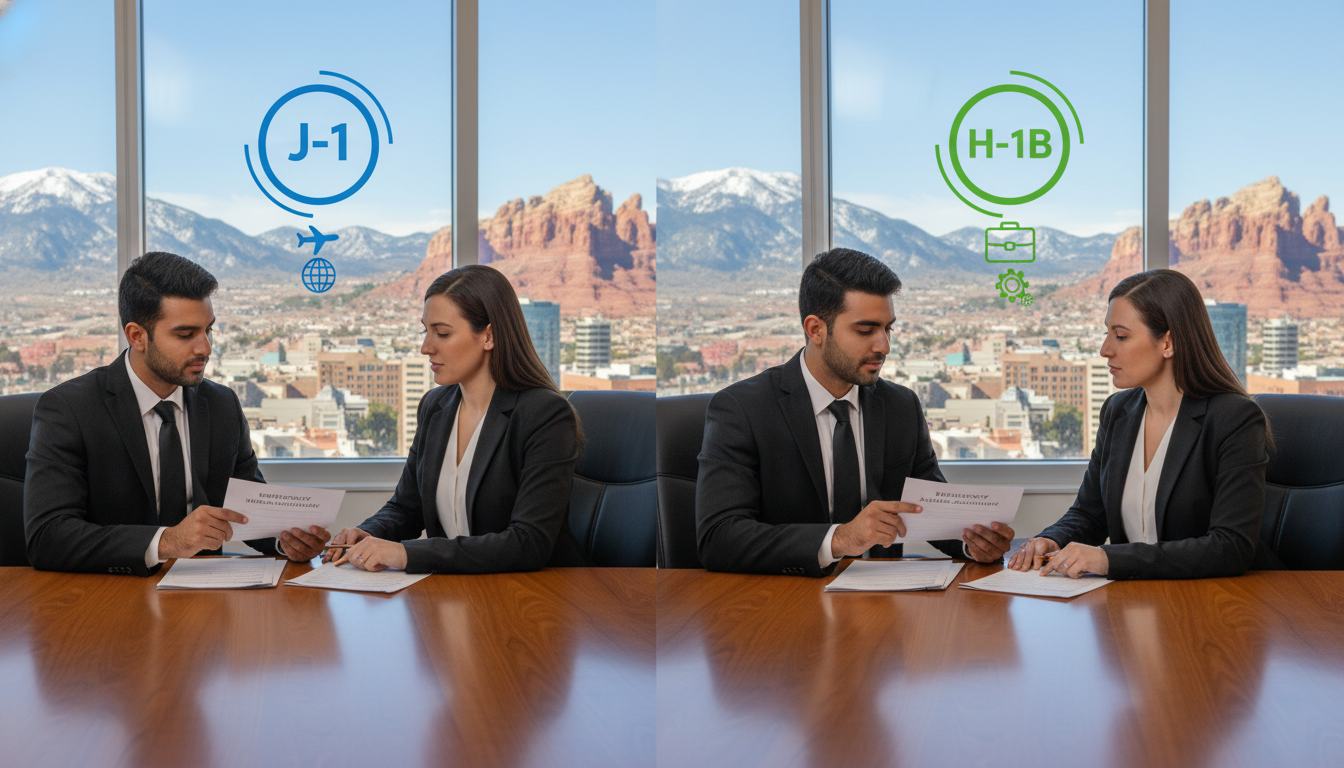
Practical comparison: J-1 vs H-1B for Mountain West applicants
J-1 advantages
- Widely accepted by community and academic programs across the Mountain West
- Standardized process through ECFMG; programs have clear protocols
- Faster to implement in many settings
- No Step 3 required before starting residency
J-1 disadvantages
- Two-year home residence requirement after training unless you obtain a J-1 waiver job
- Waiver positions may not be available in your preferred city or specialty; often in underserved or rural locations
- Complex transition from J-1 to long‑term immigration status
H-1B advantages
- Dual intent makes it easier to transition to permanent residency (green card) later
- No mandatory two-year home residence requirement
- Stronger platform for long-term US career planning
H-1B disadvantages
- Fewer programs in the Mountain West sponsor H-1Bs for categorical residents
- You must have USMLE Step 3 passed before H‑1B petition filing (timing-sensitive)
- More institutional cost and administrative burden, so many programs avoid it
- Some state licensure rules may add complexity before starting PGY-1
Key takeaway:
For a non-US citizen IMG targeting Mountain West residency, J-1 is usually the more realistic default, while H‑1B is a strategic option in selected programs if you plan carefully and meet Step 3/licensure thresholds early.
Special Considerations in the Mountain West Region
The Mountain West has unique geographic, demographic, and institutional characteristics that strongly influence visa strategy.
1. Program types and typical visa practices
Colorado residency programs
- Major hubs: Denver, Aurora, Colorado Springs, Fort Collins
- Several large academic centers (e.g., university-based programs) and many community programs
- You will find:
- Academic programs that prefer J‑1 but may sponsor H‑1B for highly qualified candidates
- Community programs that are either:
- J‑1 only
- J‑1 + occasional H‑1B
- Or do not sponsor any visas (require green card/citizenship)
Other Mountain West states (Utah, New Mexico, Nevada, Idaho, Montana, Wyoming)
- Fewer programs overall, many serving medically underserved or rural populations
- Common patterns:
- Strong reliance on J‑1 sponsorship through ECFMG
- More frequent involvement in J‑1 waiver recruitment for post-residency jobs
- H‑1B sponsorship occasionally available at major academic centers or large health systems
Example:
A non-US citizen IMG applying to Internal Medicine in Colorado might find:
- University-affiliated IM program: “We sponsor J‑1 visas. H‑1B considered on a case-by-case basis for exceptional candidates with Step 3.”
- A community IM program in a smaller Colorado city: “J‑1 visa sponsorship only.”
- A community hospitalist-focused program: “We cannot sponsor visas; US citizens or permanent residents only.”
2. Rural and underserved focus: J‑1 waiver implications
Many Mountain West states struggle with physician shortages in rural areas. This is critical for your long‑term planning:
- State J‑1 waiver programs (Conrad 30) in this region often actively recruit IMGs finishing training
- Residency in the Mountain West can position you favorably to secure a J‑1 waiver job in the same region, especially in primary care, psychiatry, and hospital medicine
- Some states (e.g., New Mexico, Montana) may be more flexible or proactive in using their waiver spots for needed specialties
If you accept a J‑1 for residency in the Mountain West, think ahead:
- Which states in the region tend to have unfilled or easily obtainable waiver slots?
- Are you open to working in a rural or semi-rural community for 3 years after training?
- Does your specialty align with high-need areas (FM, IM, Pediatrics, Psychiatry, OB/GYN)?
3. State-specific nuances that can affect visas
Each Mountain West state has its own licensing board and rules that may impact timing for H‑1B or Step 3:
- Some states require a certain number of US postgraduate training months before granting any form of license that supports H‑1B
- Others are more flexible but may still require verified ECFMG certification and USMLE completion
For example (general patterns; always verify current rules):
- Colorado: Historically more IMG-friendly; large academic system with established visa processes
- Utah: Strong university system; some programs have structured policies for J‑1 and selective H‑1B sponsorship
- Wyoming/Montana/Idaho: Fewer residency programs, often with close ties to underserved communities; J‑1 common
Action item:
Before applying, check the state medical board website (Colorado, Utah, New Mexico, etc.) and note:
- Requirements for training license for residents
- USMLE/COMLEX expectations
- Any regulations affecting H‑1B eligibility (e.g., Step 3 or minimum training duration)
Step-by-Step Visa Planning Timeline for the Non-US Citizen IMG
Visa navigation should be integrated into your overall residency application strategy from the beginning—not left until Match Week.
1. Pre-application phase (12–18 months before Match)
Clarify your personal priorities
- Are you open to a J‑1 with later J‑1 waiver service in a rural/underserved area?
- Is a direct path to permanent residency a high priority for you?
- Are you willing to invest in taking USMLE Step 3 early to be eligible for H‑1B in PGY‑1?
Research Mountain West programs carefully
On each program’s website (Colorado residency, Utah internal medicine, New Mexico family medicine, etc.) look for:
- “We sponsor J‑1 visas only.”
- “We sponsor J‑1 and H‑1B visas.”
- “We do not sponsor any visas.”
If not clearly stated, email the program coordinator with a short, specific question:
“I am a non-US citizen IMG and a foreign national medical graduate interested in your program. Could you please confirm which visa types you sponsor for incoming residents (J‑1, H‑1B, or others)?”
Decide on your Step 3 strategy
- If you are aiming for H‑1B in PGY‑1, you must:
- Schedule Step 3 early enough to receive your score before visa petition deadlines (usually late spring for a July start)
- Check eligibility rules for Step 3 (some states require specific criteria for eligibility that differ for IMGs)
If Step 3 timing is too risky, focus on programs that accept J‑1 for PGY‑1 and consider H‑1B later for fellowship.
2. Application and interview season
Filter your ERAS list based on visa realities
Build separate lists:
- Core list: Programs that explicitly sponsor J‑1 (and H‑1B if possible)
- Stretch list: Highly competitive programs that offer visas but may be harder to match
- Avoid list: Programs that do not sponsor visas or restrict to citizens/green card holders
For the Mountain West, you might see patterns like:
- A number of Colorado residency programs clearly state they sponsor J‑1
- Several Utah and New Mexico programs detail their IMG visa options on their websites
- Smaller states may have only a few programs, so you must read their policies carefully
Ask targeted questions on interview day (if not already clear)
Appropriate questions include:
- “Could you share your most common residency visa for IMGs (J‑1 vs H‑1B)?”
- “Do you sponsor H‑1B for categorical residents, or primarily for fellows?”
- “Have recent non-US citizen IMG residents had any difficulty obtaining visas to start on time?”
Avoid questions that sound like you are uninterested in clinical training; keep it concise, professional, and focused.
3. Post-interview and rank list strategy
Use what you learned to build a realistic rank list:
Top ranks: Programs where:
- Visa sponsorship is clear and reliable
- Your visa type (J‑1 or H‑1B) aligns with their policies
- You feel supported as a foreign national medical graduate
Lower ranks: Programs where:
- Policies are ambiguous or have changed recently
- They rarely match IMGs on visas
- Your preferred visa pathway is not supported
Do not rank a program that cannot sponsor any residency visa for you, even if you love its location, because if you match you cannot start.
4. After the Match: DS-2019 or H‑1B petition
If you match to a J‑1 position:
- The program will initiate documentation with ECFMG
- You will provide required materials (passport, diplomas, ECFMG certificate, statement of need from your home country, etc.)
- ECFMG issues a DS‑2019 form, which you use to apply for the J‑1 visa at a US consulate (if outside the US)
- Plan enough time for visa interview and potential administrative processing
If you match to an H‑1B sponsoring program:
- Confirm with the GME office:
- Timeline for filing the H‑1B petition
- Your responsibilities for completing Step 3 and licensing requirements
- Provide required documents quickly (ECFMG certificate, USMLE transcripts, degree verification, etc.)
- If you are abroad, you will attend a consular interview once the petition is approved

Long-Term Planning: From Residency Visa to Practice in the Mountain West
Your residency visa choice has major implications for your post-training options, especially if you hope to stay and practice in Colorado or elsewhere in the Mountain West.
J‑1 pathway and waiver options
If you complete residency on a J‑1:
You must either:
- Return to your home country for two years (physically present), or
- Obtain a J‑1 waiver through:
- Conrad 30 State Waiver programs
- Federal Interest Waivers (e.g., VA, HHS, etc.)
Mountain West opportunities:
Many states in this region actively use their Conrad 30 slots to recruit physicians for:
- Rural hospitals
- Community health centers
- Critical-access hospitals
- Tribal or frontier health facilities
Common specialties for waiver jobs:
- Family Medicine
- Internal Medicine / Hospitalist
- Pediatrics
- Psychiatry
- Occasionally OB/GYN or subspecialties in shortage areas
Strategy tips:
- Start exploring waiver possibilities in PGY‑2 (for 3‑year residencies) or earlier in longer programs
- Network with faculty who previously used J‑1 waivers in the region
- Attend state or regional job fairs aimed at rural and community recruitment
- Be willing to consider smaller communities; many attractive waiver jobs are outside major cities
Once you secure a waiver job, you typically work 3 years in that designated area. During this time, employers may sponsor you for H‑1B and eventually a green card.
H‑1B pathway for residency and fellowship
If you secure H‑1B for residency:
- You avoid the J‑1 two-year home requirement
- After residency, options include:
- Continuing on H‑1B in a job in Colorado or another Mountain West state
- Transition to another non-immigrant status (rare)
- Employer-sponsored permanent residency
However:
- You must mind your H‑1B time limits (typically 6 years total, with some extensions possible if your green card process is underway)
- Multiple H‑1B periods (residency + fellowship + job) must fit within these limits unless exceptions apply
- Many employers in underserved areas are familiar with H‑1B and green card sponsorship, but some smaller practices may be less experienced
Choice summary: J‑1 vs H‑1B in long-term regional context
- If you are willing to work in a rural or underserved area in the Mountain West after training and you value easier access to residency slots, J‑1 is often very workable, especially if you embrace the J‑1 waiver route.
- If your long-term goal is to stay in a major city, avoid home-country return requirements, and target academic or subspecialty careers, H‑1B may be preferable—but fewer programs in the Mountain West will support this at the residency level.
Common Pitfalls and How to Avoid Them
1. Not verifying visa sponsorship before ranking
Many applicants, particularly non-US citizen IMGs, assume that all programs sponsor at least J‑1. In the Mountain West, this is absolutely not the case.
How to avoid this:
- Document every program’s visa stance in a spreadsheet (J‑1 only, J‑1 + H‑1B, no visas, unclear).
- Confirm unclear programs via email before ranking.
- Do not rank any program that cannot clearly sponsor a residency visa appropriate for you.
2. Mis-timed Step 3 attempts for H‑1B
Foreign national medical graduates sometimes bank on H‑1B but:
- Take Step 3 too late
- Fail or delay retaking it
- Miss the petition window for PGY‑1 start
How to avoid this:
- Only base H‑1B plans on actual passed Step 3 score and realistic timelines.
- If uncertain, prioritize J‑1-accepting programs to avoid jeopardizing your ability to start training.
- Consider targeting H‑1B more strongly for fellowship rather than residency.
3. Ignoring state licensure nuances
Some states in the Mountain West have particular training license rules that interact with H‑1B. If you or your program misunderstand them, your start date can be at risk.
How to avoid this:
- Educate yourself on state board requirements for training licenses (Colorado, Utah, New Mexico, etc.).
- Trust but verify what you hear; check official board websites.
- Submit all documentation early to licensing boards once your Match is confirmed.
4. Underestimating long-term implications of J‑1
Some non-US citizen IMGs accept J‑1 without considering the mandatory home return or waiver requirements. By PGY‑3, they realize that their preferred post-residency plans (e.g., big-city subspecialty practice without waiver obligations) may be difficult.
How to avoid this:
- Before committing to J‑1, understand:
- The two-year home requirement
- The J‑1 waiver obligation
- How these align with your long-term career goals
- If you are flexible about practicing in underserved Mountain West communities, J‑1 can be a powerful path, not just a limitation.
FAQ: Visa Navigation for Non-US Citizen IMGs in the Mountain West
1. As a non-US citizen IMG, is it realistic to aim for H‑1B for residency in the Mountain West?
It is possible but less common than J‑1. Some large academic centers in Colorado, Utah, or Nevada may sponsor H‑1B for select candidates, typically those who already passed Step 3 and meet all licensure requirements. Many community programs in the region only sponsor J‑1 or no visas at all. If H‑1B is your priority, identify programs with a clear history of H‑1B sponsorship, take Step 3 early, and still apply widely to J‑1-sponsoring programs as a safety net.
2. If I accept a J‑1 residency visa, can I still stay in the US after training in the Mountain West?
Yes. You must either fulfill the two-year home-country physical presence requirement or obtain a J‑1 waiver. Many Mountain West states use Conrad 30 waivers to recruit physicians to underserved areas. If you are open to working 3 years in a rural or shortage area (often as a hospitalist, primary care physician, or psychiatrist), you can transition from J‑1 to H‑1B and then pursue a green card. Many IMGs successfully follow this route and build permanent careers in the region.
3. Do Colorado residency programs generally favor J‑1 vs H‑1B?
Most Colorado residency programs that sponsor visas accept J‑1 as the standard. Some academic programs may consider H‑1B on a case-by-case basis for highly qualified non-US citizen IMGs who have already passed Step 3. Community programs vary: some are J‑1 only, and others cannot sponsor any visa. It is essential to check each program individually; there is no single rule for all Colorado residency programs.
4. I am still in medical school abroad. What can I do now to improve my IMG visa options for residency?
You can:
- Aim for strong USMLE scores and early ECFMG certification.
- Complete US clinical experience (USCE) to make yourself more competitive, especially for Mountain West programs that rely heavily on IMGs.
- Research IMG-friendly programs in Colorado and other Mountain West states and note their visa policies early.
- Decide whether you want to prioritize J‑1 vs H‑1B and plan Step 3 accordingly.
- Network with residents and alumni from your country who matched into the region to learn how they navigated the visa system.
By integrating visa strategy into your overall residency planning—especially in the Mountain West, where geography, workforce needs, and institutional policies strongly shape IMG visa options—you can move from uncertainty to a structured, realistic plan. Understanding J‑1 vs H‑1B, researching program policies, and planning for long‑term pathways such as J‑1 waivers or H‑1B-based permanent residency will help you not only match but also build a sustainable career in the region.