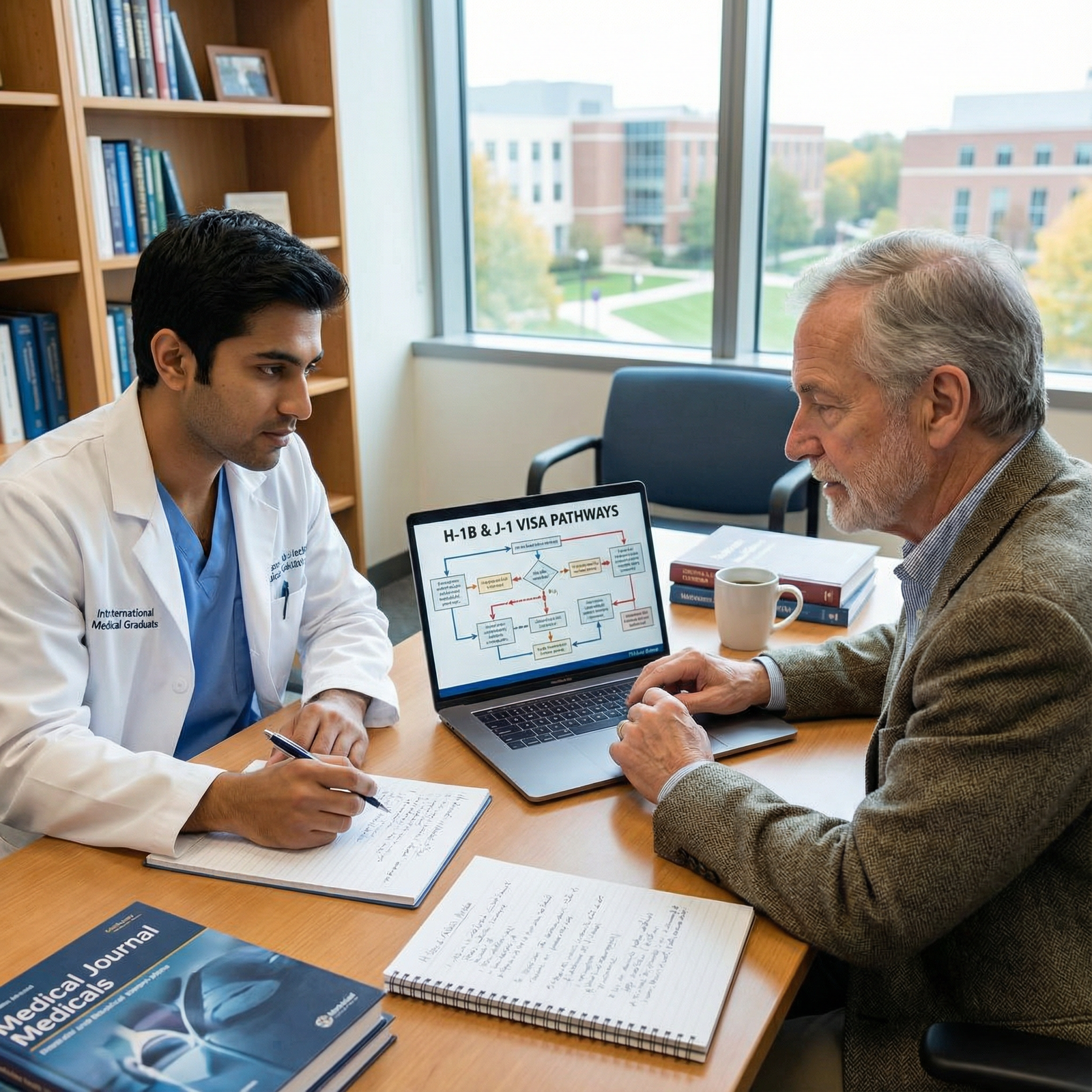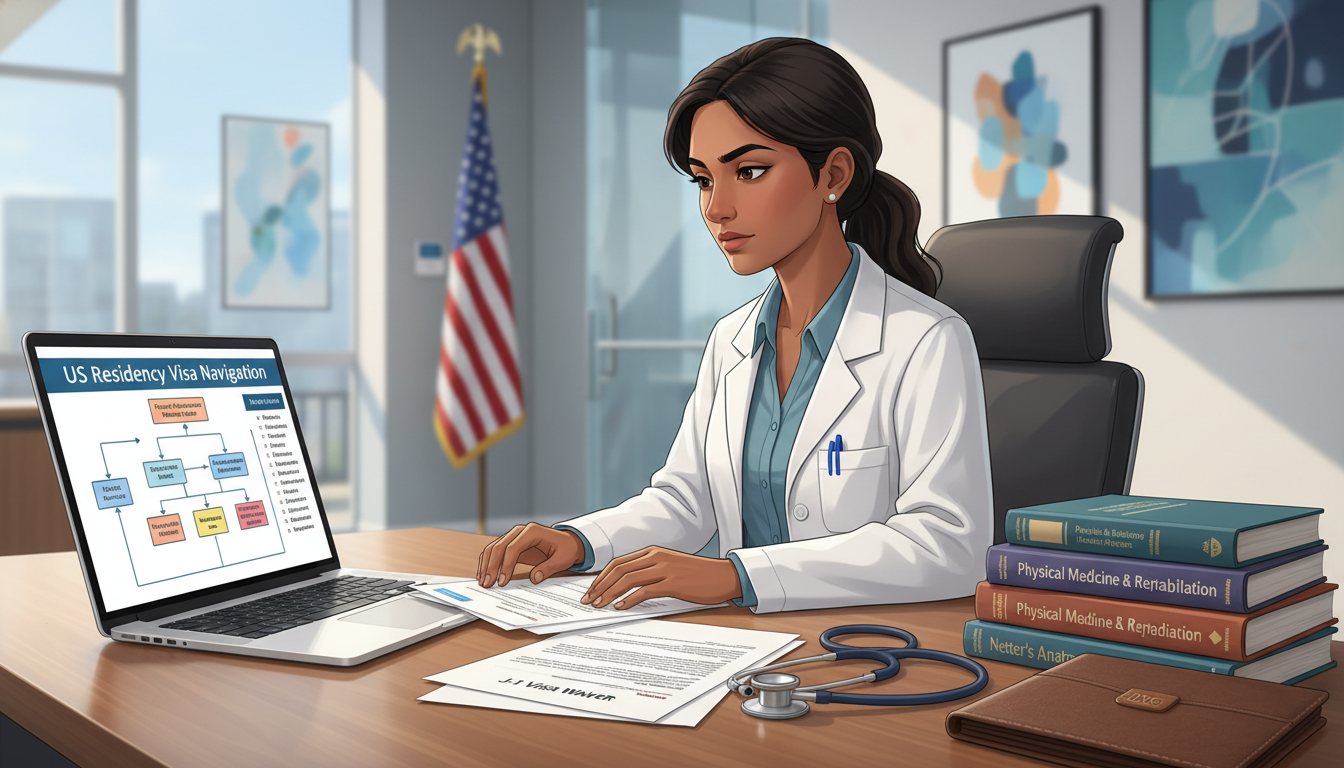
Entering a peds psych residency or triple board program in the United States as a non-US citizen IMG is exciting—but visa navigation can feel like a second full-time job. Understanding your IMG visa options and planning early will protect your timeline, reduce risk, and help you target programs that truly fit both your training and immigration needs.
Below is a detailed, practical guide tailored specifically to the foreign national medical graduate pursuing Pediatrics-Psychiatry or Triple Board (Pediatrics–Psychiatry–Child & Adolescent Psychiatry) training in the US.
Understanding the Peds Psych / Triple Board Training Pathway and Why Visa Planning Matters
Combined training in Pediatrics and Psychiatry is highly structured and typically limited to a small number of programs. That makes advance visa planning even more important for a non-US citizen IMG.
Common Combined Pathways
Triple Board (Pediatrics–General Psychiatry–Child & Adolescent Psychiatry)
- Duration: 5 years
- Outcome: Board eligibility in:
- Pediatrics
- General Psychiatry
- Child & Adolescent Psychiatry
- Intensive, highly structured curriculum
- Very few programs nationwide; each accepts only a handful of residents per year
Pediatrics/Psychiatry/Child & Adolescent Psychiatry (Peds-Psych-Child Psych)
- Also typically 5 years
- Similar concept to triple board, but curriculum structure may differ slightly by institution
Sequential Training (Pediatrics then Psychiatry or vice versa)
- Less common and more complex from a visa perspective
- Typically two separate residency programs (and possibly a fellowship)
With such long, multi-board training:
- Visa continuity across 5 years (or more, if you add fellowships) is crucial.
- You must understand J-1 vs H-1B implications for:
- Time limits (e.g., 7-year J-1 rule)
- Home-residency requirement (J-1 2-year rule)
- Future academic or practice plans in the US
Visa status is not just an administrative detail—it directly influences which programs to apply to, how you rank them, and your long-term career path in child mental health.
Core IMG Visa Options for US Residency: J-1 vs H-1B
For a non-US citizen IMG, two main visa categories are used for GME training:
- J-1 Exchange Visitor Physician Visa
- H-1B Temporary Worker (Specialty Occupation) Visa
Other statuses (e.g., F-1 with OPT, O-1, green card) exist but are far less common as the primary residency visa route.
1. J-1 Physician Visa (ECFMG-Sponsored)
The J-1 is the default visa for foreign national medical graduates doing residency or fellowship in the US. It is sponsored nationally by ECFMG, not directly by your program.
Key Features
- Sponsor: ECFMG (Educational Commission for Foreign Medical Graduates)
- Eligibility basics:
- Valid ECFMG certification
- Confirmed residency or fellowship position in an ACGME-accredited program
- Statement of Need from your home country
- Proof of adequate financial support (usually your residency salary)
- Duration:
- Authorized year by year, up to a maximum of 7 years total for clinical training
- Enough for:
- 5-year triple board
- Plus potentially 1–2 years of additional fellowship if well-planned
Pros
- Used by the majority of IMGs in residency
- Programs are very familiar with the process
- No complex prevailing wage/lawyer costs for the institution
- Relatively straightforward annual renewals with ECFMG
Cons
- Two-year home residency requirement (INA 212(e)):
- After finishing training, you must return to your home country for an aggregate of 2 years OR
- Obtain a J-1 waiver (e.g., Conrad 30, federal/National Interest Waiver options) before changing to H-1B/immigrant status
- Changing to H-1B or green card without a waiver is extremely difficult
- Moonlighting is tightly regulated and often restricted
- Spouse’s work permission (J-2 EAD) is possible but not guaranteed immediately
J-1 in a Peds Psych or Triple Board Track
Because these programs are long (5 years), you must consider:
- You will likely use 5 of the 7 allowable J-1 years during residency.
- That leaves 2 years maximum for:
- Additional fellowships (if any)
- Research years (if your program builds this into the plan)
- Your return home or waiver strategy must be thought out by mid-residency:
- If you plan to practice in a US state with strong child psychiatry needs (e.g., rural or underserved areas), Conrad 30 waivers or other waiver pathways might be available after training.
- Many triple board graduates are highly attractive to underserved pediatric and behavioral health settings—this can help with waiver job placement later.
2. H-1B Visa for Residency
The H-1B is a work visa for “specialty occupations.” Some residency programs sponsor H-1Bs for residents, but many do not, due to cost and administrative burden.
Basic Requirements
- A recognized medical degree (equivalent to US MD/DO)
- Pass USMLE Step 3 before H-1B filing (this is critical)
- Offer of employment (residency contract) from a US hospital
- Employer willing to:
- Pay prevailing wage
- File H-1B paperwork (LCA, I-129)
- Cover legal/filing fees (usually)
Pros
- No two-year home residency requirement
- More straightforward to:
- Transition into H-1B attending roles
- Apply for permanent residence (green card) later
- Spouse (H-4) may be able to work in some circumstances (typically only once certain immigration milestones are met for the H-1B principal)
- Perceived stability for those planning long-term US careers
Cons
- Fewer programs are willing to sponsor H-1Bs for residency
- Step 3 must be passed early—ideally before ranking programs
- Typically more costly and paperwork-heavy for the hospital
- Some institutions have an explicit policy: “J-1 only; no H-1B sponsorship”
H-1B in a Triple Board Context
Because triple board training is 5 years:
- H-1B cap-exempt employment (university or non-profit hospital) can be extended up to 6 years total, often with opportunities for additional extensions if a green card process has started.
- You must ensure that:
- The entire 5 years of your triple board residency can be covered under H-1B.
- Program leadership and institutional GME office understand and are willing to plan your status across all 5 years from the start.
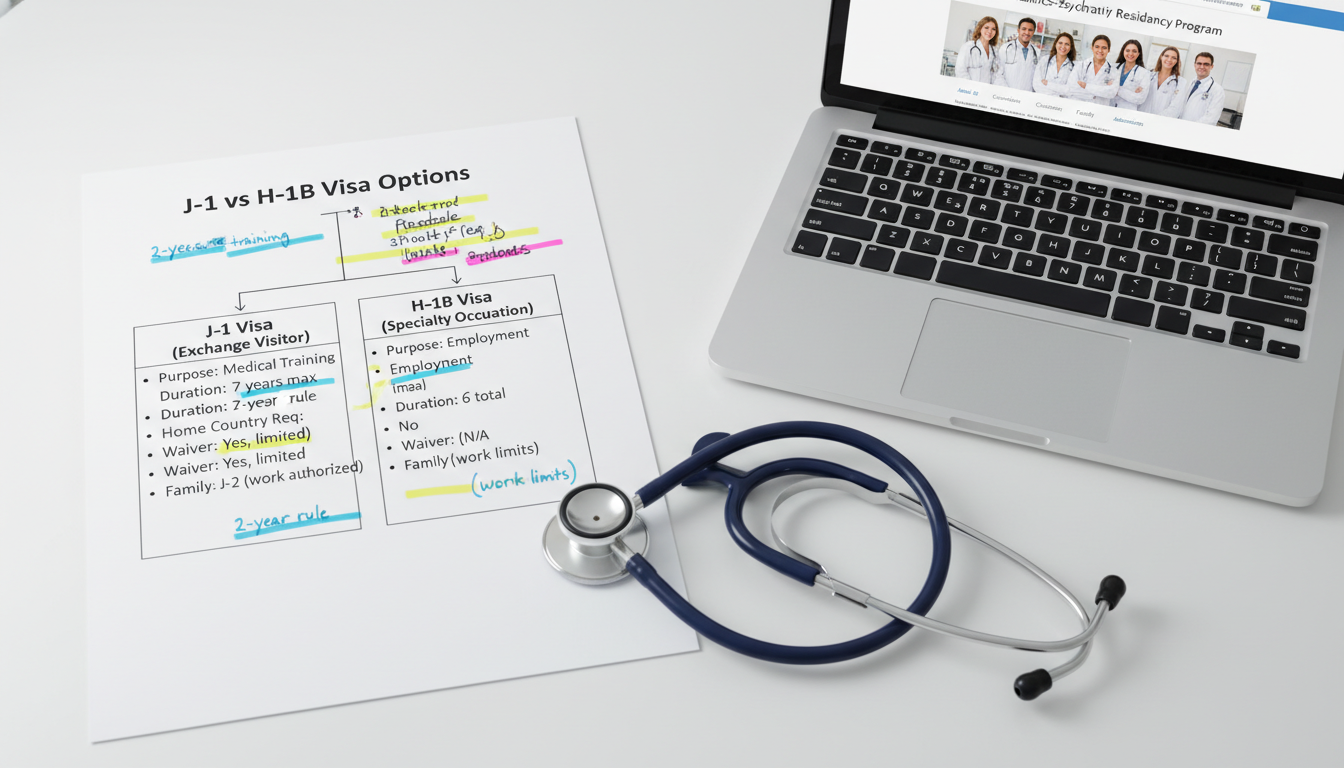
Choosing Between J-1 vs H-1B as a Non-US Citizen IMG in Peds Psych
There is no universal “best” option. The right choice depends on your career goals, timeline, and home country ties.
Key Questions to Ask Yourself
Do I intend to return to my home country soon after training?
- If yes, J-1 is usually straightforward and well-suited.
- The 2-year home residency obligation may align with your personal or professional goals.
Is my long-term goal to live and practice in the US?
- If yes, H-1B is often more favorable:
- Avoids the J-1 2-year home rule
- May simplify future transition to attending positions and green card applications
- If yes, H-1B is often more favorable:
Can I realistically complete USMLE Step 3 early?
- To start residency on H-1B, you typically must pass Step 3 before the program files your H-1B petition—usually by late spring of the Match year.
- This can be especially challenging for applicants:
- Applying straight from medical school
- Spending time in research or non-clinical roles prior to Match
Do the peds psych / triple board programs I like sponsor H-1B?
- Many combined programs are based at large academic centers that may:
- Prefer J-1 for all residents, or
- Have H-1B policies only for certain specialties
- You must check program-by-program.
- Many combined programs are based at large academic centers that may:
Practical Decision-Making Matrix
- If you want the max number of program options (including many top academic peds psych/triple board programs):
- Be prepared to accept a J-1.
- If you are determined to avoid the J-1 2-year rule and have time to pass Step 3 early:
- Target a small subset of programs that explicitly sponsor H-1B, understanding that:
- Your program list will be more limited.
- You may need a strong overall profile to be competitive at those institutions.
- Target a small subset of programs that explicitly sponsor H-1B, understanding that:
Application Strategy: Targeting Programs and Communicating Your Visa Needs
Given the limited number of peds psych and triple board slots each year, a strategic application plan is critical for any non-US citizen IMG.
Step 1: Research Program Visa Policies Before Applying
For each program of interest:
- Visit the GME office website and the residency program website.
- Look for:
- “We sponsor J-1 visas only”
- “We sponsor J-1 and, on a case-by-case basis, H-1B”
- “We do not sponsor visas”
- If unclear, email the program coordinator or GME office with:
- A concise, professional question:
“As a non-US citizen IMG, I would like to know which IMG visa options are available for residents in your peds psych / triple board program (J-1 vs H-1B).”
- A concise, professional question:
Keep a spreadsheet noting:
- Program name
- Visa policy
- Type of combined program (triple board vs other structure)
- Deadline for Step 3 (if H-1B is possible)
- Any special notes about international graduates
Step 2: Decide Your Primary Visa Goal but Stay Flexible
- If your top priority is training in a triple board or peds psych program (regardless of visa type):
- Be ready to accept J-1 as the default option.
- If your top priority is avoiding the 2-year home requirement:
- Narrow your list to H-1B-friendly programs, but recognize you are trading off number of positions for immigration preference.
Many non-US citizen IMGs adopt a dual strategy:
- Apply to a mix of:
- Programs that are J-1 only
- Programs open to J-1 and H-1B
- Rank according to a combination of:
- Training quality
- Program culture and support for IMGs
- Visa sponsorship preferences
Step 3: Address Visa in Your ERAS Materials (Subtly and Professionally)
- Personal Statement:
- You do not need to discuss visa details extensively.
- But you can mention your “international background” or “commitment to underserved child mental health, including in my home country,” which can support future J-1 waiver plans or demonstrate global perspective.
- CV:
- Ensure your citizenship and visa sections in ERAS are accurate.
- Interviews:
- Expect some programs to ask:
“What visa will you need?” - Answer honestly:
- “As a non-US citizen IMG, I will require visa sponsorship. I am currently eligible for J-1 through ECFMG and, if required by your institution, I am also working toward Step 3 to be H-1B–eligible.”
- Demonstrate that you are:
- Informed (you understand J-1 vs H-1B basics)
- Flexible where possible
- Realistic about timelines
- Expect some programs to ask:
Navigating Residency Visa Logistics Once You Match
Once you match into a peds psych or triple board program, timing and documentation become critical. Your next steps differ slightly depending on J-1 vs H-1B.
If You Match on a J-1 Visa
1. Obtain and Maintain ECFMG Certification
- Ensure your ECFMG certificate is fully issued, with primary source verification complete.
- ECFMG cannot issue your DS-2019 (J-1 document) without this.
2. Statement of Need from Your Home Country
- This is a formal letter from your home country’s Ministry of Health or equivalent authority.
- It usually states:
- Your country “needs physicians” in pediatrics, psychiatry, child mental health, etc.
- They support your training in the US.
- Requirements vary by country:
- Some have fixed templates.
- Some require in-person visits or notarized documents.
- Start early—delays here can postpone your visa appointment.
3. DS-2019 Issuance and Embassy Interview
- Your matched program confirms your appointment with ECFMG.
- ECFMG issues the DS-2019, which allows you to schedule a J-1 visa interview at the US embassy/consulate.
- Prepare:
- Proof of funding (residency contract)
- Passport
- DS-160 confirmation
- SEVIS fee payment
- Any additional documents required by your local embassy
4. J-2 for Spouse/Children (If Applicable)
- Spouse and minor children can apply for J-2 status.
- Spouse may later apply for an EAD (work permit), but that is a separate process and not guaranteed immediately.
5. During Training: Plan for the Future
- Use PGY-2 and PGY-3 to understand J-1 waiver options for triple board grads:
- Conrad 30 state waivers, especially in states with child psychiatry shortages
- Federal waiver programs (e.g., VA, HHS, some mental health agencies)
- Develop a rough post-residency timeline:
- Year you’ll finish training
- When to start job/wavier search (usually 12–18 months before graduation)
If You Match on an H-1B Visa
1. Step 3 Completion
- Pass USMLE Step 3 as early as possible—ideally before Match, and no later than early spring.
- Without Step 3, H-1B filing is usually not possible for residents.
2. Employer’s H-1B Petition
- Your hospital (or its legal counsel) will:
- File a Labor Condition Application (LCA) with the Department of Labor
- Prepare and file Form I-129 for H-1B
- Confirm that:
- Your start date (usually July 1st) is feasible given processing times
- Premium processing will be used if necessary
3. H-4 for Dependents
- Spouse and children can apply for H-4.
- H-4 work authorization is more limited than J-2 EAD and often dependent on your progress toward permanent residence.
4. Long-Term Planning
- If your institution is cap-exempt (most training hospitals are), your H-1B may not be counted against the annual cap—this is usually beneficial.
- If you plan to stay in the US long term:
- Discuss with mentors or immigration counsel when to start a green card process, often later in residency or early in attending life.
Special Considerations for Foreign National Medical Graduates in Pediatrics-Psychiatry
Peds psych and triple board training create both opportunities and complexities from a visa and career perspective.
1. Length of Training vs Visa Limits
- Triple board: 5 years
Well within the J-1 7-year total limit, but leaves less margin if:- You repeat a year
- You want additional fellowships (e.g., research-heavy child psych training)
- For H-1B:
- 5 years of residency fits within the typical 6-year H-1B limit.
- You may seek extensions via green card sponsorship later.
2. Future Practice Setting and J-1 Waivers
Child and adolescent psychiatry—and integrated pediatric-psychiatric care—is in critical shortage across much of the US. This shortage can work in your favor when seeking J-1 waivers:
- Many states prioritize mental health and child health services for their Conrad 30 slots.
- Hospitals and clinics in underserved areas or community mental health centers may be highly interested in:
- Triple board–trained physicians
- Peds psych specialists who can manage complex developmental, behavioral, and psychiatric conditions in children
If you are on a J-1 and intend to stay in the US after training:
- Start exploring waiver-eligible employers in:
- Rural pediatrics
- Community mental health for children and adolescents
- Federally Qualified Health Centers (FQHCs)
- Network during residency through:
- National conferences (AACAP, APA, pediatric meetings)
- Rotations at affiliated community clinics
3. Balancing Home Country Needs and US Career Goals
As a non-US citizen IMG, your home country may have strong expectations about your return after US training—especially if you received government scholarships.
- The Statement of Need for J-1 already frames your training as beneficial to your home country.
- If you plan to fulfill the 2-year requirement:
- Think early about how your triple board or peds psych skill set will be used back home.
- If you hope to stay in the US long term:
- Be prepared to navigate:
- Ethical considerations (promises made to sponsors back home)
- Immigration law (J-1 waiver, H-1B employment, green card process)
- Be prepared to navigate:
4. IMG-Specific Challenges and Supports
Common challenges for non-US citizen IMGs in peds psych:
- Adjusting to:
- US child protection systems
- School-based services and special education law
- Mental health legal frameworks (involuntary holds, guardianship)
- Visa stress can amplify burnout during an already intense training schedule.
Helpful strategies:
- Seek mentors who are:
- International graduates, especially those in psychiatry and pediatrics
- Familiar with J-1 vs H-1B and waiver processes
- Use institutional resources:
- GME visa/immigration office
- International office
- Wellness programs and mental health resources
- Join communities:
- IMG groups in your hospital
- National IMG sections within pediatric and psychiatric societies if available
Frequently Asked Questions (FAQ)
1. As a non-US citizen IMG, is it realistic to get H-1B sponsorship for a triple board residency?
It is possible but not guaranteed. You must:
- Identify programs that explicitly consider H-1B for residents.
- Pass USMLE Step 3 early enough for H-1B filing.
- Accept that:
- Some programs will say “J-1 only.”
- Even H-1B-friendly institutions may prefer J-1 for most residents due to cost/logistics.
You can increase your chances by being:
- Academically strong (Step scores, research, clinical experience)
- Clear and honest with programs about your needs and flexibility
2. Will the J-1 7-year limit be a problem for a 5-year triple board program?
Usually no, as long as your training stays within the planned 5 years:
- 5 years of residency uses 5 out of 7 allowed J-1 years.
- You still have 2 years available if:
- You require a research year
- You pursue a short additional fellowship
However:
- If you repeat multiple years or plan extensive additional training, you could approach the 7-year cap. In that scenario, you’d need careful planning with ECFMG and your program.
3. Can I switch from J-1 to H-1B during or after residency?
Switching from J-1 to H-1B is complicated because of the 2-year home residency requirement:
- If you are subject to INA 212(e) (as most J-1 physicians are), you must either:
- Return home for 2 years, OR
- Obtain a J-1 waiver before:
- Changing to H-1B
- Obtaining permanent residence
- Some physicians complete training on J-1, then:
- Take a J-1 waiver job on H-1B (e.g., Conrad 30 position) after the waiver is approved.
- Plan this with:
- An experienced immigration attorney
- Your potential employer
4. When should I start thinking about my visa and waiver strategy—before or after I match?
You should consider basic visa strategy before you apply, and then refine it:
- Before application season:
- Decide whether you will:
- Aim for J-1, H-1B, or stay flexible
- Research program-level policies
- Decide whether you will:
- During residency:
- If on J-1: start exploring waiver options by PGY-2 or PGY-3
- If on H-1B: consider long-term H-1B vs green card routes during your later years
- Early planning gives you more leverage and fewer surprises, especially in a long, structured pathway like peds psych or triple board.
Thoughtful visa navigation is part of your professional journey as a non-US citizen IMG in pediatrics-psychiatry. Begin early, stay informed, keep your options as broad as your circumstances allow, and use your unique international background as a strength—both in your applications and in your future work with children and families.