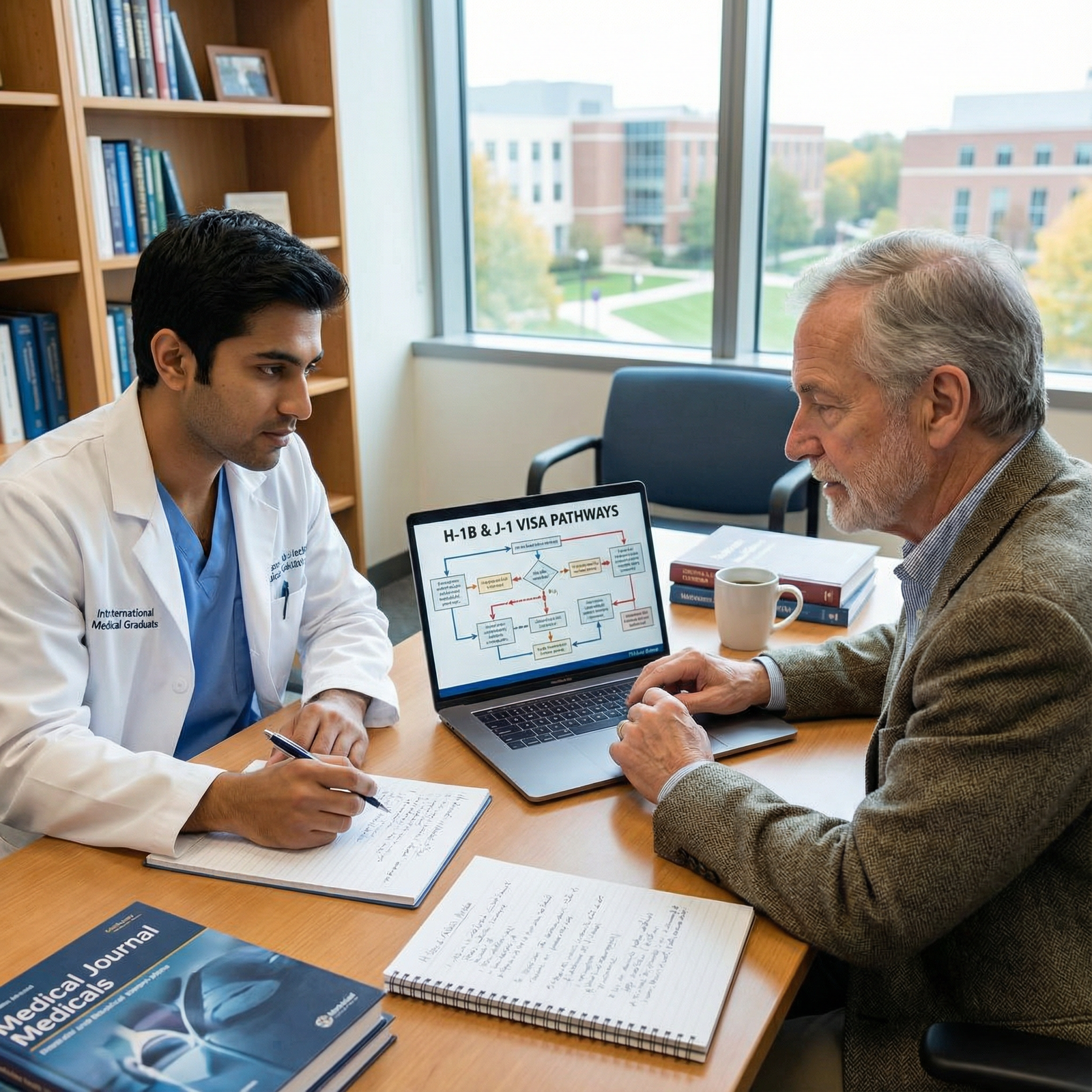
Understanding the Visa Landscape for Non‑US Citizen IMGs on the Pacific Coast
For a non-US citizen IMG aiming for residency on the Pacific Coast—especially in California residency programs—the visa question is often as important as USMLE scores or letters of recommendation. Programs in California, Oregon, and Washington attract a high volume of applicants, many of whom are foreign national medical graduates. To be competitive, you must understand residency visa policies, how they vary across institutions, and how to align your strategy (exam timing, application list, and long‑term goals) with realistic IMG visa options.
This article focuses on practical, step-by-step guidance for a non‑US citizen IMG targeting west coast residency programs: what visas are available, how J‑1 vs H‑1B compare, what Pacific Coast programs typically sponsor, and how to avoid common pitfalls that can derail an otherwise strong application.
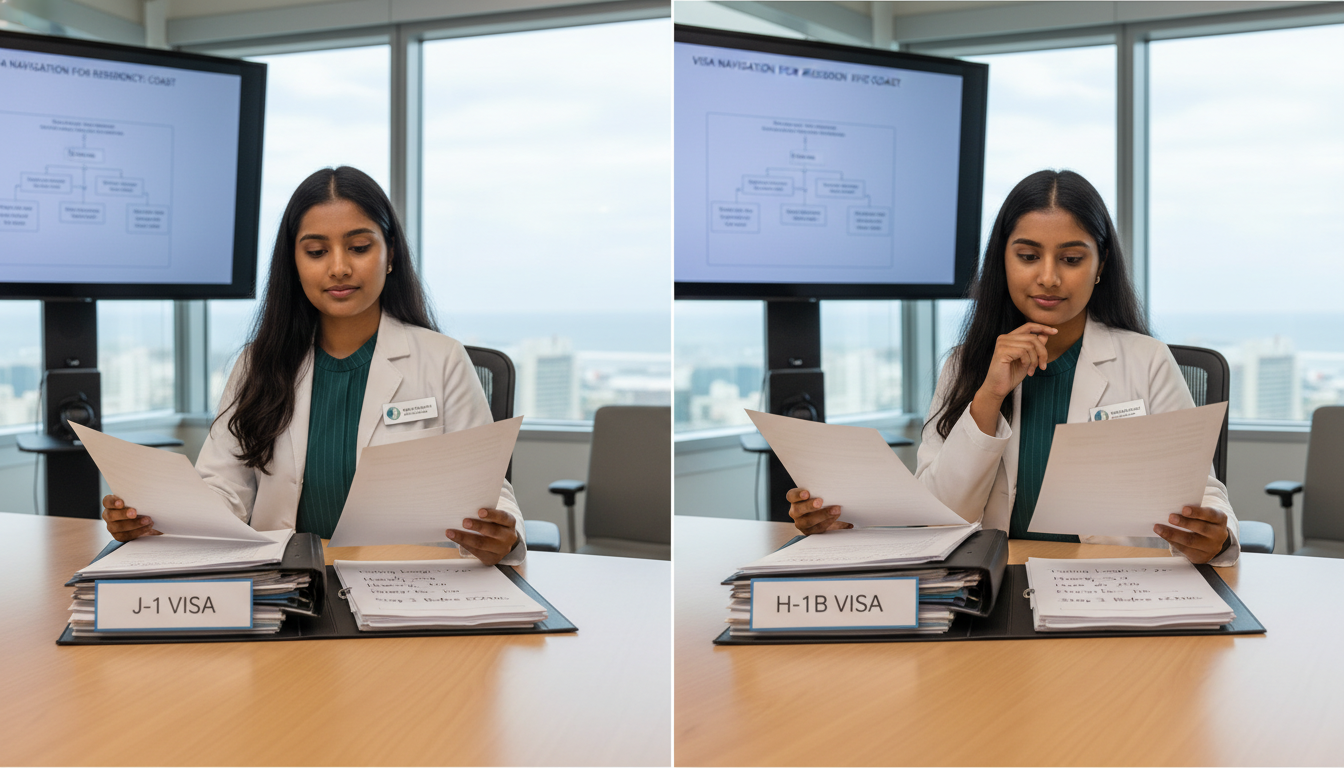
Core Visa Pathways for Residency: J‑1 vs H‑1B (and Others)
The majority of foreign national medical graduates in US GME are on either J‑1 or H‑1B visas. Understanding their differences—beyond just “J‑1 vs H‑1B”—is crucial to making informed decisions about exams, ECFMG certification, and where you apply.
1. The J‑1 Exchange Visitor Visa for Physicians
The J‑1 is the most common residency visa for IMGs.
Key features:
- Sponsored by: ECFMG, not directly by the residency program (though the program must host you and provide documentation).
- Scope: For graduate medical education (residency/fellowship), and short-term clinical training.
- Duration: Length of your ACGME‑accredited training (up to 7 years in most cases), with possible extensions for subspecialty training.
- Two‑year home residency requirement (often referred to as “212(e)”):
After completing training, most J‑1 physicians must return to their home country (or country of last permanent residence) for a total of 2 years before they can:- Obtain H‑1B or L‑1 status, or
- Apply for most types of immigrant visas (green cards).
In practice, many IMGs fulfill this requirement via a J‑1 waiver job after residency (e.g., Conrad 30 in underserved areas), not by physically returning home. This is especially relevant if your long‑term goal is to stay in the US West Coast region after training.
Pros of J‑1 for a non‑US citizen IMG:
- Widely accepted: Many California residency programs and other west coast residency sites are “J‑1 only.”
- Administratively streamlined: ECFMG manages much of the process; programs are familiar with the paperwork.
- Easier to obtain for most graduates than H‑1B, especially if you are just entering residency.
Cons and limitations:
- 2‑year home residency requirement (or need for a J‑1 waiver job) can constrain post‑residency choices.
- Typically not suitable if you aim to jump quickly to a green card pathway during residency.
- Moonlighting and outside work are more limited and tightly regulated.
2. The H‑1B Temporary Worker Visa for Physicians
The H‑1B classification (specialty occupation worker) is less common but attractive for some IMGs.
Key features:
- Employer‑sponsored: The residency program or teaching hospital must file the H‑1B petition.
- Degree requirement: Must show the equivalent of a US MD/DO plus all state licensure educational prerequisites.
- Exam requirement: Many programs require USMLE Step 3 passed before they will sponsor H‑1B.
- Cap‑exempt status: Most teaching hospitals are “cap‑exempt,” meaning:
- They can file H‑1B petitions year‑round, not just during the April lottery window.
- They are not limited by the national H‑1B numerical cap.
Pros of H‑1B:
- No automatic 2‑year home residency requirement.
- Dual intent: You can actively pursue a green card while in H‑1B status.
- Often more flexibility for post‑residency career moves within the US.
Cons and limitations:
- Fewer programs offer H‑1B sponsorship, especially in competitive California residency programs that already receive abundant applicants.
- You typically must have Step 3 done (some allow filing while pending but most insist on a passed score before petition).
- Legal and filing costs are higher for programs; some smaller or community west coast residency programs may decline due to cost/complexity.
3. Other Less Common Pathways (O‑1, TN, Green Card Holders)
For completeness:
O‑1 (Extraordinary Ability)
Rarely used at the residency entry level. More common for established physician‑scientists. Hard to secure as a new IMG.TN (for Canadian/Mexican Citizens)
Does not readily fit standard GME training roles; more common for licensed attending‑level positions.Permanent Residents (Green Card Holders)
If you already have a green card, you apply as a US IMG for visa purposes. No special residency visa required.
For most non‑US citizen IMGs targeting Pacific Coast training, the realistic practical question remains: J‑1 vs H‑1B.
How Pacific Coast Programs Approach Visa Sponsorship
Visa sponsorship is not uniform across all west coast residency sites. California, Oregon, and Washington each have a mix of academic, county, and community hospitals—and each institution has its own risk tolerance, budget, and HR policies.
1. General Trends in California Residency Programs
California residency programs are among the most competitive in the country. As a non‑US citizen IMG, this competition intersects with visa policy in important ways.
Common patterns:
“J‑1 only” is very common
Many University of California (UC) systems and large academic centers will clearly state “We sponsor J‑1 visas only.” This is driven by administrative simplicity and the strong domestic applicant pool.H‑1B sponsorship is more selective
Some California residency programs offer H‑1B only to:- Highly ranked candidates, or
- Applicants who already have Step 3 passed and meet California licensing prerequisites at the time of ranking.
California’s unique licensing rules
California historically had complicated rules around non‑LCME/non‑AOA schools (evolving over time). Always confirm:- Whether your medical school is recognized or has any special restrictions.
- The state’s policies on international medical education verification.
These factors influence whether a California residency program feels comfortable sponsoring an H‑1B for a foreign national medical graduate from your school.
2. Program Policies in Oregon and Washington
Oregon and Washington have slightly fewer programs than California but often have strong academic centers and community programs receptive to IMGs.
Typical patterns:
University-based programs (e.g., in Portland or Seattle) often:
- Accept J‑1 routinely.
- Have clear, published statements about whether they consider H‑1B.
Community programs in secondary cities may:
- Be more IMG‑friendly, but
- Have limited legal resources and may shy away from H‑1B due to perceived complexity.
Your advantage as a non‑US citizen IMG targeting the Pacific Coast is to map each program’s visa stance early and match your exam timing accordingly.
3. How to Research Visa Policies Effectively
To build a realistic target list for west coast residency:
Use FREIDA and Program Websites
- Filter by region (Pacific) and specialty.
- Look at each program’s description for “Visa sponsorship” or “We sponsor J‑1/H‑1B.”
- Many programs have a dedicated “International Medical Graduate” or “Eligibility Requirements” page.
Check Recent Resident Rosters
- Many California residency programs list current residents’ medical schools and countries.
- If you see multiple IMGs, that’s encouraging—but do not assume H‑1B is available unless explicitly stated.
Email the Program Coordinator Professionally
If the website is unclear, send a very brief, respectful email:- Introduce yourself (name, medical school, graduation year).
- Ask a single clear question, e.g.,
“Could you please clarify whether your internal medicine residency program sponsors J‑1, H‑1B, or both for non‑US citizen IMGs?”
Talk to Current Residents
Use LinkedIn or alumni connections to reach current or recent residents:- Ask what visa they’re on.
- Ask whether there have been recent changes in policy.
Document your findings in a spreadsheet so that your application list remains aligned with your visa strategy.
Aligning Your Exam Strategy with Your Desired Visa
Residency visa selection is not purely a March Match Day event—it should shape your exam strategy from the moment you start planning USMLE.
1. Step 3 and H‑1B Timing
Because many west coast residency programs require Step 3 before committing to H‑1B sponsorship, timing is critical:
If you want to be eligible for H‑1B in PGY‑1:
- Plan to take and pass Step 3 before rank lists are submitted (typically by January–February of the match cycle).
- That means finishing Step 1 and Step 2 CK relatively early, leaving time for study and scheduling of Step 3.
If Step 3 before Match isn’t realistic:
- Many non‑US citizen IMGs choose to focus on J‑1‑friendly programs initially.
- Some programs will consider H‑1B if Step 3 is passed by the time they file petitions (spring/early summer), but policies vary.
2. How Visa Goals Affect Specialty Choice
For some foreign national medical graduates, visa flexibility shapes specialty selection:
Highly competitive West Coast specialties (e.g., dermatology, plastics, some surgical subspecialties) are:
- Less likely to sponsor H‑1B for IMGs.
- Sometimes do not consider IMGs at all.
Core specialties (internal medicine, family medicine, pediatrics, psychiatry):
- More programs overall.
- More likely to have at least some IMG‑friendly sites on the Pacific Coast.
- More options for J‑1 waiver jobs later, especially in underserved California’s Central Valley, rural Oregon, and eastern Washington.
If you absolutely require H‑1B (for example, you’re a non‑US citizen IMG who cannot accept the J‑1 2‑year rule due to personal/family reasons), be realistic about your specialty and program competitiveness.
3. ECFMG and Documentation Readiness
No matter which residency visa you pursue, ensure:
- ECFMG certification is completed before Match (or by the deadline specified by NRMP/ERAS).
- Your passport is valid well into your training period.
- Your name is consistent across all documents (diploma, passport, ECFMG certificate, exam scores); discrepancies can slow down both J‑1 and H‑1B.

Practical Strategies for Non‑US Citizen IMGs Targeting the Pacific Coast
Beyond understanding residency visa types, you need a concrete action plan tailored to west coast residency.
1. Build a Visa‑Informed Application List
Aim to categorize programs into three groups:
J‑1 only programs
- Ideal if you’re flexible on J‑1 and mainly want strong training in California residency programs or other Pacific Coast centers.
J‑1 and H‑1B programs (clearly stated)
- Your highest priority if you want the option of H‑1B without excluding yourself from consideration.
- Ensure Step 3 timeline aligns with these programs’ requirements.
Unclear or case‑by‑case programs
- Consider applying only if you have strong ties, connections, or special interest.
- Be prepared that J‑1 may be more likely than H‑1B.
Use this strategy to ensure your ERAS application list includes enough visa-friendly options while still targeting your preferred region.
2. Address Visa Status Proactively in Your Application
You generally do not need to write an essay on your visa preferences in your personal statement, but you can:
Mention flexibility:
“As a non‑US citizen IMG, I am eligible for J‑1 sponsorship and expect to have USMLE Step 3 completed by [date], which may allow consideration for H‑1B where program policy permits.”Clarify any unique situations:
- If you already have a visa (e.g., F‑1 with OPT, dependent spouse visa), discuss with advisors or legal counsel how that may interact with residency visa options.
Avoid sounding demanding or overly insistent (“I will only accept H‑1B”). Instead, express awareness and flexibility when possible.
3. Plan for the J‑1 Home Residence Requirement Early
If you choose (or default into) the J‑1 pathway, think ahead about the 2‑year requirement:
- Learn about J‑1 waiver options:
- Conrad 30 programs in California, Oregon, and Washington.
- Federal waiver programs (e.g., VA, HHS) that might allow you to stay in the Pacific region.
- Understand that many physicians finish training, then move (temporarily) to more rural or underserved areas to fulfill waiver obligations, and later transition back to larger west coast cities.
Knowing this helps you evaluate whether starting training on a J‑1 aligns with long‑term plans to remain in the Pacific Coast region.
4. Be Prepared for Tight Timelines After Match
After Match Day:
For J‑1:
- Your program and ECFMG will provide instructions to apply for the DS‑2019.
- You will schedule your visa interview at a US consulate/embassy in your home country or current country of residence.
- Pay close attention to consulate wait times—Pacific Coast programs expect you to arrive by a specific orientation date.
For H‑1B:
- Program HR/legal will prepare and file the petition.
- You may need to submit additional documents: medical degree equivalency, Step 3 scores, proof of ECFMG certification, etc.
- Processing time (even with premium processing) can be tight if paperwork starts late.
Respond quickly and thoroughly to all document requests; delays on your side can jeopardize your start date, especially for west coast residency programs that have rigid orientation schedules.
Common Pitfalls and How to Avoid Them
Pitfall 1: Assuming All Strong IMGs Can Get H‑1B Anywhere
Reality: Even outstanding non‑US citizen IMGs are limited by institutional policy, not just merit.
- Some Pacific Coast teaching hospitals have a blanket policy: “No H‑1B for residents.”
- Others restrict H‑1B to certain specialties or only a limited number of positions.
- A few may informally prefer US citizens/green card holders for H‑1B because of long‑term staffing and cost considerations.
Solution:
Base your expectations on documented policy, not anecdotes. If H‑1B is essential, filter programs aggressively by visa sponsorship criteria.
Pitfall 2: Delaying Step 3 Without Realizing Its Impact
Step 3 is not required for J‑1, but it is often required for H‑1B.
Solution:
- If you’re even considering H‑1B, schedule Step 3 early enough so that:
- Scores are available before rank list deadlines, or
- At minimum, before H‑1B petitions must be filed.
- If timing is impossible, adjust your strategy toward J‑1‑friendly programs and J‑1 waiver planning later.
Pitfall 3: Ignoring State Licensing Nuances
West Coast states may have particular requirements:
- California: Historically known for complexity around international schools and clerkships; though many rules have been updated, always verify current licensing criteria.
- Oregon and Washington: Typically more straightforward, but you must still meet minimum training and exam standards.
Solution:
Review state medical board websites early in your planning to ensure your credentials (school, clerkships, exam timeline) do not conflict with licensure requirements that affect visa sponsorship.
Pitfall 4: Poor Communication with Programs About Visa Needs
Some IMGs either:
- Say nothing about visa needs until very late, causing administrative stress, or
- Overshare or sound inflexible, making programs worry about logistical complications.
Solution:
- When asked on ERAS forms, answer visa questions clearly and truthfully.
- During interviews, if asked, give a concise, well‑prepared response, e.g.:
“As a non‑US citizen IMG, I am eligible for J‑1 sponsorship and am currently preparing for Step 3, with the goal of having it completed by [month]. I’m open to either J‑1 or H‑1B, depending on your institution’s policies.”
FAQs: Visa Navigation for Non‑US Citizen IMGs on the Pacific Coast
1. As a non‑US citizen IMG, is it harder to match into California residency programs because of visa issues?
It can be more complex, but not impossible. California is highly competitive overall, and many programs are J‑1 only, which does limit options if you insist on H‑1B. If you are flexible and open to J‑1, you significantly increase your chances. Focus on strong exam scores, US clinical experience, and a realistic mix of west coast residency programs with clear IMG visa options.
2. If I start residency on a J‑1, can I later change to H‑1B for fellowship or attending jobs on the West Coast?
Generally, you must address the J‑1 two‑year home residency requirement first, either by:
- Fulfilling it physically (returning to your home country), or
- Obtaining a J‑1 waiver (e.g., Conrad 30).
Once the requirement is satisfied or waived, you can typically transition to H‑1B for subsequent positions, including fellowships or attending roles in California, Oregon, or Washington, assuming an employer is willing to sponsor you.
3. Do any Pacific Coast programs sponsor green cards directly during residency?
It is uncommon for residency programs to sponsor green cards for trainees. Most institutions reserve employment‑based green card sponsorship for attending‑level physicians or long‑term faculty. Residency is usually done on a J‑1 or H‑1B. After training (and, if applicable, after a J‑1 waiver position), you can pursue permanent residency through hospital systems or private practices that sponsor green cards.
4. Should I mention my visa preference (J‑1 vs H‑1B) in my personal statement for west coast residency applications?
Usually, no. Your personal statement should focus on your story, motivation, and suitability for the specialty. Visa topics are better handled:
- In the ERAS application visa section,
- On program questionnaires (if provided),
- Or briefly in interviews when asked.
You can, however, mention general preparedness (e.g., “I anticipate completing Step 3 by [date]”) if it is directly relevant and concise.
Navigating residency visa options as a non‑US citizen IMG targeting Pacific Coast programs requires early planning, accurate information, and strategic flexibility. By understanding J‑1 vs H‑1B, aligning exams and documentation with your goals, and tailoring your application list to realistic visa policies in California, Oregon, and Washington, you maximize your odds of both matching and building a sustainable long‑term career on the US West Coast.