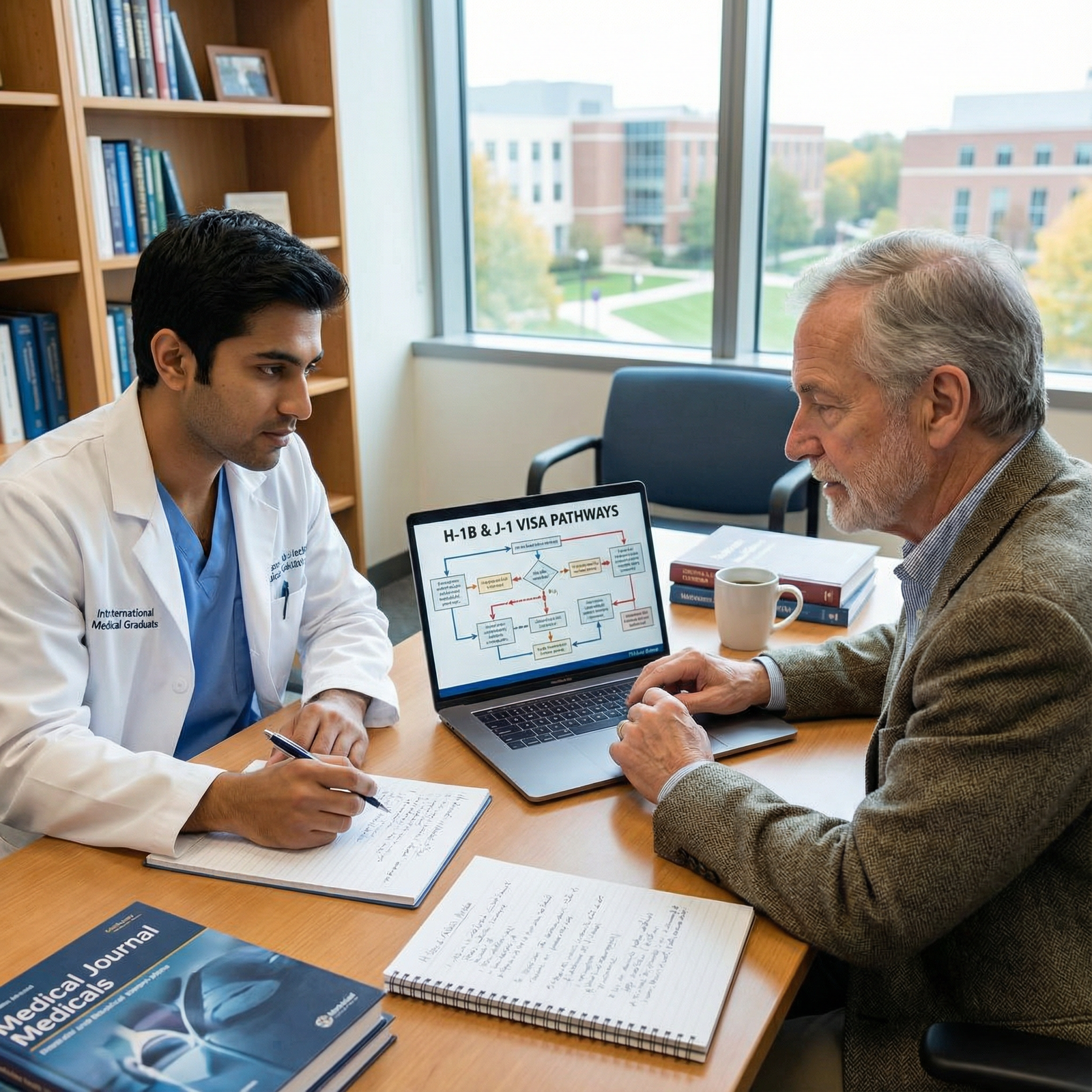
Understanding Your Visa Landscape as a Caribbean IMG in DFW
For a Caribbean medical school graduate aiming for residency in the Dallas–Fort Worth (DFW) area, visa strategy is as important as your USMLE scores and letters of recommendation. The good news: Caribbean IMGs match into DFW programs every year, including through the SGU residency match and other Caribbean medical school residency pathways. The challenge: you must align your specialty goals, program choices, and timeline with realistic IMG visa options.
This article will walk you through:
- The main visa types for residency (and which are most common in Dallas-Fort Worth)
- Key differences in J-1 vs H-1B for IMGs
- How DFW program types (university vs community) influence your chances
- Timeline and documents you’ll need as a Caribbean IMG
- Practical strategies to improve your residency visa prospects in Texas
The focus is specifically on Caribbean IMGs targeting Dallas residency programs and DFW medical training.
Core Visa Options for Caribbean IMGs Entering Residency
1. J-1 Alien Physician Visa: The Most Common Path
For most Caribbean IMGs, the J-1 visa (Exchange Visitor – Alien Physician category) is the primary route into U.S. residency.
Who sponsors it?
Not your hospital or residency directly, but the Educational Commission for Foreign Medical Graduates (ECFMG). Your DFW program must agree to accept J-1s, but ECFMG issues the Form DS-2019 and manages the visa category.
Key features of the J-1 for residency:
- Purpose: Graduate medical education (residency and fellowship)
- Duration: Typically up to 7 years total, depending on specialty and approved training length
- Work limitation: Only at the approved training site(s) listed on your DS-2019
- Two-year home-residency requirement (INA 212(e)):
After training, you must:- Return to your home country (often your country of citizenship or last permanent residence, not necessarily where your Caribbean medical school is located), or
- Obtain a J-1 waiver before transitioning to another U.S. status (like H-1B or green card)
Why it’s common for Caribbean IMGs in DFW:
- Many Dallas residency programs (especially university-affiliated) are accustomed to ECFMG-sponsored J-1 residents.
- J-1 processing is relatively standardized and predictable.
- Program cost and administrative burden are typically lower than for H-1B.
Considerations specific to Caribbean grads:
- Your citizenship matters more than the location of your Caribbean school for the home-residency rule.
- If you hope to stay and practice in Texas long term, you’ll likely need a J-1 waiver job—often in an underserved or rural area, sometimes within broader Texas, not necessarily DFW.
2. H-1B Temporary Worker (Physician)
The H-1B is a highly desired visa among IMGs because it doesn’t carry a J-1 home-return requirement and can be a more direct bridge to permanent residency. But it is also more competitive and more difficult to secure, particularly as an initial residency visa.
Key features of H-1B for residents:
- Employer-sponsored: The residency program acts as the petitioner.
- Dual intent: You can pursue a green card later without conflicts.
- USMLE Step 3 advantage: Many programs require Step 3 passed before they will file an H-1B.
- Cap vs. cap-exempt:
- University-affiliated and some nonprofit hospital systems may be cap-exempt, avoiding the national H-1B lottery.
- Purely private/community programs may be cap-subject, making H-1B more complicated or impossible for residency start dates.
Common limitations:
- Not all Dallas residency programs sponsor H-1B at the PGY-1 level.
- Programs incur legal and filing costs and must comply with wage and labor rules.
- Some specialties and programs have blanket policies: “J-1 only” or “No H-1B for first-year residents.”
In DFW context:
- Larger systems and academic centers (e.g., UT Southwestern–affiliated programs, some major hospital systems in Dallas or Fort Worth) are more likely to be H-1B-friendly.
- Smaller or community-based DFW medical training programs may restrict IMGs to J-1.
3. Other, Less Common Visa/Status Scenarios
While the majority of Caribbean IMGs use J-1 or H-1B, a few alternative scenarios occasionally appear:
F-1 (with OPT):
If you completed another U.S. degree (e.g., MPH, research fellowship) before residency, you may have Optional Practical Training (OPT) time. However:- Residency programs are rarely comfortable relying solely on F-1/OPT for the full length of training.
- You would still need to switch to J-1 or H-1B early in residency.
Green card / U.S. permanent resident:
If you already have a green card (through family, diversity lottery, or employment), you won’t need a “residency visa.” This makes you highly competitive and removes the J-1 vs H-1B issue entirely.Other statuses (e.g., E-2, L-2, pending asylum):
These are case-specific and require close coordination with an immigration attorney and the GME office. Programs differ widely in their willingness to navigate unusual categories.
For Caribbean medical school residency applicants, plan under the assumption that you will need J-1 or H-1B, then adjust if your personal immigration profile allows alternatives.

J-1 vs H-1B: Choosing the Right Path for DFW
1. Training Goals and Long-Term Plans
Ask yourself:
- Do I want to stay in the U.S. long term after residency?
- If yes, both J-1 (with waiver) and H-1B can be viable.
- Am I willing to work in a medically underserved or rural area after training for several years?
- If yes, J-1 with a Texas waiver program can be a strong path.
- Am I aiming for a highly competitive fellowship that prefers H-1B or internal transitions?
- Some fellowships in academic centers may favor candidates who can be easily transferred on H-1B.
J-1 advantages:
- More frequently available to IMGs entering PGY-1 in DFW.
- Streamlined and centralized through ECFMG.
- Many Dallas residency programs are J-1-experienced and comfortable with the process.
J-1 drawbacks:
- Mandatory two-year home-country return or waiver requirement after training.
- Post-residency job options are initially limited to employers willing to sponsor a J-1 waiver.
- Transition to certain fellowships may be more administratively complex.
H-1B advantages:
- No home-residency requirement.
- Dual intent: smoother path if you aim for U.S. permanent residency.
- Some employers and fellowships favor H-1B physicians.
H-1B drawbacks:
- Harder to obtain at the PGY-1 level; many programs in DFW will not sponsor.
- Requires Step 3 (often before match rank lists or before visa filing).
- Higher legal and administrative burden on the program.
2. DFW Market Realities: University vs Community Programs
In Dallas-Fort Worth, your visa chances are influenced by program type:
University/academic-affiliated programs:
- More likely to:
- Accept J-1 routinely
- Be cap-exempt for H-1B (avoiding the lottery)
- Have an in-house legal/immigration office
- Commonly seen at:
- Large academic centers and teaching hospitals
- Programs leading to subspecialty fellowship
Community-based or smaller hospital programs:
- May:
- Limit sponsorship to J-1 only
- Avoid H-1B due to cost and complexity
- Have fewer IMG residents overall
- That said, some DFW community programs do support international graduates, especially in primary care specialties.
Caribbean IMG strategy:
- If you are set on H-1B:
- Target Dallas residency programs that explicitly mention H-1B sponsorship in their website or FREIDA listing.
- Focus on larger systems in DFW.
- If you are flexible and open to J-1:
- Your main task is to confirm that the program accepts ECFMG-sponsored J-1 physicians and has done so recently.
Practical Application Strategy for DFW-Bound Caribbean IMGs
1. Researching Visa Policies Before You Apply
During your residency search for DFW medical training, make “visa policy” a core filter:
Where to check:
- Program websites:
Look under “International Medical Graduates,” “Eligibility,” or “FAQ.” - AMA FREIDA / ACGME / Residency Explorer:
Some databases list visa types historically offered. - Program coordinator emails:
A short, professional email can clarify current-year policies.
What to ask:
- “Do you sponsor ECFMG-sponsored J-1 visas for residency?”
- “Do you sponsor H-1B visas for IMGs, and if so, at what level (PGY-1 vs later years)?”
- “Have you had Caribbean medical school graduates (e.g., SGU, AUC, Ross, Saba) match into your program recently?”
Mentioning Caribbean medical school residency explicitly can help them understand your profile, especially if you are from a well-known institution like SGU, where the SGU residency match is common across Texas.
2. Timing Your Exams with Visa in Mind
For J-1:
- You must be ECFMG certified (passed USMLE Step 1, Step 2 CK, and satisfied clinical skills pathway requirements) to start residency and receive J-1 sponsorship.
- Ensure your credentialing documents (diploma, transcripts) from your Caribbean school are ready early.
For H-1B:
- Many programs require:
- USMLE Step 3 passed before they file the H-1B petition.
- Sufficient time (several months) for H-1B processing before July 1 start.
- For a Caribbean IMG targeting H-1B in DFW:
- Plan to take Step 3 as early as allowed once you are ECFMG certified and state-eligible.
- Recognize that this compresses your pre-residency timeline; don’t underestimate the preparation time.
3. Tailoring Your ERAS and Interview Talking Points
Residency directors want reassurance that you understand the realities of IMG visa options and won’t create last-minute complications.
In your application:
- Briefly note in your personal statement or experiences if you have:
- Prior U.S. visa history (e.g., F-1 student)
- Ties to Texas or DFW (family, clinical rotations, prior employment)
- Avoid strong demands like “I must have an H-1B” unless you truly cannot accept a J-1 for personal/legal reasons.
In interviews:
- If asked about visa:
- Respond clearly:
- “I am eligible for ECFMG-sponsored J-1 and am open to that option.”
- “If your program sponsors H-1B and feels it is appropriate, I would be interested, and I am working toward Step 3.”
- Respond clearly:
- Show that you’ve done your homework about Dallas residency programs and are prepared for either visa pathway, if possible.

Step-by-Step Visa Process Once You Match in DFW
1. Immediately After Match Day
Once you match into a DFW program:
Confirm visa category in writing
Your program will contact you with onboarding instructions. They will typically ask:- Citizenship
- Most recent immigration status in the U.S.
- Whether you need visa sponsorship
Coordinate with GME & HR
You’ll receive forms or links from the Graduate Medical Education (GME) office and Human Resources. Respond promptly—visa processing is time-sensitive.
2. If You’re Going the J-1 Route
Steps:
ECFMG’s OASIS system:
- Complete the J-1 sponsorship application through ECFMG when your program initiates it.
- Upload required documents (passport, contract/offer letter, medical diploma, etc.).
Program sends training contract to ECFMG:
- Must list your training dates, specialty, and site in Dallas-Fort Worth.
ECFMG issues DS-2019:
- This is your official J-1 document specifying your training program and dates.
Visa interview at U.S. embassy/consulate (if outside the U.S.):
- Schedule early; DFW start date is typically July 1.
- Bring DS-2019, SEVIS fee receipt, passport, and other supporting documents.
Arrival in DFW:
- Enter within the allowed window before program start.
- Attending GME orientation is essential; visa activation and I-94 status details are usually finalized at this time.
Important J-1 issues to monitor:
- Keep your training site information updated if you rotate to other hospitals.
- Renew DS-2019 annually as you progress through residency and fellowship.
- Track your total training years to remain within the J-1 maximum.
3. If You’re Going the H-1B Route
Steps:
Confirm eligibility with your program:
- Verify they are willing and able to sponsor H-1B, and that you meet their criteria (often including Step 3 and state licensure eligibility).
Provide documentation:
- Passport, ECFMG certificate, USMLE transcripts, medical diploma, CV, previous immigration documents (I-94, prior visas).
Program’s legal team files the petition (Form I-129):
- If the hospital is cap-exempt, they can file at any time.
- They may opt for premium processing to ensure timely approval.
Consular processing (if applicable):
- If you’re abroad, you attend a U.S. consulate interview with the H-1B approval notice (I-797).
Enter U.S. and begin residency:
- You must start and work only for the sponsoring employer in the specified role and location.
H-1B-specific cautions:
- Changes in site, hours, or role may require amended petitions.
- If you later change residency programs or go to fellowship, you’ll need an H-1B transfer or new petition.
Post-Residency Planning: J-1 Waivers, H-1B Transfers, and Texas Options
Your residency visa strategy should anticipate what comes after residency, especially if your long-term goal is to practice in Texas.
1. For J-1 Physicians: Waiver Pathways
Because of the two-year home-residency requirement, J-1 physicians must either:
- Serve the two years in the home country, or
- Obtain a J-1 waiver that allows them to stay and work in the U.S.
Common waiver routes relevant to Texas:
Conrad 30 State Waiver Programs:
- Texas has its own Conrad 30 program.
- Allows up to 30 J-1 physicians per year (across the state) to receive waivers by working full-time in medically underserved areas.
- Often requires a minimum three-year contract with a qualifying employer.
Federal waiver programs:
- Certain federal agencies (e.g., VA, HHS programs) can also sponsor waivers in some circumstances.
As a Caribbean IMG resident in DFW:
- Start exploring Texas J-1 waiver jobs during your final year of residency.
- Many waiver jobs may not be in Dallas-Fort Worth proper; you may need to consider nearby or more rural parts of Texas.
- After fulfilling your waiver service, transitioning to H-1B or directly to a green card becomes more straightforward.
2. For H-1B Physicians: Long-Term Employment and Green Card
If you completed residency and/or fellowship on an H-1B:
- You can often transfer H-1B to a new employer in Texas without being subject to the lottery if you’re already counted against the cap or your new employer is cap-exempt.
- Many Texas healthcare systems sponsor employment-based green cards for physicians, especially in high-need specialties and locations.
Considerations:
- H-1B has a typical maximum of 6 years, with extensions possible in some green card situations.
- Long-term career planning should integrate:
- Fellowship training needs
- Preferred location (DFW vs other regions)
- Employer’s immigration support capacity
Actionable Tips for Caribbean IMGs Targeting DFW
Start visa literacy early in medical school.
Understand J-1 vs H-1B well before applying for the Match.Target DFW programs that explicitly welcome IMGs.
Look at recent match lists; some Texas programs list where their residents graduated, including Caribbean medical school residency backgrounds (e.g., SGU residency match data).Keep all documents organized:
- Passport (valid for several years beyond residency start)
- Academic transcripts and diploma from your Caribbean school
- USMLE score reports and ECFMG certificate
- Prior U.S. visa history (I-20s, DS-2019s, I-94s, approval notices)
Stay flexible when possible.
If you can accept either J-1 or H-1B, you maximize your chances of matching into a strong program in Dallas-Fort Worth.Consult an immigration attorney for complex cases.
Especially if you have:- Previous U.S. overstay or status issues
- Multiple prior visa categories
- Spouse/children with separate immigration considerations
FAQs: Visa Navigation for Caribbean IMGs in Dallas-Fort Worth
1. As a Caribbean IMG, is it realistic to get an H-1B for residency in Dallas-Fort Worth?
Yes, but it is less common than J-1. Your chances increase if:
- You apply to academic or large hospital systems in DFW that are cap-exempt and have a history of H-1B sponsorship.
- You complete USMLE Step 3 early.
- You are a strong applicant overall (solid scores, U.S. clinical experience, strong letters).
Many Caribbean IMGs in DFW ultimately start on J-1, then later transition via J-1 waiver jobs and H-1B.
2. Does attending a well-known Caribbean school (like SGU) help my visa chances?
Indirectly, yes. Programs familiar with the SGU residency match or other established Caribbean medical school residency pipelines may feel more comfortable sponsoring IMGs from those schools, particularly for J-1. However, visa decisions are more influenced by:
- Program policy and institutional immigration support
- Your USMLE scores and clinical performance
- Timing (e.g., Step 3 readiness for H-1B)
Your school name alone doesn’t guarantee H-1B sponsorship.
3. Will a J-1 visa prevent me from eventually practicing in Dallas-Fort Worth?
Not necessarily. J-1 requires a home-country return or waiver, but many physicians:
- Complete residency on J-1 in DFW.
- Obtain a J-1 waiver job elsewhere in Texas (often underserved areas) for several years.
- Later return to practice in larger metro areas like Dallas-Fort Worth, often on H-1B or as permanent residents.
If your ultimate goal is to settle in DFW, careful J-1 waiver planning and Texas job selection can make it possible.
4. Should I mention my visa preference (J-1 or H-1B) in my personal statement or during interviews?
Use a balanced approach:
- In the personal statement, avoid strong ultimatums about visa type.
- During interviews, if asked, clearly state:
- That you are eligible for ECFMG-sponsored J-1 and open to it.
- That you are also pursuing Step 3 if the program sponsors H-1B and would consider you for that route.
- If you truly cannot accept J-1 (e.g., due to family immigration issues), you should disclose this, but understand it may limit your program options.
By understanding the residency visa landscape and proactively planning around J-1 vs H-1B, you can position yourself as a well-prepared Caribbean IMG applicant for Dallas residency programs. With thoughtful strategy, timely exams, and clear communication with DFW programs, your path from Caribbean medical school to successful DFW medical training—and beyond—is absolutely achievable.