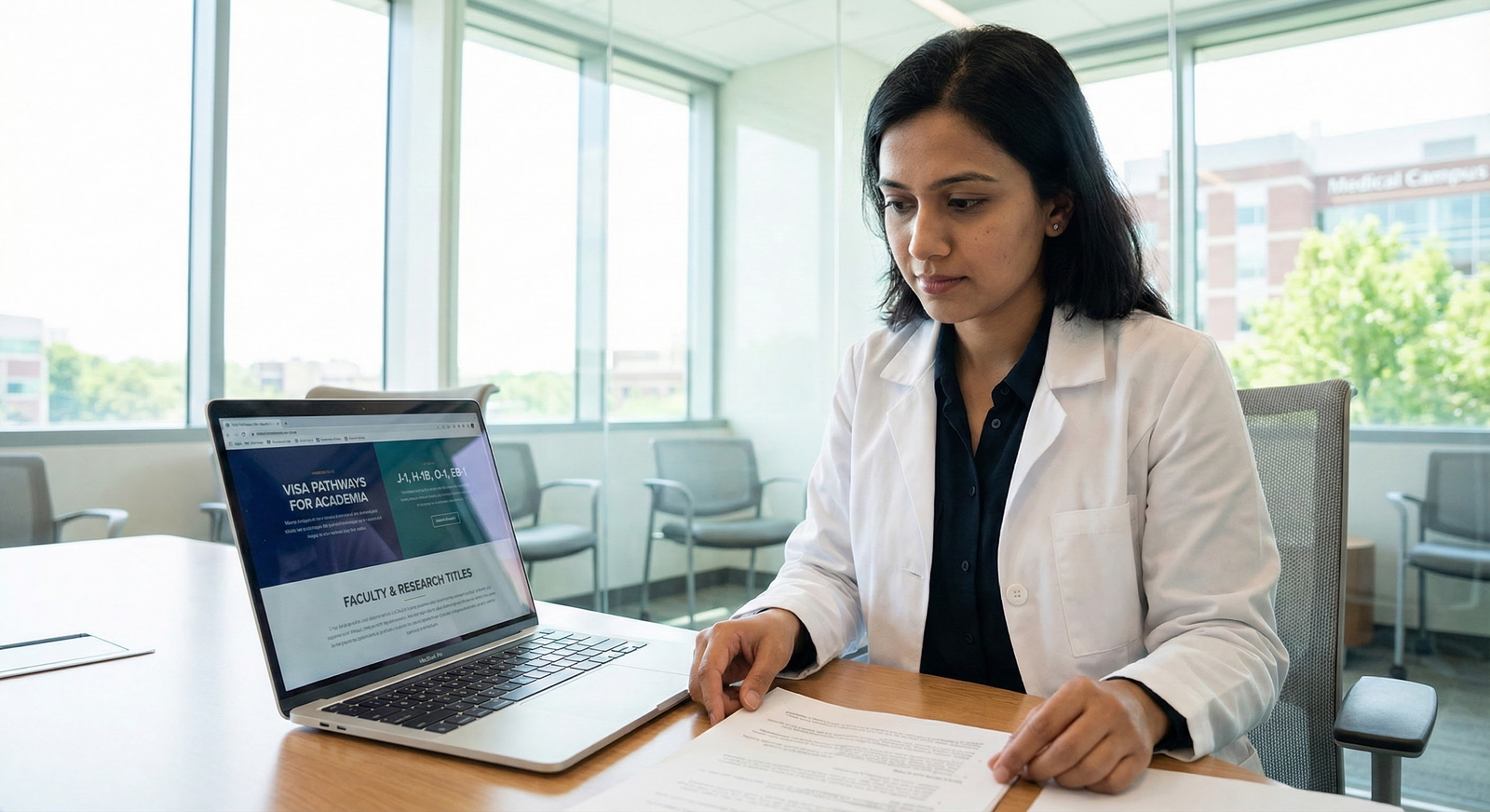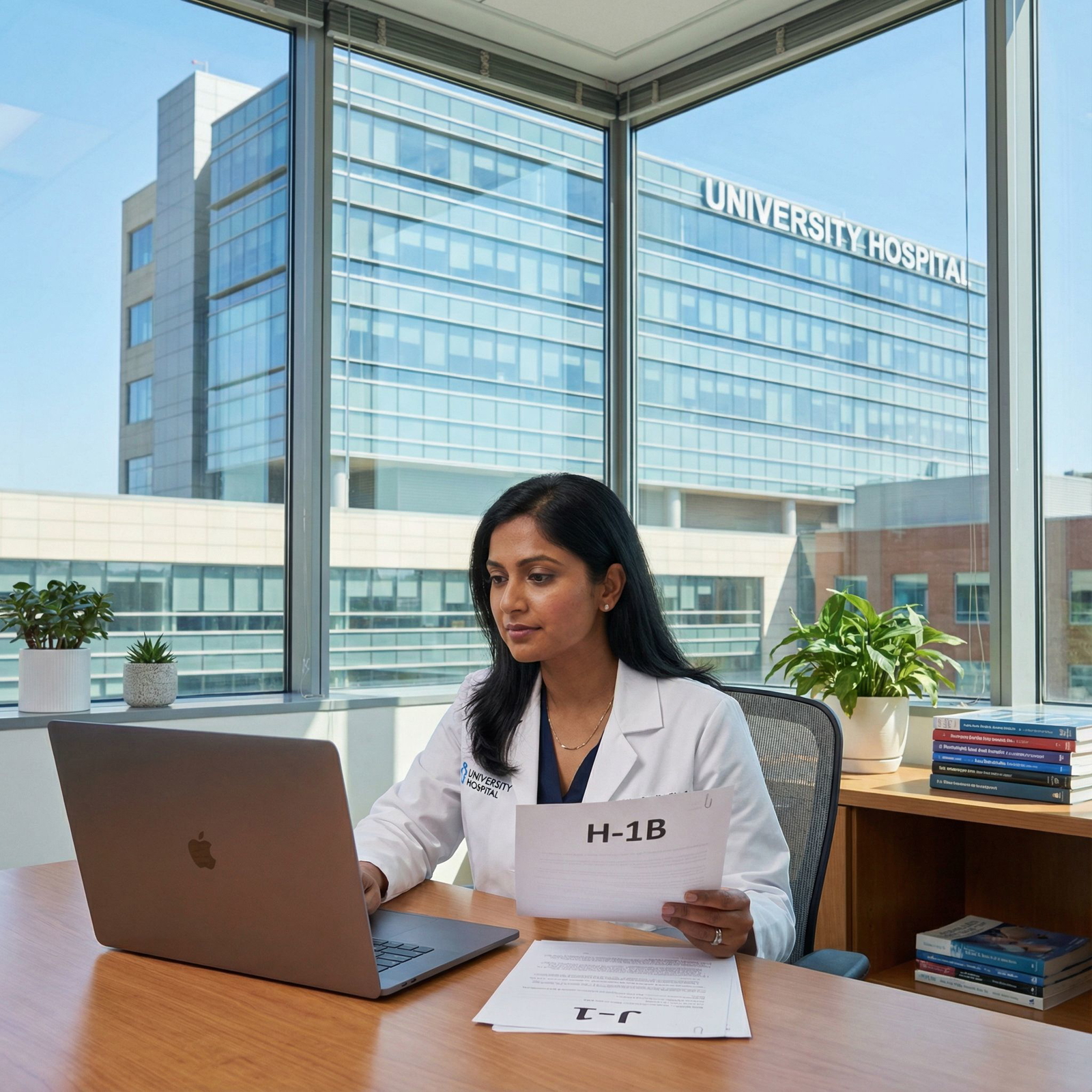
Understanding the Visa Landscape for Caribbean IMGs in PM&R
For a Caribbean medical school graduate aiming for a Physical Medicine & Rehabilitation (PM&R) residency in the United States, understanding visa pathways is just as important as board scores and letters of recommendation. The combination of being an international medical graduate (IMG), coming from a Caribbean school, and targeting a competitive but “small-volume” specialty like PM&R means you cannot treat visa planning as an afterthought.
In PM&R, program directors are often working with limited positions and may have varying levels of institutional support for sponsoring visas. Your ability to clearly understand and communicate your visa needs can directly influence:
- Which programs you apply to
- How you are perceived by program leadership
- Your ultimate chances of a successful physiatry match
- Your longer-term career and fellowship options in the U.S.
This article will walk you through:
- The main visa types relevant to residency (J-1 vs H-1B and others)
- How visa issues intersect specifically with PM&R
- Tailoring your residency strategy as a Caribbean IMG
- Practical steps and timelines for each phase of the visa process
- Common pitfalls and how to avoid them
Throughout, the perspective will remain focused on Caribbean medical school residency applicants targeting PM&R.
Visa Basics: What Caribbean PM&R Applicants Must Know
Before diving into specialty-specific strategies, you need a solid foundation on core visa categories and terminology.
Key Terms You’ll Encounter
- IMG (International Medical Graduate): You attended medical school outside the U.S. and Canada. Most Caribbean graduates fall into this category, even if they’re U.S. citizens or permanent residents by nationality.
- ECFMG Certification: Required for IMGs to enter U.S. residency training. Also a prerequisite for the most common residency visa (the J-1).
- Sponsoring Institution: The hospital or academic medical center that employs you for residency and may sponsor your visa.
- USMLE Exams: Crucial not only for your physiatry match competitiveness but also for H-1B eligibility (which requires all Steps, including Step 3, at the time of filing).
Main Residency Visa Options for IMGs
Broadly, residency visa options in the U.S. for Caribbean medical school residency applicants are:
- J-1 Exchange Visitor (ECFMG-sponsored)
- H-1B Temporary Worker (employer-sponsored)
- Less common or situational statuses:
- F-1 with OPT (typically not sufficient for full residency)
- Green card holders (no visa needed, but still counted as IMGs if foreign med school)
- Other dependent or special categories (H-4, E-2, etc.)
Most PM&R-bound IMGs will end up on either the J-1 or H-1B, so the J-1 vs H-1B decision is central.
J-1 vs H-1B for PM&R: Choosing the Best Path as a Caribbean IMG
Among IMG visa options, the J-1 and H-1B are the primary players. Understanding J-1 vs H-1B trade-offs early will shape your application strategy and how you present yourself to programs.
J-1 Exchange Visitor Visa (ECFMG-Sponsored)
The J-1 is by far the most common visa type for IMGs in U.S. residency.
Key Features:
- Sponsor: ECFMG, not the individual residency program.
- Eligibility:
- ECFMG certification
- A valid contract or offer from an ACGME-accredited training program
- Passing USMLE Step 1, Step 2 CK, and meeting other ECFMG requirements
- Duration: Valid for duration of residency training plus brief grace periods (usually up to 7 years total for GME).
- Work Location: Primarily at the sponsoring institution and its affiliated sites.
Two-Year Home Residency Requirement (212(e)):
The biggest J-1 drawback:
- Most J-1 physicians are subject to a two-year home-country physical presence requirement after training.
- You must return to your country of last permanent residence (often your Caribbean home country) for an aggregate of two years unless you obtain a waiver.
- Without the waiver, you typically cannot switch to H-1B, L, or some immigrant (green card) categories in the U.S.
J-1 Waiver Options:
Common waiver types include:
- Conrad 30 program: State-level waivers for physicians working in underserved areas.
- Federal programs: VA, HHS, etc., for certain specialties and practice settings.
- Hardship and persecution waivers: More complex and case-specific.
For PM&R, finding J-1 waiver jobs is somewhat more challenging compared to primary care, but opportunities exist:
- Rehab positions in rural or underserved communities
- Positions in hospital systems with established waiver programs
- VA or large academic centers that may use federal waiver pathways
Why J-1 Is Often Easier for Caribbean IMGs in PM&R:
- Many PM&R programs only support J-1 visas (no H-1B sponsorship).
- Less paperwork and cost burden on the individual program.
- ECFMG handles much of the sponsorship logistics.
- You do not need Step 3 to start training on a J-1.
If you are a Caribbean IMG targeting physiatry, you should assume J-1 is your default unless you have strong reasons and credentials positioning you for H-1B.
H-1B Temporary Worker Visa for Residency
The H-1B allows you to work in the U.S. in a “specialty occupation”—including physician roles in residency and fellowship.
Key Features:
- Sponsor: A specific residency program (or institution), which petitions directly to USCIS.
- Eligibility for Residency:
- Must have passed USMLE Step 3 before H-1B filing.
- Must meet state licensure/permit requirements (varies by state).
- Program must be willing and institutionally able to sponsor H-1B.
- Duration: Typically up to 6 years total in H-1B status (some exceptions).
- Cap-Exempt: Many teaching hospitals with ACGME programs are cap-exempt, allowing H-1B petitions at any time of year.
Advantages Over J-1:
- No two-year home residency requirement.
- You can later transition to:
- Other H-1B roles (e.g., attending, academic positions)
- Employment-based green cards (EB categories)
- Without needing a J-1 waiver.
Disadvantages and Barriers for Caribbean PM&R Applicants:
- Fewer programs sponsor H-1B compared to J-1, especially in smaller specialties.
- You must have Step 3 passed early—ideally before rank list submission.
- Programs may perceive H-1B as:
- More costly (legal fees, filing fees)
- More administratively complex
- Some GME offices have strict “J-1 only” policies regardless of department preference.
For a Caribbean IMG in PM&R, successfully targeting an H-1B pathway typically requires:
- Strong USMLE scores and a compelling application to justify extra hurdles.
- Strategic focus on programs known to have H-1B-friendly policies for IMGs.
- Early completion of USMLE Step 3, often during your final year of medical school or immediately thereafter.
Deciding Between J-1 and H-1B as a Caribbean IMG in PM&R
When you evaluate J-1 vs H-1B for your physiatry match, consider:
Your Long-Term Career Vision
- If you are committed to practicing in the U.S. long-term and wish to avoid a J-1 waiver:
- H-1B is more aligned with that goal.
- If you’re open to:
- Working in underserved areas post-residency, or
- Returning home briefly,
- J-1 can still support a U.S.-based career pathway via waiver routes.
- If you are committed to practicing in the U.S. long-term and wish to avoid a J-1 waiver:
Your Exam Timeline
- If Step 3 will not be done until late in the cycle, H-1B becomes less feasible.
- Many SGU residency match guides and other Caribbean schools advise prioritizing Step 1 and Step 2 CK; but if you want H-1B, you must intentionally plan for Step 3 early.
Program Preferences in PM&R
- Many PM&R programs list “J-1 only.”
- A smaller subset will say “J-1 and H-1B” or “case-by-case.”
- Your effective pool of PM&R programs shrinks significantly if you are “H-1B only.”
For most Caribbean IMGs in PM&R, a sensible default is:
- Apply broadly without demanding H-1B, be open to J-1, and if an H-1B-friendly program loves your application, explore that path opportunistically.
How Visa Status Interacts with PM&R as a Specialty
Physical Medicine & Rehabilitation has unique characteristics that influence visa strategy for IMGs.
PM&R: A Smaller, Relationship-Driven Specialty
Compared to internal medicine or family medicine, PM&R has:
- Fewer residency positions nationally
- Many programs with only 4–8 residents per year
- A culture that values:
- Longitudinal rotations and continuity
- Strong interpersonal skills
- Team-based care with therapists, nurses, and other professionals
Program directors often:
- Know their residents well
- Have limited administrative capacity for complex immigration cases
- Rely heavily on institutional GME policies for IMG visa sponsorship
This means that, as a Caribbean IMG:
- You must quickly identify which PM&R programs actually consider IMGs and sponsor visas.
- You should be prepared to explain your visa needs clearly and succinctly if asked during interviews.
Visa Constraints and Fellowship Plans
Many physiatrists pursue fellowships in areas like:
- Pain medicine
- Sports medicine
- Brain injury medicine
- Spinal cord injury
- Pediatric rehab
Your visa choice affects fellowship opportunities:
- On a J-1, you can usually continue in fellowships (still J-1 GME) within the 7-year limit, but the two-year home rule clock is postponed until all training ends.
- On an H-1B, fellowship programs must also be willing to sponsor H-1B. Some are J-1-only, which can complicate transitions.
If you foresee:
- Multiple fellowships
- A long academic training path then you must think about cumulative years in H-1B and J-1 waiver timing when planning.
Institutional Patterns: SGU Residency Match and Similar Schools
Graduates from Caribbean schools (e.g., SGU, AUC, Ross) frequently match into PM&R. Reviewing SGU residency match lists and similar Caribbean medical school residency outcomes can show:
- Which PM&R programs historically take Caribbean IMGs
- Which institutions regularly appear on match lists (often more IMG- and visa-friendly)
- Patterns of J-1-heavy versus H-1B-inclusive training environments
Use this information to:
- Build a realistic target list of PM&R programs
- Prioritize applying to places with a known track record of supporting IMG visa options
Building Your PM&R Application Around Visa Realities
To optimize your physiatry match chances as a Caribbean IMG, integrate visa thinking into every phase of your application.
Step 1: Map Out Your Personal Status and Goals
Ask yourself:
What is my citizenship and immigration status now?
- Non-U.S. citizen on a student visa, or living abroad
- U.S. citizen/permanent resident (no visa issue, but still IMG)
- Dual status (e.g., Caribbean citizen who might obtain U.S. PR through family)
What is my long-term plan?
- Practice permanently in the U.S.?
- Return to the Caribbean eventually?
- Stay temporarily to gain experience, then go back?
Your honest answers define:
- Whether the J-1 home residency requirement is truly a major barrier.
- How aggressively you should pursue H-1B opportunities.
Step 2: Prioritize Exams with Visa and Specialty in Mind
For J-1 path (more common):
- Must complete:
- USMLE Step 1
- USMLE Step 2 CK
- OET (or any updated ECFMG communication requirement)
- Get ECFMG certified before starting residency.
For H-1B path:
- You must additionally:
- Pass USMLE Step 3 before the H-1B petition is filed.
- Some PM&R programs may require Step 3 completion by the start of training, others by visa filing date (check with each program).
Practical advice:
- If you’re serious about H-1B:
- Consider scheduling Step 3 in the late final year of medical school or early gap year.
- Build a cushion in case you need to retake.
- If uncertain, focus first on top-notch Step 1 and Step 2 CK scores, which are crucial for physiatry match competitiveness as a Caribbean IMG.
Step 3: Research Programs’ Visa Policies Early
How to gather information:
- FREIDA and Program Websites:
- Look for sections titled “Eligibility & Requirements,” “Visa sponsorship,” or “International Medical Graduates.”
- Note whether they state:
- “J-1 only”
- “J-1 and H-1B”
- “We do not sponsor visas”
- Email the Program Coordinator:
- Use a concise, professional question:
- “Could you please clarify whether your PM&R residency program sponsors visas for IMGs? If so, do you support J-1, H-1B, or both?”
- Use a concise, professional question:
Create a spreadsheet tracking:
- Program name and location
- Visa policies (J-1, H-1B, none)
- Historical IMG presence (if available)
- Notes from SGU residency match outcomes or other Caribbean match lists
This database guides:
- Where you invest application fees
- Where you might initiate early mentorship or networking.
Practical Timeline: Visa Navigation Across the Match Cycle
Let’s align visa planning with the phases of your PM&R residency journey.
Pre-Application (12–24 Months Before Match)
Goals:
- Clarify long-term visa strategy (J-1 vs H-1B preference).
- Understand IMG visa options broadly.
- Plan USMLE exam sequence accordingly.
Actions:
- Build your program list with visa status columns.
- Reach out to mentors (including Caribbean grads in PM&R) to discuss:
- Which programs were visa-friendly
- Their experiences with J-1 vs H-1B
- If aiming for H-1B, plan Step 3 timing carefully.
Application Season (ERAS Submission to Interview Invitations)
Application Materials:
- You generally do not need to declare a fixed visa type in ERAS.
- However, in your personal statement or interviews you may be asked:
- “What is your visa status?”
- “Will you require visa sponsorship?”
How to Respond Strategically:
- If open to both J-1 and H-1B:
- “I will require visa sponsorship and am open to either J-1 or H-1B, depending on institutional policy.”
- If strongly H-1B oriented (and you have Step 3):
- “I am eligible for H-1B through completion of all USMLE exams, but I remain open to J-1 if that’s the structure of your program.”
Avoid appearing rigid or demanding, especially in a smaller field like physiatry where many programs default to J-1.
Interview Season
During interviews, visa questions often surface informally:
- Program director may ask:
- “Are you ECFMG certified?”
- “Do you need visa sponsorship?”
- “Have you passed Step 3?” (often a proxy to see if H-1B is possible)
Your approach:
- Be clear and honest without overloading them with technicalities.
- Emphasize:
- Flexibility (if true)
- Your understanding of general requirements
- Your commitment to staying compliant and organized.
Example response:
“Yes, I am an IMG from a Caribbean medical school and will require visa sponsorship. I understand that J-1 is commonly used for residency, and I’m fully prepared for that pathway. I have also completed Step 3, so if your institution supports H-1B sponsorship, I would be eligible, but I’m happy to follow whatever framework your program typically uses.”
This reassures them that:
- You have done your homework.
- You’re not expecting them to reinvent their processes just for you.
Post-Match: From Match Day to Residency Start
Once you match into a PM&R program:
- Confirm with GME or the program:
- Which visa type you will be using.
- The documentation and deadlines (very important if abroad).
- For a J-1:
- Work with ECFMG and your program to complete:
- DS-2019 application
- Proof of funding, health insurance, etc.
- Schedule a visa interview at the U.S. consulate in your country.
- Work with ECFMG and your program to complete:
- For an H-1B:
- The institution’s legal or GME office will:
- File the I-129 petition
- Possibly need documentation of Step 3, license/permit eligibility, and credentials.
- Your role is supplying documents quickly and accurately.
- The institution’s legal or GME office will:
Caribbean IMGs sometimes experience tighter timelines due to:
- Delays in final medical school transcripts or diplomas.
- Heavy demand at certain U.S. consulates.
Build in margin by:
- Keeping documents ready (passport validity, exam score reports, ECFMG certificate).
- Staying closely in touch with the program’s visa coordinator.
Long-Term Planning: After PM&R Residency on a J-1 or H-1B
Visa strategy does not end when you start PGY-2 in PM&R. Think at least 5–10 years ahead.
If You Train on a J-1
You must address the two-year home-country requirement either by:
Fulfilling It:
- Returning to your home country (e.g., your Caribbean nation) for two years.
- Can sometimes work in a way that still advances your skills (e.g., in rehab medicine, pain clinics, or neurorehabilitation centers).
Obtaining a Waiver:
- Conrad 30 Waiver Job:
- Apply through a state’s Conrad 30 program for an underserved-area job.
- More common in primary care, but some PM&R positions qualify.
- Federal Waivers:
- Jobs in certain federal facilities (e.g., VA) or HHS programs.
- Hardship/Persecution Waivers:
- Requires legal counsel and strong, documented claims.
- Conrad 30 Waiver Job:
After you get a J-1 waiver job:
- You convert to H-1B (usually) and fulfill a service obligation (e.g., 3 years).
- During or after this, your employer may sponsor you for a green card.
If You Train on an H-1B
Key considerations:
- H-1B is typically limited to 6 years total (some exceptions with green card filings).
- Your residency + any fellowships count toward this cap.
- For long training paths plus job search, you should:
- Consider starting a green card process early (e.g., during fellowship or early attending years) if your employer is supportive.
- Choose practice settings that are H-1B and green card friendly.
For Caribbean physiatrists, especially those from countries with relatively straightforward immigration lines, H-1B can be a powerful springboard to long-term U.S. practice.
Frequently Asked Questions (FAQ)
1. As a Caribbean IMG applying to PM&R, do I hurt my chances by asking for H-1B?
You may limit your options if you insist on H-1B, especially in PM&R where many programs only sponsor J-1 or prefer it. If you’re flexible and express that you are open to J-1 while also eligible for H-1B, you generally won’t harm your chances. The key is not to come across as demanding a non-standard arrangement.
2. Is it realistic to complete USMLE Step 3 before applying to PM&R residency?
It’s challenging but realistic with good planning. Many Caribbean IMGs focus on Step 1 and Step 2 CK first to remain competitive for physiatry. If you specifically want H-1B, you must schedule Step 3 early, often in a research or gap year, or late in med school if allowed. However, this should not compromise your Step 1/2 performance, which remain primary match determinants.
3. Do all J-1 physicians in PM&R have trouble finding waiver jobs?
Not all, but it can be more challenging compared with primary care. J-1 waiver demand is high and PM&R positions in qualified underserved settings are fewer. That said, opportunities exist, particularly:
- In hospital systems serving rural or medically underserved populations
- In certain rehabilitation hospitals and VA systems Success usually requires:
- Flexibility in job location
- Early networking and research during residency or fellowship
4. I’m a citizen of a Caribbean country but studied at a U.S.-affiliated school like SGU. Does that change my visa options?
Your medical school location, not the school’s affiliation, is what makes you an IMG for licensure and ECFMG purposes. Your citizenship determines what U.S. visa you need. If you are not a U.S. citizen or permanent resident, you will still need a residency visa (J-1 or H-1B), regardless of being at a well-known Caribbean school like SGU. The advantage of such schools is typically better match support, mentorship, and detailed SGU residency match data that help you target visa-friendly programs—but the underlying visa categories remain the same.
By treating visa navigation as an integral part of your PM&R residency plan—rather than a last-minute hurdle—you position yourself as a prepared, reliable applicant. As a Caribbean IMG, clarity about J-1 vs H-1B, familiarity with IMG visa options, and a strategic approach to program selection can significantly enhance your chances of a successful physiatry match and a sustainable long-term career in the United States.