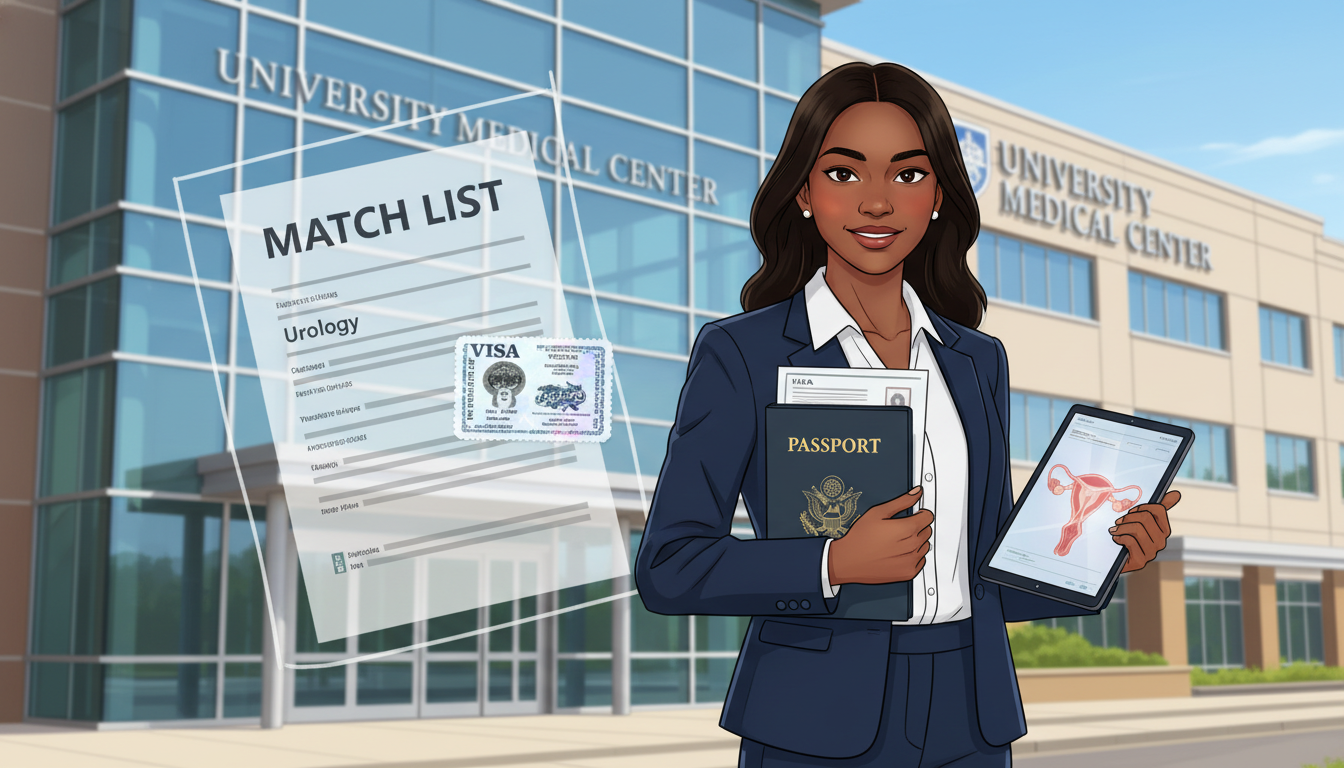
For a non-US citizen IMG or foreign national medical graduate, navigating residency visa options is often as stressful as interviews or exams—especially in smaller, geographically unique states like Alaska and Hawaii. These states offer distinctive training environments but have fewer programs, making every detail about visas, timelines, and strategy matter more.
This guide focuses specifically on how to approach visa navigation for residency in Alaska and Hawaii, what IMG visa options exist, and how to make yourself a strong candidate while managing the complexities of J-1 vs H-1B and related immigration issues.
Understanding the Landscape: IMG Training in Alaska & Hawaii
Alaska and Hawaii are unlike most other U.S. states—geographically isolated, smaller in population, and with a relatively limited number of residency programs. This shapes both training and visa strategies for non-US citizen IMGs.
Program Types and Settings
Alaska residency options
Alaska has a very small number of ACGME-accredited residency programs, primarily in:
- Family Medicine (including rural- and community-focused tracks)
- Some fellowships or affiliated rotations through mainland institutions
Training is often community-based, with a focus on:
- Rural and frontier medicine
- Alaska Native and Indigenous health
- Underserved populations and outreach clinics
Hawaii residency programs
Hawaii (primarily through the University of Hawaii and affiliated systems) offers more diverse training programs, including:
- Internal Medicine
- Family Medicine
- Pediatrics
- Psychiatry
- Obstetrics & Gynecology
- Surgery and certain subspecialties (depending on year and accreditation status)
Hawaii programs often emphasize:
- Cross-cultural care (Pacific Islander and Asian populations)
- Community medicine and public health
- Tropical and infectious diseases
Why Visa Strategy Matters More in These States
Because Alaska and Hawaii have:
- Fewer total residency spots
- A higher proportion of community-based or state-funded training environments
- Emphasis on serving local and underserved populations
…some programs may have stricter preferences or limitations on residency visa sponsorship (especially H-1B) compared with large, mainland academic centers.
For a non-US citizen IMG, it is essential to:
- Know exactly which visa types each program supports
- Understand how program mission (e.g., serving local communities) affects their willingness to sponsor certain visas
- Time exams, ECFMG certification, and documentation so you are “visa-ready” at Match time
Core Visa Options for Non-US Citizen IMGs in Residency
Most foreign national medical graduates in Alaska and Hawaii will use one of three main pathways:
- J-1 Exchange Visitor (ECFMG-sponsored)
- H-1B Temporary Worker (employer-sponsored)
- Other statuses that permit training (e.g., Permanent Resident, EAD categories)
Below we focus on the core IMG visa options and then highlight some Alaska- and Hawaii-specific considerations.
1. J-1 Exchange Visitor Visa for Clinical Residents
The J-1 visa is the most common residency visa for non-US citizen IMGs across the U.S., including Alaska and Hawaii.
Key features of the J-1 for residency:
- Sponsored by ECFMG, not directly by the residency program
- Valid for the duration of residency/fellowship training (year-by-year renewals)
- Requires return to home country for 2 years after training, in most cases, before certain immigration benefits (e.g., H-1B, permanent residency) are allowed, unless you obtain a J-1 waiver
Advantages for IMGs:
- Widely accepted: many programs in Alaska and Hawaii accept J-1 because ECFMG handles the sponsorship
- Predictable process and standardized requirements
- Less cost and legal burden for the training program than H-1B
Limitations:
- The 2-year home-country physical presence requirement can complicate future plans
- Can be difficult if your long-term goal is immediate U.S. permanent residence after training
- Some fellowships or subsequent employment may be limited until you resolve the home-residency requirement or obtain a waiver
Alaska & Hawaii specifics:
- Given the community and underserved focus, state health authorities and local employers in Alaska and Hawaii may participate in J-1 waiver programs after residency (e.g., Conrad 30, state interest waivers) to help retain physicians who trained there.
- If you are planning on a J-1 waiver for post-residency work, these two states can be relatively favorable, because they have persistent physician shortages and rural/underserved areas.
2. H-1B Visa for Residency (Specialty Occupation Worker)
The H-1B residency visa is less common than J-1 but valuable for some IMGs, especially those wishing to avoid the 2-year home-country requirement.
Key features:
- Employer-sponsored by the residency program or institution
- Typically valid for up to 6 years total, including all qualifying employment
- Classified as a “specialty occupation” requiring at least a bachelor’s degree (medicine clearly qualifies)
- Does not automatically impose a 2-year home residency requirement
Advantages:
- No J-1-style home-return requirement
- May be easier to transition directly to employment or permanent residency after training
- Attractive if you already have plans to stay in the U.S. long term
Limitations:
- Not all Alaska or Hawaii residency programs offer H-1B due to:
- Cost of legal fees
- Administrative complexity
- Institutional or state policies
- Requires:
- USMLE Step 3 passed before H-1B petition filing (often by Rank List deadline)
- Detailed contract and documentation from program
- Subject to prevailing wage and labor condition requirements, which can be more complex in remote or high-cost-of-living areas
Program variation:
Some Hawaii programs may offer H-1B, particularly in larger academic centers, but many smaller community hospitals or Alaska training sites may only offer J-1. Always verify directly from program websites or via email during your research phase.
3. Other Statuses Allowing Residency Training
If you are a non-US citizen IMG but already present in another lawful status, your pathway may be different:
- Permanent Resident (Green Card):
- You do not need a residency visa; you can train as any U.S. resident physician.
- Spouse/Dependent of Another Status (e.g., H-4, L-2, E-2, etc.):
- Some of these categories may allow employment with an EAD (employment authorization document).
- Programs may be more familiar with the classic J-1 vs H-1B framework, so they might request you convert to J-1/H-1B to simplify oversight.
- Refugee/Asylee/Parolee with EAD:
- With an EAD, many programs can employ you without separately sponsoring a visa.
- Documentation and timing of EAD validity become crucial for Match and start dates.
If you fall into one of these less typical categories, inform programs early and ask how they prefer to handle your employment authorization.

J-1 vs H-1B: Choosing the Best Route for Alaska & Hawaii
For a non-US citizen IMG targeting Alaska residency or Hawaii residency programs, the J-1 vs H-1B decision is both strategic and practical. You may prefer one, but program policies and your exam timeline often decide for you.
Key Comparison: J-1 vs H-1B for Residency
1. Sponsoring Entity
- J-1: Sponsored by ECFMG
- H-1B: Sponsored by the residency program/hospital
This means:
- J-1 = standardized process, less burden for program
- H-1B = higher institutional involvement and cost
In smaller states like Alaska and Hawaii, some programs may not have infrastructure or budget to pursue H-1B.
2. Exam Requirements
- J-1:
- Requires ECFMG certification (including USMLE Step 1, Step 2 CK, and OET/English requirements as defined by ECFMG)
- H-1B:
- Requires at least Step 1, Step 2 CK, and Step 3 to be completed before the petition is filed
- Practically, this often means Step 3 must be completed by January–February of Match year
If you are late in taking Step 3, H-1B may not be realistic for the coming Match cycle, especially in programs with strict timelines.
3. Home-Country Requirement
- J-1: Often includes a 2-year home-country physical presence requirement
- H-1B: No such automatic requirement
However, in Alaska and Hawaii, this J-1 requirement may be mitigated by waiver opportunities, especially in rural or underserved areas seeking to retain physicians.
4. Long-Term Career Planning
- If you are certain you want flexibility for U.S. permanent residency and employment immediately after training, H-1B is more aligned with that goal.
- If your priority is to maximize your chance of matching in smaller markets like Alaska and Hawaii (where not every program sponsors H-1B), J-1 is often more realistic and widely accepted.
Targeted Strategy for Alaska & Hawaii
If your primary goal is to match in Alaska/Hawaii (any visa is acceptable):
- Focus on:
- Strong application (scores, clinical experience, letters)
- Demonstrated interest in underserved or rural medicine
- Openness to J-1
- Ask programs: “Do you sponsor J-1 and/or H-1B for non-US citizen IMGs?”
- If both, you may still end up on J-1 simply due to Step 3 timing.
If your priority is avoiding the J-1 2-year rule:
- Plan exam timeline backward:
- Aim to complete Step 3 at least 3–4 months before Match
- Confirm that your preferred Alaska or Hawaii programs actually sponsor H-1B—many will not.
- Be realistic: in some cycles, there may be very few or no Alaska residency positions offering H-1B, and only a subset of Hawaii residency programs doing so.
Balanced approach:
Apply to a mix of programs:
- Programs that accept J-1 only
- A smaller group that sponsors H-1B
This ensures you do not limit yourself too severely in highly competitive, small markets like Alaska and Hawaii.
Step-by-Step Visa Navigation Timeline for Non-US Citizen IMGs
Align your residency timeline with your residency visa plan. Below is a practical timeline tailored to IMG visa options and constraints in Alaska and Hawaii.
12–18 Months Before Match
1. Confirm Eligibility and Documentation
- Ensure your medical school is recognized by ECFMG
- Start or complete ECFMG certification requirements
- Prepare official transcripts, degree verification, and translations
2. Plan USMLE Sequence
- Step 1 and Step 2 CK should be completed or nearly complete
- If considering H-1B: plan to take Step 3 early (preferably before fall of application year)
3. Research Alaska & Hawaii Programs Thoroughly
- Identify all ACGME-accredited programs in both states
- Create a spreadsheet:
- Specialty
- Program location
- J-1 vs H-1B policy
- Past acceptance of international medical graduates
- Any mention of “foreign national medical graduate” or “non-US citizen IMG” on their site
When websites are unclear, email the program coordinator with a concise, polite question:
“I am a non-US citizen IMG exploring Alaska residency options and would like to confirm: does your program sponsor J-1 visas, H-1B visas, or both for incoming residents?”
9–12 Months Before Match
4. Finalize Exam Timeline
- Complete Step 2 CK and OET/other ECFMG requirements by ERAS application opening
- If targeting H-1B, schedule Step 3 so that scores are available by January–February of Match year at latest.
5. Draft Personal Statements and Highlight Regional Fit
In your personal statement and interviews, especially for Alaska and Hawaii:
- Emphasize:
- Interest in rural, frontier, or island medicine
- Long-term commitment to underserved populations
- Cultural adaptability and prior work with diverse or indigenous communities
- This helps overcome any concern that you might leave quickly after training.
6. Prepare Visa-Specific Documentation
- Valid passport spanning your training period
- Records of prior U.S. visa statuses (if any)
- Be prepared to provide:
- Proof of financial support (for certain statuses)
- Police certificates or other background checks depending on consular requirements
Application Season (ERAS, Interviews, Ranking)
7. ERAS Application
- Clearly state your citizenship and current immigration status
- Add a concise note in the “Additional Information” section if relevant (e.g., “Currently on H-4 with EAD, open to J-1 or H-1B sponsorship”).
8. During Interviews
Ask visa-related questions professionally and briefly, for example:
- “Does your program routinely sponsor J-1 visas? Are there any limitations for non-US citizen IMGs?”
- “For applicants who have completed Step 3, do you consider H-1B residency visa sponsorship?”
Avoid sounding as if visa is your only concern; balance it with genuine interest in training and service.
9. Rank Order List Time
- Honestly assess:
- Likelihood of H-1B in Alaska/Hawaii programs on your list
- Willingness to match on J-1 if that is the main pathway offered
- Do not rank a program highly if you would ultimately refuse their primary visa type.
Post-Match: Visa Processing
10. If Matched on J-1
- Your program will initiate your ECFMG J-1 sponsorship process
- You will submit:
- Completed application forms
- Evidence of financial support (resident salary often suffices)
- Passport identification page
- DS-160 and consular fee payments
- Prepare for a visa interview at the U.S. consulate in your country of residence
11. If Matched on H-1B
- Program’s HR/immigration office will:
- File a Labor Condition Application (LCA) with the Department of Labor
- Prepare and file Form I-129 (H-1B petition)
- You may:
- Apply for a visa stamp at a U.S. consulate, if outside the U.S.
- Adjust status within the U.S., if you are already legally present in another status.
Timing is critical to ensure your H-1B is approved by July 1 (typical residency start date), especially given geographical distance and potential travel delays to Alaska or Hawaii.

Alaska- and Hawaii-Specific Practical Tips
1. Emphasize Regional Commitment
Programs in Alaska and Hawaii are acutely aware of:
- Physician shortages
- The difficulty and cost of recruitment
- The risk that residents might leave the state immediately after training
To strengthen your application:
- Show previous rural, remote, or global health experience
- Discuss specific reasons you chose Alaska or Hawaii (lifestyle alone is not enough; emphasize their populations and healthcare challenges)
- Mention any interest in staying after residency, which aligns well with future J-1 waiver opportunities.
2. Understanding J-1 Waiver Opportunities After Residency
If you match on J-1 in Alaska or Hawaii and want to remain in the U.S. afterward, plan early for a J-1 waiver job:
- Most waivers require:
- Service in a Health Professional Shortage Area (HPSA) or Medically Underserved Area
- A 3-year commitment to work full-time
- Alaska and Hawaii both have numerous underserved areas, which often makes them actively recruit J-1 waiver physicians.
Early in residency, stay informed about:
- Conrad 30 waiver slots in each state
- Whether the Alaska or Hawaii state health department publishes guidance for foreign national medical graduate waiver applicants
- Employers (community hospitals, FQHCs, tribal/Native health organizations) that are familiar with J-1 waiver processes.
3. Cost of Living and Financial Planning
Hawaii has very high cost of living, and Alaska can be expensive in certain cities or remote areas. J-1 and H-1B residents are typically not allowed to moonlight in their first year, and sometimes not at all depending on policies.
Plan finances carefully:
- Estimate housing and transportation costs in your program’s city
- Consider upfront costs:
- Visa fees
- Medical exam (for some categories)
- Travel to visa interviews and then to Alaska or Hawaii
- Build an emergency fund if possible before starting residency.
4. Travel and Consular Logistics
Reaching consulates from Alaska or Hawaii can be time-consuming and costly:
- Plan visa stamping trips (if needed) well in advance
- Check if your home country or third-country consulate has long backlogs for appointments
- Avoid scheduling exams or rotations too close to your expected travel window for visa processing.
If you are already in the U.S. and changing status (e.g., F-1 to J-1, or H-4 to H-1B), clarify with your program and immigration counsel whether consular processing is required or optional.
Common Mistakes IMGs Make—and How to Avoid Them
Ignoring Visa Policies Until After Interview Invitations
- This can result in applying heavily to programs that do not support your needed visa type.
- Instead, research and filter based on J-1 vs H-1B from the start.
Underestimating Step 3 Timing for H-1B
- Many non-US citizen IMGs lose H-1B opportunities by taking Step 3 too late.
- If H-1B is important, schedule it aggressively.
Not Highlighting Fit for Alaska/Hawaii Settings
- Applications that look generic or “mainland-focused” may be less compelling.
- Tailor your personal statement and interview answers to frontier/island medicine.
Misunderstanding J-1 2-Year Requirement
- Some IMGs assume it means you can never work in the U.S. afterward (not true).
- Learn how J-1 waivers and underserved-area employment work in practice.
Poor Communication About Immigration Status
- Programs dislike surprises. If you have a complex status (pending asylum, TPS, EAD-based work), explain it clearly and early when asked.
- Keep documentation organized and ready to share with HR/immigration offices.
FAQs: Visa Navigation for Non-US Citizen IMGs in Alaska & Hawaii
1. As a non-US citizen IMG, is it realistic to match into Alaska or Hawaii residency programs?
Yes. Both states have a history of training international medical graduates, especially in primary care specialties like family medicine and internal medicine. However, the total number of positions is small, so:
- Apply broadly, including mainland programs
- Demonstrate clear interest in the unique healthcare needs of Alaska or Hawaii
- Be flexible with visa options (especially J-1, which is more commonly offered)
2. Can I get an H-1B visa for residency in Alaska or Hawaii?
Sometimes, but not always. Many programs in these states rely primarily on J-1 visas. If you want an H-1B:
- Verify each program’s H-1B policy before applying
- Complete USMLE Step 3 early so your score is available before Rank List deadlines
- Be prepared that only a subset of Hawaii residency programs and possibly very few Alaska residency options will sponsor H-1B at any given time.
3. If I train on a J-1 in Alaska or Hawaii, can I stay in the U.S. afterward?
Yes, but you must address the J-1 2-year home-country requirement either by:
- Returning to your home country for 2 years, or
- Obtaining a J-1 waiver, typically by working in an underserved area for a specified number of years.
Alaska and Hawaii both have underserved regions and employers that may sponsor J-1 waiver physicians. Planning for this should start early in residency, particularly if you hope to stay in the same state after graduation.
4. Does being a foreign national medical graduate affect my chances more than being a U.S. citizen IMG?
Citizenship and visa needs do add complexity, but they are only one factor. Programs also look closely at:
- Clinical performance and exam scores
- Letters of recommendation, including any U.S. clinical experience
- Communication skills and professionalism
- Fit with the program’s mission (e.g., rural, underserved, or community focus in Alaska and Hawaii)
You cannot control your citizenship, but you can maximize every controllable factor—academic strength, exam performance, personal statement, and demonstration of a genuine desire to serve the communities of Alaska and Hawaii.
Visa navigation is an integral part of your residency journey as a non-US citizen IMG, especially in unique regions like Alaska and Hawaii. By understanding the differences between J-1 vs H-1B, aligning your exam timing, doing targeted program research, and showing commitment to local healthcare needs, you can transform visa complexity from a barrier into a manageable, strategic part of your overall path to U.S. graduate medical education.