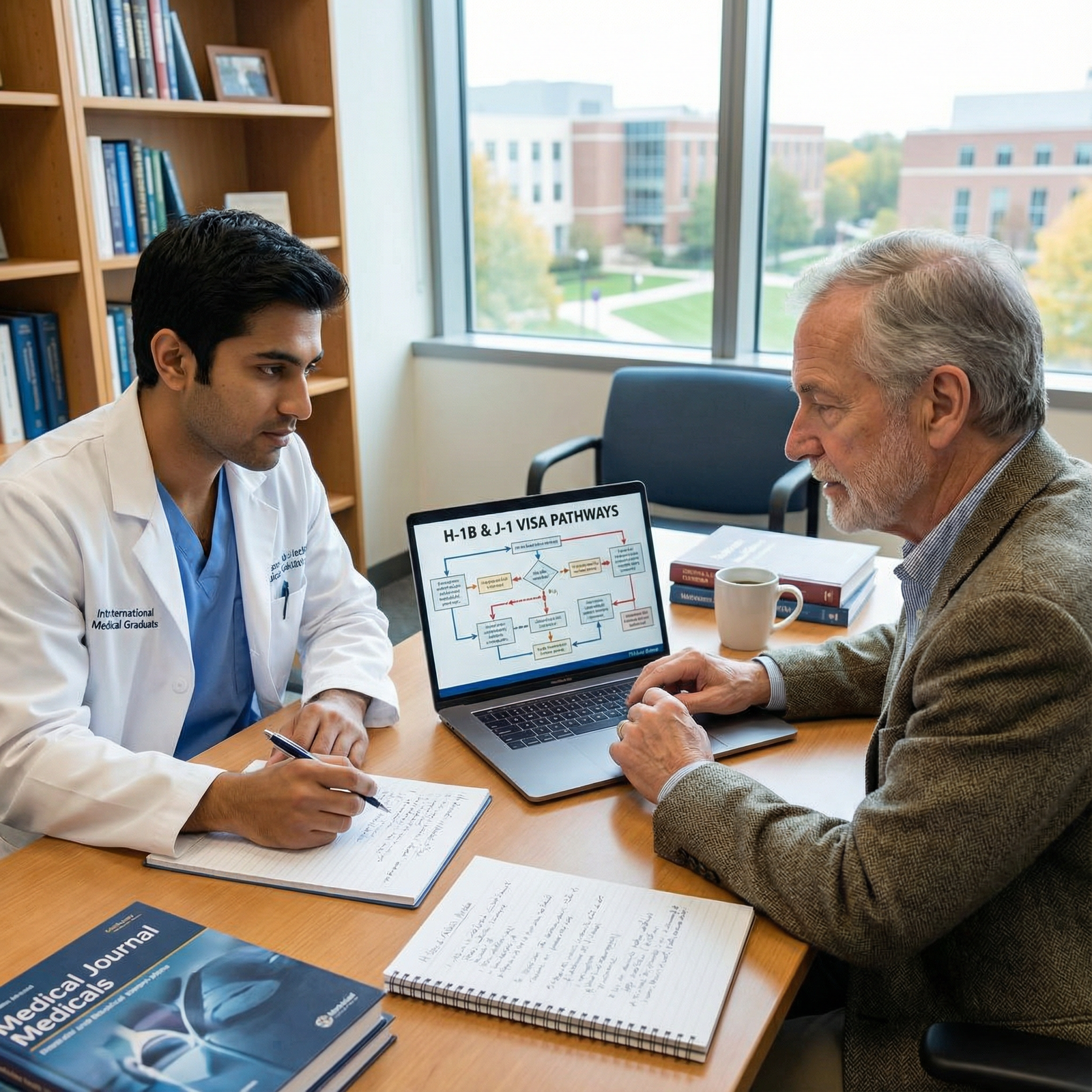
Understanding Visa Navigation for Border Region Residency Programs
Residency programs along the US‑Mexico border—such as those in El Paso, Laredo, Brownsville, McAllen, Harlingen, San Antonio, Tucson, Yuma, and San Diego—are uniquely attractive to many IMGs. They often serve predominantly Spanish‑speaking and binational populations, provide strong clinical exposure to cross‑border health issues, and may have a long history of working with international graduates.
At the same time, visa navigation for residency in the border region can be more complex than in other parts of the United States. You need to think simultaneously about:
- Which programs sponsor which visa types
- Border‑specific travel patterns (frequent crossings to Mexico)
- Future career plans in the US or abroad
- Family considerations and dependents
- Long‑term immigration strategy (e.g., eventual permanent residency)
This article walks you step‑by‑step through the key issues for IMGs considering a border region residency—with a special focus on Texas border residency programs and their common visa pathways.
Visa Landscape for IMGs in the US-Mexico Border Region
The three main visa paths
For postgraduate training in the US, IMGs typically use one of three pathways:
- J‑1 Exchange Visitor (ECFMG‑sponsored)
- H‑1B Temporary Worker (employer‑sponsored)
- Alternative paths (U.S. permanent residence or other statuses)
Most IMGs in US residencies—including those in the US‑Mexico border region—start training on a J‑1 visa. Some border programs also support H‑1B, particularly for candidates who have passed all USMLE Steps (including Step 3) and meet extra institutional requirements.
A smaller minority already hold U.S. permanent residency (green card), U.S. citizenship, or other independent work‑authorized statuses (e.g., certain EADs through asylum, TPS, or pending family petitions). These candidates usually apply as “no visa needed,” but still must be aware of border‑specific issues like cross‑border travel.
Why border region programs may care about visa type
Programs along the US‑Mexico border often have specific strategic needs:
- High patient volume and need for bilingual physicians
- Long‑term physician shortages in underserved, often rural or semi‑urban areas
- Strong ties to the local community and binational health networks
These priorities influence how they think about J‑1 vs H‑1B and long‑term retention:
- Some border programs prefer J‑1 because it is standardized through ECFMG and efficient to process.
- Others actively consider H‑1B to help recruit candidates they hope to retain long‑term (especially if the candidate might later transition to an employment‑based green card).
- Many border region institutions are cap‑exempt for H‑1B (e.g., university‑affiliated or non‑profit teaching hospitals), which makes H‑1B more feasible for residency and potentially for fellowship.
Understanding how your target programs think about IMGs and visa sponsorship is essential to building a realistic application list.
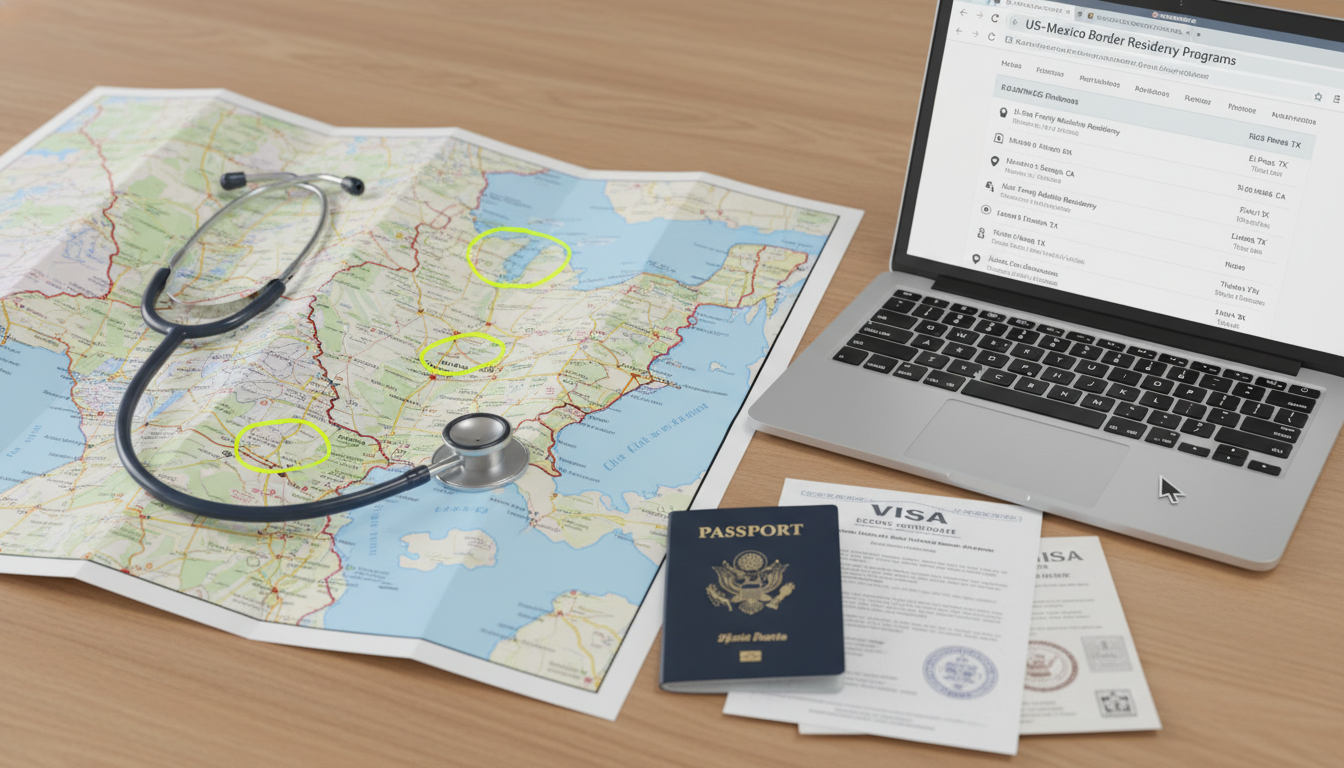
Deep Dive: J‑1 vs H‑1B for Border Region Residency
J‑1 Exchange Visitor Visa (ECFMG‑sponsored)
Core features:
- Sponsored by ECFMG (not the hospital directly) for graduate medical education.
- Valid for the duration of residency and fellowship, typically up to 7 years total (extensions possible in limited circumstances).
- Includes the two‑year home country physical presence requirement—you must return to your home country (or country of last permanent residence) for a cumulative two years after training, unless you obtain a waiver.
Advantages in the border region:
Widely accepted
Most border region residency programs that take IMGs are J‑1 sponsors via ECFMG. You will find many Texas border residency programs that clearly state “J‑1 sponsored through ECFMG” on their websites.Standardized and predictable process
ECFMG outlines clear steps and timelines for sponsorship, with dedicated support infrastructure. Programs along the border are familiar with this process and often have graduate medical education (GME) offices well‑versed in ECFMG rules.J‑1 Waiver opportunities in shortage areas
The two‑year home requirement can be waived in certain circumstances, the most common being:- Conrad 30 Waiver (State 30) – every state can recommend up to 30 J‑1 waiver slots per year for physicians who commit to working in a health professional shortage area (HPSA) or medically underserved area (MUA) for 3 years.
- Many counties near the US‑Mexico border qualify as shortage areas, so border region jobs after residency frequently align with waiver positions.
- Texas and other border states (e.g., New Mexico, Arizona, California) regularly use their Conrad 30 slots to place physicians in border communities.
Consistent chance to cross the border during training
As long as your J‑1 and DS‑2019 are valid, and you maintain status, you can usually travel to and from Mexico (subject to general visa issuance issues and consulate appointments). Border IMGs often cross for family visits; planning around stamp renewals and consulate backlogs is critical.
Limitations and special concerns:
Two‑year home residence requirement
This is the single most important legal consequence of the J‑1. Without a waiver:- You cannot change to H‑1B or permanent resident status from within the US.
- You cannot receive an immigrant visa abroad (consular processing).
- You cannot receive certain types of work or training visas in the future.
Family planning complexities
Spouses and children on J‑2 are also tied to your J‑1 status. J‑2 spouses may work (with an EAD), but after training, the entire family’s options depend on whether you obtain a waiver or fulfill the 2‑year requirement.Dependence on future waiver jobs
You may feel constrained to take a J‑1 waiver job after residency in a border or rural community, even if you later develop a strong interest in fellowship in a different region.
Best suited for:
- IMGs who want to maximize match chances by being open to all programs that sponsor J‑1.
- Candidates willing (or even planning) to work in underserved or border communities after training.
- Those without a near‑term plan for US permanent residency through marriage, family, or other categories.
H‑1B Temporary Worker Visa
Core features:
- Employer‑sponsored work visa for “specialty occupations.”
- For residents/fellows, the employer is usually the teaching hospital or university.
- Typically granted in up to 3‑year increments, with a maximum of 6 years (time in J‑1 does not count toward H‑1B’s 6‑year limit, but other H‑1B time does).
- No two‑year home residence requirement.
Why some IMGs prefer H‑1B in the border region:
No J‑1 home requirement
You can move more directly toward:- Employment‑based green card sponsorship.
- Flexibility in job choice after residency.
- Freedom to pursue additional fellowships without waiver constraints.
Stronger leverage for long‑term retention
Border region health systems that face chronic physician shortages sometimes see H‑1B sponsorship as a way to recruit and keep physicians; they may transition you from resident H‑1B to attending H‑1B and then to a green card.Potentially smoother path to permanent residency
Because you are not burdened by the J‑1 two‑year rule, your employer can sponsor PERM and an I‑140 during or after residency if they choose.
Limitations and complications:
Not all programs sponsor H‑1B
Many border region residencies do not support H‑1B for residents due to:- Cost and legal complexity.
- Institutional policy preferring J‑1.
- Concern about long‑term immigration responsibility.
Additional eligibility requirements
Most programs that do sponsor H‑1B require:- USMLE Step 3 passed before the H‑1B petition is filed (often before Match rank list certification).
- ECFMG certification and proof of medical degree.
- State licensing board eligibility for a training license.
Timing pressure
Step 3 must often be taken earlier than you might otherwise schedule it. For a border region residency in July, you may need Step 3 done by January–February of Match year.Cap vs cap‑exempt
Many teaching hospitals are H‑1B cap‑exempt, which is good during residency. However, if you transition to a private clinic or non‑affiliated group in a border community, you might face:- Need to secure a cap‑subject H‑1B in the national lottery, unless you remain affiliated with a cap‑exempt institution.
- Strategic decisions about where to work so that you stay under cap‑exempt protection.
Best suited for:
- IMGs with strong Step scores and completed USMLE Step 3 early.
- Candidates targeting specific border residency programs known to offer H‑1B.
- Those with a clear long‑term plan to stay in the US and pursue permanent residency.
J‑1 vs H‑1B: How to choose for border region residency?
A practical way to think about J‑1 vs H‑1B for a Texas border residency or any border‑region program:
Breadth of opportunities vs strategic targeting
- If you want the widest list of programs, J‑1 is easier, because nearly all IMG‑friendly border programs accept it.
- If you want to prioritize long‑term US immigration flexibility, and you can meet the extra requirements, selectively target H‑1B friendly programs as well.
Your Step 3 timeline
- If you cannot realistically pass Step 3 before Rank Order List deadlines, J‑1 will be your primary option.
- If you already have Step 3 and strong credentials, consider an H‑1B strategy at selected programs.
Your long‑term plan to stay in the US
- If you are open to returning home or working abroad for several years, J‑1 may be perfectly acceptable.
- If your priority is a continuous path to US permanent residency, H‑1B or an independent green card route is more aligned.
Willingness to work in underserved border communities after training
- Many J‑1 waiver jobs are in border or rural areas.
- If you already want to work in a border region after residency, J‑1 plus a waiver post may actually fit your goals well.
How Visa Choice Interacts with Border Region Realities
Frequent cross‑border travel and visa strategy
Residents in border cities often have family living in Mexico or travel for cultural, personal, or economic reasons. When thinking about residency visa options, consider:
Consular renewals
- J‑1 visas are often issued for a limited time (not always the full length of your residency). You may need to renew your visa stamp at a US consulate in Mexico.
- Plan renewals during vacation blocks, considering appointment wait times and possible security checks.
Re‑entry risks
- Any international travel carries some risk of delays or denials, especially if there are evolving immigration policies.
- Keep your DS‑2019 (for J‑1) or I‑797 (for H‑1B) and supporting documents well organized; know your program’s immigration contact.
Automatic visa revalidation
- Limited “automatic revalidation” rules may allow returns from nearby countries with expired visas in some statuses, but this is complex and policy‑sensitive. Always discuss with an immigration attorney or your GME office before relying on it for frequent trips to Mexico.
J‑1 waiver options tailored to border regions
If you match on a J‑1 visa and later want to stay in the US, the waiver process is central. Border regions can actually be advantageous:
Conrad 30 in border states
- Texas, New Mexico, Arizona, and California all have Conrad 30 programs and many designated shortage areas along the border.
- Health centers in towns near the US-Mexico border actively recruit J‑1 waiver physicians. Spanish language skills and cultural familiarity are big assets.
Federal waiver programs
- Additional federal programs (e.g., through the VA, Appalachian Regional Commission, or Delta Regional Authority) sometimes include regions not far from the border or serve similar underserved populations.
Strategic planning during residency
- In PGY‑2 and PGY‑3, start mapping out where waivers are commonly available in your specialty (e.g., primary care, psychiatry, pediatrics, OB/GYN, internal medicine subspecialties).
- Attend career fairs or network with J‑1 alumni of your program who accepted waiver jobs in the region.
H‑1B long-term options in border communities
If you pursue an H‑1B residency, think ahead to:
Whether your desired border employer is cap‑exempt or cap‑subject
- A county hospital or university‑affiliated center is often cap‑exempt, allowing continuous H‑1B employment.
- A small private group may require you to win the H‑1B lottery.
Green card timelines
- Ask potential employers early whether they:
- Sponsor PERM and I‑140.
- Have experience with physician immigration.
- Can help you maintain dual intent (H‑1B is dual intent; J‑1 is not).
- Ask potential employers early whether they:
Family considerations
- H‑4 dependents can live and study in the US, and in some cases spouses may qualify for work authorization (H‑4 EAD) if certain green card steps are filed. This can be especially important for binational families split between US and Mexico.

Building a Visa-Savvy Residency Application Strategy
Researching visa policies of border region programs
Before applying, systematically check each program’s stance on IMGs and visa sponsorship. For each border region residency on your list:
Check the program website
Look for a section titled “International Medical Graduates”, “Visa Information”, or “Eligibility Criteria.” Note whether they state:- “J‑1 only”
- “J‑1 and H‑1B considered”
- “No visa sponsorship”
- “U.S. citizenship or permanent residency required”
Use FREIDA and other databases
FREIDA and similar platforms often list whether a program accepts J‑1, H‑1B, or both. For example, many Texas border residency programs will explicitly mention J‑1 sponsorship and sometimes H‑1B eligibility.Email the program coordinator for clarification
If unclear, send a concise inquiry:- Briefly introduce yourself (IMG, graduation year, Step status).
- Ask: “Does your program sponsor visas for IMGs? If yes, which types (J‑1, H‑1B) and are there any specific requirements such as USMLE Step 3 for H‑1B?”
Keep a spreadsheet tracking:
- Program name and location (e.g., Harlingen, McAllen, El Paso, Tucson, Yuma, San Diego).
- Visa types accepted.
- Any Step 3 deadlines or licensing quirks.
- IMG friendliness and past match trends.
Timing your exams and applications
If you aim for H‑1B:
- Plan to complete USMLE Step 3 by early in the Match cycle, often by January or earlier of the year you start residency.
- Schedule Step 3 with enough buffer to retake if needed (though, ideally, you pass on the first attempt).
If you are comfortable with J‑1:
- Prioritize strong performance on Step 1 and Step 2 CK and robust clinical letters from US rotations.
- Still consider taking Step 3 during the early years of residency; it will help later if you change status or seek fellowship on H‑1B.
Tailoring your personal statement and interviews
For border region programs, your visa narrative should be honest and aligned with their mission:
Emphasize commitment to underserved and border communities
Programs want residents who see the border region as more than a temporary stepping‑stone.Clarify your visa flexibility
- If open to J‑1: make it clear you are willing to train on a J‑1 if that is what the program supports.
- If you strongly prefer H‑1B: explain why (e.g., long‑term US plans, dependents’ needs), but avoid sounding inflexible or entitled.
Demonstrate realistic immigration awareness
Mention that you have researched J‑1 waiver options, shortage areas, or long‑term career paths in the region. Programs appreciate candidates who think ahead.
Practical Visa Tips Specific to the US-Mexico Border Region
For Mexican graduates and binational candidates
If you are a Mexican citizen or trained in Mexico, the border region offers special advantages—and responsibilities:
Language and cultural competency
Your Spanish fluency and familiarity with Mexican healthcare systems are huge assets. Highlight how this helps navigate cross‑border referrals, health literacy, and family‑centered care.Consulate logistics
You may rely on US consulates in Mexico (e.g., Ciudad Juárez, Monterrey, Tijuana) for J‑1 or H‑1B visa issuance or renewals. Plan:- Early appointments.
- Backup arrangements if there are delays.
- Coordination with your program for travel time.
Travel safety and documentation
Keep copies of:- Your ECFMG certificate.
- DS‑2019 (for J‑1) or I‑797 (for H‑1B).
- Employment verification from your program. These come in handy at ports of entry along the border.
Managing dependents and family in the border context
For spouses, children, or other dependents:
Schooling and childcare
Many border communities have bilingual schools and cross‑border family structures. Understand local rules for public school enrollment, healthcare access, and insurance.Employment options for spouses
- J‑2 spouses can seek employment authorization (J‑2 EAD), but processing may take several months.
- H‑4 spouses might qualify for work authorization only in specific circumstances (e.g., if your PERM and I‑140 are approved). Otherwise, they cannot work.
- Some families consider living in Mexico while the physician commutes, but this raises complex issues: daily border crossing, emergency availability, and schooling. Consult both immigration and employment counsel before adopting such an arrangement.
Working during and after residency on specific visas
Moonlighting on J‑1
- Generally restricted; any paid work must be approved and usually be part of your training program.
- Border region moonlighting in nearby communities typically requires explicit permission from your program and ECFMG.
Moonlighting on H‑1B
- You are generally limited to employers and sites listed in your H‑1B petition.
- Separate H‑1B petitions or amendments may be required for additional moonlighting roles, which can be administratively burdensome.
Post‑residency visa transitions
- J‑1 → J‑1 Waiver job (often on H‑1B) in a shortage area, frequently still near the border.
- H‑1B residency → H‑1B attending position → PERM/green card in the same or nearby health system.
Strategically, many physicians who complete a Texas border residency on J‑1 stay in the broader region for their waiver positions, leveraging their bilingual skills and network while fulfilling immigration requirements.
FAQs: Visa Navigation for Border Region Residency
1. Is it easier to match into a border region residency on J‑1 or H‑1B?
For most IMGs, J‑1 is easier:
- Many more border region residency programs sponsor J‑1 than H‑1B.
- H‑1B requires Step 3 early and additional institutional approvals.
- If your priority is to maximize chances of matching, you should be fully open to J‑1.
However, if you have Step 3 completed, strong scores, and a clear plan to remain in the US long term, it is worth targeting a few H‑1B‑friendly border programs as part of a broader strategy.
2. Can I switch from J‑1 to H‑1B during residency in the border region?
It is possible but complicated:
- You must obtain a J‑1 waiver of the two‑year home residency requirement first (e.g., through Conrad 30), which typically occurs after completing training, not during residency.
- Without a waiver or fulfilling the 2‑year requirement, you cannot simply change from J‑1 to H‑1B in the US.
- A direct switch mid‑residency is rare and usually not a reliable plan.
For most IMGs, the trajectory is:
- Train entirely on J‑1 → complete residency/fellowship → obtain J‑1 waiver job → then move into H‑1B and possibly permanent residency.
3. Do border region programs give preference to candidates from Mexico or Latin America?
Programs generally state that they follow non‑discriminatory selection policies focused on merit and fit. However:
- Spanish language skills and cultural familiarity with Mexican and Latin American patients are major advantages.
- Graduates from Latin American schools may feel at home in the border context, but competition is still based on:
- USMLE scores
- Clinical experience
- Letters of recommendation
- Evidence of commitment to underserved populations
Your background can be a strength, but it does not replace the need for a strong application.
4. If I plan to live in Mexico and commute daily to my border residency, which visa is better?
Both J‑1 and H‑1B can technically support living in Mexico and working in the US, but:
- Programs often discourage or restrict such arrangements due to:
- Concerns about resident availability (e.g., night calls, emergencies).
- Border‑crossing delays and travel risk.
- Immigration rules do not prohibit it, but employment and duty hour regulations may.
If you seriously consider this arrangement:
- Discuss it explicitly with your program’s leadership before committing.
- Get legal advice on:
- Daily border crossings.
- Tax residency and social security.
- Impact on dependents and schooling.
Many residents eventually choose to live on the US side during training for stability, even if they visit family in Mexico frequently.
Visa navigation for residency in the US‑Mexico border region requires balancing immediate match prospects with long‑term immigration goals. By understanding J‑1 vs H‑1B, researching border region residency policies, and planning proactively around J‑1 waivers or H‑1B transitions, you can build a training pathway that supports both your professional ambitions and your life across the border.