
What if the only audition rotation you can get is in November or January – is that basically useless for your Match chances?
Let me be blunt: timing matters a lot more than schools like to admit. But “too late” is different depending on your specialty, your application strength, and what you’re hoping the rotation will actually do for you.
This isn’t about theory. This is about: “If I do a rotation in Month X, what can it still change in my actual Match outcome?”
Let’s break it down.
The Real Timeline: When Rotations Still Move the Needle
Think about what you want a rotation to do for you. It can:
- Generate a strong letter of recommendation (LoR)
- Get you known by a program (for interview consideration and rank list)
- Give you something meaningful to put in your ERAS application
- Help you confirm (or change) your specialty decision
Those four things don’t have the same deadlines.
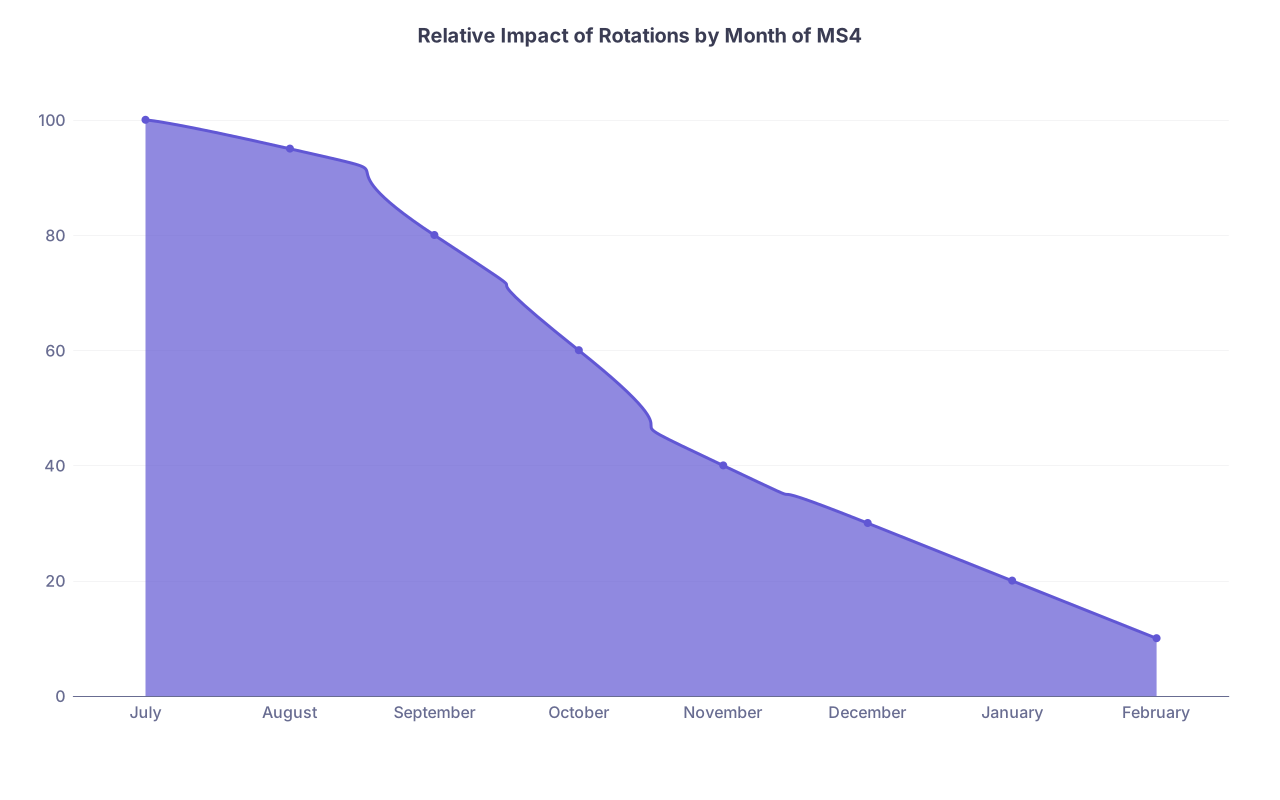
| Category | Value |
|---|---|
| July | 100 |
| August | 95 |
| September | 80 |
| October | 60 |
| November | 40 |
| December | 30 |
| January | 20 |
| February | 10 |
Use that as a mental picture: your leverage starts high in July–August and slopes down hard by November.
Here’s the practical cutoff guide:
July–September: Prime time. Rotations here can:
- Produce letters in time for ERAS
- Trigger interview invites
- Strongly affect how a program ranks you
October: Still decent, especially early October.
- Letters might make it in time for late reviewers
- Can still convert to an interview at that site, especially in less competitive specialties
November: Borderline for Match impact, but not useless.
- Unlikely to influence initial interview offers
- Can heavily impact how a program ranks you if you already have an interview there
December–January:
- Almost never helps you get new interviews
- Can absolutely move your rank position at that program if they’re still evaluating you
February and later:
- Too late to matter for this Match
- Only useful for: skills, future job networking, or if you’re planning a reapplication
So: “too late to affect Match at all” is basically February. But “too late to help with interviews” is usually November.
How ERAS and Rank Timelines Interact With Rotations
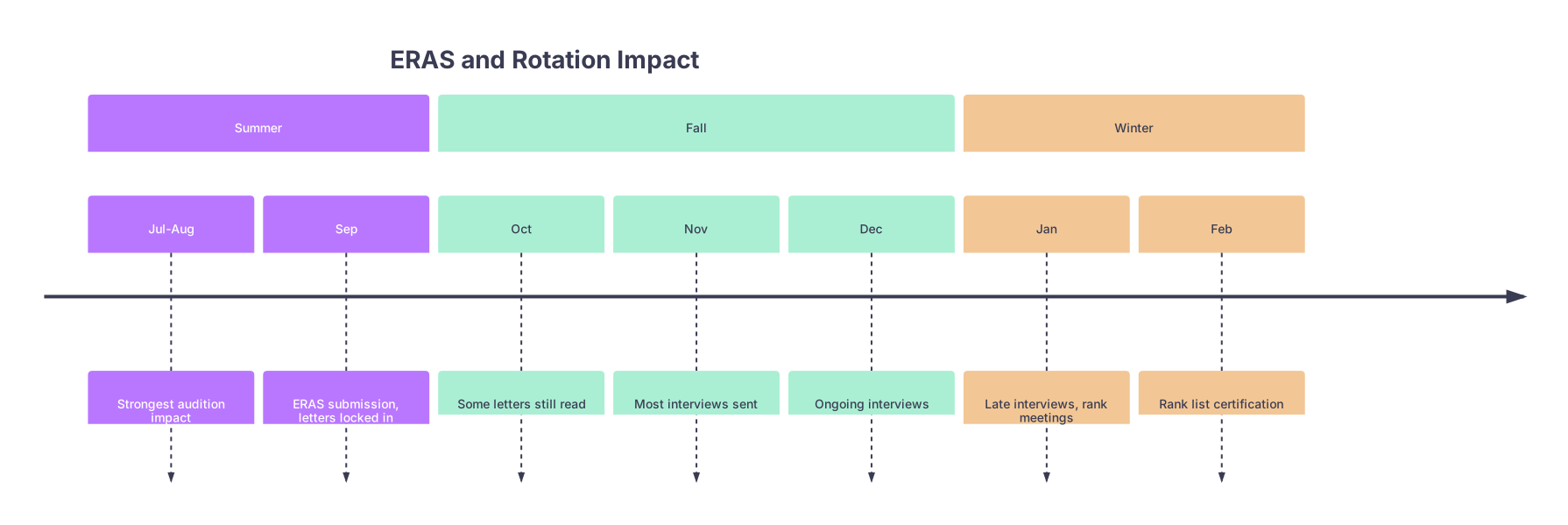
Let’s anchor this with the usual schedule (dates vary a bit each year but the pattern is stable):
| Period | Event |
|---|---|
| Summer - Jul-Aug | Strongest audition impact |
| Summer - Sep | ERAS submission, letters locked in |
| Fall - Oct | Some letters still read |
| Fall - Nov | Most interviews sent |
| Fall - Dec | Ongoing interviews |
| Winter - Jan | Late interviews, rank meetings |
| Winter - Feb | Rank list certification |
Key choke points:
ERAS application release (September):
Most programs make first-pass decisions based on what’s already in ERAS. That means rotations finishing after mid-September start behind.Interview offer peak (October–November):
By late November, the majority of interview invites are out in most fields, particularly competitive ones.Rank list meetings (January–February):
This is where late fall/winter rotations can still matter – but mostly only at the place you’re rotating.
So if your goal is:
- Letters that get you more interviews → Aim to finish by early September
- Being remembered and ranked highly at a specific program → Even December–January can work
Specialty-Specific Reality: How Late Is Too Late?
Different specialties have different levels of cutthroat insanity. Here’s how that shifts the “too late” line.
| Specialty Type | Ideal Audition Months | Often Too Late for New IVs | Still Can Help Ranking |
|---|---|---|---|
| Very competitive (Derm, Ortho, Plastics, ENT) | Jul–Aug | After Oct | Through Jan |
| Competitive (EM, Anes, Neuro, Rad, Urology) | Jul–Sep | After Nov | Through Jan |
| Core (IM, Peds, FM, Psych, OB) | Jul–Oct | After Dec | Through Jan |
| Transitional/Prelim spots | Aug–Oct | After Dec | Through Jan |
Ultra-competitive fields (Derm, Ortho, Plastics, ENT, NSG)
If you’re in one of these:
- Rotations July–August: Almost mandatory as auditions. Huge impact.
- September: Still useful, but letters may be late.
- October: Good for rank positioning at that specific place, but marginal for new interview generation.
- November–January:
- Usually too late to change how many interviews you get
- But if you already have an interview there, a strong performance can absolutely move you up their rank list
If you’re asking, “Is a November away still worth it for ortho if I haven’t done any others?” – it’s better than nothing for that single program but probably won’t “save” a weak application across the board.
Moderately competitive (EM, Anesthesia, Radiology, Neurology, some IM subspecialties)
Emergency medicine is a classic timing-sensitive one.
- EM letter (SLOE) ideally comes from July–September rotations.
- An October EM rotation can still work, but some programs will have informally sorted applicants by then.
- November EM rotations: hard to get that SLOE in time to matter widely.
For anesthesia, neuro, rads:
- July–September rotations are best for letters and early impressions
- October is fine, especially if paired with already decent numbers
- November+ mainly helps at that one institution
Less cutthroat cores (IM, FM, Peds, Psych, OB-GYN)
You have more breathing room.
- A September or even October sub-I can still:
- Generate a letter that gets read
- Lead directly to an interview at that site
- November:
- Less help for new interviews
- Still valuable for rank order at that program and for a backup letter if something falls through
I’ve seen people do an IM sub-I in November, crush it, get an interview, then get ranked highly because the PD trusted their team’s evaluation. That can definitely still happen here.
What Late Rotations Can Still Do (And What They Can’t)
Here’s where people get this wrong. A late MS4 rotation isn’t all-or-nothing. It just changes which part of the process it can still touch.
After September, rotations rarely:
- Generate letters that drive first-round interview offers
- Completely fix a low-score / low-grade application across the board
- Lead to brand-new interview offers from strangers seeing “current rotation” on ERAS
But even very late rotations can still:
Boost your rank position at that specific program
- You rotate in December
- You already had or get a late interview
- The team says, “This person worked like a PGY-1”
- They slide you up the list
Give you an extra letter for:
- Update emails (in some specialties/programs that still care)
- SOAP or reapplication if things go badly
Serve as insurance:
- If one of your earlier letter writers flops, forgets, or writes a weak note, you’ve got a backup
Clarify your own decision:
- Sometimes a November rotation is the one where you realize, “Nope, I actually hate this field.”
- That alone can save you years of misery.
Month-by-Month: “Is It Too Late?” Scenarios
You want specifics. Let’s do it.
July–August MS4
- Absolutely not too late. This is prime audition season.
- Use these for:
- Home sub-I
- A targeted away at your dream program or region
- Aim: 1–2 letters, strong impressions, interview leverage.
September
- Still very impactful, especially early September.
- If your ERAS goes in mid-September, a September rotation may have its letter slightly delayed, but programs will often still read it.
- Good move if:
- You were late deciding specialty
- You need one more strong specialty-specific letter
October
- This is your “yellow zone.”
- Useful if:
- You’re solid on paper and just need to show your face
- You’re rotating at a place that knows and respects late letters
- Less useful for:
- Generating new interviews at programs that are already drowning in applicants
November
- For most specialties: borderline for influencing interview offers.
- Still worthwhile when:
- It’s at a program you’d happily rank #1
- Your school/PD says that site often interviews their rotators, even late
- I’d consider a November rotation strategic if:
- You already have a decent interview spread
- You want to “audition” for specific geography or system
December–January
- At this point:
- Interviews are mostly scheduled
- Your ERAS is old news
- But:
- Programs hold rank meetings late January / early February
- They absolutely hear, “This student is working with us right now and is fantastic”
- You do this timing if:
- You’ve got an interview there and want to be top-of-mind
- You’re hedging for SOAP/reapplication with one more strong letter
- You didn’t get earlier dates and this is your only way to be seen there

February and Later
- For current Match? Yes, this is basically too late.
- Useful for:
- Extra clinical experience before residency
- Networking for job/fellowship years later
- Prepping Plan B if you think you might not Match and will reapply
If Your Only Available Rotation Is “Late” – How To Make It Count
Let’s say the only away you could land is in November or December. Here’s how to squeeze value out of it.
Target where you realistically want to end up.
Doing a December sub-I at a brand-name program that was never going to interview you is vanity. Doing it at a solid mid-tier place you’d happily train? Smart.Make sure they know you’re already in the pipeline.
Email the coordinator/PD:- Confirm your rotation
- Politely mention you’ve applied this cycle
- If you have an interview already, say so; if not, express genuine interest
Tell your team early you’re applying there.
Day 1 or 2, let your senior/resident/attending know:- You’ve applied to their program
- You’re excited to be here
- You’d appreciate any feedback that could help you be a strong applicant
Push for real responsibility.
The only thing that actually changes rank discussions is:- You pre-round thoroughly
- You call consults
- You own your patients
- You’re reliable on notes and follow-up
This is what makes someone say, “I’d work with them again as an intern.”
Ask directly about a letter – but with awareness.
For very late rotations, frame it like:- “Even if it’s too late for this cycle, I’d still value a letter for future use or as backup.”
That takes pressure off and many attendings will still do it.
- “Even if it’s too late for this cycle, I’d still value a letter for future use or as backup.”
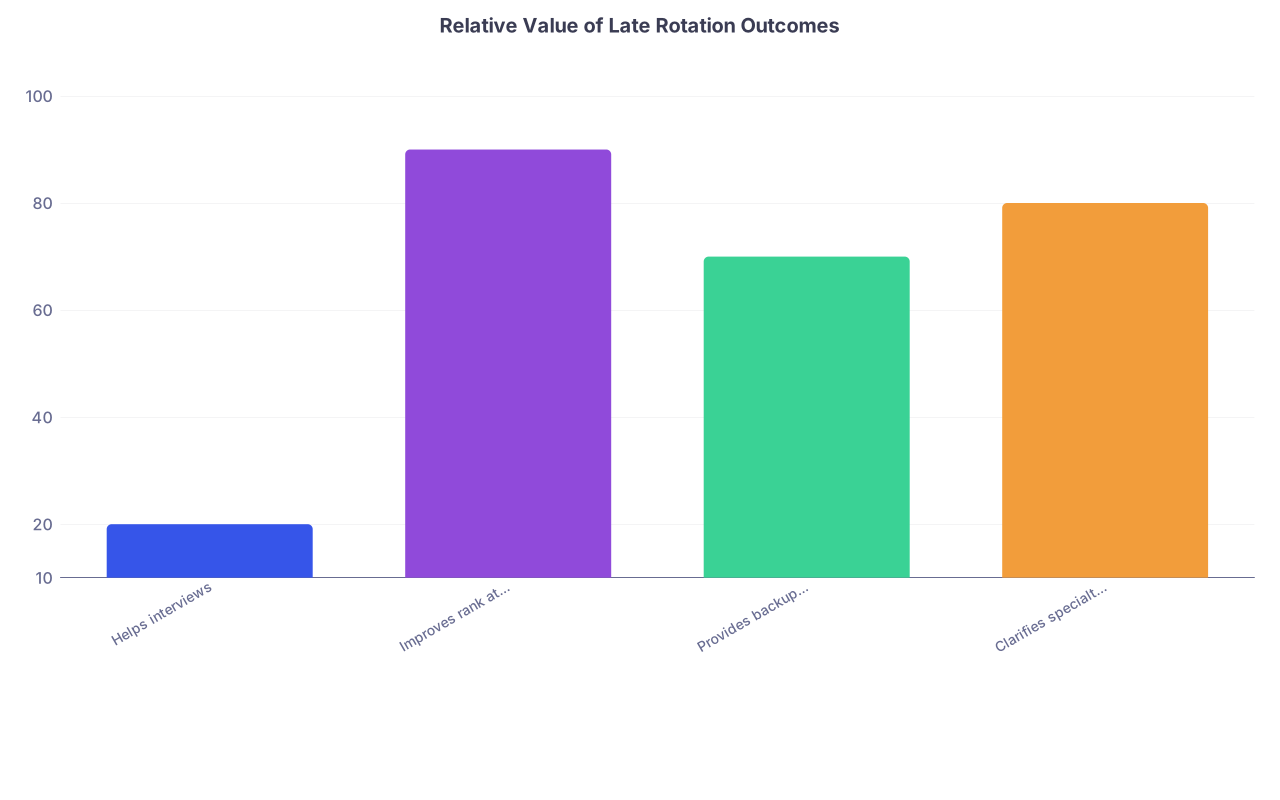
| Category | Value |
|---|---|
| Helps interviews | 20 |
| Improves rank at that program | 90 |
| Provides backup letter | 70 |
| Clarifies specialty fit | 80 |
Hard Truth: Rotations Don’t Fix Everything
There’s a myth that a late “amazing” rotation will magically overcome:
- Very low Step scores
- Multiple failed exams
- Zero prior engagement in the specialty
It won’t. What it can do is take a borderline candidate and make them clearly “yes” at that specific place.
But if you’re already significantly behind on:
- Board scores
- Clerkship grades
- Number of interviews
Then your time might be better spent:
- Strengthening the places that already gave you interviews
- Preparing obsessively well for those interviews
- Strategizing backup options and SOAP planning
Quick Decision Framework: Should You Still Add a Late Rotation?
Ask yourself:
- Do I already have at least a reasonable number of interviews for my specialty and competitiveness?
- Is this rotation at a place I’d genuinely be happy to Match?
- Is there a realistic path from this rotation to:
- An interview there
- Or a stronger rank position there?
If you’re mostly “yes,” then even a November–January rotation can be strategic.
If you’re mostly “no,” then you’re probably doing it for your ego or for vague “more experience” reasons, not Match impact.
FAQs
1. Is October too late for an away rotation to help my Match?
No, October is still very much in play for most specialties, especially IM, FM, Peds, Psych, and OB. It may be slightly late for some ultra-competitive fields, but it can still influence:
- A late interview invite at that specific program
- How strongly they rank you if you interview there
You might not get as much broad benefit (fewer programs seeing that letter in time), but it’s not “too late.”
2. Will a November rotation get me new interviews?
Usually not many. By November, most competitive and mid-tier programs have sent the majority of their invites. A November rotation is more about:
- Making a strong impression where you rotate
- Improving how that one program views and ranks you
If you’re truly short on interviews, your energy is probably better spent on targeted communication and preparing to excel in the interviews you do get.
3. Can a December or January rotation still change how a program ranks me?
Yes. Very much so. Programs often hold rank meetings in late January or early February. If you’re on service with them in December or January and blow them away, people remember that in the room.
The flip side: a weak performance late can also hurt you. They’re seeing you at what they consider “almost intern” level.
4. If I’m undecided on specialty, how late is too late to do a deciding rotation?
If you’re still deciding your specialty by October of MS4, you’re cutting it uncomfortably close for that same Match cycle. Can you do a November rotation and then apply? Maybe, in very flexible and less competitive fields. But it’s risky.
Realistically:
- Use late MS3 / early MS4 for decision-making rotations
- Once you’re in September MS4, your rotations should mostly support an already chosen specialty, not explore new ones
If you’re truly unsure that late, it’s worth asking honestly whether a delayed graduation or a research year makes more sense.
5. Is it better to do another audition rotation late, or stay home and do research/electives?
If the rotation is:
- At a program you genuinely like
- In a month where they’re still interviewing or ranking
- And you’re strong enough to impress
Then go. That’s more impactful than generic home electives almost every time.
If instead the rotation is:
- At a random big-name place with no realistic path to an interview
- In December–January in a hyper-competitive field where you don’t already have traction
Then consider staying home, doing a strong sub-I, building relationships with your own PD and chair, and focusing on crushing the interviews you already have.
Bottom line:
- “Too late to affect interviews” usually starts around November.
- “Too late to affect ranking at the program you rotate at” is basically February.
- If you’re going to do a late rotation, make sure it’s at a place where you’d be genuinely happy to Match—and then perform like an intern whose job depends on it. Because in a way, it does.