
The panic about “ruining” your ERAS after submission is exaggerated—but the confusion about what you can and cannot change is real.
Here’s the blunt truth: you can safely edit parts of ERAS after submission, but some things are locked forever and timing absolutely matters for how programs see your updates.
The Core Answer: Yes, You Can Edit ERAS After Submission—But Not Everything
Let me answer the main question first, so you are not scrolling in anxiety.
Once you submit ERAS:
- Some sections are permanently locked
- Some sections are editable but not resent automatically
- Some sections are editable and updates are visible to programs going forward
ERAS changes details slightly from year to year, but the rules are broadly consistent.
Here’s the practical breakdown you actually need.
| Section | After Submission? | Do Programs See Updates? |
|---|---|---|
| Personal Info (name, contact) | Yes | Yes (most fields) |
| Personal Statement(s) | Yes (upload/edit, re-assign) | Only if re-assigned to programs |
| Program List (where you apply) | Yes (add programs) | New programs see current ERAS |
| Experiences/Employment | Usually No (locked) | No (unless ERAS changes rules) |
| Publications/Presentations | Usually No (locked) | No |
| Letters of Recommendation (LoRs) | Assign/unassign only | New assignments only |
| USMLE/COMLEX Scores | Auto-update when released | Yes (if released to ERAS) |
If you remember nothing else:
- You can keep refining: personal statements, program list, some demographic/contact fields
- You cannot overhaul your entire CV once it’s submitted
- You should be strategic about when you edit, based on how far along programs are in reviewing apps
What You Absolutely Can Safely Change
Let’s go section by section and separate real risk from rumor.
1. Contact and Personal Information
You can edit:
- Phone number
- Address
- Some demographic details
Programs see the updated version when they open your file later. If you change your email, ensure it forwards or you keep checking the old one too for a while—some systems cache.
When to change it:
- Change immediately if it’s wrong or you switch to a more professional email.
- Do not wait. An incorrect email can literally cost you interview invites.
2. Personal Statements – The Most Common Post-Submission Edit
Yes, you can:
- Upload new personal statement versions
- Edit existing statements offline and re-upload
- Assign different statements to different programs (or change assignments)
Programs only see the version that is assigned to them at the time they open/download your application. They do not get a red flag saying “this person changed their statement.”
When it’s safe to edit:
- If you submitted early (September) and realize you want:
- A more tailored specialty-specific statement
- Separate statements for academic vs community programs
- A genuinely better version (cleaner, tighter, no new red flags)
Do it. Then re-assign the improved statement to your existing programs.
What I wouldn’t do:
- Constantly tweak every few days during peak review weeks.
- Make major content changes after interviews start, especially if you reference themes you never mentioned in your original.
Is it dangerous to improve a weak statement 3–5 days after submission? No. I’ve seen many applicants do exactly that with zero issues.
3. Program List – Adding More Programs Later
You can keep adding programs after your initial submission—this is normal.
- New programs see your application as it looks on the day they receive it, with whatever is current in ERAS at that moment.
- They are not told “this person applied late.” They just see a completed file with a submission date.
When to add programs:
- If you get fewer interview invites than expected by mid–late October, add more.
- If your specialty is very competitive (derm, ortho, plastics, ENT, etc.), consider building a second wave list in advance.
This is not risky. The only “cost” is money and sometimes weaker yield if you apply too late in the cycle relative to ultra-competitive programs.
4. Letters of Recommendation: You Can Reassign, Not Rewrite Reality
You cannot edit the content of LoRs (obviously), but you can:
- Assign or unassign letters to specific programs
- Add newly uploaded letters later and send them to programs
When you should change LoR assignments:
- If a new, stronger letter arrives (e.g., from a sub-I, away rotation, or department chair)
- If a letter writer never sent the promised letter and you add a replacement
Be careful about:
- Swapping out letters mid-season for programs that haven’t yet reviewed your file—fine.
- Removing a letter for a program after they’ve downloaded your application—pointless, they already saw it.
5. USMLE/COMLEX Scores – Automatically Updated
Once you authorize ERAS to pull your scores, new score releases (Step 2 CK, COMLEX Level 2, etc.) automatically appear to programs.
You don’t “edit” this, but it does change your file after submission in a meaningful way.
When to do it:
- If you’re waiting on a stronger Step 2 score, you can:
- Initially not release scores
- Then release once that score posts
That’s a strategy conversation, not a technical one. But yes, the system can update after submission.
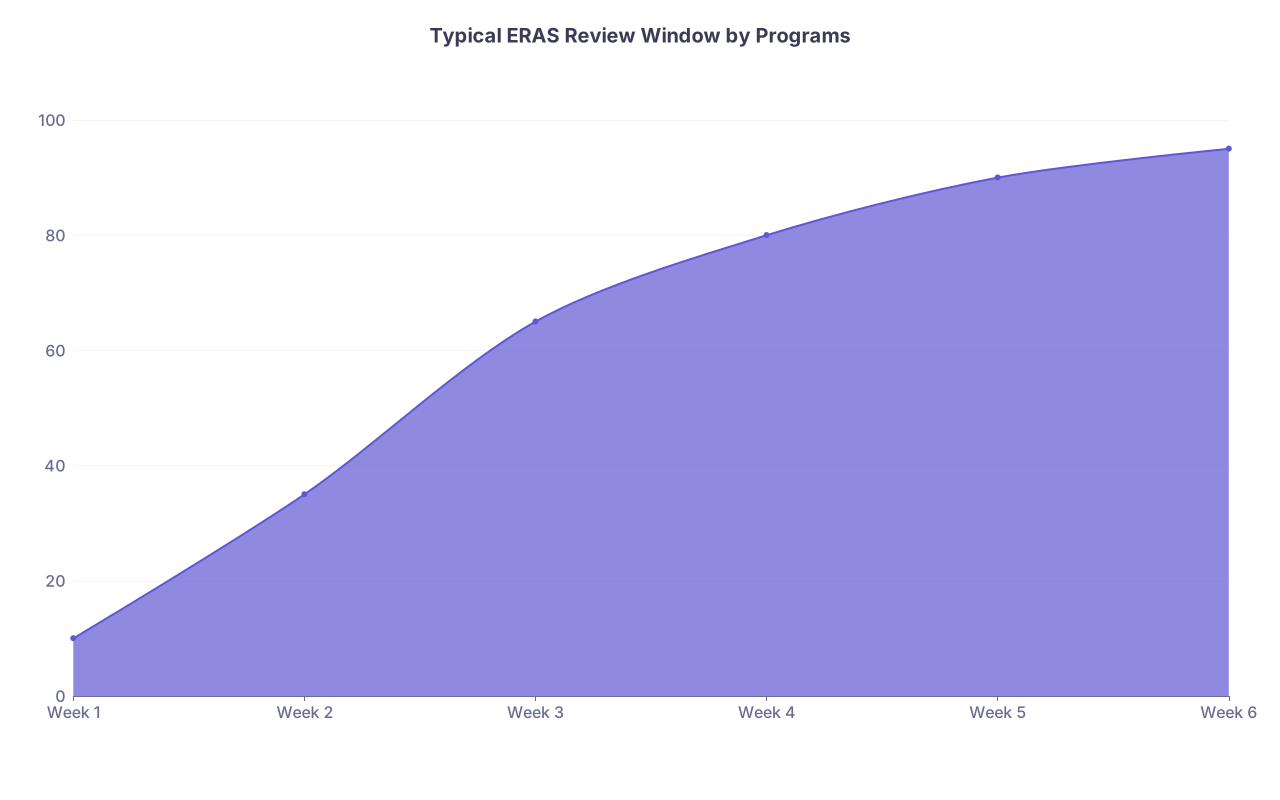
| Category | Value |
|---|---|
| Week 1 | 10 |
| Week 2 | 35 |
| Week 3 | 65 |
| Week 4 | 80 |
| Week 5 | 90 |
| Week 6 | 95 |
What’s Basically Locked Once You Hit Submit
Here’s the part nobody likes hearing.
Most of the “core” content is locked once you submit to any program:
- Work/experiences
- Volunteer activities
- Research entries
- Publications and presentations
- Most sections of the CV-like parts of ERAS
If you discover a typo in a publication title or realize you forgot an activity, you usually cannot fix it after you submit.
What if you made a small mistake?
- One minor typo: let it go. No PD is rejecting you over “pubications” vs “publications.”
- A missing major activity that defines your application:
- You can mention it in your personal statement or interview if asked
- Some applicants send a brief, professional email to programs if it’s truly big (e.g., a major first-author publication just accepted)
But you are not going to upload a new CV to override ERAS.
When You Should Edit After Submission (And When You Should Not)
The real question is less “can I” and more “does this help or hurt me right now?”
Good Reasons to Edit ERAS After Submission
Fixing critical accuracy issues
- Wrong email, wrong phone, wrong graduation date
- Mis-assigned personal statement (e.g., surgery PS sent to psychiatry)
Strengthening content before serious review starts
- You submitted on day 1 with a rushed personal statement, then refine it within 3–7 days
- You add a new, strong LoR from a recent rotation and assign it
Strategically expanding your reach
- Low interview volume → add more programs
- Late specialty switch from super-competitive to slightly less competitive → apply broadly in new specialty with tailored PS
Reflecting substantive new achievements
- Major publication accepted
- A new significant role (chief position, meaningful leadership position) early in the season
Realistically, most of this will matter more at interview or rank time than on paper.
Bad Reasons or Bad Timing for Edits
Cosmetic perfectionism mid-season
- Tweaking sentence flow in your personal statement in November when many programs already screened you
- Rewording minor sections out of anxiety, not substance
Panic-editing after an interview
- Changing your personal statement to match what you think the program wants
Remember: they downloaded your original already. You won’t rewrite history.
- Changing your personal statement to match what you think the program wants
Frequent changes that confuse your own narrative
- One week your PS is all about heme/onc, next week generalist primary care, then rural EM
Programs see lack of coherence. That hurts more than small content issues.
- One week your PS is all about heme/onc, next week generalist primary care, then rural EM
Changing stories
- Any edit that creates contradictions between what’s in ERAS, what’s in your PS, and what you say on interview. That’s how you make PDs suspicious.

Timeline: When Edits Have the Most Impact
Think about program behavior, not just ERAS rules.
Here’s roughly how many programs treat the season (varies by specialty, but you get the idea):
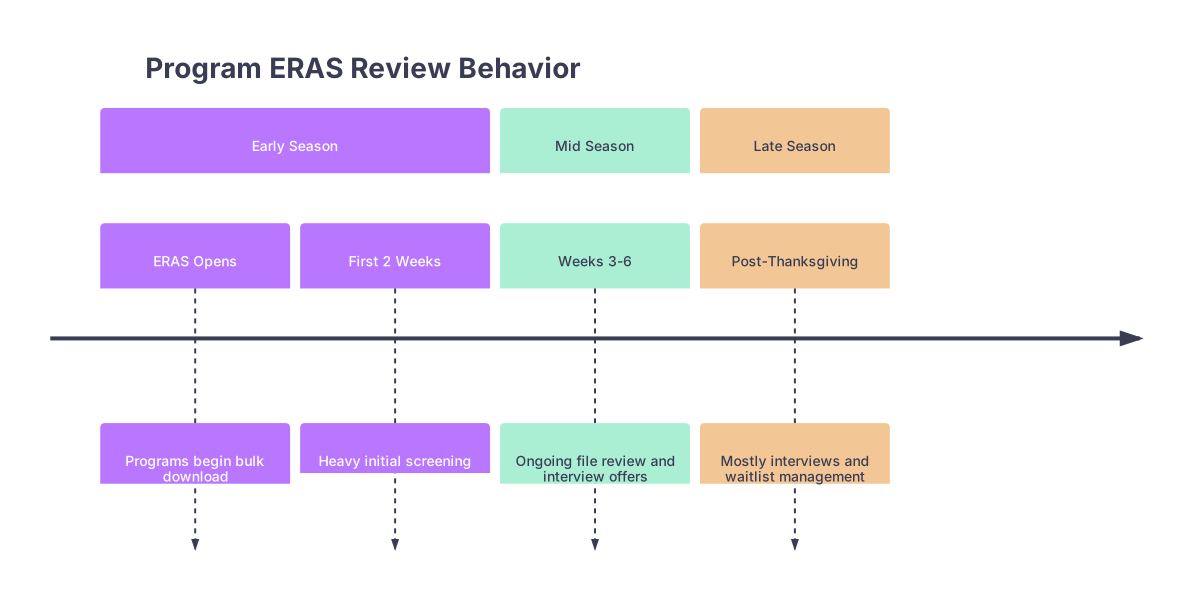
| Period | Event |
|---|---|
| Early Season - ERAS Opens | Programs begin bulk download |
| Early Season - First 2 Weeks | Heavy initial screening |
| Mid Season - Weeks 3-6 | Ongoing file review and interview offers |
| Late Season - Post-Thanksgiving | Mostly interviews and waitlist management |
How this affects you:
First 1–2 weeks after apps open:
- Fix personal statement issues ASAP
- Correct any contact errors
- Add key letters if they come in
Weeks 3–6:
- Reasonable to add programs if you’re underperforming on invites
- Still okay to assign new strong letters
- Personal statement changes matter mainly for programs you apply to later
After most interviews are out (late November onward):
- Focus less on editing ERAS
- Focus more on interview performance and, later, your rank list
At that point, tweaks in ERAS are like rearranging the furniture after the guests have left.
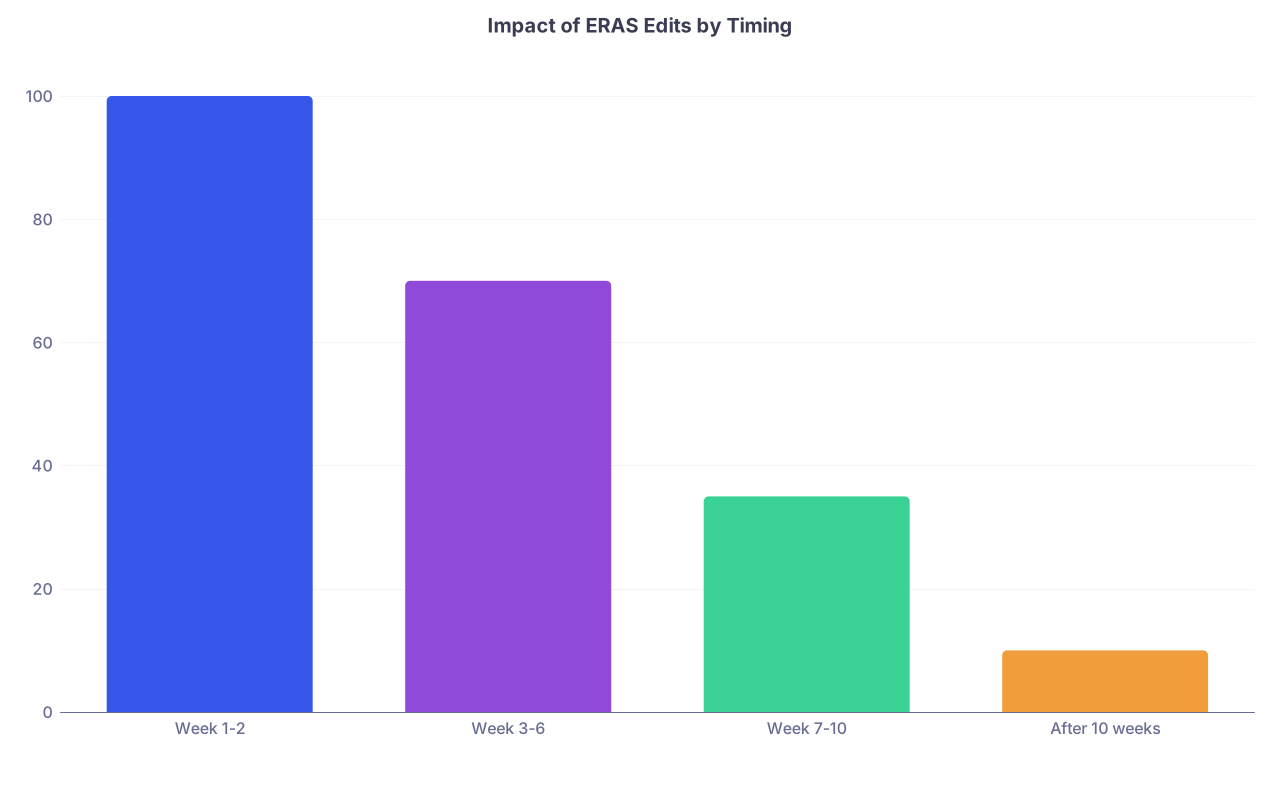
| Category | Value |
|---|---|
| Week 1-2 | 100 |
| Week 3-6 | 70 |
| Week 7-10 | 35 |
| After 10 weeks | 10 |
How to Decide: Should I Edit This or Leave It Alone?
Here’s the framework I actually recommend when someone messages me in a panic:
Ask yourself four questions:
Does this change correct a factual error that affects contact, identity, or eligibility?
- If yes → Fix it now. No debate.
Will this edit significantly change how a program understands my fit or strength?
- New top-tier LoR? Better PS that clearly fixes a weak one? Strong new score?
- If yes → Probably worth doing, especially early.
Will programs that already downloaded my file see this change?
- Usually no. So ask: “Am I doing this more for my own anxiety, or for meaningful impact?”
Does this create inconsistency with what I’ve already presented or said?
- If yes → Stop. You’re more likely to damage trust than gain points.
If your proposed edit isn’t factual, isn’t big, and doesn’t affect future programs meaningfully, you’re probably just micromanaging. Let it go and focus on interviews, rotations, and sanity.

Practical Scenarios You’re Probably Dealing With
Let’s run a few real-world examples I see every year.
Scenario 1: “I submitted with the wrong personal statement to 10 programs”
You realize your internal medicine PS went to a few family medicine programs.
What to do:
- Upload the correct FM personal statement
- Re-assign it to those FM programs immediately
- Do not email programs apologizing; they probably haven’t reviewed you yet, and if they have, you’ll look more anxious than professional
Timing: Fix within 24–48 hours. Then move on.
Scenario 2: “My new away rotation letter just uploaded in October”
You’re applying ortho, EM, or another rotation-heavy specialty, and your away rotation LoR finally arrives.
What to do:
- Assign that letter to all relevant programs that haven’t yet reached their interview targets
- Consider sending a short, professional note to a few top programs where that letter is a big value-add—only if you’re early enough and the culture in that specialty supports it
Do not:
- Spam 60 programs with “please re-review my file” emails.
Scenario 3: “I forgot to list a major research project”
If it’s a minor abstract or poster, let it go.
If it’s legitimately central to your identity (e.g., 3 years of full-time research, first-author accepted at a major journal):
- Mention it in your personal statement if you haven’t been heavily reviewed yet
- Talk about it in your interviews
- If it’s truly huge and early in the season, you can send a concise update email to select programs
But no, you’re not going to “fix ERAS” to look like you never forgot it.

FAQ: ERAS Edits After Submission
Can programs see that I edited my ERAS application after submission?
No obvious “edit log” is shown to programs for routine changes. They simply see the version of your application that exists when they download or open it. They’re not given a history of tiny tweaks.If I change my personal statement after submitting, do old programs see the new version?
Usually, no. If a program has already downloaded your file, they keep the version they originally received. New or yet-to-download programs will see whatever is current and assigned at the time of download.Is it safe to add more programs weeks after my initial ERAS submission?
Yes. This is standard. Those programs see your current ERAS as of the day you apply to them. The only downside is being later in their review queue for competitive programs.Should I email programs if I correct an error in ERAS?
Only for serious errors that affect eligibility or major achievements (like wrong graduation date, missing exam status, or a major new accepted publication). For minor typos or small clarifications, do not bother them.Can I update my experiences or publications after I submit ERAS?
In most cycles, no—those sections are locked once you submit to any program. Any updates must be communicated indirectly (personal statement, interview conversations, or rare, focused update emails).Does editing ERAS late in the season help my chances?
Usually not much. Once most programs finish initial screening and send interview invites, ERAS edits have limited impact. At that point, you gain more from focusing on interview prep and professionalism than from tweaking your application text.If I retake Step 2 or COMLEX 2, will programs automatically see the new score?
If you’ve authorized ERAS to receive your scores, new scores automatically update in your application and become visible to programs. You don’t need to “resubmit” ERAS—but whether programs care at that stage depends heavily on timing.
Key Takeaways:
Most ERAS edits after submission are technically safe but practically limited. Fix real errors and make early, meaningful improvements (like stronger personal statements or new letters). Then stop obsessing and shift your energy to strategy, program list management, and interview performance.