
It’s late August. Your classmates are posting in the GroupMe: “Submitted! Good luck everyone!” Program directors are tweeting about “reviewing applications soon.” Your ERAS portal is open on one monitor, your personal statement draft is on the other, and your brain is running one question on a loop:
“If I don’t submit soon, I’m screwed. But if I submit now, this application is…kind of a mess. Which screws me more?”
You’re basically trying to choose between two nightmares:
- Submit a flawed ERAS early, get screened out everywhere because it looks weak.
- Wait to polish it, submit “late,” and get screened out everywhere because programs already filled their interview spots.
So what’s actually worse?
Let’s walk through this like someone who’s actually been panicking over ERAS before. Because this anxiety spiral? Very familiar.
The Brutal Truth: Timing Helps, But Garbage Early Is Still Garbage
Let me be blunt so your brain has something solid to hold onto:
A truly sloppy, error-filled, half-baked ERAS submitted on day 1 is NOT “better” than a solid, coherent one submitted a bit later in the opening wave.
Programs don’t hand out bonus interviews for being first if the content is weak.
Where timing does matter:
- Being in the first big batch when programs start reviewing
- Not being weeks behind your peers in a competitive specialty
- Having Step 2 scores and key letters in by the time they’re really looking
Where timing matters a lot less than you think:
- The difference between day 1 vs day 4
- The difference between early September vs mid/late September for most specialties (except the hyper-competitive ones, where earlier matters more but still not “submit trash” early)
Programs are not robots that auto-invite the first 50 apps that appear. They wait for a big enough pool, then start screening. That gives you some breathing room.
Not weeks. But days. Sometimes a couple of weeks, depending on specialty.
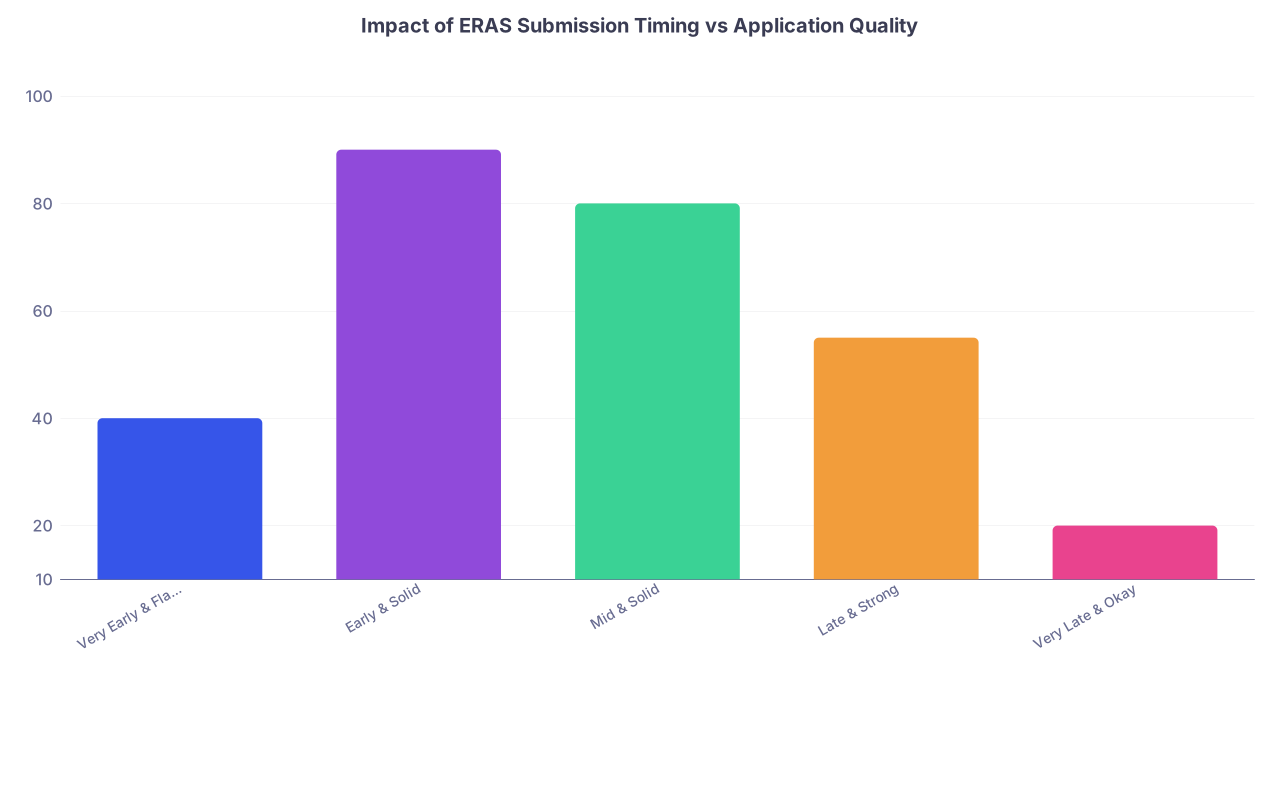
| Category | Value |
|---|---|
| Very Early & Flawed | 40 |
| Early & Solid | 90 |
| Mid & Solid | 80 |
| Late & Strong | 55 |
| Very Late & Okay | 20 |
What “Flawed” vs “Polished” Actually Means (Not What Your Anxiety Says)
Your brain calls everything “flawed.” Let’s separate actual problems from perfectionism.
Not a big deal / fixable later stuff:
- One or two minor typos (annoying, but not fatal)
- A slightly generic personal statement that’s still coherent
- Work/activities that aren’t written like Pulitzer entries but are clear
- Only 2 letters uploaded at submission, with clear plans for more
Actually damaging “flawed” application:
- Messy personal statement: rambling, unclear why you chose the specialty, cliché and vague, or accidentally sends weird vibes
- Major inconsistencies: dates don’t match, roles unclear, things look shady
- You misrepresent something (this is a huge problem)
- You pick the wrong specialty in how you present your story
- No Step 2 score when your Step 1 is weak and the specialty cares a lot about Step 2
- Activities written so poorly they make you sound unprofessional, disinterested, or immature
If your “flawed” is really “I don’t love this sentence,” that’s anxiety talking.
If your “flawed” is “my personal statement is a disorganized trauma dump with no actual connection to why I want [specialty],” that actually can hurt you. And in that case, waiting a few days to fix it is the better move.
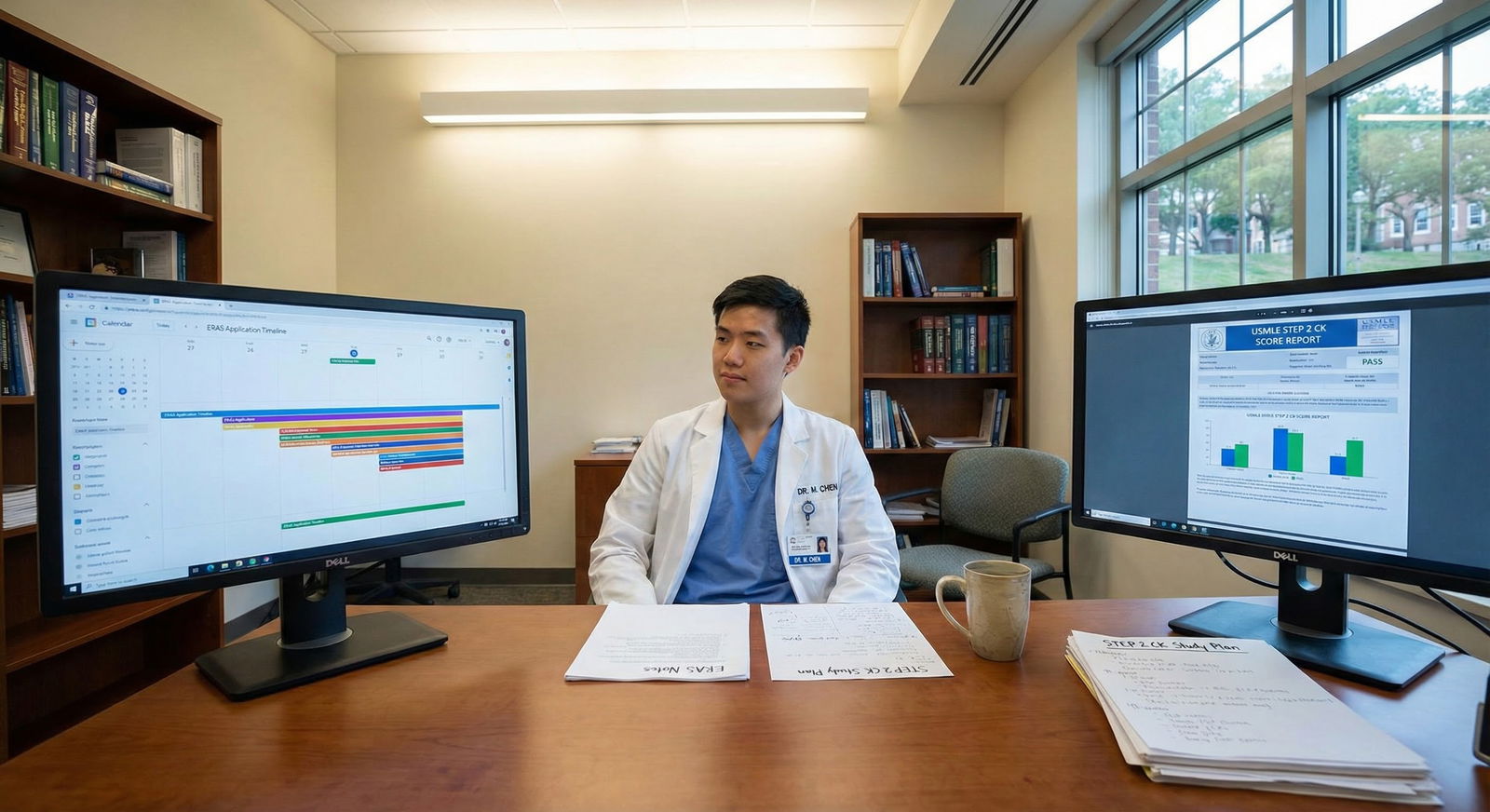
How Programs Actually Review ERAS (Not the Myth in Your Head)
You’re imagining this:
- 9:00 AM: ERAS opens
- 9:01 AM: Program director hits “accept first 200 apps that show up”
- 9:05 AM: All interviews gone forever
That’s not how it works.
Reality (which I’ve seen play out at multiple programs):
- They wait for a critical mass of applications (first several days to a week).
- Filters get applied (Step 1/2, school, visa needs, etc.).
- They sort by different things: scores, home/region, research, specific experiences.
- Faculty or a committee reviews over days to weeks, not 30 minutes.
- Interview invites roll out in waves, not all on day 1.
Being in that first wave of reasonable completeness matters. But being first-to-submit with a weak personal statement and incoherent experiences doesn’t magically get you in front of them more favorably.
If you’re applying to something like Ortho, Derm, ENT, Plastics, or Rad Onc: yes, earlier within reason is more important. But again, they’re looking for people who look serious, focused, and aligned with the field. A chaotic app screams the opposite.

| Step | Description |
|---|---|
| Step 1 | Applications Arrive |
| Step 2 | Filters Applied |
| Step 3 | Initial Screen by Coordinator |
| Step 4 | Faculty/PD Review |
| Step 5 | Interview List Created |
| Step 6 | Invites Sent in Waves |
The Real Question: How Late Is “Too Late”?
This is what your brain is unfortunately very good at: catastrophizing.
“Not submitting on day 1” turns into “I’ll never match and my life is over.”
Let me break it down by timeframes. This is opinionated, but it’s based on how programs actually behave.
| Submission Timeframe* | Risk Level | My Honest Take |
|---|---|---|
| Day 1–3 | Low | Ideal if app is solid, but not necessary to kill yourself for this. |
| Day 4–10 | Low–Mod | Still very reasonable for most specialties. Fine if it means a stronger app. |
| Day 11–20 | Moderate | Starting to feel late for hyper-competitive specialties, still OK for many others if strong. |
| After ~3–4 weeks | Higher | Now timing really can hurt, especially for competitive fields. App must be strong. |
| Months late | Very high | Basically only workable in rare situations or less competitive specialties. |
*Relative to when ERAS first allows you to submit for that application cycle.
If waiting 3–7 days means turning a weak, chaotic personal statement into a focused, readable one? That’s a trade I would make every time.
If your choice is:
- Submit today with an obviously bad PS and half-baked experiences
vs - Submit in 5–7 days with a coherent, aligned, much stronger application
You submit in 5–7 days. You just do.
Where I get more nervous:
- You’re aiming for something like Derm/Ortho/ENT/Plastics and thinking, “Maybe I’ll just submit in late October once I feel ‘ready.’”
- You have no Step 2 and a borderline Step 1 and you’re delaying for weeks with no clear timeline.
That’s not polishing. That’s procrastination disguised as “I’m being careful.” Programs won’t wait for you.
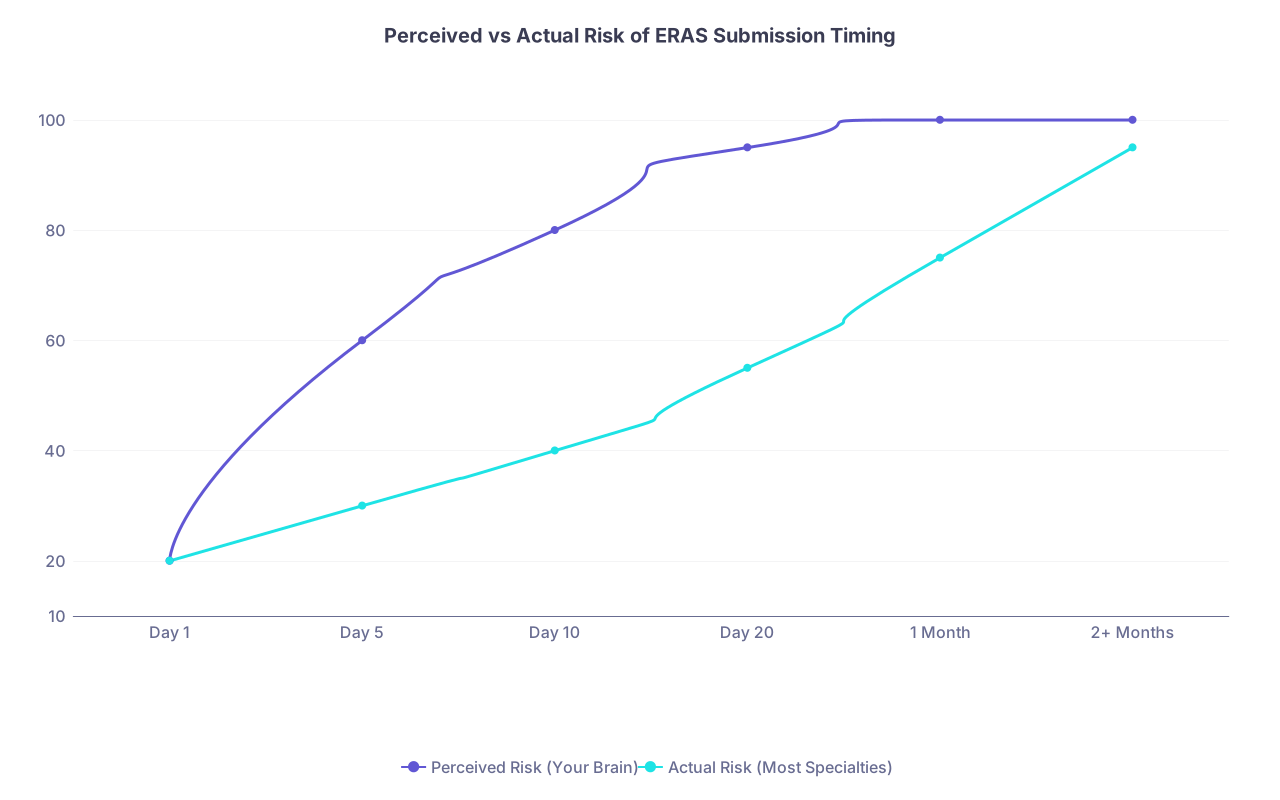
| Category | Perceived Risk (Your Brain) | Actual Risk (Most Specialties) |
|---|---|---|
| Day 1 | 20 | 20 |
| Day 5 | 60 | 30 |
| Day 10 | 80 | 40 |
| Day 20 | 95 | 55 |
| 1 Month | 100 | 75 |
| 2+ Months | 100 | 95 |
What I’d Actually Do If I Were You (Different Scenarios)
Let’s go through some specific, ugly-feeling situations you might be in.
Scenario 1: “My PS is honestly bad, but everything else is mostly fine.”
You’ve got:
- Decent Step scores
- Reasonable experiences filled in
- LORs mostly in or coming soon
- But your personal statement is generic, disorganized, or tonally off
In this case:
Wait a few days. Fix the PS.
Not weeks. But 3–7 days to:
- Get one trusted human to read it
- Make sure there’s an actual narrative: why this specialty, who you are, what you bring
- Remove anything unprofessional, overly graphic, or cringey
A truly bad PS can tank an otherwise okay app, especially in smaller programs where faculty actually read them.
Scenario 2: “My activities section is rushed and sounds like a CV, not a person.”
This is super common. You wrote “Responsibilities included…” for everything because you were tired.
Do this:
- Take 1–2 days to rewrite the biggest 4–6 experiences: your most important research, leadership roles, major volunteering, teaching.
- Focus on impact and what you learned, not just duties.
Then submit.
You don’t need every single bullet to be poetry. You need the main stuff to show you’re thoughtful and engaged, not a robot.
Scenario 3: “My Step 2 is pending and Step 1 is weak.”
This one is harder.
If your Step 1 is significantly below average for your specialty and you expect Step 2 to be a clear improvement, then yes, waiting until that score posts can help. But the waiting should have a defined endpoint.
If Step 2 is:
- Already taken → consider waiting until score releases if it’s within that first 1–2 week window.
- Not yet taken → you can’t delay ERAS for months waiting. That’s too risky.
Programs will often look at your Step 1 first, and if it’s below their cutoffs, the app may be gone before Step 2 ever shows up.
So: if Step 1 is weak but passable and you’re applying broadly, I’d still aim to be in that early group rather than super late waiting for scores.

Scenario 4: “I have only 1 letter uploaded, the others are promised.”
You can submit ERAS before all letters are uploaded. Programs know letters trickle in. This is not a reason to hold your entire application hostage for weeks.
If:
- You’ll have at least 2 letters in fairly soon
- You’ve assigned the letters in ERAS
- Your letter writers are reliable and responsive
Submit the application once everything else is ready. The letters will populate on their end.
Don’t wait 10 extra days just so it shows “3 letters” instead of “2 letters” on day one. Fix the bigger rocks first: PS, experiences, basic proofreading.
A Simple Rule: Don’t Submit Something You’re Embarrassed to Stand Behind
This is the rule I wish someone had told me:
If you’d be embarrassed to have your application read out loud on a Zoom call with the program director and your favorite attending listening in?
It is not ready.
Not “you’re nervous” embarrassed. Everyone’s nervous. I mean genuinely:
- The story doesn’t make sense
- It doesn’t show why you chose this field
- There are obvious errors and contradictions
- You look careless or uninterested
If that’s where you are, waiting several days to make it something you can at least stand behind is not just okay. It’s smart.
But once you hit the point where it’s:
- Clean
- Coherent
- Representative of who you are
Not perfect. Just honest and reasonably polished.
You submit. Even if that voice says, “Just one more week to tinker…”
That’s no longer polishing. That’s fear.
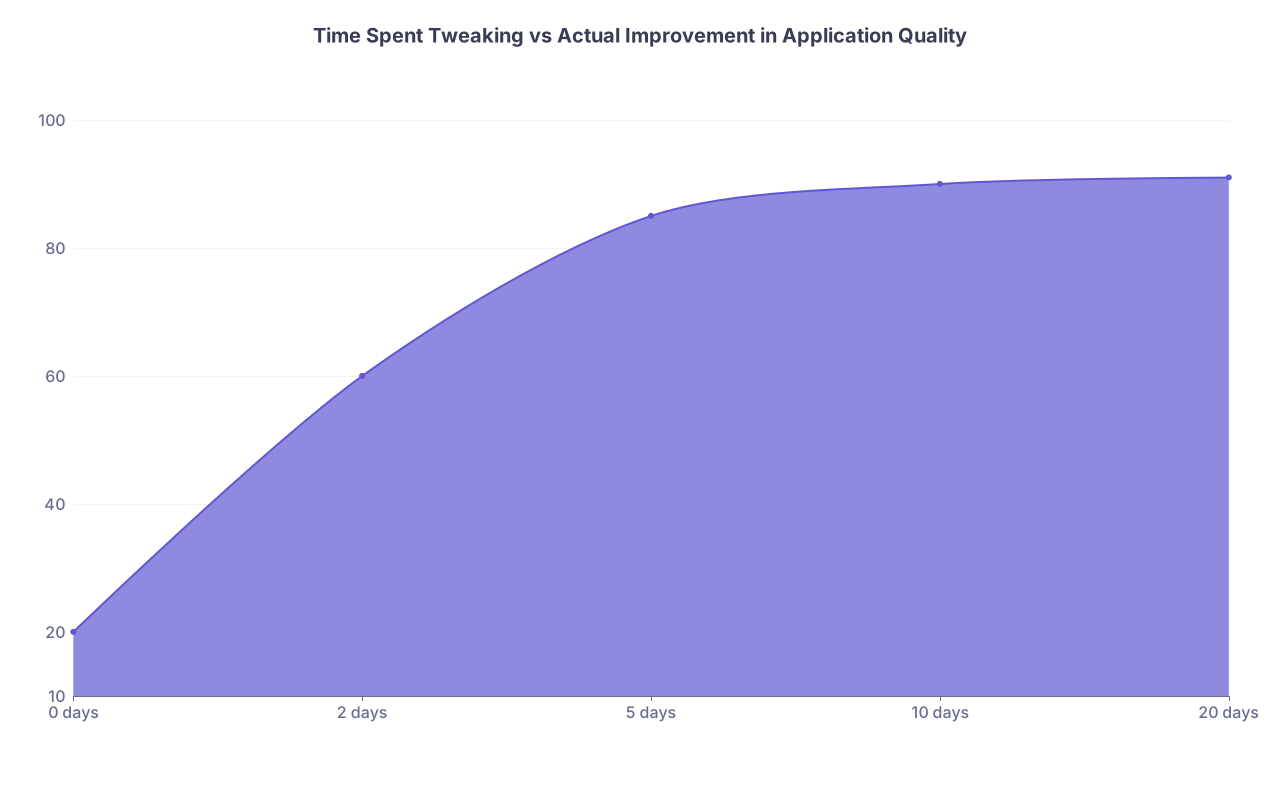
| Category | Value |
|---|---|
| 0 days | 20 |
| 2 days | 60 |
| 5 days | 85 |
| 10 days | 90 |
| 20 days | 91 |
Quick Gut-Check: Early Flawed vs Later Polished
If you want a brutal but functional gut-check, here’s how I’d frame it:
- If “flawed” = a few typos, minor wording issues, a PS that’s good but not brilliant → submit early-ish.
- If “flawed” = your story doesn’t make sense, your PS is either cringe or confusing, your activities sound like nonsense, you’re missing key parts → take several days to fix, then submit.
You are not competing to be first. You’re competing not to send out something that undersells you so badly that it sabotages your chances before anyone even meets you.

FAQ (Exactly 6 Questions)
1. Is submitting ERAS on the very first possible day necessary to get interviews?
No. Being in the first reasonable wave matters more than being first to the second. Submitting within the first several days to a week with a solid application is what most people who match do. Day 1 vs Day 4 is not going to make or break you, especially if the extra time makes your application substantially better.
2. How many typos are “too many” to submit?
One tiny typo won’t kill you. A pattern of sloppy errors starts to look like you don’t care or you’re not detail-oriented. If you’re finding obvious mistakes in every other section, give yourself 1–2 days to fix them. But don’t hold up the entire application for a single missing comma you only see when you zoom in to 200%.
3. What if my personal statement still feels “meh” but I’ve already revised it a lot?
If it’s coherent, on-topic, reflects why you want the specialty, and doesn’t say anything weird or unprofessional, it’s good enough. A PS doesn’t have to be inspirational literature. It’s a writing sample and a vibe check. Once it’s honest, clear, and doesn’t actively hurt you, stop obsessing and submit.
4. Is it worse to be early with only 2 letters or later with 3–4 letters?
If you’re otherwise ready, I’d submit earlier with 2 letters and let the remaining letters trickle in, as long as you know the other letter writers are reliable. Programs are used to letters arriving over time. Waiting an extra 7–10 days just to show an extra letter on day one usually isn’t worth the potential timing hit.
5. For competitive specialties, should I ever delay submission for polishing?
Yes—but the window is smaller. For something like Derm or Ortho, I’d still rather you take 3–5 days to turn a truly bad PS and activity section into something competent than rush out garbage on day 1. But you don’t get to sit on it for weeks. Aim to be in that first week if you can, with a version you aren’t ashamed of.
6. How do I know I’m polishing vs procrastinating?
If your changes are getting smaller and you’re mostly rephrasing the same sentence 12 times, you’re procrastinating out of fear. If your changes are big—fixing story flow, removing unclear or unprofessional content, clarifying major experiences—you’re still polishing. When it feels “good enough” but not perfect, that’s usually the moment you’re supposed to submit.
Key points to keep in your head:
- A coherent, honest, reasonably polished ERAS submitted in the first several days is better than a half-baked mess submitted on day 1.
- Don’t wait weeks. But taking a few days to fix truly damaging flaws is not only okay—it’s smart.
- Once your app is something you can stand behind without cringing, even if it’s not perfect, hit submit. Your future self will be relieved you did.