
It’s February. You’re deep into second year. Your friends are throwing around names like “UFAP,” “Boards & Beyond,” “Pathoma,” “Sketchy.” And you?
You committed. Hard. To a Step 1 book no one else seems to be using (or worse, one everyone quietly agrees is “kinda trash”). You’ve highlighted half of it. You made Anki cards from it. You’ve sunk hours. Maybe weeks.
Then one day in the library, you look around and realize:
No one. Literally no one. Is using what you’re using.
Your stomach drops.
You start doing the math in your head: wrong book → weaker foundation → lower NBMEs → bad Step score → worse residency → miserable career. Catastrophe speedrun in under 30 seconds.
Let me cut through that spiral:
Yes, you can absolutely recover.
No, you did not ruin Step 1 by picking the “wrong” book.
But you do need to adjust. And you need to be smart — not just panicky — about how you pivot.
First: Is Your Book Really “Wrong” Or Are You Just Scared?
Here’s the ugly truth: a lot of Step anxiety is just social comparison in disguise.
You see 10 other people using First Aid and UWorld only, so your brain decides: anything else = death sentence.
Sometimes that’s wrong.
Other times… honestly, yeah, there are some bad or outdated resources that will slow you down. I’ve seen people cling to 700‑page “comprehensive” books that read like a wall of text and ignore all the high‑yield patterns that Step actually tests.
So before you torch your book and your schedule, figure out which situation you’re in.
Ask yourself, very bluntly:
- When I do questions (UWorld/NBME/free qbank), do I recognize concepts from my book?
- Or do the explanations constantly reference other resources I’ve basically never seen?
- Am I struggling because Step is hard, or because my book is vague/overly detailed/organized like chaos?
If you’re doing okay on questions and your book helps you make sense of stuff, it’s probably not “wrong.” Maybe just not popular. That’s survivable.
If you’re consistently lost, always feeling like you “never saw this before,” and your book reads like someone dumped Robbins on Step 1… then yeah, it’s probably holding you back.
But still fixable.
The Sunk Cost Trap: Stop Letting Past You Sabotage Future You
Here’s the trap:
“I already spent 80+ hours with this book. I can’t just switch now. That would be wasting everything.”
No. That’s how you dig yourself deeper.
Those 80 hours are gone anyway. That time is not coming back whether you cling to the book or not. The only question that matters now:
Does continuing with this resource give you the best chance to improve from today forward?
If the answer is no, you need to pivot. Not tomorrow. Now.
Think of it like this:
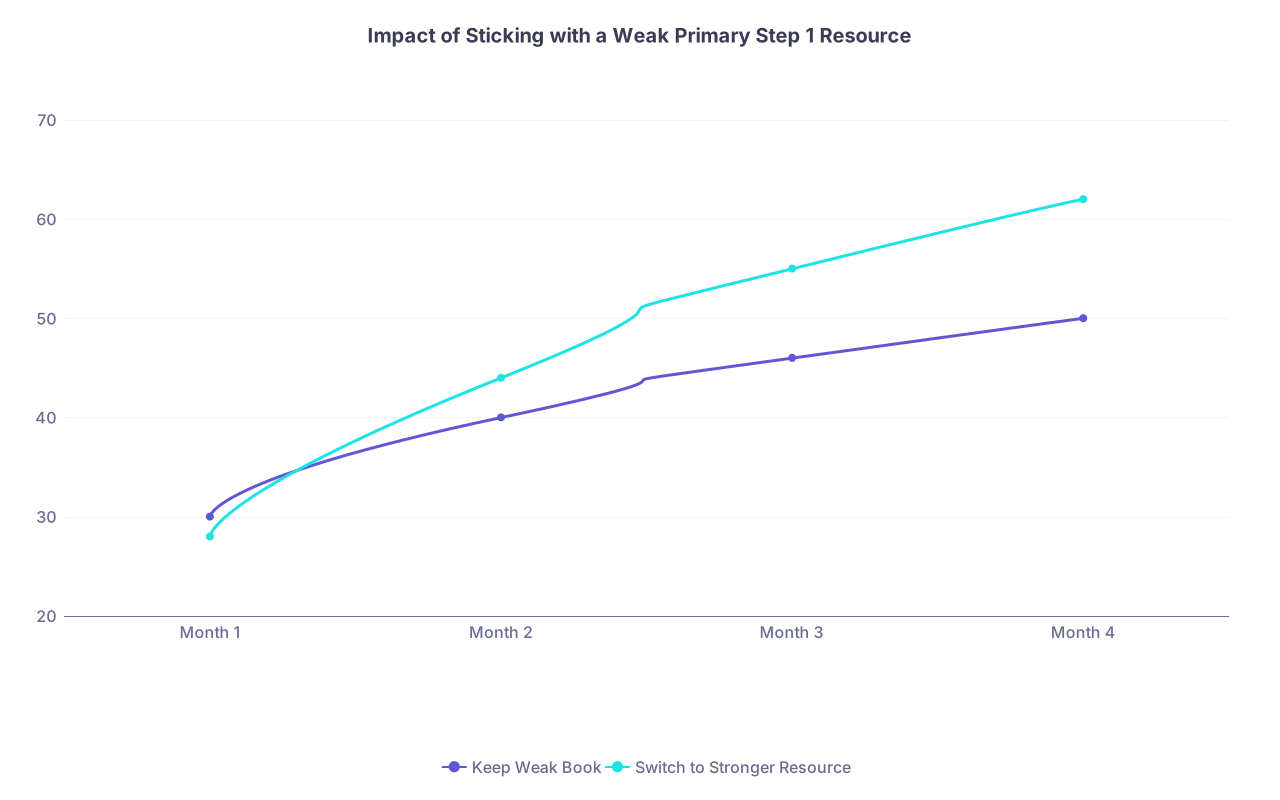
| Category | Keep Weak Book | Switch to Stronger Resource |
|---|---|---|
| Month 1 | 30 | 28 |
| Month 2 | 40 | 44 |
| Month 3 | 46 | 55 |
| Month 4 | 50 | 62 |
Yeah, the first month after switching might feel worse (you’ll feel behind, disoriented), but by month 3–4 the payoff is usually obvious. I’ve watched this happen with multiple people.
You’re not married to a book. You’re not breaking a sacred oath by changing your mind.
What Actually Matters for Step 1 (Spoiler: Not The Cover Of Your Book)
Here’s the part that people don’t like hearing: Step 1 performance is way more about what you do than which exact book you own.
If you want something to obsess over, obsess over this instead:
| Factor | Relative Impact |
|---|---|
| High-quality questions | Very high |
| Reviewing explanations | Very high |
| Spaced repetition (Anki) | High |
| Integrated resources | Moderate-high |
| Exact book choice | Moderate |
The exam doesn’t care whether you used First Aid, Boards & Beyond, or some random book from 2014. It cares whether you can:
- Recognize patterns in questions
- Apply mechanisms, not just recite facts
- Recall high‑yield details under pressure
You build that mainly from questions + tight review + repetition. Books are supporting actors, not the main event.
So if you picked a weird book, but you’re doing solid question practice and actually learning from explanations? You’re already ahead of people passively rereading “perfect” resources and doing 20 questions a week.
How to Recover if Your Step 1 Book Really Was a Bad Choice
Let’s say you’ve honestly assessed it and… yeah. It’s not great. Bloated, disorganized, outdated, or just not matching how you learn.
Here’s how you recover without nuking your entire life.
Step 1: Pick a New “Spine” Resource (But Don’t Go Crazy)
You only need one main reference for Step 1 content. Two maximum if they’re complementary (e.g., First Aid + Boards & Beyond videos).
Stop thinking you need every “top” book. You don’t.
You want something that:
- Is widely used and Step‑oriented
- Has clear organization (systems or subjects)
- Feels at least somewhat learnable to you
Common combos that actually work:
- First Aid + UWorld + Pathoma
- Boards & Beyond + UWorld + First Aid as reference
- Sketchy (for micro/pharm) + UWorld + a lighter text
You don’t need that one 900‑page “complete” book that nobody at your school uses.
Step 2: Don’t Start Over. Translate What You’ve Already Learned.
You’re terrified you’ll “have to redo everything.” You won’t.
What you do is map your existing knowledge into the new resource.
Here’s how:
Take one topic you’ve already studied in your old book. Let’s say heart failure.
- Open your new spine resource to heart failure.
- Skim the section and mark what you already know.
- Notice what’s new, clearer, or emphasized differently.
- Add/modify your Anki cards only for the missing or re-framed pieces.
You’ll find that 40–70% of what you learned isn’t wasted. It’s just… reorganized.
This process feels slow for a week or two. Then it speeds up, because the core concepts are already in your head — you’re just reframing them.
Step 3: Move Questions to the Center of Your Prep
If you’ve been hiding in books because they feel “safer” than getting questions wrong, this is where you change that.
From now on, your workflow should look more like:
- Short review of a topic
- Then questions on that topic
- Then deep review of explanations
- Then Anki/notes derived from those explanations
Not: “Read 80 pages → highlight → hope it sticks.”
Questions are the reality check. If your new spine resource is good, you’ll start recognizing patterns and language in UWorld and NBMEs much more quickly.
And if your confidence is wrecked, start with:
- 10–15 questions/day, very controlled
- Timed but not random at first (by system)
- Review each question like it’s a mini‑lecture
You’re not “behind” if you’re learning deeply.
Step 4: Patch the Gaps, Don’t Rewrite Your Entire Plan
The instinct when you feel like you messed up is to launch into punish‑mode: doubling hours, adding 3 more resources, promising yourself you’ll “do everything” now.
That’s how people burn out and start actively avoiding studying.
Instead, you focus on targeted repair:
- Take a baseline NBME (if your test isn’t too close).
- Identify the systems or disciplines that are actually weak (not just “I feel bad”).
- For those systems, do:
- Focused review in your new book/video
- 20–40 targeted UWorld questions
- Anki on missed concepts
That’s it. Not glamorous. Very effective.
You do not need to fix everything at once.
What If I Don’t Have That Much Time Left Before Step 1?
This is where the panic usually spikes.
“I’m 6 weeks out. I’ve been chained to the wrong book. Everyone else is finishing second passes of UWorld. I’m dead.”
You’re not. But you don’t have room for fantasy, either. No more “ideal plan from scratch.” You do triage.
If you’re ≤ 6–8 weeks out, here’s what matters most, in order:
- NBMEs + honest review
- UWorld (or your qbank) with high‑yield systems prioritized
- A lean primary resource only for things you consistently miss
- High‑yield memorization tools (Anki, Sketchy, Pathoma sections)
You are not going to do everything. Accept that now.
Instead of asking, “How do I cover all of biochem, pharm, and micro?”
Ask, “What will most improve my score in the next 7–10 days?”
Then hammer that. Scores move from focused work, not panicked resource‑collecting.
The Worst‑Case Scenario You’re Secretly Scared Of
I know the real fear sitting under all this:
“What if this mistake tanks my Step score and ruins my career?”
Walk that out logically.
Worst realistic case (not the fantasy apocalypse in your head):
- You stuck with a weak book too long
- Your baseline NBME is lower than your friends
- You work your tail off with better resources and questions
- You still score somewhat below your “dream” number
Does that close some doors? Possibly. Hyper‑competitive derm/plast/rads at top‑tier places might be harder. I’m not going to sugarcoat that.
But here’s what it doesn’t do:
- It doesn’t make you unemployable as a physician
- It doesn’t mean you can’t match
- It doesn’t mean you can’t have a fulfilling specialty and life
I have seen:
- People with mediocre Step scores crush Step 2 and still match solidly
- People pivot specialties and end up far happier than their original “dream”
- People with “perfect” Step scores still burn out or hate their residency
This one resource mistake? Not the axis your entire life spins on.
Annoying setback? Yes. Career‑ending disaster? No.
Mental Reset: You’re Allowed to Change Course
One thing I wish more students heard:
You’re allowed to say, “This isn’t working,” and pick something better.
That’s not failure. That’s what grown‑up learners do.
Real bad choices aren’t “I tried X and switched at month 3.” Real bad choices are:
- “I knew it wasn’t working at month 3, but I was too scared to change at month 4, then month 5…”
- “I was so ashamed I’d picked the wrong thing that I kept grinding harder on it instead of reassessing.”
You’re still early enough to fix this. Even if you’re in dedicated, you can still salvage a lot with focused correction.
Quick Reality Check: How Common Is This?
You’re not the one person who “messed up Step 1 resources.”
It’s almost comical how often I’ve heard different versions of:
- “I tried to use a random 1000‑page book my aunt gave me from 2012.”
- “I thought I could wing it with lecture slides and no central resource.”
- “I spent 2 months making perfect outlines and barely touched questions.”
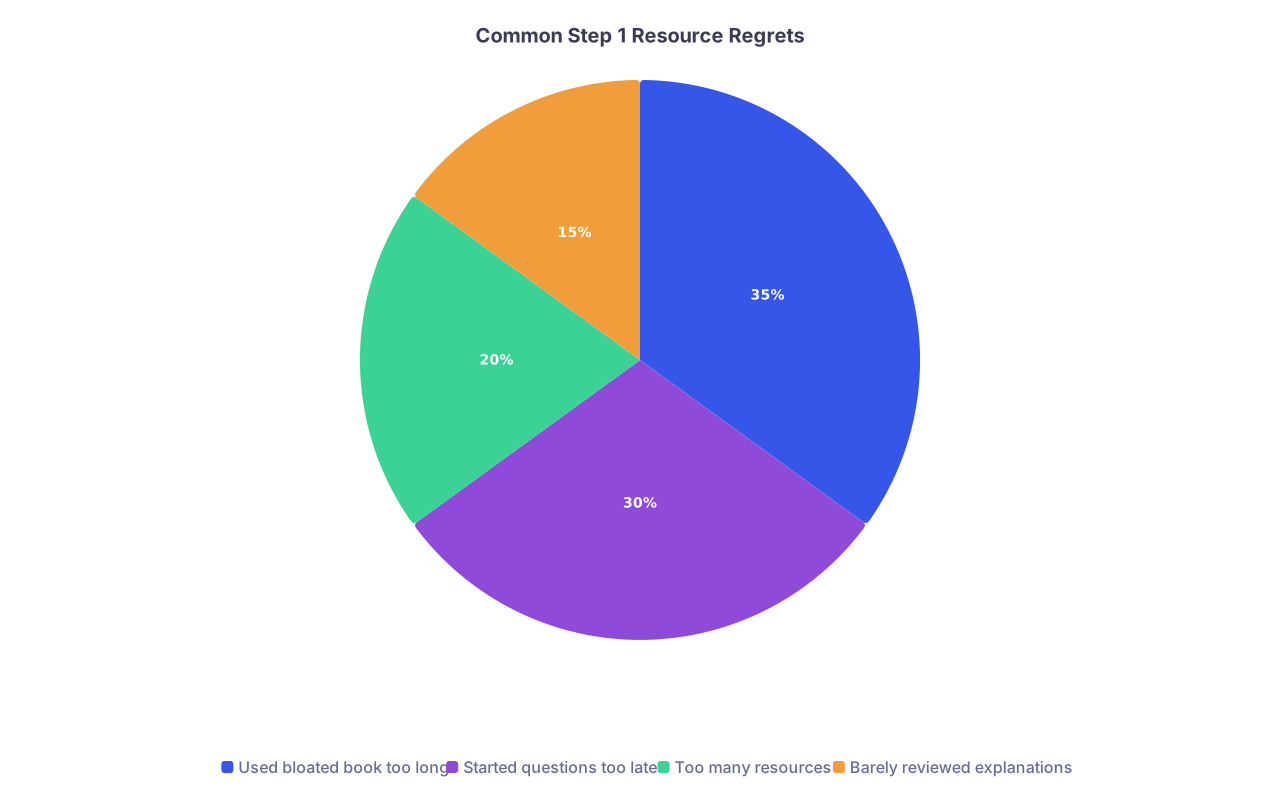
| Category | Value |
|---|---|
| Used bloated book too long | 35 |
| Started questions too late | 30 |
| Too many resources | 20 |
| Barely reviewed explanations | 15 |
You’re in that pie somewhere. Everyone is. The difference is what you do after you realize it.
Concrete Plan You Can Start Today
Let’s zoom all the way down from the anxiety cloud into something painfully specific you can do in the next 24 hours.
Today, do this:
- Pick your new spine resource. Just one. Don’t overthink it. If 80% of your classmates are using X and actually seem to like it, that’s a decent sign.
- Choose one system you’ve already “covered” with your old book (e.g., cardio).
- Do 10–15 UWorld questions in that system, timed. Don’t avoid it just because you’re scared to see the score.
- Review every explanation. For anything that feels fuzzy, open your new spine resource to that exact topic and read that specific section only.
- Make or update Anki cards just for what you missed or learned today. Not everything.
That’s it. One day. You do that again tomorrow. And again.
You’ll feel behind for a while. You’ll hate that you “wasted” time. But after about 2–3 weeks of this, you’ll start to see the pattern: more questions feel familiar, fewer explanations feel like Martian.
That’s recovery.
FAQ (Exactly 5 Questions)
1. I’m halfway through my current Step 1 book. Should I finish it “just to complete it”?
No. Completion is not a learning objective. If the book isn’t aligning with questions or other trusted resources, finishing it is just aesthetic satisfaction with no score gain. Sample 1–2 chapters in a new, stronger resource. If those chapters + questions feel more practical and test‑aligned, cut your losses and switch. Your exam doesn’t care whether you finished a book; it cares whether you can answer questions.
2. Everyone says First Aid is essential. If my “wrong” book isn’t First Aid, should I drop everything and memorize FA?
Don’t “memorize FA.” That’s how people burn out and still miss questions. Use FA (or another high‑yield text) as a scaffold around your question bank. When you miss a question on renal, for example, then you open the corresponding renal pages in FA and connect the dots. If your current book is basically a worse, longer, or weirder version of FA, then yes, transition to FA as your reference. But always in the context of questions and explanations.
3. I feel so behind compared to my classmates now. Is it even worth pushing hard, or should I delay my exam?
Feeling behind is not the same as being unrecoverable. Look at objective data first: NBME scores, UWorld percentiles, your school’s policies. If your practice scores are catastrophically low and you truly don’t have enough time (like single‑digit weeks with huge content gaps), then delaying might be smart. But if your scores are improving and you still have several weeks, don’t assume “behind = doomed.” People catch up in the last 4–6 weeks all the time with tighter, more focused studying.
4. How do I know if my new resource is actually better and I’m not just switching to avoid discomfort?
Give it a 7–10 day trial. During that time, pair it with questions. If by the end of that period:
- You can connect more UWorld/NBME questions to things you actually remember seeing in the resource,
- You feel less confused by the structure, and
- Your review sessions feel more “clicky” rather than chaotic,
then it’s probably a better fit. If it feels just as vague or you’re still avoiding questions, the problem might not be the book — it might be your study habits.
5. I’m scared switching resources will just waste more time. How do I minimize the chaos?
You control the chaos by avoiding “start from scratch” mentality. Don’t restart every subject. Instead, focus on what your questions and NBMEs are telling you is weak. For those areas only, use the new resource as your primary explanation/clarification tool. Keep your old notes/Anki, but slowly update or replace them as you encounter concepts in the new resource. No mass reboot. Just progressive swap‑outs driven by actual questions you miss.
Open your current Step 1 book right now and flip to the last section you studied. Then open the resource you’re considering switching to on that same topic. Spend 10 minutes comparing them side by side, then do 5 questions on that topic. Let the questions — not your fear — tell you which one actually helps you more.