
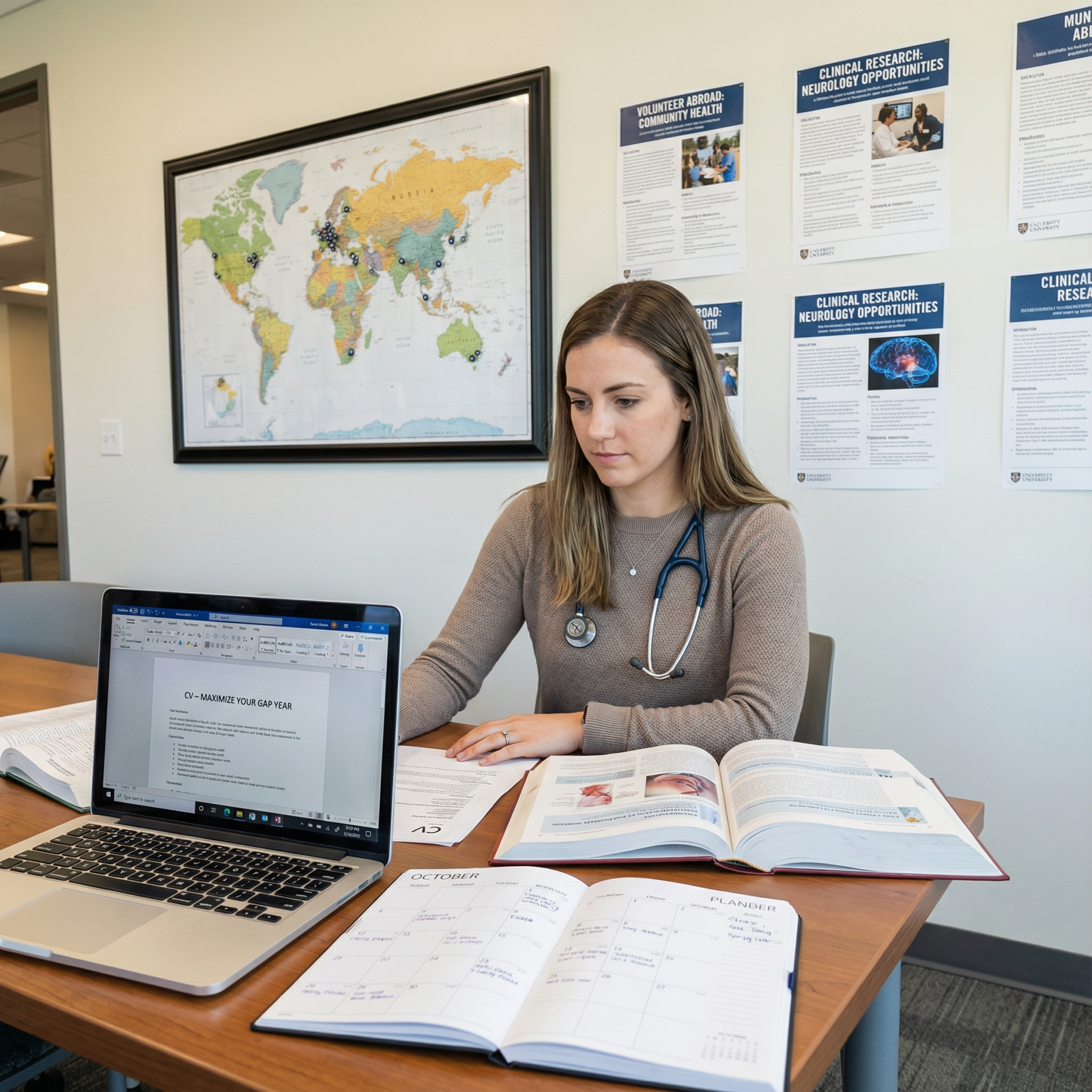
Most gap year residents do not get blindsided on Match Day by the algorithm. They get blindsided by their bank account.
You can have the interview invites, the LORs, the Step scores—and still end up sick to your stomach in March because you’re broke, maxed out, and out of options. That’s not bad luck. It’s predictable, preventable financial drift during your “just one year” before residency.
Let’s walk through the mistakes that quietly sabotage people between graduation and Match—and how you can stop yourself from being one of them.
Mistake #1: Treating Your Gap Year Like a Victory Lap
Most people don’t blow their money on a Ferrari. They bleed it out in $30 and $200 chunks all year.
You finish med school. You’re exhausted. You think: “I’ve worked so hard for so long—I deserve a real year off.” And you do deserve rest. But if your “rest” turns into:
- Three “once in a lifetime” trips
- Constant eating out because “I finally have time to see friends”
- Short‑term sublets and last‑minute flights to interviews
- Uber/Lyft everywhere “because I’m not a student anymore”
…you wake up in February with a scary low balance and 4 more interviews to pay for.
Here’s the problem:
Your brain doesn’t see this as overspending. It sees it as “catching up on life.” But the calendar for expenses does not care. ERAS, NRMP, interview travel, deposits, moving costs—they all pack into an 8–10 month window.
The safe move is harshly simple: before your gap year starts, define the year in numbers, not vibes.
- How much you’ll earn (realistic, not fantasy).
- How much you MUST save for applications, interviews, and moving.
- How much you can safely spend on “fun” after that.
If you do not put numbers on those three items, you’re basically hoping future-you will suddenly turn into a minimalist monk in January. That’s not how it goes.
Mistake #2: Not Pricing the Match Year Before It Starts
Here’s where people really get nailed: they underestimate the actual cash cost of applying and interviewing.
They guess. They don’t calculate.
Let me show you the shape of the problem. These are ballpark ranges I’ve seen repeatedly:
| Expense Category | Common Range (USD) |
|---|---|
| ERAS Application Fees | $500–$2,000 |
| NRMP & Transcript Fees | $150–$400 |
| Interview Travel/Lodging | $500–$6,000+ |
| Relocation/Moving | $1,500–$5,000+ |
| Upfront Housing Costs | $2,000–$6,000 |
Now look at the timing pattern:
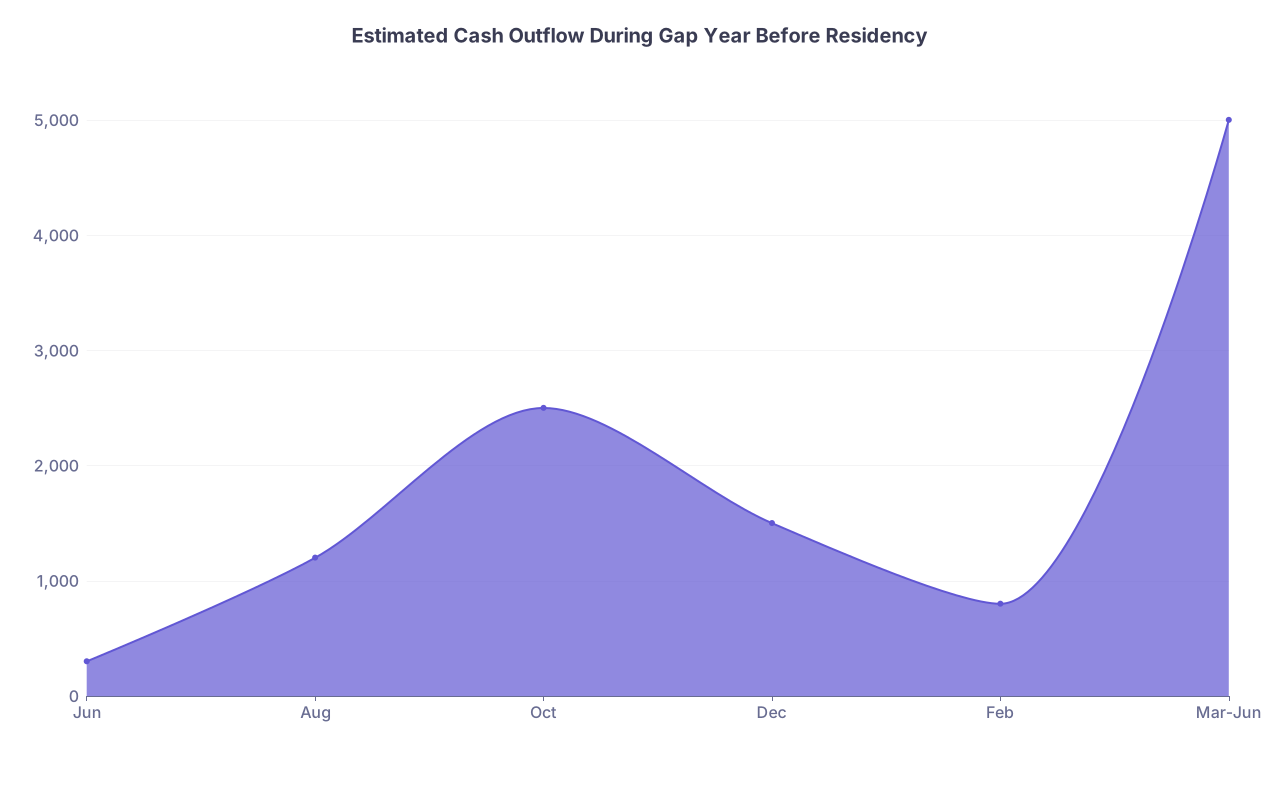
| Category | Value |
|---|---|
| Jun | 300 |
| Aug | 1200 |
| Oct | 2500 |
| Dec | 1500 |
| Feb | 800 |
| Mar-Jun | 5000 |
The late‑spring/early‑summer spike (post-Match) is exactly when you think “oh, I’m about to start residency, I’m fine.” That’s also when:
- Security deposit + first month’s rent (sometimes last month too)
- Moving costs (truck, shipping, flights, furniture)
- Utility deposits, parking fees, licensing • enrollment odds and ends
Hit all at once.
If you don’t sit down and literally price your year—by month—you will underestimate. Guaranteed.
At minimum, map this out on one page:
- Number of programs you realistically plan to apply to
- Average cost per interview if in‑person (flight, 1–2 hotel nights, food, transport)
- Worst‑case interview count (more interviews = more cost)
- Relocation distance scenario: in‑state vs cross‑country
Do not plan using the “everything goes perfectly” scenario. Use the “I match but it’s not my closest program” scenario.
Mistake #3: Assuming You’ll “Figure Out Income Later”
This is the quiet disaster: people build a spending plan around income that doesn’t exist yet.
Common version:
“I’ll just pick up per diem shifts / research assistant work / moonlighting / tutoring once things settle down.”
Then:
- Credentialing takes months
- The grant doesn’t get funded
- The clinical job caps your hours
- You’re interviewing during prime work weeks
- The tutoring company has seasonal demand that doesn’t match your needs
You can’t build a responsible gap‑year budget on fantasy income. You can build it on:
- A signed, written offer with hourly rate and estimated hours/week
- A consistent, established job you’ve already been doing
- Extremely conservative estimates for side gigs (and treat extra as bonus, not baseline)
Here’s a rough sanity check:
| Monthly Gross Income | You Can Safely Allocate to Match Costs* |
|---|---|
| $1,500 | $200–$300 |
| $2,500 | $400–$600 |
| $3,500 | $700–$900 |
| $4,500 | $1,000–$1,300 |
*Assumes you’re also paying for basic living expenses.
If your expected monthly surplus doesn’t cover your estimated Match‑year expenses, then they must be funded BEFORE the gap year starts (savings, family support, loans). Not magically funded by future hustle.
Mistake #4: Ignoring High‑Interest Debt While You “Wait for Residency”
This one’s brutal because it feels rational:
“I won’t worry about my credit card now, I’ll crush it once I’m a resident.”
Meanwhile, that 22% APR balance quietly sets your future self on fire.
Let’s say you leave med school with:
- $3,000 on a credit card
- 22% APR
- You make only minimum payments during your gap year (or stop paying entirely during a few “lean” months)
You can easily pay hundreds in interest alone before you ever get your first residency paycheck. And if you use that same card to “float” interview expenses, your balance balloons right when your stress is highest.
Here’s the pattern I see:
- Use card for ERAS, NRMP, and first few interviews.
- Tell yourself it’s temporary.
- Keep using it for flights, hotels, and a few “I deserve this” dinners.
- Hit the credit limit by January.
- Panic when a last‑minute dream program invites you, and you literally cannot pay for the trip.
You do not want to be choosing between:
- Skipping a strong interview
- Borrowing money on worse terms from friends/family
- Opening a new emergency high‑interest line under stress
You don’t need to be debt‑free to apply. But you must understand your debt’s interest rate and factor it into your plan. High‑interest consumer debt in a gap year is gasoline. You’re already carrying matches.
Mistake #5: Misjudging Interview Costs in the Virtual/Hybrid Era
A lot of people relaxed after COVID: “Interviews are virtual now; cost isn’t a big deal anymore.”
Partly true. Very incomplete.
Three traps:
- Many programs still do in‑person second looks or hybrid days. Especially competitive specialties and certain geographic areas.
- Last‑minute travel is always more expensive. And interviews are rarely scheduled on your financial timetable.
- Even “virtual” can cost more than you expect: better internet, quiet space rentals, ring light, professional clothes, etc.
I’ve seen applicants blow $1,000+ in a single frantic week:
- Emergency flight bought 5 days before interview
- Two hotel nights in a pricey city
- Uber to/from airport and around town
- Last‑minute rush tailoring on a suit that “suddenly” feels wrong
You need a realistic per‑interview budget. Something like:
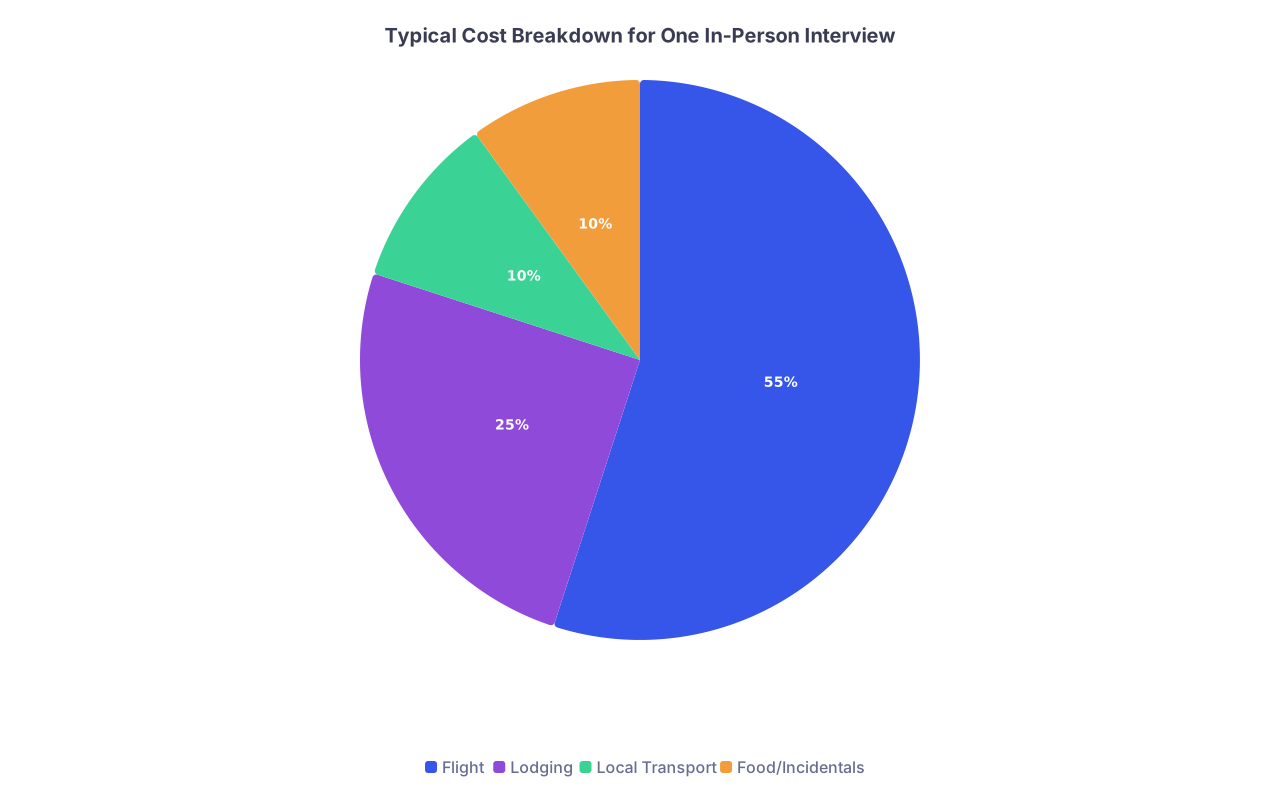
| Category | Value |
|---|---|
| Flight | 55 |
| Lodging | 25 |
| Local Transport | 10 |
| Food/Incidentals | 10 |
Run the math:
If your estimated average per‑interview cost is $400 and you could attend 10–15 in‑person interviews, you’re looking at $4,000–$6,000. Even if half are virtual, that’s still thousands.
Do not plan assuming “most will be virtual so it’ll be cheap.” Plan assuming a mix, and treat every in‑person interview like it will cost the high end unless proven otherwise.
Mistake #6: Forgetting You Have to Move Somewhere You Don’t Control
This one hits in May and June, when the relief of matching dies and reality hits: you actually have to get yourself there.
Typical surprise costs people forget:
- Cross‑country car shipping or rental truck
- New furniture because you can’t bring your old stuff
- Security deposit + first month’s rent (sometimes last month too)
- Application fees for multiple apartments
- Utility deposits, parking passes, renters insurance
- A few “starter” grocery + household supply runs
It’s not hard to hit $3,000–$7,000 total in those first few weeks, especially moving to high‑cost areas (think Boston, San Francisco, NYC, Seattle).
This is what your end‑of‑gap‑year cash often actually needs to cover:
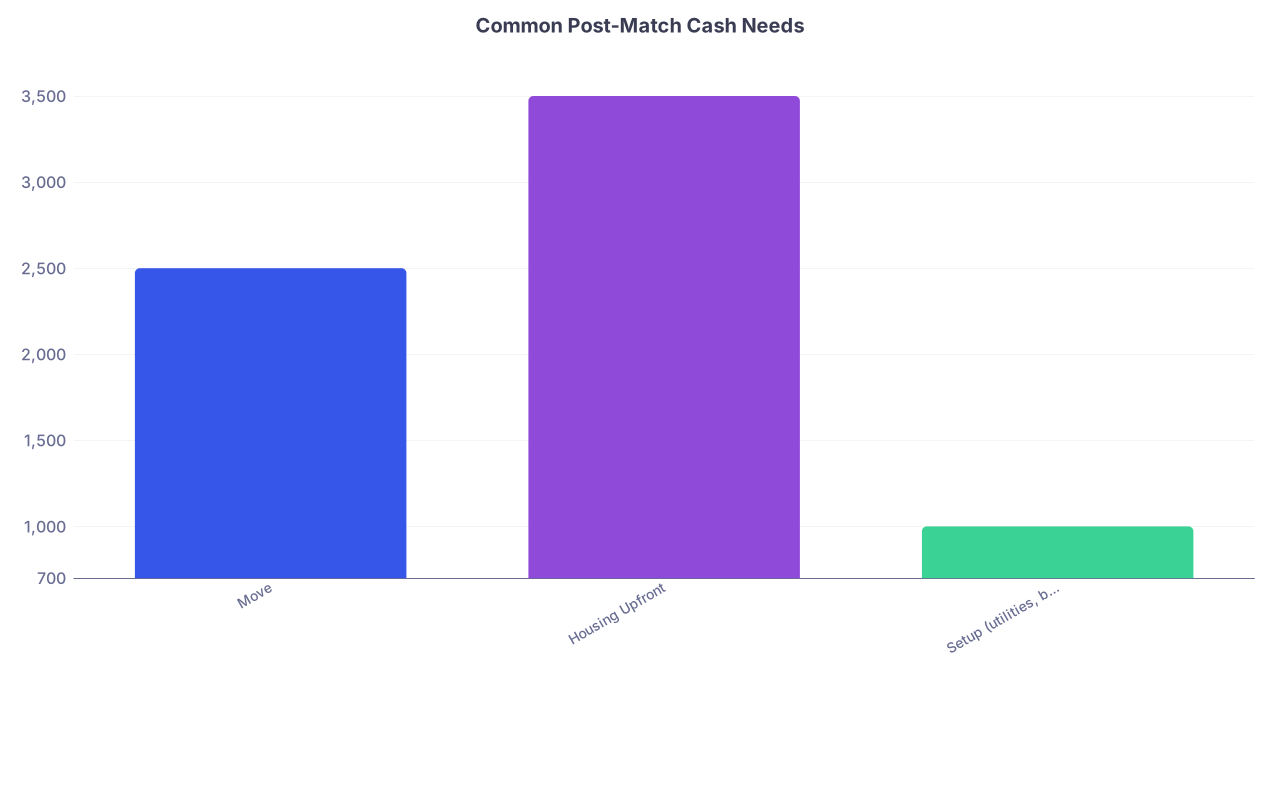
| Category | Value |
|---|---|
| Move | 2500 |
| Housing Upfront | 3500 |
| Setup (utilities, basics) | 1000 |
If you limp into Match Day with $400 in your account because you assumed “once I match, I’m set,” you’re stuck. Residents do not get paid before they start. There is a dry financial gap between Match and first paycheck that you have to cross on your own.
You can’t control where you match. But you can control whether you’ve built a generic relocation buffer:
- Bare minimum I like to see: $3,000 in cash by Match Day
- More realistically: $4,000–$6,000 if you’re open to coastal or big‑city programs
If that number sounds impossible, you need to start adjusting something now—cost of living in your gap year, interview strategy, number of applications, or your income plan.
Mistake #7: Not Coordinating Financial Timelines with Licensing and Paperwork
This is less obvious, but I see it derail people every year.
There are hidden costs wrapped around:
- USMLE/COMLEX transcript releases
- Background checks
- State licensing fees (or training licenses)
- Immunization titers, TB testing, occupational health visits
- Required courses (ACLS/BLS, NRP, etc.) if not covered by the program
Individually, these might be $30–$300 each. But they cluster in the exact worst moment: right when you’re broke from interviews and before your move.
And then there’s this:
Some programs are slow with onboarding details. You might not get concrete numbers until late, which means you must have flexible, uncommitted cash ready.
Best practice: mark a “red zone” on your calendar from January to June of your gap year and protect a chunk of money specifically for:
- Licensing/credentialing
- Medical clearances
- Course fees
- Unforeseen “program requires X” costs
If you try to pay these out of your daily living money at the last minute, something else—usually food, medication, or rent—gets sacrificed. That’s how people end up making bad health or housing decisions just before starting the most intense job of their life.
Mistake #8: Not Having a Real Emergency Plan (Then Calling Emergencies “Bad Luck”)
Life still happens during a gap year:
- Your car dies
- A parent gets sick and you fly home
- You get sick and can’t work for a month
- Your landlord sells the place and you have to move unexpectedly
Most people handle this by saying, “I’ll just use my credit card if something happens.” That’s not an emergency plan. That’s deciding in advance to make a bad problem even more expensive.
A real emergency plan has layers:
- A small but sacred emergency fund (even $500–$1,000 helps)
- A list of what you’d cut immediately if something big hit (subscriptions, travel, eating out, optional trips)
- A backup human resource: who you’d call before you’re in a full‑blown crisis
You don’t need a full six‑month emergency fund to survive a gap year. But you do need one rule:
You don’t touch the emergency fund for “I really want to go to this extra interview” or “I’m tired of cooking.”
If you blur that line, you will arrive at Match Day with zero buffer. And then a single thing going wrong in May can wreck your start to residency.
Mistake #9: Treating Budgeting Like Optional “Extra Work”
Last one. And it’s maybe the biggest.
Medical people love to micromanage study schedules, board exam resources, and productivity tools. Then they turn into complete improvisers with money because “I’m too busy” or “I’m not a numbers person.”
That’s nonsense.
You learned cardiac physiology. You can handle a simple spreadsheet.
Money avoidance is what actually leaves people broke on Match Day—not low income alone.
In one sentence, here’s the system that works better than 95% of what I see:
- One simple, living budget document that covers June-to-June of your gap-to-residency year, updated monthly.
Not an app you never open. Not a vague sense that “I should spend less.” One actual document where you:
- List your expected income month by month
- List your baseline living costs (rent, utilities, food, transport, phone, insurance, meds)
- Pre‑allocate line items for:
- Applications/ERAS/NRMP
- Interview travel
- Licensing/credentialing
- Emergency fund
- Relocation/move
Then you track reality against it.
Does this take time? Yes. A couple of hours to set up, then maybe 20–30 minutes a month. Know what takes more time? Scrambling in February to find money for an interview you absolutely should attend but can’t afford because you didn’t look 4 months ahead.
A Simple Framework So You Don’t End Up Broke on Match Day
If you remember nothing else, use this as your gap year financial guardrail:
Price the whole year in advance.
June this year through June next year. Applications. Interviews. Moving. Licensing. Health costs. Put actual numbers.Secure your minimum Match‑and‑move fund early.
Decide your target Match Day cash buffer (for most, $3,000–$6,000). Build your gap‑year spending around preserving that amount, not the other way around.Lock in realistic income.
Don’t budget based on “maybe” shifts or “I’ll probably.” Budget on contracts, consistent jobs, and conservative estimates. Treat extra income as a cushion, not a requirement.Respect debt and high‑interest traps.
Don’t casually run up interview and relocation costs on a card assuming your resident salary will magically fix it. It won’t. It’ll just be competing with your sleep, your sanity, and your new life.Update monthly. No exceptions.
On the same day every month, look at your actual expenses vs your plan. Adjust. Re‑cut. Or if you’re ahead—great—shore up your emergency fund instead of inflating your lifestyle.
FAQ (Read These Before You Swipe Your Card Again)
1. I’m already in my gap year and behind on savings. Is it too late to fix this?
No, but you’ve lost the luxury of being vague. You need a brutally honest snapshot right now:
- Make a list of all current debts and minimum payments.
- Pull up your last 2–3 months of bank and card statements; categorize what you’ve actually spent.
- Rebuild a June–June budget with updated reality: how much cash you must have for the rest of applications, interviews, and relocation.
Then you cut. Hard. That might mean: no more trips, subletting a cheaper room, pausing nonessential subscriptions, scaling back the range/number of programs in a strategic way (not randomly), and taking on extra shifts or a second job if humanly possible. It’s not fun, but it’s better than landing Match Day with $0 and no plan.
2. Should I open a new credit card just for interview expenses?
This is one of those seductive “solutions” that often backfires. A card can be a tool if you:
- Already have a clear, realistic plan to pay the balance down within months.
- Use it only for pre‑budgeted interview and application expenses.
- Track it closely and refuse to use it for lifestyle creep (restaurants, impulse buys, “I’m stressed” shopping).
But if your current financial plan is already shaky, a new card is just a way to delay the pain and increase the interest. Most of the people I’ve seen get crushed weren’t using cards as tools—they were using them as blindfolds.
3. My family says they’ll “help if needed.” Can I just rely on that instead of saving so aggressively?
Dangerous mindset. Verbal family promises are not a financial plan. People lose jobs. Health issues hit. Market crashes erase savings. Or your relatives simply don’t grasp the amounts you’re talking about.
If help materializes, great—treat it as a buffer or as a way to reduce debt. But plan as if it won’t. The worst feeling is discovering in February that “we’ll help” really meant “we can give you $200,” when your plane ticket alone costs $600.
4. What’s one concrete thing I can do this week to protect myself financially for Match?
Do this, today, not “when you have time”:
- Open a blank document or spreadsheet.
- Label 13 columns: Jun to next Jun (or now through next Jun, if you’ve already started).
- In each month, estimate: income, baseline living costs, application/interview costs, and moving/licensing costs.
- At the bottom, create one line: “Cash on hand by Match Day” and watch what your current plan actually produces.
If that number isn’t where it needs to be, pick one change you can implement this week—cancel a recurring subscription, pick up an extra shift, or cut a discretionary trip—and actually move that money into a separate “Match + Move” savings account.
Open your bank app right now and start that separate account. Name it something blunt like “Residency Survival Fund.” Then protect it like your career depends on it—because financially, it does.


