

Your gap year social media can quietly sabotage your ERAS before anyone even reads your personal statement.
I’m not exaggerating. I’ve watched solid applicants—great scores, strong letters, clean transcripts—fall off rank lists after one faculty member pulled up an Instagram story they thought was “just for friends.” It takes exactly one screenshot in a WhatsApp faculty group to change the tone of your whole application discussion.
You’re about to be judged by people who:
- Google you.
- Search you on Instagram, X/Twitter, Facebook, TikTok, LinkedIn.
- Ask residents, “Anyone know this person?”
If you treat your gap year like a social media free‑for‑all, you’re handing them ammunition.
Let’s walk through the biggest mistakes I’ve seen—and how to avoid having your online life haunt your Match.
The Biggest Lie: “Programs Don’t Really Check Social Media”
They do. Not always systematically. Not formally. But they do.
A few patterns I’ve seen repeatedly:
- A chief resident casually looks up applicants on Instagram the night before interviews.
- A faculty member recognizes you from TikTok and brings it up in the committee meeting.
- A coordinator Googles your full name to confirm email and finds public posts you forgot existed.
No, there usually isn’t a “social media screening committee.” It’s more random. Which is worse, because you can’t predict who will see what, or in what context.
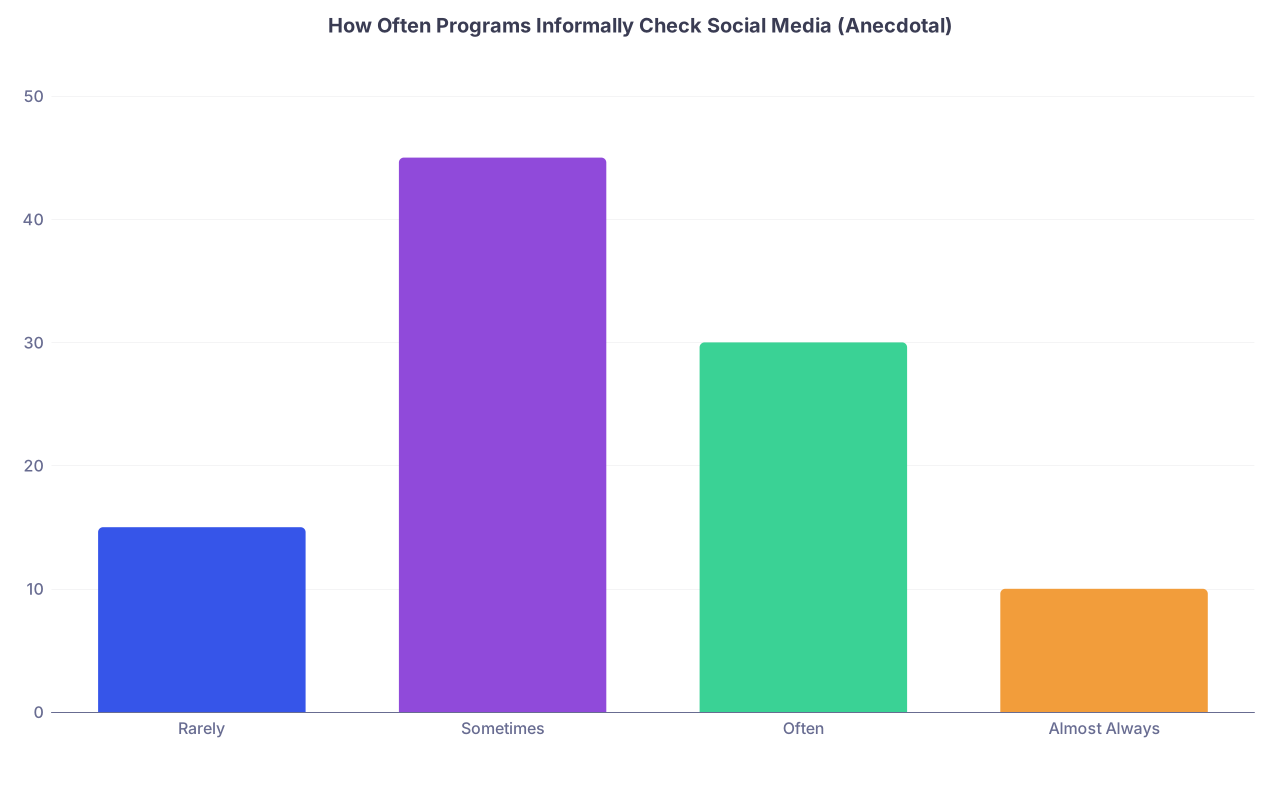
| Category | Value |
|---|---|
| Rarely | 15 |
| Sometimes | 45 |
| Often | 30 |
| Almost Always | 10 |
The dangerous complacent assumptions:
- “I don’t post that much, so I’m fine.”
- “My accounts are private.”
- “Everyone does stupid stuff online. They’ll understand.”
No. They don’t need to see you committing crimes. They just need a reason to think:
- Poor judgment
- Immature
- Unprofessional
- High risk for HR problems
You’re not being evaluated as a fun person. You’re being evaluated as someone they’ll trust at 2 a.m. with sick patients and their program’s reputation.
Mistake #1: Treating “Private” Accounts Like They’re Actually Private
This is the most common—and the most naive—error.
You tell yourself: “My account is private. Only my friends see this.”
Reality: private ≠ safe.
Screenshots exist. So do:
- Shared devices
- Friends who are also applying and nervous
- Partners you might break up with
- People in your gap‑year lab/clinic who follow you
I’ve literally heard: “I have a screenshot of this applicant drunk and ranting about attendings, I can show you after morning report.” That person did not match at that program.
What blows people up most often:
“Close friends” stories that aren’t all that close
- Drunk rants about rotations
- Complaints about specific hospitals or EMRs
- Whining about patients (“this guy with COVID screaming about masks”)
Messaging screenshots that leak
- Group chats where you trash talk other students or residents
- Jokes that sound racist/sexist/ableist out of context (or in context)
- “the PD here is a joke” level commentary
Photos you’re not even tagged in—but are recognizable in
- Group photos at parties
- Someone else’s story with your face clearly visible
- Reposted memes with your name/handle attached
Do this instead:
- Assume anything you post or send can eventually be seen by a PD.
- Use “would I be okay if this was on a projector in morning conference with my name attached?” as your filter.
- Stop relying on privacy settings as your main protection. They are thin ice.
Mistake #2: Posting About Patients, Rotations, or Hospitals During Your Gap Year
This one is a career killer. And it sneaks up on the “but I didn’t use their name” crowd.
You’re in a gap year doing:
- Research
- A clinical job (MA, scribe, assistant)
- A preliminary year
- A global health project
You’re exhausted. Something wild happens. You post.
The “harmless” posts that are actually walking HIPAA violations or professionalism red flags:
- “Wildest thing in clinic today, 24yo with…”
- A photo of a hospital hallway with a room number in the background
- “Can’t believe this doctor still doesn’t believe long COVID is real”
- “Night float is just suffering and watching people die slowly”
Even if you don’t break HIPAA legally, you can still get tagged as unprofessional. Programs are terrified of people who:
- Complain about work publicly
- Air internal problems of the hospital online
- Use patients as content
Red flags committee members actually talk about:
- “This applicant posts pictures in scrubs with hospital logos and captions that are way too casual.”
- “They framed a complex patient situation like a plot twist.”
- “They complain constantly about staffing and administration.”
You can absolutely:
- Share that you work in healthcare
- Express general frustration about burnout or system issues
- Talk about the human impact of medicine
But do it like you know you’re part of a profession that takes confidentiality and trust seriously.
If you're not sure if something is okay, do not post it. You’re not a health influencer. You’re an applicant begging programs to trust you.
Mistake #3: Sloppy “Professional” Profiles (LinkedIn, Twitter, Personal Website)
Half‑professional, half‑personal accounts are where people really step on landmines.
You create a LinkedIn, a “med Twitter,” maybe a personal website during your gap year:
- To show your research
- To look “engaged” in your field
- Because someone told you it helps your “brand”
Then you poison it.
Common self‑inflicted wounds:
Inconsistent identity
- ERAS says one thing, LinkedIn says another
- Different graduation years floating around
- “Future neurosurgeon” on X/Twitter while you’re applying FM and IM
Overstated accomplishments
- Calling abstracts “publications”
- Saying “author” when you’re author #15 of 22
- Listing “worked on RCT” when you did three chart extractions
Misery and negativity in public
- Constantly subtweeting about “toxic attendings”
- Complaining about the Match, NRMP, or specific specialties
- Participating in pile‑ons or drama
Here’s the reality: if your name is unique enough, programs will see this stuff.
| Area | Red Flag Example |
|---|---|
| Specialty | Different goals on ERAS vs Twitter |
| Dates | Mismatched grad or employment dates |
| Tone | Frequent angry or sarcastic rants |
| Accuracy | Inflated titles or misleading roles |
| Maturity | Petty fights or subtweets about peers |
What to do:
- Make one clean, boring, accurate LinkedIn. That’s enough.
- If you do “med Twitter,” keep it civil, thoughtful, and focused.
- Delete grandiose titles like “future surgeon” or “Neuro resident 2026 (?)”
You want your online professional identity to be:
- Consistent
- Understated
- Respectful
If your profile screams ego or bitterness, people will believe it.
Mistake #4: Party, Substance, and “Unhinged” Content in Your Gap Year
Yes, you’re allowed to have a life. Yes, doctors drink and go to weddings and have fun.
The problem isn’t that you have a photo holding a beer. The problem is patterns. Themes. The “vibe.”
Things that really do get screenshotted and discussed:
- Repeated posts of heavy intoxication
- Drug references—even “jokey” ones
- Photos with questionable paraphernalia visible (bongs, pills, vapes with captions about “getting through night shift”)
- “Blackout,” “obliterated,” “don’t remember last night” captions
- Videos where you slur medical content or rant about medicine while drunk
Programs aren’t puritanical. They’re practical. They see:
- Legal risk
- Patient safety risk
- HR headaches
- Risk of professionalism complaints
You’re asking them to choose between you and the quiet, equally qualified applicant with a clean online footprint. Who do you honestly think they’ll rank higher?
This doesn’t mean:
- You can’t have any fun pictures
- You must erase your entire personality
But if your gap year feed looks like:
- Party, party, party
- Anti‑work memes
- “I hate medicine” jokes daily
You’re not screaming “stable future resident.”
Mistake #5: Becoming a Hot-Take Machine About Medicine
Your gap year gives you time and space. Some people spend that time online, loudly.
Threads I’ve seen absolutely wreck otherwise decent applications:
- Long rants about how “residency is exploitation” with explicit calls to sabotage
- Specialty wars (“derm is for lazy people who don’t like real medicine,” “FM is just people who couldn’t match elsewhere”)
- Mocking patients for “noncompliance,” obesity, mental illness
- Blaming “foreign grads” or “DOs” for Match problems
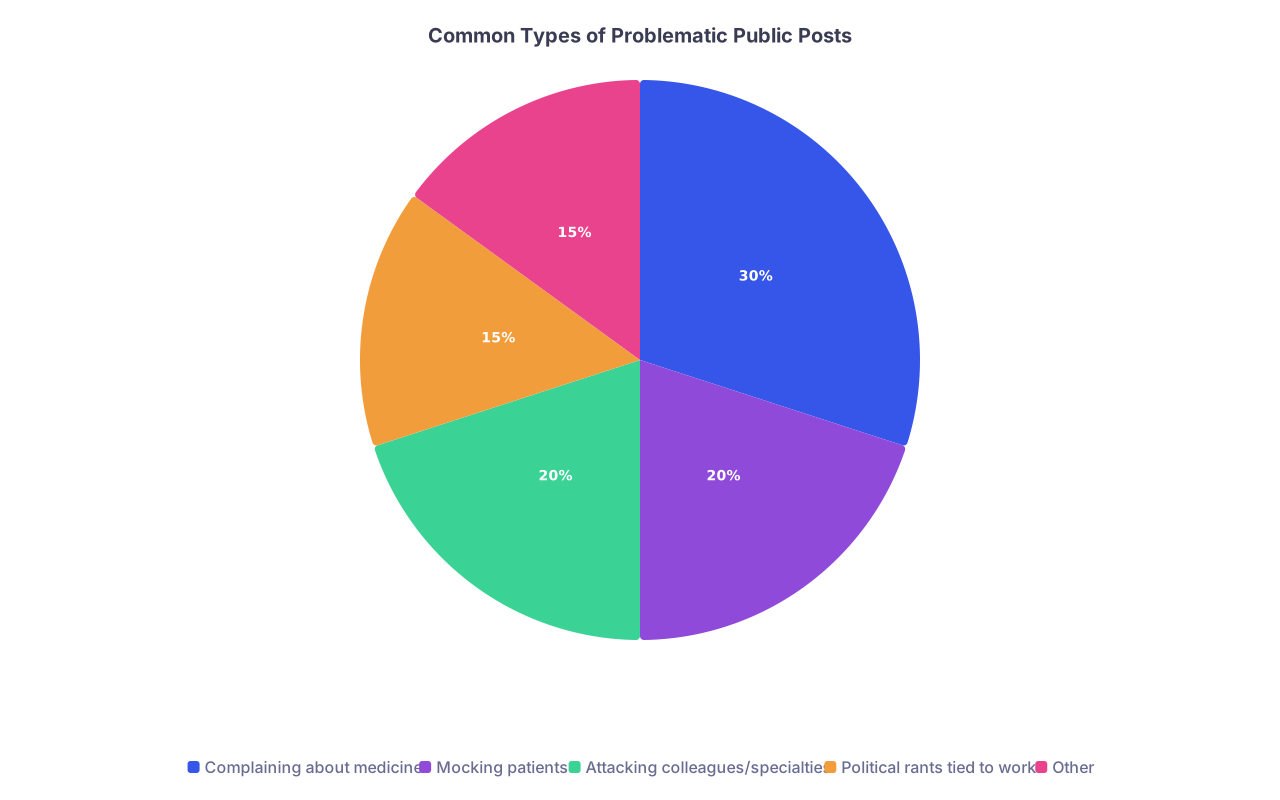
| Category | Value |
|---|---|
| Complaining about medicine | 30 |
| Mocking patients | 20 |
| Attacking colleagues/specialties | 20 |
| Political rants tied to work | 15 |
| Other | 15 |
You can have opinions about:
- Healthcare policy
- Working conditions
- Burnout
- Equity in medicine
But you cannot sound:
- Contemptuous of patients
- Disparaging of entire specialties
- Hostile toward groups of colleagues (IMGs, DOs, NPs, etc.)
Remember, selection committees are made up of:
- People in those specialties you’re mocking
- IMGs and DOs and NPs you’re publicly diminishing
- Folks who’ve given their entire lives to a system you just called “a scam”
You don’t have to lie. You do have to show you know the difference between constructive critique and being a walking HR problem.
Mistake #6: Ignoring Old Content from College & Early Med School
Everyone forgets this part. Your gap year is the time to clean house. Most people don’t.
Old you probably:
- Liked questionable tweets
- Joined dumb Facebook groups
- Posted song lyrics or memes that look a lot different in 2026 than they did in 2014
- Tagged friends in compromising photos
And then you walk into residency apps thinking, “That was ages ago, no one will care.”
Some will. Especially if:
- The content is bigoted (racist, sexist, homophobic, transphobic, etc.)
- It suggests academic dishonesty or “hustles”
- It makes light of addiction, suicide, or trauma in a flippant way

| Step | Description |
|---|---|
| Step 1 | Start Cleanup |
| Step 2 | Google Yourself |
| Step 3 | Check Top 3 Pages of Results |
| Step 4 | Audit Main Accounts |
| Step 5 | Delete/Un-tag Problem Content |
| Step 6 | Lock Down Privacy Settings |
| Step 7 | Re-check from Logged-out Browser |
| Step 8 | Ask Trusted Friend to Scan |
During your gap year, you should be:
- Searching your full name, common nicknames, and old usernames.
- Going through old Instagram, Facebook, Twitter/X posts and likes.
- Removing tags from photos you wouldn’t want in a residency slide deck.
You’re not being paranoid. You’re being realistic. The world changed. Jokes that “everyone made” in 2012 will sink you in 2026.
Mistake #7: Mixing Personal Drama and Medical Identity
This one’s subtle but nasty.
You start an account as:
- “Med student account”
- “Future surgeon diary”
- “Gap year research journal”
Then you use it like a personal diary:
- Breakup rants
- Family drama
- Passive-aggressive posts about friends or roommates
- “I’m so alone nobody supports me” threads
From a program’s perspective, this reads as:
- Emotional instability
- Boundary issues
- High likelihood of interpersonal drama
Again, you’re allowed to struggle. You’re not a robot. But there’s a difference between:
- Thoughtful reflections on burnout or mental health
vs. - Daily chaos broadcasting
If you want a personal vent account, don’t tie it to your real name, your med school, or your face. And understand that nothing is truly unfindable.
Practical Damage Control: What To Do During Your Gap Year
Use this year strategically. Clean up and then lock in better habits.
Step 1: Full Inventory
Open a notes file and systematically go through:
- Google search (logged out, incognito)
- Instagram search (your name, old usernames)
- Facebook, Twitter/X, TikTok, Reddit usernames
- LinkedIn and any personal websites
Write down every account that can be tied to your real name, med school, or face.
Step 2: Ruthless Cleanup
Be aggressive. Things to delete or archive:
- Posts with alcohol/drugs prominently featured
- Rants about medicine, hospitals, or specific people
- Anything involving patients, even vaguely
- Old edgy jokes that didn’t age well
- Petty interpersonal fights or subtweets
If you’re pausing halfway through a post thinking, “But it’s not that bad…” go back and delete it. The bar is not “technically defensible.” The bar is “would not be a distraction or liability in a committee room.”
Step 3: Set Conservative Privacy Defaults
- Lock personal accounts to private.
- Remove public follower/following lists when possible.
- Turn off public comments or story replies from strangers if you tend to argue.
- Stop using real name + “MD” or “futureMD” on informal accounts.

Step 4: Curate What Is Public
You’re allowed to exist online. Just be intentional about what’s visible.
Safer public content:
- Neutral hobbies (running, baking, photography, travel)
- Community service (without exploiting vulnerable people for “content”)
- Academic stuff: posters, presentations, publications
- Simple life updates
If you want zero risk, make your public presence:
- LinkedIn only
- One basic, clean, mostly-unused X/Twitter or Instagram with nothing controversial
Anything more than that, and you’re choosing risk. Just be honest with yourself.
How This Actually Plays Out in ERAS and the Match
Let me be very clear: social media alone rarely gets you a spot. It mostly loses you spots.
Common ways it affects you:
- Silent down‑ranking: “Something felt off. Let’s move them a bit lower.”
- Tie‑breaker losses: You vs. another similar applicant. Your online presence is messier. They win.
- Program-specific tanking: Someone at that institution takes personal offense to your content. You drop off their list entirely.
What you’ll never get:
- An email saying, “We’re not ranking you because of Instagram.”
- Direct feedback that your tweets cost you interviews.
You’ll just get:
- Fewer invites than expected.
- Vague “competitive cycle” explanations.
- A Match list that doesn’t make sense given your scores and CV.
You cannot control everything about the Match. But you can stop handing programs extra reasons to doubt you.


