The phrase “IMG‑friendly program” is one of the most abused labels in residency applications.
Programs throw it around on websites. Students repeat it in WhatsApp groups. And every year, international medical graduates get burned because they believed that label without checking the reality underneath.
Let me be blunt: many “IMG‑friendly” programs are absolutely not friendly to you. Some are neutral at best. A few are quietly hostile.
Here are 10 red flags that a supposedly IMG‑friendly program actually isn’t—and how to avoid getting trapped.
1. Their “IMG-Friendly” Claim Comes From Reddit, Not Data
If your entire evidence that a program is IMG‑friendly is:
- One Reddit post (“Hey, they took my cousin from India!”)
- A single line on a blog list
- A Telegram/WhatsApp rumor
…you’re gambling your application, not managing it.
Real IMG‑friendliness shows up in numbers, not stories.
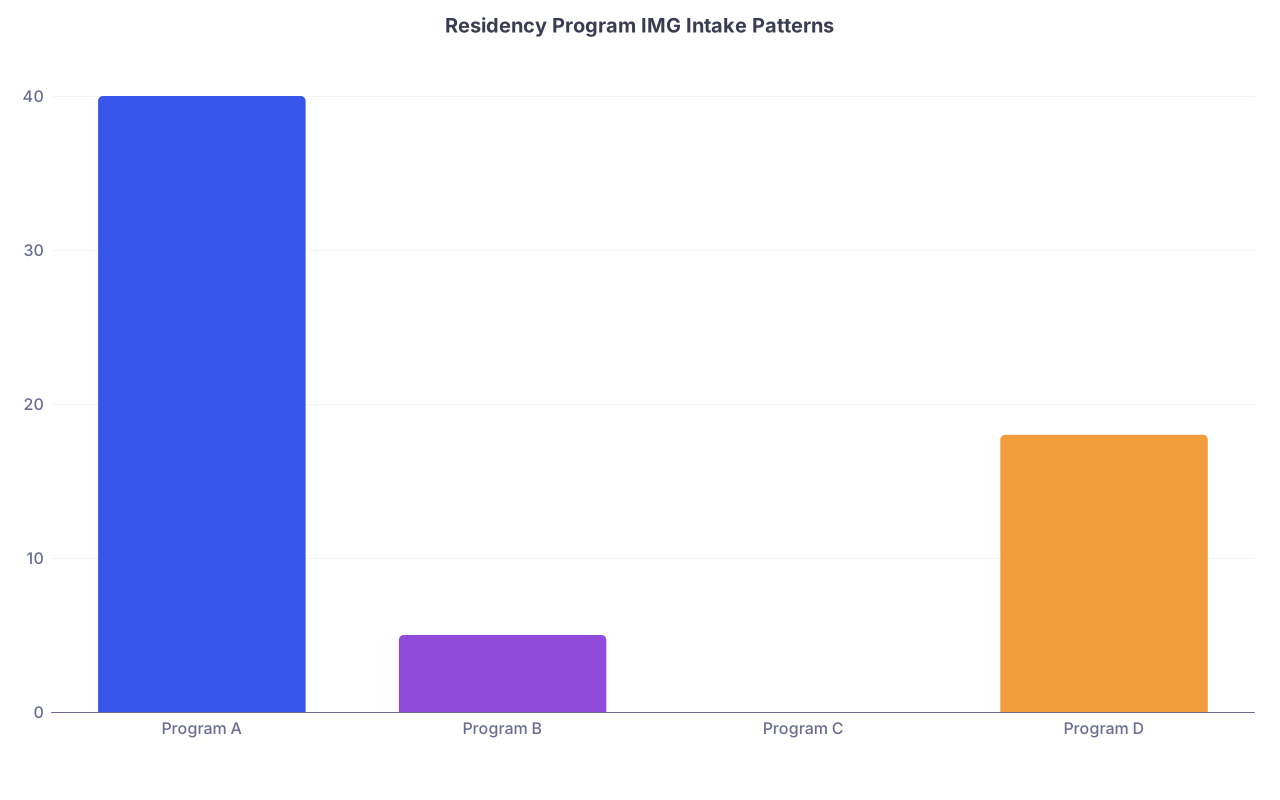
| Category | Value |
|---|---|
| Program A | 40 |
| Program B | 5 |
| Program C | 0 |
| Program D | 18 |
I’ve seen people apply “aggressively” to programs that:
- Took 1 IMG once… 5 years ago
- Haven’t had a non‑US citizen in the last 3 match cycles
- Only take Caribbean grads but never non‑US IMGs
Red flag: You cannot confirm recent IMG matches from multiple sources.
How to avoid the mistake:
Use objective tools
- FREIDA
- NRMP Program Director Survey (for specialty norms)
- Program websites (current resident roster)
Look at 3–5 years, not one year
One isolated IMG resident = anecdote, not pattern.Check what kind of IMGs they take
- US‑citizen Caribbean grads only?
- Or non‑US citizens from international schools?
Those are very different levels of “friendly.”
If you cannot see at least a few IMGs right now in their resident list, do not trust any “IMG‑friendly” label.
2. Their Visa Policy Is Vague, Changing, or “Case-by-Case”
Programs that truly support IMGs are very clear about visas. They know it matters to you, and they say it upfront.
Programs that don’t want the trouble hide behind vague lines like:
- “We consider visa sponsorship on a case‑by‑case basis.”
- “We have sponsored visas in the past.”
- “We prefer US citizens and permanent residents.”
That’s code for: we rarely sponsor and we want the option to say no without looking bad.
| Policy Statement | Risk Level |
|---|---|
| “We sponsor J‑1 and H‑1B visas yearly.” | Low |
| “We usually sponsor J‑1 visas.” | Medium |
| “We have sponsored visas in the past.” | High |
| “Case‑by‑case visa sponsorship.” | Very High |
Red flag: The visa line on their site or FREIDA is unclear, old, or non‑committal.
How to avoid the mistake:
- Check multiple sources: FREIDA + program website + email. They should match.
- Email directly:
“I’m an IMG requiring [J‑1/H‑1B]. Does your program currently sponsor this visa type for incoming residents?” - Watch for slippery replies:
- “We cannot guarantee visa sponsorship.”
- “We prefer candidates who do not require sponsorship.”
If the visa status isn’t explicit and firm, don’t treat them as IMG‑friendly. You’re not a backup plan.
3. Their Current Residents Don’t Match Their Marketing
I’ve watched programs describe themselves as “diverse” and “supportive of IMGs” while having:
- 0 IMGs in the last 3 PGY classes
- Or a single IMG hidden in PGY‑3 from years ago
That’s not IMG‑friendly; that’s marketing.
Here’s where most people screw up—they read the mission statement and skip the roster.
Red flag: Their website talks inclusion, but their resident photos are overwhelmingly US MDs.
How to avoid the mistake:
- Go straight to the resident list and count:
- How many clearly international schools?
- How many non‑US citizen backgrounds?
- Look at each PGY year:
If all the IMGs are stuck in PGY‑4 or PGY‑3 but none in PGY‑1 and PGY‑2 → pattern changed. Probably not in your favor.
If you can’t see at least 1–2 IMGs per class in a program claiming to be IMG‑friendly, that’s a loud warning.
4. They List Cutoffs That Quietly Exclude You
An IMG‑friendly program doesn’t hide behind silent filters.
A fake‑friendly program will:
- Publicly say “we welcome IMGs”
- Then privately auto‑screen anyone below a Step 1/2 score that most IMGs don’t reach
Or they’ll post requirements that sound “recommended” but function as strict cutoffs.
Typical traps I’ve seen:
- “We typically interview applicants with Step 2 CK > 245.”
- “We require strong US clinical experience (at least 3 months).”
- “Graduation within the last 3 years strongly preferred.”
If your Step 2 CK is 231 and you’re 5 years from graduation, this program isn’t IMG‑friendly. It’s brutally selective.
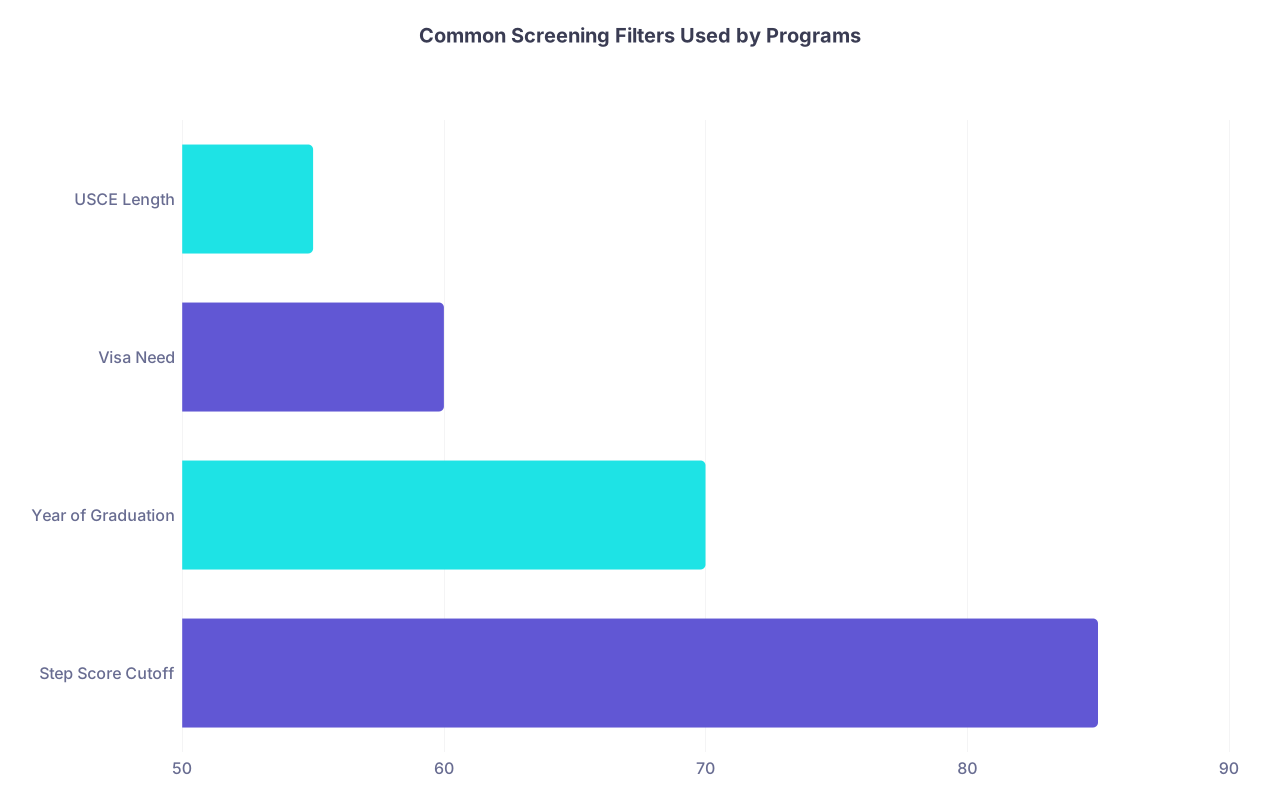
| Category | Value |
|---|---|
| Step Score Cutoff | 85 |
| Year of Graduation | 70 |
| Visa Need | 60 |
| USCE Length | 55 |
Red flag: Their minimums or “typical” ranges quietly exclude your profile.
How to avoid the mistake:
- Compare your stats honestly to their stated or implied filters.
- If you’re below 2 of these: score, YOG, USCE, visa need → they are probably not aiming for you.
- Do not assume “maybe they’ll make an exception.” They won’t. Not for dozens of applicants.
5. They Call Observerships “US Clinical Experience”
IMG‑hostile programs dismiss all non‑hands‑on rotations and then claim “we just want people ready for US healthcare.”
IMG‑friendly programs understand that IMGs may start with observerships and build up.
The sneaky middle group? They quietly inflate the meaning of USCE to look IMG‑friendly while still filtering hard.
Things I’ve seen on program info pages:
- “Observerships count as USCE.”
- But then in interviews: “We really look for hands‑on experience.”
- Or they invite you and hammer you for not having inpatient acting internship style work.
Red flag: They never clearly define what type of USCE they value most—and what doesn’t count.
How to avoid the mistake:
- Email directly:
“Do you consider observerships vs externships/hand‑on electives differently in your application review?” - Ask current or recent residents (especially IMGs):
- “What type of USCE did people who matched here usually have?”
If every matched IMG has 3–6 months of hands‑on sub‑internships and you only have 2 months of observerships, this program might not be a good “friendly” target yet.
6. Their Interview List Is IMG-Light, Even If Their Roster Isn’t
Here’s a subtle one most people miss.
Some programs used to be IMG‑friendly. Then leadership changed. Or hospital finances changed. Or visa policies tightened. But the website photos lag behind reality by 2–3 years.
So you check their residents, see a lot of IMGs, apply, and:
- You get no interview
- Or every IMG you know gets ghosted
Because the pipeline changed, but nobody updated the marketing.
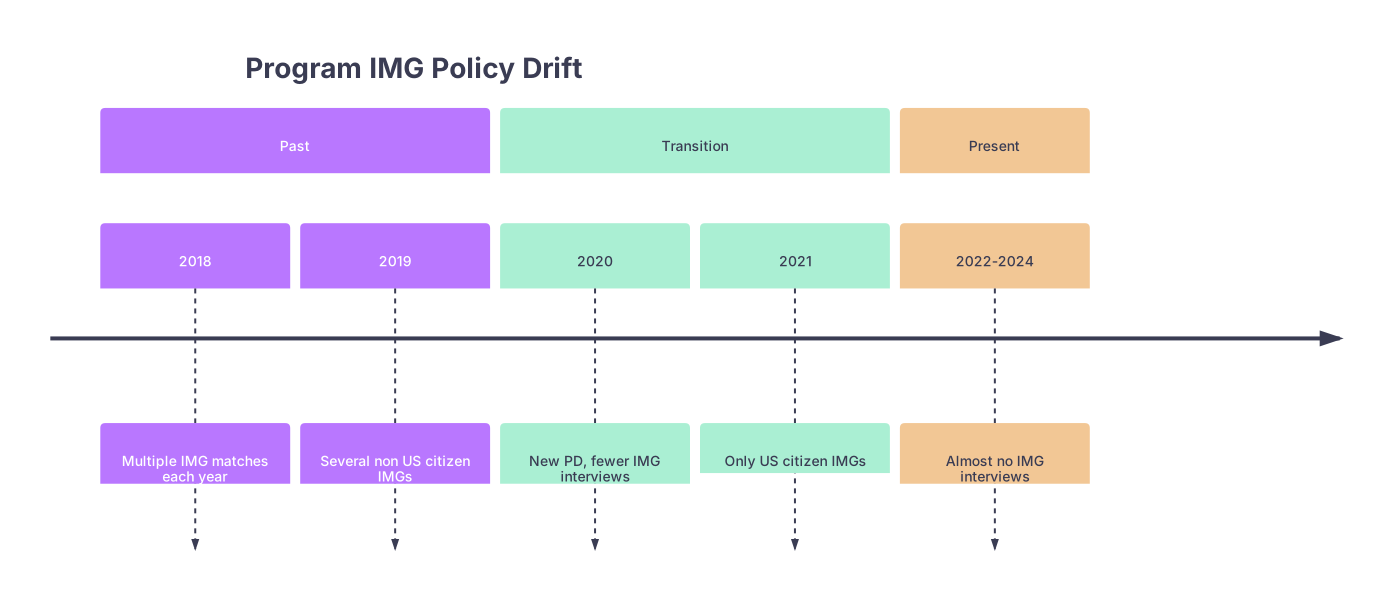
| Period | Event |
|---|---|
| Past - 2018 | Multiple IMG matches each year |
| Past - 2019 | Several non US citizen IMGs |
| Transition - 2020 | New PD, fewer IMG interviews |
| Transition - 2021 | Only US citizen IMGs |
| Present - 2022-2024 | Almost no IMG interviews |
Red flag: Current‑year interview lists (from forums, groups, friends) show very few IMGs, despite old rosters full of them.
How to avoid the mistake:
- Talk to this year’s applicants. Not people who matched 4 years ago.
- Scan interview threads by specialty; patterns show quickly.
- Recognize: IMG‑friendly is not a permanent label. It has an expiration date.
Don’t chase a 2019 reality in the 2025 Match.
7. Their Culture Signals “You’re Lucky to Be Here”
You can get into a program that’s technically IMG‑friendly but psychologically hostile.
Signs from people I’ve spoken with:
- Faculty repeatedly compare IMGs to US MDs as “less prepared.”
- Attendings make jokes about your accent or school.
- PDs say things like:
- “We take a chance on IMGs sometimes.”
- “This is a big opportunity for someone from your background.”
That’s not friendly. That’s condescending.

Red flag: You hear from multiple IMGs that they “survived” the program, not grew in it.
How to avoid the mistake:
- During interviews, ask IMGs only questions like:
- “Do you feel treated the same as US grads?”
- “Any challenges specific to being an IMG here?”
- Listen for hesitation, awkward laughs, or vague answers. That’s often your real answer.
Do not dismiss cultural hostility with “at least I’ll have a residency.” Burnout, anxiety, and humiliation are not minor side effects.
8. They Overload IMGs With Service, Not Training
The nastiest version of “IMG‑friendly” is actually “IMG‑dependent.”
Programs that:
- Rely heavily on IMGs to cover the hardest shifts
- Are understaffed, overworked, and use your visa status as leverage
- Give you minimal conference time, teaching, or procedures
Basically, they see you as a cheap workforce, not a resident in training.
You’ll hear phrases like:
- “Our residents work hard and learn by doing.”
- “There is a strong service component.”
- “We have a high patient volume and you’re thrown in from day one.”
Translation: we’re going to squeeze everything out of you, and you’ll be too exhausted to complain.
Red flag: IMGs at the program describe being exhausted, not educated.
How to avoid the mistake:
- Ask:
- “How often do residents miss conferences due to workload?”
- “What percent of your graduates pass boards on the first attempt?”
- Compare board pass rates with similar programs. Low pass + high service = bad combination.
- Talk to recent grads:
- “Did you feel adequately prepared for independent practice or fellowship?”
IMG‑friendly does not mean “we’ll exploit you more because you’re desperate.”
9. They Take Many IMGs… But Almost None Match Into Fellowships
This is a trap in internal medicine, pediatrics, and sometimes surgery.
Program proudly displays:
- Many IMG residents
- Photos of diverse classes
- Talk of “commitment to global medical education”
Yet when you track where their IMGs land after residency:
- Minimal fellowships
- Few academic jobs
- Many stuck in low‑support community roles or non‑academic positions they didn’t choose
| Outcome Metric | US Grads | IMGs |
|---|---|---|
| Fellowship Match Rate | 60% | 20% |
| Academic Positions | 30% | 5% |
| Board Pass on First Try | 95% | 75% |
That “friendly” label masks a second‑tier training culture where IMGs are welcomed in… but not developed out.
Red flag: Disproportionately weaker outcomes for IMGs vs US grads from the same program.
How to avoid the mistake:
- Ask pointed questions:
- “What fellowships have your IMG graduates matched into in the last 3–5 years?”
- “Can you share examples of non‑US graduate success stories from this program?”
- If they only mention US grads when bragging about outcomes, that tells you everything.
Friendly programs invest in your future, not just your labor.
10. They Use “We Welcome Diversity” as a Shield, Not a Reality
Some programs hide behind DEI language while being structurally unfriendly to IMGs.
You’ll see:
- Big DEI statements
- Nice stock photos
- A “Diversity Committee” and a line about international perspectives
But:
- Application filters screen out IMGs on year of graduation or visa need
- Their interview selection is 90% US MD/DO
- IMGs on their website are 90% historical, not recent
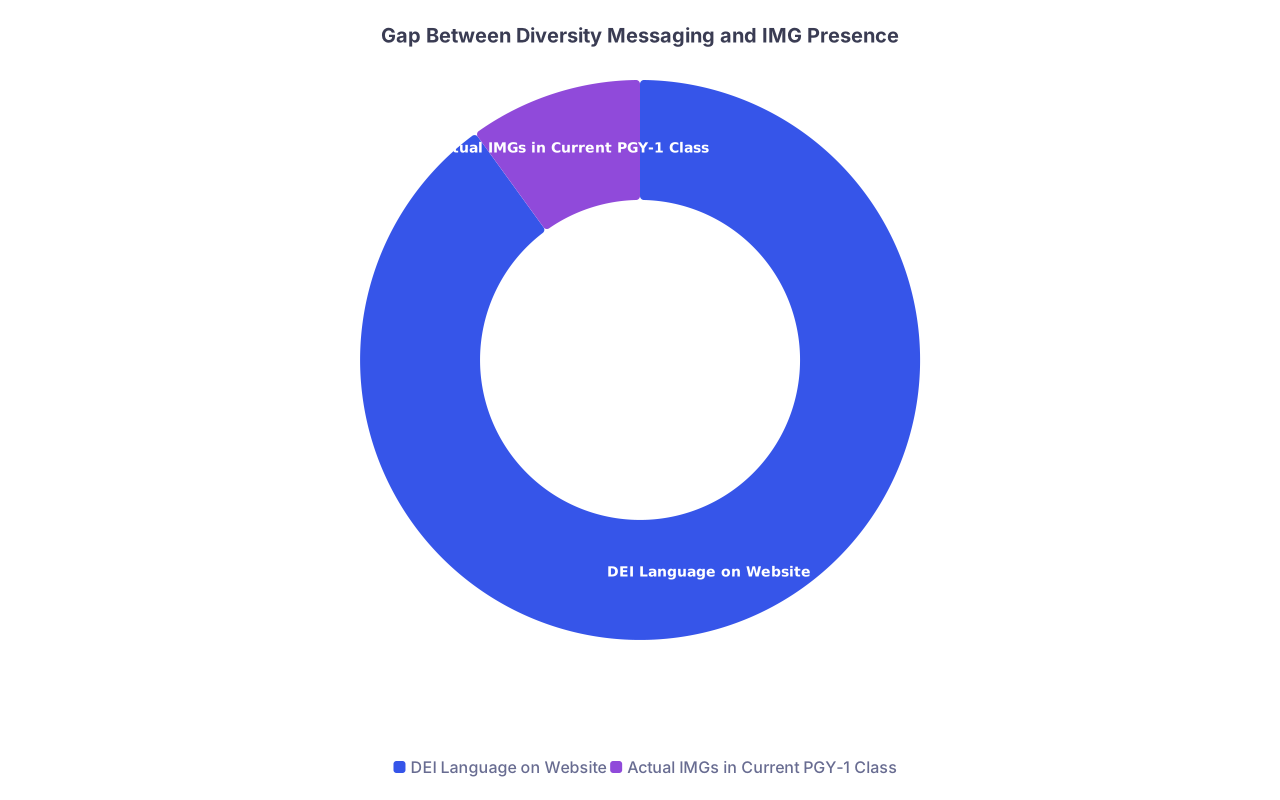
| Category | Value |
|---|---|
| DEI Language on Website | 90 |
| Actual IMGs in Current PGY-1 Class | 10 |
Red flag: The louder the diversity marketing, the weaker the actual current IMG presence and support.
How to avoid the mistake:
- Look for hard numbers, not pretty words:
- % IMGs in each year
- % non‑US citizen residents
- Ask:
- “Approximately what percentage of your current residents are IMGs?”
If they dodge or “don’t know,” that’s not serious diversity work.
- “Approximately what percentage of your current residents are IMGs?”
- Cross‑check: DEI talk + no IMGs in PGY‑1 = don’t waste an application slot.
Quick Reality Check: When Is a Program Truly IMG-Friendly?
Forget labels. Here’s what an actually IMG‑friendly program tends to look like:
- Consistently has multiple IMGs per year, across several classes
- Clearly states J‑1 and/or H‑1B sponsorship and follows through
- PD or APD is comfortable talking specifics about IMGs in their program
- IMGs from that program have matched into fellowships or good jobs
- Current IMGs say things like:
- “They treated me like any other resident.”
- “I felt supported with visas, exams, and career planning.”
If you see 3 or more of these, that’s worth an application. If you don’t, stop calling it IMG‑friendly just because someone on a forum said so.
FAQs
1. Is it ever worth applying to a borderline or “maybe” IMG-friendly program?
Yes—but only in controlled doses. A few higher‑reach programs in your list are fine, especially if your scores and CV are strong. The mistake is building your entire strategy around “maybe they’ll like me” programs that show clear red flags: no visa clarity, no recent IMGs, unrealistic cutoffs. Treat those as lottery tickets, not core targets.
2. How many truly IMG-friendly programs should I apply to?
Enough that your list is built on probability, not hope. For most IMGs, that means the majority of your applications (60–80%) should be to programs that: (1) actively sponsor your visa type, (2) currently have multiple IMGs, and (3) have matched IMGs in the last 2–3 years. The rest can be higher‑tier or borderline programs if you have the stats.
3. If a program used to be IMG-friendly but seems less so now, should I still apply?
Only if you see current evidence that IMGs are still interviewing or matching there. Programs change direction fast with new leadership. If the last 2 PGY‑1 classes are mostly US grads and newer applicants report no interviews for IMGs, treat the “IMG‑friendly” reputation as expired. Historical friendliness will not help you in this year’s Match.
Key points: stop trusting the phrase “IMG‑friendly” without hard proof, always verify with current residents and data from the last 2–3 years, and never ignore visa clarity—if they’re vague about sponsorship, they’re not friendly to you.