
The phrase “IMG-friendly program” is one of the most misleading labels in the entire Match system.
The fear you’re too scared to say out loud
You’re not just wondering, “Will they rank me?”
You’re wondering, “Are they only taking IMGs because nobody else wants to be there… and will they treat me like cheap labor once I’m in?”
You see those programs where 70–90% of residents are IMGs and your brain goes straight to:
- Are they desperate?
- Are they malignant?
- Do they use IMGs because we complain less and accept worse conditions?
- Am I walking into a trap I’ll be stuck in for three+ years?
You’re not paranoid. That fear is rational. Because some programs absolutely are using “IMG-friendly” as code for “we can get away with stuff here.”
But here’s the annoying, complicated truth:
Not all IMG-heavy programs are exploitative. And not all “prestige” US-IMG-scarce programs are safe, supportive havens.
So you’re stuck asking: how do I tell the difference before I rank them?
Let’s pull this apart like someone who’s actually terrified of making a terrible decision. Because that’s me. And probably you.

| Category | Value |
|---|---|
| University | 10 |
| Community | 35 |
| Unopposed Community | 50 |
| Rural | 45 |
| Historically IMG-heavy | 80 |
What “IMG-friendly” really means (and what it doesn’t)
Let me be blunt: “IMG-friendly” is not some official, ethical category blessed by the NRMP. It usually just means one thing:
They have historically matched a decent number of IMGs.
That’s it. No guarantee of:
- Reasonable workload
- Decent teaching
- Decent board pass support
- Visa stability
- Respect
Sometimes “IMG-friendly” means:
- They actually value IMGs, have structured teaching, and are open-minded.
- Or… they got blacklisted by US grads, have high attrition, bad word-of-mouth, or low reputation, so they rely on IMGs who don’t know the backstory.
Both types exist. Side by side. On the same “IMG-friendly programs” spreadsheet you got from Reddit.
The real question isn’t “Are IMG-friendly programs bad?”
It’s “What type of IMG-friendly is this program?”

Are they just using IMGs? Red flags vs. healthy signs
Let’s talk about the nightmare version first, because that’s the one that keeps you awake at 2:37 a.m.
Exploitative / “using you” patterns
You can’t see everything from the outside, but there are patterns. I’ve seen them. People talk. WhatsApp groups don’t forget.
These are bad signs when you stack several together:
Massive IMG majority + terrible outcomes Think: 80–100% IMGs, but:
- Board pass rates are low or “not available”
- Few graduates get fellowships or decent jobs
- Residents vanish from the website mid-year (attrition)
Impossible workload, unstable schedules Things residents will quietly hint at:
- “We work a lot” said with a long pause
- Vague answers about call (“it depends,” “we’re working on it”)
- A culture of bragging about suffering instead of learning
Visa chaos and fear-based culture The most insidious exploitation for IMGs happens around visas:
- Threatening or implying that “complaints” might affect visa renewal or future letters
- Refusing to sponsor H-1B when they easily could
- Residents say, “We just try not to make problems.”
No real teaching, just service You’ll hear this in tiny ways:
- “We don’t really have didactics because we’re too busy.”
- “Morning report is mostly sign-out.”
- “Attendings let us handle everything” (translation: abandoned)
High PGY-1 to PGY-2 “mysterious losses” Programs that constantly:
- Replace PGY-2s mid-year
- Have “off-cycle” openings every year
Are usually not just “unlucky.” Residents are leaving or being pushed out.
No resident ever says, ‘I’d pick this program again’ Watch faces. Listen to what they don’t say. When you ask: “Would you choose this program again?”
And you get:- Nervous laughter
- “Well, you know, every program has issues…”
That tells you more than any website slogan.
Healthy IMG-friendly programs exist
Now the other side. Programs that genuinely value IMGs, not just use them:
Signs they’re actually IMG-friendly in a good way:
- The leadership openly talks about how IMGs enrich the program, not just “fill positions.”
- Board pass rates are solid, even if the name isn’t flashy.
- Graduates get fellowships, jobs in decent locations, or hospitalist roles with proper support.
- Residents speak normally, without fear, about raising concerns.
- Visa questions get answered clearly and confidently: timelines, renewals, H-1B vs J-1, what they’ve done in past years.
- Faculty know residents’ names and talk about them like humans, not FTEs.
The biggest tell?
When you ask a PGY-3, “Would you recommend this place to your younger sibling?” and they say “Yeah, if they’re an IMG like me and want X/Y,” that’s gold.
| Aspect | Healthy IMG-Friendly Program | Possibly Exploitative Program |
|---|---|---|
| IMG Percentage | Moderate to high with good outcomes | Very high with poor or unknown outcomes |
| Board Pass Support | Structured, tracked, openly discussed | Vague, residents self-study only |
| Visa Culture | Clear, confident, supportive | Fear, threats, last-minute surprises |
| Resident Turnover | Stable classes | Frequent mid-year vacancies |
| Resident Tone | Candid but not scared | Hesitant, avoidant, or overly rehearsed answers |
How to actually vet an IMG-heavy program (so you don’t get trapped)
You’re not powerless, even if it feels like it. You can’t see everything from the outside, but you can absolutely stress-test a program.
Here’s how I’d do it if I were worried I was walking into exploitation.
1. Ask residents direct—but not naive—questions
Don’t ask, “Is your program good?” That’s useless.
Ask things that force specifics:
- “How many hours do you actually work on an average call month?”
- “How often do you stay past your end time to finish notes?”
- “How many people failed boards in the last 5 years? What happens when someone struggles?”
- “How does the program respond when a resident raises a concern?”
- “If you had visa issues, how did they handle it?”
Then watch their faces. Tone > words.
2. Stalk their outcomes
Residency is not the end of the road. Ask:
- “Where did your last 3–4 graduates go?”
- “Do most grads get hospitalist jobs? Fellowships? Community practice?”
- “Do you have a list of alumni and what they’re doing now?”
If they constantly say, “People mostly go back home” or “We don’t really track that,” that’s… strange. Good programs brag about their graduates.
3. Look for overcompensation on interview day
Some malignant programs are weirdly too polished on interview day.
Things that make me suspicious:
- Residents always answer as a group and are never left alone with you
- Every answer sounds like a rehearsed script
- No one admits to any downsides or challenges
Real residents in real programs will say stuff like:
- “Consults can be rough”
- “ED can be chaotic but we manage”
- “Sometimes call is brutal but we’re pushing for Q4 instead of Q3”
If everything is “amazing, perfect, family, supportive, so great,” I start to worry what they’re not allowed to say.

| Step | Description |
|---|---|
| Step 1 | Find IMG friendly program |
| Step 2 | Check IMG percentage and outcomes |
| Step 3 | Review website and alumni paths |
| Step 4 | Flag for concern |
| Step 5 | Interview day questions |
| Step 6 | Consider ranking higher |
| Step 7 | Rank cautiously or avoid |
| Step 8 | Board pass and alumni data available |
| Step 9 | Resident answers feel honest |
The visa power imbalance: where exploitation really hides
Let’s be honest: visas are where programs can really mess with you.
This is the part that scares me the most, because you can’t just “walk away” easily if things get bad. You have your legal status, your future, and your entire life tied up in this.
Here’s how exploitation can look for IMGs on visas:
- They delay or mishandle paperwork, then blame you.
- They “remind” you that complaining could “complicate” your visa situation.
- They change the promised visa type after you’ve already committed.
- They deliberately keep you in the dark so you’re always on edge and compliant.
To protect yourself, you have to be that slightly annoying person who asks too many questions before you rank:
Ask the program (not a random resident, the actual coordinator or PD):
- “How many residents are currently on J-1? H-1B? Any issues in the last 3 years?”
- “Do you sponsor H-1B for any residents? Under what circumstances?”
- “Has any resident lost status or not had a visa renewed while in good standing?”
- “Who handles the visa process—your GME office, an external lawyer, or the resident alone?”
If they’re vague, defensive, or say, “We usually figure it out,” that’s terrifying. A good program knows this stuff cold and answers it the same way every year.
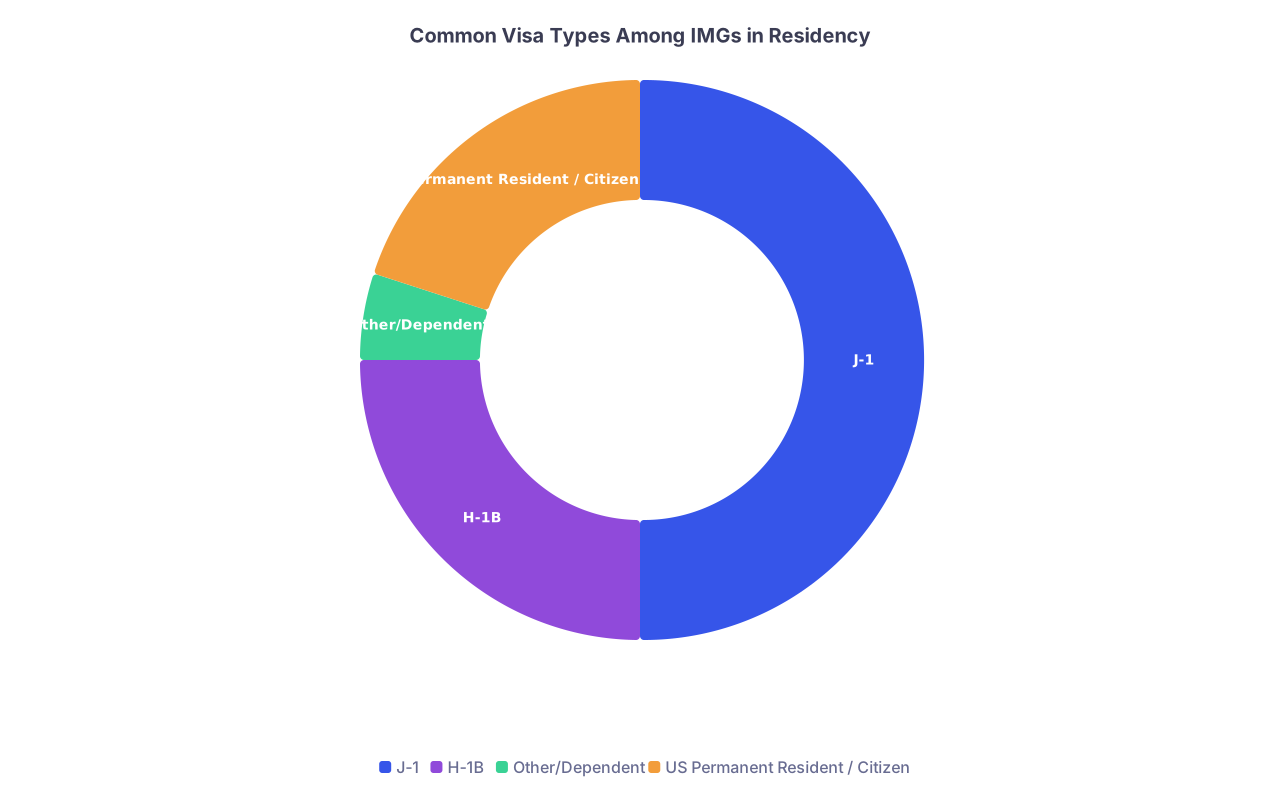
| Category | Value |
|---|---|
| J-1 | 50 |
| H-1B | 25 |
| Other/Dependent | 5 |
| US Permanent Resident / Citizen | 20 |
Are you overthinking this? Honestly… no.
I’m not going to gaslight you and say, “You’re just anxious, it’ll be fine anywhere.” No.
There are programs that:
- Rely heavily on IMGs because US grads avoid them.
- Tolerate bullying, racism, or condescension because IMGs are scared to speak up.
- Push workloads right up to or over the edge of ACGME regulations.
- Treat you as a service engine first, trainee second.
But you’re also not doomed to those places just because you’re an IMG.
You can:
- Rank more than one category of program (IMG-heavy, moderate-IMG, home state, etc.).
- Use alumni, seniors from your med school, or country WhatsApp groups to get uncensored feedback.
- Decide that some trade-offs (e.g., more work but good teaching and safe culture) are acceptable, and others (visa threats, humiliation, no support) are not.
The trick isn’t finding a “perfect” program. It’s avoiding the truly dangerous ones while accepting that no place is Instagram-perfect.
Quick reality check: signs you’re not just being irrational
If any of these are true, your fear is reasonable, not dramatic:
- You’ve heard consistent negative rumors about a specific program from different, unconnected people.
- The program has mid-year vacancies every year.
- Residents from a certain country say privately, “We avoid that place.”
- The program dodges every question about outcomes, visas, and board pass rates.
You’re allowed to say, “No thanks,” even if they seem “IMG-friendly.”
Programs need you too. Even if it doesn’t feel like it.
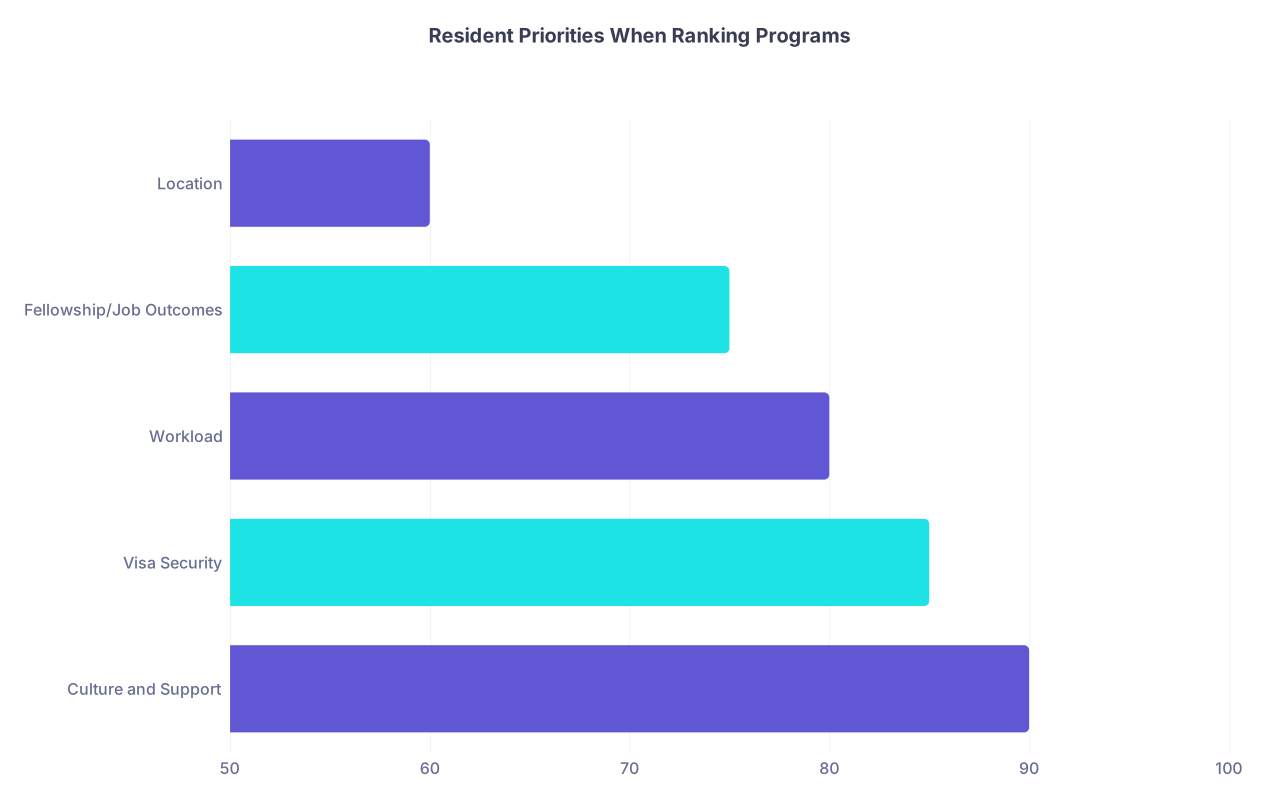
| Category | Value |
|---|---|
| Culture and Support | 90 |
| Visa Security | 85 |
| Workload | 80 |
| Fellowship/Job Outcomes | 75 |
| Location | 60 |
How to balance desperation and self-respect on your rank list
The darkest thought in all of this is:
“What if I avoid these sketchy IMG-heavy programs… and then I don’t match at all?”
So you start bargaining with yourself:
- “Maybe I can tolerate a malignant place for 3 years if it means I match.”
- “I’ll just keep my head down, I don’t need support, I just need a visa.”
- “Everyone suffers in residency anyway, right?”
Here’s where I land on that:
You’re allowed to rank “less than ideal” programs for the sake of matching.
But you don’t have to willingly step into an abusive situation.
There’s a line between:
- Hard-working, under-resourced, rough-around-the-edges program where people are still fundamentally decent and you still learn.
and
- Malignant, fear-based, exploitative program where your safety, sanity, and career are at real risk.
If your gut, plus the data, plus resident tone all scream run — it’s okay to rank them low or not at all. Even as an IMG. Even if everyone says you should be “grateful” for any spot.
You’re not ungrateful for wanting a place that treats you like a human.

FAQ (exactly 5 questions)
1. Are most IMG-friendly programs exploitative or malignant?
No, “most” is too strong. Many IMG-heavy programs are just under-the-radar, less competitive, or in less popular locations, but still decent training sites with supportive PDs and solid outcomes. The truly exploitative ones are a subset, but they can be loud in IMGs’ stories because the harm is so intense. Your job is to separate “less prestigious but okay” from “genuinely dangerous,” using resident feedback, outcomes, and visa clarity.
2. Is it safer to avoid programs with very high IMG percentages?
High IMG percentage alone doesn’t equal exploitation. It might just mean US grads prefer big-name university programs or specific cities. What matters is what happens to those IMGs: board pass rates, fellowships, jobs, wellness, visa security, attrition. A 90% IMG program with strong outcomes and happy seniors is far safer than a 30% IMG university program with bullying and burnout.
3. How can I ask about exploitation or bad culture without sounding aggressive?
Focus on specific, neutral questions. Ask about board pass support, how concerns are handled, how many residents leave early, what happens when someone struggles with performance, who handles visas, and whether any residents have failed to complete the program in recent years. You’re not accusing; you’re gathering data. Tone it as curiosity: “I’m an IMG, and this matters a lot for me. Can you walk me through how you handle X?”
4. Should I still rank a program I’m uneasy about if it’s my only realistic shot?
You can, but don’t ignore major red flags. If it seems simply “tough but okay,” you might reasonably rank it because matching somewhere may matter more than comfort. But if you see real signs of visa instability, systemic disrespect, repeated failure to graduate residents, or a culture of fear, you’re not obligated to sacrifice yourself. Rank in an order that reflects both your desire to match and your baseline standards for safety and dignity.
5. How do I find the “real story” about a program beyond interview day?
You go off-script. Look for recent grads on LinkedIn and message them politely. Use IMG WhatsApp/Telegram/Facebook groups by country or specialty. Ask seniors from your med school who matched in the US. If two or three unrelated sources quietly warn you about the same place, listen. Conversely, if multiple IMGs say, “It’s busy, but they were fair to me and I passed boards and got a job,” that’s reassuring—even if the program doesn’t look glamorous on paper.
Key points:
Not all IMG-friendly programs are exploiting IMGs—but some absolutely are.
You’re not crazy for being scared; use that fear to ask sharper questions and investigate outcomes, visas, and culture.
You deserve more than “any spot”; you deserve a place that trains you, not just uses you.