The biggest lie we tell IMGs is that “any residency is fine, you can make it work later for fellowship.”
Let me be blunt: some “IMG‑friendly” programs will quietly suffocate your fellowship dreams if you’re not careful.
And that’s exactly what’s freaking you out, right? You finally have a real shot at an interview or an offer from a community hospital that “takes a lot of IMGs,” but in the back of your mind you’re thinking:
What if this place gets me stuck?
What if I match here, work myself to the edge of burnout, and then find out nobody matches to cards, GI, heme/onc, pulm/crit, anything?
What if they smile in the interview and say, “We absolutely support fellowship,” but when it’s time for letters and research and schedule flexibility… nothing?
Let’s talk through this without sugarcoating it—but also without the doomsday fantasy where your whole career is over because of one imperfect program choice.
You’re allowed to be scared. You’re not allowed to be uninformed.
First: Yes, an “IMG‑friendly” program can absolutely hold you back
There’s this dangerous myth that as long as you’re in some US residency, doors magically open. They don’t.
Here’s the reality I’ve seen play out for IMGs in “friendly” but low‑support programs:
- The program matches 80–90% IMGs every year.
- No protected research time. Zero.
- No formal mentorship for competitive fellowships.
- Faculty “don’t really do research anymore.”
- PD says in July, “We fully support fellowship applications,” but in September refuses to adjust your schedule for interviews.
- One person matched to a solid fellowship 5 years ago and they still mention that name like it’s yesterday.
You know what that looks like on paper:
| Signal Type | Example Sign |
|---|---|
| Red Flag | 0–1 recent matches to competitive fellowships |
| Red Flag | No structured research or scholarly track |
| Red Flag | PD vague when you ask about fellowship outcomes |
| Green Flag | Recent IMGs matching to cards, GI, heme/onc, PCCM |
| Green Flag | Regular case conferences/QI projects with resident authors |
| Green Flag | Clear process for letters and interview time off |
A program can be very “IMG friendly” at getting you in and very “IMG indifferent” about what happens to you after graduation.
Your anxiety about that isn’t paranoia. It’s just… accurate.
How to figure out if your “friendly” program will actually support fellowship
You’re not crazy for obsessively stalking websites, FREIDA, LinkedIn, random WhatsApp screenshots, anything that shows “fellowship match list.” Everybody does it. The key is knowing what actually matters.
1. Stop listening to what they say. Look at what they’ve done.
Words in interviews are cheap. Outcomes aren’t.
You want hard data:
- Where have residents gone in the last 3–5 years?
- How many did hospitalist vs fellowship?
- For IMGs specifically—not just the US grads.
If the program site has a vague “our graduates have gone on to fellowships such as…” with no years, no names, no places—that’s a soft red flag. It usually means the list is old or cherry‑picked.
Compare that with a program that posts: “Class of 2023: 3 fellows (Cards – University X, GI – University Y, Heme/Onc – University Z), 9 hospitalists, 2 primary care.” That’s a very different level of transparency.
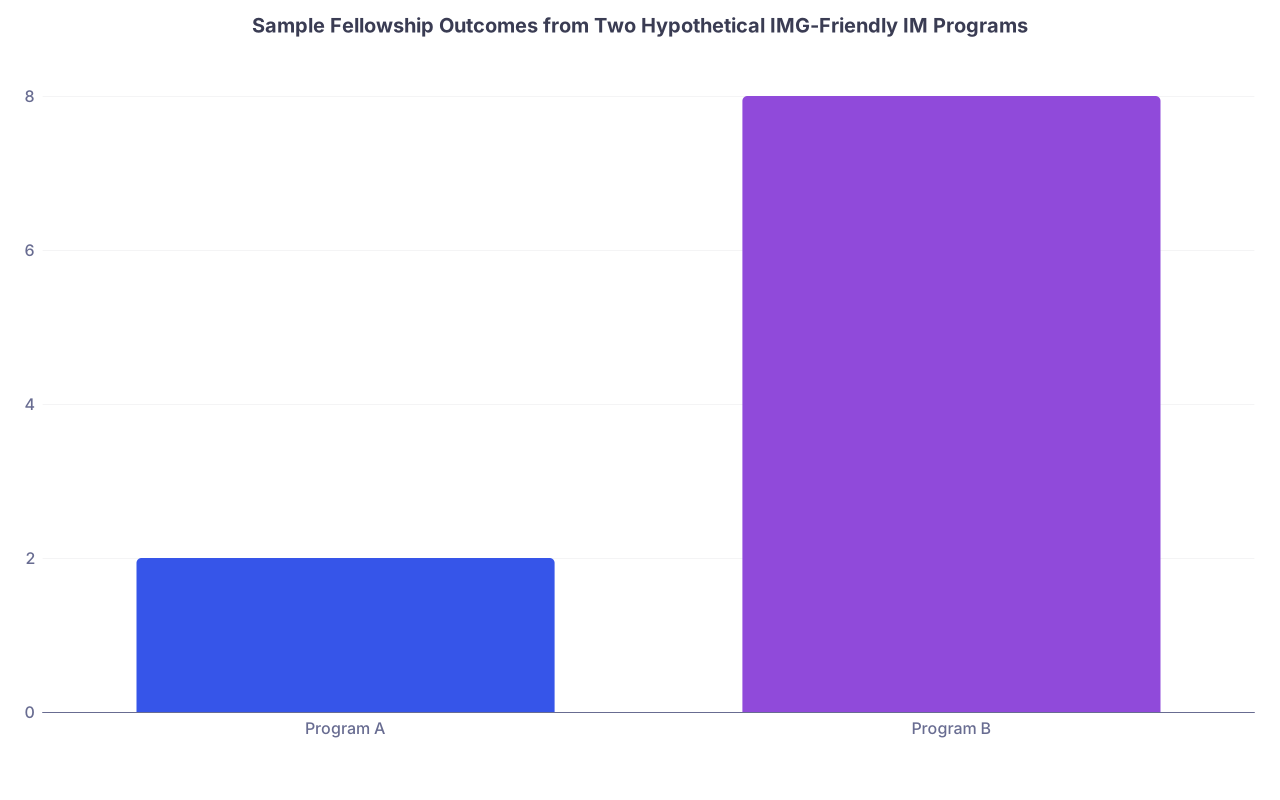
| Category | Value |
|---|---|
| Program A | 2 |
| Program B | 8 |
Imagine Program A: 2 people per year consistently go into fellowship (out of 12).
Program B: 8 out of 12 go to fellowship, including competitive spots.
Both might advertise as “supportive.” Only one actually is.
2. Ask the question you’re scared to ask
During interviews or second looks, you should be asking residents:
“Has anyone ever felt blocked or discouraged from applying to fellowship?”
You’ll be shocked how fast the energy in the room changes. I’ve heard:
- “Uh… they prefer people do hospitalist first.”
- “They say they support it, but when it comes to schedules and letters, it’s tricky.”
- “The PD doesn’t ‘believe in’ GI or cards right out of residency.”
That’s code for: we kinda resent people who want more than this.
On the flip side, if a senior says: “Oh yeah, 4 of us applied this year—PD did a full mock interview, and we got time off for virtual interviews,” that’s gold.
3. Look at how they treat research and scholarly activity
You don’t need an R01 lab. You do need something.
Red flags:
- “We expect you to do a QI project” with no structure, no faculty, no path to publication.
- Attendings laugh off research as “unnecessary for community practice.”
- Nobody has gone to a national conference in years.
Green flags:
- Residents presenting posters at ACP, ATS, ASH, ACG, ACC regularly.
- A simple but real research infrastructure: IRB support, a research director, or at least a spreadsheet of ongoing projects.
- Faculty who know how to write “fellowship‑style” letters.
If you’re seeing only red flags and you want cards, GI, heme/onc, PCCM, or any academic‑leaning fellowship… your anxiety is valid.
Worst case: you match at a program that doesn’t actually support your fellowship dreams
Let’s sit in the worst‑case scenario you’re catastrophizing about.
You rank a place high because it seemed IMG‑friendly and safe. You match there. First July hits. The reality:
- No formal mentorship for fellowship.
- No research on‑ramp.
- You’re on 6–7 inpatient months as PGY‑1, grinding non‑stop.
- When you ask about fellowship, someone says, “Focus on being a good intern first.”
You go home and spiral: “I’ve already ruined my future. I’m stuck.”
You’re not.
Is it harder? Yes. Unfair? Also yes. Impossible? No.
Here’s how I’ve seen IMGs in exactly that situation still make it to good fellowships.
Step 1: Get uncomfortably honest about your program’s ceiling
Some programs will not launch you into a brand‑name cards or GI spot straight out of residency. You can mourn that for a minute. Then you decide:
“Okay. What’s the realistic best‑case path from here?”
For some people that’s:
- Strong community heme/onc or pulm/crit
- Solid but mid‑tier cards or GI in a less fancy location
- Or a two‑step path: hospitalist + research year → fellowship
That doesn’t mean you’ll never get to where you want. It just means your route won’t be Instagram‑pretty.
Step 2: Manufacture the support your program doesn’t give you
You might have to build your own ecosystem:
- Find 1–2 attendings who care about teaching and outcomes. Ignore the rest.
- Attach yourself to them politely but relentlessly: ask about projects, cases, letters.
- Email faculty at nearby university programs: “I’m an IM resident at X, very interested in heme/onc. Would you be open to involving me in a retrospective project?”
Yes, that feels awkward. Yes, IMGs do this all the time and get results.

| Step | Description |
|---|---|
| Step 1 | Realize program is weak for fellowship |
| Step 2 | Identify 1 to 2 supportive faculty |
| Step 3 | Join or start a small project |
| Step 4 | Present at local or national meeting |
| Step 5 | Ask for strong mentorship and letter |
| Step 6 | Reach out to nearby university faculty |
| Step 7 | Remote chart review or case series |
You basically create your own “micro‑academic” environment inside or just outside your community program.
Step 3: Make your application scream “I maximized a limited environment”
Fellowship programs are not stupid. They can tell when a residency is low‑resource. What impresses them is when your file shows:
- Multiple posters or abstracts from a place that barely has an IRB.
- Letters that talk about you being the one who pushes quality, teaching, or scholarly activity forward.
- Continuous extra effort—teaching sessions, journal clubs, board review leadership.
I’ve seen IMGs from tiny community programs match into good heme/onc because their application made it clear: “I squeezed every drop out of this place and looked for more.”
It’s not fair. But it’s possible.
When a “fellowship‑weak” choice might still be the right one
Here’s the quieter, less TikTok‑friendly truth: your absolute top priority right now is matching into some residency. No residency → no fellowship, ever.
There are times when you knowingly accept a program with poor fellowship outcomes because:
- It’s your only realistic shot this cycle.
- Your visa situation is fragile and they sponsor reliably.
- You have family/health constraints and need that geography.
If that’s you, it’s okay to admit: “I’m choosing survival and stability first, then I’ll fight for fellowship second.”
Just don’t lie to yourself and call a clearly weak fellowship environment “good enough” if you have stronger options. Your anxious brain is useful when it’s saying, “Wait, let’s actually compare these.”
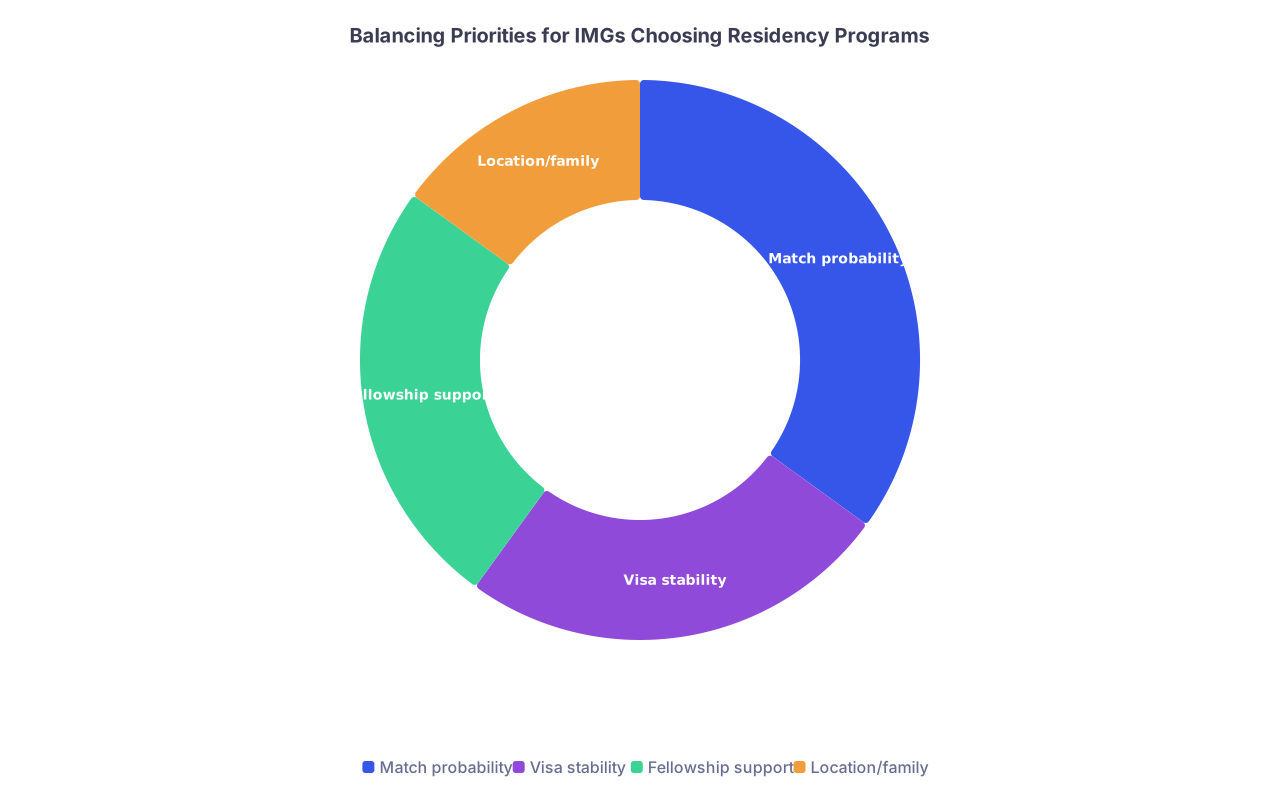
| Category | Value |
|---|---|
| Match probability | 35 |
| Visa stability | 25 |
| Fellowship support | 25 |
| Location/family | 15 |
You can’t optimize everything. But you also shouldn’t sacrifice fellowship support for no reason other than fear.
How to rank programs when you care deeply about fellowship
The week before the rank list deadline is basically one long anxiety attack. You keep rearranging your list, imagining future you thanking or hating present you.
Here’s a harsh but simple ranking framework if fellowship is non‑negotiable for you:
- Programs with proven fellowship outcomes in your field of interest
- Programs with strong overall fellowship outcomes, even if not in your exact niche yet
- Programs with transparent, growing scholarly support (even if track record is short)
- Programs that are only “friendly” for matching, not for advancement
Visa reliability can bump a weaker program up the list. Personal life can, too. But fellowship‑toxic programs should only climb that list if the alternative is “no match.”
If you’re stuck between two similarly “friendly” programs:
- Ask for the last 3 years of fellowship destinations.
- Ask residents privately about schedule flexibility for interviews.
- Ask how many people applied vs how many matched.
Programs that dodge those questions usually have something to hide.
If you’ve already matched somewhere and you’re panicking now
Maybe you’re reading this as a PGY‑1 or PGY‑2 thinking, “Oh no. This is my program. I’m screwed.”
You’re not. But you don’t have time to waste.
Here’s what you do this month—not “someday when it calms down” (it won’t).
Identify one attending who:
- Actually likes teaching, and
- Has any history of conference presentations or publications.
Ask them:
“I’m really interested in [field]. I know our program doesn’t have a ton of research, but I’m very motivated. Is there any project you’re thinking about that I could help push forward?”Email your PD or APD and say:
“I’m interested in applying to [fellowship] eventually. I’d love to meet for 10–15 minutes to discuss what prior residents have done and how I can align my electives and projects.”
Yes, that conversation is scary. But you need to know early whether you’ll get real support or just platitudes. Then you can adjust—by leaning into external mentors if needed.
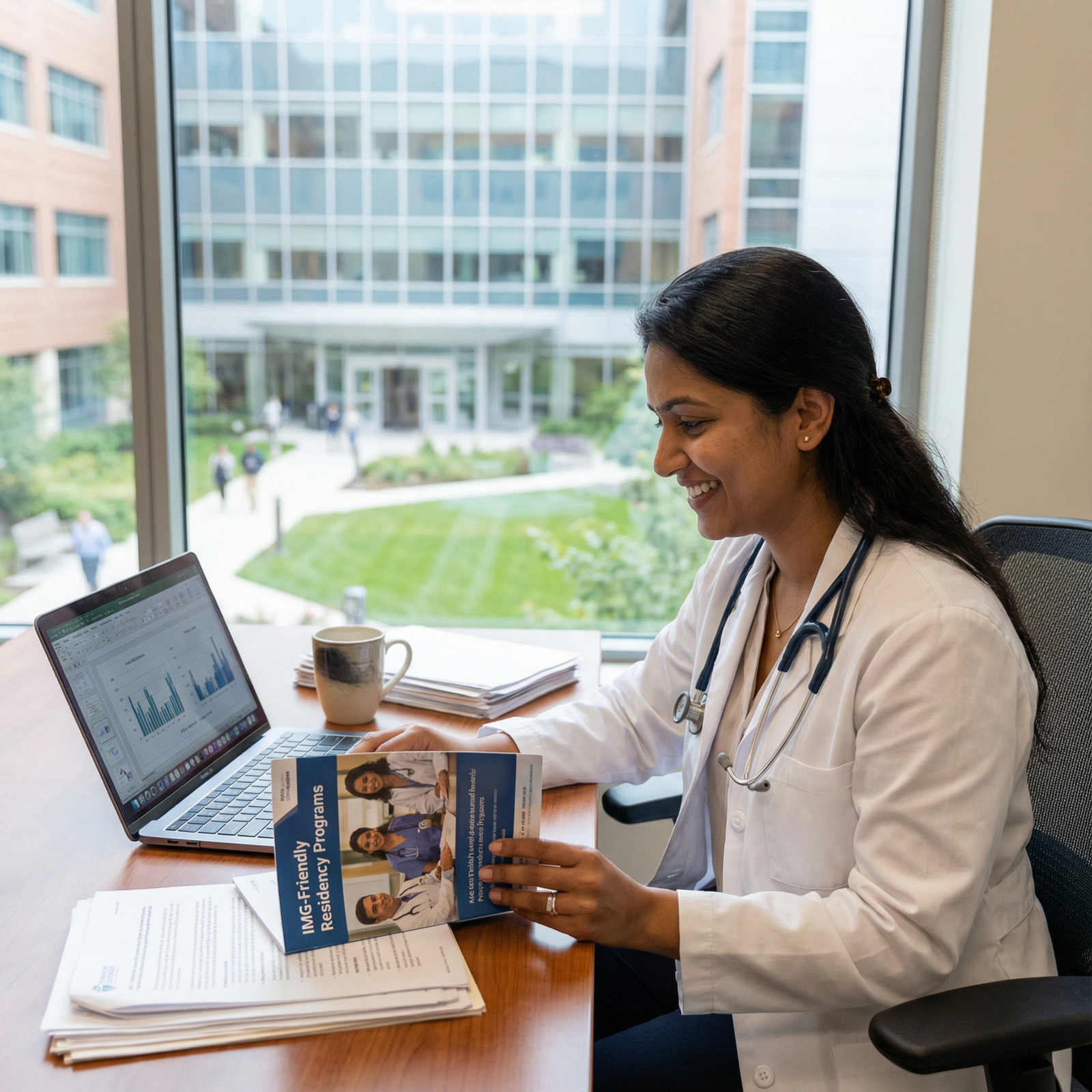
And if you find out your program is basically a fellowship desert?
Then your strategy becomes:
- Crank your in‑training exam score.
- Gather small but real scholarly wins: case reports, QI posters, local meetings.
- Network with faculty at nearby institutions in your specialty of interest.
- Be open to doing a hospitalist year with heavy research at a more academic place before fellowship.
Is that exhausting? Yes. Are you alone? Sadly, no. A lot of IMGs have walked this exact path and still landed where they wanted.
The uncomfortable truth that should actually calm you down
Here it is:
Your career isn’t decided by a single line—“Residency: X Community Hospital.”
It’s decided by the pattern your application shows over time: what you did given where you were.
Fellowship programs know which residencies are powerhouses and which are barebones. They don’t expect RCTs from a 12‑resident community program. But they do expect to see that you pushed, that you looked for mentorship, that you produced something. Even small.
Yes, some doors will be harder to open from a weak program. But “hard” and “impossible” are not the same.
Your job now is to be ruthless about identifying reality—how supportive or non‑supportive a given “IMG‑friendly” program actually is—and then equally ruthless about squeezing every opportunity you can from wherever you land.
You’re allowed to be scared. You’re not doomed.

FAQ (exactly 4 questions)
1. If a program has almost no recent fellowship matches, should I avoid it completely?
Not automatically. If it’s your only realistic shot to match, you take it and fight for fellowship later. But if you have options, a program with zero or almost zero recent fellowship outcomes—especially in your field of interest—should go lower on your list. It means you’ll be building everything yourself: mentorship, research, networking. That’s possible, but it’s a heavy lift you shouldn’t volunteer for if you have a better alternative.
2. Can I match a competitive fellowship like cards or GI from a small community, IMG‑heavy program?
Yes, but the bar is higher. You’ll usually need strong board or in‑training scores, meaningful scholarly activity (even if small), and powerful letters from people who can compare you favorably to fellows they’ve known. It often helps if you build collaborations with faculty at larger academic centers—case series, chart reviews, multi‑center projects. It’s not the usual path, but it’s real. I’ve seen it.
3. How soon should I start thinking about fellowship after starting residency?
Sooner than people tell you. You don’t need a 10‑year plan on day one, but by the end of PGY‑1 you should know whether you’re leaning toward fellowship and which fields interest you. That early awareness lets you choose electives smartly, align with the right mentors, and say “yes” to projects that will actually matter later. Waiting until early PGY‑3 to “get serious” about fellowship from a weak program is asking for panic.
4. What’s one concrete sign my program truly supports fellowship applicants?
Look for this: when residents apply, does the program proactively help them—adjusting schedules for interviews, doing mock interviews, reminding them about timelines, and proudly listing matches on their website? Programs that genuinely support fellowship don’t act surprised or annoyed when people apply. They have a rhythm to it. If everything feels ad hoc and grudging—“I guess we can try to move a shift or two”—that’s not real support, that’s damage control.
Open your current (or hypothetical) rank list or program list right now and, for each program, write down the last 3 years of fellowship outcomes you can actually verify—not what they said, what you can see. Then ask yourself: am I ranking my dream, or the place that will actually get me closest to it?