The obsession with “big-name” hospitals is misleading a lot of IMGs. For most international grads, a strong IMG alumni network beats name-brand prestige. Almost every time.
Let me spell out why, where the exceptions are, and how you should actually be targeting programs.
The hierarchy that really matters for IMGs
Programs will never say this on their websites, but here’s the real priority order for most IMGs trying to match into Internal Medicine and similar fields:
- Programs that already take IMGs consistently
- Programs where IMGs from your school have matched
- Programs with active, reachable IMG alumni who help applicants
- Solid community or university‑affiliated programs with IMG‑friendly policies
- Only then: “name-brand” prestige
The name on the badge helps later (fellowships, academic jobs). But if you never match there, who cares how famous it is?
You’re not competing for a logo. You’re competing for a spot. And spots tend to go where there is:
- A track record with your school
- Faculty who understand IMG transcripts, exams, and letters
- Seniors who actively pull juniors up behind them
That’s the alumni network effect. And it’s more powerful than a shiny reputation at the application stage.
Why alumni networks quietly control IMG match outcomes
Here’s what an active IMG alumni network actually does for you:
- Helps you choose realistic targets instead of fantasy lists
- Tells you which scores/attempts/years since graduation a program really accepts
- Gets your name in front of the PD before your file is one of 4,000 in ERAS
- Sometimes translates into internal advocacy: “We should interview this applicant; I know the school and the training”
That last point is the killer. Programs are drowning in applications. Human shortcuts win.
If a current resident or attending emails the PD: “This is a strong candidate from my med school, similar to me,” your chances of getting an interview are suddenly not the same as all the other 3,999 applications.
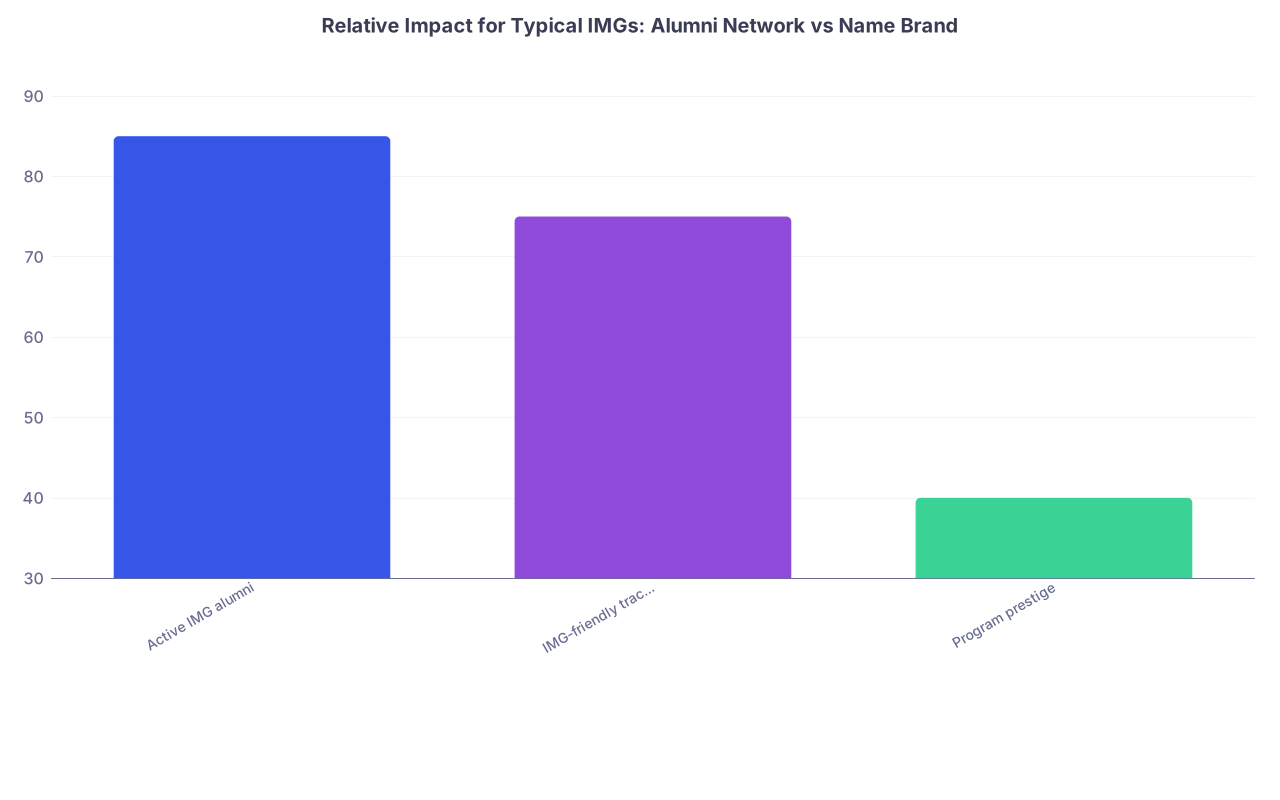
| Category | Value |
|---|---|
| Active IMG alumni | 85 |
| IMG-friendly track record | 75 |
| Program prestige | 40 |
Those numbers aren’t official statistics; they reflect what I’ve seen play out over and over: alumni and IMG-friendliness matter a lot more than pure prestige.
I’ve watched candidates with 225–230 Step 2 and strong alumni backing get interviews at mid-tier university programs, while 250+ test-takers with no network got filtered out at the same places. Not because 250 is “worse,” but because nobody brought their file to the top of the pile.
The three types of “name brands” and what they mean for IMGs
You can’t treat all big names the same. Some are IMG‑friendly; some are black holes.
| Program Type | Typical IMG Reality |
|---|---|
| Elite academic (top 10) | Rare IMGs, heavy US‑grad bias |
| Mid‑tier university | Variable; some very IMG‑friendly |
| Strong community affiliate | Often backbone for IMGs |
1. Elite academic powerhouses (think MGH, UCSF, Hopkins)
For 98% of IMGs, these are lottery tickets, not a strategy.
- Extremely US‑grad heavy
- Often “IMG‑neutral” on paper, but in practice: a handful of IMGs with insane CVs, US med schools, or very special research backgrounds
- Alumni network helps a little, but not enough if your numbers or profile aren’t already elite
If your school has a regular trickle of graduates into one of these places, different story. Then the alumni network + research + high scores might make it worth an attempt. But again: that’s because of the networked pipeline, not the brand by itself.
2. Mid‑tier university programs
This is where name and alumni start to mix.
Some of these:
- Take 20–40% IMGs
- Rely on specific international schools they “trust”
- Have faculty who trained abroad and understand the transition
Here, a prior match from your school can flip a program from cold to warm. PDs think in patterns:
- “We had a great resident from XYZ University” → they’ll open the door wider
- “We had problems with X school’s grads” → good luck breaking in
3. Strong community and university‑affiliated programs
These are the real workhorses of IMG matching.
- Often 50–80% IMGs
- Value work ethic, reliability, and clinical maturity
- Much more likely to answer a resident’s email about an applicant
Are they “famous”? Not usually. Will they train you to be a competent internist and get you into fellowship if you do well? Absolutely.
When alumni networks beat prestige (and when they don’t)
Let me be blunt: if you’re a typical IMG—Step 2 around 225–245, 1–3 years since graduation, average research—your match odds rise the most when you:
- Maximize applications to programs where alumni from your specific school are current residents or recent grads
- Prioritize documented IMG‑friendly tracks over aspirational brand names
Here’s how that plays out.
Scenario A: Chasing the big logo
Applicant 1: Caribbean grad, Step 2: 237, 3 years since graduation
Strategy:
- Applies to 15 “famous” IM programs with almost no IMG presence
- Minimal contact with alumni, generic emails, no strong connections
- Applies to 30–40 random community programs based on hearsay
Result: Few or no interviews at the big names; scattered interviews, higher chance of not matching or scrambling into a weak spot.
Scenario B: Riding the alumni network
Applicant 2: Same profile, Step 2: 237, 3 years since graduation
Strategy:
- Builds list around 40–60 IMG‑friendly IM programs
- From those, gives priority to 15–25 programs where alumni from their med school are current residents or recent grads
- Contacts these alumni directly, asks for honest fit feedback, and occasionally gets their name floated to PDs or chiefs
Result: More targeted interviews, better geographic and program fit, higher match probability. No big logo, but a real residency.
The second applicant isn’t “more qualified.” They’re better networked in an IMG‑relevant way.
How to actually use IMG alumni networks (step-by-step)
Hand‑waving “network!” advice is useless. Here’s what you should actually do.
1. Build a real alumni map
Don’t rely on rumors.
- Start with: your med school’s official alumni office, LinkedIn, Facebook groups, WhatsApp groups, school‑specific IMG match lists
- Track: Name, grad year, current role (PGY1–3, attending, fellow), program, and specialty
- Focus first on: Internal Medicine, Transitional Year, Preliminary Medicine programs

| Step | Description |
|---|---|
| Step 1 | List all residencies with alumni |
| Step 2 | Check program IMG-friendliness |
| Step 3 | Prioritize for application |
| Step 4 | Lower priority |
| Step 5 | Reach out to alumni |
| Step 6 | Ask for fit feedback |
| Step 7 | Adjust program list based on info |
This becomes your personal map of where you have a plausible path.
2. Analyze which programs are truly IMG‑friendly
For each program, don’t just look at their website fluff. Look at their resident roster.
Red flags:
- 95% US MD with one token IMG
- All IMGs from just 1–2 specific high‑powered foreign schools, none from yours
- No clear evidence of visa sponsorship despite vague “we consider all qualified applicants” language
Green flags:
- Multiple IMGs per class
- Variety of foreign schools represented
- Clear J‑1 (or H‑1B) sponsorship history if you need a visa
- Current resident photos where you can literally see IMG diversity
If you see IMGs from schools “like yours” in terms of reputation and geography, that’s even better.
3. Reach out the right way (without being annoying)
Here’s the basic outreach template I’ve seen work:
- Keep it short
- Be specific
- Respect their time
Something like:
Dear Dr. X,
I’m a final-year student / recent graduate from [Your Med School], currently applying for Internal Medicine for the 20XX Match. I saw that you are a resident at [Program] and also an alumnus of [Your Med School].
I wanted to ask two quick questions:
- How IMG-friendly is your program currently?
- Do you think my profile (Step 2: XXX, Y years since graduation, visa need: J‑1/H‑1B/none) is realistic for an interview there?
I’d really appreciate any brief guidance. I know you are busy, so even a short reply would be incredibly helpful.
Best,
[Name]
What this does:
- Signals you did your homework
- Gives enough data for a yes/no assessment
- Doesn’t ask for letters, positions, or miracles on first contact
Later, if the conversation goes well, they may:
- Offer to mention you to the chief residents
- Suggest how to frame your application
- Tell you flat‑out if a program won’t touch applicants with certain score/visa gaps
4. Weight alumni presence more than prestige in your rank list
Once you get interviews, it’s tempting to rank the “famous” name on top by default. Don’t be that predictable.
A program where:
- You have multiple alumni advocates
- The culture is known to be supportive to IMGs
- Graduates routinely match into fellowships you care about
…is usually a better long‑term bet than a more famous but rigid, US‑grad‑dominated place where you’ll be isolated.
But doesn’t prestige matter at all?
It does. Just later.
Prestige boosts:
- Fellowship applications (especially competitive ones: Cards, GI, Heme/Onc, PCCM)
- Certain academic or big‑city attending jobs
- Networking with subspecialists and researchers
But here’s the catch: programs that are strong in outcomes often aren’t the most famous names on Reddit. Plenty of mid‑tier universities and large community programs send people to good fellowships every year because their residents are well‑trained and supported.
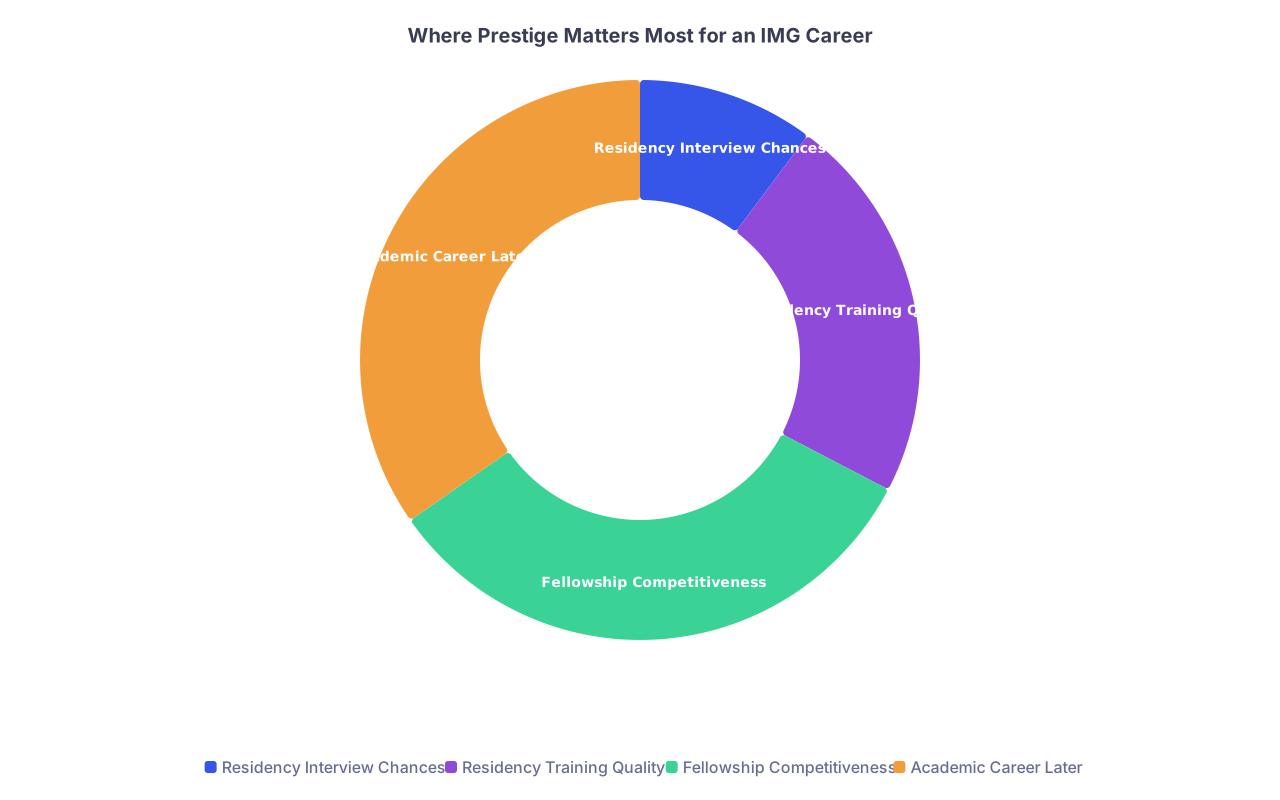
| Category | Value |
|---|---|
| Residency Interview Chances | 25 |
| Residency Training Quality | 55 |
| Fellowship Competitiveness | 80 |
| Academic Career Later | 85 |
So yes, a huge name can help—if you get in and succeed there. But as an IMG, you first need to ask: where can I realistically train, grow, and build a strong CV?
That’s usually where your alumni are.
Putting it all together: how to design your list as an IMG
Here’s a simple framework you can actually use.
Identify 20–40 clearly IMG‑friendly IM programs based on resident rosters.
From those, mark all programs where you have alumni from your school.
Sort them into three tiers in this order of priority:
- Tier 1: IMG‑friendly + alumni from your school
- Tier 2: IMG‑friendly + diverse IMGs (no alumni yet)
- Tier 3: Prestigious, less IMG‑dense programs where you still technically meet their usual cutoffs
Allocate applications something like:
- ~50% Tier 1
- ~35% Tier 2
- ~15% Tier 3 (your “reach” list)
You can flex the numbers, but the logic is non‑negotiable if you’re being rational about match odds.
Key takeaways
- For most IMGs, an active, school‑specific alumni network at a program matters more for actually getting interviews than the program’s national prestige.
- IMG‑friendliness plus alumni presence is a higher‑yield targeting strategy than chasing famous logos with no track record of taking people like you.
- Prestige helps later—fellowships, academic paths—but you need a solid residency first, and that usually comes from leaning hard into your IMG alumni network.