
It’s early November. You’re an IMG, staring at your ERAS dashboard.
Six interviews. All from “IMG-friendly” programs you found on some spreadsheet that every WhatsApp group passes around.
But here’s what’s gnawing at you:
Are these places actually good training environments that genuinely value IMGs?
Or are they just desperate for warm bodies to fill service lines nobody wants?
Let me be blunt. Program directors draw a very sharp line between “IMG-friendly” and “we’ll take anyone who fogs a mirror.” You don’t see that line from the outside. On their side of the table, it’s glaring.
I’ve sat in rooms where PDs have said, word-for-word:
“We are not becoming a dumping ground for people who couldn’t match elsewhere.”
And in other rooms:
“I just need bodies to cover nights. If they can pass Step 3 eventually, we’ll deal with it.”
Same specialty. Completely different culture.
You need to know which is which before you rank them. Because three years in a desperate program can wreck your career, your mental health, and your shot at fellowships.
Let me walk you through how PDs actually see this, and how you can tell—before you sign up for three years of misery.
How PDs Themselves Classify “IMG Programs”
Here’s the dirty secret: PDs do not call themselves “IMG-friendly.” That’s your language, not theirs.
Internally, they think in three rough buckets:
- Programs that strategically recruit high-quality IMGs
- Programs that are quietly dependent on IMGs to function
- Programs that are flat-out desperate and will take whoever matches
Nobody admits to being group 3. But their behavior screams it.
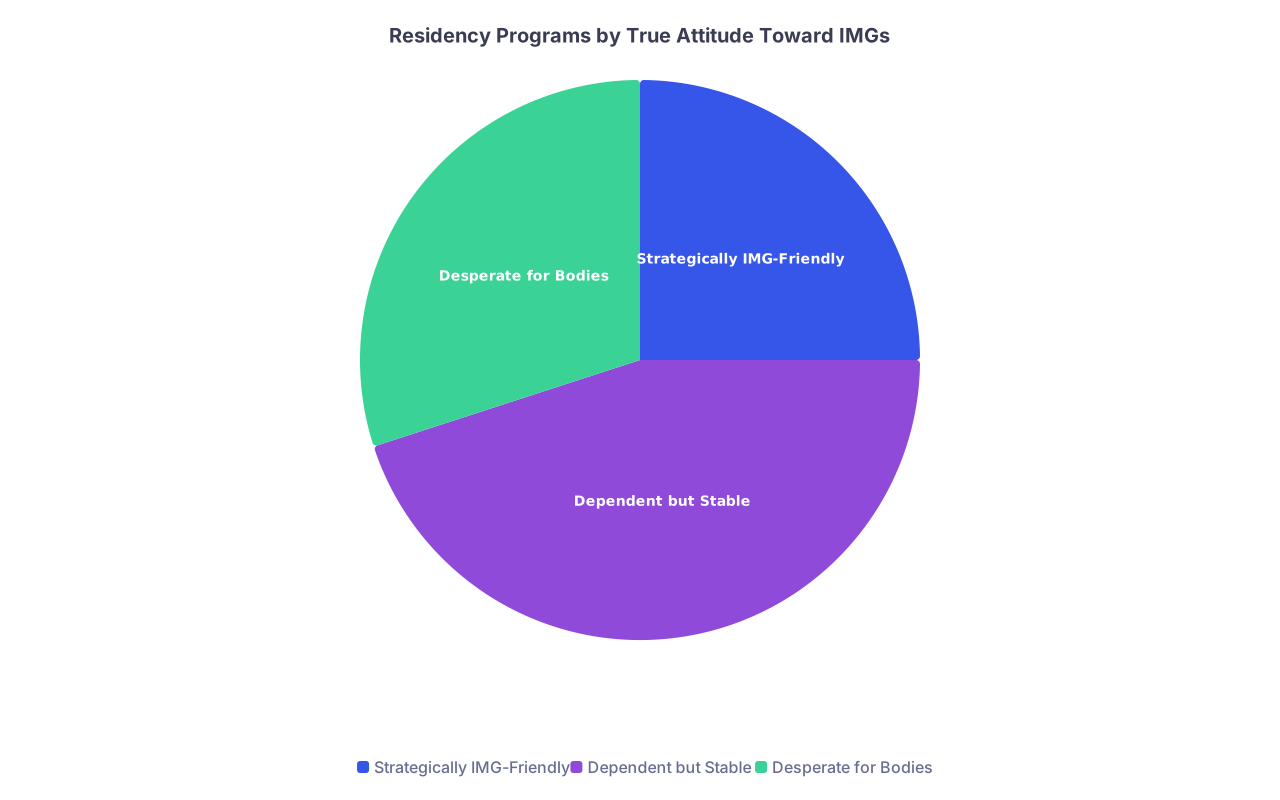
| Category | Value |
|---|---|
| Strategically IMG-Friendly | 25 |
| Dependent but Stable | 45 |
| Desperate for Bodies | 30 |
Those numbers aren’t from a paper; they’re from the backroom conversations: community IM, FM, prelim surgery, small transitional years, and some malignant neurology and psych shops that live on IMGs because US grads avoid them.
When PDs talk informally, you’ll hear phrases like:
- “We love IMGs; they’re some of our strongest residents.” → Usually group 1 or 2
- “US grads don’t want to come here, so…” → Group 2 shading into 3
- “I just need people who will show up and not quit.” → Group 3, full stop
Your job is to figure out which one is sitting across from you on interview day.
The Real Definition of “IMG-Friendly” from the PD Side
You think “IMG-friendly” means:
“They take IMGs and don’t discriminate.”
PDs think “IMG-friendly” means something else:
“We actively seek strong IMGs because we know they can be as good or better than US grads, and we can’t compete for top US students, but we still care about quality.”
There’s a big difference between recruits IMGs by choice and stuck with IMGs because no one else ranks them.
Strategic IMG-Friendly Programs Look Like This
Let me paint what these programs actually look like behind closed doors:
- The PD knows exactly which foreign schools are solid and talks about them by name. “We always look closely at applicants from Aga Khan / Ben-Gurion / St George’s / All India Institute.”
- They still screen. They’ll say things like, “We usually need Step 2 at least 220–230 for IMGs, and graduation within 5–7 years.” They don’t apologize for it.
- Faculty can actually name their IMG alumni who matched competitive fellowships. “Our former resident from Pakistan is at a cardiology fellowship at [X]; another is doing GI at [Y].”
- Their website is up-to-date. Resident photos not from 2016. Clear graduations and fellowships listed. No shame about their match lists.
These programs want you. But they want the best version of you. That’s good. That’s where growth happens.
“Desperate for Bodies” Programs Look Very Different
These programs have a completely different energy, and PDs know exactly what they’re doing:
- They accept anyone above “bare minimum” thresholds because they have to fill all spots. If they miss the quota? Hospital loses funding and coverage. Heads roll.
- They silently tolerate poor performance as long as you keep the service afloat. Late notes? Whatever. As long as you show up for nights.
- Turnover is high. Residents leave, transfer, quit, or get terminated. But they never talk about it publicly.
- They lean on visa-dependent residents because they know you’re trapped. PDs will literally say off-record: “At least they can’t leave mid-year.”
If a program consistently ends up on the NRMP SOAP list year after year, and they’re majority IMG, do not kid yourself. That’s not “friendly.” That’s dependence.
How To Tell the Difference Using Public Data
You can spot a lot without ever setting foot there. I’m going to give you the exact filters PDs use when judging other programs.
1. SOAP and Fill Rates
If a program routinely goes unfilled and scrambles in SOAP every year, PDs assume:
- Reputation is bad
- Training is weak
- Workload vs support is terrible
An occasional SOAP year happens—even to decent programs—if they overestimate their competitiveness. But a pattern means something is structurally wrong.
2. Board Pass Rates and ACGME Citations
This part programs try to downplay, and applicants rarely bother to check. But PDs look.
ACGME accreditation letters, RRC whispers, and “informal feedback” all circulate among PDs. They know:
- Who has residents failing boards year after year
- Who has “areas for improvement” that sound suspiciously like “your residents are unsafe”
- Who’s on warning or has been put on probation before
You can’t see the ACGME letters. But you can look at board pass rates and program histories. Chronic sub-90% pass rates in non-competitive specialties—big red flag, especially if it’s an IMG-heavy community program.
| Signal Type | Red Flag Example | Healthier Sign Example |
|---|---|---|
| SOAP History | Unfilled 3+ years in a row | Rare or no SOAP use in last 3–5 years |
| Board Pass Rate | <85% over several years | ≥90–95% consistently |
| Alumni Outcomes | No clear fellowships/jobs listed | Track record of fellowships and hospital jobs |
| Website Updates | Outdated residents, old photos | Current classes, updated leadership info |
| Reputation Talk | “People leave there” whispered around | Other PDs praise certain grads from that place |
3. Faculty Stability
PDs talk about each other the way you and your classmates gossip about attendings.
If a program has:
- New PD every 2–3 years
- APDs cycling in and out
- Chaos in scheduling and policies
That tells you something: leadership is unstable, and usually the hospital is squeezing the program to function as cheap labor.
Stable leadership that sticks around more than 5–7 years? Usually means they’re at least trying to run a real educational program, even if it’s not fancy.
On Interview Day: What PDs Reveal Without Realizing
Once you’re in the interview, you’re not powerless. You can extract a shocking amount of truth from what they casually say—or don't.
How Desperate Programs Talk
PDs at desperate-for-bodies shops will keep saying some version of:
- “We are very busy, you will see a lot of pathology.” Translation: You will be crushed with service work and little structured teaching.
- “We are like a family here.” Sometimes true. Sometimes code for, “We trauma-bond over how bad it is.”
- “Our residents are very independent.” Often means you will have attending coverage on paper but not in reality.
Listen for obsession with:
- Coverage
- Hours
- “Not being afraid of hard work”
And glaring lack of:
- Specifics about teaching
- Evidence of scholarly activity
- Real stories about graduates moving on to good positions
That’s a service program masquerading as a training program.
How Strategic IMG-Friendly Programs Talk
Different tone. Very different.
You’ll hear:
- “Our residents have 2–3 hours of protected didactics per week.” And they can tell you when and how it’s protected.
- “We had grads go into cardiology at X, heme-onc at Y, hospitalist jobs at Z.” Names, places, years. Not vague.
- “We prefer IMGs from schools that prepare students well for board exams.” They speak about quality, not “we’ll take anyone.”
These PDs bring receipts. They have concrete answers. They’re not shy about their expectations, and they don’t try to oversell the program as a warm fuzzy family. They talk about outcomes.
The Visa and Contract Trap: What PDs Won’t Say Out Loud
This part is ugly, but you need to hear it.
Programs that are desperate for bodies know:
- You’re on a visa
- You can’t easily leave
- You’re terrified of being dismissed because that might end your ability to stay in the country
Some PDs exploit this. Not all. But I’ve heard the conversations:
“He’s J-1, he’s not going anywhere.”
“She will tolerate the schedule; she does not want to go back.”
At those places, IMGs are not just residents. They’re leverage.
The signs:
- Very high proportion of visa-dependent residents and almost no US grads
- Poor support with visa paperwork, frequent “delays,” always your fault
- Threats or pressure tied to contract renewal: “We’ll see if we renew you, depending on how much you improve” with zero clear metrics
Healthy IMG-friendly programs:
- Are transparent about visa sponsorship
- Initiate paperwork on time
- Have had multiple successful visa renewals for prior residents
- Don’t dangle your immigration status as a behavioral tool every week
Ask upper-levels—privately—how the program handles visas when things go wrong. Their faces will tell you the truth faster than their words.
What PDs Actually Look For in IMGs (At Good vs Bad Programs)
Here’s where you probably underestimate yourself. PDs at good IMG-friendly programs are sometimes more impressed with a strong IMG than a middle-of-the-road US grad.
What Serious Programs Value
In strategic, serious programs, when they see a strong IMG file, the PD’s inner monologue sounds like:
- “Graduated within 5 years, solid Step 2, good English, US clinical experience in similar setting. This person will be fine.”
- “They did real medicine back home—this person will hit the ground faster than some US grads.”
- “They won’t be entitled. They’ll work and be grateful for opportunities, but we’ll owe them real training in return.”
They don’t care that you didn’t go to a US med school. They care whether:
- You’ve shown you can handle US-style documentation and communication
- You’ve passed boards on the first attempt with decent scores
- You show maturity and stability, not chaos and drama
What Desperate Programs Care About
At the most desperate programs, the calculation is more brutal:
- “Did they pass Step 2 eventually?”
- “Will they show up on time?”
- “Do they seem likely to quit?”
If the bar is that low, the training will match it. You might think the lower bar helps you get in. It does. But you’ll pay it back for years in poor fellowship opportunities and a constant fight to prove you’re competent.
How To Evaluate an Offer Like an Insider
You don’t have the full backchannel PD network. Fine. But you can approximate it if you act like one.
Look at the Resident Roster Like a PD Would
Pull up the current residents page and ask yourself three questions:
- Is this a mix of backgrounds, or 90–100% non-US grads, all from lower-tier Caribbean or very small foreign schools?
- Do the PGY-3s and PGY-4s have clear next steps listed (jobs, fellowships)?
- Does the pattern look stable or chaotic (lots of “former residents” missing from photos or bios)?
Balanced programs often have:
- A mix of US MD, US DO, and IMGs
- Some consistent pipeline from certain IMG schools they trust
- Clear sense that people graduate and move on successfully
Extremely skewed programs—100% IMG, constant turnover—usually mean something else. Often “no US grad wants to be here.”
Use Alumni Outcomes as Your North Star
Look up names of graduates on LinkedIn, Doximity, PubMed.
If you see:
- Hospitalist jobs in decent health systems
- A sprinkling of fellowships
- Stable employment patterns
You’re probably looking at a program that trains well enough and has some respect.
If you struggle to find any trace of alumni beyond “practicing somewhere in the middle of nowhere” or you can’t find them at all—that’s a concern. PDs notice the same thing.
A Quick Reality Check: You Won’t Get Perfection
Let me ground this.
If you’re an IMG with:
- Low Step scores
- Old graduation
- Weak or no US clinical experience
You’re not choosing between Mass General and a mid-tier community hospital. You’re choosing between:
- A lower-prestige but functional, decently run community program that expects you to hustle and improve
- A frantic, understaffed, desperate program that’ll take you easily and then eat you alive
I’ve seen IMGs try to “game” the system by aiming only for the most desperate programs because “at least I’ll match.”
Three years later they’re emailing anyone with a pulse, begging for help getting a hospitalist job or fellowship, trying to explain away their poor training environment.
The question you should ask yourself:
“Is matching anywhere worth three years in a place that might permanently cap my ceiling?”
Sometimes the answer is yes. You have life circumstances, immigration realities, financial pressures. I’m not judging that. But go in knowing which type of place you’re walking into.
A Simple Checklist: Friendly vs Desperate (Read This Before You Rank)
Use this as a blunt instrument. Not perfect. But accurate more often than not.
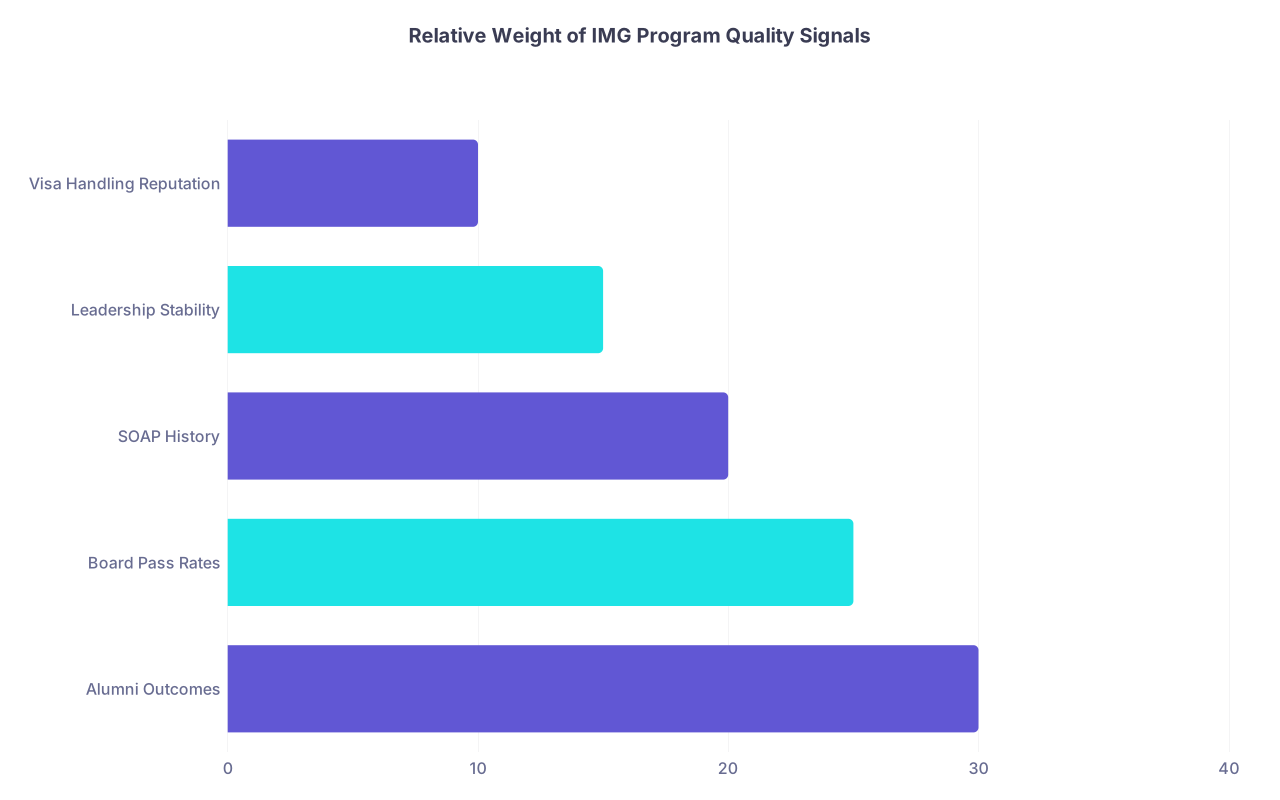
| Category | Value |
|---|---|
| Alumni Outcomes | 30 |
| Board Pass Rates | 25 |
| SOAP History | 20 |
| Leadership Stability | 15 |
| Visa Handling Reputation | 10 |
Ask yourself, for each program:
- Do they have a track record of graduates getting decent jobs and fellowships?
- Are board pass rates and ACGME status solid?
- Do they avoid chronic SOAP dependence?
- Is leadership stable and respected by residents?
- Are current residents cautious but not terrified when they talk privately?
If most answers are yes → likely “IMG-friendly but serious.”
If most answers are no → you’re drifting into “desperate for bodies” territory.
FAQs
1. Is it always bad to join a “desperate for bodies” program if it’s my only option?
Not always. If it’s literally your only path into US training and your alternative is never practicing here, it might be a rational choice. But you need a strategy from day one: crush Step 3, overperform clinically, build strong relationships with a few good attendings, and plan your exit. Some residents claw their way out to decent jobs despite the environment. Just do not romanticize it. It will be harder, and the burden will be on you, not the program.
2. How many SOAP years in a row should make me avoid a program?
Two or more consecutive years of unfilled positions in a non-competitive specialty is a serious red flag. One SOAP year you can sometimes explain (new PD, misjudged rank list, local hospital drama). But persistent underfilling tells you PDs and applicants both know something’s wrong. If they’re also majority IMG and have poor board pass rates, I’d avoid if you have any other option.
3. Do PDs really see strong IMGs as equal to US grads?
In the better IMG-friendly programs, yes. I’ve heard PDs say, verbatim: “Our best residents last year were both IMGs.” They care about reliability, clinical reasoning, communication, and test performance. A focused, mature IMG with good US experience and strong letters will absolutely outrank a mediocre US grad in many PDs’ minds, especially in community and mid-tier academic programs. In desperate programs, though, they barely differentiate—you’re all coverage first, residents second.
4. How can I safely ask residents about the “desperate” issues without sounding rude?
You do not ask, “Is this a malignant program?” That’s amateur. Instead, ask specific reality-based questions: “How often do people leave or transfer out?” “How supported do you feel when things go wrong?” “How is the program when someone struggles on boards?” “Do you feel like education is protected, or does service always win?” Listen to what they say—and what they avoid saying. Hesitation, nervous laughter, or “We’re like a family” repeated three times are not good signs.
5. I have a low Step 2 and older YOG. Should I still try for the more serious IMG-friendly programs?
Yes. You don’t lose anything by applying if they don’t have hard filters you obviously fail (like “YOG within 5 years”). Many PDs will overlook a low score or older graduation if the recent story is strong: good US clinical experience, strong letters from US attendings, clear improvement, and mature interviews. Apply broadly, but when the dust settles, do not assume the easier acceptance equals the better program. Look at outcomes and patterns, not just who said yes first.
If you remember nothing else: Programs that truly value IMGs talk constantly about training, outcomes, and growth. Programs that are desperate for bodies talk constantly about coverage, workload, and “not being afraid of hard work.” Learn to hear that difference. Your future depends on it.