
You’ve just opened a spreadsheet with 20+ potential observerships. Half are famous “IMG-friendly” names you see on every forum list. The others are random community hospitals your uncle’s friend might get you into. You can afford maybe 2–3 rotations. And you’re stuck on the core question:
Should you only do observerships at known IMG‑friendly programs, or does that strategy actually backfire?
Here’s the direct answer:
It is not smart to limit yourself only to big-name IMG‑friendly programs. You want strategic observerships, not just “famous IMG‑friendly” ones. Sometimes the “no-name” community hospital will do far more for your application than the brand everyone chases.
Let’s break this down properly.
1. What “IMG-Friendly” Actually Means (and What It Does Not)
People throw around “IMG-friendly” like it’s a magic label. It is not.
In practice, a genuinely IMG-friendly program usually means:
- They regularly take several IMGs per year. Not just one outlier.
- Their current residents include IMGs (US and/or non-US).
- Their filters do not automatically destroy IMG applications (e.g., “US grads only” or “Only LCME schools”).
- Faculty do not say things like “We tried an IMG once; it didn’t work out.”
, No US-Grad Filter, Multiple IMGs Per Class](https://cdn.residencyadvisor.com/images/articles_svg/chart-indicators-a-program-is-img-friendly-7084.svg "Indicators a Program Is IMG-Friendly")
| Category | Value |
|---|---|
| IMG Residents Present | 85 |
| [Clear Visa Support](https://residencyadvisor.com/resources/img-friendly-residency-programs/should-i-prioritize-visa-support-or-reputation-as-an-img-applicant) | 70 |
| No US-Grad Filter | 60 |
| Multiple IMGs Per Class | 75 |
On the other hand, “IMG-friendly” does not mean:
- You have any real advantage just by doing an observership there.
- They will automatically interview you because you rotated there.
- Every attending is supportive.
- The program is good for your profile and future goals (academic vs community, fellowship interest, etc.).
I’ve seen too many IMGs burn time and money chasing 1–2 famous community programs that appear on every “Top IMG-Friendly” list, then end up with generic letters and no interview. Meanwhile, someone who rotated at a smaller, less-known hospital gets:
- 2 strong, detailed LORs
- A PD who calls another PD on their behalf
- An interview plus a realistic shot at ranking high
That’s the difference between chasing reputation and playing to leverage.
2. What Actually Makes an Observership “Worth It”?
Strip away the noise. An observership is “worth it” only if it gives you at least one of these:
- A strong, detailed US clinical LOR in your chosen specialty
- A real advocate who will remember you and answer calls/emails about you
- US system exposure you can talk about intelligently in interviews
- A program that has a path from observer → interview (ideally → resident)
If the answer to all four is “unclear,” I do not care how “IMG-friendly” the program is supposed to be. You’re just standing on rounds watching people write in Epic.
So, when you’re deciding between programs, ask direct questions (and yes, you should actually email or call and ask):
- Do former observers from your hospital ever match here? In what specialties?
- Do observers typically get LORs, and from whom?
- How much direct exposure will I get to residents and attendings?
- Who will be my supervising physician? Will I be able to ask them for a letter?
Programs that are truly IMG supportive often answer these questions clearly and positively. Programs that just like your money will dodge or give vague, useless answers.
3. Should You Prioritize Known IMG-Friendly Programs?
Short answer: You should prioritize programs where your observership can realistically translate into LORs, advocacy, and interview chances. Sometimes that’s the famous IMG-friendly place. Often it’s not.
Here’s where IMG-friendly reputations help:
- They’re more likely to have systems for observers (badges, EMR shadowing access, schedules).
- They’ve seen IMG applications before and know how to interpret your background.
- They might have a history: observers → interview → match.
But here’s what people forget: those same places are often saturated with IMGs doing observerships. You’re one more quiet observer on rounds. Getting noticed is harder.
At a smaller or less famous site, you might be:
- The only observer that month
- The only IMG some residents have ever worked with
- The person who gets invited to teach, present, or help with a QI project
Translation: better stories, better letters, better advocacy.
4. Comparing Types of Programs for Observerships
Let’s compare three common targets:
| Site Type | Pros | Cons |
|---|---|---|
| Big-name IMG-friendly | Structure, known to PDs, many IMGs | Crowded, harder to stand out, generic LORs |
| Mid-sized community with IMGs | Good access to attendings, realistic match odds | Less name recognition |
| Small community/no-name | Easy to stand out, strong relationships | May not help if no IMG track record |
Here’s how I’d rank priorities for most IMGs:
Mid-sized community or university-affiliated programs
- Already take IMGs
- Residents and attendings actually have time to know you
- LORs from these places are usually specific and believable
Larger known IMG-friendly programs
- Good for at least one high-recognition LOR
- Useful if you can secure a strong letter from a PD or well-known faculty
Tiny places with zero IMG history
- Worth it only if:
- You have a strong personal connection, and
- They’re willing to write detailed letters and advocate
- Worth it only if:
5. How Many “Known IMG-Friendly” Observerships Do You Actually Need?
You don’t need four rotations at the same famous IMG-friendly brand.
For most applicants, something like this is enough:
- 1 observership (or externship/elective) at a known or university-affiliated program
- 1–2 observerships at solid community programs with a track record of IMGs
- Anything beyond that should be chosen for specific benefits:
- PD letter
- Specific fellowship interest
- Real chance of interview at that exact program
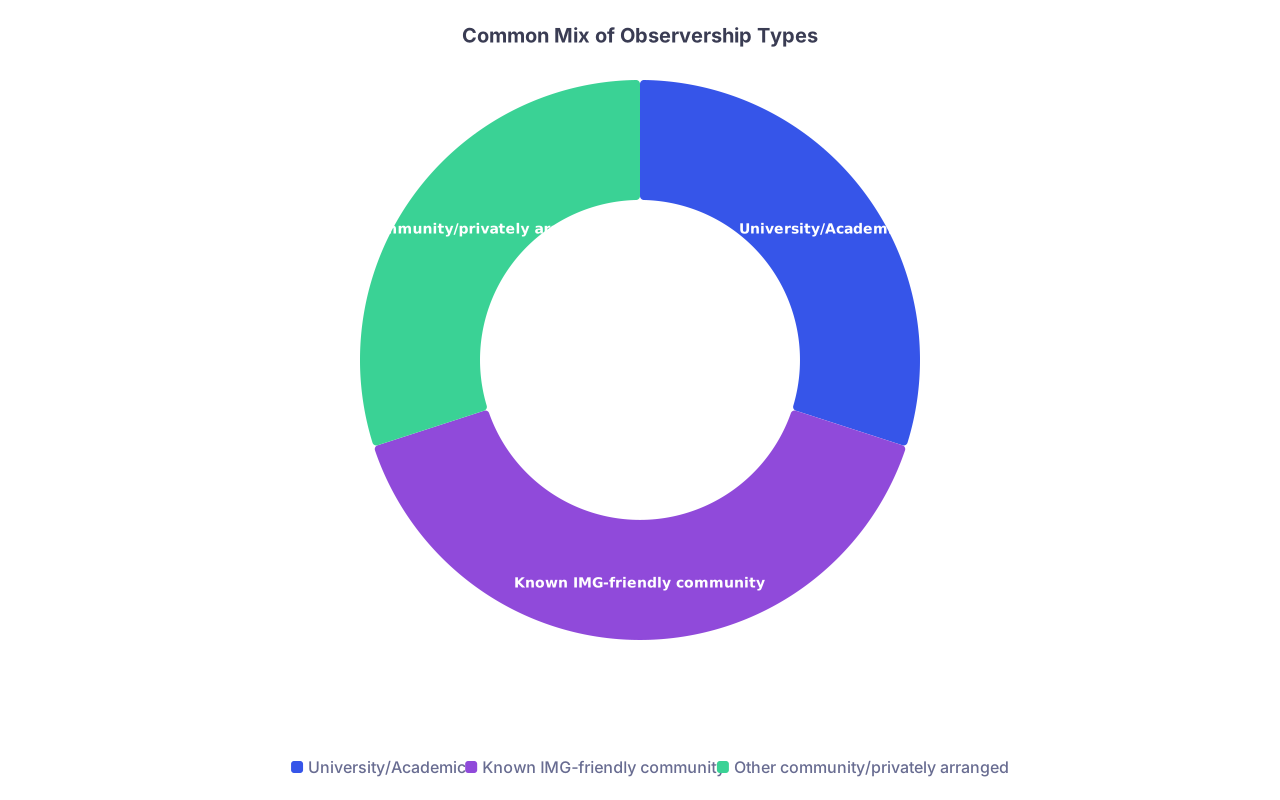
| Category | Value |
|---|---|
| University/Academic | 30 |
| Known IMG-friendly community | 40 |
| Other community/privately arranged | 30 |
If you can only afford one observership, and you’re choosing between:
- A big-name “top 10 IMG-friendly” hospital
- A mid-sized community program where you’ve been promised real responsibilities and PD contact
I’d pick the mid-sized one in most cases. The exception: if your Step scores and CV are very strong and you’re aiming at academic or competitive programs, then one academic/known site can be very powerful.
6. How Observerships Actually Convert to Interviews
Most IMGs overestimate the “observership → automatic interview” effect. It doesn’t work like that.
Here’s the realistic path:

| Step | Description |
|---|---|
| Step 1 | Observership |
| Step 2 | Strong work ethic |
| Step 3 | Attending notices you |
| Step 4 | Detailed LOR |
| Step 5 | PD or faculty remembers your name |
| Step 6 | ERAS application reviewed closely |
| Step 7 | Interview invite more likely |
Key phrase: more likely. Not guaranteed.
Your proximity to power matters. If your observer experience has you working closely with:
- Program Director
- Associate PDs
- Chief residents
- Highly respected faculty in that specialty
…your odds go up sharply. If you’re with a random hospitalist who never interacts with the residency office, your name may never reach the decision-makers.
So, when you’re evaluating “Is this well-known IMG-friendly observership worth it?” ask:
- Will I interact with PD or core faculty?
- Will my supervisor write letters regularly for observers?
- Do they know how to “sell” IMGs to PDs?
If you hear: “We don’t guarantee letters,” or “You’ll mostly watch on rounds,” and there are 5–10 observers at a time? That’s a red flag.
7. Decision Framework: Should You Choose a Known IMG-Friendly Site or Not?
Use this quick test. Between two options, ask these 5 questions:
- Which site has clear evidence of IMGs matching into the specialty I want?
- Where will I have the closest relationship with attendings/PDs?
- Where am I more likely to get at least one strong, narrative LOR?
- Which site’s name will help me more given my current profile (scores, school, research)?
- Where can I actually stand out?
If the famous IMG-friendly place only wins on “name,” but the smaller program wins on 3–4 of the other questions, you already know the right answer.

8. Example Scenarios (So You Can See the Tradeoffs)
Scenario 1: Low step scores, strong clinical skills
You: Step 1 pass, Step 2 222, internal medicine applicant, good bedside skills, average research.
- Option A: Famous IMG-friendly community IM program, 8 observers at a time, no guaranteed letters.
- Option B: Mid-sized community program with 40% IMG residents, PD known to call colleagues, you’d be their only observer that month.
You should pick Option B. You need advocacy and specific letters more than a logo.
Scenario 2: Strong scores, aiming for academic career
You: Step 2 250+, multiple publications, wants academic IM with fellowship.
- Option A: University-affiliated “IMG-neutral” program with mostly US grads but some IMGs, known research output.
- Option B: Purely community IMG-friendly program known for matching IMGs, little research.
Do at least one rotation at Option A. You can supplement with an IMG-heavy community site, but you need an academic letter.
Scenario 3: Very limited budget
You: Can afford only 1 observership total.
- Option A: $3500 fee at a big-name IMG-friendly site with 10+ observers.
- Option B: $800 at a regional community program where your cousin is a resident and the PD already agreed to meet you.
Pick Option B. The extra $2700 for brand name with zero guaranteed relational advantage is usually a bad trade.
9. Practical Steps: How to Select and Use Observerships Wisely
Here’s a simple approach that works:
Build a target list of 10–15 programs
- Mix: some known IMG-friendly, some mid-sized community, at least a couple university-affiliated if possible.
Check actual IMG presence
- Look at current residents on the website. Are there IMGs? From where? How many?
Email coordinators and ask very specific questions
- “Do former observers ever match here?”
- “Do observers typically receive letters of recommendation?”
- “How many observers are there at one time?”
Match sites to your profile
- Strong scores and research → include at least one academic or university-affiliated rotation.
- Weaker scores → prioritize places with known IMG intake and reachable PDs.
On rotation, behave like an unofficial sub-intern
- Know the patients, labs, imaging.
- Ask smart questions, offer help in practical ways.
- Ask for feedback before asking for a letter.
When asking for LORs, be direct
- “Do you feel you know my work well enough to write a strong, detailed letter for my internal medicine residency applications?”
- If they hesitate, that’s a no. Move on.
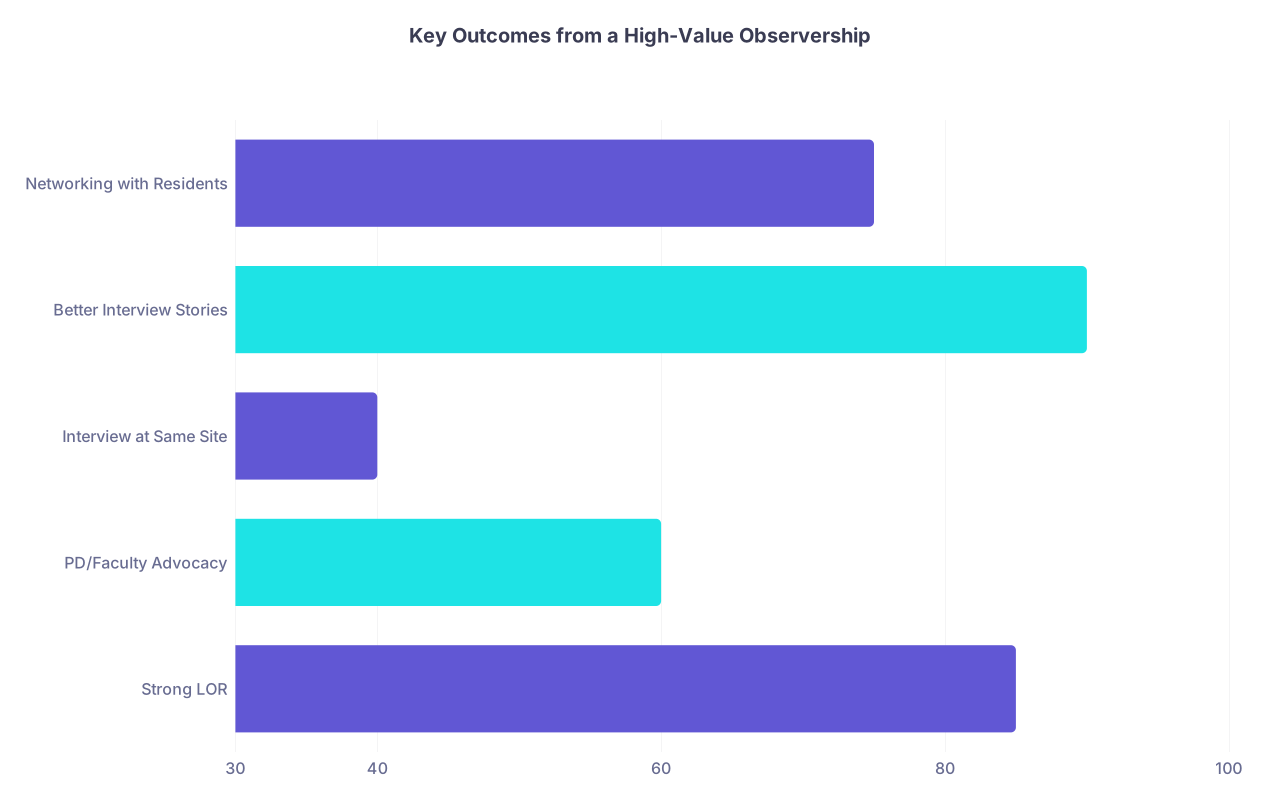
| Category | Value |
|---|---|
| Strong LOR | 85 |
| PD/Faculty Advocacy | 60 |
| Interview at Same Site | 40 |
| Better Interview Stories | 90 |
| Networking with Residents | 75 |
10. Bottom Line: Is It Worth Doing Observerships Only at Known IMG-Friendly Programs?
No. That’s a narrow and usually inefficient strategy.
Here’s the clearer position:
- You need at least one rotation that has decent name recognition or is clearly structured and serious about education.
- But you should not ignore smaller or less-known programs that can give you better letters, more responsibility, and real advocacy.
- The right mix depends on your scores, research, budget, and long-term goals.
Known IMG-friendly programs are one tool, not the whole strategy. Use them if they actually move your application forward—letters, interviews, connections—not just because people on WhatsApp groups say the name a lot.

FAQ (7 Questions)
1. Do observerships at IMG-friendly programs guarantee an interview at that program?
No. At best, they raise the probability if you stand out and secure a strong letter or direct PD support. Plenty of observers never get interviews from the same place they rotated.
2. Is a letter from a small community hospital worse than one from a big-name IMG-friendly place?
Not if it’s detailed and enthusiastic. A specific, narrative-heavy letter from a community attending who worked closely with you is often more powerful than a generic “good observer” letter from a famous hospital.
3. How many observerships should an IMG aim for before applying?
For most IMGs: 2–3 US rotations in the target specialty is reasonable. More is not always better. Focus on quality: strong LORs and relationships beat sheer number of observerships.
4. If a program has no IMGs currently, should I avoid doing an observership there?
Not automatically. But be skeptical. Ask whether they’ve taken IMGs before, whether they support visas, and how they treat observers. If they’ve never taken IMGs and have no visa support, observership value drops a lot.
5. Is it better to have all observerships in one specialty or mix different ones?
If you’re sure about your specialty (e.g., internal medicine), it’s better to keep most observerships in that field. PDs want evidence you understand and are committed to that specialty. One out-of-specialty rotation is fine; three or four looks unfocused.
6. Do paid observerships at big IMG-friendly programs look worse than unpaid or “free” ones?
PDs know most observer programs charge something. They care much more about what you did and who is writing your letter than about whether you paid a fee. Overpriced programs with no real mentorship are the actual problem, not the concept of fees.
7. I have one academic observership offer and one from a community IMG-friendly program. Which should I do first?
Do the one where you’re most likely to perform well and get a strong letter first. Your first US rotation is often where you’re most motivated and fresh. If both are equal, start with the community site to build confidence, then go to the academic site armed with US-system experience.
Key takeaways:
- Do not limit yourself only to famous IMG-friendly observerships; prioritize places where you can get strong LORs, relationships, and realistic interview chances.
- A strategic mix—one recognized/academic site plus one or two solid, IMG-accepting community programs—is far more effective than chasing brand names alone.