
The biggest mistake IMGs make on interview day is asking safe, generic questions and never actually finding out: “Will this program really support me as an IMG?”
You’re not there just to impress them. You’re there to investigate them.
Below is the question set you should walk in with—organized, practical, and targeted specifically to IMGs who want to know the truth about support, not brochure-level fluff.
1. Questions About IMG Track Record (Do They Actually Match and Graduate IMGs?)
If a program has no real history of supporting IMGs, all the “we love diversity” talk is background noise.
You want to know: Have people like you actually succeeded here?
Ask these directly:
- “How many IMGs are currently in your program, and in which PGY levels?”
- “In the last 3–5 years, what percentage of your matched residents have been IMGs?”
- “Do IMGs here typically graduate on time and move on to fellowships or good jobs?”
- “Have any IMGs struggled or not completed the program, and what did you learn from that?”
That last question feels bold, but it’s gold. Programs that truly support IMGs can talk honestly about struggles and how they responded. Programs that get defensive or vague? Red flag.
If you want to compare programs quickly, track their answers like this:
| Metric | Good Sign | Red Flag |
|---|---|---|
| % IMGs in current class | 20–60% (depending on specialty) | 0–1 token IMG |
| Years consistently taking IMGs | 3+ years in a row | One year only / “rarely” |
| IMG graduation rate | Almost all graduate | Several “attritions” |
| Fellowship/job placement for IMGs | Comparable to AMGs | IMGs mostly unmatched jobs |
You are not being “difficult” by asking these. You’re being smart.
2. Questions About Visa and Immigration Support (Real Help or You’re On Your Own?)
Many IMGs get burned here. The program sounds supportive, then the GME office is clueless about visas, or they will “only sometimes” sponsor.
You need clarity, not vibes.
Ask the program director or coordinator:
- “What visas do you routinely sponsor for residents? J‑1, H‑1B, or both?”
- “How many of your current residents are on visas, and which types?”
- “Who handles the visa paperwork—your GME office, an outside lawyer, or do residents manage it themselves?”
- “Have any residents ever had visa issues that disrupted training? How was that handled?”
- “If an H‑1B is possible, what are the typical requirements (Step 3, timing, etc.)?”
Follow up with this:
- “If there are delays with ECFMG certification or visa processing, how flexible is the program with start dates?”
You’re listening for specifics. Names of offices. Steps in the process. Timelines. Programs that actually support IMGs know this cold.
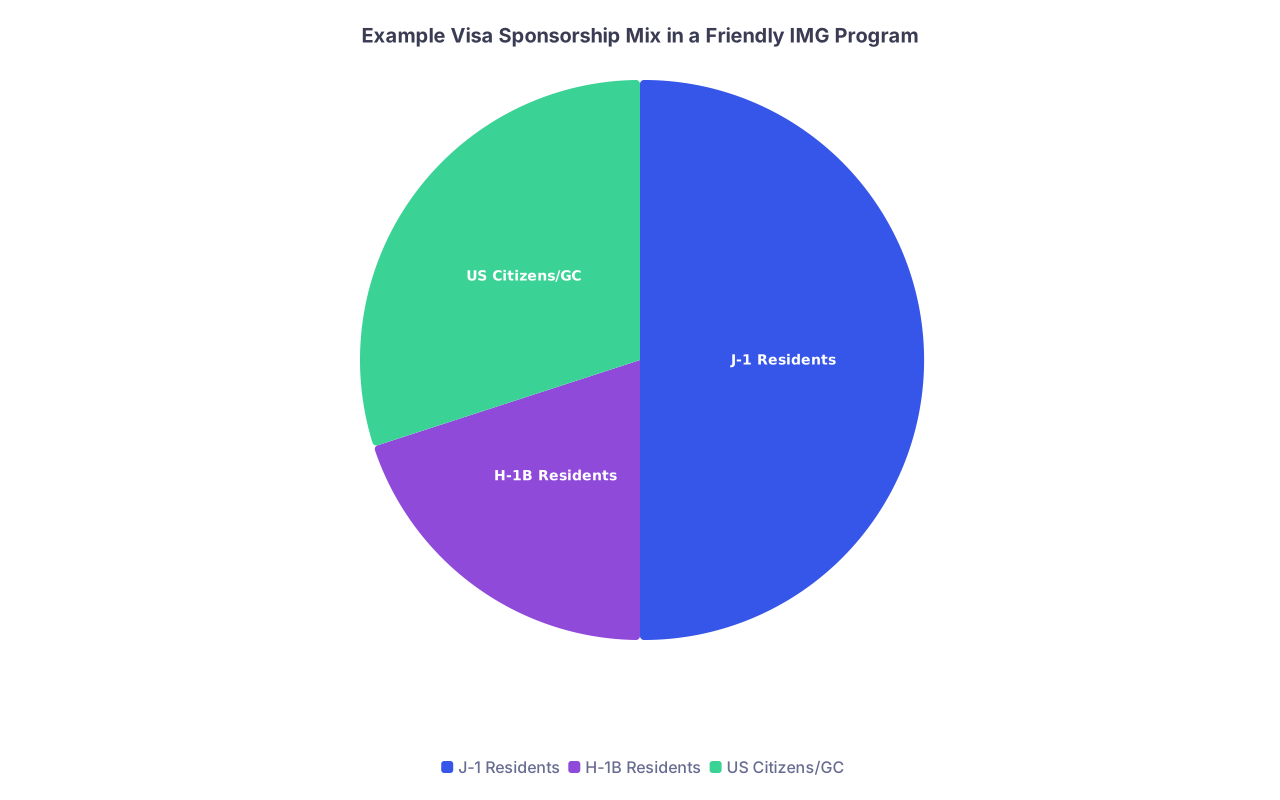
Here’s a quick way to visualize how programs differ:
| Category | Value |
|---|---|
| J-1 Residents | 50 |
| H-1B Residents | 20 |
| US Citizens/GC | 30 |
If they “technically” sponsor but have only ever had one J‑1 in 10 years, that’s not a robust system. It’s a one-off exception.
3. Questions About Academic and Clinical Support (How Do They Help IMGs Adjust?)
IMGs often need extra support with:
- Documentation and EMR style
- US clinical norms and communication
- Writing notes the way attendings expect
- Understanding “unwritten rules”
You need to know if the program acknowledges this reality and has systems to help.
Ask:
- “Do you have any formal onboarding or boot camp focused on US clinical systems, documentation, and EMR?”
- “For new IMGs, how do you support the transition to US-style patient care and communication?”
- “How is feedback given during the first 3–6 months? Is there structured feedback or only informal?”
Push for concrete examples:
- “Can you describe a situation where a new IMG was struggling and what the program did to help them improve?”
- “Are there any faculty or chief residents specifically designated as IMG mentors or liaisons?”
Bad sign: “We just treat everyone the same.” That sounds fair but usually means, “We have no extra support, good luck.”
4. Questions About Wellness, Burnout, and Workload (Support When Things Get Hard)
You will get tired. You will have days you feel behind. The question is not “Will I struggle?” but “What happens when I do?”
Ask current residents (not just leadership):
- “If a resident is overwhelmed academically or personally, what actually happens here?”
- “Have you seen anyone get real help—adjusted schedules, extra supervision, time off—when they needed it?”
- “Do interns feel safe admitting when they are struggling, or do people hide it?”
With leadership, be specific:
- “Have you ever modified a rotation, extended training, or provided formal remediation for an IMG? How did you support them during that time?”
- “If someone fails Step 3 or an in‑training exam, what’s the concrete plan?”
You’re watching for two things: examples and attitude. A good program will say something like:
- “Yes, we had a PGY‑1 from abroad who struggled with documentation, we paired them with a senior for 2 weeks, reduced their patient load temporarily, and set weekly check-ins.”
A bad program’s answer will sound like:
- “We expect everyone to meet our standards” and then a hard pivot to a different topic.
5. Questions About Culture, Bias, and Communication (Is This a Place You Can Belong?)
This one matters more than most IMGs think. Two years in, the problem often isn’t exam prep, it’s isolation and subtle bias.
You’re trying to answer: Will they respect my accent, my background, my different way of thinking?
Ask residents—preferably other IMGs first, then AMGs:
- “As an IMG, have you ever felt treated differently by attendings, nurses, or patients? How did the program respond?”
- “Is it easy to speak up, ask questions, or admit when you don’t know something, or do people get judged for that?”
- “Are there social events or spaces where IMGs actually feel included, not just invited?”
With leadership, ask:
- “How do you support residents who are adjusting to US culture, communication styles, and patient expectations?”
- “Have there been any formal DEI or cultural humility trainings that involve residents and faculty?”
If everyone tells you, “We’re like a family,” but can’t give a single specific example of how they handled conflict, bias, or a tough situation—that’s just marketing.
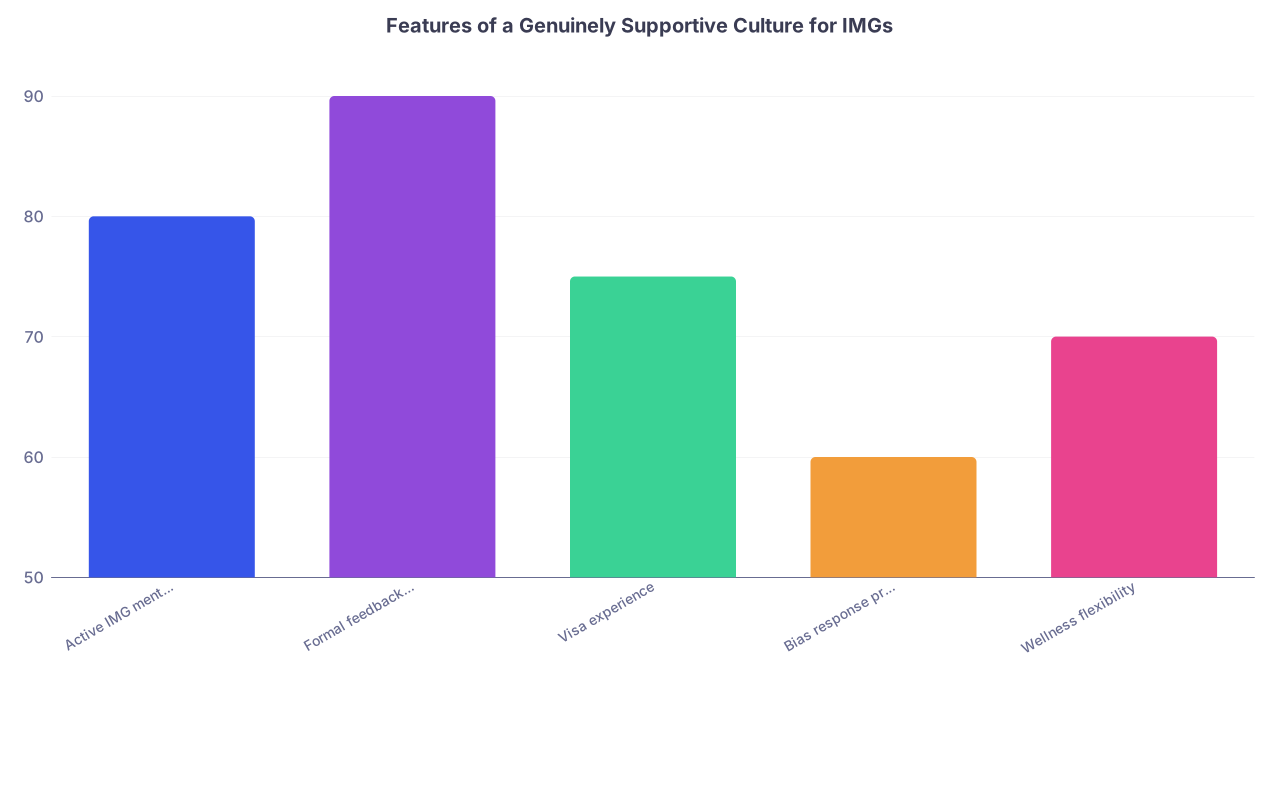
Here’s what real support culture looks like across programs:
| Category | Value |
|---|---|
| Active IMG mentors | 80 |
| Formal feedback system | 90 |
| Visa experience | 75 |
| Bias response process | 60 |
| Wellness flexibility | 70 |
(Think of these values as approximate “strength” levels. You want programs that score high on multiple items, not just one.)
6. Questions About Exam Support (Step 3, In‑Training Exams, Board Pass Rates)
For IMGs, failing Step 3 or boards can be disastrous for visa and career. You have to know if the program will help you pass, not just say “study harder.”
Ask the program director or chief residents:
- “What is your board pass rate over the last 3–5 years? Is it similar for IMGs and AMGs?”
- “Do you provide structured board prep—question banks, review courses, protected study time?”
- “How do you identify residents who are at risk of failing in‑training exams, and what support do you give them?”
- “For residents on visas, how does the program help with timing Step 3 to avoid any issues?”
Ask residents bluntly:
- “Did you feel supported in preparing for in‑training exams and boards, or was it mostly on your own time and money?”
Good programs know their numbers and have a system. Weak programs say “we encourage self-study” and leave it at that.
7. Questions About Mentorship and Career Support (Who’s in Your Corner?)
Support is not just about surviving residency. It’s about what happens after.
You want to know if IMGs actually get mentorship, letters, and opportunities.
Ask:
- “Do IMGs in this program match into fellowships or competitive jobs at a similar rate to AMGs?”
- “Are there specific faculty who have a track record of mentoring IMGs into fellowship or academic positions?”
- “How are mentors assigned—randomly, self-selected, or based on career interests?”
- “Can you give an example of an IMG graduate from this program and what they are doing now?”
If they can only name one “star IMG” from ten years ago, that’s not a pattern. That’s an outlier.
8. Questions About Logistics and Practical Life Support (Real-World Help, Not Just Academics)
Support is also very concrete: housing, childcare, transportation, time for immigration appointments, etc.
Ask residents:
- “How understanding is the program when you have visa appointments, immigration deadlines, or travel needs?”
- “Does the scheduling office work with you for religious holidays, cultural events, or family emergencies?”
- “Are there IMGs with families here? How do they cope with schedules, childcare, and call?”
Ask leadership:
- “Do you allow occasional schedule adjustments for immigration or consulate appointments?”
- “What resources exist for residents who are new to the US—help with housing, banking, getting a driver’s license, etc.?”
A supportive program doesn’t need to be perfect. But you should hear evidence that they’ve thought about this before you arrived.
9. How to Prioritize and Use These Questions on Interview Day
You’re not going to ask 40 questions in one day. You’d look like a cross-examining attorney.
Here’s a simple structure:
With Program Director/Associate PD:
- Track record of IMGs
- Visa and exam/board support
- Formal mentorship and remediation systems
With Chief Residents:
- How support looks in real life
- Culture, workload, feedback
- Examples of when residents struggled
With Current IMG Residents:
- Visa reality vs. promises
- Bias and culture
- Adjustment to US system and exams
Use a mental decision tree like this:

| Step | Description |
|---|---|
| Step 1 | Start Interview Day |
| Step 2 | Ask PD about IMG numbers and visas |
| Step 3 | Deprioritize program |
| Step 4 | Ask chiefs about workload and support |
| Step 5 | Ask IMG residents about culture and bias |
| Step 6 | Rank program higher |
| Step 7 | Consistent IMG history? |
| Step 8 | Real examples of support? |
| Step 9 | Would you feel safe and supported here? |
You’re essentially scoring each program on:
- Track record
- Systems
- Culture
If any one of those is terrible, think very hard before ranking them highly.
10. Quick Reference: Top 15 Questions to Definitely Ask About Support
If you want a compact “carry-in-your-pocket” list, use this:
- How many IMGs are currently in your program, and how long have you been consistently matching IMGs?
- What visas do you routinely sponsor, and how many current residents are on each type?
- Who specifically handles visa and immigration paperwork for residents?
- Do you have any structured orientation or boot camp focused on US clinical systems and documentation for new IMGs?
- How is feedback given in the first 3–6 months, especially for residents coming from different training systems?
- Can you share an example of an IMG who struggled and how the program supported them?
- What is your board pass rate for the last 3–5 years, and how do you support residents who score low on in‑training exams?
- Do IMGs here match into fellowships or secure good jobs at a rate similar to AMGs?
- Are there designated IMG mentors or faculty with a strong record of supporting IMGs?
- Have residents ever experienced bias or discrimination, and how did leadership respond?
- How flexible is the program with scheduling around immigration appointments or urgent personal issues?
- Do residents feel safe admitting when they are overwhelmed or behind?
- What protected or structured board prep resources do you provide?
- How does your program help residents adjust to US communication styles with patients, nurses, and consultants?
- Can you give an example of a recent IMG graduate and where they are now?
If you ask even half of these with confidence and genuine curiosity, you’ll learn more about support than many applicants ever do.
FAQ (Exactly 7 Questions)
Is it rude for an IMG applicant to ask about visa and immigration support directly?
No. It is necessary. Strong programs expect these questions from IMGs and will have clear, practiced answers. The programs that get awkward or vague are usually the ones that are disorganized or reluctant about visas.Should I ask about board pass rates and failures on interview day?
Yes, briefly and professionally. Ask for the overall board pass rate over a few years and how they support residents who struggle. You are not accusing them of failure; you are evaluating whether they have a safety net or just blame residents.Who is the best person to ask about cultural and day-to-day support—faculty or residents?
Residents, especially current IMGs. Faculty will describe policies. Residents will describe reality. Ask both, but trust the residents’ lived experience more when it comes to culture and daily support.What if I really like a program but they’ve had very few IMGs before?
Then you treat it as higher risk. Lack of IMG history does not automatically mean bad support, but it means you must push harder on questions about visas, onboarding, and how they’ve handled international hires in any role. Be cautious ranking such programs at the top unless you get very convincing, specific answers.How do I ask tough questions without sounding negative or confrontational?
Tone and framing. Start with curiosity and use neutral language: “How do you usually handle…?” or “Can you walk me through…” Ask about past examples instead of hypotheticals. Smile. Be direct but not emotional. Programs that dislike honest questions are not places you want to train.Should I bring a written list of questions into the interview?
Yes, that’s fine, especially for second-look or resident lunches. Keep it short and organized so you are not reading off a script. Glancing at a small notepad is normal and actually signals that you’re serious and thoughtful.How do I compare support across programs after interviews are over?
Right after each interview, sit down and score each program on three things from 1–5: IMG track record, structural support (visas, onboarding, exam help), and culture (how safe and included you’d feel). Use those numbers to sort your rank list. Do not rely on just “gut feeling” 3 weeks later when all the interviews blur together.
Open a fresh document right now and create three columns: “Track Record,” “Systems,” and “Culture.” As you schedule or complete each interview, fill in what you learn for each program under those three headings. If you cannot write anything specific under “Systems” or “Culture,” you did not ask enough questions—fix that at your next interview.