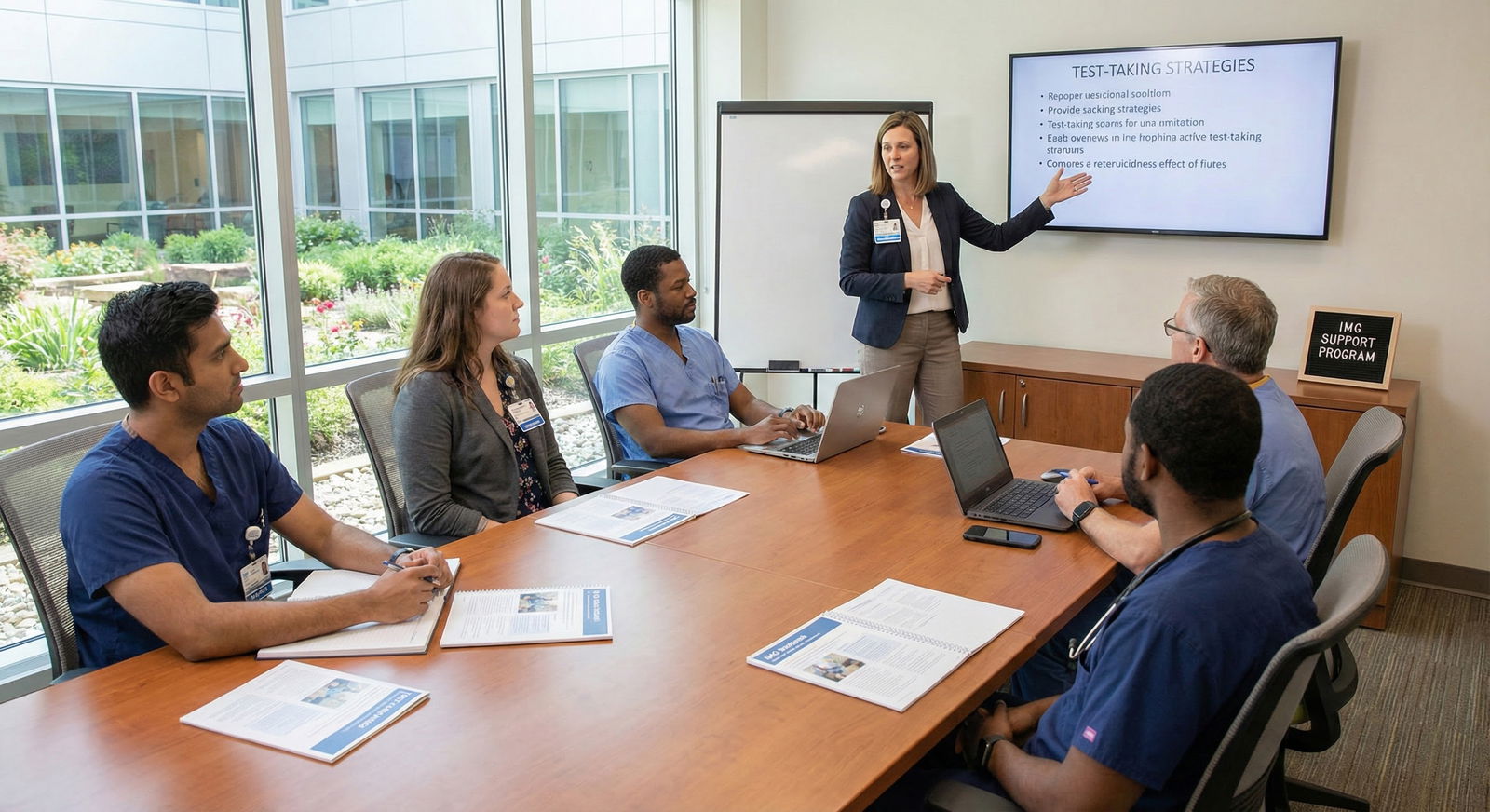
The biggest mistake IMGs make in PGY‑1 is acting like visa issues are “personal problems” instead of program problems. That’s wrong. Strong programs expect to support you—if you use the year strategically.
You’re not just surviving intern year. You’re building a visa and career infrastructure with your program as your primary ally. I’m going to walk you month‑by‑month through PGY‑1, showing exactly when and how to leverage program support so you’re never the “oh no, we didn’t know your visa expires next summer” story.
Big Picture: What PGY‑1 Should Achieve for Your Visa
At this point, before Day 1, you should understand the endgame.
For most IMGs on residency‑friendly programs, PGY‑1 should accomplish:
- Clear long‑term plan: J‑1 vs H‑1B vs pathway to green card
- Documented institutional support (emails, letters, GME policies)
- Clean, compliant status (no gaps, no violations, no last‑minute panics)
- Relationships: program director, GME, institutional legal/immigration
- A realistic timeline for:
- Fellowship or job search
- Waiver (if J‑1)
- Future H‑1B or employment‑based green card steps
Here’s how to structure the year.
Before July 1: Pre‑Start Prep (Match to Orientation)
From Match Day to your start date, you should already be thinking like this: “How will this program carry me through multiple years of training and into the next visa step?”
Immediately Post‑Match (March–April)
At this point, you should:
Clarify exactly what your program sponsors
- J‑1 only through ECFMG
- H‑1B and J‑1
- Rarely: direct support for green card for faculty later, not during residency
Ask very specifically (email is better than phone):
- “Does your institution sponsor H‑1B for residents?”
- “If so, in which departments?” (Sometimes Surgery does, IM doesn’t.)
- “Has any IMG in your program in the last 3 years been on H‑1B?”
Review GME and HR visa documents
- Offer letter language about “employment subject to work authorization”
- Any attached “Foreign National/International Hire” instructions
- Hospital GME website’s section on visas
Lock down your initial status
- J‑1: Work closely with ECFMG, submit DS‑2019 paperwork early
- H‑1B: Expect the institution’s immigration office to:
- File LCA
- Prepare H‑1B petition
- Ask for your documents (CV, medical degree, ECFMG cert, USMLE steps, license/permit info)
At this stage: respond fast. Programs hate chasing documents.
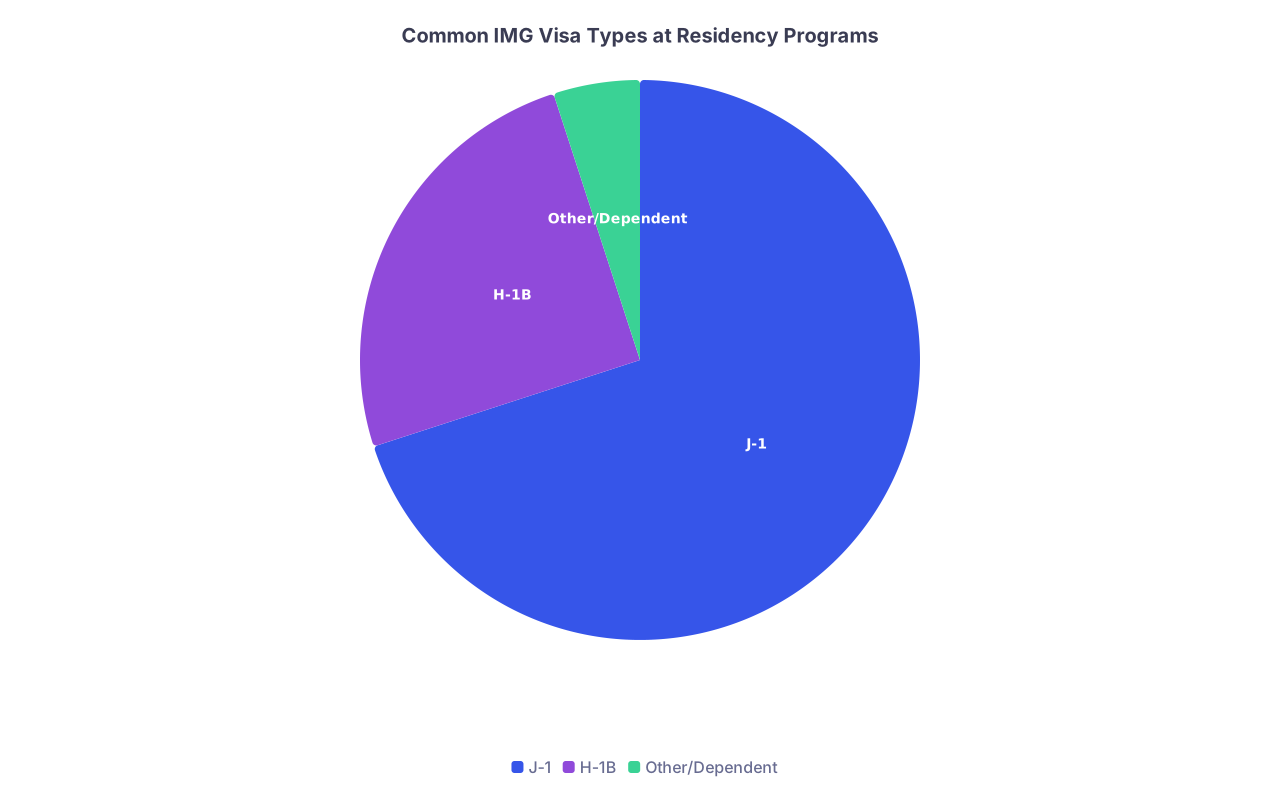
| Category | Value |
|---|---|
| J-1 | 70 |
| H-1B | 25 |
| Other/Dependent | 5 |
Late Spring (May–June): Build Your “Visa File”
Before you show up, create a digital folder (cloud + backup):
- Passport (all pages with stamps/visas)
- Medical degree + translation
- ECFMG certificate
- USMLE transcripts
- DS‑2019s / I‑797s / I‑94 screenshot
- Previous visas (F‑1, B‑1/B‑2, etc.)
- Match letter & GME contract
This will save you and your GME office a lot of time all year.
Month 1–2 (July–August): Orientation and Foundations
You’re overwhelmed. Call schedules, notes, pagers. Still—this is when you quietly set up your visa support structure.
Week 1–2: Orientation Window
At this point, you should:
Find the exact visa contact
- Not just HR. You want:
- GME office’s international coordinator
- Institutional immigration attorney or outside counsel contact
- Ask HR/GME: “Who handles visa and immigration questions for residents?”
- Not just HR. You want:
Clarify institutional policies in person In a short meeting or email, confirm:
- “For J‑1 residents, do you support waiver applications after residency?”
- “Do you ever convert residents to H‑1B for fellowship or employment here?”
- “Are there any internal deadlines I should know about for renewals?”
Tell your program director your long‑term plan Quick, clear conversation:
- “My current visa is J‑1; I’m interested in primary care and likely a J‑1 waiver in an underserved area.”
- Or: “I’m on H‑1B and planning to apply for fellowship; I want to understand how the institution handles H‑1B extensions and portability.”
The point: put yourself on their radar as someone serious and organized.
Week 3–4: Calendar and Compliance
Build a visa calendar:
- DS‑2019 / I‑797 start and end dates
- Program end date for each year
- License/permit expiration
- Deadline when GME typically starts renewals (ask them)
Then, set reminders 6 months and 3 months before each key date.
At this point you should also:
- Ask: “How will I be notified when it’s time to renew my DS‑2019 / H‑1B?”
- Check: Your SEVIS/I‑94 matches your DS‑2019/H‑1B exactly (name, dates, category)
Month 3–4 (September–October): Clarify Long‑Term Visa Strategy
Now that you’re not totally drowning on wards, you use this window for deeper planning.
J‑1 Residents
At this point, you should:
Confirm program length and funding
- “Will the program fully support J‑1 sponsorship through all years, including fellowship if I match here?”
- Ask for this in writing (email is enough).
Start learning J‑1 waiver basics
- Conrad 30 by state
- VA / federal waivers
- Timeline: waiver job search often starts PGY‑3, but your planning starts now.
Ask your PD honestly
- “Do past graduates from this program commonly get J‑1 waivers?”
- “Do you have relationships with waiver‑friendly employers?”
You’re not asking them to do anything yet—just mapping what support they’ve historically provided.
H‑1B Residents
You should now:
Clarify H‑1B maximum and strategy
- Check current time used (including any previous H‑1B in the US)
- Review 6‑year total cap
- Ask immigration: “Do you track my H‑1B time and let me know if I’m approaching the cap?”
Ask about fellowship or employment transitions
- Can they extend H‑1B for fellowship at the same hospital?
- Will a new fellowship program file an H‑1B transfer?
Month 5–6 (November–December): Lock Down Institutional Support
By this point, you should stop being vague and start getting documentation and specifics.
Use This Window to Get Things in Writing
You don’t need a signed contract, but you do want an email paper trail that says:
- “Our program has historically supported J‑1 waiver letters for graduates who accept appropriate jobs.”
- Or: “Our institution sponsors H‑1B for fellows in [X] specialties.”
Ask GME or PD questions like:
- “When prior J‑1 graduates requested support letters for waivers, what was the usual process and timeline?”
- “If I eventually pursue an H‑1B or waiver job, are there any restrictions on letters we can request from the program?”
Month 7–9 (January–March): Use Evaluations and Reputation to Your Advantage
At this point in PGY‑1, your performance starts influencing how far the program will go for you.
Build Leverage the Right Way
You want to be the resident for whom the PD thinks: “Of course we’ll sign whatever support letter they need.”
So:
- Be reliable with documentation and deadlines (they notice)
- Avoid any professionalism flags (these haunt you in future letters)
- Ask for mid‑year feedback and improve quickly
This is how you quietly earn strong program advocacy for future visa issues.
Start Talking About Post‑Residency Direction
Not a full plan yet, but:
- “I’m leaning toward hospitalist work in underserved settings after training—likely a J‑1 waiver path. Are there alumni I should talk to?”
- Or: “I’m very interested in cardiology fellowship. Do you know if our cardiology program has IMGs on H‑1B or J‑1 currently?”
You’re signaling early that you’re planning ahead, not waking up in PGY‑3.
| Timing | Key Question |
|---|---|
| Orientation | What visas does your program/institution sponsor for residents? |
| Early Fall | Have recent graduates received J-1 waivers or H-1B support? |
| Winter | Who in GME/legal handles my visa renewals and long-term planning? |
| Late PGY-1 | What support can I expect for waiver or H-1B letters when I near graduation? |
Month 10–12 (April–June): Translate Support into a Concrete Roadmap
By late PGY‑1, you’re not just asking questions anymore. You’re building a timeline.
For J‑1 Residents
At this point, you should:
Confirm DS‑2019 renewal process for PGY‑2
- Exact deadlines
- Who sends what to ECFMG
- Typical processing time
Draft your J‑1 Waiver Timeline (for PGY‑3+), using program input Example structure:
- Late PGY‑2: start serious job search for waiver positions
- Early PGY‑3: sign waiver job contract
- Mid PGY‑3: request support letters from PD/chair
- Before completion: file waiver application
Ask your PD: “Does this timeline match what you’ve seen for prior graduates?”
Identify where the program will concretely help
- Letters of support
- Connections to alumni in waiver jobs
- Flexibility with scheduling interviews late in residency
For H‑1B Residents
You should now:
Map out your remaining H‑1B time
- Confirm with immigration office: “How many years of H‑1B time will I have left after residency?”
- If considering fellowship: “Is it realistic to stay on H‑1B for both fellowship and initial employment, or will I likely need a J‑1 or other path?”
Ask about green card culture Not now, but later. Still, ask:
- “Do faculty here ever get institution‑sponsored green cards?”
- “Are there internal policies against sponsoring trainees directly for permanent residency?”
You’re gathering intel for PGY‑2/PGY‑3 decisions.
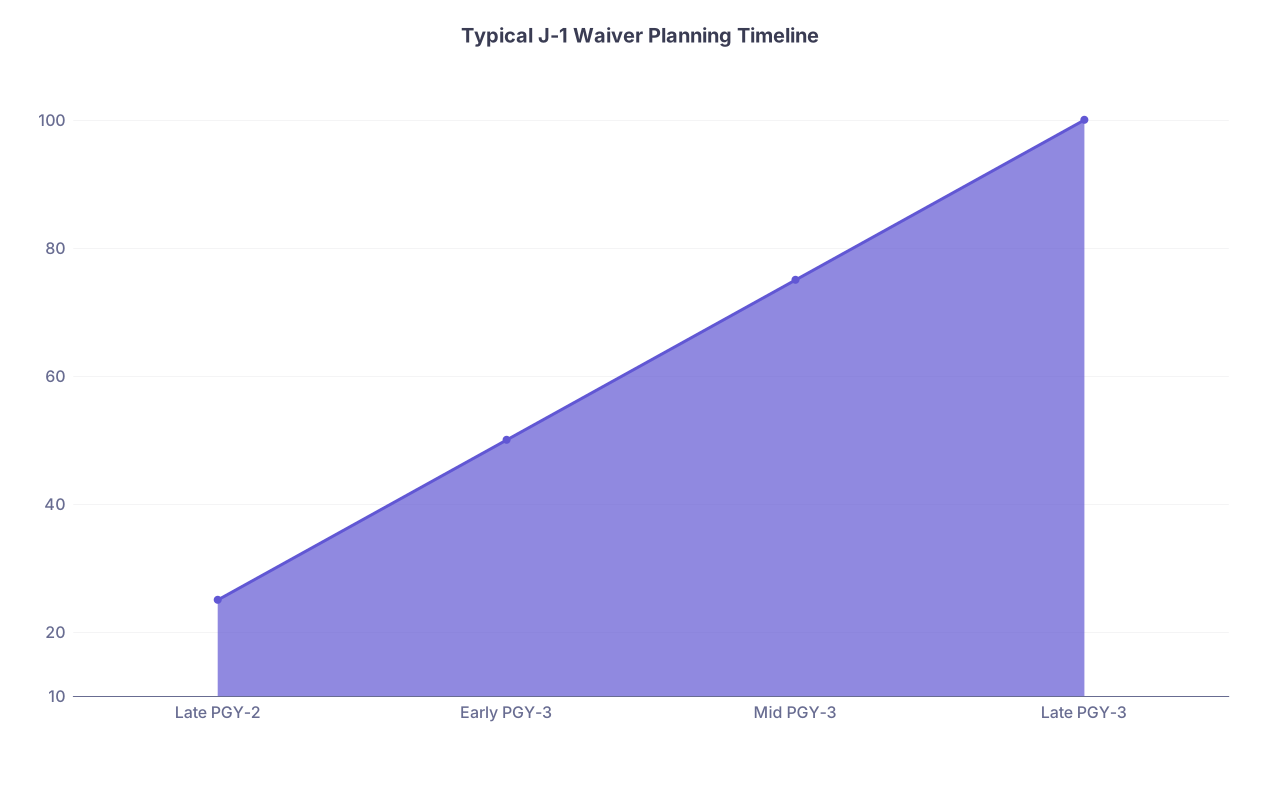
| Category | Value |
|---|---|
| Late PGY-2 | 25 |
| Early PGY-3 | 50 |
| Mid PGY-3 | 75 |
| Late PGY-3 | 100 |
Parallel Track: Month‑by‑Month Visa Maintenance Tasks
Here’s what you should be doing throughout PGY‑1, alongside clinical work.
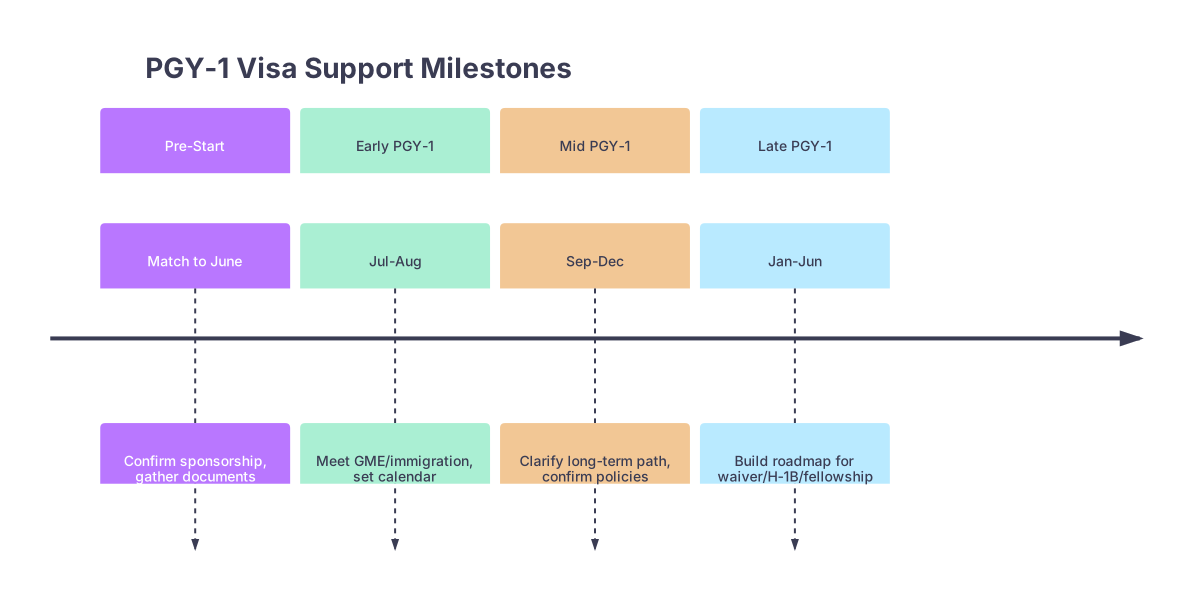
| Period | Event |
|---|---|
| Pre-Start - Match to June | Confirm sponsorship, gather documents |
| Early PGY-1 - Jul-Aug | Meet GME/immigration, set calendar |
| Mid PGY-1 - Sep-Dec | Clarify long-term path, confirm policies |
| Late PGY-1 - Jan-Jun | Build roadmap for waiver/H-1B/fellowship |
Every 3–4 Months
At this point each quarter, you should:
- Confirm no changes in institutional visa policy
- Check that your contact info is current with GME and immigration
- Save copies of any updated DS‑2019 / I‑797 / I‑94
Before Any International Travel
Leverage program support before you book tickets:
- Email GME/immigration:
- “Are there any issues with me leaving and reentering on my current visa?”
- “Do I need a new visa stamp?”
- “Can you provide a travel support letter from the hospital verifying my employment?”
This is where programs with IMG‑friendly policies really help. Good ones:
- Pre‑review your documents
- Warn you if consular delays are common for your country
- Help you decide if travel is too risky this year
How to Tell if a Program is Truly IMG‑Friendly During PGY‑1
Some programs talk a big game about “welcoming IMGs” but disappear when the word “waiver” or “H‑1B” comes up. There are tells.
Strong, IMG‑Friendly Programs Typically:
- Know your visa category off the top of their head
- Have a designated immigration or international office
- Have multiple senior residents/fellows on visas
- Can name specific alumni who got:
- Conrad 30 waivers
- H‑1B transfers for jobs
- Fellowship spots as IMGs
Weak or Superficial “Friendly” Programs:
- Say “we’ll see when the time comes” to every question
- Have no written policy or past examples
- Put all responsibility back on you without any institutional process
If you’re in the second type, you don’t panic—but you do:
- Document everything yourself in more detail
- Cast a wider net in PGY‑2 and PGY‑3 for jobs/fellowships
- Rely more on outside immigration counsel (not just the hospital lawyer)
Sample Yearly Checklist: What You Should Have by End of PGY‑1
By June of PGY‑1, your visa situation should not feel like a mystery. You should have:
Documents
- Up‑to‑date DS‑2019 / H‑1B approval
- Copy of institutional visa policy (or at least relevant emails)
- Clean, organized digital and physical copies
Relationships
- A known contact in:
- GME
- Institutional immigration
- Your PD and possibly department chair
- A known contact in:
Roadmap
- If J‑1: rough timeline for waiver job search and application
- If H‑1B: understanding of remaining time, fellowship impact, and if/when green card may be realistic
- Knowledge of whether your current institution could play a role in your long‑term plans
Reputation
- Solid evaluations
- No professionalism issues
- Early advocacy from faculty who will one day write:
- Waiver letters
- Recommendation letters
- Support letters for H‑1B/green card
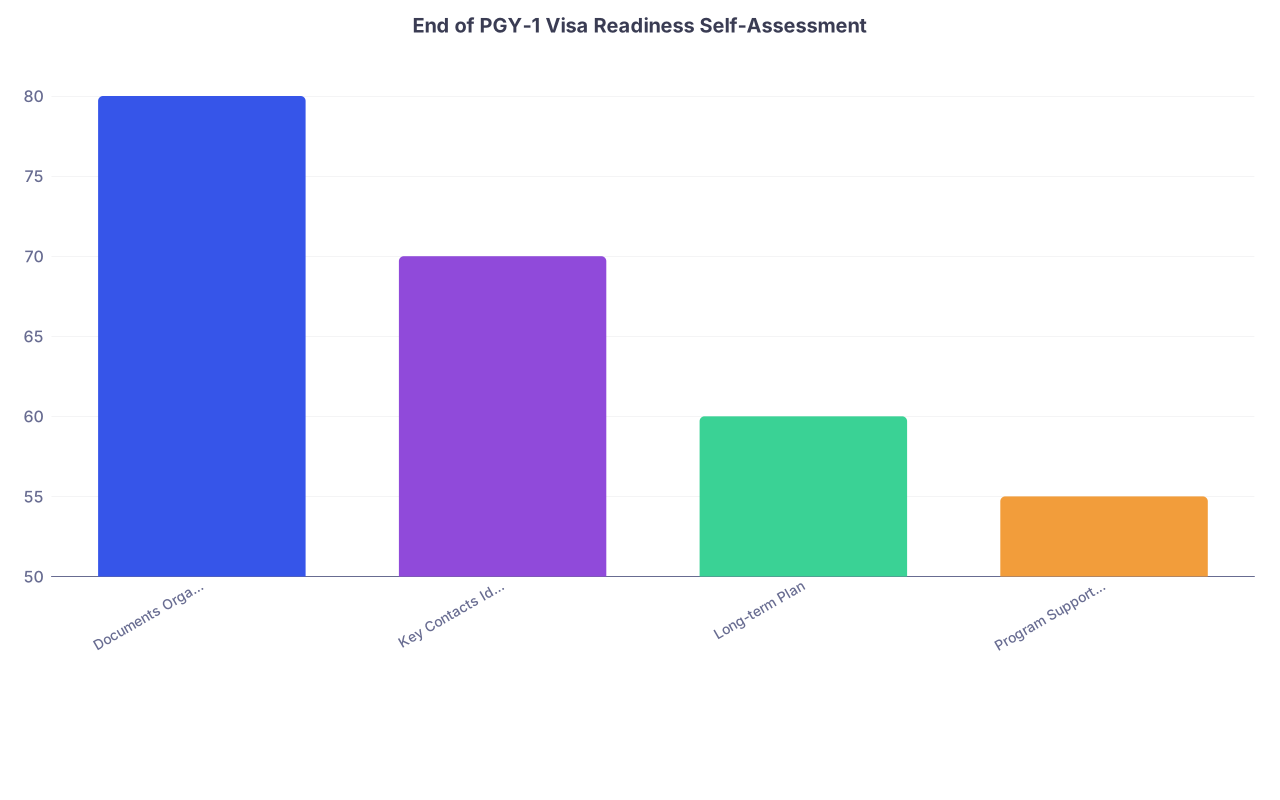
| Category | Value |
|---|---|
| Documents Organized | 80 |
| Key Contacts Identified | 70 |
| Long-term Plan | 60 |
| Program Support Confirmed | 55 |
Quick PGY‑1 Month‑by‑Month Snapshot

Match–June (Pre‑start)
- Confirm sponsorship type and history
- Gather all documents, respond promptly to GME
July–August
- Meet GME/immigration contacts
- Build visa calendar and reminders
September–October
- Clarify J‑1 vs H‑1B long‑term implications
- Ask about alumni outcomes and waiver/H‑1B experiences
November–December
- Get email confirmations on what support the program usually provides
- Keep your performance solid to build trust
January–March
- Discuss preliminary post‑residency direction
- Identify faculty who may support you later
April–June
- Create a concrete roadmap for PGY‑2 and beyond
- Confirm renewal processes and long‑term visa steps with GME/immigration
FAQ (Exactly 4 Questions)
1. When should I first talk to my program about J‑1 waiver plans?
By mid‑PGY‑1 you should at least signal your likely direction, especially if you’re leaning toward a waiver‑heavy specialty like FM, IM, or psychiatry. You do not need a job lined up; you just need your PD to know that a waiver is almost certainly in your future so they expect later requests for letters and schedule flexibility.
2. Should I hire my own immigration lawyer in PGY‑1?
If your hospital has a strong immigration team that clearly answers your questions, you can usually wait. If answers are vague, your visa history is complex, or you’re switching categories (F‑1 to H‑1B, etc.), then yes—having your own lawyer early is smart. Just remember: the hospital’s lawyer represents the institution, not you.
3. Can I push my program to switch me from J‑1 to H‑1B during residency?
Sometimes, but it’s an uphill battle. Most institutions have fixed policies. If they already sponsor H‑1B for residents in your specialty, you have some leverage. If they don’t, you’ll waste energy fighting a system that won’t move. Your time is usually better spent planning a strong waiver or H‑1B strategy for after training.
4. What if my program “supports IMGs” but refuses all letters for J‑1 waivers?
Then they’re not truly IMG‑friendly, they’re just willing to fill service slots. You adjust. Plan to rely more on state health departments, non‑program references, and employers for waiver support. In PGY‑2/PGY‑3, you widen your search to employers and states with strong Conrad 30 infrastructure and less dependence on PD letters. And you treat your next job—not this residency—as your real immigration home base.
Key takeaway: During PGY‑1 you’re not just fixing this year’s paperwork. You’re building a multi‑year visa strategy with your program as a core partner. The IMGs who do best are the ones who 1) get clarity in writing, 2) calendar everything, and 3) treat performance and professionalism as visa tools, not just evaluation boxes.