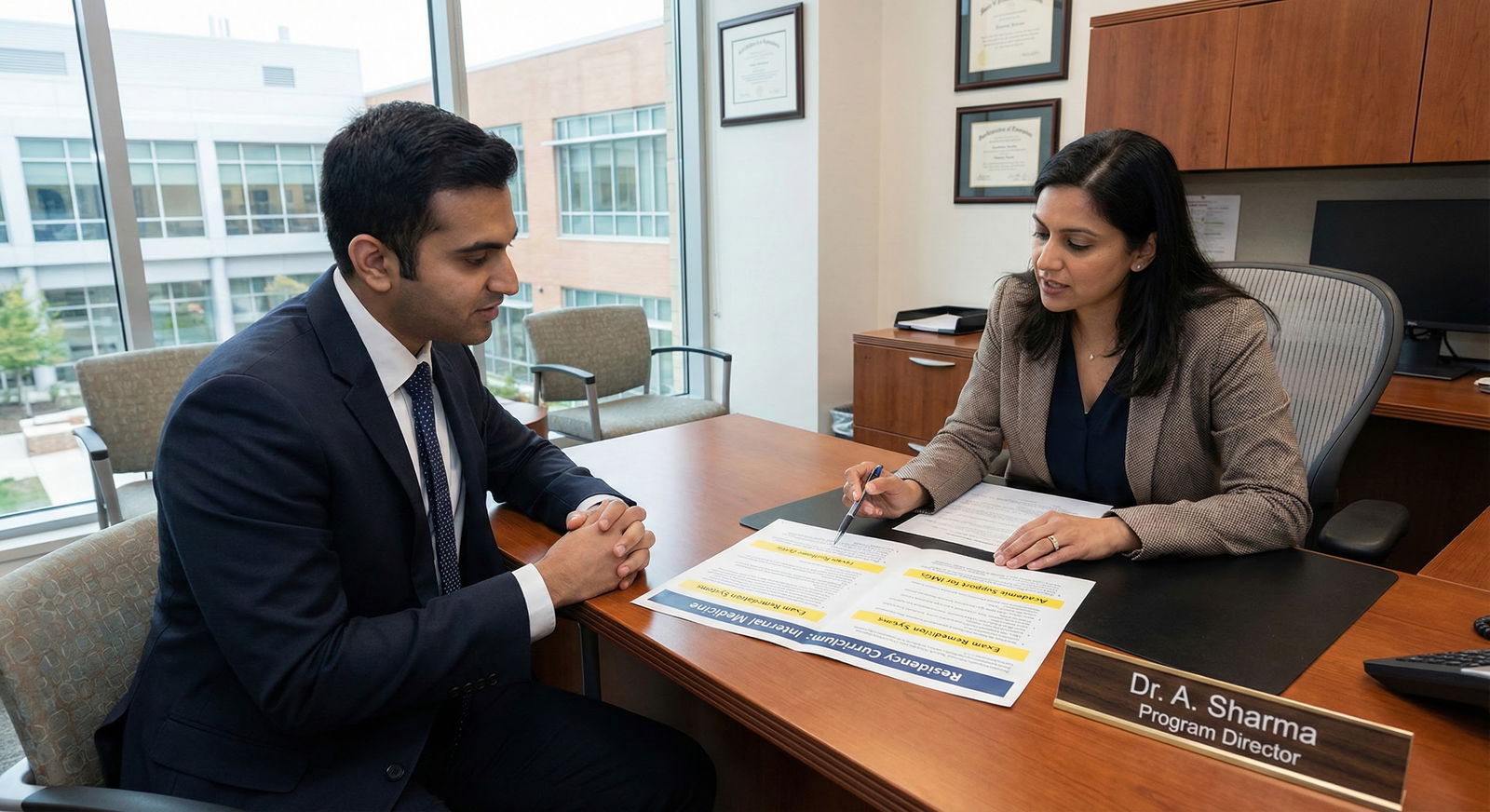
You’ve got a spreadsheet open with 60+ residency programs. One column says “sponsors J‑1/H‑1B,” another has program reputation notes like “big name,” “IMG‑friendly,” “community program.” You’re an IMG, you need a visa, and you keep staring at the same question:
If I have to choose, should I prioritize visa support or program reputation?
Let me answer that straight: if you’re an IMG who needs a visa, you prioritize visa support first, then reputation. Not the other way around.
But it’s not quite that simple. There’s a smart way to balance the two so you don’t end up at a dead‑end program that kills your fellowship chances—or an elite program that never even ranks you because they don’t want to touch visas.
Let’s break it down.
1. The brutal truth: No visa = no training
If your ability to be in the country depends on a training visa, there’s a hierarchy of priorities whether you like it or not:
- Can this program legally sponsor me to be here?
- Will they actually sponsor me (not just “maybe” in theory)?
- Among those that will, which give me the best career trajectory?
Notice how “name brand prestige” doesn’t show up until step 3.
Here’s why prioritizing reputation over visa support is usually a mistake for IMGs:
- A top‑tier program that doesn’t routinely handle visas is effectively off‑limits. You’re burning application slots and money.
- Some “prestige” university programs say they sponsor but do it rarely or painfully. You end up stuck in administrative limbo even if you match.
- If you match at a place that makes your visa life miserable, it affects everything: fellowship timing, moonlighting, travel, even staying after graduation.
I’ve seen IMGs aim for a big university name that “might” do visas, ignore multiple solid mid‑tier programs with strong visa history, and then end up unmatched. Their CVs weren’t the problem. Their strategy was.
So the default rule:
If you need a visa, you only seriously consider programs that have a consistent, recent track record of sponsoring the type of visa you want. Reputation is a tiebreaker among those programs, not above them.
2. J‑1 vs H‑1B: This is where “reputation vs visa” actually changes
Now we need to talk specifics, because what you should prioritize changes depending on which visa is realistic for you.
| Factor | J-1 | H-1B |
|---|---|---|
| Sponsorship | Common for IMGs | Less common, selective |
| USMLE requirements | Usually Step 1 + 2 CK passed | Often Step 3 required before start |
| Waiver obligation | 2-year home country or waiver job | None |
| Program type | Many community & academic | More academic/large systems |
If you’re fine with a J‑1
If you’re okay with a J‑1 (and many successful IMGs are), your main filter becomes:
- Does the program routinely sponsor J‑1 visas for IMGs?
- Are current residents/fellows IMGs on J‑1?
J‑1 is much more common and easier for programs administratively. That means:
- You’ll have more programs to choose from.
- You can afford to weigh reputation a bit more heavily within the J‑1‑friendly pool.
In that case, your sequence becomes:
- Programs that have sponsored J‑1s in the last 1–2 cycles
- From that list, favor better training + outcomes (board pass rates, fellowship match, job placement)
- Consider brand name last, not first
If you’re pushing hard for an H‑1B
Different game.
H‑1B is more restrictive:
- Many programs simply don’t bother.
- Many require Step 3 passed before rank list (sometimes before IV invite).
- Hospital legal departments can be slow, risk‑averse, or both.
If your goal is H‑1B and you’re not willing to take J‑1, then visa policy becomes non‑negotiable priority #1:
- You can’t “trade” that for reputation. A top‑20 name that only does J‑1 is just off your list.
- Within H‑1B‑friendly programs, your “prestige” spectrum will skew more toward large academic centers and big health systems anyway.
Bottom line:
- J‑1 okay? You have room to filter for quality and reputation after you confirm steady J‑1 sponsorship.
- H‑1B only? Visa policy dominates. Reputation is secondary because your pool is smaller.
3. Ranking programs as an IMG: how to prioritize without sabotaging yourself
Let’s translate this into something you can actually use when building your program list and rank order list.
Step 1: Sort programs into 3 buckets
You’re not just guessing; you’re categorizing.

| Step | Description |
|---|---|
| Step 1 | All Considered Programs |
| Step 2 | Exclude |
| Step 3 | Bucket 1 - Strong Support |
| Step 4 | Top Targets |
| Step 5 | Solid Targets |
| Step 6 | Safety but Acceptable |
| Step 7 | Routine Visa Sponsorship? |
| Step 8 | Type Matches Your Need? |
| Step 9 | Reputation and Training Quality? |
Practically, you want:
Bucket A – Strong visa support + solid training
- Multiple current IMGs on J‑1/H‑1B
- PD/coordinator clearly know the process (“we sponsor every year,” “we’re ECFMG certified,” “we require Step 3 by X for H‑1B”)
- Reasonable workload, board pass rates, alumni outcomes
Bucket B – Visa support but question marks
- Say they sponsor, but few current IMGs
- Policies sound restrictive or “case by case”
- Limited history of IMGs in competitive fellowships/strong jobs
Bucket C – Weak or no visa support
- Explicit “no visa,” “US citizens/green card only,” or “rare exceptions”
- No IMGs in recent classes
- Confusing or contradictory information
Your applications and rank list should be built mostly from Bucket A, with some strategic Bucket B for stretch shots and very few or zero Bucket C (unless you’re dual‑eligible with another status).
Step 2: Within Bucket A, now reputation matters
Once you’ve confirmed consistent visa support, then you look at:
- Fellowship match (if your specialty cares about this)
- Board pass rates
- Case volume and pathology
- Hospital system reputation regionally
- Research opportunities (for certain specialties: IM, Neuro, Psych, etc.)
This is where you decide:
- Do I take a slightly less famous but very IMG‑supportive university program over a big‑name place that treats IMGs as a quota?
- Do I prefer a strong community program that places people into decent jobs over a “brand” that burns residents out and has poor support?
You’re not chasing “fame.” You’re chasing outcomes.
4. How program reputation really affects IMGs (vs what people think)
There’s a lot of mythology here. Let me be blunt.
When reputation actually matters
Reputation matters a lot more in:
- Hyper‑competitive fellowships (cards, GI, heme/onc, ortho, derm, etc.)
- Academic careers at name‑brand institutions
- Countries/cultures where brand recognition dominates hiring
Being at a well‑known academic program with strong research and a track record of placing IMGs into fellowships is a major asset if that’s your path.
When it matters less than you think
If you want to work as a hospitalist, primary care physician, outpatient psychiatrist, etc., 3–5 years out, your:
- USMLE performance
- clinical performance
- letters
- visa/work authorization status
will matter as much or more than “I was at Program X vs Program Y.”
Community attendings, smaller hospitals, and many private groups don’t obsess over the difference between “Top‑30 university IM program” and “solid community affiliate.” They care if you’re competent and can legally work.
So if your main goal is “practice in the US, comfortable lifestyle, maybe hospitalist or outpatient,” then:
Visa support + stable training environment > prestige by a huge margin.
5. Red flags and green flags for visa support
Here’s where applicants mess up: they assume “we accept IMGs” = “we sponsor visas.” False. You need to look sharper.
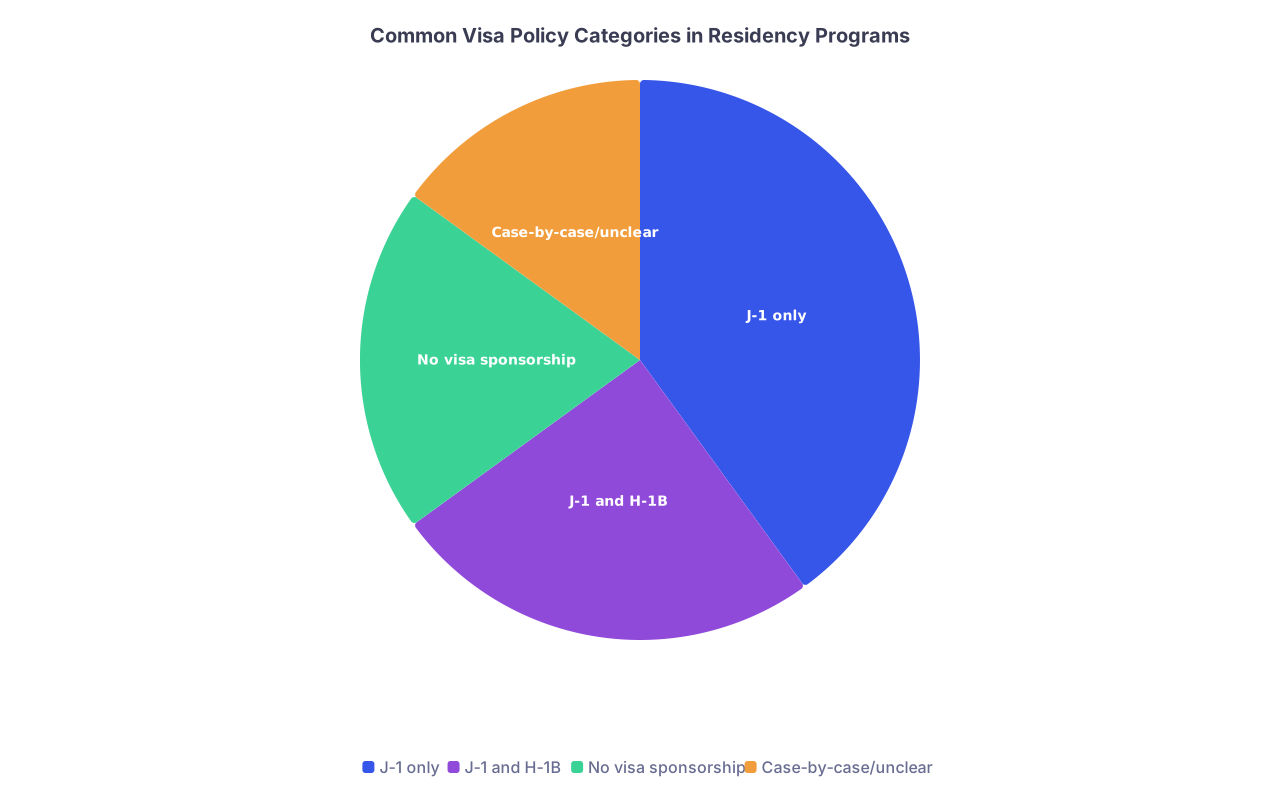
| Category | Value |
|---|---|
| J-1 only | 40 |
| J-1 and H-1B | 25 |
| No visa sponsorship | 20 |
| Case-by-case/unclear | 15 |
Green flags
- Website explicitly says: “We sponsor J‑1 visas” or “We sponsor J‑1 and H‑1B visas.”
- Current resident list shows several IMGs, ideally with graduation schools outside the US/Canada.
- PD or coordinator responds with specifics when you email:
- “We require Step 3 done by X for H‑1B.”
- “We’ve sponsored J‑1 for multiple residents this year.”
- Program is part of a large teaching hospital system that already has international fellows/residents.
Red flags
- Vague lines like “Visa sponsorship is considered on a case‑by‑case basis.”
- Website doesn’t mention visas at all and current residents are 100% US grads.
- Coordinator replies with: “We have occasionally sponsored visas in special situations.”
- They say they sponsor in theory, but recent residents are all citizens/GCs.
Those red flags push a program into Bucket B or C for you. Don’t ignore them just because it’s a famous name.
6. Strategy by scenario: what you should do
Let’s run a few realistic situations.
Scenario 1: Strong IMG, needs J‑1 or H‑1B, wants a competitive fellowship
You: high USMLEs, some USCE, research. Long‑term goal: GI, Cards, Heme/Onc.
Your priority stack:
- Programs with proven visa support (J‑1, and H‑1B if realistic for you)
- Within that, programs with documented fellowship match success, especially for IMGs
- Strong academic or hybrid programs > small, isolated community hospitals
- Reputation is a proxy here only if matched by outcomes
You don’t go to a no‑name, no‑research place just because it offers an H‑1B, unless your alternatives are truly awful.
Scenario 2: Average profile, needs J‑1, primary goal is staying in the US as an attending
You: mid‑range scores, average CV, decent USCE.
Your priority stack:
- Programs that reliably sponsor J‑1 for IMGs
- Reasonable workload/supportive culture (you need to pass boards and not burn out)
- Any academic affiliation is a bonus, not essential
- Reputation only matters to the extent it helps you get your first job
Your worst move: ignoring IMG‑friendly community programs with great visa support because you’re chasing university logos.
Scenario 3: You already have US permanent residency / citizenship
Different world.
If you don’t need a visa at all, then:
- Visa support is irrelevant.
- Reputation, training quality, location, and fit completely dominate your choices.
I’m only including this because I see people with green cards still obsessing about “visa‑friendly programs.” If that’s you, stop. You’re playing by different rules now.
7. Practical ways to research this without going insane
You don’t need to become an immigration lawyer. You do need to be methodical.

Here’s a straightforward workflow:
Use program websites first
- Check “Eligibility,” “International Medical Graduates,” or FAQ pages.
- Write down explicitly: J‑1 only / J‑1 & H‑1B / none listed.
Cross‑check with actual residents
- Scan current residents’ med schools. Lots of foreign schools = IMG‑friendly signal.
- Use LinkedIn or Doximity to see if graduates were on J‑1/H‑1B and where they went afterward.
Email coordinators with a targeted question
Something like:“I’m an IMG requiring a [J‑1 / H‑1B] visa. Does your program routinely sponsor this visa type for incoming residents, and are there any specific exam requirements (e.g., Step 3 for H‑1B)?”
Vague or evasive answers = caution. Clear, specific answers = green flag.
Look at recent match lists
- If they don’t list IMG alumni in fellowships or jobs anywhere, that’s data.
- Programs proud of their outcomes usually show them off.
Create a simple scoring sheet
Give each program:- Visa support score (0–2)
- Training quality score (0–2)
- Fellowship/job outcome score (0–2)
- Personal fit/location score (0–2)
Only programs with visa score 2 get serious attention.
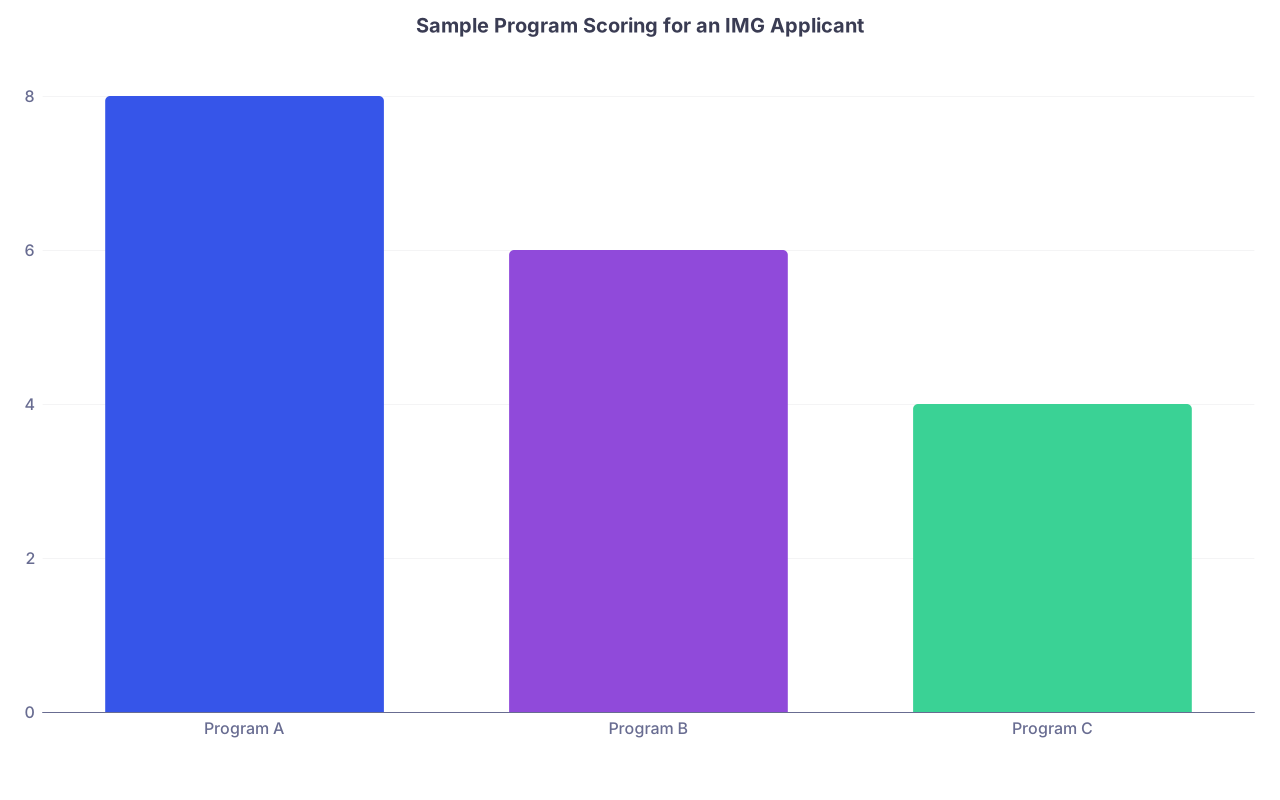
| Category | Value |
|---|---|
| Program A | 8 |
| Program B | 6 |
| Program C | 4 |
(Example: Program A – strong visa + good outcomes + decent location; Program C – unclear visa, moderate training, bad fit.)
8. The core answer: which should you prioritize?
Here’s the direct ranking for an IMG who needs a visa:
- Reliable visa support that matches your needs (J‑1 vs H‑1B)
- Quality of training and outcomes (board pass rates, fellowships, jobs)
- Program culture and support (especially for IMGs)
- Reputation/brand name
- Location and lifestyle preferences
Reputation goes below visa, training quality, and culture. That’s the part many people get backwards.
A famous name that won’t or can’t sponsor you is irrelevant. A mid‑tier program that trains you well, supports your visa, and sends graduates into real jobs or fellowships is far more valuable than a logo you can’t use.
9. What you should do today
Don’t just read this and nod. Take 15–20 minutes and do something concrete:
Open your residency program list right now and add three columns:
- “Visa type supported”
- “Recent IMGs? (Y/N)”
- “Visa certainty (0–2)”
Then pick 10 programs on your list and fill those columns using their websites and resident pages. If anything’s unclear, draft one email to a coordinator asking specifically about J‑1/H‑1B sponsorship.
Once you’ve done those 10, you’ll feel the difference between guessing and actually knowing which programs deserve your application—and which don’t.