The mythology that “if you are an IMG, you will never get a US fellowship” collapses the moment you actually track the data. The problem is not fellowship itself. The problem is choosing residencies that do not send people anywhere—and not measuring outcomes until it is too late.
Let me be blunt: if a residency cannot show you five years of fellowship placement data for its IMGs, it is not “supportive.” It is guessing. And you should not build your career on someone else’s guesses.
This is about tracking. Percentages. Denominators. Patterns over time. Not vibes.
Why IMG fellowship placement needs hard data, not promises
Program directors love adjectives: “supportive,” “collegial,” “strong fellowship culture.” None of these words answer the only question that matters to you as an IMG who wants subspecialty training:
“What percentage of IMGs who wanted fellowship from this program actually matched, and into what?”
The difference between a fellowship‑friendly residency and a dead‑end one is usually visible in three basic metrics:
- How many graduates actually apply for fellowship (not everyone wants it).
- Of those, how many match (overall and by IMG vs AMG).
- Into which specialties and which tiers of programs (community vs mid‑tier academic vs top‑tier).
Supportive programs:
- Know these numbers.
- Are not embarrassed to show them.
- Can name specific IMG graduates and where they matched.
Non‑supportive programs:
- Talk generically about “strong candidates matching every year.”
- Have zero breakdown for IMGs.
- Hand‑wave with anecdotes about “one guy who matched GI 8 years ago.”
You want to be in the first category. The way to get there is to track and interrogate the data.
Core metrics: what to track for IMG fellowship outcomes
You cannot compare programs or call them “IMG‑friendly” without a consistent structure. At minimum, track the following for each residency you are seriously considering or ranking.
| Metric | Why it matters |
|---|---|
| Total graduates per year | Defines the denominator for all percentages |
| % graduates applying to fellowship | Shows true fellowship culture, not just anecdotes |
| Overall fellowship match rate | Baseline outcomes for the program |
| IMG fellowship match rate | The metric that actually applies to you |
| Average USMLE Step 2 / COMLEX Level 2 of matched fellows | Benchmarks where you need to be |
| % of matches to academic programs | Signals academic strength and reputation |
1. Fellowship “intention rate”
First filter: what share of residents try for fellowship?
A program with:
- 80%+ of eligible residents applying to fellowship = strong fellowship culture
- 40–60% = mixed; some people intentionally hospitalist, some discouraged
- <30% = giant red flag if you want academia or subspecialty
As an IMG, you should specifically ask:
- “Among IMGs in the last 5 years, what percentage applied to fellowship?”
- “How many chose hospitalist by preference vs did not get interviews or offers?”
If they cannot answer that, they are not tracking your outcomes in a serious way.
2. IMG fellowship match rate vs overall match rate
Supportive residencies usually have:
- High overall fellowship match rates (e.g., 70–90%)
- And IMG rates that are not dramatically lower (e.g., maybe 10–15 percentage points lower, not 40–50)
Programs that claim to be “friendly” but have a 75% overall match rate and a 25% IMG match rate are friendly in marketing only.
Here is a simplified model scenario from what I have seen across internal medicine programs with diverse cohorts:
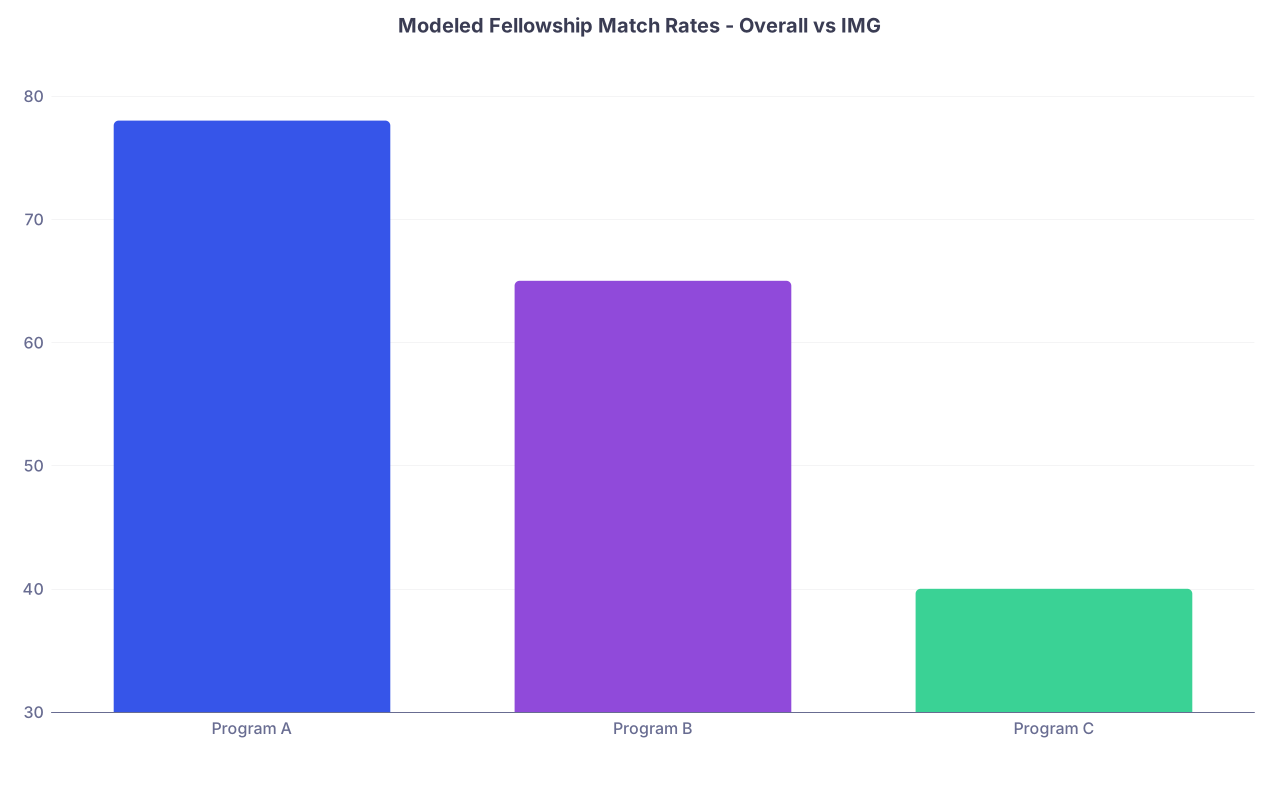
| Category | Value |
|---|---|
| Program A | 78 |
| Program B | 65 |
| Program C | 40 |
Now overlay IMGs at the same programs:
- Program A: Overall 78% fellowship match, IMG 70%
- Program B: Overall 65%, IMG 45%
- Program C: Overall 40%, IMG 10%
A is genuinely supportive. B is partially supportive, with real but noticeable disparity. C is where IMGs go to be told “maybe hospitalist first, then apply.”
If your goal is cardiology, GI, heme/onc, or pulmonary/critical care as an IMG, Programs A and B are salvageable. Program C is not.
3. Fellowship type distribution
Not all fellowships are equal in competitiveness. The data repeatedly show:
- Highly competitive: Cardiology, GI, Hematology/Oncology
- Mid: Pulm/CC, Endocrine, Rheum, Nephrology (still competitive for IMGs at strong programs)
- Less competitive: Geriatrics, Palliative, hospital-focused tracks
The ratio of competitive vs non‑competitive fellowships matters more for IMGs than you think. If a program brags about “90% fellowship placement,” but 80–90% of these are geriatrics and palliative, the competitive pipeline might be nearly nonexistent.
A crude but useful breakdown for a “truly supportive” internal medicine residency for IMGs:
- Of IMGs who want fellowship:
- 50–60% match into mid to high‑tier programs
- At least 30–40% land in competitive specialties (cardiology, GI, heme/onc, pulm/CC)
- The rest in geriatrics, palliative, or choose hospitalist roles strategically
If that pattern collapses to “1 cardiology fellow in 10 years” and “lots of geriatrics,” that residency is more of a terminal training site than a springboard.
How to actually collect and structure fellowship data
You are not going to get a neat Excel file from most programs. You will have to reconstruct their patterns using three sources:
- Official website “Alumni / Where our residents go” pages
- Program PDFs, slide decks, or social media posts showing match graphics
- Direct questions to residents and leadership during interviews and open houses
Here is the basic process I recommend, and yes, it is tedious. But you are trading some spreadsheet time now for a 3‑year career trajectory.

| Step | Description |
|---|---|
| Step 1 | Identify Target Programs |
| Step 2 | Collect Alumni Fellowship Data |
| Step 3 | Tag IMG vs AMG Outcomes |
| Step 4 | Calculate IMG Match Rates |
| Step 5 | Analyze Fellowship Types and Tiers |
| Step 6 | Compare Across Programs |
| Step 7 | Adjust Rank List |
Step 1: Reconstruct 5 years of fellowship outcomes
For each residency of interest, build a small table. Manually if you have to.
Columns:
- Graduation year
- Total residents
- IMGs that year
- IMGs who applied to fellowship (estimate/ask)
- IMGs who matched fellowship
- Specialty
- Institution of fellowship (flag academic vs community and tier)
Then compute for each program:
- 5‑year overall fellowship match rate (by person, not by number of fellowship spots)
- 5‑year IMG fellowship match rate
- Specialty distribution for IMGs
You will quickly see patterns:
- Programs where IMGs consistently match nephrology, endocrine, rheum, and an occasional heme/onc = decent pipeline, especially if academic sites
- Programs where IMGs almost never appear in fellowship lists = danger zone
Step 2: Differentiate IMG vs AMG outcomes
A frequent trap: the program boasts about “excellent fellowship placement,” but the heavy lifting is done by US MDs with 250+ Step scores and home‑institution research. IMGs are an afterthought.
You must separate cohorts:
- Ask directly: “Of your last 5 graduating classes, how many IMGs matched into fellowship, and in which specialties?”
- In alumni lists: identify names, countries of medical school, or use LinkedIn / program bios to tag IMG vs AMG
If the program genuinely supports IMGs, they usually know the numbers and are proud of them. They will tell you, unprompted, “Our IMGs have gone on to cardiology at X, heme/onc at Y, and pulm/CC at Z.”
If they dance around it and keep shifting to “overall success,” that is a data red flag.
What the patterns look like in supportive vs non‑supportive programs
Based on repeated patterns across internal medicine, pediatrics, and some surgery prelim/transition to categorical structures, fellowship‑friendly programs for IMGs share a few quantifiable traits.
1. Fellowship applications are normalized, not exceptional
In a supportive residency:
- 60–80% of PGY‑3s (or seniors in 3‑year programs) apply to fellowship.
- IMGs are not a small minority in that applying group.
In a weak program:
- Only 20–30% apply.
- IMGs are advised early to “consider hospitalist first” or “build a portfolio then apply later.”
If you track by class, the difference is obvious. Here is a modeled pattern:
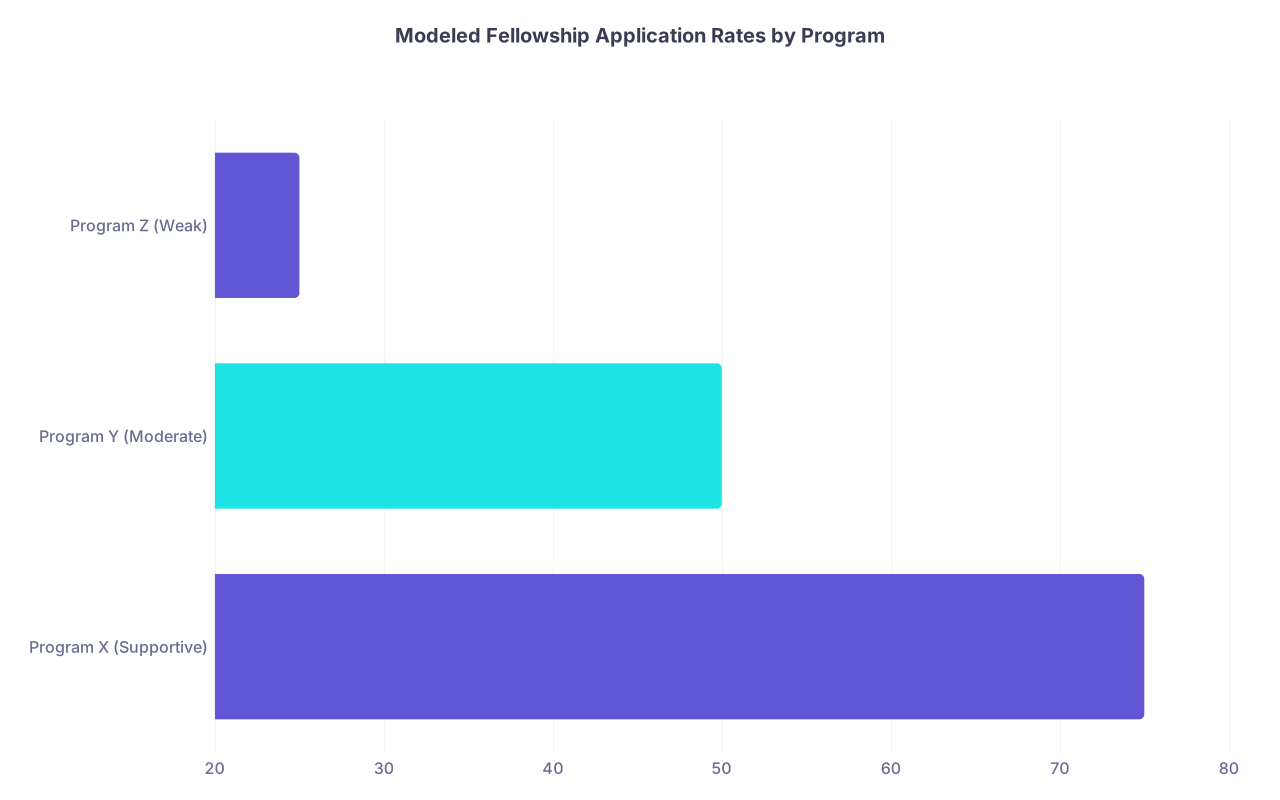
| Category | Value |
|---|---|
| Program X (Supportive) | 75 |
| Program Y (Moderate) | 50 |
| Program Z (Weak) | 25 |
Program X is building future fellows as the default. Program Z is building hospitalists by design.
2. Scholarly output: not crazy, but consistent
Fellowship for IMGs is heavily front‑loaded onto:
- Published or in‑press papers
- Abstracts and posters at national meetings
- QI projects with measurable outcomes
Supportive residencies usually have:
- Clear research mentors who have taken IMGs to conference podiums
- Standing pipelines: “Cardiology group typically takes 3–4 residents a year for projects, 1–2 are IMGs”
- Documented abstract counts for residents
You should expect to see a distribution something like:
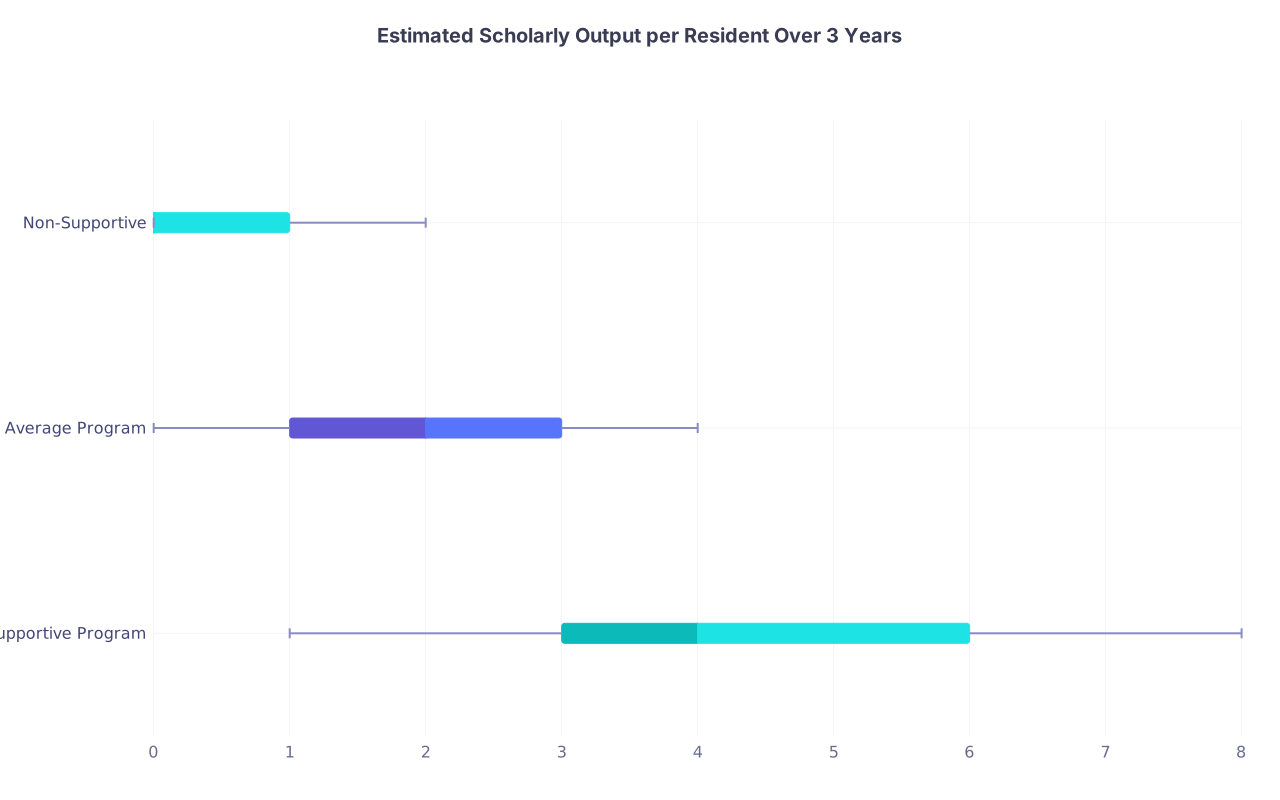
| Category | Min | Q1 | Median | Q3 | Max |
|---|---|---|---|---|---|
| Supportive Program | 1 | 3 | 4 | 6 | 8 |
| Average Program | 0 | 1 | 2 | 3 | 4 |
| Non-Supportive | 0 | 0 | 0 | 1 | 2 |
Supportive program: the median resident leaves with ~4 outputs; the ambitious ones have 6–8. And IMGs are not systematically excluded from those opportunities.
3. PD and faculty behavior toward IMG applicants
You cannot put this in a spreadsheet easily, but it affects the data downstream.
In high‑yield IMG‑friendly residencies, you hear things like:
- “Our top cardiology match last year was an IMG—let me show you what they did.”
- “We pair IMG residents with faculty mentors early; we know their visa timelines and build around them.”
- “We know it is a bit harder to get interviews as an IMG, so we start your application work in PGY‑2, not last minute.”
In weaker programs, the language shifts:
- “We are supportive of any path—fellowship, hospitalist, whatever.”
- “Visas complicate things, but we will write strong letters.”
- “Fellowship is very competitive for IMGs, so keep an open mind.”
Translate that into numbers: supportive programs have actual IMG match rates; the others have sympathy and low expectations.
Example comparison: three hypothetical internal medicine residencies
To show how tracking converts marketing fluff into decisions, here is a simplified, modeled comparison of three IM residencies over the last 5 years.
| Metric | Program A | Program B | Program C |
|---|---|---|---|
| IMG residents total | 30 | 28 | 32 |
| IMGs applying to fellowship | 24 (80%) | 18 (64%) | 10 (31%) |
| IMGs matching fellowship | 18 (60% of all IMGs) | 9 (32%) | 2 (6%) |
| Competitive fellowship matches (Cardio/GI/Heme-Onc/Pulm-CC) | 10 | 4 | 0 |
| Matches at academic centers | 15 | 7 | 1 |
If you plot those match rates:
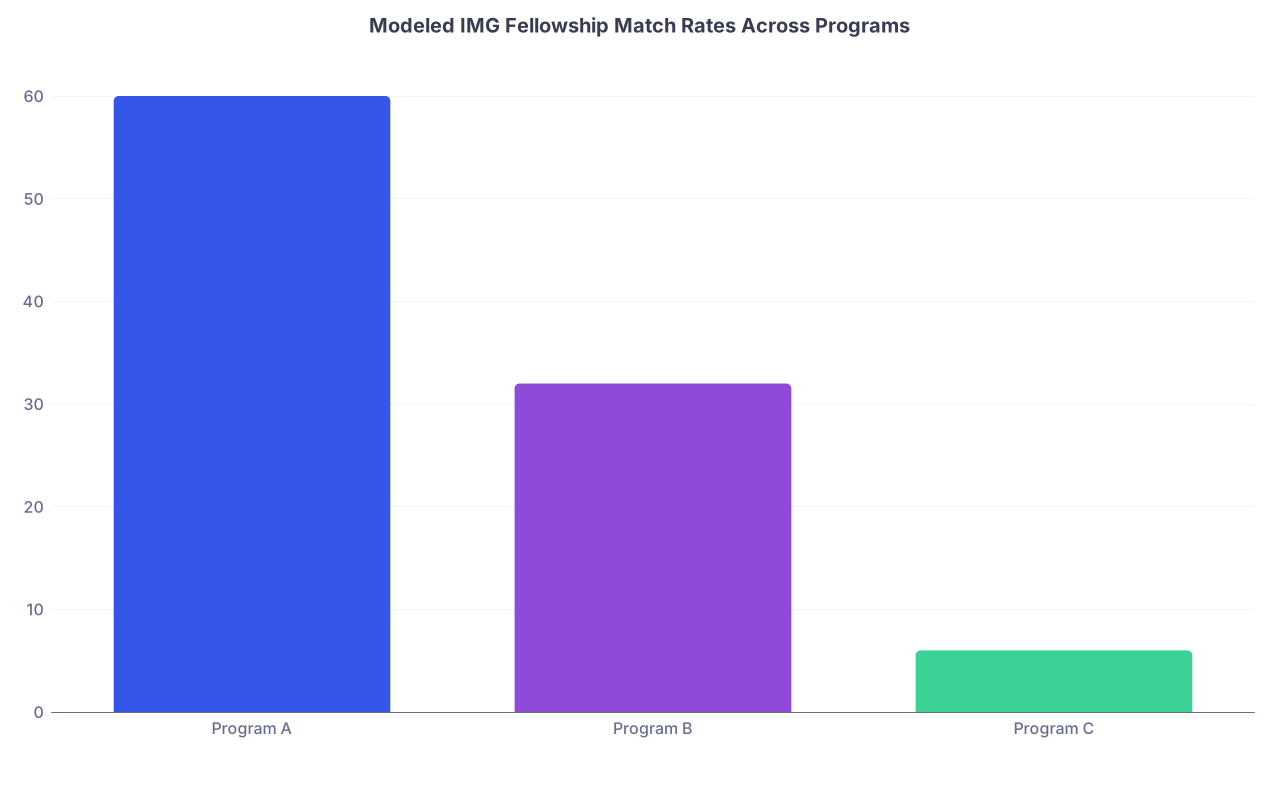
| Category | Value |
|---|---|
| Program A | 60 |
| Program B | 32 |
| Program C | 6 |
You do not need a PhD to see where an IMG with fellowship aspirations belongs. Program A is clearly structured to send IMGs to fellowships. Program C basically produces hospitalists with a rare exception.
Yet all three programs could describe themselves online as:
- “We support residents in pursuing fellowship or hospitalist careers.”
Without the numbers, you would not know the difference.
How to use these metrics during application and rank list phases
You are in the “Residency Match and Applications” phase. That means you are choosing where to apply or how to rank. This is where tracking fellowship placement becomes actionable.
Before applying: filter your list with data, not forum rumors
You will not have deep alumni breakdowns for every program at the ERAS stage, but you can do a first‑pass filter:
- Check program websites for any “Fellowship Match” or “Alumni outcomes” page.
- Count, roughly, per year:
- Total residents
- Number of listed fellowships
- Estimate:
- Is this a 60–80% fellowship culture or a 20–30% one?
If a 20‑resident class consistently lists 3 or 4 fellowships per year, that is not a fellowship‑heavy culture. As an IMG, that will compound your disadvantage.
During interviews: ask quantitative questions
You are not just there to smile and nod. Ask like a person who reads data:
- “Of your IMGs in the past 5 graduating classes, how many applied to fellowship and how many matched?”
- “Can you share examples of recent IMG fellows and where they went?”
- “What sort of scholarly output do your matched IMG fellows usually have—papers, abstracts, presentations?”
You are not being rude. You are performing due diligence on a three‑year investment.
If the PD responds with concrete numbers and easily remembered names, that is a good sign. If they hand‑wave, treat their program as lower on your rank list.
After interviews: build a simple score for each program
You do not need a complicated model. A simple weighted scoring system based on your spreadsheet is enough. For each program:
- IMG fellowship match rate (0–5 points)
- % of IMGs in competitive fellowships (0–5 points)
- Academic vs community fellowship destinations (0–3 points)
- Perceived mentorship/research structure for IMGs (0–3 points)
A program scoring 13–16 is worth being high on your rank list if other factors (location, visa support) are also acceptable. Programs in the 3–7 range, even if “friendly,” are career‑limiting for subspecialty ambitions.
Special considerations for IMGs: visas, timing, and perception
Data alone is not enough unless you place it in the real constraints IMGs face.
- Visa status: H‑1B vs J‑1 support strongly alters your fellowship options downstream. Track how many IMGs on your desired visa type from a program have actually matched fellowship.
- Timing: Strong programs start fellowship prep in late PGY‑1 or early PGY‑2. Laggard programs pretend you can “decide later,” which usually means you end up rushed and under‑prepared compared with AMGs.
- Perception: Some programs are “friendly” in the sense that they will interview many IMGs for residency—but have weak brand value when their graduates apply for fellowship. Others are less open at the residency stage but push very hard for those they choose.
Visas especially matter. I have seen more than one talented IMG stuck because the program did not realize until late that many fellowships in a given specialty would not consider certain visa types. The result shows up bluntly in your spreadsheet: strong residents, poor match rates.
Supportive residencies will:
- Be explicit about which visa categories they sponsor.
- Have multiple prior IMG fellows on those same visa types.
- Help you target programs known to be visa‑friendly.
If the program has “never really had to deal with that before,” you are the experiment. Do not be the experiment.
A quick sanity check: what good looks like
If you are feeling lost, use this rough sanity baseline for an internal medicine residency that is genuinely supportive of IMG fellowship placement:
Over the last 5 years, among IMGs:
- ≥60–70% who applied to fellowship matched.
- ≥30–40% of those matches are in cardiology, GI, heme/onc, or pulm/CC.
- A visible majority of fellowships are at academic centers.
- Residents can name 3–5 recent IMG graduates who are now fellows or junior attendings in subspecialties.
If your working spreadsheet for a program looks nothing like that—lots of hospitalists, a few geriatrics, one endocrine fellow from 2016—that is your signal.
Three key points, and then you can close the tab:
- “Supportive of IMGs” is meaningless unless you can see 5‑year IMG‑specific fellowship outcomes: application rates, match rates, and specialties.
- The data you need is reconstructable—from websites, resident conversations, and direct questions—and will clearly separate springboard residencies from dead‑end ones.
- If your goal is fellowship as an IMG, treat residency selection as a data problem: build the spreadsheet, run the numbers, and rank accordingly. Your future subspecialty depends on it.