

The biggest myth about chief residents? That they always knew they were “chief material.”
Most of them didn’t. Most of them were exactly where you are right now: sitting on a call night, thinking, “There’s no way anyone would trust me to lead a team.”
Let me say this bluntly: a lot of residents who’d make phenomenal chiefs quietly talk themselves out of it long before anyone else does. Not because they’re bad leaders. Because they’re brutal self-critics.
The Script Running In Your Head (And Why It’s Lying To You)
You know that mental loop?
“I’m not the smartest in my class.” “I’m not the favorite of any big-name attending.” “I freeze when people look at me in morning report.” “I made that one bad call on nights and I still think about it every day.”
So you decide the story must be: “I’m not chief material.”
Here’s the part nobody tells you during orientation: the people who never doubt their chief potential are often the last ones who should have that much power.
The ones who ask, “What if I’m not cut out for this?” are usually the ones who are actually safe to follow.
Because they:
- Notice their mistakes
- Question their impact on others
- Replay interactions to see what they could’ve done better
Which sounds a lot less like “unqualified” and a lot more like… leadership.
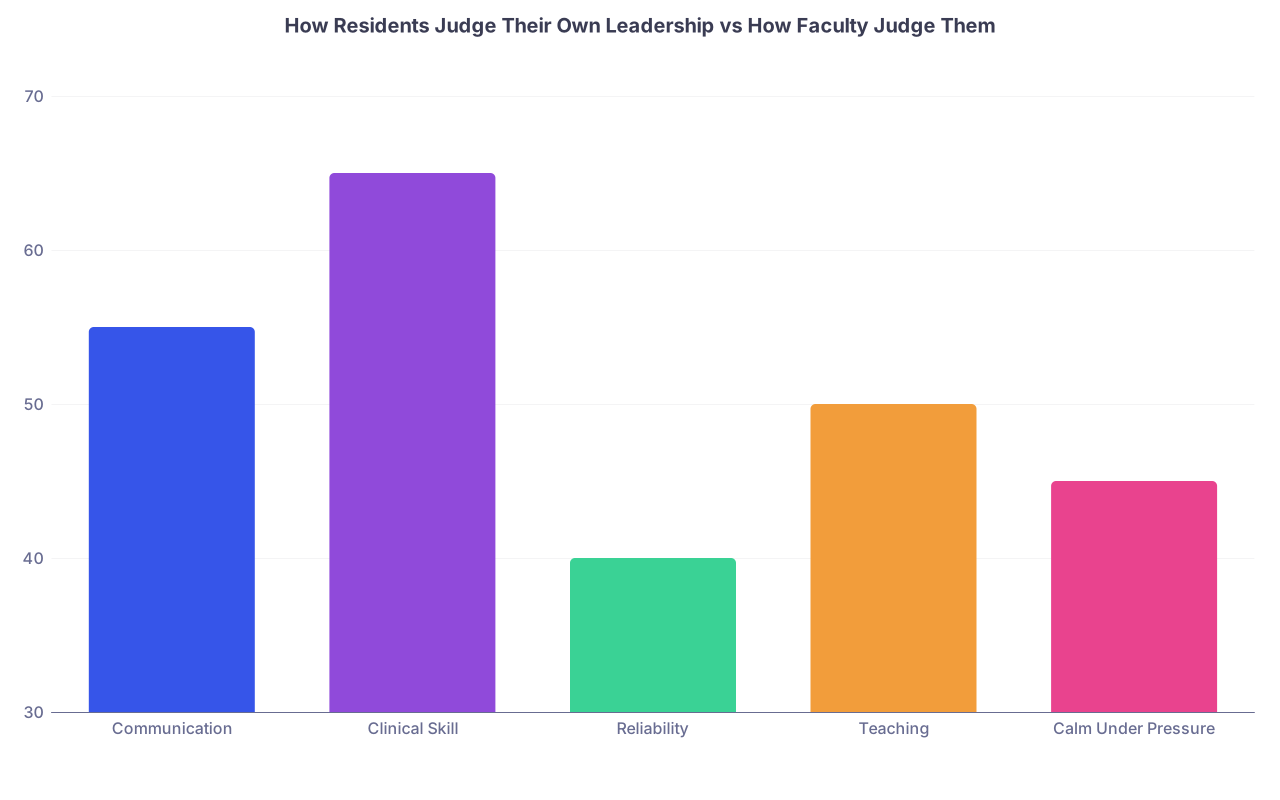
| Category | Value |
|---|---|
| Communication | 55 |
| Clinical Skill | 65 |
| Reliability | 40 |
| Teaching | 50 |
| Calm Under Pressure | 45 |
(Imagine those bars showing how you rate yourself out of 100. Faculty scores are almost always 10–20 points higher, by the way. I’ve seen that mismatch over and over.)
“Signs You’re Not Chief Material”… That Are Actually Red Flags You’re Underrating Yourself
Let’s go through the greatest hits of the anxious brain. The stuff that makes you think, “No program director in their right mind would pick me.”
1. “I Need Time To Process Before I Speak Up”
You watch that one co-resident who always has a comment, always has a plan, always jumps in with an answer at conference.
Meanwhile, you:
- Think for a second before responding
- Replay your words after a tough family conversation
- Wish you could be faster on your feet in front of attendings
So you label yourself: “Too slow. Not decisive enough. Not a leader.”
Reality: chiefs don’t need to be loud, they need to be trusted.
Trust comes from:
- Not blurting out plans you haven’t thought through
- Admitting when you need 30 seconds to check something
- Saying, “I don’t know, but I’ll find out,” and actually doing it
Rapid-fire confidence looks impressive in front of a projector. On an overnight code, steady and thoughtful beats flashy 100% of the time.
2. “People Come To Me With Problems… But I Think It’s Just Because I’m ‘Nice’”
You’ve probably had this happen:
Everyone vents to you about:
- The toxic senior
- The attending who shames people
- The schedule that’s wrecking everyone’s sleep
They come to you after a rough call. They text you when something feels unfair. You listen. You validate. But you think, “I’m just the emotional support friend, not the leader.”
I’m going to be a little harsh: that’s wrong.
Programs notice exactly who the residents go to when things are bad. The unofficial “captain” of the class is often the person everyone process-texts at 1 a.m. Not the loudest person in noon conference.
If your co-residents say things like:
- “Can I run something by you?”
- “I trust your judgment on this.”
- “You’re the only one I feel comfortable telling this to.”
You’re not “just nice.” You’re already doing chief-level emotional labor. You’re just not getting the title (yet).
3. “I Still Make Too Many Mistakes”
There’s this fantasy that chiefs are near-perfect clinicians. They see the zebra from across the room, quote guidelines from memory, and never miss anything.
Actual chiefs? They:
- Forget to order the DVT prophylaxis and call back at 11 p.m. to fix it
- Miss a nuance in a radiology read and feel sick about it the whole drive home
- Learn from an intern who catches something they didn’t
If you still remember that one patient you think you failed… and it quietly keeps you up at night… that’s not proof you’re unsafe. That’s proof you’re conscientious.
The people who scare me? The ones who say, “Yeah, everyone makes mistakes,” but never seem remotely bothered by any of theirs.
4. “I Hate Conflict And Avoid It Whenever Possible”
Here’s the nightmare scenario in your head:
You as chief, having to:
- Confront the chronically late resident
- Call out an attending for unprofessional behavior
- Tell your friend they’re not meeting expectations
And your brain goes, “Nope. Absolutely not. That’s for people with thicker skin.”
Thing is, the best chiefs I’ve seen hate conflict too. But they still step into it.
You might already be doing low-key versions of this:
- “Hey, can we debrief that interaction? It felt off.”
- “I don’t think that was fair to the intern.”
- “Can we figure out a better way to divide this workload?”
You don’t need to enjoy conflict to handle it well. You just need:
- A basic sense of fairness
- Enough courage to feel awkward and do it anyway
- The ability to repair after a tense conversation
If you already feel guilty when you see someone treated badly and you try to fix it, you’re closer to “chief material” than the person who thinks, “Not my problem.”
What Programs Actually Look For In Chiefs (And How You Probably Measure Up Better Than You Think)
Let me translate the vague “leadership potential” thing into real behaviors.
| Trait Programs Value | How You Probably Interpret It |
|---|---|
| Reliability | “I just do what I’m supposed to do.” |
| Emotional steadiness | “I’m quiet when stressed.” |
| Peer trust | “People overshare with me.” |
| Initiative | “I fix small things so I don’t bother others.” |
| Advocacy | “I complain when things feel unfair.” |
Most chief selection conversations I’ve heard sound like:
- “Who do people feel safe with?”
- “Who actually follows through?”
- “Who doesn’t throw interns under the bus?”
- “Who do you trust to tell you the truth when something’s broken?”
Notice what’s missing:
- “Who has the highest in-service score?”
- “Who never looks uncertain?”
- “Who is the most charismatic in front of the chair?”
A Hard Question You Probably Answer Differently Than Your PD Would
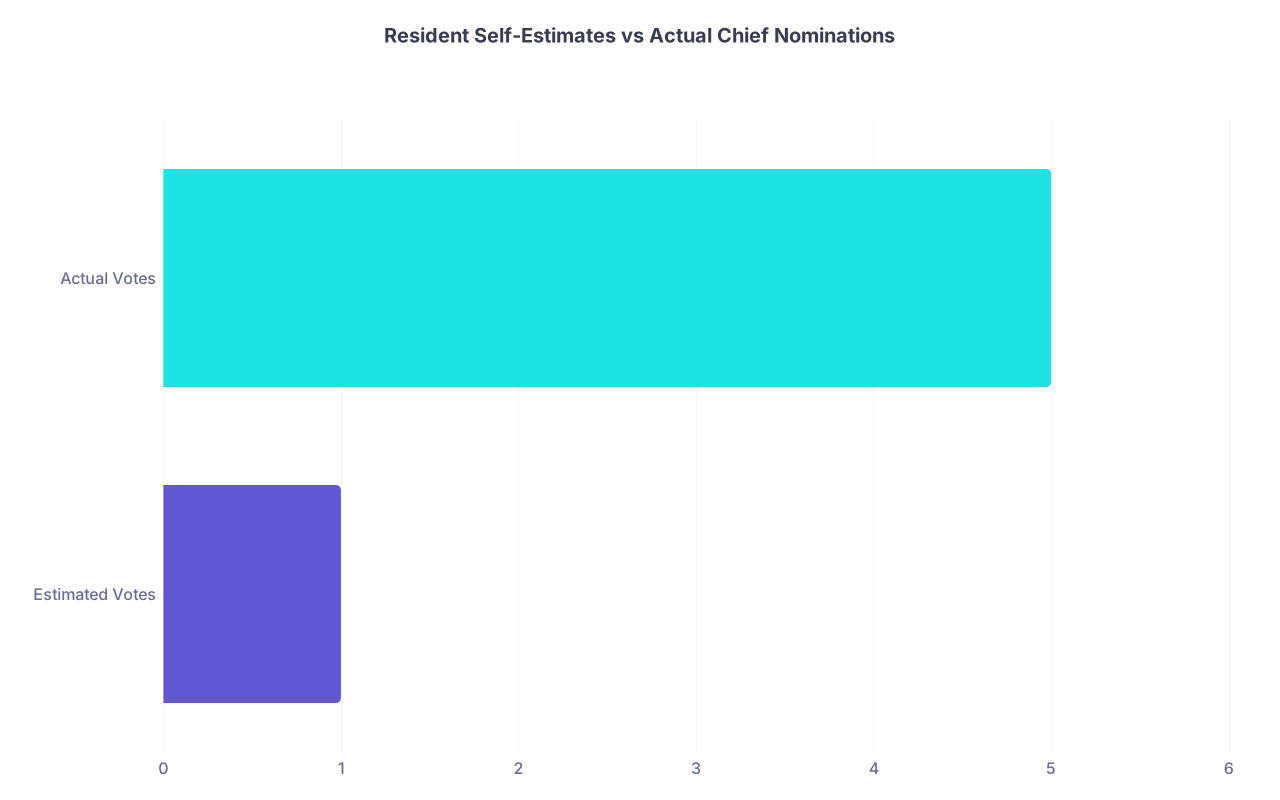
If your PD asked your co-residents anonymously: “Who would you want as chief if things hit the fan?” …how many times do you think your name would come up?
Your answer is probably “zero” or “maybe one pity vote.”
Real answer is almost always higher. The quiet, reliable, thoughtful resident gets way more write-ins than they realize.
| Category | Value |
|---|---|
| Estimated Votes | 1 |
| Actual Votes | 5 |
Signs You’re Underestimating Yourself (That I’ve Actually Seen In Future Chiefs)
Let’s flip this now. Because there are patterns I keep seeing in residents who turn into strong chiefs later. And they almost never recognize these in themselves as strengths.
1. You Apologize For Existing… But Still Show Up For Others
You start every sentence with “Sorry, quick question—” or “Sorry, can I just—”.
Yet:
- You’re the one who answers the group chat when an intern is panicking
- You pick up extra admissions without announcing it to the world
- You stay late to help with signout while telling yourself, “It’s not a big deal”
That combination—self-doubt + consistency—is weirdly predictive of strong chief performance. You assume everyone else is as dependable as you. They’re not.
2. You Remember How It Felt To Be The Weakest One In The Room
If you:
- Were the slowest on notes as an intern
- Struggled with procedural skills at first
- Had an attending who made you feel stupid
Then you lead differently. You remember what it feels like to be the person always two beats behind. Chiefs who’ve struggled are usually the ones who:
- Say, “Take a breath, we’re not in a rush,” instead of “Hurry up”
- Quietly protect the intern who’s drowning without humiliating them
- Call out shaming behavior because they’ve been on the receiving end
The best leaders in medicine almost never had a straight “golden child” path. They’ve eaten dirt. That’s exactly why people trust them.
3. You Obsess About Being “Fair”
If something in your program makes you think:
- “This schedule is punishing the same people every time.”
- “Why do nights always fall on the parents / international grads / IMG folks?”
- “Why does X person get away with stuff others get crushed for?”
And you can’t just shrug and move on? That’s leadership wiring. Annoying, exhausting, empathy-heavy… but leadership.
You don’t have to fix everything to be chief material. You just have to care enough to try.
4. You Care What Interns Think Of You (And You’re A Little Afraid Of Messing Them Up)
You pre-round slowly so they can present, even if you could do it faster alone. You ask, “How are you doing?” and actually listen for more than “fine.”
You fear:
- “What if I accidentally traumatize someone?”
- “What if I model bad boundaries?”
- “What if they pick up my worst habits?”
That fear is not weakness. That’s accountability. Chiefs shape the culture. If you already worry about the downstream impact of your behavior, you’re thinking like one.

What If You’re Right And You’re Not Chief Material?
Let’s play out your worst-case scenario, because I know your brain is already there.
You think:
- “What if I try to lead and I burn out?”
- “What if people don’t respect me?”
- “What if I get chosen and then fail publicly?”
Here’s the unromantic truth: not everyone should be chief. Some people need that last year to just be residents, not admin plus resident plus therapist for the whole program.
But even if you never become chief, this still matters. Because this isn’t really about a title. It’s about whether you believe:
“I am someone other people can count on under pressure.”
You will need that belief as:
- A fellow leading junior fellows and residents
- An attending running a team at 3 a.m. during a massive GI bleed
- A community doc running a tiny hospital where you are the code team
So even if you never touch a chief role, you still need to stop writing yourself off as “not leadership material” just because you’re human and anxious.
A Simple Reality Check Exercise You Can Actually Do
If you want something concrete—not vague “believe in yourself” nonsense—do this in the next 48 hours:
Pick two people:
- One co-resident in your year
- One intern or junior you’ve worked with
Ask them this exact question (yes, it will feel cringe):
“If I were ever in a leadership role like chief, what strengths do you think I’d bring? And what would worry you?”Don’t argue with their answers. Just write them down. Word for word.
Compare it with the script in your head.
Most anxious residents are shocked by:
- How often words like “calm,” “safe,” “organized,” “supportive,” and “advocate” show up
- How rarely anyone mentions the things you obsess about (that one mistake, that one awkward presentation, that one attending who didn’t like you)
Is this going to fix your imposter syndrome overnight? No.
But it will give you data that isn’t purely generated by your 2 a.m. brain.

| Step | Description |
|---|---|
| Step 1 | Heavy Self Doubt |
| Step 2 | Avoid Leadership Opportunities |
| Step 3 | Less Feedback From Others |
| Step 4 | Assume You Are Not Chief Material |
| Step 5 | Ask Trusted Colleagues For Feedback |
| Step 6 | Hear Unexpected Strengths |
| Step 7 | See Yourself As Potential Leader |
| Step 8 | Consider Chief And Other Roles |
You’re Allowed To Be Scared And Still Be “Chief Material”
You can be:
- Anxious
- Conflict-avoidant
- Not the smartest in the room
- Still learning how to set boundaries
- Still haunted by that one catastrophe of a call night
…and still be someone your program would be lucky to have leading a class.
Being “chief material” doesn’t mean:
- Untouchable clinical genius
- Zero self-doubt
- Perfect public speaking
- Being the program director’s favorite
It looks a lot more like:
- Showing up when you’re tired
- Owning your mistakes instead of hiding them
- Caring about the interns more than your own image
- Being willing to have hard conversations, even if your voice shakes
If you’re reading this because some tiny part of you wondered, “Could I maybe, possibly…?”—that part of you deserves a chance.

FAQ (exactly 5 questions)
1. What if I genuinely don’t want to be chief—does that mean I’m not leadership material?
No. Wanting the title and being capable of leadership are two different things. You’re allowed to say, “I don’t want extra admin and politics during my last year,” and still be an excellent leader in other contexts—fellowship, attending-hood, committees, QI projects. Opting out of chief doesn’t invalidate your leadership potential; it might actually be a healthy boundary.
2. I had a really bad evaluation early on. Doesn’t that permanently take me out of the running?
One bad eval almost never kills a chief possibility. People in academics know growth when they see it. A resident who had a rough start but clearly improved—and treated people well along the way—can be more appealing than the person who was “perfect” but flat, arrogant, or hard to work with. What matters is the trajectory, not a single low point.
3. How do I know if my program would ever actually consider me for chief?
Look at behavior, not vibes. Do attendings ask for your take on team dynamics? Do chiefs or seniors loop you into discussions about schedules, wellness issues, or rotations? Do people say things like “You’d be a good chief someday” and you just nervously laugh it off? Those are signals. If you really want clarity, you can also ask a trusted faculty mentor, “Do you see me as someone who could be considered for chief? What would I need to work on?”
4. I’m introverted and hate being the center of attention. Can introverts be good chiefs?
Yes—some of the strongest chiefs are introverts. The job isn’t nonstop public speaking. It’s a lot of one-on-one check-ins, emails, quiet advocacy, and behind-the-scenes problem solving. If you listen well, think before you speak, and people feel safe with you, your introversion is a feature, not a bug. You might just need to be deliberate about protecting your own energy.
5. What if I try to step up more and people think I’m being fake or power-hungry?
This fear is common and overblown. Most residents are so worried about not stepping on toes that any increase in visibility feels like arrogance. If you’re asking this question, you’re already self-aware enough that you’re unlikely to come off as power-hungry. Frame your actions around service: “How can I make things better for my co-residents and interns?” If that’s your north star, people generally read your leadership as genuine, not performative.
Open the last text or email you got from a co-resident asking for help, advice, or just venting. Read what they trusted you with. Then ask yourself—honestly—if someone who wasn’t “chief material” would be the person they chose to come to.


