

What do you do when the senior you depend on for evaluations blatantly disrespects you… and you’re terrified that speaking up will tank your career?
That’s the nightmare loop, right? You’re a resident. You need good evals. You need letters. You need people to like you. And yet, some days, it feels like the workplace was designed by someone who hates your nervous system.
Let me say the quiet part out loud: you can be conflict-avoidant, anxious, and still not get walked all over in residency. Those things are not mutually exclusive.
The Fear Underneath It All
The fear isn’t just “I don’t like conflict.” It’s:
- What if they label me “difficult” or “not a team player”?
- What if this attending trashes my evaluation?
- What if my co-residents turn on me and I’m isolated on service?
- What if I escalate something and it explodes way beyond what I intended?
And sometimes: what if I’m actually the problem and I just don’t see it?
You’re not crazy for thinking like this. The power dynamics in residency make everything feel high-stakes. You’re literally graded by the people you may need to confront. That’s a messed up setup for anyone who’s already scared of conflict.
But doing nothing also has a cost: resentment, burnout, anxiety, and you learning the wrong lesson—“I just have to take it.”
No. You really don’t.
Let’s walk through how to handle difficult colleagues when your default instinct is: “smile, nod, and then spiral at 2 a.m.”
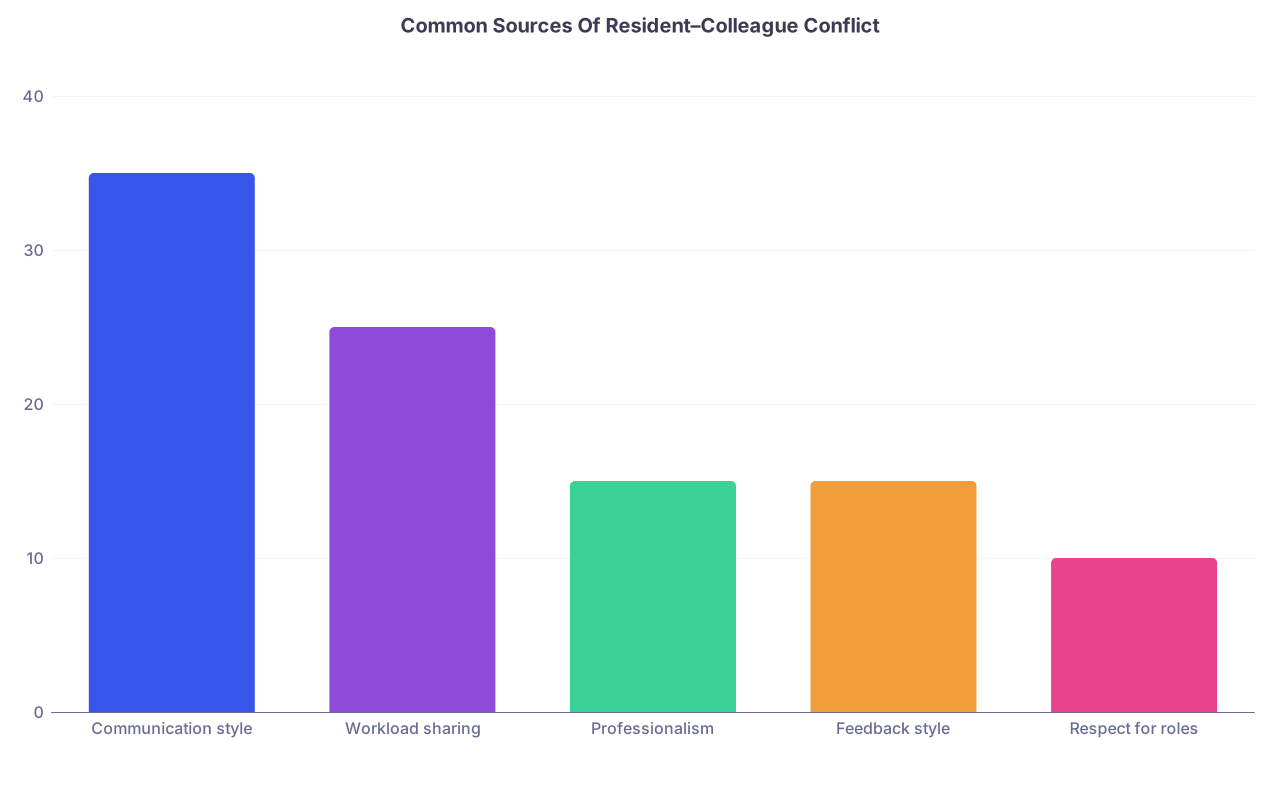
| Category | Value |
|---|---|
| Communication style | 35 |
| Workload sharing | 25 |
| Professionalism | 15 |
| Feedback style | 15 |
| Respect for roles | 10 |
Step 1: Name What Kind of “Difficult” You’re Dealing With
Not all “difficult” is the same, and how you respond really depends on what flavor of nightmare you’ve got.
Here are the big ones I keep seeing in residency:
The Overbearing Senior
Think: “Why didn’t you do this already?” said with that disgusted face at 3 a.m. They micromanage, criticize in front of nurses, and love the phrase, “When I was an intern…”The Passive-Aggressive Co-Resident
Smiles in front of attendings, then subtly dumps work on you, rolls their eyes, “forgets” to pass on tasks. Later tells others you’re “not very efficient.”The Explosive Attending
Yells. Slams orders into the EMR. Makes sarcastic comments in front of the whole team. You stand there wondering if you should cry, run, or just disappear.The Checked-Out Colleague
Vanishes. Chronically late, leaves early, disappears during codes, magically “busy” when work appears. Guess who picks up the slack?The Underminer
Corrects you in front of patients aggressively. Cuts you off. Re-does what you just did without explanation. Gives you that “you clearly have no idea what you’re doing” vibe.
Those are very different problems. But your brain often lumps them into one: “Conflict = danger = stay quiet.”
So first move: before reacting, literally name it to yourself.
“Okay, this is an overbearing senior moment.”
Or: “This is a passive-aggressive co-resident thing.”
Why? Because naming it makes it feel less like “I’m failing” and more like “Ah, yes, this recognizable pattern that many residents survive.”

Step 2: Use “Low-Conflict” Communication That Still Protects You
You do not need to morph into some confrontation-loving superhero. You can be gentle and still set boundaries. Think: firm but low-drama.
Here’s what that looks like in real life.
Scenario A: Overbearing Senior Publicly Criticizes You
They snap at you on rounds:
“Why didn’t you follow up that lab? That’s basic. You can’t miss that.”
You feel your ears burning. The nurse is watching. The med student looks uncomfortable. You want to disappear.
Your move is not to clap back in the moment. Your move is to survive the moment calmly, then do a short, private follow-up.
Later, in the workroom:
“Hey, can I run something by you quickly?”
Pause, let them look up.
“When that came up on rounds about the lab, I totally get you want me to track that better. I’m working on that. But when it’s said in front of everyone like that, I honestly shut down and it’s harder for me to fix it. If you can give me that kind of feedback one-on-one, I’ll probably learn from it a lot better.”
Notice the structure:
- You validated the educational goal.
- You owned something (even if they were over the top).
- You calmly named the impact on you.
- You gave them an alternate path that still lets them feel “in charge.”
Will every senior respond well? No. Some will double down. But many actually soften a bit because you’re not attacking, you’re collaborating.
Scenario B: Passive-Aggressive Co-Resident Dumping Work
They keep saying subtle stuff like, “Oh, I thought you were handling all the discharges?” and somehow you end up with the worst pile every call.
One quiet, direct moment beats months of silent resentment.
“Hey, I’ve noticed the last few calls I’ve ended up with most of the discharges and follow-ups. I want to make sure we’re splitting things fairly. Can we literally divide the list right now so it feels balanced to both of us?”
You’re not calling them lazy or mean. You’re anchoring to fairness and transparency. Harder for them to play games when everything is out in the open.

| Step | Description |
|---|---|
| Step 1 | Conflict with colleague |
| Step 2 | Document and escalate to chief or PD |
| Step 3 | Let it go or gentle check in |
| Step 4 | Private conversation |
| Step 5 | Maintain and monitor |
| Step 6 | Document and seek support |
| Step 7 | Safety risk? |
| Step 8 | Pattern or one time? |
| Step 9 | Improves? |
Step 3: When to Confront, When to Document, When to Escalate
This is where the fear gets loud.
Because your brain jumps to: “If I say something, they’ll retaliate. If I escalate, everyone will hate me.”
So let me draw a line for you.
You deal privately when it’s:
- A one-off snappy comment
- Mild unprofessionalism that doesn’t feel dangerous
- Miscommunication about roles or expectations
- A pattern that’s annoying but not threatening
You start documenting and getting help when it’s:
- Repeated humiliation in front of others
- Yelling, swearing, or personal attacks
- Racist/sexist/ableist/harassing comments
- Unsafe behavior around patients
- Retaliation or threats
Let me be blunt: you are not overreacting if you write down dates, times, and exact phrases. That’s called being smart in a system that often gaslights trainees.
I’ve seen residents avoid documenting because it “feels dramatic.” Then, when things finally explode, everything becomes “he said, she said.” You want specifics. Your future self will thank you.
Documentation that doesn’t feel like a lawsuit prep
Make a simple, boring file (or even notes on your phone, locked):
- Date, time, place
- Who was present
- What was said/done (exact phrases if you remember)
- Your brief reaction / impact (e.g., “Humiliated in front of entire team,” “Nurse later asked if I was okay”)
You might never use it. Or it might be the thing that makes leadership actually take you seriously instead of telling you to “just work it out among yourselves.”

Step 4: Protect Your Reputation Without Becoming a Doormat
Here’s the messed-up truth: as a resident, you’re building two things at once—your skills and your reputation. That second one can make you swallow a lot of crap you shouldn’t.
So how do you stand up for yourself without getting labeled “problematic”?
You over-communicate professionalism.
If you’re going to push back on someone, the rest of the time you’re:
- Reliable with notes, orders, follow-ups
- On time (as much as humanly possible)
- Responsive to pages
- Kind to nurses and staff
- Reasonably prepared on rounds
Not perfect. Just clearly not a slacker.
Why? Because then, when you do raise a concern, it lands as: “This is a solid resident with their act together who’s reporting a real issue,” not “That disorganized intern who’s always behind is now complaining.”
Is that fair? No. But it’s the game.
And when you talk to chiefs, faculty advisors, or your PD about a conflict, stick to behaviors, not character.
Say:
“On three occasions, Dr. X raised his voice and criticized me in front of patients and staff, which made it harder for me to function clinically.”
Not:
“He’s a bully and a horrible person.”
You want to sound like someone who wants a solution, not a war.
| Situation Type | Low-Conflict Response Example |
|---|---|
| Overbearing senior | Private feedback about how you learn best |
| Passive-aggressive peer | Suggest explicit task division in the moment |
| Underminer in front of pt | Ask to debrief privately about what happened |
| Checked-out colleague | Calmly name imbalance and propose specific split |
| One-time snappy comment | Let go or small “Was everything okay earlier?” check-in |
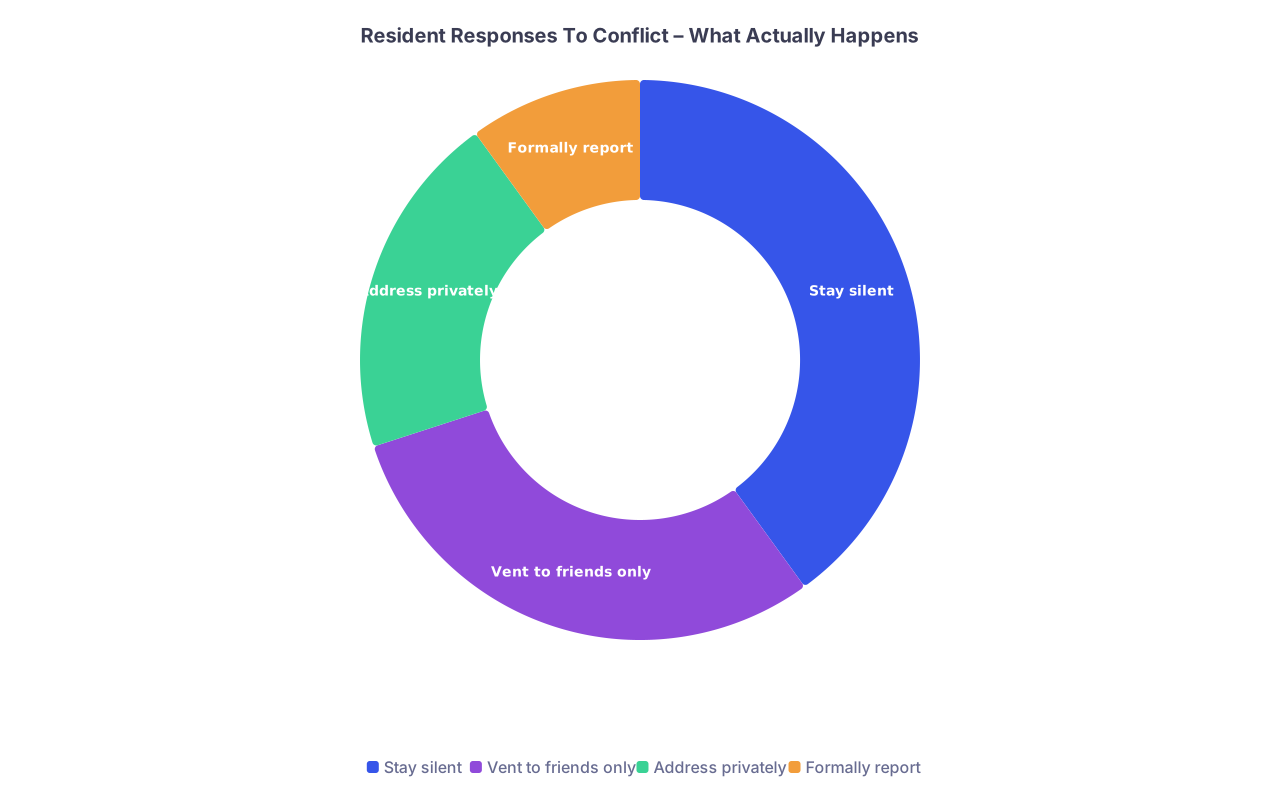
| Category | Value |
|---|---|
| Stay silent | 40 |
| Vent to friends only | 30 |
| Address privately | 20 |
| Formally report | 10 |
Step 5: Scripts for the Conflict-Avoidant Resident
If you’re like me, your brain goes blank when you’re stressed. So having literal sentences in your back pocket helps.
Here are some low-drama, high-boundary lines you can steal:
When someone is harsh in public and you want to move it private:
“Got it. I’ll follow up on that. Can we talk through the details after rounds so I can make sure I fully understand?”
When a co-resident keeps shifting work to you:
“I’m happy to help, but I’m already covering X and Y. If I take this on too, the rest may get delayed. How do you want to split it so it’s fair?”
When a nurse or staff member speaks to you disrespectfully (and you’re terrified to push back):
“I want us to work well together, and I know everyone’s stressed. When things are said like that, I shut down a bit. Can we reset and figure this out together?”
When an attending makes a cutting comment that crosses a line:
“Dr. Smith, I respect your feedback and I’m here to learn. When it’s phrased that way, it’s hard for me to process the content. Is there another way you’d want me to think about this?”
Sounds soft, right? But there’s steel inside that. You’re naming the impact and asking for change.
You don’t have to yell to be strong.

Step 6: Getting Help Without Feeling Like You’re “Snitching”
Another fear: “If I tell my chief / PD, I’ll be marked as the complainer.”
Here’s the reframe: you’re not gossiping, you’re seeking supervision. That’s literally their job.
When you go to them, you can say:
“I want to run a situation by you and get advice on how to handle it professionally. I’m not trying to blow anything up; I just don’t want to respond in a way that makes things worse.”
This signals:
- You’re trying to handle it at the lowest possible level.
- You’re open to feedback on your own role.
- You’re not here for drama; you’re here for guidance.
And if they dismiss you with “Yeah, he’s rough with everyone, just get used to it”? File that away. That tells you more about the program culture than about you.
You’re allowed to decide, silently, “Okay, this is not a safe person to bring future concerns to,” and find someone else—another faculty mentor, a different chief, GME office, ombuds.
You’re not “too sensitive” if something feels wrong. Most abusive patterns in medicine get normalized by being brushed off exactly that way.
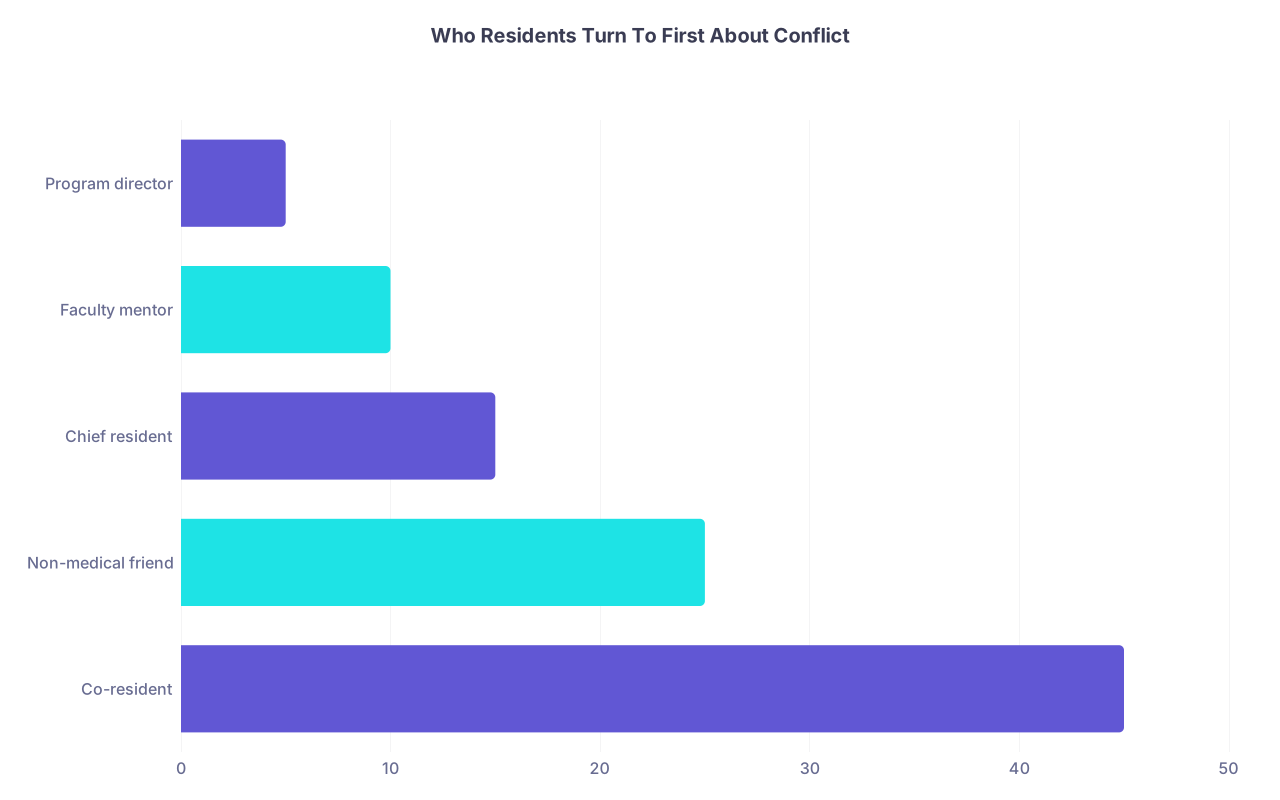
| Category | Value |
|---|---|
| Co-resident | 45 |
| Non-medical friend | 25 |
| Chief resident | 15 |
| Faculty mentor | 10 |
| Program director | 5 |
Step 7: For The Truly Toxic Situations
Sometimes it’s not just “difficult.” It’s toxic.
You start dreading seeing one person. You feel physically sick when you’re on service with them. You cry in the call room bathroom. You start questioning if you should even be in medicine.
If that’s you, I’m not going to sugarcoat this: you might not be able to fix that person. You can, however, do three very practical things:
- Build your record. Keep that log. Save any emails or messages that are blatantly unprofessional.
- Build your allies. Find at least one faculty member who knows you as competent and hardworking. One nurse who likes working with you. One chief who’s seen you on your best days.
- Build your exit options. That doesn’t always mean switching programs, but it might mean:
- Asking not to be scheduled with a specific attending again
- Requesting a meeting with GME about a pattern of behavior
- Quietly exploring transfer if it’s truly untenable
You’re not weak for doing this. You’re surviving a system that was not designed with your psychological safety in mind.
You’re allowed to want to be treated like a human being and still become a fantastic physician.
Quick Reality Check
You will not handle every conflict “well.” Some days you’ll freeze, say nothing, replay it in the shower and come up with the perfect line 12 hours too late.
That doesn’t mean you’re broken. It means you’re human and in training.
If you walk away from this with only one skill, let it be this: instead of automatically swallowing it every time, pause and ask yourself:
“Is this something I can let go, or is this starting to change how I feel about myself and my work?”
If it’s the second one, it deserves attention. From you, and probably from someone with power.
You don’t have to become fearless about conflict. You just need enough courage to take one small, protective step at a time.
That’s how you get through residency with your sanity semi-intact.
FAQ (Exactly 6 Questions)
1. What if the difficult colleague is the one writing my evaluation or fellowship letter?
This is the nightmare scenario everyone imagines. Your instinct is to keep your head down and take whatever they dish out. Sometimes, with a short rotation and mild issues, that’s honestly the most strategic move. But if their behavior is bad enough that you’re worried about patient safety or serious unprofessionalism, quietly start building a counterweight: get strong evaluations and support from other attendings, ask to work more with faculty who know your strengths, and consider a very carefully framed conversation with a trusted chief or mentor: “I’m concerned that my relationship with Dr. X might affect my evaluation, and I want to make sure there’s enough data from other faculty who’ve seen my work.”
2. How do I know if I’m being too sensitive or if their behavior is actually a problem?
Ask yourself this: if you watched someone talk to a med student that way, would you think, “Yikes, that’s not okay”? We’re usually much harsher on ourselves than on others. Also check with a couple of trusted colleagues and describe the situation factually—not “He’s a jerk,” but “He raised his voice and said, ‘Are you incompetent?’ in front of the whole team.” If two or three reasonable people say, “Yeah, that’s not normal,” believe them. That’s not you being fragile; that’s someone crossing a line.
3. What if I try to talk to the person and they deny everything or blame me?
That happens a lot, especially with people who’ve been getting away with this for years. Your goal in that conversation is not to convince them they’re wrong. Your goal is to 1) show you attempted a professional, direct approach and 2) give them a chance (even a small one) to adjust. If they gaslight you or flip it on you, mentally file that away, document the interaction, and move up a level—chief, mentor, PD, GME. You’re not “escalating too fast” if you already tried the lower step in good faith.
4. I’m terrified of being labeled “not a team player.” How do I avoid that?
You offset necessary conflict with visible teamwork everywhere else. Be the person who helps with scut, checks in on the med student, doesn’t trash-talk nurses, and follows through on tasks. When people see you as generally collaborative and reliable, they’re much more likely to interpret conflict as a specific issue, not a personality flaw. Also, when you bring up concerns, use language like “team dynamics,” “learning environment,” and “patient care impact” instead of “I don’t like this person.”
5. Is it ever better to say nothing and just survive the rotation?
Yes. Not every battle is worth it, especially if it’s a two-week rotation with someone you’ll never see again, and the offense is annoying but not harmful. You’re allowed to strategically choose silence for your own sanity. The test is: is this just irritating, or is it making you dread going to work, doubt your worth, or feel unsafe? If it’s the latter, “just survive it” slowly burns you out. At that point, doing something—even just talking confidentially with a mentor—is usually less costly long-term than swallowing it.
6. What if there’s a known toxic attending and leadership “already knows” but nothing changes?
This is depressingly common. Programs shrug and say, “Oh, that’s just how Dr. X is,” and generations of residents get traumatized. You’re not going to single-handedly fix an entrenched culture, but you can still protect yourself. Document patterns. Avoid extra elective time with that person. Make sure your primary mentors and letter writers are people who treat you well. If you do report, frame it as a pattern that impacts multiple residents and patient care, not a single personality conflict. And if the culture is broadly dismissive of these concerns, you are absolutely justified in considering whether this is a place you want to stay long-term.
Open your phone or notebook right now and write down the last difficult interaction that’s still bugging you—who, what they said or did, and how it made you feel. Then ask yourself: is this one I can let go, one I should gently address, or one I need to start documenting?


