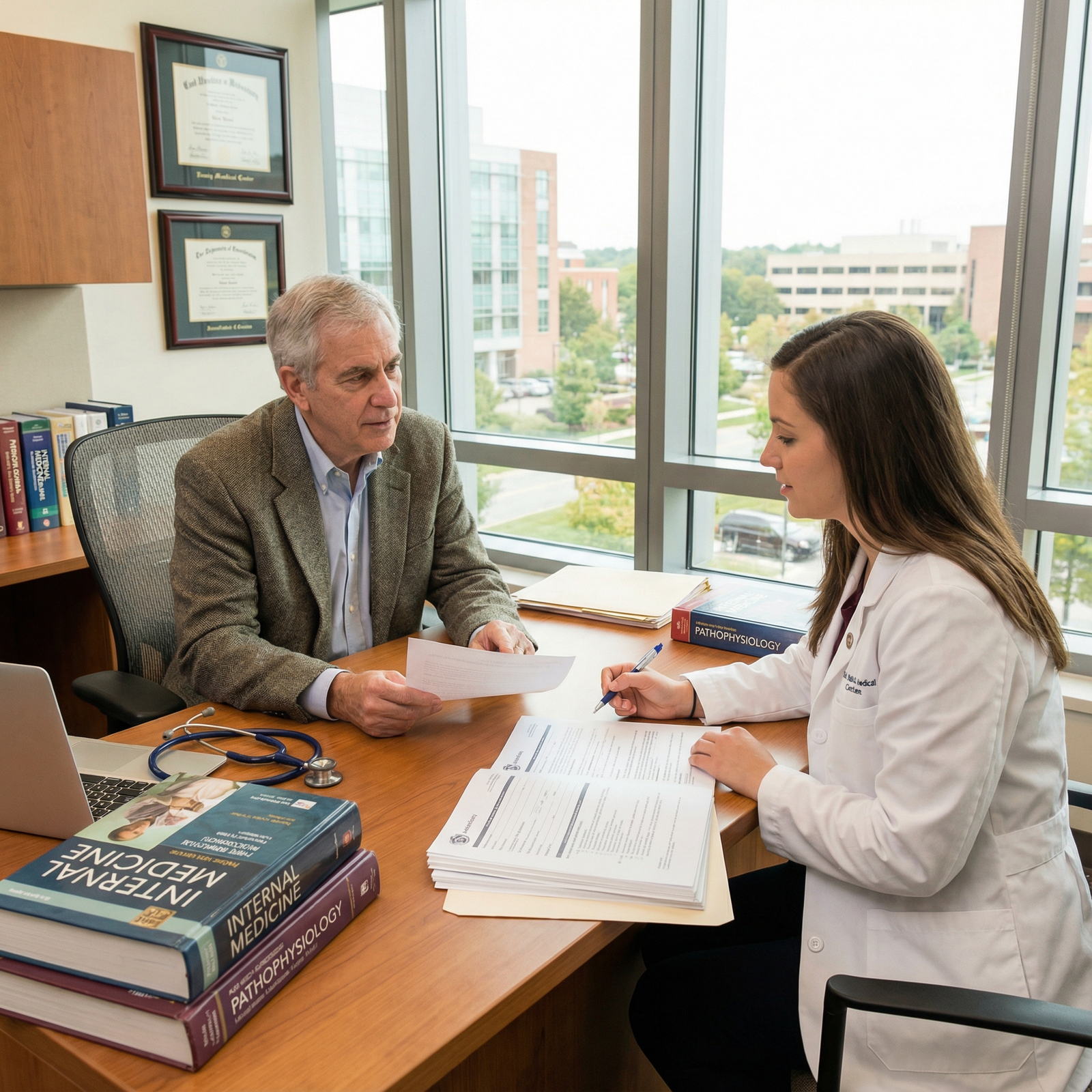
Introduction: Why Mentorship Choices Matter for Your Letters of Recommendation
For premeds and medical students, Letters of Recommendation (LoRs) are often the most personal and persuasive part of an application. Whether you are applying to medical school, a competitive residency program, or a specialty-specific away rotation, strong LoRs can transform you from a collection of grades and scores into a real, three-dimensional future physician.
Yet most applicants focus almost exclusively on how to ask for a letter and not nearly enough on whom they ask. Choosing the right mentors—people who know you well, can write effectively, and have the credibility to speak to your potential—is the single most important step in elevating your letters of recommendation.
This guide walks you through a structured, step-by-step approach to:
- Understand what admissions committees actually look for in LoRs
- Strategically select mentors who can best support your goals
- Build strong, genuine relationships well before you need a letter
- Ask for and support high-quality letters with professionalism
- Maintain mentor relationships for long-term career development
Throughout, we’ll connect mentorship with broader career development and provide concrete application tips tailored to both medical school and residency applicants.
The Role of Letters of Recommendation in Medical School and Residency Applications
Letters of Recommendation are more than formalities—admissions committees rely on them to validate, contextualize, and interpret your entire application. In a competitive pool where many applicants share similar GPAs and test scores, strong letters often tip the balance.
Key Purposes of Letters of Recommendation
1. Validation of Academic and Clinical Performance
Letters of recommendation give independent confirmation of your:
- Knowledge base and ability to learn
- Clinical reasoning and problem-solving
- Reliability, professionalism, and follow-through
- Performance under pressure and in real-world clinical contexts
For example, a faculty member might write:
“She consistently arrived early for rounds, prepared detailed patient presentations, and independently read about her patients’ conditions, which improved our team’s care.”
Comments like this make your transcript and MSPE come alive.
2. Assessment of Character and Professionalism
Admissions committees know that medicine is a high-stakes, team-based profession. They are looking for future colleagues who are:
- Ethical and trustworthy
- Kind and compassionate to patients and staff
- Accountable and receptive to feedback
- Resilient in the face of stress
Strong LoRs often highlight specific anecdotes, such as how you handled a difficult patient interaction or how you responded to a clinical error, which provide much more insight than generic praise.
3. Evidence of “Fit” with the Program or School
Programs use letters to gauge:
- Whether your values align with their mission (e.g., primary care, research, underserved populations)
- How you function on a team and in their typical learning environment
- Whether you would be a good colleague and trainee
A mentor who knows your goals and the program’s culture can tailor your letter to emphasize your fit:
“Given her commitment to primary care in underserved urban communities, I believe she would be an excellent fit for your mission-driven program.”

Strategic Steps for Choosing the Right Mentors
Selecting mentors for Letters of Recommendation is not about choosing the most famous name you can access. It’s about selecting people who can tell a detailed, authentic story about you as a learner and future physician. This process begins long before you ever say, “Can you write me a letter?”
1. Clarify Your Goals and Target Programs
Before you choose mentors, get very clear about what you’re applying to and what matters most for that path.
For Medical School Applicants
Consider:
- Are you applying MD, DO, or both?
- Are you emphasizing research, community service, or clinical exposure?
- Do your target schools value primary care, academic medicine, innovation, or advocacy?
Examples of goal-aligned mentors:
- A basic science professor who knows your work well for research-heavy MD programs
- A primary care physician you’ve shadowed extensively for schools emphasizing community service
- A PI from a long-term research project for combined MD/PhD or heavily research-oriented programs
For Residency Applicants
Ask yourself:
- Are you applying to a highly competitive specialty (e.g., dermatology, orthopedic surgery, ENT)?
- Are you targeting academic programs, community-based programs, or a mix?
- Do you see yourself in research, education, leadership, or purely clinical practice?
Examples:
- Subspecialty attending from an away rotation at a program similar to your target
- Research mentor in your specialty if you are applying to academic programs
- Core clerkship director or sub-I attending who observed you over weeks in your chosen field
Once you define your goals, you can better align your mentorship and letters of recommendation strategy with your long-term career development.
2. Prioritize Experienced, Relevant Professionals
Admissions committees weigh letters differently based on the writer’s role and relevance to your application.
Types of Mentors to Consider
Clinical Faculty (Attendings)
- Core for residency applications and very helpful for medical school applications with strong clinical exposure
- Can speak to your bedside manner, clinical reasoning, team role, and work ethic
Course Directors and Professors
- Particularly important for medical school applicants, especially in science disciplines
- Can validate your intellectual curiosity, discipline, and academic rigor
Research Mentors / Principal Investigators (PIs)
- Essential if you are applying to research-intensive programs or MD/PhD
- Can discuss your initiative, persistence, problem-solving, and contributions to scientific work
Longitudinal or Advising Mentors
- Faculty advisers, physician mentors, or pre-health advisors who have known you over years
- Useful for holistic, character-focused letters that span multiple settings
Balancing Prestige and Depth of Relationship
A well-known name helps, but only if the mentor actually knows you. A detailed, enthusiastic letter from an assistant professor who supervised you closely will almost always outperform a vague letter from a department chair who barely remembers you.
Ask yourself:
- Who has seen me handle challenges or grow over time?
- Who can provide specific stories, not just adjectives?
- Who understands the level I’m applying at (premed vs. med student vs. residency)?
Whenever possible, choose mentors who are both respected in their field and have direct experience supervising your work.
3. Assess Compatibility and Communication Style
Mentorship is not purely transactional. Strong LoRs often emerge from genuine mentor-mentee relationships built on trust, communication, and shared values.
Signs of a Good Mentor Fit
- Accessible and responsive: They reply to emails and show up to meetings.
- Supportive but honest: They challenge you while clearly wanting you to succeed.
- Good communicator: They express themselves clearly, which often translates to stronger, more persuasive letters.
- Familiar with current application expectations: Especially important for residency and competitive medical school cycles.
If you routinely leave interactions with a mentor feeling heard, motivated, and guided, that person is a strong candidate for your letters of recommendation.
4. Select Mentors Who Truly Understand Your Strengths
The most powerful LoRs are narrative-driven and specific. That can only happen when your mentor knows you beyond your name on a class roster or team list.
Help Mentors Get to Know You Deeply
To lay the groundwork months in advance:
- Engage actively: Ask questions on rounds, volunteer to present, participate in class discussions.
- Seek feedback: Ask, “What can I work on to improve my presentations or notes?” and follow up by actually implementing their suggestions.
- Share your aspirations: Let them know you are interested in pediatrics, surgery, psychiatry, academic medicine, etc.
- Show consistency: Be reliable, prepared, and professional every time they interact with you.
When it’s time to ask for a letter, you want your mentor to say:
“I know exactly what to write; I’ve seen your growth and know your goals.”
If a potential mentor barely remembers who you are or your experiences with them were brief and superficial, they are unlikely to produce a strong letter, even if they are well-known.
5. Consider Mentor Reputation, Influence, and Network
Your mentor’s reputation and position can shape how heavily their letter is weighed, especially in residency and competitive specialty applications.
What to Look For
- Respected in their department or specialty: Known for clinical excellence, education, or research
- Involved in education: Program directors, clerkship directors, or faculty known to write detailed letters
- Connected to your target programs: They trained there, collaborate with faculty, or have sent previous students there
A letter from a mentor who has an established track record of training strong students and residents can reassure committees:
“If Dr. X strongly endorses this applicant, they are someone we should pay attention to.”
That said, never sacrifice depth of relationship for prestige alone. Ideally, choose writers who have both strong reputations and close supervision of your work.
6. Invest in Building the Relationship Before You Need a Letter
Mentorship and Letters of Recommendation are not last-minute tasks. They grow out of ongoing, authentic relationships.
Ways to Build Strong Mentor Relationships
Clinical Rotations and Sub-Internships
- Show up early, offer to help, and be the student others can rely on.
- Ask thoughtful clinical questions and read about your patients.
- Request mid-rotation feedback and act on it.
Research or Longitudinal Projects
- Take ownership of parts of a project (data collection, literature review, draft writing).
- Meet regularly with your mentor to discuss progress and next steps.
- Demonstrate follow-through—complete tasks by or before deadlines.
Office Hours and Advising Meetings
- For premed and early medical school, meet with professors outside class.
- Talk about your interests, challenges, and evolving plans.
- Ask for advice periodically—not just a week before applications are due.
Building trust and credibility over months to years leads to letters that read like:
“I have worked closely with this student for over two years, during which I’ve seen profound growth in their clinical acumen and leadership.”
That level of familiarity is what elevates your Letters of Recommendation far above the average.
Approaching Potential Mentors for Letters of Recommendation
When you’ve identified mentors who align with your goals and know you well, the next step is asking in a professional, tactful way.
1. Ask for a “Strong” Letter of Recommendation
Whenever possible, ask explicitly if they can write you a strong positive letter. This gives them a graceful way to decline if they feel they cannot endorse you fully.
Example phrasing (email or in person):
“I really value the time I spent working with you on the internal medicine service. I’m applying to internal medicine residency this fall, and I was wondering if you feel you could write a strong letter of recommendation on my behalf?”
If they hesitate or decline, thank them and move on. It is far better to have a smaller number of enthusiastic letters than one lukewarm or generic letter.
2. Craft a Professional, Complete Request
When you reach out (ideally 4–8 weeks before the deadline), include:
- Who you are and how you worked with them
- What you’re applying for (medical school, specific specialty, or program)
- Why you chose them specifically as a mentor and recommender
- When the letter is due and how it should be submitted
- A brief note about what qualities or experiences you hope the letter might highlight
Sample Email Structure
Subject: Request for Strong Letter of Recommendation for [Medical School / Residency in X]
- Brief greeting and reminder of how you know each other
- Short paragraph summarizing your goals and what you’re applying for
- Direct request for a strong letter of recommendation
- Clear deadlines and submission instructions (including ERAS, AMCAS, or school-specific portals)
- Offer to provide supporting materials (CV, personal statement, transcript, bullet point list of experiences with them)
Attach or link:
- Updated CV or résumé
- Draft of your personal statement if available
- Any program list or target goals (academic vs. community, region, specialty focus)
- Summary of projects or patient cases you worked on together, if helpful
Providing this context helps mentors write more targeted, compelling letters that reinforce your overall application narrative.
3. Be Specific About What to Emphasize
Many mentors, especially busy clinicians and researchers, appreciate gentle guidance about what you hope the letter will highlight, such as:
- Clinical reasoning and reliability
- Compassionate patient care and communication skills
- Research initiative and perseverance
- Leadership, teaching, or teamwork
You might say:
“It would be especially helpful if you could comment on my clinical reasoning, ability to function as a team member, and growth over the course of the rotation, as these are qualities my target programs emphasize.”
This isn’t scripting the letter; it’s aligning it with your broader career development and application strategy.
Following Up, Expressing Gratitude, and Sustaining the Mentorship
1. Timely Follow-Up and Gentle Reminders
Faculty are busy and may appreciate polite reminders:
- Send a reminder 1–2 weeks before the deadline if the letter isn’t yet marked as received.
- Keep reminders brief, appreciative, and respectful of their time.
Example:
“I just wanted to send a quick, polite reminder that the ERAS letter deadline is next Friday. I’m very grateful for your support and guidance.”
2. Express Genuine Gratitude
Writing Letters of Recommendation is time-consuming. Regardless of the outcome, always thank your mentors:
- Send a handwritten note or thoughtful email after the letter is submitted.
- Acknowledge their role in your journey and mentorship.
- When you match or gain admission, update them and thank them again.
This is not only professional but also the beginning of a long-term professional relationship.
3. Maintain and Grow the Relationship Beyond the Letter
Mentorship doesn’t end once the letter is uploaded.
- Share your results (acceptances, match outcomes, future plans).
- Periodically update them on major milestones (starting residency, research publications, leadership roles).
- Continue to seek their advice as your career evolves.
Some of your letter writers may later become career-long mentors, collaborators, or sponsors—helping you with future fellowships, job searches, and leadership opportunities.

Frequently Asked Questions About Mentorship and Letters of Recommendation
1. How early should I start building relationships with potential mentors?
Begin as early as possible:
- Premeds: Start in the first or second year with science professors, research mentors, or clinical supervisors.
- Medical students: Engage during preclinical years with faculty and during your very first clerkships.
Aim to have at least a few mentors who have known you for 6–12 months or longer by the time you apply. Longitudinal relationships almost always yield stronger Letters of Recommendation.
2. What if my “big-name” mentor doesn’t know me very well?
If a senior or famous physician barely knows you, they are usually not the best choice, even if you think their title would impress programs. A generic letter from a big name often feels weak to committees.
Instead, prioritize:
- Attendings or professors who supervised you closely
- Research mentors you worked with consistently
- Faculty who can describe specific strengths and anecdotes
If a big-name mentor did work with you consistently and knows you well, that’s ideal—but depth of relationship should always come first.
3. How many Letters of Recommendation do I need, and how many mentors should I cultivate?
Requirements vary:
- Medical school applicants: Typically need 2–3 academic letters (often including science faculty) and sometimes 1 clinical or personal letter. Some schools accept committee letters.
- Residency applicants: Usually need 3–4 letters, often including at least 1–2 from your chosen specialty and possibly 1 from an away rotation or department chair.
You should cultivate more mentors than the minimum number of letters required. This gives you flexibility if someone is unavailable, declines, or cannot meet your deadline.
4. What should I do if my first-choice mentor declines to write a letter?
A mentor might decline because:
- They don’t feel they know you well enough.
- They don’t think they can write a strong letter.
- They are overcommitted or facing time constraints.
If this happens:
- Thank them sincerely for their honesty and time.
- Ask if they have recommendations for others who might know your work well.
- Turn to your “backup” mentors—this is why cultivating multiple relationships is so important.
A tactful decline usually protects you from receiving a mediocre letter, which is ultimately a favor.
5. How can I tell if a letter from a mentor is likely to be strong?
While you won’t see the letter itself (and shouldn’t ask to), you can gauge likely strength by:
- The mentor’s enthusiasm when you ask (“I’d be happy to write you a strong letter.”)
- The depth of your relationship (close supervision over time vs. brief contact).
- The mentor’s familiarity with your goals and application plans.
- Their track record of mentoring and supporting other successful applicants.
If you have thoughtfully chosen mentors, invested in genuine relationships, and clearly communicated your goals, you are setting yourself up for strong, supportive Letters of Recommendation.
By intentionally selecting mentors who know you well, aligning them with your career goals, and nurturing these relationships over time, you transform Letters of Recommendation from a stressful checkbox into a powerful asset in your medical school or residency application. These relationships—and the advocacy that grows from them—can influence not just a single application cycle, but your entire career development as a future physician.