
Unlocking Opportunities: How Strong Mentor Recommendations Open Doors in Medicine
In medicine, your trajectory is shaped not only by your grades, test scores, and CV, but also by the people who are willing to stand behind you. Mentorship and strategic networking can transform a solid application into a compelling one—and at the heart of that transformation are strong letters of recommendation.
For premed students, medical students, and early trainees, understanding how to cultivate meaningful mentorship and earn impactful recommendations is one of the most important career development skills you can learn. Strong recommendations from mentors do more than praise your performance; they signal to decision-makers that an experienced physician is willing to stake their reputation on your potential.
This guide explores how to unlock those opportunities: what makes a letter of recommendation truly powerful, how to build mentor relationships that lead to such letters, and how recommendations continue to influence your career long after medical school.
Why Letters of Recommendation Matter So Much in Medicine
Beyond Metrics: How Committees Really Use Recommendations
In both medical school and residency applications, letters of recommendation (LoRs) are central pieces of the holistic review process. Committees know that two applicants can have similar GPAs and test scores yet be very different in character, professionalism, and potential. Recommendations help them see that difference.
Strong letters of recommendation in medicine typically serve three key functions:
Personal insight:
A mentor can describe how you handle stress, respond to feedback, work in teams, and interact with patients—qualities no transcript can capture.Credibility and validation:
A respected attending, PI, or academic leader stating, “I would strongly support this applicant at my own institution” carries enormous weight. It reassures committees that your excellence is recognized by professionals they trust.Context and nuance:
A mentor can explain gaps, setbacks, or unconventional paths in a way that reframes them as resilience and growth, rather than weaknesses.
In short, a well-written letter transforms you from a set of numbers into a future colleague.
The Increasing Importance of Recommendations in a Pass/Fail Era
With many medical schools and even parts of standardized exams shifting to pass/fail grading, letters of recommendation and narrative evaluations have become more influential. When fewer numerical signals are available, programs lean more heavily on:
- Narrative evaluations in clerkships
- Standardized letters of evaluation (SLOEs in some specialties)
- Traditional recommendation letters from mentors who know you well
This makes it even more important to be intentional about your mentorship and networking strategy early in your medical journey.
Types of Recommendations and Who Should Write Them
Different mentors highlight different dimensions of your readiness for the next step in your training. A strategically chosen mix of letter writers creates a three-dimensional portrait of you as both learner and future physician.
Academic Faculty: Showcasing Your Intellectual Foundation
Academic faculty—especially those who have taught you in demanding preclinical or science courses—can:
- Speak to your intellectual curiosity, critical thinking, and work ethic
- Describe your performance relative to peers
- Highlight your engagement in class, such as asking insightful questions or leading group discussions
Ideal when:
- Applying to medical school, especially if you’re a premed seeking science faculty letters
- Demonstrating academic strength, adaptability to rigorous curricula, and reliability
Clinical Supervisors: Demonstrating Clinical Skills and Professionalism
For medical students and residency applicants, letters from clinical supervisors (attendings, clerkship directors, chief residents under faculty oversight) are essential. These mentors can address:
- Your clinical reasoning and bedside manner
- Professionalism, teamwork, and communication with patients and staff
- How you handle long hours, difficult cases, and feedback
These letters are often the most trusted by residency and fellowship programs because they speak directly to how you function in real clinical environments.
Research Supervisors: Highlighting Scholarly Potential
Research mentors (principal investigators, lab supervisors, or clinical research leads) are particularly valuable when:
- Applying to research-heavy medical schools or MD/PhD programs
- Targeting academic or highly competitive specialties
- Demonstrating commitment to scholarly activity, critical analysis, and persistence
They can describe your:
- Role and contributions to projects (study design, data analysis, manuscript preparation)
- Initiative, independence, and ability to learn new methods quickly
- Potential as a future academic leader or physician-scientist
Other Valuable Voices
While the three categories above are most common, other meaningful recommenders may include:
- Long-term community physicians you have shadowed
- Volunteer or service leaders who can speak to your commitment to underserved populations
- Professional supervisors from significant gap-year jobs (scribing, EMT, clinical research coordinator, etc.)
These letters are particularly useful for showing continuity, character, and leadership—especially when aligned with your long-term career goals.

What Makes a Recommendation Letter Truly Strong?
Hallmarks of an Exceptional Medical Recommendation
Not all letters carry the same impact. The strongest recommendations tend to share several key characteristics:
Depth and specificity
Vague statements like “hardworking” or “pleasant” add little value. Powerful letters include:- Specific clinical encounters where you demonstrated insight or compassion
- Concrete examples of your research contributions (e.g., leading data analysis, writing a manuscript section)
- Clear descriptions of leadership or initiative you took beyond expectations
Clear, confident endorsement
Committees read between the lines. Phrases such as:- “I give my highest recommendation”
- “I would eagerly welcome this student as a resident at my own institution”
- “This student ranks in the top 5% of all trainees I have worked with in the past 10 years”
carry far more weight than lukewarm or cautious language.
Longitudinal perspective
Letters that describe how you have grown over time—academically, clinically, and personally—are particularly compelling. A mentor who has known you for a year or more can:- Describe your progression from novice to more advanced trainee
- Provide context on how you respond to challenges and setbacks
- Demonstrate sustained mentorship and investment in your development
Alignment with your goals and the program’s priorities
Strong letters are not generic. They highlight qualities that matter for the specific next step:- Professionalism, reliability, and teamwork for clinical training
- Intellectual curiosity and grit for research-intensive paths
- Cultural humility, service, and advocacy for primary care or community-focused programs
Red Flags That Weaken a Letter
You want to avoid letters that unintentionally hurt your application. Potential issues include:
- Very short letters (e.g., a few paragraphs) suggesting the mentor doesn’t know you well
- Overly generic language that could describe any student
- Faint praise without strong endorsement
- Unexplained concerns or emphasis on weaknesses
- Evidence that the writer had limited direct interaction with you
This is why it’s critical to ask: “Do you feel you can write a strong, positive letter of recommendation for me?” rather than simply, “Can you write a letter?”
Building Mentor Relationships That Lead to Great Recommendations
Strong recommendations are the outcome of strong mentorship. You cannot manufacture a powerful letter in the final month before deadlines—it’s the product of months or years of thoughtful relationship-building.
Start Early: Mentorship in Premed and Medical School
Whether you’re a premed or already in medical school:
Identify potential mentors early
Look for people whose work you admire and whose career paths resemble where you might want to go. This could be:- A basic science professor whose course you excel in
- A physician in a clinic where you volunteer
- A research PI doing work that interests you
Show up consistently
Attend office hours, research meetings, journal clubs, or teaching sessions. Reliability builds trust.Be curious and engaged
Ask thoughtful questions, request feedback, and demonstrate that you’re invested in learning, not just in getting a letter.
Practical Strategies to Deepen the Relationship
Here are concrete ways to nurture a meaningful mentor-mentee connection:
Communicate your goals clearly
Share your short- and long-term aspirations (e.g., “I’m considering pediatrics or internal medicine with a focus on underserved populations”). This helps mentors tailor opportunities and eventually their recommendations.Seek and use feedback
When you ask for feedback on your clinical performance, presentations, or writing—and then actively implement it—you signal maturity and teachability. Mentors are more likely to advocate strongly for mentees who grow in response to guidance.Take initiative and add value
Rather than waiting to be assigned tasks:- Volunteer to lead a small project or presentation
- Offer to draft parts of a manuscript or IRB submission
- Help organize teaching sessions or student groups
Mentors notice trainees who consistently go a step beyond.
Keep mentors updated on your progress
Send occasional concise updates:- New roles (e.g., “I was elected to the student curriculum committee”)
- Major milestones (MCAT score, Step scores, honors, publications, presentations)
- Shifts in your interests or career focus
This ongoing connection will help them write richer, more current letters.
Express genuine appreciation
A brief email or in-person thank-you after major milestones, presentations, or completed rotations goes a long way. Mentors are more invested in mentees who value their time and guidance.
Turning a Strong Mentorship into a Strong Recommendation
How and When to Ask for a Letter
Timing and approach matter. Consider these steps:
Ask well in advance
Ideally:- 6–8 weeks before medical school application deadlines for premeds
- 2–3 months before ERAS opens or your target submission date for residency
Ask in person or via thoughtful email
If possible, request the letter during a meeting or video call. If that’s not feasible, write a professional, personalized email that:- Reminds them who you are and how you’ve worked together
- States your goals (e.g., applying to internal medicine residency)
- Asks if they can write a strong, supportive recommendation
Offer supporting materials
Make writing easier and the letter stronger by providing:- Your updated CV
- Personal statement or draft if available
- A short summary of your work with them (projects, cases, responsibilities)
- Any program-specific instructions or forms
- Your deadlines clearly listed
Respecting Their Time and Professional Boundaries
- Be organized: share all documents in one email or folder.
- Send a polite reminder 1–2 weeks before the deadline if needed.
- Never draft your own letter unless explicitly required and ethically discussed (and even then, many institutions discourage this). Authentic mentor voice is far more powerful and trusted.
Real-World Example: How Mentorship Translated into Acceptances
Case Study: Sarah’s Path from Premed to Multiple Acceptances
Sarah, a premed with strong academics and meaningful volunteer work, understood early that mentorship and networking would be critical. During her second year of college:
She built a faculty relationship
- Regularly attended office hours with a physiology professor she admired
- Asked questions that connected course content to clinical care
- Accepted an invitation to join the professor’s research lab
She took on meaningful responsibilities
- Learned data analysis rather than sticking to basic lab tasks
- Helped write parts of a manuscript and presented at a regional conference
- Sought feedback on her presentations and implemented suggestions
She maintained contact
- Sent semester updates on grades and activities
- Discussed her evolving interest in academic internal medicine
When it was time to apply to medical school, her mentor agreed to write a strong letter of recommendation. That letter highlighted:
- Her transformation from a shy student to a confident presenter
- Specific examples of her analytical thinking and teamwork in the lab
- Her resilience and professionalism when a project hit unexpected challenges
Combined with her academic record and personal statement, this powerful recommendation helped secure multiple medical school interviews and acceptances—including at research-focused institutions that valued her scholarly potential.
Sarah’s story illustrates a broader truth: strong recommendations emerge from genuine, long-term mentorship, not last-minute requests.
Beyond Medical School: Recommendations as Long-Term Career Catalysts
Mentorship and recommendations do not stop mattering after acceptance to medical school. In fact, they become even more critical as you advance through training.
Critical Junctures Where Recommendations Are Key
Clinical clerkships
Narrative comments and early letters can influence:- AOA nominations
- Clinical honors
- Early research or specialty-specific opportunities
Residency applications
Residency program directors consistently rate letters of recommendation—especially from within the specialty—as among the highest-impact components of applications. They want to know:- How you function on a busy team
- How you handle responsibility, stress, and complex patients
- Whether you are someone they would trust as a future colleague
Fellowships and early attending jobs
For subspecialty fellowship or first jobs:- Letters from program directors, department chairs, and respected faculty carry enormous weight.
- Strong recommendations can differentiate you in competitive fields and geographic locations.
Academic promotion and leadership roles
Later in your career, external letters may be required for:- Academic promotion
- Leadership positions (program director, division chief, etc.)
- Prestigious awards or society memberships
Mentorship and networking you cultivate as a trainee lay the foundation for these later opportunities.
Networking and Sponsor Relationships
Strong mentors often evolve into sponsors—people who don’t just advise you but actively advocate for you by:
- Introducing you to influential colleagues
- Nominating you for committees, awards, or leadership roles
- Connecting you with research or job opportunities
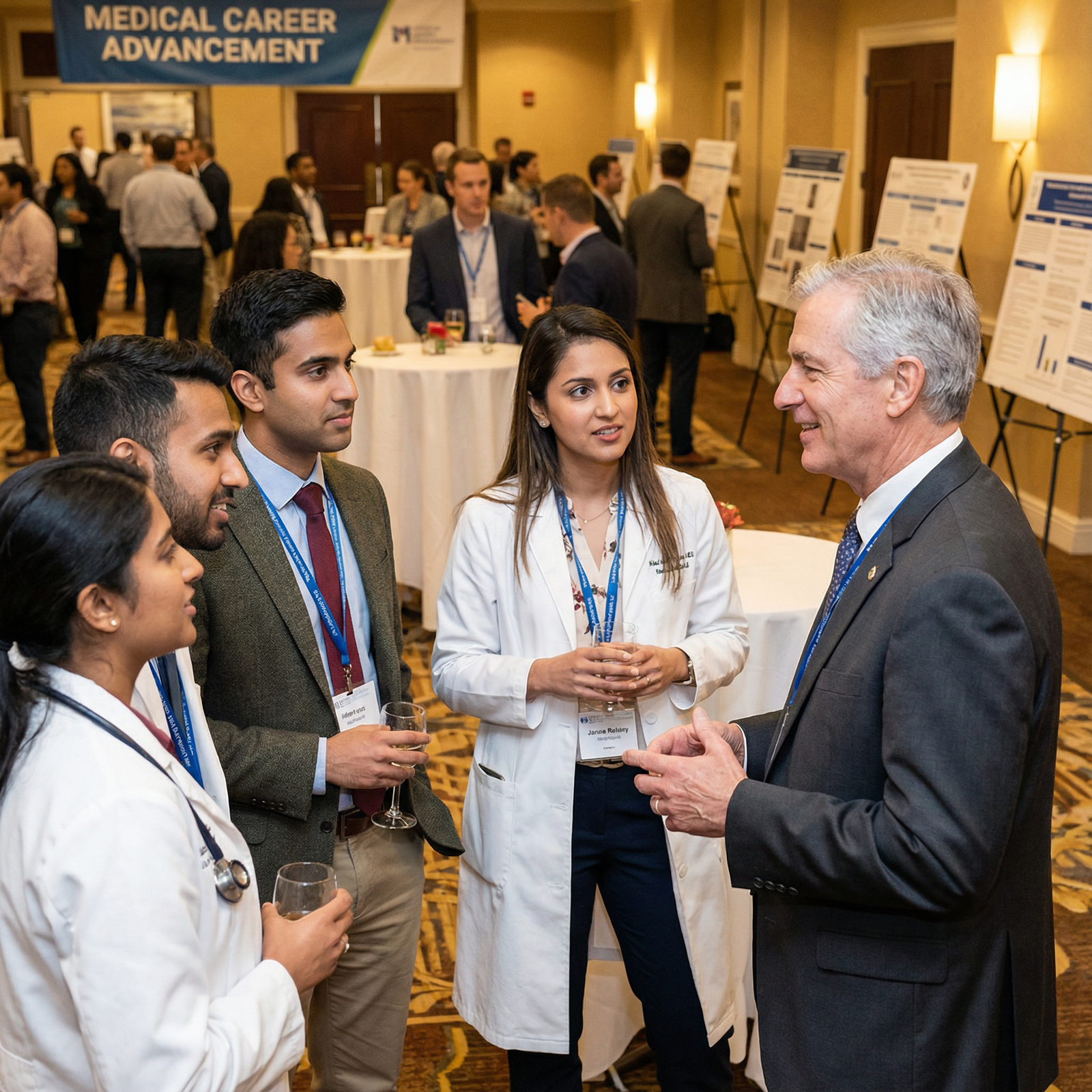
A powerful recommendation letter is often just the visible part of a much larger support network built through deliberate, professional relationships.
Frequently Asked Questions (FAQs)
1. How do I choose the right mentors for my recommendations?
Choose mentors who:
- Have worked with you closely (clinically, academically, or in research)
- Can describe your growth over time and provide specific examples
- Are respected in their field and familiar with the expectations of the programs you’re targeting
- Align reasonably well with your career interests (e.g., a pediatrician for pediatrics residency)
A less-famous mentor who knows you deeply will usually write a stronger letter than a prestigious name who barely remembers you.
2. What should I give my mentor to help them write a strong letter?
Provide a concise but comprehensive packet, which may include:
- Your updated CV (with dates, roles, and brief descriptions)
- Your personal statement or draft
- A summary of your work together, including specific projects, rotations, or responsibilities
- A brief paragraph on your career goals and why you’re applying to this particular program or specialty
- Clear deadlines and submission instructions
This helps your mentor write a detailed, tailored letter that supports your overall narrative.
3. What if a mentor seems hesitant or says they are too busy?
Take this as important feedback. A hesitant answer may mean:
- They do not feel they know you well enough.
- They are unsure they can write a strong letter.
- Their schedule truly limits their ability to do a good job.
In any of these scenarios, it is better to seek another recommender. You might say:
“I appreciate your honesty—thank you. I’ll ask someone who knows me better in that case.”
4. How can I maintain my mentorship relationships over time?
You don’t need constant contact, but you do need consistent, meaningful touchpoints:
- Send updates a few times a year (new roles, publications, exams, match outcomes).
- Share major milestones (e.g., “I matched at…”, “I’ve decided on cardiology fellowship…”).
- Express appreciation and acknowledge their impact: “Your guidance during my third-year rotation really shaped my approach to patient care.”
This keeps the relationship active and authentic—and makes future recommendations more informed and powerful.
5. How many recommendation letters do I actually need?
It depends on your stage and the application system:
Medical school (AMCAS/AACOMAS):
Most schools require 2–3 letters, often including:- 1–2 science faculty
- 1 non-science faculty OR committee letter OR physician letter
Residency (ERAS):
Typically 3–4 letters:- 1–2 from within your target specialty
- 1 from a core clerkship (medicine, surgery, etc.)
- Sometimes 1 from a research mentor, especially for academic programs
Always check each program’s specific requirements and tailor your selection accordingly.
Strong mentorship, strategic networking, and powerful letters of recommendation form a continuous thread throughout your medical career—from premed to residency and beyond. By investing early and consistently in genuine mentor relationships, you give yourself more than just a good letter; you build a network of advocates who will open doors, vouch for your character and competence, and stand beside you as you grow into the physician you aim to become.