
The way most doctors design their careers in psychiatry and family medicine is backwards. They pick a job, then try to bolt flexibility onto it. That fails. You have to design flexibility in from day one.
You are looking at two of the most lifestyle-friendly specialties: Psychiatry (Psych) and Family Medicine (FM). Both can support:
- True part-time work
- High-percentage telehealth
- Custom clinic schedules
But only if you stop thinking “What jobs are available?” and start thinking “What constraints do I refuse to break?” and build from there.
This is a playbook for doing that. Focused on residency and the first 5 years out.
1. Start With Constraints, Not Dreams
Dreams are vague. Constraints are sharp. You design a flexible career by defining non‑negotiables early and letting those drive every decision.
Typical constraints I see from residents:
- “I will not work more than 3 days per week in clinic.”
- “I need at least 1 fully remote day weekly, ideally 2–3.”
- “I must be home by 5:30 pm on clinic days.”
- “I want to live in X city / region and not move.”
- “I need at least $X income to feel safe.”
Write your version of this down. Not in your head. On paper or a note app.
Then sort them:
- Non‑negotiable – you will walk away from a job if it conflicts.
- Strong preference – you will trade some money/clout for this.
- Nice to have – you ask for it, but do not fight over it.
Psych and FM are flexible, but not magic. You will not get 0.6 FTE, fully remote, no call, in a major coastal city, with top‑quartile pay in your first year out. The trick is to rank what actually matters.
2. How Psych vs FM Really Compare for Flexibility
Both are good. They are not identical. Ignore marketing fluff and look at how jobs actually show up in the real world.
| Factor | Psychiatry | Family Medicine |
|---|---|---|
| Telehealth potential | Very high | Moderate–high |
| Common part-time roles | Many | Available but more competitive |
| Procedures | Minimal | Many options (if desired) |
| Panel intensity | High complexity, lower volume | Moderate complexity, higher volume |
| Employer flexibility | Strong in many markets | Highly variable by system |
Where Psychiatry wins
- Telehealth adoption is higher.
- Productivity is easier to maintain remotely (50-minute follow-ups vs complex physicals).
- Many systems are desperate for psychiatrists and will bend on FTE and schedule.
Where Family Medicine wins
- More practice settings: outpatient, urgent care, sports, women’s health, addiction, occupational medicine, college health, concierge, etc.
- Easier to design a “portfolio” career: 2 days primary care, 1 day urgent care, some telehealth, some admin.
- You can move into non-clinical niches (admin, informatics, quality) without retraining.
If your top priority is remote work and schedule autonomy, Psych has a slight structural edge. If you want variety and multiple income streams, FM is often better.
3. Build for Flexibility During Residency (Psych and FM)
You design your flexible future in residency. Not after.
Step 1: Choose electives strategically
Psych residents:
- Do telehealth-heavy electives – community mental health centers, outpatient clinics that already run video visits, partial programs with remote groups.
- Get comfortable with brief visits (20-30 minutes) as well as 50-minute sessions. This matters for RVU-based telehealth jobs later.
- Look for consult-liaison with remote coverage – some systems already have hybrid CL models.
FM residents:
- Pick outpatient-heavy tracks and electives. Inpatient and OB skills are great but make your life less flexible if you keep all of them.
- Do rotations in:
- FQHCs and community health centers
- Student health
- Occupational medicine
- Addiction / MAT clinics
- Virtual care programs if your system has one
You want exposure to the employers who already “get” flexible scheduling.
Step 2: Track what kind of work exhausts you
Pay attention, especially PGY-2 to PGY-3:
- Do you feel wrecked after a full-day high-volume primary care clinic?
- Do you enjoy complex, “puzzle” cases, even if they take time?
- Does telehealth drain you or feel energizing?
- How many back-to-back patient contacts before your brain fogs out?
Write this down for yourself. This is data. It will determine whether you should accept a 20-patient/day panel or a 10-patient/day deep-dive psych clinic or a structured telehealth role.
4. Part-Time Structures That Actually Work
Part-time is not “I work less so everything is easier.” Done badly, part-time can be worse: full-time inbox, full-time drama, part-time pay. You need structure.
Common workable models for psych and FM:
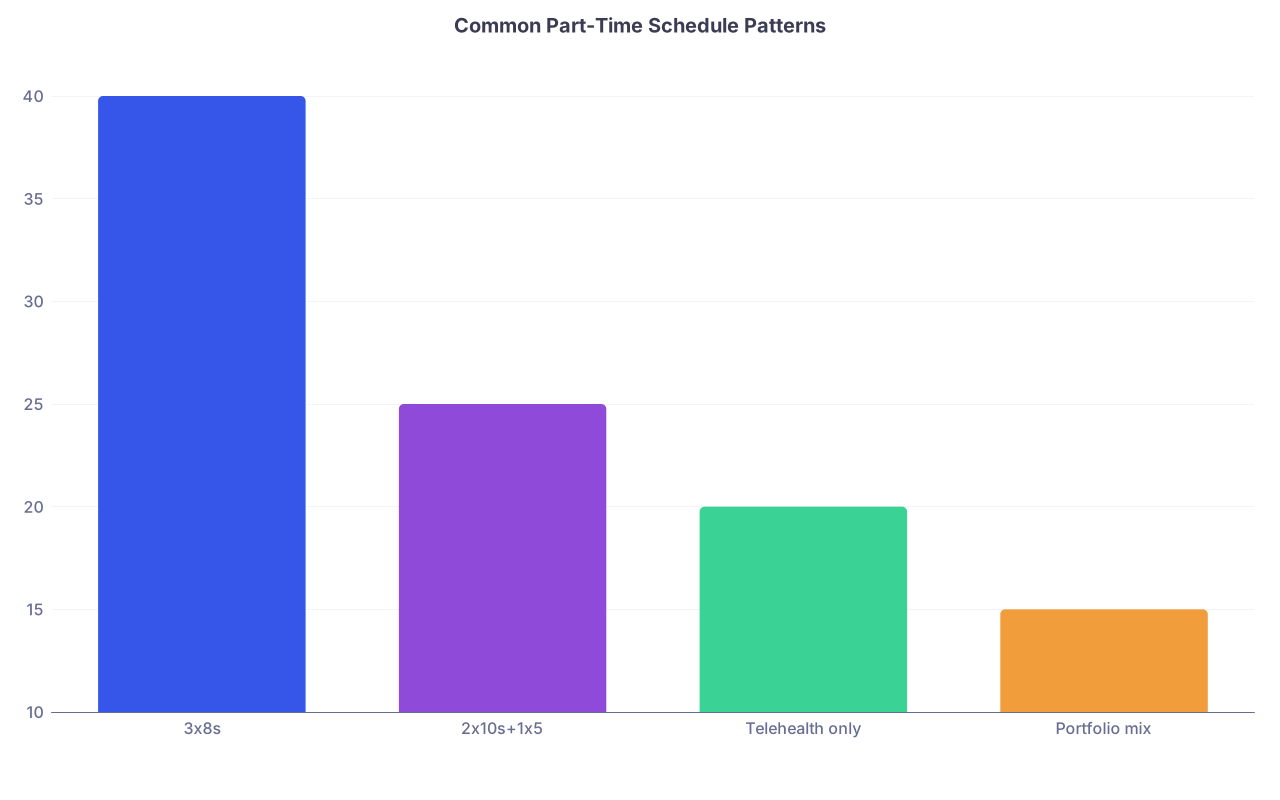
| Category | Value |
|---|---|
| 3x8s | 40 |
| 2x10s+1x5 | 25 |
| Telehealth only | 20 |
| Portfolio mix | 15 |
Model A: Classic 0.6–0.8 FTE clinic
- Psych:
- 3 clinic days per week (mix in-person + telehealth)
- 8–10 patients per day, mostly 30–60 minute visits
- Light call (or no call if negotiated)
- FM:
- 3–4 clinic days per week
- 12–18 patients / day depending on system
- May still have inbox / panel responsibility on off days
What to insist on:
- Written FTE definition: how many clinic sessions, how inbox is counted, any shared coverage on “off” days.
- Clear rules for non-visit work (refills, messages, labs) and whether they are pro-rated with FTE.
Model B: Compressed days
- 2 × 10–12 hour days and 1 shorter day, giving you 2 “free” weekdays.
- Works well in both psych and FM if you are okay with marathon clinics.
Pitfall: systems love to call you 0.8 FTE but dump a full panel on you. Guard against that explicitly in writing.
Model C: Telehealth-focused part-time
- Mostly or fully remote. Usually W-2 with a large telehealth company or big system.
- You commit to blocks of time: for example, 9–1 Monday–Thursday.
This is common in psychiatry (adult outpatient) and growing in FM for:
- Virtual urgent care
- Medication refills and chronic disease follow-up
- Remote care management
The key is to ask: who owns the panel? If you own it, your inbox might balloon. If it is purely episodic urgent care, your responsibility ends with the visit.
Model D: Portfolio career
This is where things get interesting. Example:
- Psych:
- 2 days outpatient clinic
- 1 day telehealth for a private company
- 0.5 day teaching / supervision
- FM:
- 2 days primary care
- 1 day tele-urgent care evenings
- 0.5 day occupational medicine or student health
Portfolio careers give massive flexibility over time. They also require you to manage logistics across multiple employers. More on that later.
5. Telehealth in Psych vs FM: How to Use It, Not Get Used
Telehealth companies can be gold mines or traps. Depends how you approach them.
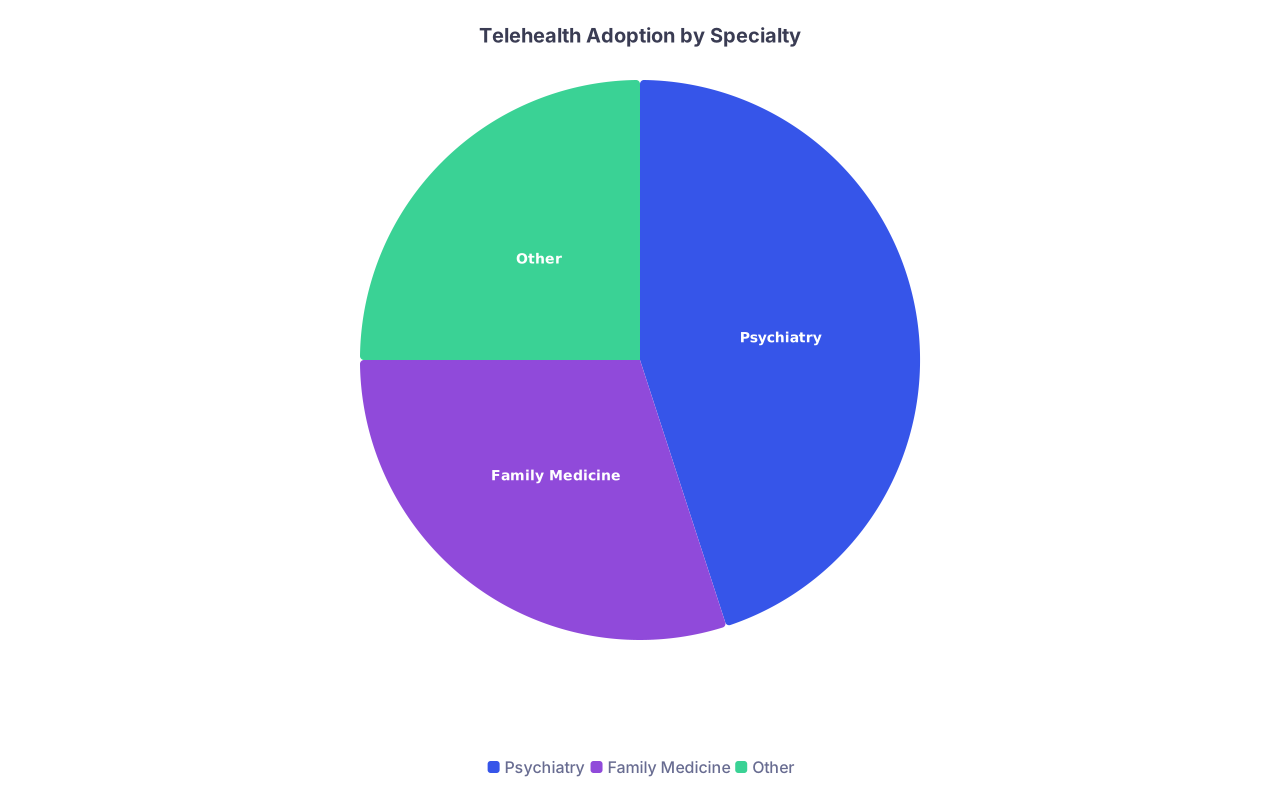
| Category | Value |
|---|---|
| Psychiatry | 45 |
| Family Medicine | 30 |
| Other | 25 |
Tele-psychiatry
This is the home field of flexible work right now.
Common setups:
- W-2 employed:
- Salary + RVU or per-visit bonus
- Malpractice covered
- Some benefits at 0.5+ FTE
- 1099 contractor:
- Per-visit payment (e.g., $75–$200+ per follow-up, more for intake)
- No benefits, you pay your own taxes
- Maximum flexibility but you must be disciplined
Red flags I have seen:
- “Unlimited panel growth” with no cap on inbox.
- Guaranteed minimums that quietly vanish after 3–6 months.
- No paid time for documentation, prior auths, or collateral calls.
What you want to clarify, in writing:
- Visit length, no-show policy, how no-shows are compensated.
- Who handles refills, labs, messages when you are off.
- Schedule control – can you block out weeks/months if you want a break?
Tele-FM
FM telehealth is more variable, but there are several solid use cases:
- Virtual urgent care / episodic visits – good for extra income or side days.
- Chronic disease follow-up – diabetes, HTN, etc. Better if attached to a stable team.
- Niche tele-clinics – weight loss, HIV PrEP, gender-affirming care, travel medicine.
Patterns that tend to work:
- 4-hour blocks where you see 8–12 patients, mostly low-acuity.
- Clear triage protocols so you are not managing unstable chest pain by video.
- Strong RN/MA or care navigator support.
Pitfall: The “chat-only” or “asynchronous only” gig with unrealistic expectations. Great way to burn out and risk your license for not a lot of money. Be very careful there.
6. Clinic Types That Actually Support Lifestyle
Not all clinics are created equal. Psych and FM both have specific environments that play nicely with flexibility.

For Psychiatry
Settings I repeatedly see working well for flexible schedules:
Outpatient community mental health centers (if funded decently)
- Often desperate for psychiatrists
- More willing to do 0.5–0.8 FTE
- Can integrate telehealth days
Large health system outpatient psych
- Mixed results, but some departments genuinely support part-time
- Better infrastructure (EHR support, nursing, call pools)
College / university counseling centers
- Usually daytime hours
- Summers can be lighter or more flexible
- Strong mental health culture
Private group practices
- Probably the highest flexibility if the group is healthy
- You must understand how they divide overhead, referrals, and admin load
Settings that look good on paper but often are not:
- “Hybrid inpatient/outpatient” roles that slip back toward full inpatient demands.
- Solo private practice straight out of residency with no mentorship – flexible on paper, but legally and mentally risky if you are not ready.
For Family Medicine
High-flexibility clinic environments:
Pure outpatient primary care with mature teams
- Some big systems now run 0.7–0.8 FTE options formally
- Panel-based but split across several part-timers
Student health / college health services
- Academic calendar, mostly weekday hours
- Higher focus on counseling, reproductive health, mental health
Occupational medicine / employee health
- Predictable hours
- Procedural variety
- Rarely nights/weekends
Direct primary care (DPC) or concierge models
- Smaller panels, more control over scheduling
- Often fewer admin barriers (no insurers)
- You trade security and need strong business sense
Be cautious with:
- FQHCs that talk about mission but are quietly burning through clinicians with 22–25 patients/day and constant chaos. Some are fantastic. Some are meat grinders. Talk to current docs, not just leadership.
7. Negotiating Flexibility: Script and Tactics
Residents usually negotiate like this: “Uh, I’d like better work-life balance?” Weak. You need to walk in with specifics.

| Step | Description |
|---|---|
| Step 1 | Define non negotiables |
| Step 2 | Research market data |
| Step 3 | Draft ideal schedule |
| Step 4 | Ask employer for proposal |
| Step 5 | Request written contract |
| Step 6 | Counter or walk away |
| Step 7 | Acceptable? |
Step 1: Know your value
Psych in many markets:
- You are scarce. They know it. Use that.
FM:
- More supply, but still high demand in many regions, especially rural or underserved.
- Your leverage rises if you bring additional skills (OB, procedures, addiction, admin experience).
Step 2: Show up with a concrete proposal
Do not say, “I want part-time.” Say:
- “I am looking for 0.6–0.7 FTE structured as three clinic days per week, one of which is telehealth. I want my panel and inbox scaled to that FTE, with shared coverage systems for my off days. I am open to some call, proportional to FTE.”
That sounds like someone who knows what they are doing.
Step 3: Ask these questions out loud
Some exact phrases:
- “How do you adjust panel size for 0.6 or 0.7 FTE?”
- “Who handles my inbox and refills when I am not scheduled?”
- “Is telehealth built into your existing workflows, or would I be the pilot?”
- “How many patients per day does a full-time clinician see here?”
- “What does a typical week look like for your 0.8 FTE docs?”
If they dodge, that is usually a sign.
Step 4: Get it into the contract
Verbal promises vanish. You want contract-level or addendum-level details for:
- FTE and session count
- Expected patient volume
- Call responsibilities and how they scale
- Telehealth vs in-person expectations
- Any protected time (admin, teaching)
If they say, “We’ll figure it out later” – assume that means “You will get the standard full-time expectations later.”
8. Making a Portfolio Career Actually Work
The portfolio career is where Psych and FM can shine. But you can absolutely create chaos if you just stack random gigs.
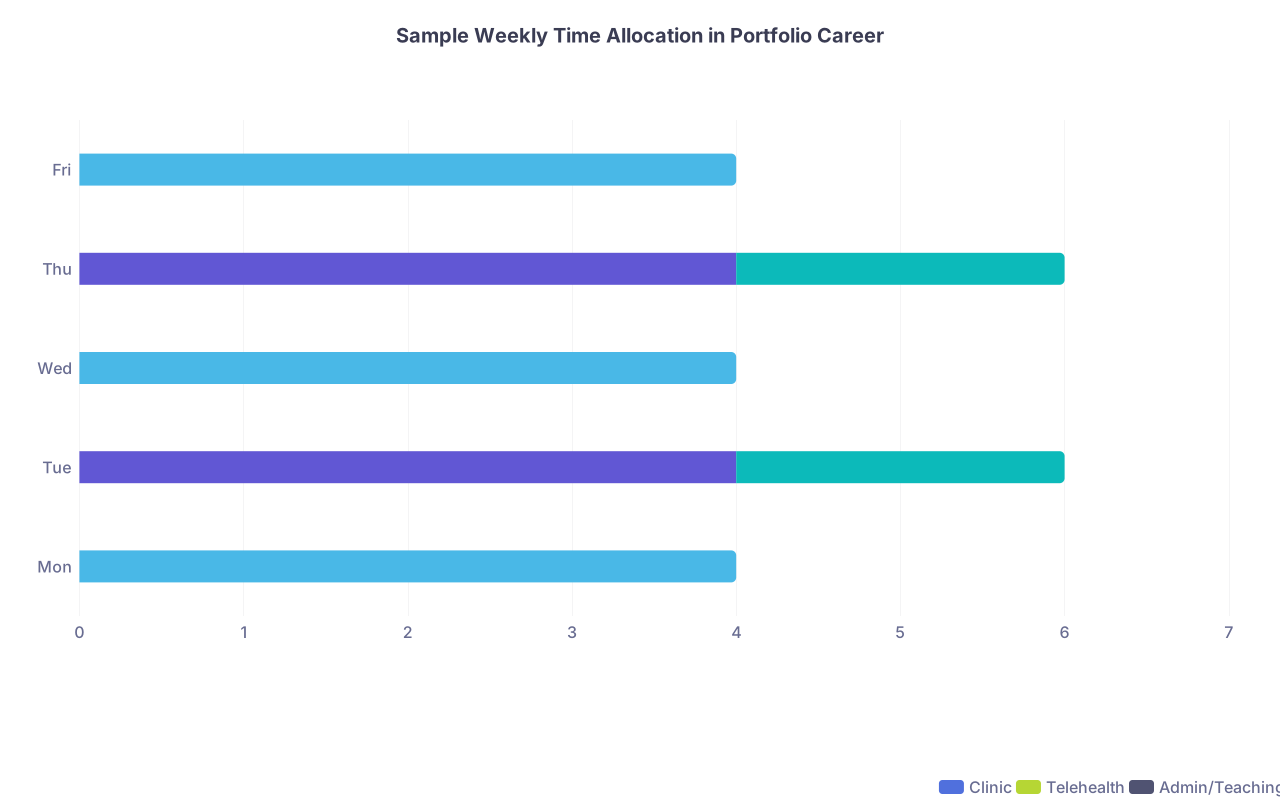
| Category | Clinic | Telehealth | Admin/Teaching |
|---|---|---|---|
| Mon | 4 | 0 | 0 |
| Tue | 0 | 4 | 2 |
| Wed | 4 | 0 | 0 |
| Thu | 0 | 4 | 2 |
| Fri | 4 | 0 | 0 |
Components to mix
Psych:
- Outpatient clinic (2 days)
- Telehealth (1–2 days, W-2 or 1099)
- Supervision / teaching (0.5 day)
- Consulting (e.g., to primary care clinics, schools, or companies)
FM:
- Primary care clinic (2–3 days)
- Tele-Urgent care (evenings or 1 day)
- Niche clinic (sports, addiction, women’s health)
- Admin roles (quality, informatics, leadership) 0.1–0.2 FTE
Rules so you do not drown
One main home base
- Pick one employer where you put most of your professional identity. They handle your main benefits, CME, malpractice (for that work), and provide a “home.”
-
- Make sure each employer knows exactly which days and hours you are theirs. No blending. No “I’ll just squeeze a few telehealth visits in between.” That is how you double-book and burn out.
Separate inboxes and phones
- Different work emails. Different EHR logins. If you must carry a phone, consider a work-only number.
- Never allow two jobs to send patient messages into the same account.
Quarterly review
- Every 3 months, look at:
- Hours actually worked vs contracted
- Income per hour for each component
- Mental strain per hour
- Every 3 months, look at:
Cut the lowest-value or highest-drain piece first.
9. Legal, Licensing, and Practical Landmines
You want flexibility, not a licensing nightmare.

Multi-state telehealth
- Psych and FM both can do multi-state telehealth; psych especially.
- The Interstate Medical Licensure Compact helps if your home state participates.
- You must follow the rules of the patient’s location state at the time of the visit.
Beware:
- Different states with different controlled substance rules, especially for ADHD meds, benzos, MAT.
- DEA and Ryan Haight Act rules for prescribing controlled substances via telehealth. These change; you must stay current.
Malpractice
- Every job should give you clear malpractice coverage details in writing. Claims-made vs occurrence. Tail coverage responsibilities.
- If you do 1099 telehealth, you may need your own policy or verify that theirs is robust.
Documentation and EHR fatigue
Psych and FM are both documentation heavy. Telehealth does not fix that.
Solutions I have repeatedly seen help:
- Use smart phrases / templates aggressively.
- Dictation or voice recognition for complex visits.
- Rules for yourself:
- Do not leave the visit without at least a skeleton note.
- Block real admin time in your schedule; do not pretend you can do it “between visits.”
If a job expects 16–20 patients a day, zero admin time, and pristine notes – that is their fantasy, not your future.
10. Your Residency-to-Attending Roadmap for Flexibility
Here is a simple, practical sequence to follow from now through the first 2–3 years out.
During residency (PGY-2 to PGY-3)
- Write down your 5–7 top constraints. Rank them.
- Stack electives toward outpatient, telehealth-friendly, and lifestyle-friendly settings.
- Talk to 3 attendings who have the kind of life you want. Ask specific questions:
- “How many days per week do you actually work?”
- “What would you change about your schedule if you could?”
- “What was your biggest mistake in your first job?”
6–12 months before graduation
Decide: Psych vs FM if you are still unsure. Heavily weigh:
- Your energy with high complexity vs high volume
- How much you care about telehealth as a core modality
- Whether you want procedures and broad scope (FM) or depth in mental health (Psych)
Build a “flexibility-first” job filter:
- Reject ads that are vague on schedule.
- Target employers known for lifestyle (ask upper-year residents, program alumni).
Job search and negotiation
Interview with at least 4–5 places if possible. Use those questions from Section 7.
Put your ideal schedule on the table early:
- “Here is the structure I am looking for. How close can we get to this?”
Compare offers beyond salary:
- Patient load
- Telehealth days
- FTE structure
- Admin support
- Options to reduce or alter FTE over time
First 18–24 months as attending
Start with one primary job. Get stable. Learn your bandwidth.
Once stable, add a small, clearly bounded side gig if you still want more variety or money:
- 1 evening per week telehealth
- 1 Saturday a month urgent care
- 0.1–0.2 FTE teaching or admin
Once you have real data on what you can handle, redesign:
- Increase or decrease FTE
- Shift toward more telehealth or more in-person
- Build out a portfolio career if you still want it
FAQ (exactly 4 questions)
1. Is Psychiatry or Family Medicine better if my top priority is working mostly from home?
Psychiatry usually wins for pure remote potential. Outpatient adult tele-psych is mainstream now, and many systems are comfortable with high percentages of telehealth visits (sometimes 80–100 percent). Family Medicine has more telehealth than it used to, but much of FM still requires occasional in-person exams, procedures, and physicals. If you strongly want 3–4 days per week at home seeing patients by video, psychiatry is structurally a better fit in most markets.
2. How soon after residency can I realistically work part-time?
You can work part-time immediately as a new attending, but it is easier if you are in psychiatry or if you accept a slightly lower-pay, lifestyle-focused FM job. Many systems prefer new grads at 0.8–1.0 FTE, arguing you need “full exposure,” but that is negotiable in psych and in some FM settings. The tradeoff: starting at 0.6–0.7 FTE might mean slower loan payoff and fewer early-career opportunities. However, if flexibility is a non-negotiable, do not let someone guilt you into 1.0 FTE unless you actually want it.
3. Can I start a private practice straight out of residency to get flexibility?
You can, but for most people it is a bad first move. There are too many unknowns at once: business setup, billing, marketing, compliance, malpractice, and clinical judgment without a safety net. A smarter path is to spend 1–3 years as an employed physician in a reasonably well-run outpatient setting, learn how a practice works, then either start a small side practice or move fully into private practice once you actually understand the mechanics. You want flexibility, not a crash course in how to run a small business while managing full-time clinical risk.
4. What if my current residency program has almost no telehealth exposure?
Then you manufacture your own exposure. Start with electives in outpatient-heavy sites that have at least some tele-visits, even if small. Ask faculty if you can sit in on their telehealth sessions as an observer. Do reading and CME on telehealth documentation, billing, and regulatory issues so you are not behind. When you interview for jobs, be honest: “My program had limited telehealth, so I sought extra training independently and I am eager to work in a setting that uses it regularly.” Employers care less about whether your residency had the perfect setup and more about whether you are thoughtful, safe, and motivated to learn quickly.