
The specialties everyone talks about for lifestyle are not the ones that quietly launch the best non-clinical careers.
Derm, ophtho, anesthesia, radiology – you already know those buzzwords. But the people who end up as CMOs at health tech startups, senior medical directors in pharma, VPs at payers, or well-paid consultants? They’re not coming mostly from derm.
They’re coming from a handful of “boring” but shockingly strategic lifestyle-friendly specialties that program directors and department chairs will never openly market as off-ramps.
Let me show you what actually happens behind the curtain.
The Real Game: Lifestyle + Transferable Skills + Signaling Power
Here’s the part no one tells you on Reddit: lifestyle alone means nothing for non-clinical careers.
Three things matter:
- Your day-to-day work gives you transferable skills (data, systems thinking, population-level decision-making, communication with executives).
- Your title and background carry credibility in boardrooms, venture pitches, and policy meetings.
- Your specialty allows flexible, sustainable clinical practice so you can moonlight your way into non-clinical roles without burning out.
A cushy outpatient clinic schedule with no strategic exposure is not a launchpad. It’s a cul-de-sac.
Certain specialties, though, hit the trifecta: decent lifestyle, high non-clinical demand, and lots of adjacent doors quietly opening if you know where to look.
Let’s walk through the ones that give you leverage.
1. Physical Medicine & Rehabilitation (PM&R): The Stealth Systems Specialist
PM&R is the quiet assassin of non-clinical career prep. Every PD I know in PM&R has at least one grad who slid into an admin, insurance, or industry role within 5 years.
You spend residency and early practice:
- Coordinating multidisciplinary teams
- Living in documentation, metrics, and functional outcomes
- Managing long-term, complex patients whose care crosses systems, services, and payers
That’s exactly how health plans, utilization management companies, and disability evaluation systems think.
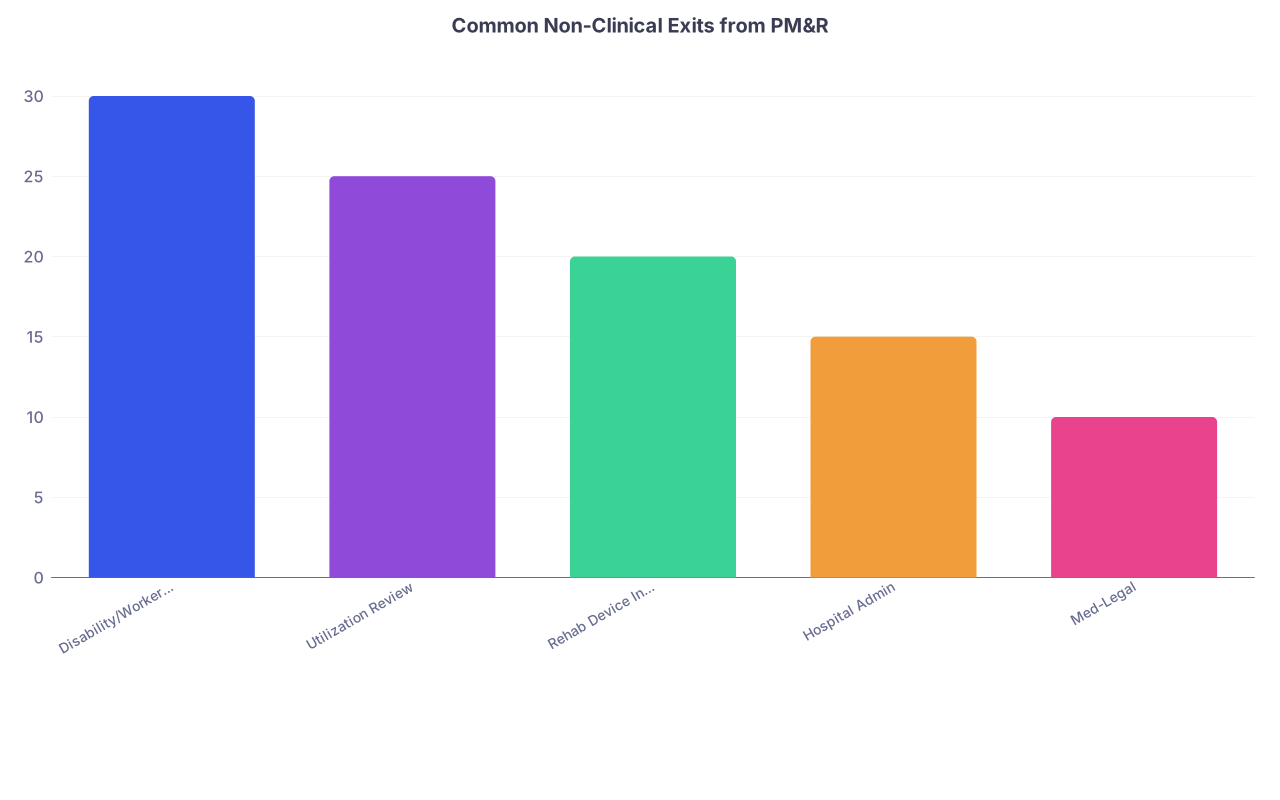
| Category | Value |
|---|---|
| Disability/Workers Comp | 30 |
| Utilization Review | 25 |
| Rehab Device Industry | 20 |
| Hospital Admin | 15 |
| Med-Legal | 10 |
Behind the scenes, this is how PM&R gets people out:
- Disability and workers’ comp: Insurers love PM&R docs for independent medical exams (IMEs), functional capacity evaluations, and case review. You understand function, not just diagnosis. You can ramp up this work part-time while maintaining outpatient PM&R or pain clinics.
- Utilization management / medical director roles: If you’ve ever watched how rehab admissions, LTAC/SNF placement, or inpatient rehab approvals work, you’re already speaking payer language: length of stay, goals, functional gains, discharge planning.
- Med device and rehab tech: Exoskeletons, prosthetics, neuromodulation, robotics – PM&R is the default specialty on advisory boards and in clinical trials. Companies like Ottobock, Ekso, various exo/orthotic startups quietly recruit PM&R docs as KOLs and consultant medical directors.
Lifestyle? Outpatient-heavy. Call varies but is typically humane compared to surgical fields. You can structure a week of mostly 8–5, carve out one or two half-days to take calls with insurers or industry, and gradually flip the ratio.
The part no brochure will say out loud: PM&R is a fantastic “bridge” specialty if you’re already thinking, “I may not want to do bedside medicine until 65.”
2. Occupational Medicine: The Corporate Door Opener Nobody Talks About
Occ Med might be the single most underrated lifestyle + corporate-career specialty in all of medicine.
Program directors in Occ Med know this. They see their grads vanish into:
- Large employers (Fortune 500 health/safety departments)
- Payers and workers’ comp insurers
- Government agencies (OSHA, NIOSH, VA, DoD)
- Corporate consulting and risk management
And the lifestyle? Clinic hours. Predictable. Nights/weekends mostly protected. Very little acute chaos.

Here’s the quiet truth: Occ Med trains you to speak the language of risk, liability, productivity, and regulation. That’s exactly what executives and insurers care about.
People I’ve seen exit from Occ Med end up as:
- Regional or national medical directors for large manufacturing/logistics companies
- Medical directors at occupational health networks
- Senior leaders in telehealth companies focused on workplace injury/triage
- Consultants doing incident review, policy design, and safety audits
The earning potential in pure clinical Occ Med isn’t spectacular in every market. But as a platform to move into highly paid corporate roles with stock, bonuses, and regular hours, it’s far stronger than most students realize.
If you want a predictable day with a direct pipeline into the corporate world, this is an almost engineered path.
3. Radiology: Data, AI, and the Tech Industry’s Favorite Physician
Radiology is already seen as “lifestyle” by med students. What they usually miss is how many radiologists quietly migrate into health tech, AI, and informatics–especially in the last decade.
Radiologists:
- Live in imaging software and PACS
- Understand data, workflows, and decision-support tools
- Constantly think in probabilities, risk stratification, and value of information
Health tech companies building AI, image analysis tools, or workflow optimization platforms know this. So do device companies and EHR vendors.
| Role Type | Where They Land |
|---|---|
| AI Clinical Lead | Imaging/AI startups |
| Product Physician | PACS/EHR/imaging vendors |
| Medical Director | Teleradiology companies |
| Clinical Strategy Lead | Big tech health divisions |
Lifestyle-wise, yes, telerads and many private groups offer flexible hours, remote work, and shift-based schedules. That’s exactly how some people carve out time to start consulting or join a startup part-time.
Program directors won’t advertise this, but here’s a pattern you’d only hear in faculty offices:
- Rads resident gets into QA/IT committee work
- Starts helping with PACS upgrades, structured reporting, or AI pilot projects
- Meets vendors, gets invited to advisory calls
- A few years into attending life, jumps full-time to a vendor, AI startup, or health tech role
If you like tech and data and you want optionality beyond clinical care, radiology is a very clean on-ramp.
4. Pathology: From Microscope to Industry, Lab Leadership, and Diagnostics
Pathology is another specialty that quietly cranks out non-clinical careers.
On paper, it’s “non-patient-facing” and lifestyle-friendly in many settings. What people don’t see:
- Pathologists often control or heavily influence labs, diagnostics strategy, and test utilization.
- They interact with hospital leadership, quality committees, and external vendors regularly.
- Every major diagnostics company (think Roche, Abbott, Quest, LabCorp, emerging genomics firms) needs pathologists on staff.
The classic moves:
- Medical director roles in reference labs and hospital systems
- Genomics and molecular diagnostics startups, especially if you trained with heme, mol, or transfusion focus
- Regulatory affairs and clinical trials for diagnostics and pharma
Path has one huge advantage: your training is already systems- and process-oriented, not just patient-focused. That thinking maps perfectly to:
- Quality improvement
- Regulatory compliance
- Operational optimization
Lifestyle? Many pathology jobs are regular daytime hours, light call, and no in-person patient management. That frees up mental bandwidth and physical time to take advisory positions, do consulting, or move gradually into industry.
The candid downside: clinical demand and compensation can be volatile by region. But if your eyes are already on industry or diagnostics, that’s less of a bug and more of a push to pivot earlier and smarter.
5. Preventive Medicine / Public Health: The Policy and Population Pipeline
Preventive Medicine and its variants (Preventive + MPH, Public Health + clinical background) are the most explicit bridge into non-clinical work.
But the way it actually plays out might surprise you.
People in these tracks end up as:
- Medical directors and senior leaders at public health departments
- Policy advisors at state and federal agencies
- Leaders in non-profits, NGOs, and global health organizations
- Consultants in population health, health systems design, or value-based care initiatives
- Health plan medical directors for population health and quality
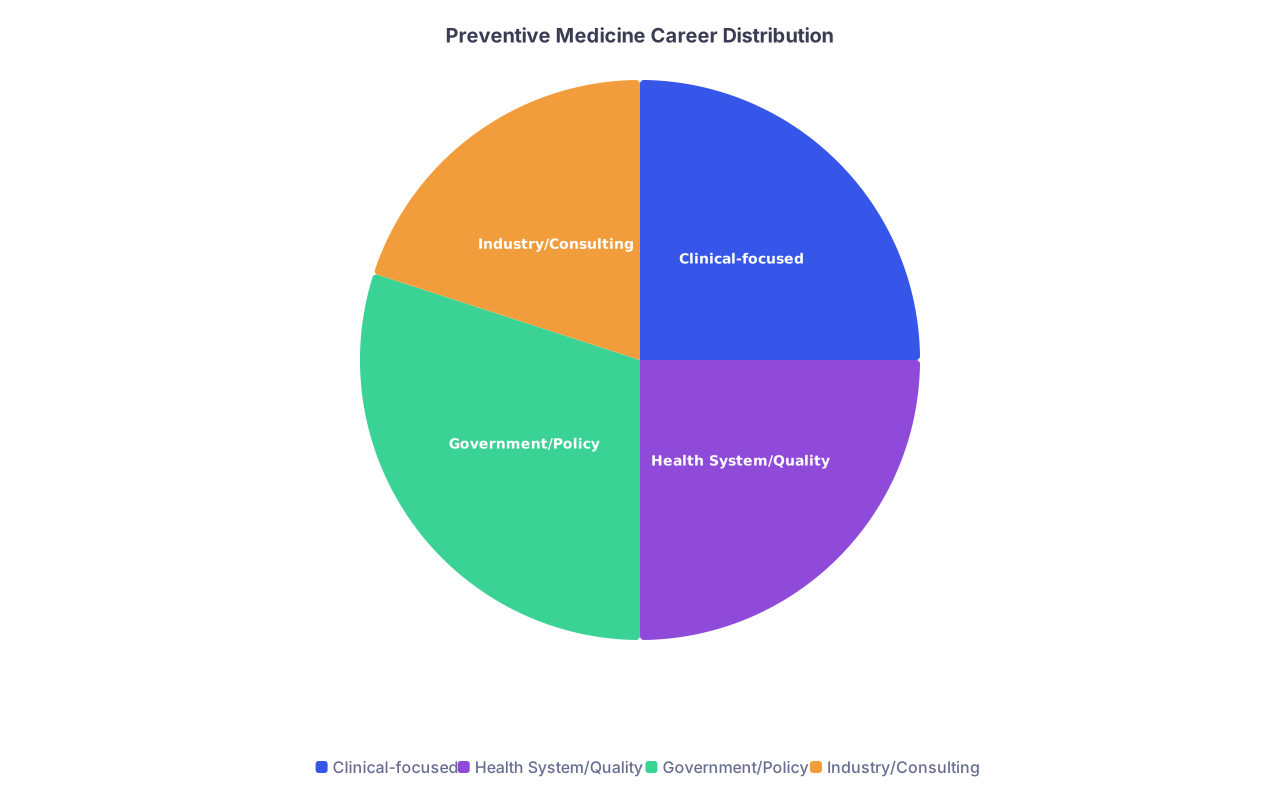
| Category | Value |
|---|---|
| Clinical-focused | 25 |
| Health System/Quality | 25 |
| Government/Policy | 30 |
| Industry/Consulting | 20 |
Lifestyle is often excellent: predictable hours, little to no overnight call, and meetings rather than codes. It’s not glamorous bedside medicine, but if you want to be paid to think about systems and populations rather than writing 30 notes a day, this is how you do it.
What program directors quietly know: many of their residents are using the specialty as a launchpad into non-clinical or hybrid careers. They’re fine with that. In fact, they often help facilitate placements through contacts at CDC, VA, state health departments, or payers.
There’s a tradeoff: starting salaries in purely governmental roles may be lower than clinical heavy-hitters. But the work-life balance and leverage over systems is hard to beat. And if you pivot into consulting, payer leadership, or industry, compensation can climb very fast.
6. Psychiatry: The Flexible Platform for Coaching, Content, and Consulting
Psychiatry looks like a pure clinical outpatient lifestyle play. In practice, it has a very interesting non-clinical upside.
Psychiatrists:
- Understand behavior, motivation, and organizational dynamics
- Are in constant demand for expert witness, forensic, and med-legal work
- Are heavily involved in digital mental health, one of the most overfunded corners of health tech in recent years
On the ground, I’ve watched psych attendings do all of this alongside or after clinical practice:
- Chief medical officers or senior advisors to mental health startups and telepsych platforms
- Forensic and expert witness work, sometimes at eye-watering hourly rates
- Coaching for executives and founders (yes, the MD + psych combo sells)
- Content creation and authorship, backed by the MD credential and psych specialty
The big practical advantage: outpatient psychiatry is one of the easiest specialties in which to downshift your clinical FTE. Do three days of clinic, two days of consulting, and you’ll still be fully employable clinically if your non-clinical bets don’t pan out.
Lifestyle-wise, outpatient psych is hard to beat: no procedures, little call if you set it up that way, and decent control over your schedule.
The unspoken downside: everyone thinks psych is their ticket to “a chill life.” That’s not always true in high-acuity, under-resourced systems. But if you’re deliberate about building an outpatient, telepsych, or concierge-style panel, it’s a very forgiving platform for experimentation outside the clinic.
7. Emergency Medicine (Selective): Gateway to Admin, Ops, and Telehealth
Yes, EM is under heavy pressure right now. Oversupply concerns, corporate consolidation, toxic contracts – all real. But with eyes open and the right type of job, EM can be a powerful bridge into hospital administration, operations, telehealth, and consulting.
Why? Because EM physicians:
- Live in throughput, triage, and capacity management
- Understand hospital operations across multiple services
- Are used to high-stakes decision-making and resource allocation

| Step | Description |
|---|---|
| Step 1 | EM Resident |
| Step 2 | Committee Work and QI |
| Step 3 | ED Leadership Role |
| Step 4 | Hospital Admin or System Role |
| Step 5 | Telehealth Medical Director |
| Step 6 | Consulting or Startup Advisor |
The people who convert EM into non-clinical roles usually do a few things early:
- Join ED flow, QI, or informatics committees
- Get exposure to scheduling, staffing, and budget conversations
- Work with hospital leadership on operational problems
That experience looks almost tailor-made on a CV for:
- Hospital or system-level leadership roles
- Telehealth platform leadership (urgent care, triage, enterprise telehealth)
- Operations and strategy consulting (healthcare-focused firms especially)
Lifestyle with EM is a mixed bag. Shift work can be brutal or flexible depending on the group. But if you can cluster shifts, you can carve out protected chunks of time to build non-clinical roles or businesses in parallel. I’ve seen EM docs do 10 shifts/month and the rest in admin or telehealth leadership.
You have to be more strategic here because the market is rougher. But for people wired toward crisis management and operations, EM remains a strong on-ramp out of strictly clinical care.
How These Specialties Quietly Beat the “Sexy” Lifestyle Fields
Let’s call something out directly: derm, ophtho, plastics – magnificent lifestyle and money. But they’re not always the best non-clinical launchpads.
Why?
Because non-clinical employers don’t care how much your past patients liked their Botox. They care about:
- Systems thinking
- Data literacy
- Policy, regulation, and reimbursement fluency
- Experience working with multidisciplinary teams, executives, payers, or vendors
That’s why specialties like PM&R, Occ Med, Path, Pre-ventive Med, and certain flavors of Psych/EM punch far above their reputational weight.
They train you in exactly the “boring” stuff non-clinical roles are built on.
Here’s a quick comparison:
| Specialty | Lifestyle Potential | Non-Clinical Door Power |
|---|---|---|
| Dermatology | Excellent | Moderate |
| PM&R | Good–Excellent | High |
| Occ Med | Excellent | Very High |
| Radiology | Good–Excellent | High (Tech/AI) |
| Pathology | Good | High (Diagnostics/Industry) |
| Preventive | Excellent | Very High (Policy/Admin) |
| Psychiatry | Good–Excellent | High |
How to Actually Position Yourself While in Residency
This is the part most residents screw up. They think: “I’ll finish residency, then look into non-clinical stuff later.”
By then, you’ve already signaled to everyone that you’re “just another clinician.”
If you’re in (or headed to) one of these specialties and want doors to open:
- Get involved in committees and projects that touch systems, policy, or tech. Quality improvement, informatics, rehab program design, occupational safety policies, ED throughput, mental health program implementation – that’s the currency.
- Document outcomes. Not “I attended meetings,” but “We reduced average LOS by X hours” or “Implemented new imaging protocol reducing unnecessary CTs by Y%.”
- Network with vendors, payers, and external partners you bump into through your role. The PACS rep, the AI pilot project contact, the occupational safety consultant, the payer’s medical director on the other side of UM calls – these are your future recruiters.
- Learn the business language. RVUs, LOS, star ratings, MIPS, MA quality metrics, risk adjustment, capitation – if those sound fuzzy, fix that. Non-clinical roles live there.
You don’t have to broadcast to your PD that you’re planning to “escape clinical medicine.” But most PDs in these fields are not naive. They know exactly where grads go and often support it quietly if you’re a solid resident.
FAQs
1. If I already matched into a non-ideal specialty for non-clinical work, am I stuck?
No. You’re not stuck, you just have a steeper hill. Any specialty can pivot if you accumulate systems, admin, or tech experience. That said, the specialties above give you more built-in leverage. If you’re early enough to switch, it’s worth considering; if not, start aggressively collecting non-clinical projects where you are.
2. Which of these specialties has the best combination of lifestyle and exit options?
Occupational Medicine and Preventive Medicine are probably the cleanest “low call + high non-clinical alignment” options. PM&R and Radiology are close behind with strong industry/tech potential. Psychiatry is incredibly flexible but more variable depending on practice setting.
3. Do I need an MBA or MPH to make these non-clinical transitions?
Usually no. An MPH can help for Preventive or Public Health roles; an MBA can help in certain admin/industry tracks. But I’ve watched plenty of people get into leadership, tech, and payer roles without extra degrees, just by stacking real experience, results, and relationships.
4. How early in residency should I start pursuing non-clinical angles?
Year 2 is ideal. Year 1 you focus on not drowning and learning your field. Once you’re functional on the wards/clinics, start taking on one strategic project at a time: QI, informatics, policy, vendors, etc. By PGY-3/4 you should have concrete bullets on your CV that scream “systems/strategy,” not just “saw patients.”
5. Will choosing a “non-sexy” specialty hurt my earning potential long term?
If you stay purely clinical, some of these specialties won’t match the top-earning procedural fields. But if your real goal is to build a non-clinical or hybrid career with control over your time, geography, and stress level, the long-term financial upside can equal or surpass those paths—especially once you’re in leadership, industry, or consulting roles.
Key points you should not forget:
First, lifestyle alone is useless; you want specialties that also build non-clinical leverage.
Second, PM&R, Occ Med, Radiology, Pathology, Preventive Med, Psych, and selected EM tracks are the quiet winners here.
Third, the real advantage comes from what you do in residency and early attending life: committees, projects, vendor relationships, and evidence that you can think beyond the next patient note.