
The fantasy that only burned‑out internists and failed surgeons end up in non‑clinical roles is dead wrong.
The physicians who do best in utilization review, industry, and medical education are usually the ones who plan their moves early, leverage specialty-specific advantages, and stop clinging to the “full-time clinic or bust” mindset. If you are in (or headed toward) a lifestyle-friendly specialty and you want durable, sane non‑clinical options, you need to think like that now—not at age 55 when you are already fried.
Let me break this down specifically.
The Real Game: Why Lifestyle Docs Have an Edge in Non-Clinical Work
“Lifestyle specialties” (radiology, PM&R, anesthesia, derm, EM, path, psych, some outpatient IM/peds) give you three assets that most people underutilize:
- Better control of schedule (or at least blocks of time you can predict).
- Skills that translate directly to decision, review, and strategy work.
- Slightly less sunk-cost identity in “being in the OR/clinic every day or I am nothing.”
Non‑clinical work is not one monolith. Utilization review, pharma/biotech/med device industry roles, and medical education each have different gatekeepers, credentials, and day-to-day realities. You cannot just say “I want a non‑clinical job” and spray resumes.
You map your specialty to the niches where you are a natural fit.

Utilization Review: The Quiet Power Job Most Residents Ignore
Utilization review (UR) and utilization management (UM) sit at the intersection of clinical judgment, policy, and cost control. This is the world of:
- Prior authorizations and medical necessity reviews
- Inpatient vs observation status decisions
- Length of stay, readmission risk, and discharge appropriateness
- Appeals for denied claims
Most residents only interact with this as “that anonymous doctor who denied my MRI.” That anonymous doctor has a salary, predictable schedule, and no night call.
What Utilization Review Physicians Actually Do
Day-to-day, UR physicians typically:
- Review charts and orders against evidence-based guidelines (e.g., MCG, InterQual).
- Decide whether the requested service/level of care is “medically necessary” per payer or regulatory criteria.
- Call ordering physicians to discuss alternative plans or clarify documentation.
- Participate in appeals—writing reports or occasionally speaking on the phone with external reviewers.
- Work with internal teams (case management, coding, compliance) to refine policies.
A lot of it is pattern recognition + documentation analysis + negotiation. Not procedural. Not glamorous. But stable.
Which Specialties Fit Best—and Why
Let’s be blunt: some specialties plug into UR much more naturally.
Strong fits:
- Internal medicine / hospitalist / FM with inpatient experience: you understand admissions, DRGs, sepsis, heart failure, pneumonia, and discharge criteria.
- Emergency medicine: superb at disposition decisions, obs vs admit, “is this really an inpatient?” calls.
- Pediatrics (for pediatric plans or children’s hospitals): NICU/PICU and gen peds experience are highly valued.
- PM&R: excellent for post-acute care, rehab admissions, SNF vs IRF decisions.
- Psychiatry: behavioral health utilization management is its own world—big need, fewer psychiatrists.
Good but more niche:
- Anesthesiology: pain management UR, periop optimization, high-cost procedural approvals.
- Radiology: imaging appropriateness review, especially high-cost modalities (MRI, CT, nuclear).
- Oncology/hem-onc: chemo regimens, biologics, targeted therapies—expensive, complex.
Less direct, but possible:
- Dermatology, ophthalmology, ortho, ENT, urology: often more focused in procedure or subspecialty UR, or part-time reviewer for specific benefit managers.
If you are in EM, hospital medicine, or PM&R and you want non‑clinical options, UR should be on your list. It is one of the most straightforward transitions.
Lifestyle Reality: Hours, Pay, and Remote Work
Let’s be specific.
| Role Type | FTE | Remote? | Typical Total Comp (USD) |
|---|---|---|---|
| Health Plan Medical Director | 1.0 | Hybrid/Remote | 230k–320k |
| Physician Reviewer (Staff) | 0.6–1.0 | Often Remote | 180k–260k |
| Part-Time Concurrent Reviewer | 0.2–0.5 | Remote | 80k–160k (scaled) |
| Behavioral Health UM (Psych) | 0.6–1.0 | Remote | 200k–280k |
| PRN / Per-Case Reviewer | Variable | Remote | Hourly $100–$160+ |
These are ballparks from what I have seen in job offers and contracts over the last several years. Exact numbers vary by region and experience, but the pattern holds:
- UR rarely pays like high-end procedural private practice.
- But for EM docs tired of nights, hospitalists burning out, or PM&R docs sick of RVU fights, the trade is attractive: daylight hours, PTO you can actually use, no weekends or call in many roles.
Fully remote is common for payer-side physician reviewers. Some medical director roles are hybrid.
How Lifestyle-Friendly Specialties Can Enter UR
You do not need an MBA. You do need a coherent story and the right experiences.
If you are in:
EM or hospitalist medicine:
- Emphasize disposition decisions, case management collaboration, discharge planning.
- Get on your hospital’s utilization review committee or work with case managers now.
PM&R:
- Take ownership of rehab placement decisions, IRF criteria, and post-acute care planning.
- Document that you work closely with payers about SNF vs home vs IRF placement.
Psych:
- Engage with inpatient length-of-stay decisions, partial programs, and step-down levels of care.
- If your facility has a utilization management psychiatrist—shadow them for a week.
Radiology:
- Participate in clinical decision support policy, appropriateness criteria rollouts (ACR Select, etc.).
- Get used to talking with referring physicians about when imaging is and is not indicated.
Early on, build:
- Committee work: UR committee, quality, peer review.
- Documentation expertise: strong understanding of coding, DRGs, and medical necessity language.
- Comfort saying “no” constructively: UR is not about being a rubber stamp.
Red Flags and Downsides
UR is not for you if:
- You need daily gratitude from patients. There are no grateful patients here.
- You get triggered every time a payer questions a clinician’s judgment. You will be that payer.
- You hate reading and writing. Expect a lot of screen time and documentation.
Some plans micromanage productivity (X cases per hour). Some environments feel like assembly lines. You must interview them hard: case volumes, metrics, how often physicians are overruled by non‑clinicians, how appeals are handled.
Industry Roles: Medical Affairs, Clinical Development, And Beyond
The industry bucket is huge, but the three core physician lanes for most lifestyle docs are:
- Medical Affairs
- Clinical Development / Clinical Research
- Safety / Pharmacovigilance
Then there are satellite roles: informatics, health economics, strategy, digital health.
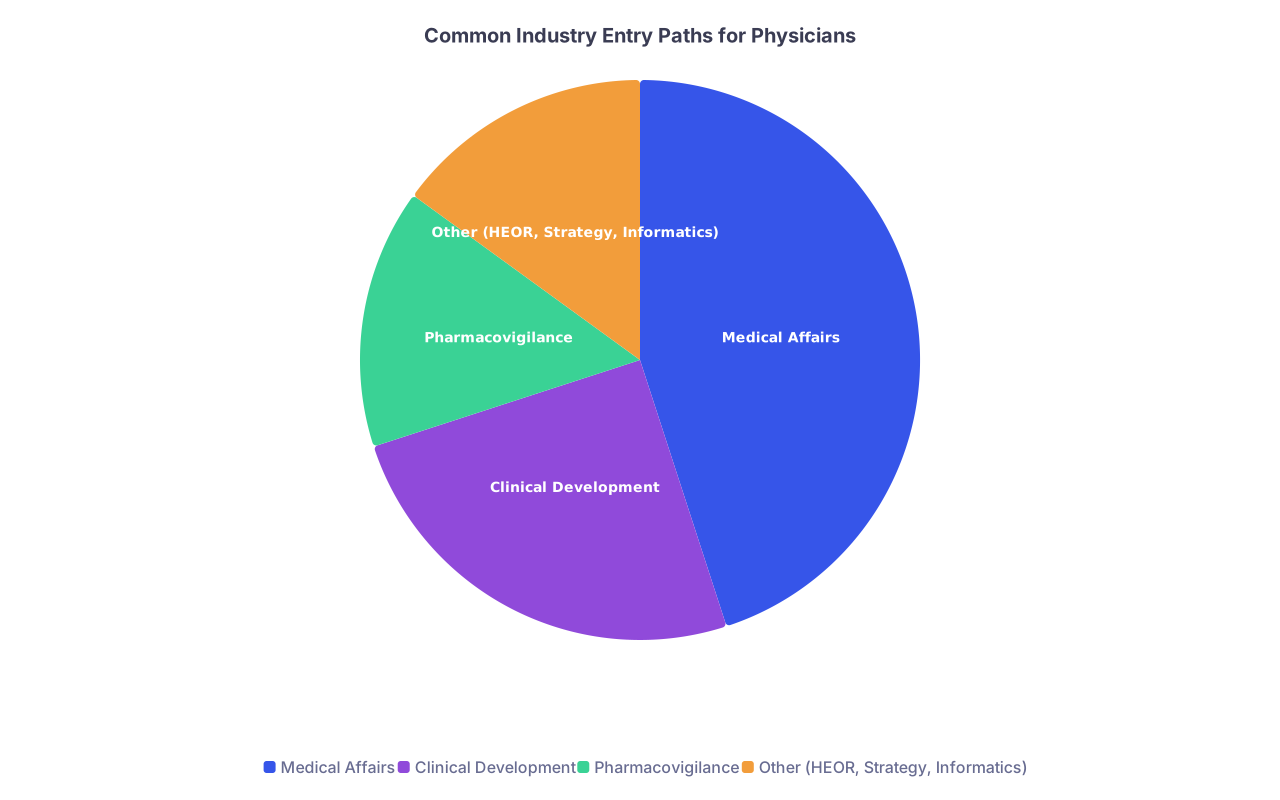
| Category | Value |
|---|---|
| Medical Affairs | 45 |
| Clinical Development | 25 |
| Pharmacovigilance | 15 |
| Other (HEOR, Strategy, Informatics) | 15 |
1. Medical Affairs: The “Front-Facing” Industry Role
Medical affairs is the most common starting point for clinicians.
What you do:
- Serve as an internal clinical expert for a product or therapeutic area.
- Educate sales and marketing teams (without crossing regulatory lines).
- Meet with key opinion leaders (KOLs), help with advisory boards, and support investigator-initiated trials.
- Respond to complex off-label medical information requests in a compliant way.
- Produce or review slide decks, white papers, and educational content.
Roles include:
- Medical Science Liaison (MSL)
- Associate/Medical Director, Medical Affairs
- Field Medical Director
Who fits:
- Subspecialists with deep therapeutic knowledge: oncologists, rheums, neurologists, cardiologists, GI, ID, etc.
- But also: psychiatrists, dermatologists, allergists, pulm/CC for relevant drugs/devices.
- PM&R for neurorehab, spasticity agents, ortho-related devices.
- Anesthesiologists and pain docs for analgesics, regional anesthesia devices, neuromodulation.
Lifestyle angle:
- MSL roles are often fully remote with heavy travel (40–60% in peak times). Some love this, some hate airports.
- In-house medical affairs roles can be hybrid or fully remote with periodic travel.
- Hours are generally civilized. End of quarter and launches get busy, but you are not covering night call.
2. Clinical Development / Clinical Research
This is where drugs and devices are designed, tested, and pushed through the pipeline.
Roles:
- Clinical Research Physician / Clinical Scientist
- Medical Director, Clinical Development
- Principal or Senior Medical Director in R&D
Day-to-day:
- Design clinical trial protocols, endpoints, and inclusion/exclusion criteria.
- Work with statisticians, operations teams, and regulatory on trial execution.
- Interpret trial data, write sections of CSRs (clinical study reports), and support regulatory submissions.
- Interact with investigators and site PIs.
Good fits:
- Anyone with real clinical trial experience or at least serious research background.
- Oncologists, neurologists, cardiologists, endocrinologists, rheums.
- Radiologists with imaging-based endpoints (e.g., oncology, MS, NASH imaging).
- PM&R and pain for device and interventional trials.
Lifestyle:
- Often more “corporate” hours—8 to 6 type days, sometimes longer near major milestones.
- Travel is less than MSLs but not zero. Investigator meetings, scientific conferences, some site visits.
3. Pharmacovigilance / Drug Safety
Unsexy but crucial. And frankly underrated.
What you do:
- Review adverse event reports and assess causality.
- Signal detection—looking for safety patterns across data sources.
- Prepare safety reports for regulators (periodic safety update reports, etc.).
- Sit on safety review committees and make recommendations for labeling changes or risk mitigation.
Good fits:
- Internists, hospitalists, EM, ICU/CC, who have seen a lot of real-world adverse drug effects.
- Anyone systematic and detail-oriented who does not mind structured documentation and regulations.
Lifestyle:
- Often more predictable, fully remote or hybrid, fewer “fire drill” meetings than clinical development.
- Heavy reading and structured workflows.
Specialty-Specific Angles for Industry Transitions
You do not walk into a medical director job straight from residency. But some specialties have cleaner routes.
Radiology
Radiologists are surprisingly well positioned for:
- Imaging-based AI startups and vendors: algorithm development, validation, clinical workflow integration.
- Device companies (interventional radiology, vascular, oncology embolization systems).
- Pharma where imaging endpoints are key (oncology, MS, NASH, neurodegeneration).
What helps:
- Subspecialty training (MSK, neuro, body, breast) – sells better than “generalist.”
- Participation in research with imaging biomarkers or AI tools.
- Committee work related to radiation safety, protocol optimization, quality.
PM&R
PM&R is underrated in industry. Useful niches:
- Neurorehabilitation (stroke, TBI, SCI) – pharma, exoskeletons, gait devices, robotics.
- Spasticity management – botulinum toxin, intrathecal pumps.
- Musculoskeletal and pain – implants, injectables, braces, neuromodulation.
You become valuable when you can talk comfortably in both clinical and functional/outcome language: FIM scores, PROMIS, gait metrics, return-to-work endpoints.
Anesthesiology
Industry-aligned strengths:
- Airway devices, monitors, anesthesia machines, regional anesthesia tools.
- Perioperative optimization, ERAS pathways, analgesic drugs (IV, neuraxial, regional).
- Critical care – ventilators, ECMO adjuncts, ICU monitoring.
You will sell yourself not as “I can push propofol,” but as “I understand perioperative risk, safety, and workflow at scale.”
Psych
Massive need:
- CNS drugs (antidepressants, antipsychotics, mood stabilizers, ADHD, neuromodulators).
- Digital therapeutics and mental health apps—everyone wants a psychiatrist on the masthead.
- Behavioral health benefits companies and tele-psych startups.
Your ticket:
- Comfort with rating scales, outcomes research, and complex polypharmacy.
- Evidence that you can engage with guidelines, not just instinct.
EM
EM is less obviously targeted by pharma (unless toxicology or specific niches), but excellent for:
- Digital health triage tools, virtual urgent care platforms.
- Device companies tied to emergency or critical care.
- Medical monitoring of first-in-human and early phase trials (safety minded, broad knowledge).
You pitch your ability to quickly assess risk, manage ambiguity, and understand real-world acute care.
Medical Education: From Side Gig To Career Anchor
Medical education is probably the most crowded non‑clinical area—but it is also extremely modular. You can build it alongside almost any lifestyle specialty.
Three main categories:
- Undergraduate and Graduate Medical Education (UME/GME)
- Continuing Medical Education (CME) and professional education
- Commercial and digital med ed (courses, platforms, content)

| Step | Description |
|---|---|
| Step 1 | Resident or Early Attending |
| Step 2 | Teaching Within Residency |
| Step 3 | Program or Clerkship Role |
| Step 4 | Assistant Program Director |
| Step 5 | Program Director or Dean Level |
| Step 6 | CME Faculty or Course Creator |
| Step 7 | Online Platforms or Content Companies |
| Step 8 | Curriculum or Assessment Committees |
| Step 9 | Educational Leadership Certificate or Masters |
1. UME/GME: Academic Track Without Full RVU Slavery
At the med school or residency level:
Roles:
- Clerkship director, site director
- Program director (PD), associate/assistant PD
- Course director for system blocks or longitudinal courses
- Simulation center faculty
These are often mixed roles: part clinical, part protected time. The degree of “lifestyle friendly” depends heavily on the specialty and the institution.
Lifestyle specialties do better here:
- PM&R, radiology, psych, outpatient IM/peds, pathology, derm—less overnight call, more stable schedules.
- You can realistically carve out half-days for teaching, simulation, curriculum work.
Downsides:
- Academic salaries lag private practice significantly in many fields (derm, rads, anesthesia).
- Committee work can metastasize if you do not set boundaries.
- Promotion pathways are glacial in some places.
2. CME and Professional Education
This is where money and flexibility improve.
Work looks like:
- Designing and delivering CME courses, workshops, and online modules.
- Serving as course director for regional or national meetings.
- Working as medical director for CME companies (often remote).
You can:
- Start as course faculty locally.
- Then help plan curriculum.
- Then become the person who is hired by a CME company to run a portfolio of courses.
Strong fits:
- Procedural specialists teaching techniques (anesthesia blocks, PM&R injections, derm procedures).
- Psych/EM/IM teaching management algorithms, guidelines, updates.
This can become a serious income stream once you are known, but it takes years of reputation building.
3. Commercial and Digital Medical Education
This is where many lifestyle docs quietly generate scalable, semi-passive income:
- Qbank and exam prep content (USMLE, boards, subspecialty certs).
- Online fellowship prep courses.
- Niche platforms (e.g., EM procedures, pain ultrasound, psych pharmacology).
You can:
- Be an employee or contractor for existing brands (Boards & Beyond, OnlineMedEd, AMBOSS, etc.).
- Or build your own micro-brand focused on one narrow need and do it far better than anyone else.
Specialty niches that perform well:
- Radiology: pattern recognition courses, call prep, subspecialty boards.
- Anesthesia: oral boards, OSCE prep, crisis resource management.
- PM&R: boards, EMG, spasticity, ultrasound injections.
- Psych: psych boards, psychopharm deep dives.
- EM: oral boards, PEM, procedures.
If you combine:
- A lifestyle-friendly schedule
- Solid teaching skills
- Basic business/tech literacy
You can realistically build a non‑clinical “second career” here that either complements clinical work or eventually becomes your main focus.
How To Actually Position Yourself During Residency and Early Attending Years
Reading about roles is easy. Positioning yourself is where most people fail, because they think the transition magically happens after some undefined amount of “experience.”
You need to think like this:
- What 1–2 non‑clinical lanes make sense for my specialty?
- What concrete experiences can I stack during training that map directly to those lanes?
- How do I package those into a narrative that employers outside medicine understand?
Step 1: Choose Your Primary and Secondary Lane
Examples:
EM resident:
- Primary: Utilization review / payer medical director.
- Secondary: Digital health / telehealth industry.
PM&R resident:
- Primary: Medical education (boards, rehab med ed) or industry (neurorehab).
- Secondary: UR for post-acute care.
Psych resident:
- Primary: Behavioral health UR or pharma CNS medical affairs.
- Secondary: Med ed (psychopharm, therapy training content).
Anesthesia resident:
- Primary: Industry (devices, periop).
- Secondary: Med ed (exam prep, crisis sim).
This does not lock you in forever. But it focuses your efforts.
Step 2: Stack the Right Experiences
For UR:
- Join UR, case management, or quality committees.
- Do a QI project on length of stay, readmissions, or admission criteria.
- Learn documentation and coding basics; shadow a coder or CDI specialist.
For Industry:
- Do clinical research with real protocols and regulatory oversight, not just chart reviews.
- Attend industry-sponsored investigator meetings or advisory boards (as a trainee observer).
- Take optional coursework in clinical trials, regulatory science, or health tech if your institution offers it.
For Med Ed:
- Start with small-group teaching for med students.
- Volunteer to help write questions, OSCE cases, or simulation scenarios.
- Present at local or regional meetings on education projects.
- Consider a certificate or master’s in medical education if your schedule allows and the program is reputable.
Step 3: Build External Proof, Not Just Internal Titles
Internal titles like “resident education chief” look fine on a CV but do not automatically translate.
Concrete external proof:
- Publications: education research, trial papers, or even thoughtful reviews in your niche.
- Conference talks or workshops.
- Online presence: high-quality blog, Substack, or YouTube content with actual educational substance (not fluff).
- Committee appointments with national societies (education committee, guidelines, etc.).
This is the stuff that industry recruiters, med ed companies, and UR organizations can understand.
Final Reality Check: Lifestyle, Identity, and Money
Non‑clinical roles will not magically solve all your problems. They trade one set of constraints for another.
You need to be honest with yourself about priorities:
- If peak income is your dominant goal and you are in derm, ortho, rads, or a high-end anesthesia group, most non‑clinical roles will be a pay cut.
- If you want no nights, no weekends, predictable hours, and the ability to schedule your life, UR or many industry roles beat clinical work hands down.
- If you want autonomy and scalable upside, educational entrepreneurship or startup work can outperform everything else—but with risk.
The main mistake I see: physicians wait until they are desperate, then try to crash-land into “any non‑clinical job” without having done the deliberate positioning.
Do the opposite. Use the relative breathing room of a lifestyle-oriented specialty to quietly build your exit options years before you need them.
FAQs
1. Do I need to finish residency and be board certified before moving into these non‑clinical roles?
For most stable, well-compensated positions: yes, or very close. UR physician roles, medical director titles, and serious industry positions almost always want board eligibility at minimum, and often board certification plus 2–5 years of post-residency experience. There are rare exceptions, particularly for med ed content creation or early-stage startups, but you are more marketable and less pigeonholed if you complete residency and certification.
2. How important is an MBA or extra degree for industry or UR work?
Overrated for most people. An MBA can help if you are targeting senior leadership in industry or payer organizations, but it is not a ticket to entry-level medical affairs or UR roles. Hiring managers care more about real clinical expertise, communication skills, and any concrete exposure to research, regulatory, or business processes. A targeted certificate (e.g., clinical research, regulatory science, medical education) sometimes gives better ROI than a generic MBA.
3. Can I realistically do non‑clinical work part-time while still practicing clinically?
Yes, and this is often the ideal setup in lifestyle-friendly specialties. EM docs may do 0.6 FTE clinical + 0.4 FTE UR or medical directorship. PM&R or psych attendings might keep 2–3 clinic days and spend the rest on med ed or industry consulting. The practical issue is scheduling: institutions and companies both want predictable blocks of availability, not random scraps of time. Negotiate clear, consistent days for each domain.
4. How do I find these non‑clinical opportunities in the first place?
You will not find most of the good ones on generic job boards. Leverage: specialty society listservs, LinkedIn (yes, actually use it like an adult), industry conferences, and networking through former attendings who have already gone non‑clinical. For UR, target payers (national insurers, regional plans), large health systems, and utilization management vendors. For industry, stalk company career pages, medical affairs professional organizations, and recruiters who specialize in physician roles. For med ed, start by doing small gigs for established companies, then grow your portfolio.
Key takeaways:
Non‑clinical work is not a consolation prize; it is a parallel track that rewards early, deliberate positioning. Lifestyle-friendly specialties have a structural edge if you exploit schedule flexibility and specialty-specific value. If you are even mildly interested, start stacking relevant experiences now—committees, research, teaching, or content—so that when you want out, you have options instead of just frustration.