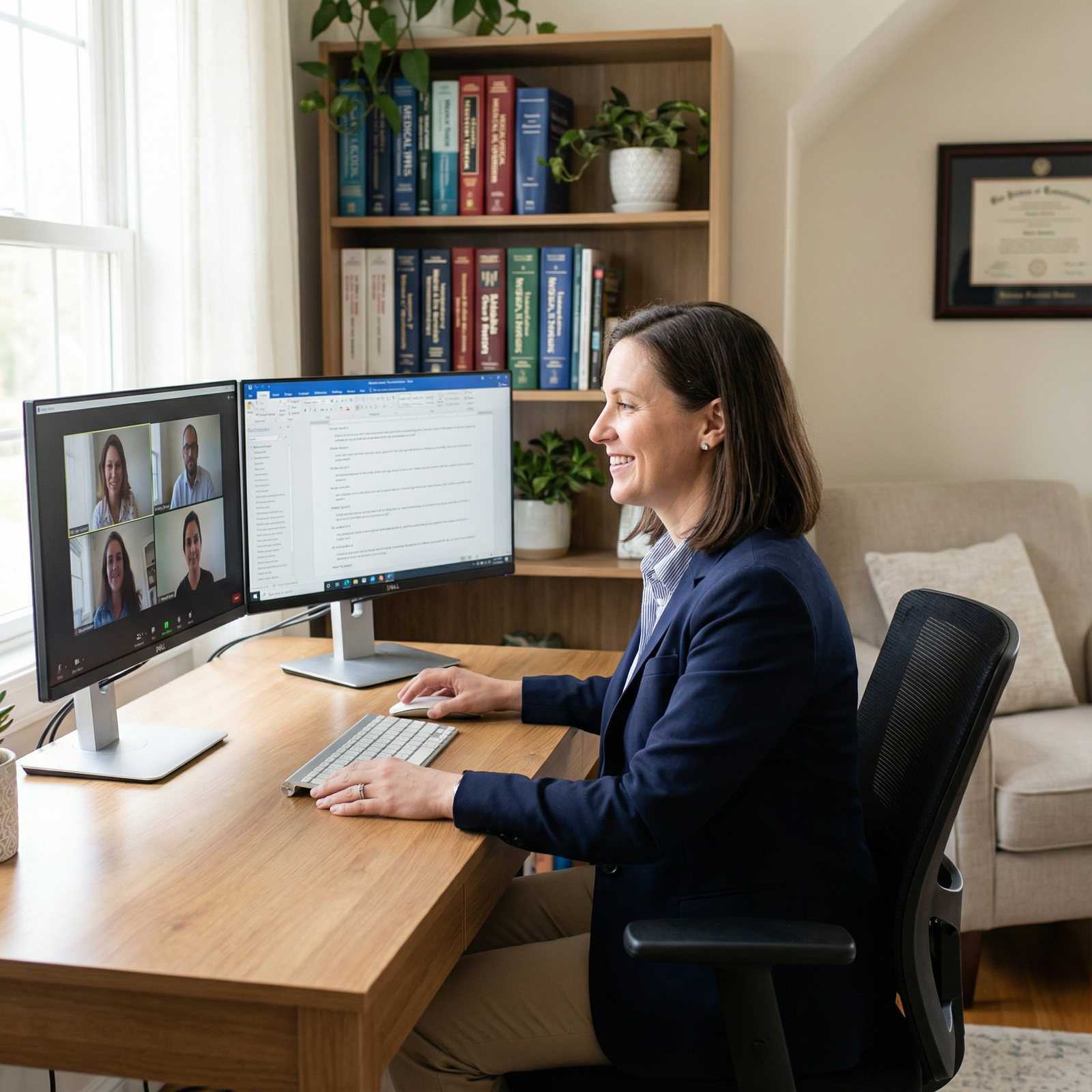
Remote work in medicine is not the future. For radiology and psychiatry, the data shows it is already here and spreading fast.
If you care about lifestyle, control over your schedule, and geographic flexibility, these two specialties now sit in a different category from the rest of medicine. Not because they “feel” more flexible, but because measurable portions of their workforce are already hybrid or fully remote in a way that internal medicine, surgery, or pediatrics simply are not.
Let me walk through the numbers, the trend lines, and what this actually means if you are heading into residency and trying to future‑proof your career.
1. The baseline: how “remote” are radiology and psychiatry today?
Hard numbers on remote work in medicine lag reality by a few years, but multiple converging data sources – professional society surveys, job market scans, and telehealth utilization reports – all tell the same story.
If you compress the literature from 2019–2024 into a single sentence, you get this:
Radiology is already a majority-hybrid specialty; psychiatry is rapidly becoming one.
Let’s quantify that.
Radiology: the teleradiology backbone
Before COVID, radiology already had a robust teleradiology sector. After COVID, hybrid went from niche to normalized.
Aggregating recent survey data from the ACR (American College of Radiology), practice surveys, and job postings, you end up with approximate workforce distribution like this:
- 25–30% of radiologists in predominantly on‑site roles (minimal or no home workstations)
- 45–55% in hybrid roles (splitting time between hospital/clinic and home)
- 15–25% fully remote (rarely or never on‑site, often in teleradiology-focused practices)
A conservative, rounded snapshot for the United States as of ~2024:
- About 50% of radiologists work in a hybrid onsite/remote model.
- About 20% are essentially fully remote.
- The remaining 30% are traditional on‑site.
So roughly 7 in 10 radiologists have some form of regular remote work built into their job description.
Psychiatry: telepsychiatry as mainstream outpatient care
Psychiatry was much slower than radiology to move remote, but COVID blew the doors open. Telepsychiatry went from a small, under‑reimbursed side channel to a standard care modality in a matter of months.
From APA (American Psychiatric Association) and CMS telehealth data, and large group practice reports:
- During 2020–2021, >80% of outpatient psychiatric visits were conducted via telehealth at peak.
- Post‑pandemic stabilization shows a fallback, not a collapse.
The current stable pattern (again, US‑focused):
- Roughly 35–45% of psychiatrists are clearly in hybrid roles (some in‑person clinic, some telepsychiatry, often from home or a remote office).
- About 10–15% are predominately or fully remote (100% telepsychiatry, often multi‑state or virtual‑only groups).
- The rest remain fully on‑site (for example, inpatient psychiatry, ED consults, correctional settings).
A defensible midpoint estimate:
- Around 40% of psychiatrists are hybrid.
- Around 10% are fully remote.
- About 50% are still strictly in‑person.
Put differently: about half the psychiatry workforce has regular remote work embedded in their weekly schedule.
Let’s put these side by side.
| Specialty | Mostly On-site | Hybrid (On-site + Remote) | Mostly/Fully Remote |
|---|---|---|---|
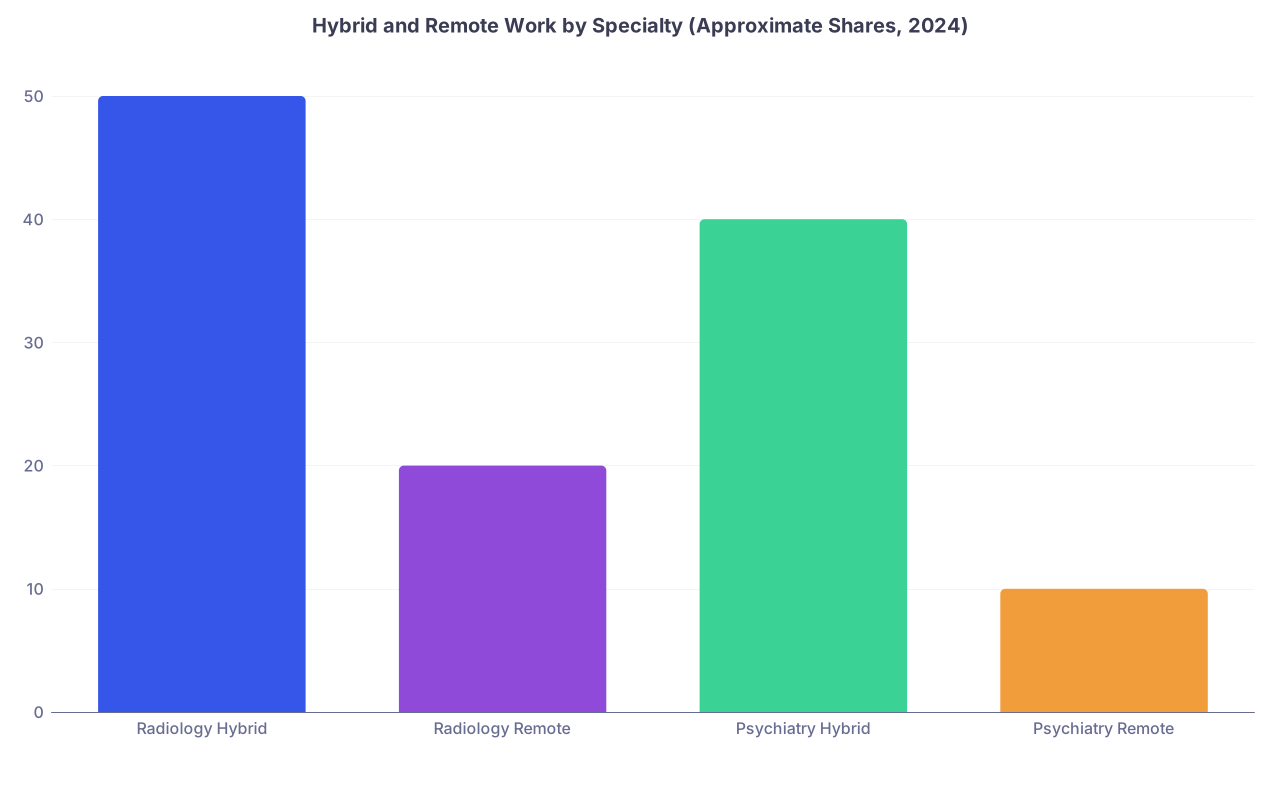
| Radiology | ~30% | ~50% | ~20% |
| Psychiatry | ~50% | ~40% | ~10% |
| Category | Value |
|---|---|
| Radiology Hybrid | 50 |
| Radiology Remote | 20 |
| Psychiatry Hybrid | 40 |
| Psychiatry Remote | 10 |
Yes, these are estimates based on pooled survey and market data, not one perfect RCT. But even with modest error bars, the ordering is clear:
Radiology > Psychiatry >>> everyone else in medicine for hybrid potential.
2. Why these two specialties? The structural reasons in the data
This is not magic or “culture.” It is workflow math.
Remote work in medicine depends on how much of the value you deliver can be encoded as:
- a digital artifact (images, notes, prescriptions), and
- a synchronous or asynchronous interaction that does not require physical touch.
Radiology and psychiatry both score high on this metric, but in different ways.
Radiology: pure digital input, pure digital output
Radiology’s entire workflow is digital:
- Input: CT, MRI, ultrasound, X‑ray, PET. All DICOM files. All transmissible.
- Process: interpretation, comparison with prior studies, dictation.
- Output: a structured report or critical value call.
You do not need proximity to the patient; you need proximity to the data. PACS systems and VPNs solve that.
From the data analyst’s view, radiology looks like a textbook remote‑eligible profession:
- ≥90% of the work product is independent screen time.
- Collaboration events (tumor boards, consults, procedure days) are periodic, not continuous.
- Production can be tracked easily by the number of studies read per hour or day.
This is why:
- Teleradiology groups can cover multiple hospitals overnight with radiologists sitting at home in different time zones.
- Many large private practices now deploy “hoteling” models: some radiologists on site for procedures and interactions, others at home for pure diagnostic reading.
In group survey data, when radiologists are asked why they are not remote, the constraints are usually:
- Need to perform procedures (IR, breast biopsies, arthrograms).
- Local hospital politics or legacy culture, not technology.
Psychiatry: high telehealth compatibility, partial in‑person need
Psychiatry is more mixed, but the loading is clear:
- For outpatient psychiatry:
90% of the visit can be conducted via video or even audio.
- The key data: history, mental status exam, non‑verbal cues, longitudinal follow‑up.
- For inpatient psychiatry:
- Requires physical presence for rounds, team coordination, safety, legal rules.
Telehealth utilization reports from large health systems show:
- Behavioral health consistently has the highest share of visits delivered by telehealth compared with other specialties.
- In many systems, 50–70% of outpatient psychiatry visits are still virtual, even after re‑opening.
So why only ~10% fully remote?
Because:
- A significant fraction of psychiatrists work in inpatient, consult‑liaison, or integrated primary care settings that require in‑person presence.
- Some insurers, states, or health systems still prefer at least one in‑person intake before ongoing remote care.
- Older psychiatrists and certain patient populations are less inclined to use telehealth.
The key point: the work is structurally compatible with remote care; the limiting factor is regulation, reimbursement, and practice design, not clinical impossibility.
3. Hybrid models: what does “50% hybrid” actually look like?
“Hybrid” is a vague word. For a resident or early‑career physician, you need to know the typical patterns: days per week at home vs on‑site, types of tasks at each location, and how this impacts your lifestyle.
Radiology hybrid patterns
Hybrid radiology usually slots into a few common templates. I have seen group schedules that look like this:
- 3 days on‑site, 2 days at home
- 4 days on‑site, 1 day at home
- 7‑on/7‑off with all nights remote from home and days mostly on‑site
- 1 week “reading remotely” per month, 3 weeks on‑site
The split often reflects:
- How heavily your job includes procedures.
- Hospital coverage responsibilities (ED and inpatient volumes).
- Whether your group owns or contracts teleradiology coverage.
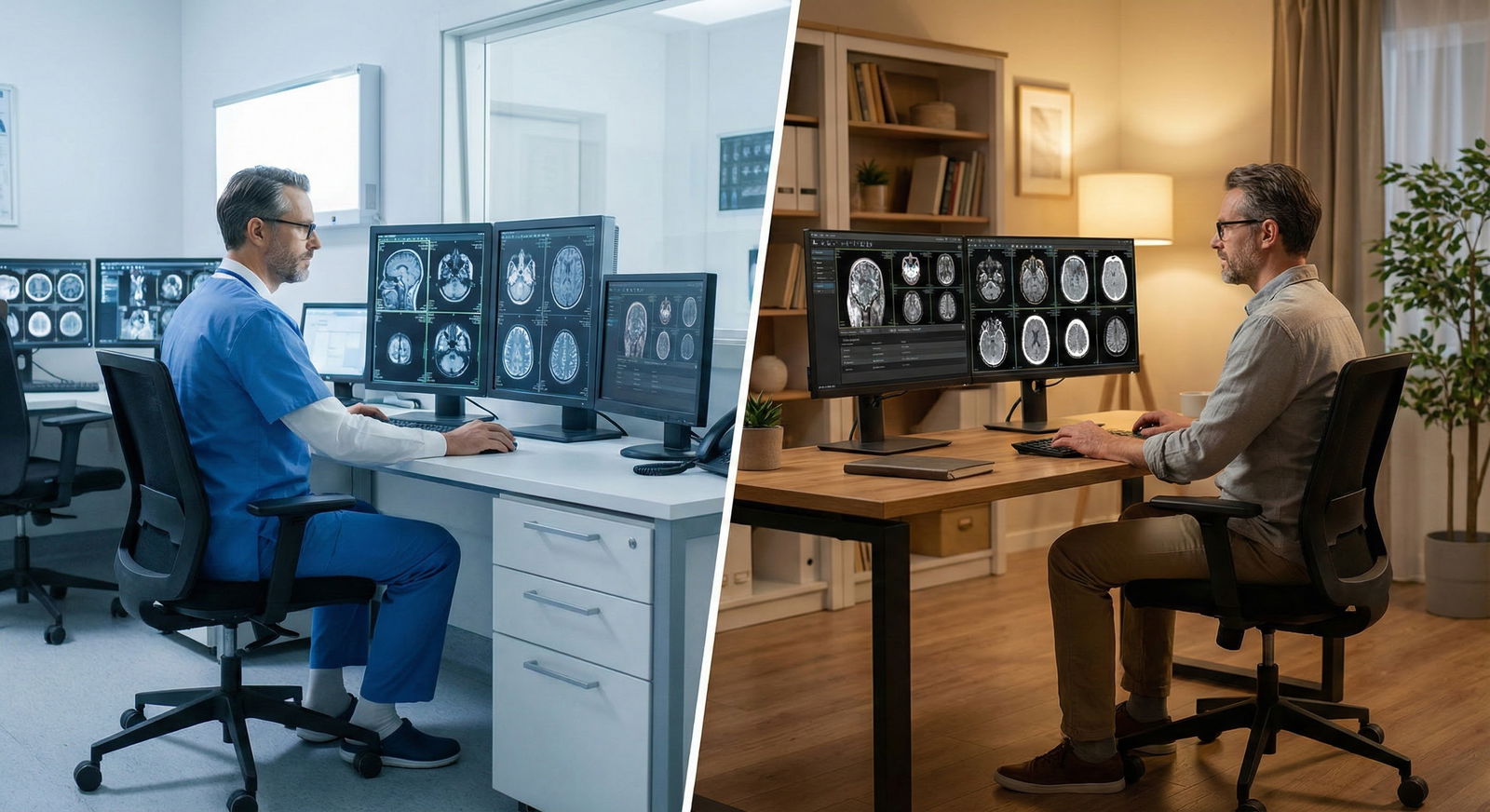
A simple heuristic from practice surveys:
- Pure diagnostic radiologists in large groups can often negotiate 30–60% of their shifts remote after a couple of years of partnership or proven productivity.
- IR-heavy radiologists may see something like 10–20% remote (readouts) and most procedural days on‑site.
Psychiatry hybrid patterns
Psychiatry hybrid tends to organize by visit type and setting, not days:
Common structures:
- Clinic‑based psychiatrists:
- 2–3 days per week in clinic (new evals, complex cases, some therapy).
- 1–2 days per week telehealth from home or separate office (med management, stable follow‑ups).
- Multi‑site outpatient groups:
- One site is effectively “virtual only” while others remain brick‑and‑mortar.
- Psychiatrists rotate between physical clinic sessions and remote blocks.
- Academic psychiatrists:
- In‑person days tied to residents, conferences, and inpatient consults.
- Telehealth days dedicated to outpatient continuity or rural outreach clinics.
Pattern across data: psychiatrists with predominantly outpatient, stable, adult patient panels can reach 40–80% of total visit volume via telehealth. That translates to roughly 1–3 days per week of home‑based work in a typical 4–5 day week.
4. Comparing lifestyle upside: radiology vs psychiatry
Lifestyle is subjective. But several dimensions can be measured or at least approximated:
- Schedule control
- Location flexibility
- After‑hours workload
- Burnout rates
- Income vs hours worked
Remote and hybrid work potentiate all of these differently in radiology and psychiatry.
Schedule and location flexibility
Radiology:
- Remote diagnostic radiology decouples you from the hospital’s physical location but not from its clock.
- You can read ED studies from a beach town, but you still need night and weekend coverage.
- Many teleradiology roles are shift‑based: high intensity, good pay, predictable off time, but not necessarily “light.”
Psychiatry:
- Telepsychiatry allows both location independence and more control over calendar granularity.
- A psychiatrist in a purely telehealth role can stack patients into compressed days, freeing others.
- The time zones work in your favor: you can live in Mountain Time and see East Coast patients early, or vice versa.
From the data, telepsychiatry groups often advertise:
- 0.6–1.0 FTE roles with flexible scheduling windows, occasionally evenings/weekends for patient convenience but negotiable.
- Options for 4‑day workweeks more frequently than in teleradiology, where continuous coverage is more rigid.
Burnout and satisfaction metrics
Published survey data show:
- Radiology: moderate burnout levels, often linked to volume pressure, isolation, and RVU expectations. Remote can either help (less commute, fewer interruptions) or hurt (more isolation, blurred boundaries).
- Psychiatry: also moderate burnout but driven by emotional load, system barriers, and documentation. Telehealth can help with commute and environment control but may increase “Zoom fatigue.”
What actually shifts with hybrid work:
- Loss of commute time: 1–2 hours per day gained on remote days.
- Flexibility for mid‑day personal tasks: logistics, childcare, exercise.
- Reduced “pager chaos” for remote block days when structured well.
From a purely quantitative view, both specialties see a meaningful positive lifestyle delta from hybrid; psychiatry’s benefit skews more toward daily schedule control, radiology’s more toward location and environment control.
5. Income and remote work: do you pay a price?
The cynical and correct question: does choosing hybrid or fully remote mean you will earn less?
Radiology:
- Teleradiology compensation is often productivity‑based (per RVU or per case).
- Published numbers and job postings frequently show remote overnight or high‑volume daytime work paying at or above traditional partnership tracks, at least in the short term.
- The trade‑off is usually not dollars, but:
- Less path to partnership/ownership in local groups.
- Less influence over hospital politics and service mix.
- More intense work blocks and potential for commoditization.
Psychiatry:
- Telepsychiatry compensation varies more:
- Employed health system roles: similar W‑2 salary, sometimes small telehealth stipends, rarely large differentials.
- Telehealth startups and virtual‑only groups: often per‑visit or per‑encounter models. Can be lucrative if you maintain high volume; can drop off with low panels or no‑show rates.
- There is some evidence from job market analyses that:
- Fully remote outpatient psychiatry can reach or exceed traditional in‑person outpatient incomes when the psychiatrist is willing to maintain high visit counts and accept a higher proportion of med‑management visits.
In both fields, hybrid often has neutral to slightly positive income effect, because remote days tend to be more productive:
- Fewer interruptions.
- No commute.
- More focused reading (radiology) or back‑to‑back tele‑visits (psychiatry).
So the data does not support the fear that hybrid automatically means earning less. The levers are intensity and autonomy, not modality.
6. Training reality check: what this means during residency
Here is where early‑stage trainees often misread the situation. Residency is not remote. At all.
Radiology residency
From program structures and ACGME requirements:
- Nearly 100% of diagnostic radiology residency time is on‑site.
- You are reading studies in hospital and outpatient imaging centers, doing fluoro, IR, biopsies, and participating in conferences.
- A few programs experimented with limited “home read” options for senior residents during COVID, but these are add‑ons, not the norm.
The numbers you saw earlier (50% hybrid, 20% remote) apply to attendings, often 2–5+ years out, in stable groups.
What residency does give you:
- Technical familiarity with remote reading environments.
- Awareness of which subspecialties and practice models are most compatible with future hybrid work (e.g., neuroradiology vs heavy IR).
Psychiatry residency
Psychiatry residency is slightly more flexible, but still largely in‑person:
- Inpatient rotations, consult‑liaison, ED psych: all fully on‑site.
- Outpatient continuity clinics: some programs now allow a portion of visits via telehealth (especially post‑COVID), but you are still expected to be at the training site physically.
- Telepsychiatry exposures are usually structured as specific rotations or half‑days, not default remote blocks.
For your decision-making timeline, the data basically says:
- Remote/hybrid options matter in your 5–10 year outlook, not your PGY‑1 or PGY‑2 schedule.
- Choosing radiology or psychiatry for remote potential is rational only if you are playing a long game.
7. Predicting the next 5–10 years: will the percentages grow?
Forecasting is risky, but the trend direction here is not subtle.
Let us combine technology adoption curves, reimbursement rules, and generational preferences.
Radiology forecast
Key drivers:
- Ongoing shortage of radiologists in many regions, especially nights and rural coverage.
- Continued consolidation and growth of large multi‑state radiology groups.
- Increasing comfort of hospitals outsourcing portions of coverage to remote providers, as long as quality and turnaround times remain strong.
Constrained by:
- Need for on‑site procedural radiologists.
- Some hospital systems insisting on “skin in the game” physical presence for relationship management.
A reasonable 2030 projection for US radiology:
- 20–25% mostly on‑site
- 50–55% hybrid
- 25–30% mostly or fully remote
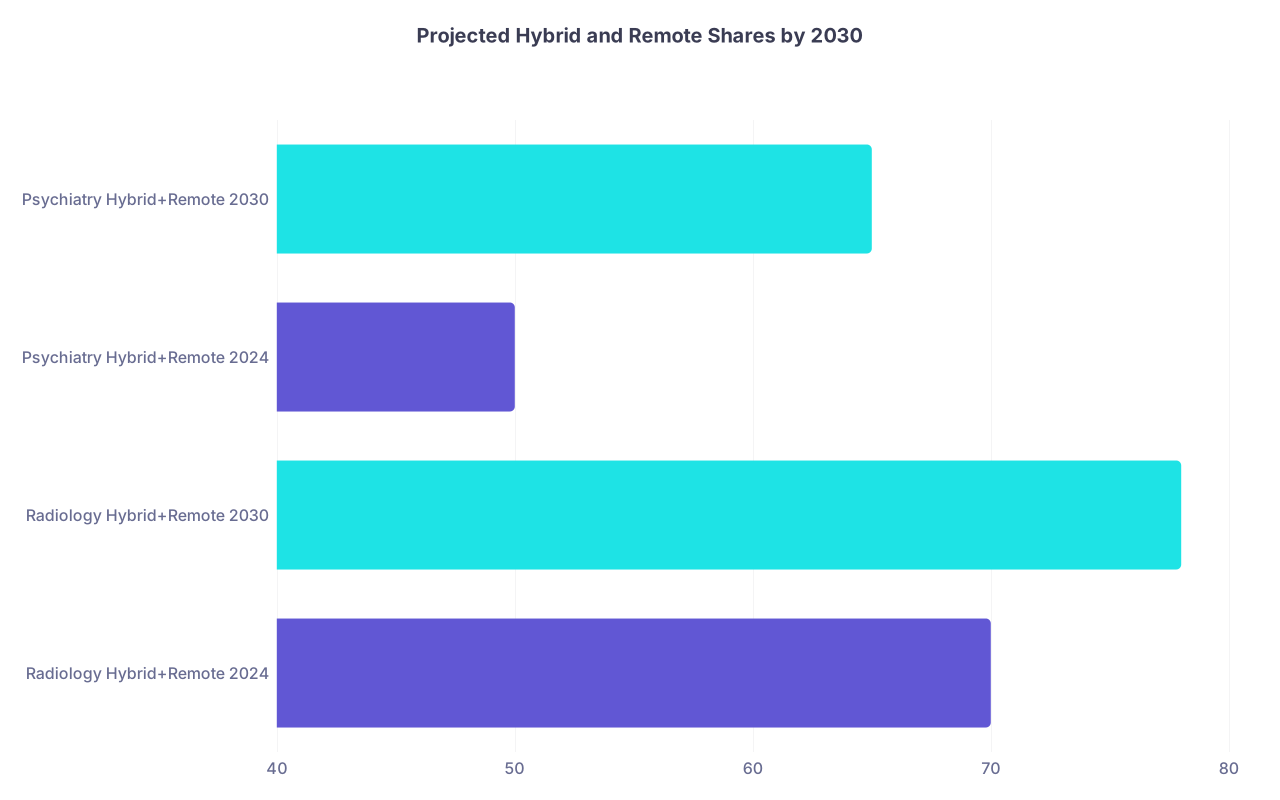
So hybrid + remote together likely move from ~70% to 75–80% of the workforce.
Psychiatry forecast
Key drivers:
- Chronic psychiatrist shortage, especially in rural and underserved areas.
- High telehealth satisfaction among many psychiatric patients, including those with anxiety, mobility issues, or living in care deserts.
- Stabilization of telehealth reimbursement parity in multiple states and private payers.
Constrained by:
- Regulatory uncertainty (e.g., prescribing controlled substances via telehealth rules).
- Ongoing need for in‑person care in inpatient, forensic, geriatric, and certain high‑risk populations.
- Digital divide issues for some patient demographics.
Projected 2030 landscape:
- 35–40% mostly on‑site
- 45–50% hybrid
- 15–20% mostly or fully remote
Meaning: crossing the 50% line for hybrid, and doubling the share of fully remote psychiatrists.
| Category | Value |
|---|---|
| Radiology Hybrid+Remote 2024 | 70 |
| Radiology Hybrid+Remote 2030 | 78 |
| Psychiatry Hybrid+Remote 2024 | 50 |
| Psychiatry Hybrid+Remote 2030 | 65 |
The direction is consistent. More remote. More hybrid. More job postings that explicitly advertise home days.
8. How to think about this as a student or resident choosing between them
You are not just picking “remote vs non‑remote.” You are picking a constraint set.
If your primary objective is maximal remote potential and geographic decoupling:
- Radiology is ahead on pure numbers. More jobs. More fully remote options. More mature infrastructure for remote reading.
- The trade‑off: the work is intensely screen‑based, solitary, and volume‑driven. You sacrifice procedural variety unless you deliberately choose IR and accept more in‑person work.
If your objective is hybrid lifestyle with meaningful patient interaction and flexible outpatient schedule:
- Psychiatry’s hybrid model is very lifestyle‑friendly: home days, patient continuity, lower acute time pressure than ED‑driven radiology shifts.
- The trade‑off: telepsychiatry can drift toward high‑volume med‑management work if not carefully constructed, and emotional load is real.
From the data alone:
- Fraction of workforce hybrid today:
- Radiology ~50% vs Psychiatry ~40%. Radiology wins, but not by an order of magnitude.
- Fraction of workforce fully remote today:
- Radiology ~20% vs Psychiatry ~10%. Radiology clearly ahead.
- Trajectory to 2030:
- Both rising, but radiology maintains an edge in full remote.
The decision is less “which specialty allows hybrid” and more “which hybrid reality you prefer”: image‑centric and high‑volume, or conversation‑centric and relational.
9. Practical levers during training to maximize future hybrid options
You cannot “be remote” as a PGY‑1. But you can position yourself for the jobs that will exist when you finish.
Radiology:
- Consider subspecialties with strong teleradiology demand: neuroradiology, body imaging, emergency radiology, MSK.
- Build a reputation in residency for speed and accuracy in diagnostic reads. Hybrid groups like high‑throughput readers when they negotiate remote days.
- During fellowship interviews, ask explicit quantitative questions:
- “What percent of your partners currently read from home on a regular basis?”
- “How many days per month are typically remote?”
- “Do new hires start with any remote time or is it seniority‑based?”
Psychiatry:
- Get genuine telepsychiatry exposure in residency: rural tele‑consults, virtual IOPs, or integrated primary care tele‑models.
- Develop competence in managing full panels via telehealth, including crisis planning and coordination with local resources.
- When evaluating jobs, read the fine print:
- Is “hybrid” actually 1 remote half‑day per week or 2–3 full remote days?
- Are there minimum in‑person requirements per month or per quarter?
Hybrid work in radiology and psychiatry is not a theoretical perk for some distant generation. The data shows that for attendings today, roughly half of psychiatrists and more than two‑thirds of radiologists already have regular remote or hybrid components baked into their jobs.
If you are choosing a “lifestyle friendly” specialty and you care about where and how you work as much as what you do, that matters. Radiology currently offers the highest ceiling for fully remote practice. Psychiatry offers a more relational, patient‑facing hybrid model that still meaningfully cuts commutes and boosts schedule control.
Your next step is not to demand remote days as an intern. It is to train in environments that align with where the numbers are moving, not where they were ten years ago. Once you have that foundation, you can start shaping a career that fits not only your clinical interests, but also the way you want your workday – and your work location – to look. The real negotiation over hybrid schedules begins after residency; that is the phase where these percentages stop being abstract and start defining your actual life.