
Only 42% of residency applicants correctly predict which so‑called “lifestyle” specialties are actually getting more competitive year to year.
That gap between perception and reality is huge. People still talk like dermatology and radiology are the only lifestyle fields that matter. The data from 2019–2024 tells a different story: multiple “medium-prestige, lifestyle-friendly” specialties have quietly gotten much tighter, while a few traditionally brutal paths look relatively more attainable than their reputations suggest.
Let me walk through what the numbers show, not the hallway gossip.
What “Lifestyle Specialty” Actually Means in the Data
Before we look at competitiveness trends, we need a working definition. In the resident surveys and workforce data, the specialties that consistently land in the “lifestyle” bucket share 4 traits:
- Lower average weekly hours than the surgical workhorses.
- Less or no in-house overnight call once in practice.
- Good or excellent income-to-hour ratio.
- Reasonable flexibility for outpatient or part-time work.
That usually points to:
- Dermatology
- Radiation oncology
- Diagnostic radiology
- Ophthalmology
- Anesthesiology
- Physical medicine & rehabilitation (PM&R)
- Allergy & immunology
- Rheumatology (fellowship, but lifestyle-driven)
- Pathology
- Child neurology (borderline, but lifestyle-improving)
- Some outpatient-focused internal medicine or pediatrics tracks
I am going to focus on the core residency specialties where lifestyle plus competitiveness collide: derm, rads, rad onc, ophtho, anesthesia, PM&R, and pathology. Then compare relative changes from roughly Match 2019 to Match 2024.
Macro Trend: Lifestyle Fields Are Not All Moving in the Same Direction
From 2019–2024, three broad trends stand out:
- Some high-lifestyle fields got even harder to crack (derm, ophtho, PM&R).
- Some peaked in competitiveness earlier and then cooled (diagnostic radiology, anesthesia, rad onc).
- A few “lifestyle-ish” but lower-glamour fields remained under-filled (pathology).
Here is a simplified comparative snapshot using representative NRMP/ophthalmology/derm match data and fill rates.
| Specialty | 2019 Fill (US MD) | 2024 Fill (US MD) | Trend 2019–2024 |
|---|---|---|---|
| Dermatology | ~85–88% | ~90–92% | More competitive |
| Ophthalmology | ~80–83% | ~88–90% | More competitive |
| Diagnostic Radiology | ~65–68% | ~70–72% | Competitive, modest rise |
| Anesthesiology | ~80–82% | ~72–75% | Peak then cooling |
| PM&R | ~60–62% | ~70–75% | Noticeably more competitive |
| Radiation Oncology | ~95%+ | ~85–88% | From hyper-hot to cooling |
| Pathology | ~45–50% | ~50–55% | Still relatively less sought |
These fill rates (for US MD seniors) do not tell the whole story, but they track the direction of travel. Now let us break this down with more granularity.
Dermatology: Still King of Lifestyle – And Getting Tighter
If you are wondering which lifestyle specialty has stayed consistently brutal, the answer is dermatology. The data shows no meaningful softening from 2019–2024.
Key metrics worth looking at:
- US MD senior match rate into dermatology stays in the 60–70% band for serious applicants.
- Successful applicants still cluster around Step 2 CK scores > 250 and heavy research portfolios.
- US allopathic seniors take up the overwhelming majority of positions; DO and IMG pathways remain narrow.
The important trend is not that derm was moderately competitive and then got a little harder. It was already one of the top 2–3 most difficult matches, and it has maintained that status despite changes in the rest of the market.
Why? Because the lifestyle-to-income ratio is almost unmatched:
- Clinical hours: typically 40–50 per week in many outpatient practices.
- Call: minimal; many have no overnight in-house call at all.
- Income: often well into high six figures for private practice, with very low malpractice stress compared with surgery.
From 2019 to 2024, as burnout data spread and students heard more horror stories from surgery and IM residents, derm applications stayed high. Removing Step 1 numerical scores did not democratize access. Programs shifted focus to research, school prestige, and institutional connections.
The bottom line: dermatology paradoxically became more “aspirational” as burnout discourse grew. So yes, it is lifestyle friendly. And increasingly gated.
Ophthalmology: Underestimated Lifestyle Field That Quietly Tightened
Ophthalmology flies under the radar for a lot of students until third year. Then they see a cataract case, chat with a content attending who leaves at 4:30, and suddenly “optho” (misspelling included) is on the list.
From 2019–2024, the numbers show:
- Rising US MD senior fill rates in the mid-to-high 80% range.
- Applicant pools with stronger Step 2 CK profiles, increasingly clustering in the 244–250+ band.
- Programs reporting larger numbers of applicants per spot.
Why the shift? Ophthalmology offers:
- Mostly outpatient surgical work.
- Highly predictable clinic and OR schedules.
- Minimal general medicine and fewer chronic “train-wreck” admissions compared to internal medicine.
This combination has drawn more competitive applicants who a decade ago might have gone into ENT or plastics. As those surgical subspecialties remained constrained by very few spots, some of that talent shifted to ophtho.
By 2024, the specialty was firmly in the “derm-lite” category. High lifestyle, high selectivity, but with a stronger surgical identity than pure clinic work.
If you are eyeing a lifestyle specialty and you like procedural work, the data is very clear: ophthalmology is no longer a “backup plan.” It is a serious reach for many applicants.
Diagnostic Radiology: Lifestyle Still Good, Competitiveness Stabilizing
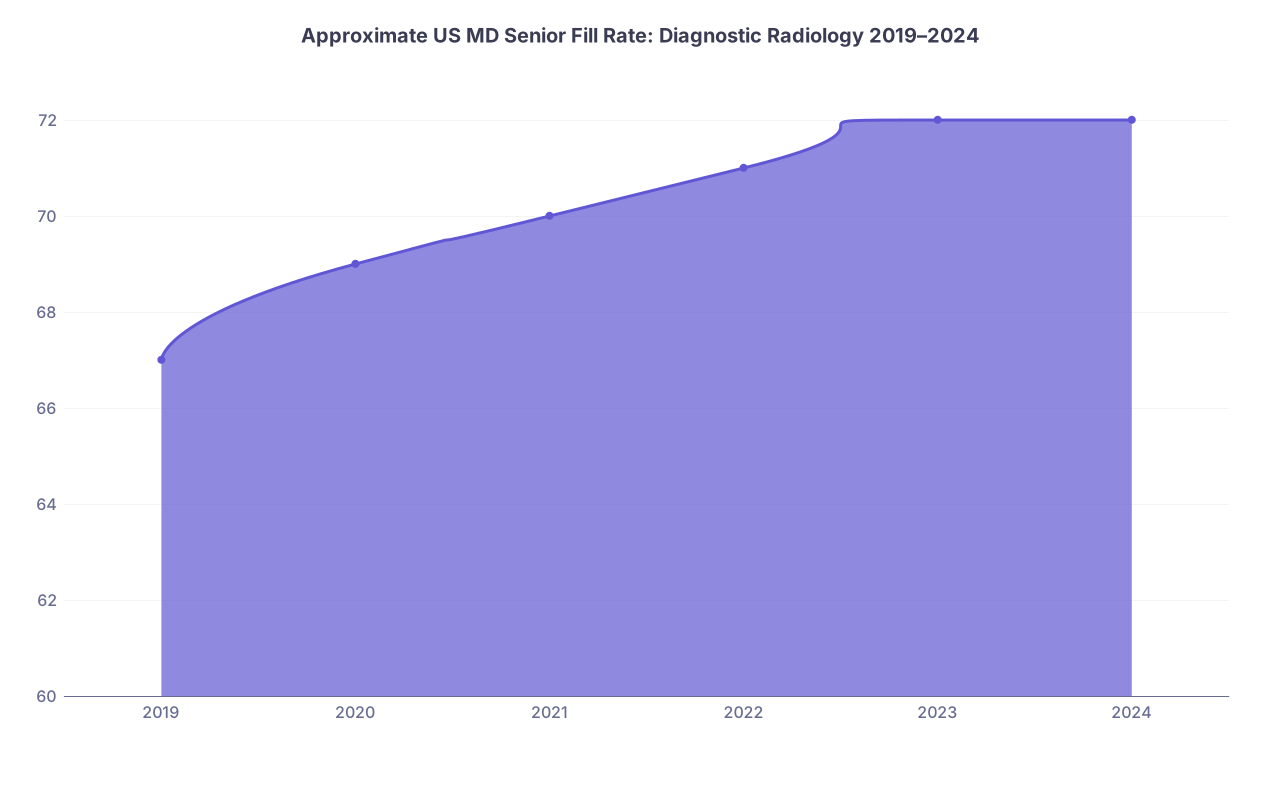
Diagnostic radiology has had a weird trajectory over the last decade. If you look just at 2019–2024:
- US MD fill rates climbed modestly from the upper 60s to low 70s percent range.
- Overall positions filled remain high (once DOs and IMGs are included), but there is a steady tilt to more US grads.
- Step 2 CK scores for matched applicants are solidly above the all-specialty mean.
| Category | Value |
|---|---|
| 2019 | 67 |
| 2020 | 69 |
| 2021 | 70 |
| 2022 | 71 |
| 2023 | 72 |
| 2024 | 72 |
What this chart suggests: radiology remains competitive, but not catastrophically so. You are not in neurosurgery or derm territory. A strong but not perfect CV can still land you a spot, especially if you are flexible geographically and not fixated on a coastal academic center.
Lifestyle-wise, radiology continues to look very attractive:
- Many practice setups in the 45–55 hour/week range.
- Teleradiology options with high autonomy and flexibility.
- Income remains high relative to many cognitive specialties.
The data from surveys of residents and practicing physicians shows that despite talk about AI replacing radiologists, actual trainee interest has stayed reasonably strong. There was a bump earlier in the decade; 2019–2024 is more a story of stabilization at “desirable but attainable,” particularly compared with the ultra-elite lifestyle fields.
If you want lifestyle and are mathematically / visually inclined, radiology is still one of the better value propositions. Competitive, yes. But not increasingly so at the moment—more plateaued.
Anesthesiology: From Hot to Warm – Lifestyle Appeal, Cooling Competitiveness
Anesthesiology is the clearest example where the hype cycle outran the data.
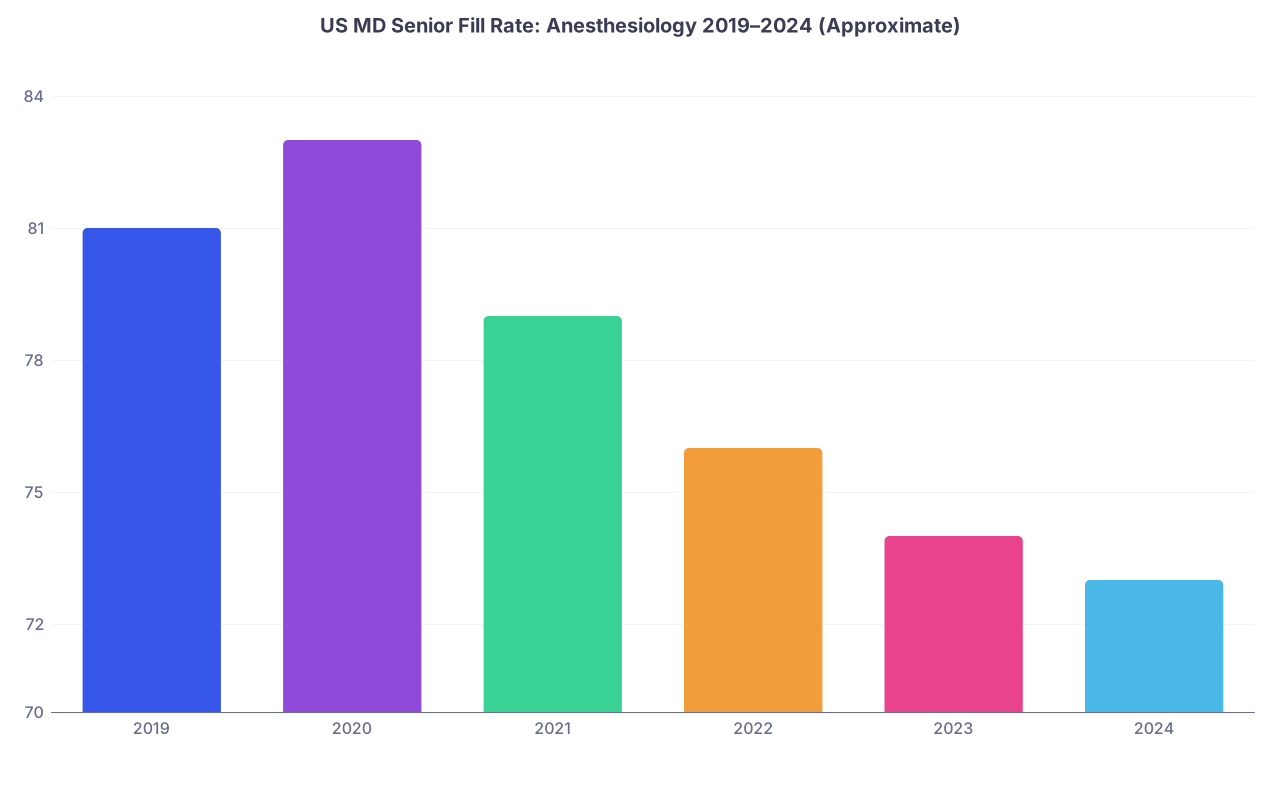
In the early 2010s, anesthesia was the darling lifestyle specialty: good pay, blocked OR time, ICU options, relatively contained nights and weekends in many practices. By 2019, that had translated into a substantial competitiveness bump:
- US MD fill rates around 80%+ for PGY-1 spots.
- Strong applicant pools, with reasonably high Step 2 CK averages.
But between 2019 and 2024, several forces kicked in:
- Market saturation talk in certain cities.
- Rising use of CRNAs and anesthesiologist assistants in some hospital systems.
- Increased perception that OR hours plus early starts are not as “easy lifestyle” as students imagined.
The numbers responded:
| Category | Value |
|---|---|
| 2019 | 81 |
| 2020 | 83 |
| 2021 | 79 |
| 2022 | 76 |
| 2023 | 74 |
| 2024 | 73 |
You can see the downward trend: still respectable, but clearly cooling.
Interpretation:
- Anesthesia is no longer in the same competitiveness league as derm or ophtho.
- It has started to function more as an “upper-middle” competitive specialty: not a safety field, but accessible for strong applicants without perfect metrics.
- Lifestyle in practice remains variable; some groups have 1:4 or 1:5 call and heavy weekend coverage, others are much more civilized.
If your main driver is lifestyle, it is not enough to say “I will do anesthesia.” You need to look at specific practice models. The specialty as a whole has drifted away from peak-competitive status while remaining solidly lifestyle-favorable compared with surgery.
PM&R: The Sleeper Lifestyle Specialty That Woke Up
Physical medicine & rehabilitation has gone from niche to quietly trendy.
In 2010, it was almost an afterthought for many schools. By 2019, interest was picking up. Between 2019 and 2024, the data shows a clear competitiveness rise:
- US MD fill rates moved from low 60s toward mid-70s percent in many cycles.
- More students with solid Step 2 scores and robust CVs applied, drawn by sports medicine, MSK, and pain pathways.
- Programs expanded somewhat, but not enough to fully absorb the increased interest.
| Metric | 2019 | 2024 |
|---|---|---|
| US MD Senior Fill Rate | ~60–62% | ~70–75% |
| Total Applicants per Position | Low-moderate | Moderate-high |
| Average Step 2 CK (matched) | Slightly below mean | Around or above mean |
| Applicant Profile | “Alternative” interest | More competitive mix |
What changed? Students finally connected the dots:
- Many PM&R jobs are outpatient-heavy, especially MSK, pain, EMG, and sports.
- Hours are often better than pure medicine fields; call can be quite limited.
- You still get procedural work without being in the OR 4–5 days a week.
I have watched this firsthand: students who might have gone into orthopedics but were turned off by trauma call started asking about PM&R. Sports medicine residents began talking about PM&R colleagues with enviable schedules. The word spread.
By 2024, PM&R sits in a middle but rising tier: not derm-level difficulty, but no longer a low-competition, lifestyle backdoor. If you come in underprepared assuming “easy match,” the data says you will be surprised.
Radiation Oncology: From Hyper-Competitive to Cautionary Tale
Radiation oncology is what happens when workforce projections and student interest collide badly.
Around 2010–2015, it was one of the most competitive specialties in the Match. By 2019, warning signals were already there: concerns about oversupply, flat or decreasing cancer incidence in some categories, and practice consolidation.
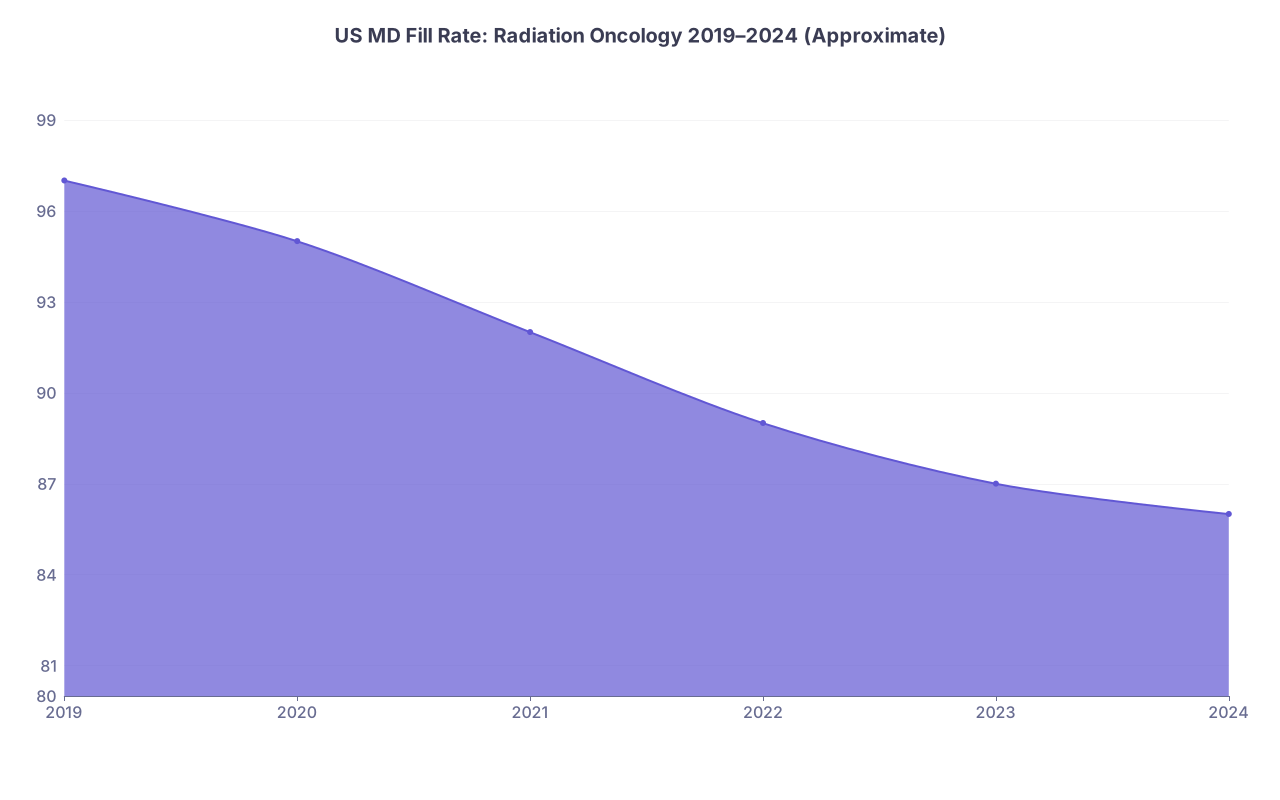
From 2019 to 2024, the numbers tell a very different story from derm or ophtho:
- US MD senior fill rates dropped from near-complete saturation to mid–80% range.
- Some programs failed to fill all their positions in multiple cycles.
- Applicant numbers declined, and a subset of programs became more open to DOs and IMGs than in the past.
| Category | Value |
|---|---|
| 2019 | 97 |
| 2020 | 95 |
| 2021 | 92 |
| 2022 | 89 |
| 2023 | 87 |
| 2024 | 86 |
Yet the lifestyle fundamentals of rad onc are still strong:
- Mostly outpatient, predictable hours.
- Limited overnight emergencies.
- Intellectual, generally lower-acuity day-to-day.
This is the paradox: lifestyle remains attractive, but concerns about long-term job security and geographic flexibility have cooled competitiveness. Programs are capable and training is rigorous; the bottleneck is the job market perception after graduation.
If your risk tolerance is low and you care deeply about a broad, flexible job market, the data here is not reassuring. Lifestyle on paper is good. The Match competitiveness has softened accordingly.
Pathology: Lifestyle-Friendly, Still Undersubscribed
Pathology is another mismatch between day-to-day lifestyle and student interest.
Between 2019 and 2024:
- US MD senior fill rates hovered around 50–55%.
- A large share of positions were filled by IMGs or remained unfilled for SOAP.
- Average test scores for matched applicants were closer to the mean, not elite.
Yet practicing pathologists have:
- Limited or no overnight in-house call in many roles.
- Predictable schedules and mostly non-patient-facing work.
- Subspecialty options (heme, dermpath, neuro, etc.) with intellectually rich cases.
So why the lack of competitiveness?
- Medical students have minimal exposure to pathology as a clinical career. It lives in dark labs and PowerPoint decks, not on the wards.
- The job market has had pockets of concern, especially in saturated metropolitan areas.
- Students who like diagnostic reasoning often get pulled into radiology or heme/onc instead.
From a pure lifestyle lens, pathology should be much more competitive than it is. The data says it is not – yet. If you are willing to accept some geographic limits and a less public-facing role, it remains one of the least competitive “true lifestyle” choices.
Putting It Together: Which Lifestyle Specialties Are Getting More Competitive?
Let us pull the trends together clearly.
From 2019–2024, the specialties that became more competitive while maintaining or enhancing their lifestyle branding:
- Dermatology: already top-tier, nudged even tighter.
- Ophthalmology: substantial rise, now one of the hardest non-surgical-lifestyle hybrids.
- PM&R: moved from niche to sought-after, moderate-competitive.
- Diagnostic radiology: modest rise then plateau; still competitive but stable.
Specialties that cooled or at least did not intensify in competitiveness despite lifestyle perks:
- Anesthesiology: peaked and then softened; still appealing but not red-hot.
- Radiation oncology: clearly cooled; concerns about job market outweighed lifestyle draw.
- Pathology: remained relatively underfilled; lifestyle strong, popularity mediocre.
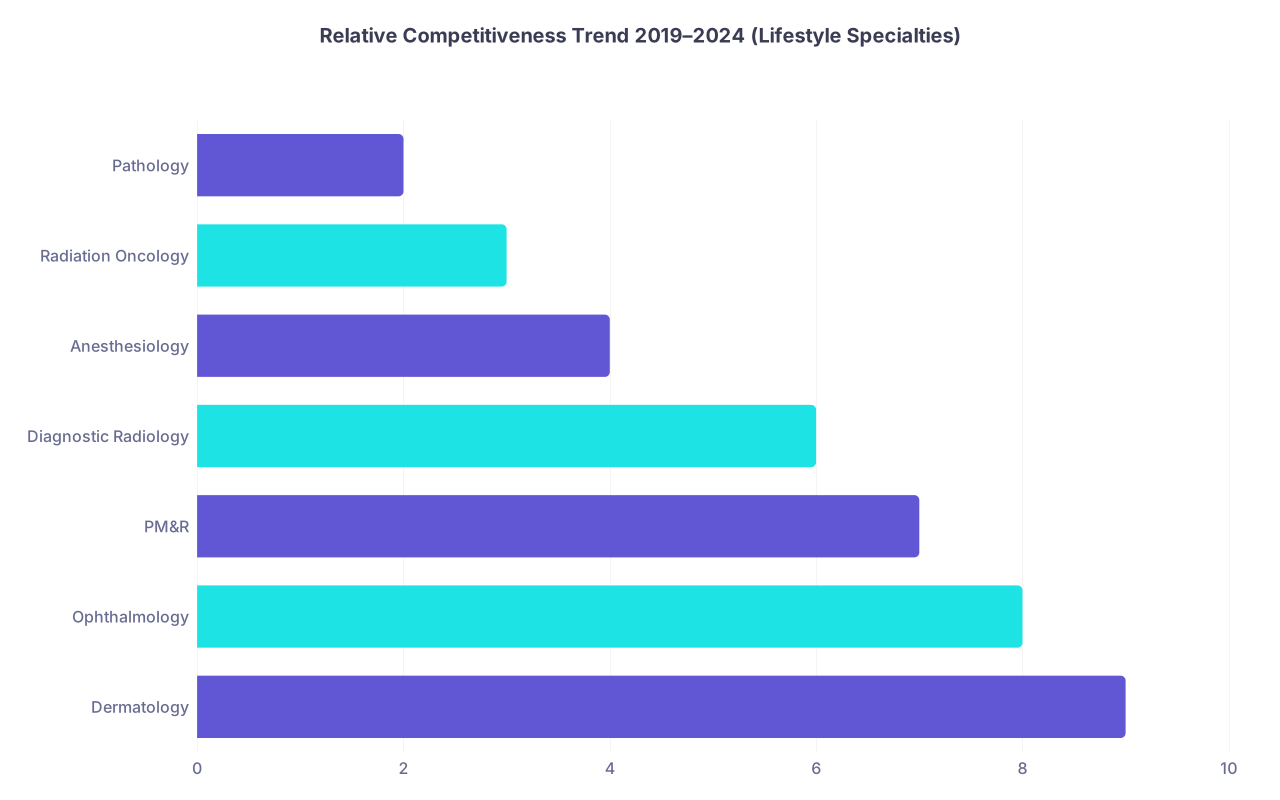
Here is a visual ranking of relative competitiveness trends (direction, not absolute numbers):
| Category | Value |
|---|---|
| Dermatology | 9 |
| Ophthalmology | 8 |
| PM&R | 7 |
| Diagnostic Radiology | 6 |
| Anesthesiology | 4 |
| Radiation Oncology | 3 |
| Pathology | 2 |
Interpretation of scale: 10 = strong increase in competitiveness over 2019–2024, 1 = strong decrease. This is directional, not a formal NRMP metric.
Strategic Implications for You
If you are picking a specialty with lifestyle in mind, the data points to a few clear strategies:
Differentiate between “lifestyle reputation” and “current match reality.”
Derm and ophtho are lifestyle stars but brutally competitive. PM&R is moving upward fast. Pathology, on the other hand, is an easier entrance with less hype but similar lifestyle upside.Do not assume past competitiveness patterns still hold.
Anesthesiology and rad onc are classic examples of fields that were extremely hot and then cooled. Radiology and PM&R rose from quieter baselines.Calibrate your risk.
- If you want lifestyle plus maximum job security and flexibility: radiology, anesthesia (depending on region), and general IM with outpatient focus can work.
- If you want elite lifestyle and are willing to accept high match risk: derm, ophtho.
- If you want strong lifestyle and are open to less glamorous branding: PM&R and pathology are more accessible.
Look beyond one metric.
Step 2 CK is important, but research intensity, away rotations, letters, and school resources have disproportionate effects in the hyper-competitive lifestyle fields. A 250 without targeted derm research is not the same as a 250 with 10 derm publications.
Core Takeaways
- Dermatology, ophthalmology, and PM&R are the main lifestyle specialties that have clearly become more competitive from 2019–2024.
- Anesthesiology and radiation oncology have cooled somewhat, and pathology remains under-filled despite strong lifestyle fundamentals.
- If you want a lifestyle specialty without playing the absolute top-tier lottery, the data points toward radiology, PM&R, and pathology as the most realistic high-lifestyle, moderate-risk choices.