
41% of internal medicine residents say lifestyle is their primary driver for fellowship choice—yet a large chunk of them still end up in high-burnout fields like interventional cardiology and pulmonary-critical care.
So let me be blunt: if your goal is maximal lifestyle, most residents are choosing wrong.
People confuse “prestige,” “salary,” and “famous at conferences” with “good life.” Those are not the same. The cardiologist doing 2 A.M. STEMIs and the GI doc scoping GI bleeds at 3 A.M. are highly paid. They are not lifestyle friendly.
You asked specifically about subspecialty choices that maximize lifestyle in internal medicine fellowships. Good. That is the right way to frame it. Because the lifestyle you end up with is set less by what you do in residency and much more by:
- Which fellowship you choose
- What version of that fellowship you choose (academic vs private, procedural vs cognitive, call-heavy vs consult-only)
- How you structure your career in your first 5–7 years after training
Let me break this down specifically.
The Core Reality: What Actually Drives “Lifestyle” in IM Subspecialties
Lifestyle is not a feeling. It is a pattern. And that pattern is driven by a few variables that repeat across every subspecialty:

The real levers:
- Call intensity (nights, weekends, in-house vs home call)
- Predictability of schedule (clinic-based vs emergent work)
- Degree of procedural urgency (elective vs “stat come now”)
- Outpatient vs inpatient orientation
- Revenue per hour of work (how hard you need to grind to hit your financial goals)
- Ability to say “no” and still keep your job (supply-demand, niche skills)
Every subspecialty has people with good lifestyles and people who are chronically miserable. But some fields make it much easier to build a sane life with:
- Mostly daytime work
- Minimal true emergencies
- Control over when and how you work
Those are the ones you are actually asking about.
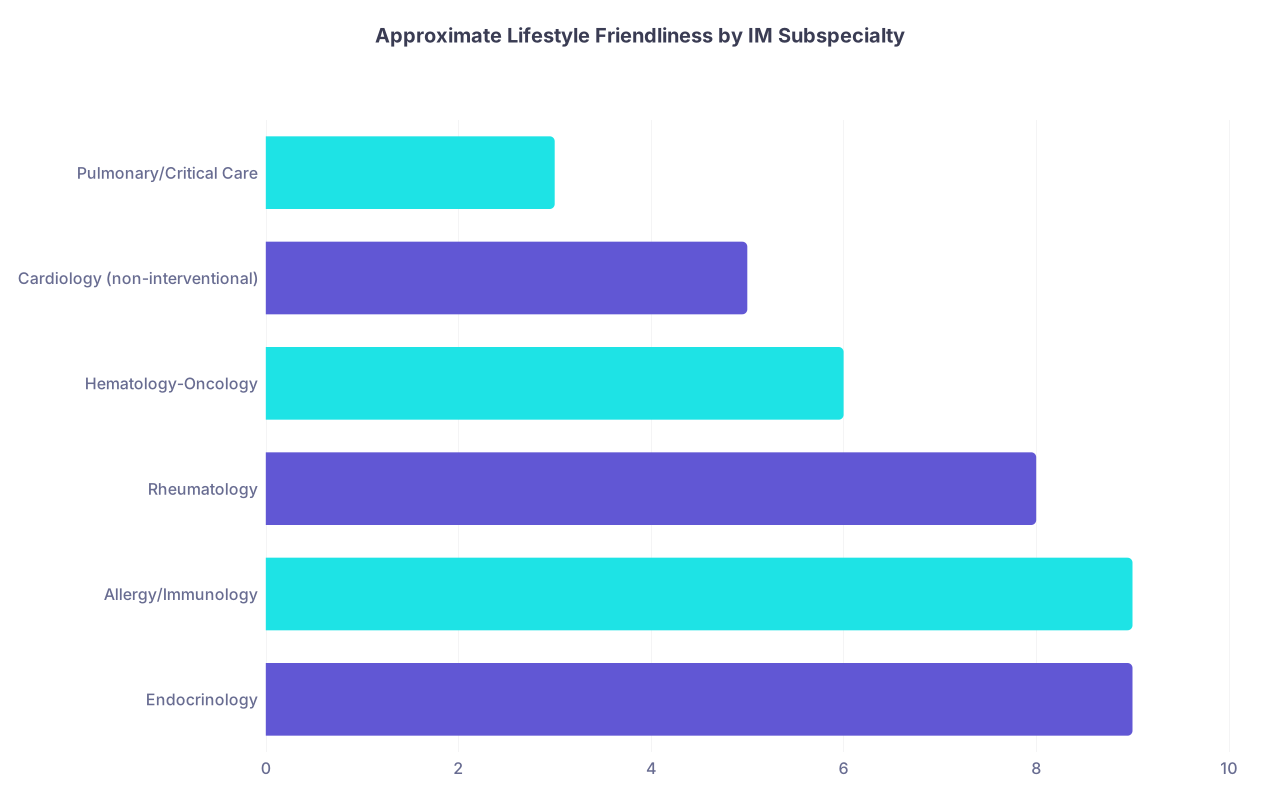
Before we sort the subspecialties, look at the big picture.
| Category | Value |
|---|---|
| Endocrinology | 9 |
| Allergy/Immunology | 9 |
| Rheumatology | 8 |
| Hematology-Oncology | 6 |
| Cardiology (non-interventional) | 5 |
| Pulmonary/Critical Care | 3 |
(Scale: 1 = brutal, 10 = most lifestyle-friendly. This is directional, not absolute. Geography and job type matter.)
Now let us go subspecialty by subspecialty.
Allergy & Immunology: The Quiet Lifestyle Champion
If you told me, “I want a cognitively interesting field with the highest lifestyle upside in IM subspecialties,” I would answer fast: Allergy/Immunology.
Not the flashiest choice. But extremely rational.
Why Allergy/Immunology Is So Lifestyle-Friendly
Allergy is overwhelmingly outpatient. That alone changes everything.
Typical schedule:
- 4–5 days per week of clinic
- Rare to have nights or weekend emergencies
- Home by 4:30–5:30 most days in many private practice setups
Emergencies? Almost none.
- Anaphylaxis from immunotherapy? Very rare and it happens in your office, during hours.
- Asthma flares? Usually handled in urgent care / ED before you ever get called.
Procedures are clean and controlled:
- Skin testing
- Patch testing
- Immunotherapy injections
- Office-based, scheduled, predictable
The other factor: the mix of chronic disease management (asthma, allergic rhinitis, atopic dermatitis, urticaria, immunodeficiency) with relatively limited true inpatient complexity.
Most allergists I know describe their lives as: “good income, low stress, almost no call, mostly happy patients.”
Trade-offs and Realities
The knock on Allergy:
- Lower inpatient presence means less “acute adrenaline” cases.
- Limited hospital prestige. You are not running codes or ICUs.
- Income is variable by market. In some saturated urban regions, you work harder to hit higher incomes.
But if you want high lifestyle with solid pay and a clinic-based life, it is near the top.
Endocrinology: Cognitive, Chronic, And Quietly Flexible
Endocrinology is the other classic “lifestyle” internal medicine field. A lot of residents dismiss it because they think it is “just diabetes.” That is simplistic.
What Makes Endocrine Lifestyle-Friendly
Endocrinology is mostly chronic disease management with a heavy outpatient component.
Common outpatient mix:
- Type 1 and 2 diabetes
- Thyroid disease (hypo/hyper, nodules, cancer follow-up)
- Osteoporosis
- Adrenal and pituitary disorders
- PCOS and other reproductive endocrine issues
Because the diseases change slowly and require long-term management, the clinical tempo is moderate. You rarely face a true emergency that requires you to come in at 2 A.M.
Inpatient call when it exists is consultative and generally controlled:
- DKA (managed by hospitalists and ICU; you guide)
- Perioperative steroid management
- Inpatient thyroid storm / myxedema coma (uncommon)
- Hyper/hypocalcemia
With many endocrine jobs, especially outpatient-focused ones, you can end up with:
- 4-day clinic weeks
- Limited weekend work
- Mostly phone call that does not require coming in
The Problem: Compensation vs Lifestyle
Endocrinologists are some of the most underpaid subspecialists relative to their training and complexity of thought, especially in academic settings.
In high cost-of-living areas, an academic endocrine attending making a modest salary may feel squeezed.
The trick, if you choose Endocrine:
- Consider private practice or mixed-model groups.
- Build a niche (thyroid cancer, pump/CGM expertise, transgender medicine, complex pituitary/adrenal) that enhances your value.
- Negotiate for RVU multipliers or schedule control rather than just raw salary.
Done right, Endocrine can give you predictable hours, intellectually interesting work, and a relatively low-burnout practice.
Rheumatology: The Steady, Chronic, Outpatient-Centric Path
If allergy and endocrine are lifestyle darlings, rheumatology is the steady, underestimated cousin.
Why Rheum Belongs on the Lifestyle List
Rheumatology has a similar pattern: chronic, complex, largely outpatient.
Core panel:
- Rheumatoid arthritis
- Lupus
- Psoriatic arthritis
- Ankylosing spondylitis / spondyloarthropathies
- Vasculitis
- Gout and crystal arthropathies
What matters for lifestyle:
- Mostly scheduled clinic visits
- Very limited true emergencies
- Inpatient consult service is often “daytime only” in many groups
- Many practices run four-day clinic weeks with the fifth day as admin or infusion supervision
Infusion centers (for biologics) can be financially lucrative for groups, which helps fund better staffing and schedule control.
Burnout Risk and How to Avoid It
Where rheum can get rough:
- High documentation burden (complex notes, prior authorizations for biologics)
- Heavy cognitive load managing polypharmacy and comorbidities
- Emotionally complex patients with chronic pain
Lifestyle protection strategies in rheum:
- Avoid jobs where you are the sole rheumatologist for a massive region, drowning in consults.
- Insist on NP/PA support or well-structured infusion center staffing.
- Cap panel size or new patient volume if you notice 15-minute follow-ups for complex rheum patients. That is a recipe for burnout.
Rheumatology offers strong control over your time and generally minimal night/weekend disruption if you choose your practice wisely.
Hematology/Oncology: Two Different Lives in One Fellowship
Heme/Onc is where lifestyle gets complicated.
If you look only at raw numbers, many oncologists are well compensated. But the work is heavy. Emotionally, cognitively, and sometimes in terms of hours.
Yet there are ways to make Hem/Onc reasonably lifestyle-friendly if you are deliberate.
Onc vs Benign Heme: Very Different Worlds
Most “Heme/Onc” jobs are actually “mostly Onc with some Heme.” Onc brings:
- Frequent family meetings
- End of life care discussions
- Rapidly changing therapy standards
- Clinic plus infusion center oversight
- Sometimes heavy call depending on practice structure
Benign hematology alone? Entirely different feel.
Benign heme focuses on:
- Anemias
- Coagulopathies
- Thrombophilias
- Platelet disorders
- Non-malignant cytopenias
Those patients are often managed outpatient, and while the work is intricate, the emotional toll of serial cancer deaths is lower.
Clinically, the most lifestyle-friendly route in this space is usually:
- Academic benign hematology
- Or mixed practice where you intentionally push away heavy inpatient oncology and acute leukemia service time
Where Lifestyle Goes to Die in Heme/Onc
The setups that are rough:
- Community practices with massive panel sizes, infusion center oversight, and frequent inpatient consults
- Jobs where you carry the inpatient malignant heme service routinely
- Practices that expect “24/7 availability” to patients on oral targeted therapies and immunotherapy
If you are drawn to Heme/Onc but still care about life outside the hospital:
- Seek jobs with protected clinic-only weeks and defined inpatient weeks
- Ask explicitly about weekend call frequency and after-hours call volume
- Clarify whether phone calls at night are triaged by an answering service or go straight to you
Heme/Onc is not top-tier lifestyle compared to Allergy or Endocrine. But with the right niche (benign heme, limited acute leukemia exposure), it can be reasonably livable.
Gastroenterology: Lifestyle Depends Entirely on How Procedural You Want To Be
GI has a reputation: highly paid, procedure-heavy, and busy. Generally deserved.
But there is nuance. There are GI jobs that are grindhouses, and there are GI jobs that are surprisingly controllable.
| Practice Type | Procedures | Call Burden | Lifestyle Score (1–10) |
|---|---|---|---|
| Heavy ERCP/EUS group | High | High | 3 |
| Mixed general GI | Moderate | Moderate | 5 |
| Mostly outpatient GI | Low–Mod | Low | 7 |
| Academic GI (no nights) | Low–Mod | Low–Mod | 6 |
Where GI Is Brutal
- Private groups that own endoscopy centers and chase volume aggressively
- Heavy ERCP/EUS practices where you are on the hook for biliary obstruction, cholangitis, and massive GI bleeds
- Rotating inpatient weeks where you are doing 8–12 scopes plus consults daily, plus call
Those jobs pay very well. They do not maximize lifestyle.
Building a “Lifestyle GI” Path
The more lifestyle-friendly GI contours look like:
Outpatient-biased practice with:
- Scheduled colonoscopies/EGDs
- Clinic for IBS, GERD, IBD follow-ups
- Minimal or no ERCP/EUS responsibilities
Academic GI with focused niche:
- Motility disorders
- Functional bowel disease
- Hepatology with transplant center support
Hepatology deserves a brief mention. Pure hepatology (especially in transplant centers) can be heavy due to decompensated cirrhosis consults and transplant call. But outpatient hepatology clinics without transplant duties can be quite controlled.
Lifestyle in GI is therefore highly plastic. If you want a safe path, you must:
- Avoid jobs where the selling point is “unlimited RVU earning potential” and “massive procedural volume.” That is code for “no life.”
- Ask how many nights per month you are primary for GI bleeds.
- Specifically clarify your share of ERCP/EUS calls.
Cardiology: Only One Slice of It Is Truly Lifestyle-Friendly
Cardiology as a whole is not a lifestyle specialty. It is intense, high-demand, and saturated with emergencies.
But not every cardiologist is sprinting to the cath lab at night.
Subtypes of Cardiology to Understand
Broad strokes:
- Interventional cardiology: STEMIs at 2 A.M., cath lab call, intense. Not lifestyle-friendly.
- EP (electrophysiology): Procedure-heavy, device checks, occasional late cases, call for device/arrhythmia issues. Mixed lifestyle; can be decent but not top-tier.
- Advanced heart failure/transplant: Sicker patients, frequent admissions, often high emotional load.
- Imaging / non-invasive / general consultative: Where the lifestyle potential lives.
The most lifestyle-friendly cardiology look:
Non-invasive, imaging-heavy jobs:
- Echo
- Nuclear
- CT/MRI if you are in the right system
Outpatient-focused general cardiology with limited hospital time and well-structured call pools.
Still, do not confuse “better than interventional” with “top-tier lifestyle.” Even non-invasive cardiologists often share:
- Weekend call rotations
- Evening phone calls for chest pain and heart failure
- Occasional acute issues that need urgent management
If your priority is maximizing lifestyle, cardiology will almost never beat Allergy/Endocrine/Rheum. It is simply not built that way as a field.
Nephrology, ID, Pulm/CC: Where Lifestyle Gets Tough
Let us be honest. There are fields that are crucial, intellectually rich, and valuable—yet lifestyle-unfriendly in most real-world jobs.
Nephrology
Pattern:
- Chronically ill patients
- Dialysis rounds at odd hours
- Multiple hospitals or dialysis centers
- Weekend rounds and frequent pages about fluid/electrolytes
There are some cushy transplant nephrology or mostly clinic jobs in academic centers, but they are not the norm.
Infectious Diseases
ID has call. It has sick patients. It has consults that appear whenever someone spikes a fever or new bacteremia shows up.
Lifestyle tends to be:
- Better than ICU fields
- Worse than outpatient chronic disease fields
- Variable by job—some academic ID roles with focused niche (HIV clinic, transplant ID with defined hours) can be tolerable
Pulmonary/Critical Care
This is straightforward.
If you choose Pulm/CC, you are signing up for:
- ICU nights
- Vent management
- Emergencies
- Procedural intensity (lines, bronch, chest tubes)
- High acuity and high stress
There are “pure pulm” or sleep-heavy jobs that are more lifestyle-friendly. But most markets expect you to do ICU, especially early in your career.
If lifestyle is your primary goal, Pulm/CC is a poor strategic choice.
The Overlooked Lifestyle Lever: Job Type, Not Just Fellowship
You can choose the most lifestyle-friendly fellowship and still wreck your life by choosing the wrong job afterwards.
Or you can choose a mid-lifestyle fellowship and carve out a surprisingly good setup.

| Step | Description |
|---|---|
| Step 1 | IM Resident |
| Step 2 | Pick lifestyle subspecialty |
| Step 3 | Pick any subspecialty |
| Step 4 | High lifestyle potential |
| Step 5 | Reevaluate job |
| Step 6 | Lower lifestyle |
| Step 7 | Moderate lifestyle |
| Step 8 | Lifestyle top priority |
| Step 9 | Offer mostly outpatient work |
| Step 10 | High call intensity job |
Key axes you must pay attention to:
- Academic vs private
- Pure outpatient vs mixed inpatient/outpatient
- Group size and call structure
- Geographic market (saturation vs high demand)
Academic vs Private
Academic jobs:
- Often lower pay
- Usually more predictable structure
- May have protected time and defined call rotations
- More committee/teaching/admin work
Private practice:
- Higher pay, often significantly
- Lifestyle varies wildly—some are sane, some are “live at the hospital”
- Stronger link between productivity and workload
Lifestyle optimization here means:
- In academics: Avoid “service-heavy, no backup” roles. Choose subspecialty groups with multiple partners and predictable rotations.
- In private: Ask specific questions about call frequency, weekend coverage, clinic load, and inpatient service.
Outpatient vs Inpatient
Outpatient-biased jobs are almost always more controllable:
- Allergy
- Endocrine
- Rheum
- Outpatient-focused GI
- Outpatient benign heme
Inpatient-heavy roles are inherently less predictable:
- Heme/Onc with malignancy inpatient weeks
- ICU-based Pulm/CC
- Hospital-based GI bleed-heavy services
- Cardiology call with STEMIs and acute coronary syndromes
When evaluating a job, ignore the fluff in the recruiter’s email and extract three brutally specific facts:
| Domain | Key Question |
|---|---|
| Call | How many nights and weekends am I on call? |
| Inpatient | How many inpatient weeks or months per year? |
| Clinic Load | How many patients per clinic day? |
If they dodge those numbers, that is your answer.
Ranking IM Subspecialties by Lifestyle Potential (Realistically)
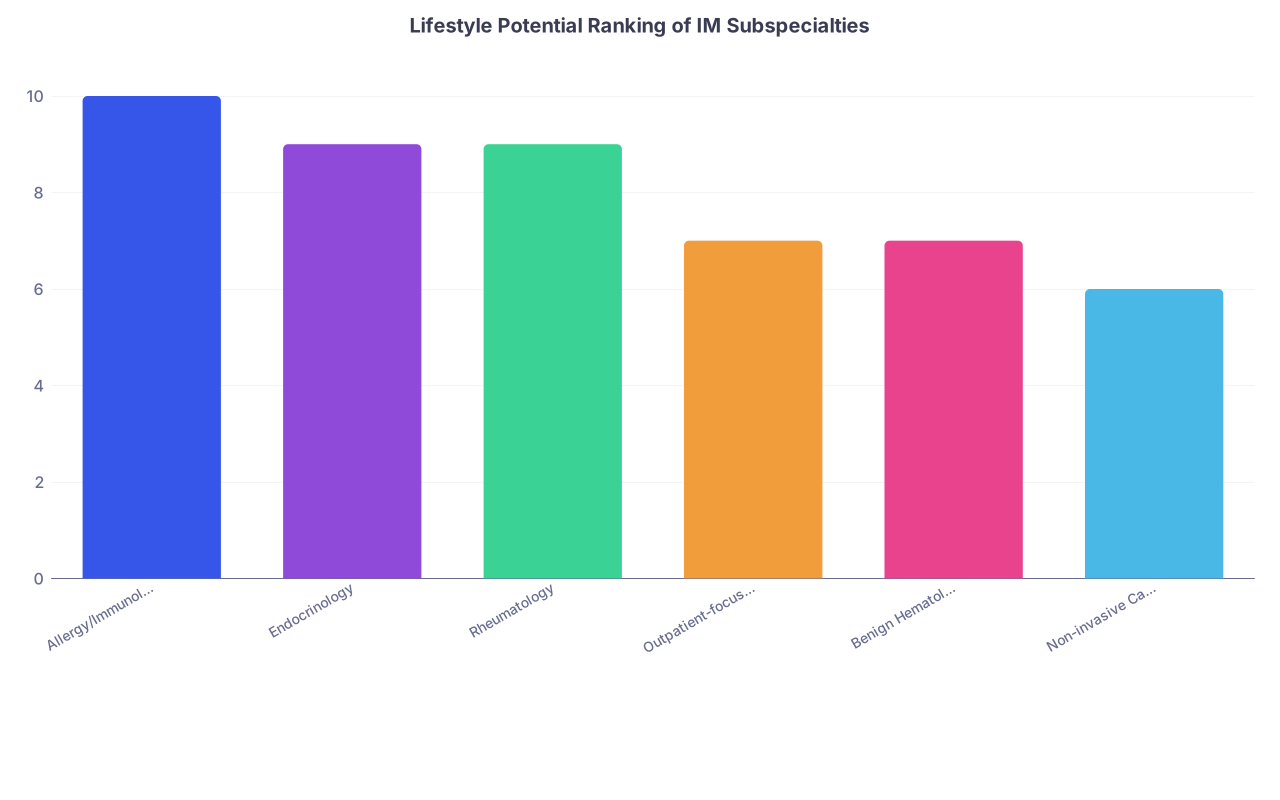
If your absolute top priority is lifestyle, and you assume a reasonably smart job choice in a normal U.S. market, my ranking for IM subspecialties by maximum achievable lifestyle would look like this:
| Category | Value |
|---|---|
| Allergy/Immunology | 10 |
| Endocrinology | 9 |
| Rheumatology | 9 |
| Outpatient-focused GI | 7 |
| Benign Hematology | 7 |
| Non-invasive Cardiology | 6 |
Again, this is about potential if you are deliberate:
- Allergy/Immunology – Top-tier. Clinic-based, minimal emergencies, high control.
- Endocrinology – Excellent lifestyle, especially in strong outpatient roles.
- Rheumatology – Chronic, outpatient-heavy, controllable.
- Outpatient-focused GI – Very good if you avoid heavy ERCP/EUS and inpatient bleeding call.
- Benign Hematology – Decent lifestyle in academic or niche setups.
- Non-invasive cardiology – Better than other cardiology tracks, but still not as good as the pure outpatient chronic-disease fields.
Nephrology, Pulm/CC, malignant-heavy Heme/Onc, and high-procedure GI/Interventional Cardiology drop lower on the lifestyle scale for obvious reasons.
How to Align Your Fellowship Choice With the Lifestyle You Actually Want
You are not choosing a fellowship. You are choosing future Tuesday afternoons.
Are you:
- In clinic, seeing stable outpatients and leaving by 4:45?
- In the ICU placing lines on a crashing patient at 6 P.M. with an overnight on the horizon?
- In the endo suite finishing your twelfth scope at 7 P.M. after a day of add-ons?
- On the phone with a family explaining a new stage IV cancer diagnosis at 8 P.M.?
All valid careers. But very different lives.
To actually maximize lifestyle:
- Be honest about what you enjoy. If you crave adrenaline and procedures, you will resent Allergy. If you love thinking deeply and moving slowly through complex chronic disease, you will burn out in a constant-emergency field.
- Shadow real attendings in each subspecialty on nights and weekends, not just daytime clinic. That is where the truth lives.
- During fellowship interviews, ignore the glossy brochure. Ask senior fellows:
- What does a bad week look like?
- What time do attendings realistically leave?
- How often are they called in at night?
- Think beyond first job salary. A $50–100k pay difference becomes irrelevant if you are chronically exhausted and hate your daily reality.
You are in the “specialty specific residency insights” phase now. The phase where people around you make decisions they will quietly regret in 5–10 years but feel too far in to reverse.
If you use fellowship choice to buy yourself time, control, and flexibility, you will have room later to:
- Build side interests
- Teach, lead, or do part-time work
- Adjust your clinical load as your life changes (kids, aging parents, burn out risk)
Choose differently now, and you will spend the next decade digging yourself out.
With these subspecialty contours clear, you are ready for the next step: dissecting actual job offers and contract terms so you do not trade your fellowship-based lifestyle advantage away at the first attending gig. But that is a story for another day.