
It’s your third interview day this week. You’re sitting in a windowless conference room with lukewarm coffee, waiting for the PD to walk in. Everyone keeps saying, “We really value wellness here,” but you haven’t heard a single concrete example that actually tells you what your life would look like at this place.
You don’t need more slogans. You need the right questions that expose what the day-to-day actually is.
Let’s go straight at that.
The Core Principle: Ask About Behavior, Not Beliefs
Every program claims they care about “work-life balance.” That phrase is useless by itself. You’re looking for behavioral evidence:
- How they build the schedule
- How they respond when residents are drowning
- How they handle pregnancy, illness, and life events
- How seniors/attendings actually behave at 3 a.m.
So the questions you ask should force them into specifics. And then you watch how fast, how detailed, and how aligned their answers are across different people.
I’ll break this down into categories with questions that reliably surface the truth.
1. The Schedule Questions That Expose Reality
These are non-negotiable. If you only remember one section, make it this.
Ask these (and then shut up and let them talk):
1. “What does an average week look like on your busiest inpatient rotation?”
You’re listening for:
- Start and end times with actual numbers
- How often you’re pre-rounding at 5 vs 6 vs 7
- How many days off you realistically get
Red flags:
- “It varies” with no concrete example
- “Depends on the attending” used as a blanket excuse
- They talk in generalities: “Not too bad,” “Pretty manageable”
Green-ish:
- “On VA wards we’re usually in by 6, out by 5-6. Weekend days start closer to 7. We get one golden weekend and one single-day weekend on that block.”
2. “On what rotations do people consistently stay past 7 p.m.? How often?”
This is where people slip.
Programs that are honest and functional will say things like:
- “The trauma month. You’ll have stretches of late nights, but it’s one month a year.”
- “Our ICU can run late 1–2 times a week, but we’ve adjusted caps to keep that better.”
Programs that are hiding stuff:
- “We try to get people out early when we can.” (Translation: you’re there late… a lot.)
- “It’s residency, you’ll work hard everywhere.” (Non-answer.)
3. “When was the last time you changed a rotation or schedule because residents were burning out?”
If they can’t give a recent, concrete example, they’re not actually responsive.
Good answers sound like:
- “We cut 24+4s in ICU last year after multiple people brought up fatigue.”
- “We rebuilt night float after residents reported getting crushed on post-call.”
Bad:
- “We review this every few years.”
- “ACGME monitors that for us.”
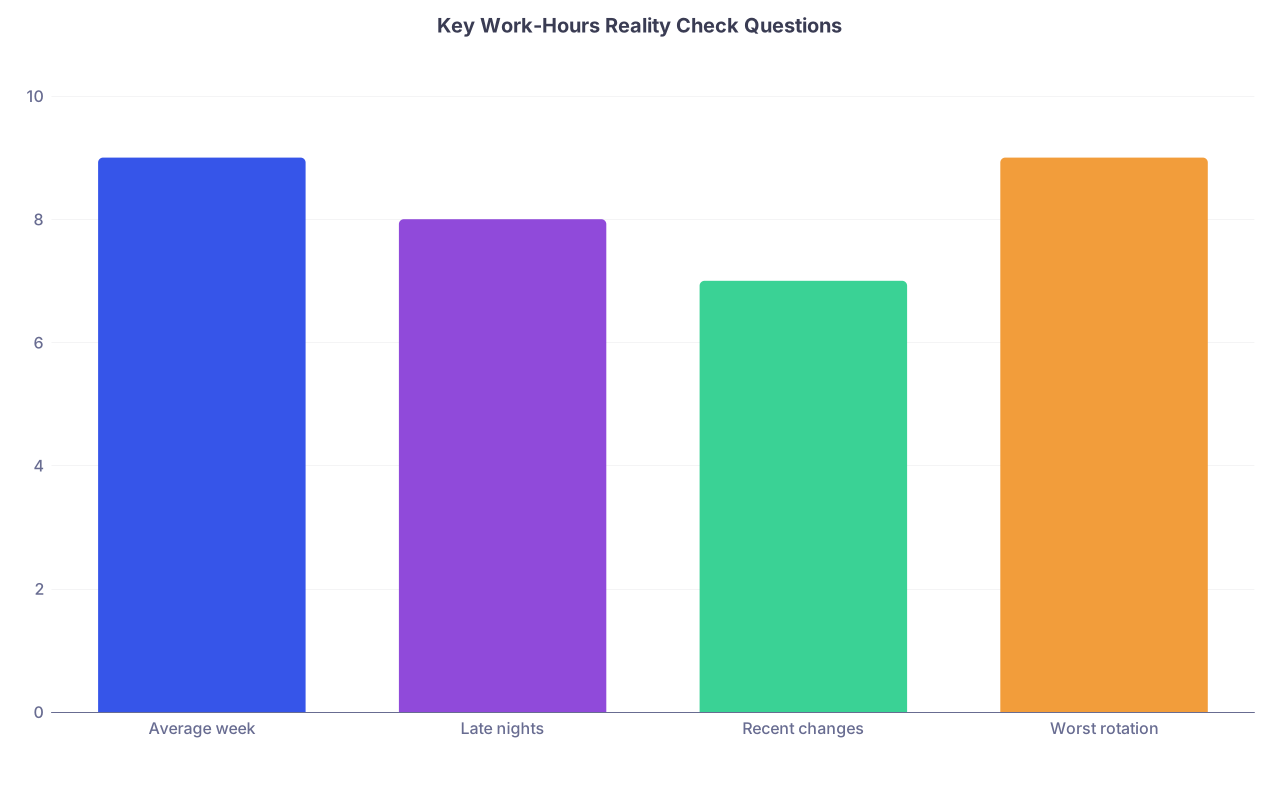
| Category | Value |
|---|---|
| Average week | 9 |
| Late nights | 8 |
| Recent changes | 7 |
| Worst rotation | 9 |
(The higher the importance, the more weight you should give that question when you compare programs.)
2. Questions That Reveal How They Handle Human Beings
Schedules are one thing. How they treat you when life happens is another.
4. “Tell me about how you’ve supported residents through major life events in the last couple of years.”
You’re looking for real stories:
- “We rearranged schedules so someone could go home for a sick parent.”
- “We extended training by 3 months so a resident could take a leave without penalty.”
If they default to policy-speak only (“We comply with FMLA”), that’s not comforting. You want to hear evidence of flexibility and humanity.
5. “What happens if a resident wakes up sick on a call day?”
Programs with true support have:
- A clear jeopardy/back-up system
- Culture where using it is normal, not shamed
Good:
- “We text the chief, jeopardy comes in. No one gets punished for being sick.”
- “It happens. People use backup maybe once a month, no drama.”
Bad:
- “We encourage people to ‘push through’ if they can.”
- “We don’t have a formal backup system, but people help each other out.”
6. “How have you handled pregnancy and parental leave for residents?”
Make them get concrete. Follow-up with:
- “How much paid time?”
- “Do people feel pressured to come back early?”
- “Any examples of residents having multiple kids here?”
If no one can remember the last pregnant resident, that’s useful data too.
3. Culture Questions That Show You the Hidden Curriculum
You want to expose the tone of the place.
7. “If I asked your interns what makes this program hardest on their personal lives, what would they say?”
Good programs don’t deny reality. They’ll say:
- “Nights are rough. People feel socially disconnected that month.”
- “The commute to the VA is annoying.”
Terrible answer:
- “I think they’d say we balance things really well.”
No one talks like that about their residency.
8. “Give me three words your residents would use to describe this program’s culture.”
You’ll hear one of three flavors:
- Realistic but warm: “Busy, supportive, tight-knit.”
- Red flag: “Hard-working, intense, respected.” (Notice what’s missing.)
- Fluff: “Excellent, academic, strong.” (Doesn’t answer your question.)
9. “How do attendings react when notes or discharges aren’t done until later in the day?”
You’re probing whether there’s hidden pressure to stay late.
Healthy:
- “We care more about safe care than arbitrary times. If you’re consistently late, we coach efficiency, not shame you.”
- “Some attendings are intense, but chiefs will back you if expectations are unreasonable.”
Toxic:
- “We expect residents to do what it takes.”
- “Our residents are very dedicated; they always get it done.” (Translation: at any cost.)

4. Work-Hours, Caps, and “We Follow ACGME” Nonsense
Everyone “follows ACGME.” That statement is worthless. Here’s how you cut through.
10. “In the last academic year, how many ACGME work-hour violations were reported, and what did you change because of them?”
You don’t care if the number is 0 or 10. You care if:
- They track it
- They respond to it
- Residents feel safe reporting
Green:
- “We had a few on ICU nights early in the year. We increased the night team by one and it’s been better.”
- “People report honestly. We don’t punish them.”
Red:
- “We haven’t had any in years.” (That’s almost always underreporting.)
- “We remind residents to budget their time better.”
11. “How do you make it safe for residents to honestly report hours and fatigue?”
Best answers involve:
- Anonymous or at least low-friction systems
- Explicit statements that there’s no punishment
- Examples of residents actually speaking up
If they jump immediately to “Well, if the ACGME audits us…” you’re not the priority. Their accreditation is.
| Topic | Reality-Oriented Answer | Red Flag Answer |
|---|---|---|
| Violations | "We had some and adjusted X rotation." | "We never have violations." |
| Sick call | "We use jeopardy; people use it." | "People usually just push through." |
| Reporting fatigue | "Residents can flag it without penalty." | "We remind people to be more efficient." |
5. Resident Behavior: What They Do, Not What They Say
Residents will sometimes sugarcoat in formal settings. You need questions that look at their behavior patterns.
12. “What do residents do on their days off?”
If they all say “sleep” and “catch up on chores,” that’s not illegal, but it tells you a lot. You want to hear at least some of:
- “People have co-ed soccer, rock climbing, book clubs.”
- “A lot of folks travel on their golden weekends.”
- “We have a mom’s group that meets at the park.”
If the only answer is “We hang out at the hospital gym and study,” that’s not a lifestyle-friendly culture.
13. “How many residents have significant others or kids, and do they feel they can actually see them?”
This sounds personal, but residents will answer it casually:
- “More than half are partnered; we have several with kids. It’s busy, but people make it work.”
- “We’ve had three residents become parents this year; they’re not ghosts.”
If they laugh and say, “Oh, this is not a place to have a life,” believe them.
14. “What percentage of your seniors moonlight, and does that feel optional or financially necessary?”
For supposedly “lifestyle-friendly” fields (radiology, derm, anesthesia, PM&R, path), the answer matters.
- If everyone is moonlighting just to afford rent, that’s pressure.
- If some moonlight “because they’re bored” or “for extra cash, not survival,” that’s different.
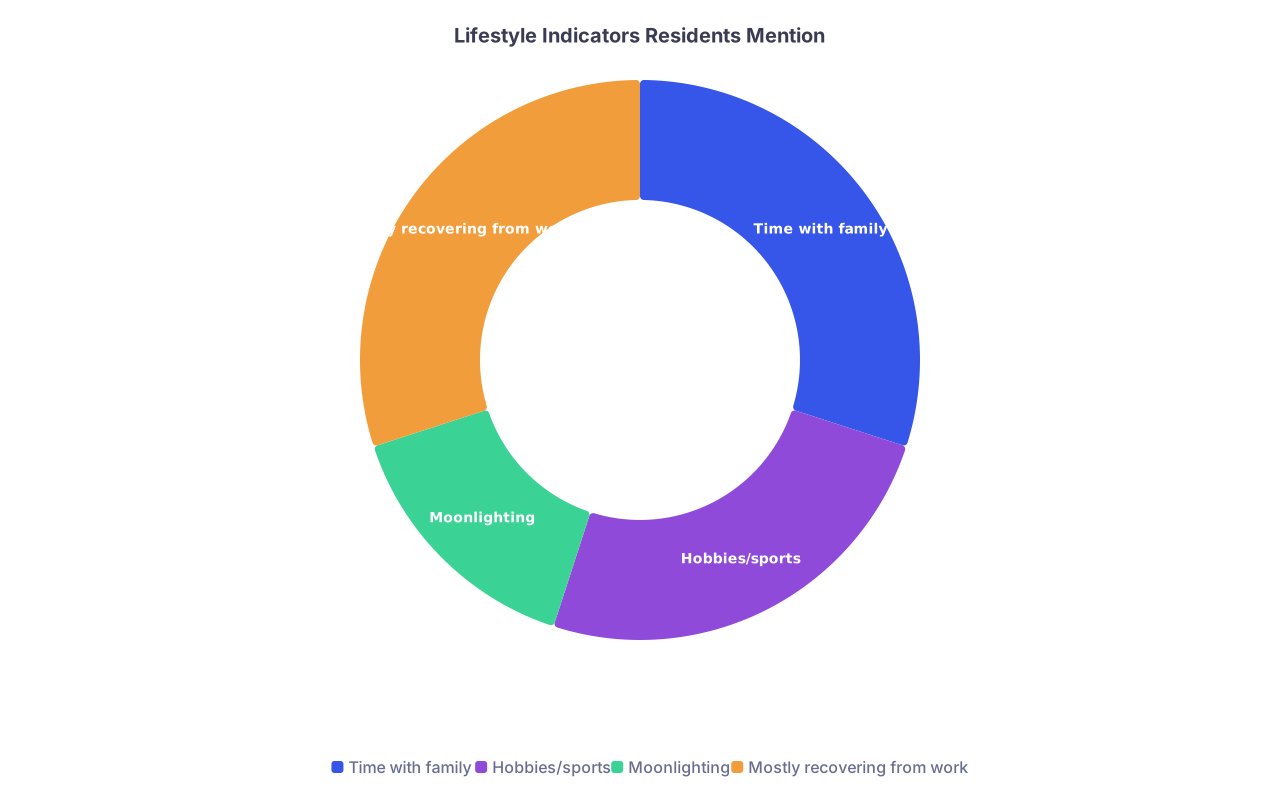
| Category | Value |
|---|---|
| Time with family | 30 |
| Hobbies/sports | 25 |
| Moonlighting | 15 |
| Mostly recovering from work | 30 |
6. Program Response to Burnout and Mistreatment
Any program that claims zero burnout is either lying or clueless.
15. “Tell me about a time residents brought up burnout or wellness concerns. What changed?”
Specific. Example-driven. If they can’t name one recent change, they’re not evolving.
Good:
- “We cut weekend continuity clinic after people said it destroyed their only day off.”
- “We hired a scribe on nights for the ED month.”
Bad:
- “We’re forming a committee.” (Perpetual committee = no change.)
- “We already have a wellness curriculum.” (Lectures are not wellness.)
16. “How do residents safely report mistreatment, and what’s one example of something that actually led to action?”
You want:
- Multiple reporting routes (PD, ombuds, anonymous survey)
- A concrete example of real consequences or remediation
If the answer is just “We have an annual survey,” that’s weak.

| Step | Description |
|---|---|
| Step 1 | Residents voice concern |
| Step 2 | Chiefs/PD listen |
| Step 3 | Collect specific examples |
| Step 4 | Adjust schedule or staffing |
| Step 5 | Reassess after a block |
| Step 6 | Iterate if still bad |
7. Specialty-Specific Angles for “Lifestyle-Friendly” Fields
Since you’re looking in the “most lifestyle friendly specialties,” you need to avoid the trap of assuming “good specialty = good program.”
Some targeted questions by specialty:
Dermatology / Pathology
- “How often are you here past 5 p.m. on routine days?”
- “How often are you taking work home (notes, reading, outside consults)?”
- “Do attendings expect you to be instantly reachable off-hours?”
If derm residents are regularly leaving at 8 p.m., that’s a huge red flag in a traditionally cushy field.
Radiology
- “How intense are night float weeks? Are people able to flip back to days without feeling wrecked?”
- “How often do residents pick up extra shifts because coverage is thin?”
- “Is there protected time during the day for studying, or is that all on your own time?”
Anesthesia
- “How often do you stay late waiting for cases to finish?”
- “Who does post-call cases when the board is packed?”
- “Any rotations where you feel like you’re essentially on home call 24/7?”
PM&R
- “What are your busiest inpatient rehab services like?”
- “Is there pressure to pick up extra consults or coverage constantly?”
- “How much weekend call are you actually doing?”
Programs in traditionally lifestyle-friendly specialties that are still brutal absolutely exist. Don’t assume. Ask.

8. How to Read Their Body Language and Inconsistencies
The questions matter, but how they answer might matter more.
Watch for:
- Speed: If they answer instantly, with detail, they’ve thought about it and are probably telling the truth.
- Consistency: Does the PD’s answer match the interns’ and the chiefs’? If the PD says “We rarely stay late,” and interns roll their eyes later, believe the interns.
- Tone: Nervous laughter, hedging (“Well, it’s residency…”) and obvious spin are data.
Strategy on interview day:
- Ask similar versions of the key questions to:
- PD
- A chief
- A junior resident
- A senior resident
If their stories line up, good sign. If they don’t, you just learned more than any brochure will tell you.
9. Quick Script: 7 Killer Questions You Can Actually Use
If you want a minimalist list to bring into interviews, use these:
- “Walk me through a typical week on your hardest rotation—start and end times included.”
- “Which rotations consistently push people past 7 p.m., and how often?”
- “When residents have raised burnout concerns, what’s one concrete change you made?”
- “How do you handle a resident who wakes up sick on a call day?”
- “What do residents usually do on their days off?”
- “How many work-hour violations did you have last year, and what changed because of them?”
- “If I asked your interns what’s hardest on their personal lives here, what would they say?”
Bring those, and you’ll get more real data than most applicants ever do.

FAQ: Work-Life Balance Interview Questions
1. Is it okay to ask directly, “Do you value work-life balance?”
You can, but it’s useless. Every program will say yes. Skip the philosophy and go for specifics: hours, changes made, how they handle sick call. Behavior over slogans.
2. Will I look “weak” if I ask about work-life balance on interview day?
No, not if you frame it right. Focus on patient safety and sustainability: “How do you make sure residents can provide safe care without burning out?” That sounds mature, not fragile.
3. How many work-life questions can I ask before it gets weird?
You can easily ask 2–3 per interview block if you spread them around and mix them with clinical/education questions. Residents expect you to ask. PDs should too. If anyone seems annoyed, that’s a data point.
4. What if residents give very different answers from faculty?
Trust the residents. They live the schedule. Faculty may be out of touch or incentivized to paint a rosier picture. Big inconsistencies should drop a program on your rank list unless there’s a really good explanation.
5. Are lifestyle-friendly specialties always better for work-life balance?
As a category, sure. But individual programs can still be miserable. A malignant anesthesia program can feel worse than a well-run IM program. Don’t relax just because the specialty is “chill” on paper.
6. Should I ask about moonlighting if I care about lifestyle?
Yes. If everyone is moonlighting to survive financially or cover service gaps, that destroys your time off. You want moonlighting to be a bonus option, not a survival requirement.
7. How do I compare programs after hearing all these answers?
Write down: average workday, worst rotation, backup system quality, evidence of change, and resident tone. Patterns will pop out. Rank higher the places that acknowledge the hard parts, show real changes, and where residents still sound like they have actual lives.
If you remember nothing else:
- Ask for specific examples, not values or mission statements.
- Cross-check answers across PDs, chiefs, and interns for consistency.
- Watch how honestly they talk about what’s hard—programs that can’t admit their flaws won’t fix them.