
You’re post-call, chugging lukewarm coffee, and trying to picture your future: do you want to be the person sprinting to emergency add-ons at 6 p.m., or the one locking the clinic door at 4:45 and actually showing up for dinner? You keep hearing vague phrases like “good lifestyle” and “outpatient-heavy,” but you want something more concrete:
Which specialties actually have the most predictable daily schedule?
Let’s answer that directly: not “least hours,” not “chillest,” but most predictable — where your day looks roughly the same most of the time, you can forecast your week, and surprises don’t own your life.
The Short List: Specialties With The Most Predictable Daily Schedules
Here’s the core group where, in practice, you’re most likely to have a stable, repeatable daily routine once you’re an attending:
- Dermatology
- Outpatient Psychiatry
- Outpatient-focused Family Medicine / General Internal Medicine
- Allergy & Immunology
- Endocrinology (mainly outpatient models)
- Physical Medicine & Rehabilitation (PM&R), especially outpatient/MSK/EMG-focused
- Ophthalmology (especially clinic-heavy practices)
- Radiation Oncology
- Pathology
- Occupational Medicine
- Public Health / Preventive Medicine
Are there exceptions in each? Yes. Can you still get wrecked during residency? Also yes. But as careers, these are the big “predictable day” options.
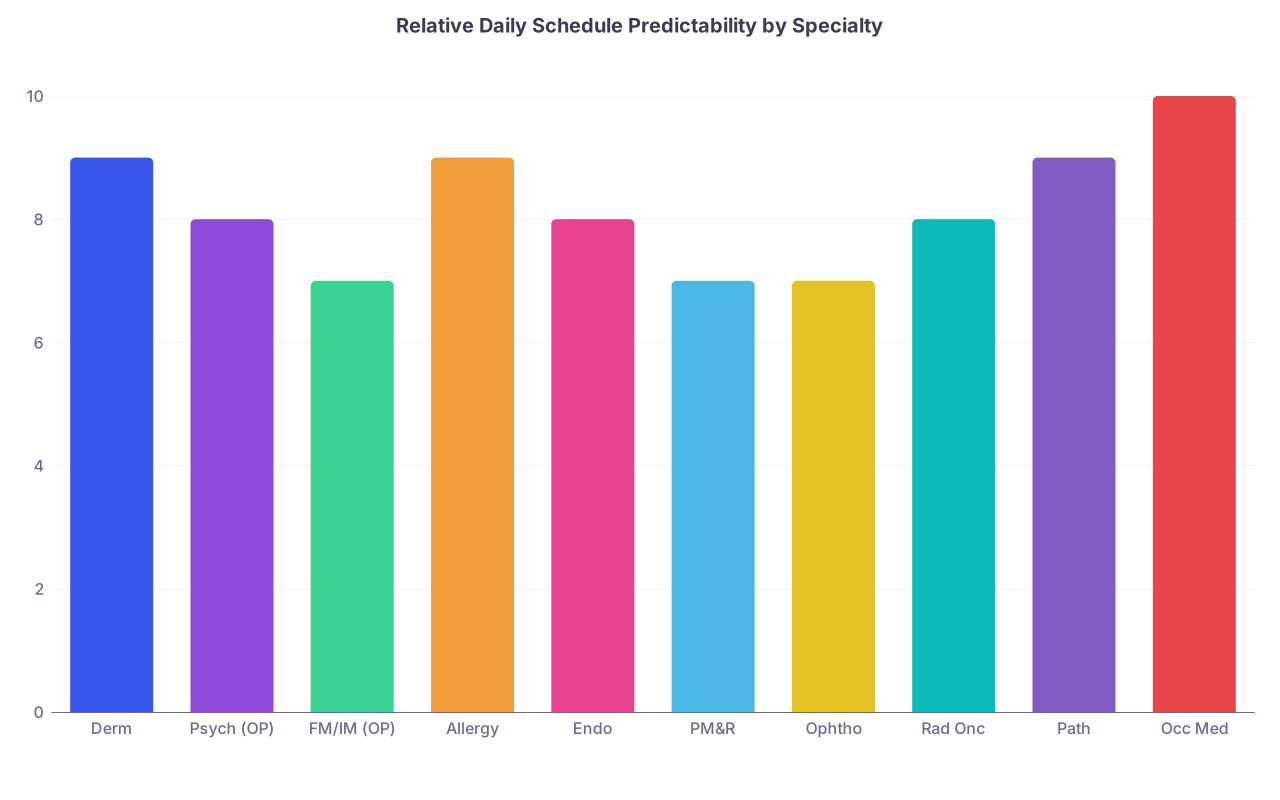
| Category | Value |
|---|---|
| Derm | 9 |
| Psych (OP) | 8 |
| FM/IM (OP) | 7 |
| Allergy | 9 |
| Endo | 8 |
| PM&R | 7 |
| Ophtho | 7 |
| Rad Onc | 8 |
| Path | 9 |
| Occ Med | 10 |
(Scale 1–10, based on typical attending life in outpatient-heavy jobs.)
Now let’s break down what “predictable” actually means and what it looks like specialty by specialty — including the traps that make something sound lifestyle-friendly but feel very different on the ground.
What “Predictable Daily Schedule” Really Means
Forget what the brochures say. Predictability comes down to four things:
Outpatient vs. Inpatient
Outpatient = visits are scheduled, in blocks, with start and stop times. Less “we need you in the OR now.”
Inpatient = admissions, codes, emergencies, discharges, pages. Much less predictable.Urgency of the Specialty
Does your specialty regularly handle emergencies that can’t wait? If yes, your schedule will get blown up.
Dermatology rash follow-ups? Can wait. STEMI? Cannot wait.Call Structure
- Home vs in-house
- Frequency
- Realistically how often it ruins your night/weekend
Predictable specialties have infrequent, low-intensity call or sometimes none at all.
Procedure Load & Add-ons
Any specialty that runs on “add-on cases” or “just one quick procedure at 4 p.m.” gets less predictable quickly.
Most of the lifestyle-friendly specialties hit the sweet spot: primarily outpatient, low emergency burden, light home call, and few urgent add-ons.
Dermatology: The Gold Standard of Predictable
Derm is the poster child here, and frankly, it deserves the reputation.
What the day looks like as an attending in a typical private or group practice:
- Clinic block 8–5 (or 8–4), mostly 10–20 min visits
- Procedures (biopsies, excisions, cosmetic) are scheduled in advance
- Very little true emergency work
- Call is often phone-only, low volume, and not every night
There are variations:
- Academic derm with inpatient consults = slightly more pager noise, still not chaotic
- Cosmetics-heavy practices may have evening/weekend clinic by choice, but still scheduled and predictable
The main point: your schedule is basically a grid of known visits for the next 1–3 months. Days may be tiring, but they are rarely surprising.
Residency caveat: Derm residency can still feel busy and compressed because of clinic volume and reading, but it’s still far more predictable than surgical fields.
Outpatient Psychiatry: Calm Calendar, Heavy Brains
Psych has a split personality. Inpatient psychiatry and C/L psych can be unpredictable. Outpatient psych, especially adult, is extremely schedulable.
Typical outpatient psych attending schedule:
- 45–60 min intakes, 20–30 min med management follow-ups
- You decide how many you book and on which days
- True off-hours emergencies are rare once patients are stable and have clear instructions (crisis line/ED)
But do not confuse predictable with “light.” You’re carrying:
- Suicidality risk
- Complex comorbidities
- Sometimes a ton of documentation and coordination
Still, in terms of your daily structure, outpatient psych is one of the most controllable. No OR, no traumas, minimal “drop everything and run” events once you’re out of the hospital-based roles.
Primary Care (Family Med / General IM): Predictable… If You Choose Wisely
Primary care is where people get burned both ways. It can be extremely predictable, or total chaos, depending on job design.
Best-case scenario for predictability:
- Pure outpatient, no inpatient rounding
- Clinic-only practice, 8–5, with blocked schedule
- Shared call for triage, often home-based and nurse-screened
- Minimal or no weekend clinic
What wrecks predictability:
- Adding inpatient rounding in the early morning before clinic
- Nursing home rounds squeezed into “lunch” or after hours
- Too many same-day “urgent” visits stacked onto a full schedule
- Phone messages, refills, and portal messages allowed to bleed into the evening
If you ruthlessly prioritize structure when job hunting — ask about panel size, template design, same-day slots, portal message policies, and inpatient responsibilities — primary care can give you a very stable week. If you just sign whatever is offered? You can absolutely end up staying late every day with your schedule shredded.

Allergy & Immunology: Quietly Top-Tier Lifestyle
Allergy is wildly under-marketed as a lifestyle specialty.
What your day usually looks like:
- Pure outpatient clinic: rhinitis, asthma, food allergies, immunotherapy
- Scheduled skin testing and challenge visits
- Occasional urgent issues (reactions), but far fewer emergent situations than ED/ICU fields
- Very light call in many practices
This is the kind of specialty where:
- You often know exactly how next Tuesday will look
- The mix of procedures (allergy shots, testing) and visits is built into a template
- Hospital consults are rare outside some academic centers
It’s one of the most predictable schedules in medicine with generally reasonable hours.
Endocrinology: Boring (in a Good Way) from a Schedule Perspective
Endocrine is not flashy. But if your goal is a stable clinic life, it’s solid.
Most endocrine jobs:
- Heavily outpatient: diabetes, thyroid disease, osteoporosis, adrenal disorders
- Occasional hospital consults, but not usually night-and-weekend driven
- True emergencies (DKA, adrenal crisis) exist but are often handled by hospitalists/ICU with your input, not you driving in at 2 a.m. every week
The biggest schedule threats:
- Institutions that expect a lot of inpatient consult coverage with too few endocrinologists
- Undersupported diabetes education, causing follow-ups and phone volume to balloon
Still, compared with surgical and acute care fields, endocrinology’s day-to-day is repeatable and calendar-driven.
PM&R (Physiatry): Depends Where You Land
PM&R is a chameleon. The predictability depends entirely on your niche:
Highly predictable:
- Outpatient MSK/spine clinics
- EMG-focused practices
- Non-operative sports medicine in controlled clinical settings
Less predictable:
- Acute inpatient rehab with medically complex patients
- Heavy consult services (trauma, neuro) at big hospitals
Outpatient PM&R clinics tend to run like other outpatient internal medicine sub-specialties: templates, predictable procedure slots (injections, EMGs), and minimal emergencies.
The key: during fellowship/job hunting, you need to explicitly aim at outpatient-heavy practices if predictability is your priority.

| Step | Description |
|---|---|
| Step 1 | PMR Residency |
| Step 2 | Outpatient MSK or EMG |
| Step 3 | Inpatient Rehab or Consults |
| Step 4 | More predictable schedule |
| Step 5 | Less predictable schedule |
| Step 6 | Prefer clinic or hospital |
Ophthalmology: Procedure-Heavy but Scheduled
Ophtho is a good example of “busy but predictable.”
Attending life often looks like:
- Clinic days with back-to-back patients, quite full but pre-scheduled
- OR days bundled (e.g., all cataracts on Tuesdays)
- Emergencies exist (retinal detachments, acute angle-closure glaucoma), but frequency is much lower than trauma surgery or OB
Call:
- Often home call, and while you will get called, it’s not as relentless as many surgical subs
- In some communities, coverage is shared widely, reducing personal burden
So: your calendar may be dense and packed, but not random. You know which days are OR, which are clinic, which are admin.
Radiation Oncology: Structured but Market-Dependent
Rad Onc used to be the unbeatable lifestyle specialty. Market issues aside, the day structure is still highly predictable in many places.
You typically:
- See consults and follow-ups in clinic, scheduled ahead
- Plan treatments in coordination with dosimetrists and physicists
- Have stable treatment regimens that follow protocols
True emergencies?
- Spinal cord compression, SVC syndrome, some bleeds — but these are a small slice of weekly volume in most practices
Your hours hinge on:
- Patient volume
- How well-staffed the department is
- Whether your group is covering multiple sites
But for daily predictability, it still ranks high.
Pathology: Invisible but Very Predictable
Pathology is almost comically predictable compared with most clinical fields.
Daily life:
- You come in, review cases, sign them out
- Grossing and frozen sections are scheduled
- Call exists (transfusions, critical results), but rarely the kind that drags you into the hospital at 3 a.m. regularly
No clinic. No ward work. No panicked family meetings.
You’ll work hard and need to be meticulous, but your time is governed by lab workflow and case volume, not random emergencies.

Occupational Medicine & Preventive Medicine: Top-Level Predictability
If your absolute priority is a clock-in/clock-out routine, these are heavy hitters.
Occupational Medicine:
- Clinic hours tightly aligned to business hours
- Injury evaluations, physicals, return-to-work visits
- Very little true off-hours clinical work
Preventive / Public Health:
- Often more like a policy/administrative job than a clinical one
- Meetings, planning, data review — almost entirely business hours
- No personal panel of acutely ill patients blowing up your phone at midnight
These can feel more like “doctor-adjacent” roles to some people, but from a schedule standpoint, they’re hard to beat.
Where People Get Fooled: “Lifestyle” That Isn’t Predictable
A couple of specialties sound good but are wildly variable by job:
Hospitalist:
- No clinic, blocked shifts — seems predictable
- Reality: days often run unpredictably late depending on admissions, codes, late consults
- Night shifts, variable schedules, and holiday coverage cut into predictability
Anesthesiology:
- Some groups have fixed schedules and minimal call. Others have early starts, late-running rooms, trauma, OB, and frequent add-ons.
- Life can be fantastic or rough, but it is not inherently predictable.
Emergency Medicine:
- Shift-based, yes. You know your start time.
- But rotating days/nights/weekends and shift changes kill “daily routine” for many people.
If you want control over your calendar and a day that looks the same most of the week, outpatient-heavy, low-emergency specialties are your safest bets.
| More Predictable (Typical) | Less Predictable (Typical) |
|---|---|
| Dermatology | Emergency Medicine |
| Outpatient Psychiatry | General Surgery |
| Allergy & Immunology | OB/GYN |
| Pathology | Cardiology (inpatient/ICU) |
| Occupational Medicine | Trauma/Acute Care Surgery |
How To Actually Use This When Choosing A Specialty
Do not stop at “Is this a good lifestyle specialty?” That question is too vague. Ask:
- In this specialty, can I design a mostly outpatient, clinic-based career?
- How often are true emergencies that need me now?
- What does call realistically look like for attendings here?
- Does the job protect start/stop times or constantly erode them with add-ons and messages?
Then, when you talk to attendings, push for specifics:
- “What time do you typically leave the office?”
- “How often do you get called at night or on weekends?”
- “Do you know your schedule a month in advance? Three months?”
- “How often does your day get blown up by unscheduled issues?”
You’re not just choosing a field. You’re choosing a calendar template for the next 30 years.
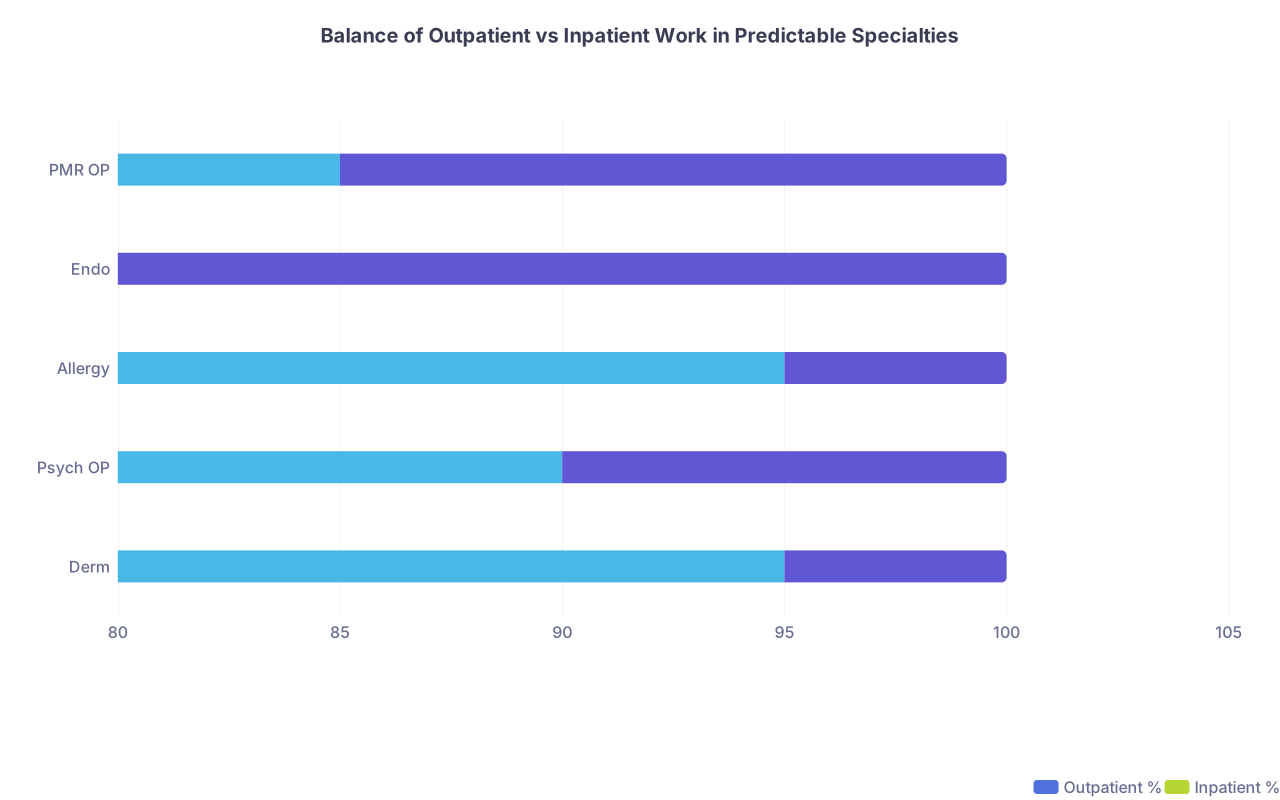
| Category | Outpatient % | Inpatient % |
|---|---|---|
| Derm | 95 | 5 |
| Psych OP | 90 | 10 |
| Allergy | 95 | 5 |
| Endo | 80 | 20 |
| PMR OP | 85 | 15 |
FAQ: Predictable Schedule Specialties
Which single specialty has the most predictable daily schedule overall?
If I had to pick one, it’s Dermatology in a typical outpatient private/group practice. Nearly all care is scheduled, emergencies are rare, call is light, and most attendings know exactly what their clinic templates look like months out.Is outpatient psychiatry more predictable than primary care?
Usually yes. Outpatient psych has fewer acute medical issues, less same-day “sick visit” chaos, and less need for urgent labs, imaging, or procedures. Primary care can be equally predictable if you avoid inpatient rounding and carefully structure your clinic, but many PCPs get saddled with add-ons and inbox overload.Can a hospitalist job ever be truly predictable?
You can have a predictable schedule of shifts (7-on/7-off), but the day itself is inherently unpredictable: fluctuating admissions, sick patients, codes, discharges that drag on. If what you care about is a consistent Monday–Friday daytime routine, hospital medicine is not the best match.Is anesthesiology a lifestyle-friendly and predictable specialty?
It can be lifestyle-friendly in certain groups (good staffing, minimal trauma/OB, fair call distribution), but it’s not consistently predictable. OR days run late, add-on cases pop up, and early starts are standard. It’s much less “clock in at 8, out at 5 every day” than derm/allergy/psych.What about radiology? Where does it fall on the predictability spectrum?
Radiology is fairly structured — lists of studies to read, scheduled procedures — but call, after-hours coverage, and volume surges add unpredictability. It’s more predictable than EM or surgery, less so than pathology, derm, or allergy, and heavily dependent on practice setup (24/7 coverage models vs day-only roles).Are lifestyle specialties still competitive enough to worry about?
Yes. Derm, ophtho, rad onc, and many lifestyle-heavy fields are competitive, though the exact landscape shifts over time. If you want these, you need strong board scores (where applicable), solid clinical evals, and usually research or meaningful engagement in the field. You do not “back into” derm by accident.If I want predictability but also procedures, what are my best options?
Look at: Ophthalmology, Allergy & Immunology (testing, challenges), Dermatology (biopsies, excisions, cosmetics), PM&R with EMG and injections, and some outpatient GI or pulmonary practices that are heavily procedural but still semi-scheduled. The trick is outpatient-heavy jobs where procedures are on the calendar, not tacked on chaotically.
Key points to walk away with:
- The most predictable daily schedules live in outpatient-heavy, low-emergency specialties: derm, allergy, outpatient psych, path, occ med, and similar.
- “Lifestyle” and “predictable” are not the same. You want both structure (clinic) and low urgency (few true emergencies).
- Your eventual job design matters as much as your specialty. Ask ruthless, specific questions about clinic templates, call, and add-ons before you sign anything.