
You’re a PGY-2 or PGY-3, staring at an email from your program coordinator: “Start thinking about fellowship plans.”
Your mind jumps straight to one question:
“If I do a fellowship, is my lifestyle going to be better or worse than it is right now?”
Not the academic answer. The real one.
Call schedules. Clinic volume. Night pages. RVUs. Whether you can actually see your kids on weekends or make a 7 pm dinner reservation without praying no one crashes in your service area.
Here’s the answer you’re looking for: some fellowships reliably improve work-life balance; some reliably destroy it; and some are a mixed bag depending on how you practice.
I’ll break this down by core residency, then by common fellowships: which ones generally help your lifestyle, which ones hurt it, and what concrete levers actually matter more than the fellowship name on your CV.
First, how to think about “lifestyle” fellowships
Before diving into specialties, zoom out. A fellowship tends to improve work-life balance when it:
- Shifts you toward scheduled, elective work and away from emergencies.
- Reduces or eliminates in-house nights and frequent home call.
- Gives you high revenue per hour so you can work fewer hours if you want.
- Places you in settings with predictable volumes (outpatient, procedural suites).
It usually makes lifestyle worse when it:
- Increases your exposure to unpredictable emergencies (ICU, trauma, cath lab).
- Locks you into hospital-dependent work with 24/7 coverage obligations.
- Ties your income tightly to volume/RVUs in saturated markets.
- Keeps you in chronically understaffed, high-acuity environments.
Keep those principles in mind as we walk through the big buckets.
Internal Medicine: which fellowships help and which punish you
Internal medicine is where people most often get burned by “I thought this would be chill, but…”
Fellowships that usually IMPROVE lifestyle
1. Endocrinology
Day-to-day: almost entirely outpatient, scheduled visits, very few true emergencies.
Lifestyle upside: Patients do not usually crash at 2 am from hypothyroidism. Diabetes adjustments can be done in clinic or via messages. In many communities, call is light.
Two caveats:
- Academic endocrine can be very clinic-heavy with lots of inbox work.
- You may be paid less per hour than a well-run outpatient general IM job, but predictability is better.
2. Allergy & Immunology
This is one of the best lifestyle fellowships in medicine.
Mostly outpatient, procedures are minor (skin testing, challenges, immunotherapy). Call is extremely light in most practices. Many A&I docs do 4-day workweeks.
You’ll hear phrases like “I actually see my kids” from allergists. That’s not an accident.
3. Rheumatology
Again, largely outpatient. Flares can be urgent but not usually emergent.
The main “pain” points are long-term inbox management and complex medication monitoring. But call is usually reasonable and nights are quiet in most setups.
4. Geriatrics / Palliative (done right)
These are nuanced. If you’re embedded in a well-staffed inpatient consult team or outpatient clinic with strong interdisciplinary support, lifestyle can be good. The work is emotionally heavy but usually not “running through the hospital overnight” heavy.
The problem is when you end up covering multiple services, multiple nursing homes, or being the “go-to” person for every difficult family at 5:01 pm. Structure matters more than the fellowship label here.
Fellowships that usually WORSEN lifestyle
1. Cardiology (especially Interventional)
General cardiology can be busy but sustainable. The trouble starts with procedural subspecialties.
- Interventional cardiology: You’re covering STEMI call, middle-of-the-night lab activations, sick patients, and high medicolegal risk. Lifestyle is objectively worse than almost any non-ICU IM path.
- EP (electrophysiology): Better than interventional for some, but still procedural, still hospital-tied, still long cases, still complex.
If your main driver is “better lifestyle,” cardiology is a poor choice unless you intentionally practice non-invasive in a group willing to share call and keep you mostly outpatient.
2. Critical Care (standalone or with pulm)
Pure ICU work is inherently high acuity, nights, weekends, holidays. Some groups do 7-on/7-off, which looks good on paper. What they don’t highlight: “on” weeks can be brutal and mentally draining.
If you love the ICU, great. But do not pretend this is a lifestyle fellowship.
3. GI (often worse, not better)
GI can be lucrative and can be shaped into a decent lifestyle if you angle yourself toward outpatient scopes, screening colonoscopies, and a large group with shared call.
The reality in many markets:
- Night and weekend call for GI bleeds.
- High-volume endoscopy days.
- Pressure to do more procedures for RVUs.
It’s better lifestyle than cardiology in many places, but worse than a cushy outpatient primary care or allergy job.
Pediatrics: where the lifestyle wins really are
Peds is a bit different because many pediatric subspecialties are chronically underpaid relative to the training, but some are genuine lifestyle improvements.
Fellowships that usually IMPROVE lifestyle
1. Pediatric Endocrinology
Very similar to adult endocrine, maybe even fewer emergencies. Think diabetes management, growth, thyroid. Call is light in many centers, and nights are uncommon unless you’re on a small-team service.
2. Pediatric Allergy & Immunology
Same story as adult allergy: largely outpatient, predictable, minimal call. If you want a true “lifestyle” pediatric subspecialty, this is on the short list.
3. Developmental-Behavioral Pediatrics
Clinic-based, multidisciplinary, scheduled. No codes, no 2 am crises. The stress tends to be cognitive/administrative, not acute. Many DBP doctors run very reasonable schedules.
Fellowships that usually WORSEN lifestyle
1. Pediatric Critical Care
PICU is high stakes, high stress, nights, weekends, and usually fewer physician bodies to share coverage than adult critical care. The emotional load is heavier too.
2. Neonatology
Some NICU jobs are shockingly lifestyle-friendly (level II, community setups, in-house NNP coverage). But most NICU practices, especially at academic centers or level III/IV units, involve nights, weekends, and being responsible for tiny critically ill humans.
3. Pediatric Emergency Medicine
Shift work looks flexible for a while, then your body starts to feel it. Nights, evenings, weekends, constant flow. It’s not primary care clinic; it’s the front line.
Anesthesia: the lifestyle fellowships vs the burnout traps
Anesthesia residents often ask, “If I don’t fellowship, am I dooming myself?” Not necessarily. But some fellowships clearly shift your lifestyle in one direction.
Fellowships that often IMPROVE lifestyle
1. Pain Medicine (especially outpatient-focused)
This can be a substantial lifestyle upgrade:
- Clinic-based, procedures in ASC or office.
- Elective schedules.
- Very few true emergencies.
The dark side:
Some pain jobs are thinly veiled opioid mills or high-pressure, procedure-only mills. Those are not lifestyle-friendly. But a well-structured interventional pain practice is one of the best schedules in the anesthesia universe.
2. Cardiac Anesthesia – it depends
At big academic centers, cardiac can mean long pump cases and late nights. In some community settings, though, being the cardiac person actually gets you more predictable cases, fewer add-on trauma nights, and better pay. Extremely variable.
Fellowships that usually WORSEN lifestyle
1. Critical Care (again)
Anesthesia-critical care is still critical care. Same ICU issues: nights, weekends, burnout risk.
2. OB Anesthesia
Babies come when they want. OB call tends to be brutal at under-resourced hospitals. Some big centers have dedicated in-house teams that rotate well, but most residents I’ve talked with don’t describe OB anesthesia as a lifestyle upgrade.
Surgical specialties: should you actually subspecialize?
Surgery is where people most clearly confuse “prestige” fellowships with “good life” fellowships.
Fellowships that CAN improve lifestyle (with careful practice choices)
1. Breast Surgery
Elective, clinic plus OR, limited emergencies. Lifestyle is often significantly better than trauma or general acute care surgery. Many breast surgeons have very civilized schedules.
2. Some Ortho subspecialties (sports, hand)
This heavily depends on call structure. A sports surgeon in a large group, focusing on elective arthroscopy and clinic, can have an excellent lifestyle. Hand in a big practice with shared call can also be pretty good.
But if your group expects you to take general ortho call at a trauma-heavy hospital, fellowship will not save your lifestyle.
Fellowships that almost always WORSEN lifestyle
1. Trauma / Surgical Critical Care
If you sign up for trauma, you know the deal: nights, weekends, unpredictable, high-adrenaline. Some love it. Lifestyle-wise, you pay a price.
2. Vascular Surgery (fellowship or integrated)
Aneurysms, limb ischemia, bleeding. Lots of urgent and emergent work. Endovascular cases that go late. Call can be vicious in under-covered regions.
3. Complex subspecialties that tether you to the hospital
Think hepatobiliary, transplant, some oncologic fellowships. These may be great if you’re chasing academic prestige and complex cases. They are not great if you want freedom and time off.
EM, FM, Psych: niche fellowships and lifestyle outcomes
Emergency Medicine
Many EM docs think fellowship will rescue them from bad shifts. Reality check:
- Toxicology, ultrasound, administration: can redirect you toward academic/leadership roles with more control and daytime work. Good for lifestyle if you exit full-time nights/weekends.
- Critical Care: worse lifestyle than standard EM for most people.
- Peds EM: often more nights/weekends and lower pay. Sometimes slightly gentler pace than adult ED, but not necessarily better lifestyle.
Family Medicine
Lifestyle here is 90% job design, 10% fellowship.
- Sports Medicine: can be great if you end up mostly clinic plus daytime event coverage. Can be terrible if you are always at events nights/weekends.
- Geriatrics, Palliative: same comments as IM – can be cushy or grueling, based on practice structure.
- OB-focused fellowships: more call, more nights, more unpredictability. Usually worse lifestyle.
Psychiatry
Psych is already lifestyle-friendly compared to many fields. Fellowships don’t change that dramatically.
- Child & Adolescent: often clinic-based, good pay, flexible schedules. Can be a lifestyle positive.
- Addiction, Forensics, Consult-Liaison: generally fine lifestyle-wise. The difference is more in content than hours.
- The real determinant is practice setting: hospital vs outpatient, academic vs private, employed vs your own group.
Big picture: which fellowships are generally “lifestyle-friendly”?
Here’s a simple snapshot for your mental model.
| Fellowship | Typical Lifestyle Impact* |
|---|---|
| Allergy & Immunology | Strongly improves |
| Endocrinology (adult/peds) | Improves |
| Rheumatology | Improves |
| Pain Medicine (outpatient) | Improves |
| Breast Surgery | Improves |
| Pediatric Endocrine/Allergy | Improves |
| Cardiology (especially interventional) | Worsens |
| Critical Care (any route) | Strongly worsens |
| GI | Slightly worsens |
| Trauma / Surgical Critical Care | Strongly worsens |
*Assuming average market conditions and typical practice models.
The 4 non-negotiables that matter more than the fellowship name
I’ve watched people in the same fellowship land on opposite ends of the lifestyle spectrum. The pattern is boring but real. Your actual work-life balance comes down to:
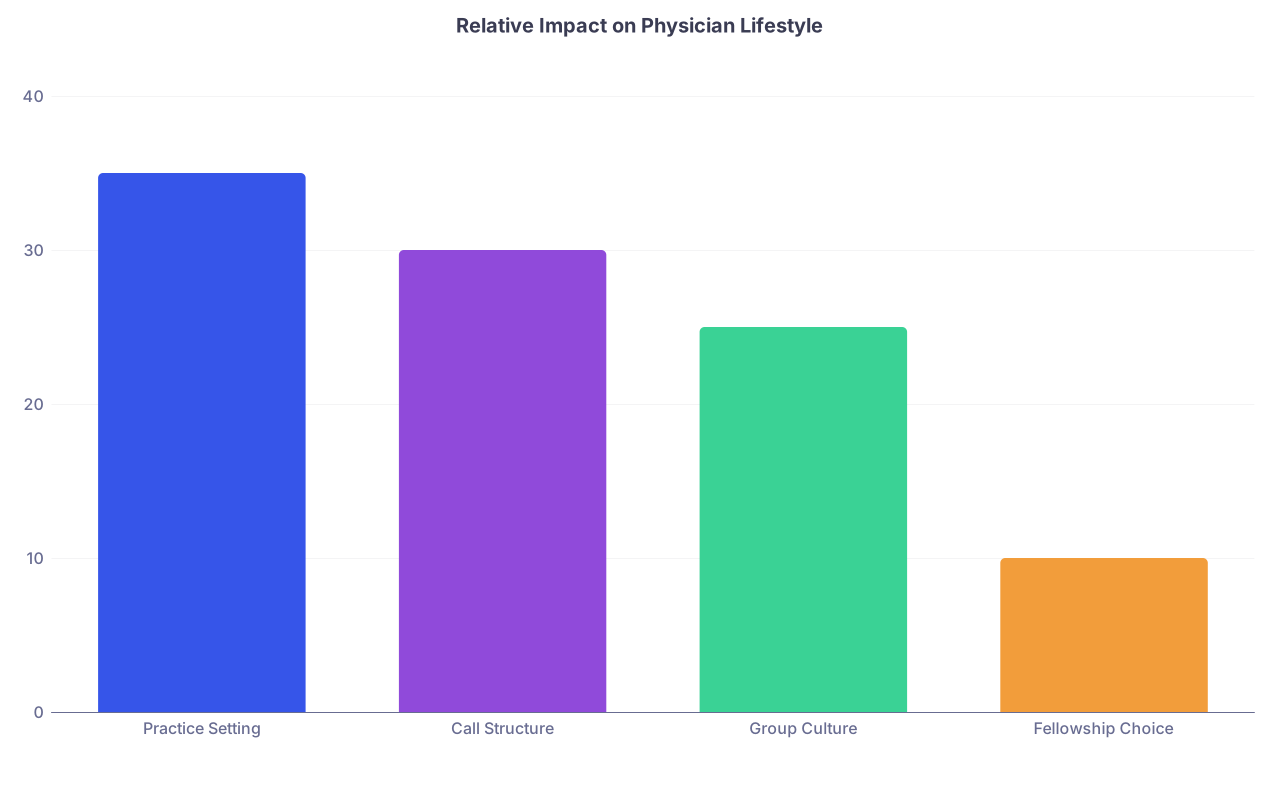
| Category | Value |
|---|---|
| Practice Setting | 35 |
| Call Structure | 30 |
| Group Culture | 25 |
| Fellowship Choice | 10 |
- Practice setting
Academic vs private vs employed vs concierge.
Outpatient clinic vs hospital-based vs mixed.
A supposedly “chill” fellowship like rheum can become miserable if you join a group that double-books clinic, underpays you, and sticks you with all complex referrals.
- Call structure
Ask specific questions:
- In-house vs home call?
- How many nights per month?
- Average call volume overnight?
- Post-call day actually off or still working?
You’d be shocked how many people never press on this in job interviews.
- Group culture and staffing
Do partners leave on time? Are vacations protected? Is there enough APP and nursing support? Do they cover for each other when life happens or is it “every person for themselves”?
Walk the halls. Ask the junior partners how often they miss kids’ events.
- Your tolerance for inbox/telemedicine vs acute chaos
Endocrine and rheum are “lifestyle” until you drown in MyChart messages and med prior auths. ICU is chaos, but at least it stops when you leave.
Know which type of stress you handle better.
Quick decision flow: will this fellowship help or hurt my lifestyle?
Use this more than generic reputation.

| Step | Description |
|---|---|
| Step 1 | Considering Fellowship |
| Step 2 | Likely Worse Lifestyle |
| Step 3 | Likely Better Lifestyle |
| Step 4 | Neutral or Slightly Better |
| Step 5 | More emergencies than current path |
| Step 6 | More scheduled outpatient work |
| Step 7 | Same or more call load |
You can run any fellowship through that logic honestly and get close to the truth.
The bottom line: fellowships that tend to help vs hurt
If your primary goal is improved work-life balance, the fellowships that most consistently move you in the right direction are:
- Allergy & Immunology
- Endocrinology (adult and peds)
- Rheumatology
- Outpatient-focused Pain Medicine
- Breast Surgery
- Many outpatient-heavy pediatric subspecialties (endo, allergy, developmental)
The fellowships that almost always make lifestyle worse:
- Any Critical Care track
- Interventional-heavy Cardiology
- Trauma and Surgical Critical Care
- Vascular and other highly emergent surgical fellowships
- Many high-acuity, hospital-bound paths (transplant, complex oncologic surgery, NICU at big centers)
Everything else is gray zone and depends heavily on where and how you practice.
Your next step today
Do this right now: pick 2 fellowships you’re seriously considering. For each, write down:
- Typical practice setting you’d want (academic vs community, inpatient vs outpatient)
- Realistic call expectation (nights/month, weekends, home vs in-house)
- How much emergency work vs elective work you expect
- One local or online physician you can ask, “What does a rough week look like in your job?”
Then send one email:
“Can I get 15 minutes to hear what your typical week and call schedule actually look like?”
The answers to that email will tell you more about lifestyle than any glossy brochure or program director pitch ever will.