
It’s August. Your residency graduation photo is still on your mom’s fridge, your co-residents are posting “First day as attending!” selfies… and you’re sitting at your kitchen table staring at a LocumTenens.com email wondering:
“If I jump into locums right now… am I being bold or just stupid?”
You’ve got loans, maybe a partner, maybe a kid, maybe nothing but a mattress on the floor and a Honda with 160k miles. Everyone online seems to either say “locums saved my life” or “locums is financial Russian roulette.” No middle ground. And you’re stuck in the what-ifs.
Let’s talk about whether locums is “too risky” right after residency, in real terms: income, malpractice, competence, and your actual safety net. Not the fantasy version where everything works out. The version where flights are canceled, contracts evaporate, and you still have to pay Navient.
First: What “Too Risky” Actually Means After Residency
“Risky” isn’t some abstract vibe. It’s specific stuff that will actually wreck your sleep:
- Not being able to consistently cover your basic monthly bills
- Getting stuck in a bad clinical situation with no backup
- A malpractice nightmare with your name on it and no one to shield you
- Getting trapped in a travel-job limbo where you can’t build a stable life
- Burning out because you’re the lone attending with no senior to ask
You’re probably not actually afraid of “locums.” You’re afraid of:
- A gap in pay
- A catastrophic clinical/malpractice event
- Getting labeled unreliable or “just a locums doc” and hurting your future jobs
So instead of “Is locums bad?”, the real question is:
Given my finances, skill level, and tolerance for uncertainty, how big of a safety net do I need to not implode if locums goes sideways?
The Real Risks of Locums Right After Residency (No Sugarcoating)
There are real risks. People who tell you it’s all freedom and big checks are selling you something.
1. Income volatility
Locums companies will tell you there’s “so much demand.” Cool. But demand for you, in your specialty, where you can actually work?
A few failure modes I’ve seen:
- Credentialing drags: You sign in July, don’t actually start getting shifts until October.
- Contract canceled: Hospital merges, new CMOs, budget cuts. “We’re not renewing.”
- Holiday gaps: Fewer shifts around weird calendar periods if you’re not senior.
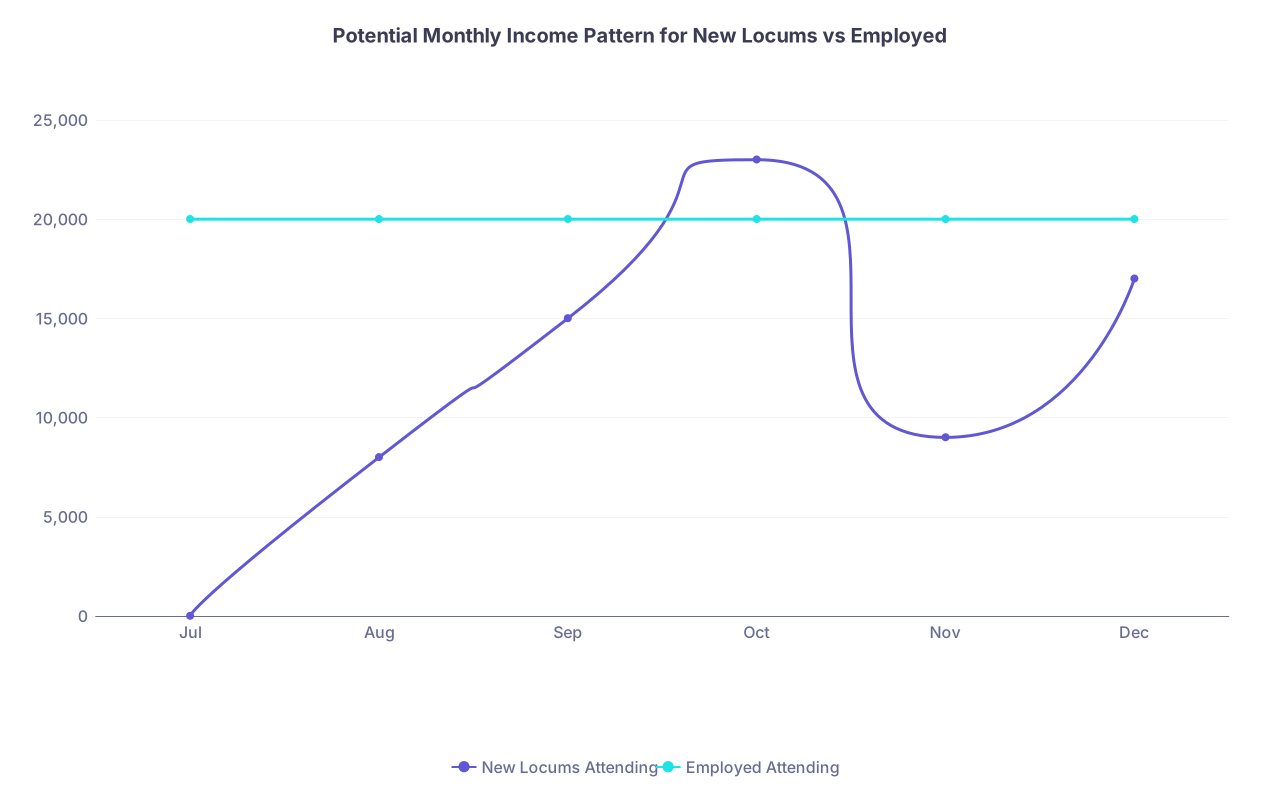
| Category | New Locums Attending | Employed Attending |
|---|---|---|
| Jul | 0 | 20000 |
| Aug | 8000 | 20000 |
| Sep | 15000 | 20000 |
| Oct | 23000 | 20000 |
| Nov | 9000 | 20000 |
| Dec | 17000 | 20000 |
That chart is why your chest tightens when you think about locums. A bad few months as locums isn’t “I saved a bit less.” It can be “I put rent and loan payments on a credit card.”
2. Clinical responsibility jump
You know that feeling on nights as senior when you think you know what to do but you still text your attending “Just confirming this is reasonable?” Locums often means:
- You are the only attending
- No one knows your training
- Systems are unfamiliar
- Support staff may be minimal
If you finished residency in June and in September you’re solo in a 10-bed ED in rural Midwest… that’s a big jump. Some people handle it fine. Some feel their impostor syndrome go nuclear.
3. Malpractice + documentation landmines
Most locums agencies say, “We cover malpractice, don’t worry!” You should still worry. Because:
- Is it occurrence or claims-made?
- Is tail coverage guaranteed if you leave agency X?
- Policy limits—are they adequate for your specialty?
- Are you personally named, or is it some weird corporate coverage structure?
If the worst-case lawsuit scenario plays in your head at 2 a.m., you’re not crazy. You’re just paying attention.
4. Career trajectory weirdness
Some traditional groups and academic places see a brand-new grad who went straight into locums as:
- “Maybe couldn’t get a real job”
- “Non-committal”
- “Probably won’t stay long”
Is that fair? No. Does it happen? Yes. I’ve seen faculty talk like this during hiring meetings.
None of this means “don’t do locums.” It means don’t treat it like a cute side quest. It’s a real career choice, with real downsides.
The Upside (And Why People Do It Anyway)
Now, your brain’s already excellent at imagining the disasters, so let me remind you of the non-horror-movie version.
Locums right after residency can give you:
- Higher hourly pay than many starter employed jobs
- Flexibility to try different practice settings and regions
- Time off between contracts (for real, not just “vacation” you never take)
- Power to walk away from toxic places instead of being locked into a 3-year contract
- A “test drive” of different groups before signing long-term

I know a new hospitalist who skipped a mediocre 7-on/7-off employed job, did locums in three different systems for 18 months, then picked the one he actually liked—and came in with leverage because they already knew he was good.
So it’s not that locums is inherently “too risky.” It’s that for a new grad, the margin for error is thin. You don’t have:
- Years of savings
- Deep local networks
- A reputation that gets you instant interviews
Which means your safety net matters more than the hourly rate.
How to Gauge If You Have Enough Safety Net
Here’s where we get concrete. You need three safety nets: financial, clinical, and logistical. If two out of three are solid, locums can be reasonable. If zero out of three are solid, you’re gambling.
1. Financial safety net: Can you survive 3–6 bad months?
Run the numbers—not vibes.
Start with this question:
If I had zero income for 3 months, what happens?
Not ideal, obviously, but realistic with credentialing delays or contract messes.
Make yourself a quick table like this:
| Category | Monthly Amount | Can Lower? (Y/N) |
|---|---|---|
| Rent / Mortgage | ||
| Loans (min pay) | ||
| Utilities / Phone | ||
| Food / Essentials | ||
| Insurance (all) |
Then look at:
- How many months of bare-bones expenses do you have saved?
- < 2 months: Locums as your only plan = high risk
- 3–6 months: Manageable, but you need backup options ready
6 months: You can breathe. You have runway.
If your stomach drops doing this math, your fear is not irrational. Your brain is clocking that one cancellation could put you in panic mode.
You can still do locums—but I’d recommend:
- Locking in at least one longer contract (3–6 months) instead of only PRN shifts
- Having a per-diem or part-time local job as backup
- Cutting fixed expenses before you start, not after you’re desperate
Clinical Safety Net: Are You Too Green To Be Solo?
This part hurts because you don’t want to admit you’re not fully ready. But your anxiety is likely circling around this exact question.
Ask yourself bluntly:
- In residency, were you already basically functioning as junior attending on nights?
- Did your attendings trust your judgment and sign off with minimal changes?
- Are you going into a locums environment similar to your training, or totally different?
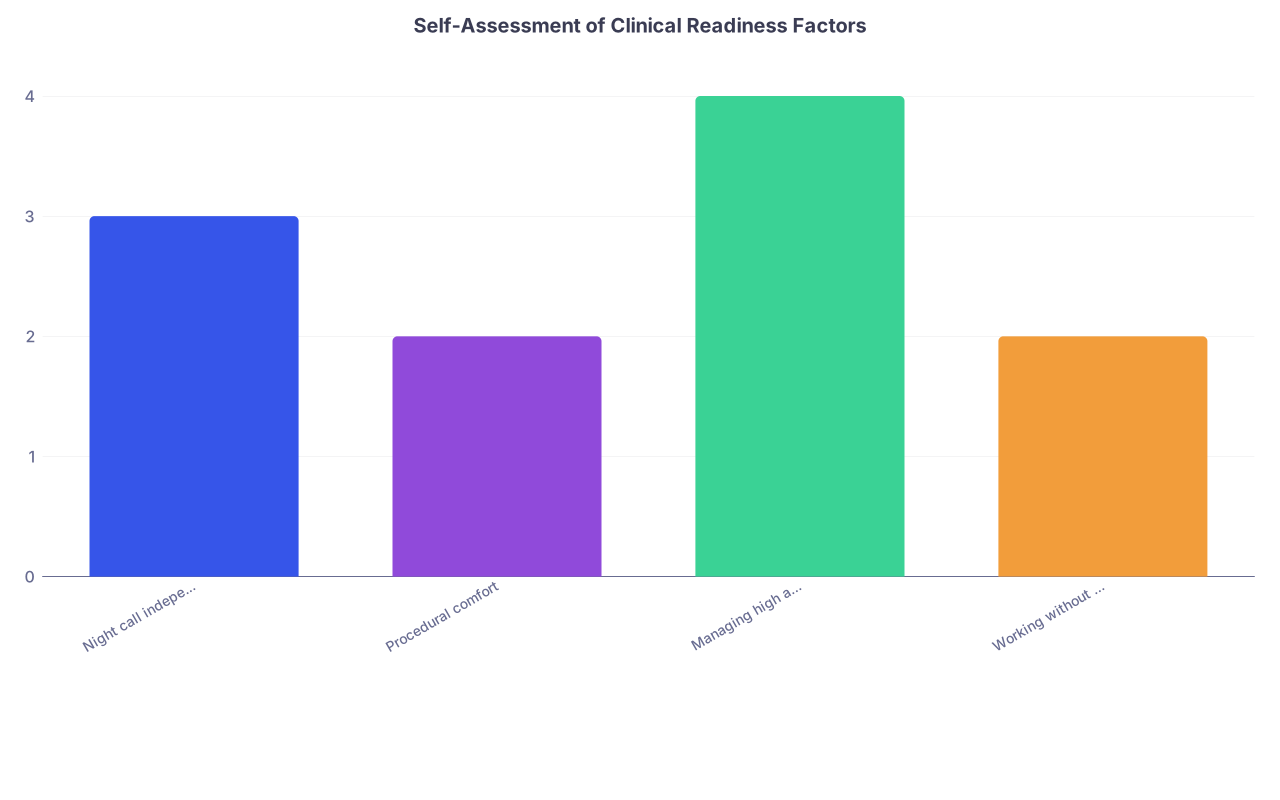
| Category | Value |
|---|---|
| Night call independent | 3 |
| Procedural comfort | 2 |
| Managing high acuity | 4 |
| Working without backup | 2 |
(Scale 1–5 in your head. If you’re mostly 1–2s, you know why your chest is tight.)
Situations that are particularly risky for brand-new grads:
- Solo coverage (only doc on site) with no in-house backup
- Systems with limited support staff, no subspecialty backup
- Procedurally heavy settings if your training was light in that area
If you insist on locums right away, tilt the odds in your favor:
- Choose larger hospitals / systems where you’re not solo
- Avoid the “we need someone tomorrow, it’s desperate” gigs—those are desperate for a reason
- Start with short commitments (2–4 weeks) somewhere relatively well staffed before you accept that 6-month solo rural job
And ask this on every interview call:
“Tell me about the support structure on nights/weekends. Who else is in-house? Who’s on call? What happens when things go bad?”
If they’re vague or defensive? That’s your sign.
Logistical / Life Safety Net: Can You Actually Live Like This?
Locums sounds glamorous. Travel, flexibility, seeing new places. In practice:
- Constant onboarding and learning new EMRs
- Credentialing paperwork hell
- Travel delays, bad housing, loneliness in random towns
- Always being “the new person”

| Step | Description |
|---|---|
| Step 1 | Finish Residency |
| Step 2 | Consider employed or hybrid |
| Step 3 | Seek supportive employed role |
| Step 4 | Local locums or per diem |
| Step 5 | Travel locums with backup plan |
| Step 6 | Emergency Fund 3 months or more |
| Step 7 | Comfort working semi independent |
| Step 8 | Need geographic stability |
If you’re already stressed, slightly introverted, and not great with chaos, the constant change may keep your nervous system in fight-or-flight. That’s not “being weak.” That’s just your wiring.
Locums can work better early on if:
- You anchor yourself with a “home base” system (one main site that gives you consistent shifts), and
- You add more exotic travel assignments later once you’ve got some rhythm and confidence
When Locums Right After Residency Is Reasonable
Let me be specific. Situations where I actually think, “Yeah, go for it”:
- You have 4–6 months of bare minimum expenses saved
- You’re in a high-demand specialty (EM, anesthesia, radiology, hospitalist, some IM subs)
- Your residency already had you functioning pretty independently
- You have at least one “solid” locums contract lined up for 3+ months at a non-sketchy site
- You’re not locked into a specific city right now (no kid mid-school-year, no partner locked to a job)
And you have at least one backup path if things implode:
- A per diem offer at a local hospital
- A standing interview with a community group you can activate
- A willingness to take a “less ideal” employed job for a year if needed
If you can check most of those, is there risk? Yes. But it’s bounded risk.

When Locums Right After Residency Is Probably Too Risky
On the flip side, some red-flag combinations where my honest opinion is: don’t do pure locums as your only plan yet.
- You have < 2 months of emergency savings and high fixed expenses
- You’re in a less in-demand or very narrow subspecialty where locums jobs are sparse
- You relied heavily on backup in residency and still feel shaky on bread-and-butter cases
- You need to stay in a specific city/region where locums jobs are limited
- You have high anxiety that spikes with uncertainty, and it’s already affecting your sleep
That doesn’t mean “you’re doomed.” It means maybe:
- Take a stable employed job for 1–2 years
- Build savings and confidence
- Then transition to locums with an actual cushion
Or do a hybrid:
- 0.6–0.8 FTE employed + some locums on the side
- Get the stable baseline income + benefits
- Use locums to try other settings and bump income without betting the whole house
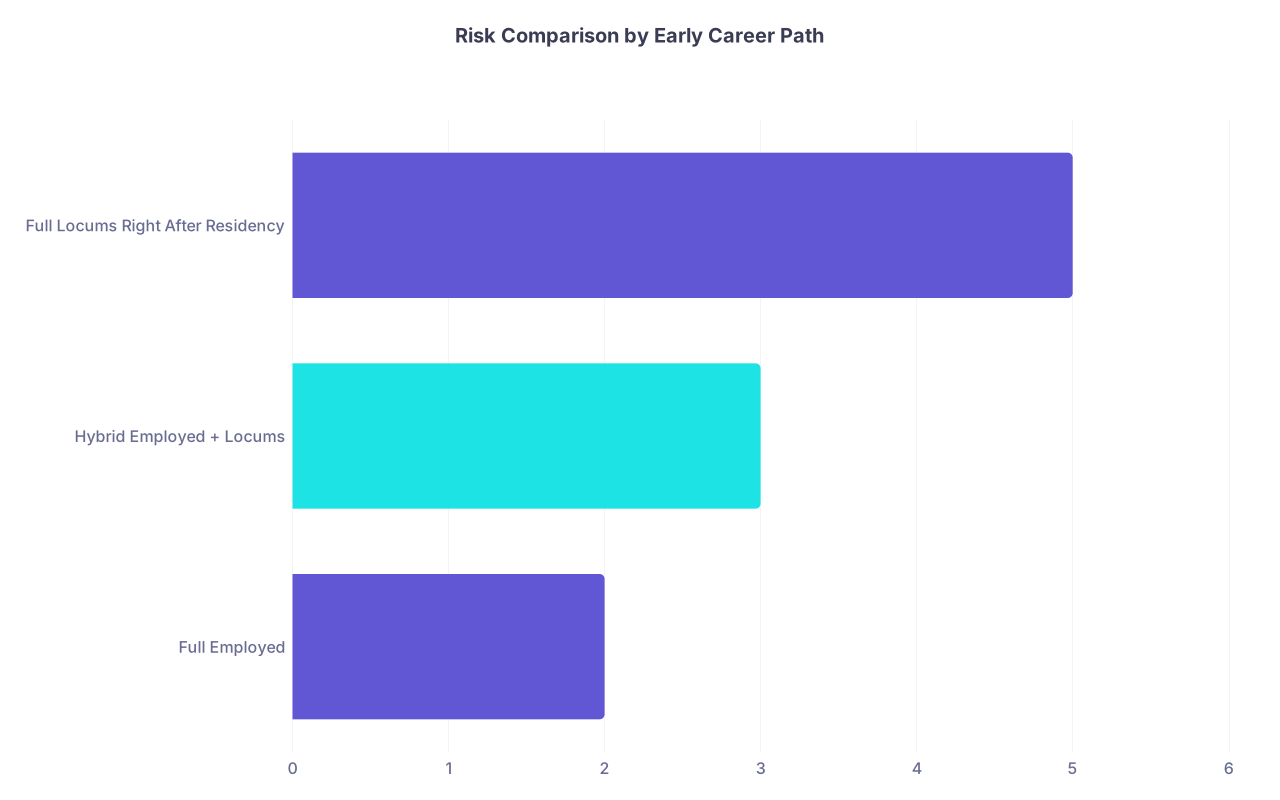
| Category | Value |
|---|---|
| Full Employed | 2 |
| Hybrid Employed + Locums | 3 |
| Full Locums Right After Residency | 5 |
(1 = lowest risk, 5 = highest risk. Locums early is just… spikier.)
Concrete Ways to Make Locums Safer If You Still Want To Try
If your gut still wants the flexibility and pay of locums, you’re not reckless. You’re just trying to not wreck your life in the process.
Here’s how to pad your landing:
Get something in writing, with dates
Not “we have lots of shifts.” You want:- Guaranteed minimum hours/ shifts per month
- Start date that aligns with your runway
Clarify malpractice in actual detail
Ask:- Is it occurrence or claims-made?
- Who pays tail if I switch agencies?
- Policy limits? (Common: $1M/$3M. Some specialties may want more.)
Start with familiar practice environments
If you trained at a big academic center, maybe don’t start at a critical access hospital where it’s just you and one nurse at 3 a.m.Line up a backup job path before you need it
Not after your contract gets cut. Before.
That might mean:- Talking to your program’s affiliated community sites about per diem
- Letting a recruiter know you’d consider employed work if needed
Slash fixed costs ahead of time
Move into a cheaper place. Don’t buy the Tesla yet. Refinance or go on income-driven repayment. Make your monthly burn rate as low as you reasonably can.

So… Is Locums “Too Risky” After Residency?
Here’s my blunt answer:
For some people, yes.
If you’re broke, clinically shaky, tied to one location, and already maxed on anxiety—jumping straight into full-time locums as your only plan is honestly too risky.For others, it’s a calculated risk that can absolutely work.
Especially if you’ve got savings, solid training, flexible geography, and at least one dependable anchor contract.
Your anxiety isn’t a sign that locums is impossible. It’s a sign that you need to build guardrails instead of leaping blind.
FAQ (Exactly 6 Questions)
1. Will doing locums right away hurt my chances of getting a “real” job later?
It can raise eyebrows if your CV is: residency → 2 years of super fragmented, random short-term gigs → now you’re applying to a long-term job. But if you:
- Stay at each site for a few months
- Get strong references
- Can explain clearly why you did locums (“wanted to evaluate systems, build savings, and then commit”)
Most reasonable groups will be fine. What worries them is chaos and unexplained gaps, not the word “locums.”
2. How much money should I have saved before going full-time locums after residency?
Bare minimum, I’d say 3 months of essential expenses in cash. Preferably 6. Not “total spending with DoorDash and vacations.” Bare bones: rent, food, insurance, loans. If you’re under 2 months, you’re depending heavily on everything going right with timing, and it rarely does.
3. Is it safer to work directly for hospitals as an independent contractor instead of through an agency?
Sometimes. Sometimes not. A direct hospital contract might give you better integration and more predictable shifts, but you’re then fully responsible for:
- Your own malpractice (if not included)
- Benefits (health, disability, retirement)
- Taxes
Agencies at least bundle some of that, but can be flaky with assignments. What matters is reading the actual contract and knowing who is guaranteeing what.
4. Can I do locums for just a year and then switch to employed?
Yes, and plenty of people do. Just be intentional. Save aggressively, keep your CV clean, and pick places where you’d consider staying. That way, if you like one, you can transition from locums to permanent at that site and it looks logical, not random.
5. What specialties are the least risky for starting with locums?
Not “risk-free,” but generally:
- Hospitalist
- EM (if you trained in a busy ED and are used to volume)
- Anesthesia
- Radiology
These tend to have high demand and more structured systems. Hyper-specialized fields, outpatient-heavy subspecialties, or procedures that need lots of support can be trickier for a brand-new attending doing locums.
6. I’m already anxious—will locums just make that worse?
It might. If uncertainty and last-minute changes spike your anxiety, locums will trigger that repeatedly: schedule changes, travel issues, new staff, new EMRs. Some people adapt and love it; others feel constantly on edge. If your anxiety is already affecting your sleep, mood, or performance in residency, I’d strongly lean toward a more stable first job, build stability, then revisit locums later if you still want it.
Actionable next step for today:
Open a blank note and calculate one number: your bare-bones monthly cost of living. No fluff, just survival. Then multiply it by 3 and 6. That’s your personal “locums safety net target.” Once you see that number in black and white, you’ll know whether you should be stabilizing first or if you’re actually closer to being able to take the locums leap than your anxiety is telling you.