
Two weeks before her first locum tenens contract started, a hospitalist I know got a text at 9:43 p.m.: “Census dropped. We have to cut half the shifts. Do you still want the assignment?” She just stared at her phone thinking, “What have I done… I already turned down a permanent job for this.”
If you’re post-residency and flirting with locums, this is the stuff that wakes you up at 3 a.m. Not the clinical work. The chaos. The “Hey, can you actually start tomorrow?” emails. The “We overhired, so…” calls.
You’re not crazy to worry about volatility. You’d be naïve not to.
Let me walk through how “bad” it really gets, what’s normal vs red flag, and how to protect yourself if unpredictable schedules and last‑minute changes are your kryptonite.
How Volatile Is Locum Life… Really?
Here’s the part nobody on those glossy agency websites tells you: yes, locums schedules can be volatile. But it’s not all pure chaos, all the time. It depends on:
- The type of work (ED vs clinic vs hospitalist vs ICU)
- How early you’re booked
- How desperate the site is
- How competent the scheduler/medical staff office is (huge and underrated)
I’ve seen the whole spectrum:
- One EM doc booked for 8 shifts/month at the same community ED for a full year. Schedule locked 3 months in advance. Barely changed.
- A hospitalist whose entire block of 7-on was chopped to 3 because the census tanked. Two weeks’ notice. No cancellation pay in the contract. Brutal.
- An anesthesiologist whose OR days got shuffled twice a week because of surgeon vacations, case mix, and staffing. Start times moved, days added/dropped.
Most people imagine locums like this constant tornado of “We need you tomorrow!” but in reality, there are two different flavors of volatility:
- Pre‑assignment volatility – Will they cancel the contract? Will they change the dates? Will the credentialing drag out and shift everything?
- On‑assignment volatility – Will they switch my shifts last minute? Drop days? Add nights? Change call?
Both are real. Both can be managed. But if you hate uncertainty, the pre‑assignment stuff will stress you out almost as much as the day-to-day.
Common Last-Minute Changes You Actually See
Let’s be specific, because vague “things can change” talk just fuels anxiety.
These are the most common last‑minute schedule changes I’ve seen with locums:
Shift cancellations due to low census
- Hospitalists, ED, ICU especially.
- You might get: “We only need 4 of the 7 scheduled shifts now.”
- Sometimes with cancellation pay, sometimes without (depends on your contract, and yes, that’s terrifying when rent is due).
Shifts added due to call‑outs or surprise volume
- You’re post-call and get: “Can you pick up tonight? Our doc called in sick.”
- Or halfway through a 10-day block: “We just opened a new unit. Can you add two more days?”
Flip‑flopped days or nights
- “Actually, we need you on nights instead of days that week.”
- Sometimes happens because a permanent doc changed preferences, or another locum backed out.
- If you’re sensitive to circadian chaos, this feels like a personal attack.
-
- Contract says q4 call, but once you’re there: “We’re short this month; can you take extra?”
- Not technically a “schedule change” if you agreed verbally, but it feels like bait and switch.
Start date pushbacks from credentialing delays
- Legal start date: January 1.
- Actual start date: “Well, credentialing says they’re backed up. Maybe January 15. Or 22. We’ll let you know.”
- Meaning: you sit around with no income waiting for some committee to meet.
Full cancellation of an upcoming block
- The nightmare: “The hospital got a full‑time hire. We won’t need locums past next month.”
- If you counted on that income for 3–6 months, your stomach just dropped reading that sentence.
So yes, “volatile” isn’t an exaggeration. But it’s also not random. It follows patterns.
Where Locums Schedules Are Most vs Least Crazy
| Setting | Volatility Level | Typical Issues |
|---|---|---|
| ED | Medium-High | Last-minute adds, occasional cuts |
| Hospitalist | High | Census-based cuts, extra shifts |
| ICU | Medium | High acuity but often pre-set blocks |
| Outpatient | Low-Medium | More stable clinic days, rare cuts |
| Psychiatry | Low-Medium | Longer contracts, less day-to-day flux |
Hospitalist locums? That’s probably the top of the volatility food chain. Census is the puppet master. If the hospital overestimates volume, your shifts can evaporate.
Outpatient clinic locums? Usually more predictable. Patients are scheduled weeks out. They don’t like canceling clinics because it wrecks access metrics and admin dashboards.
Psychiatry, primary care, and long-term coverage at rural sites tend to be the least chaotic once you’re in. They’ve usually been short-staffed forever and aren’t suddenly “full.”
Emergency medicine, hospitalist, anesthesia? More moving parts. More risk of last-minute shuffling.
How Often Do Schedules Actually Change?
You’re probably trying to put a number on it. Just how bad is this anxiety going to get?
Rough, honest ballpark based on what I’ve seen and heard repeatedly:
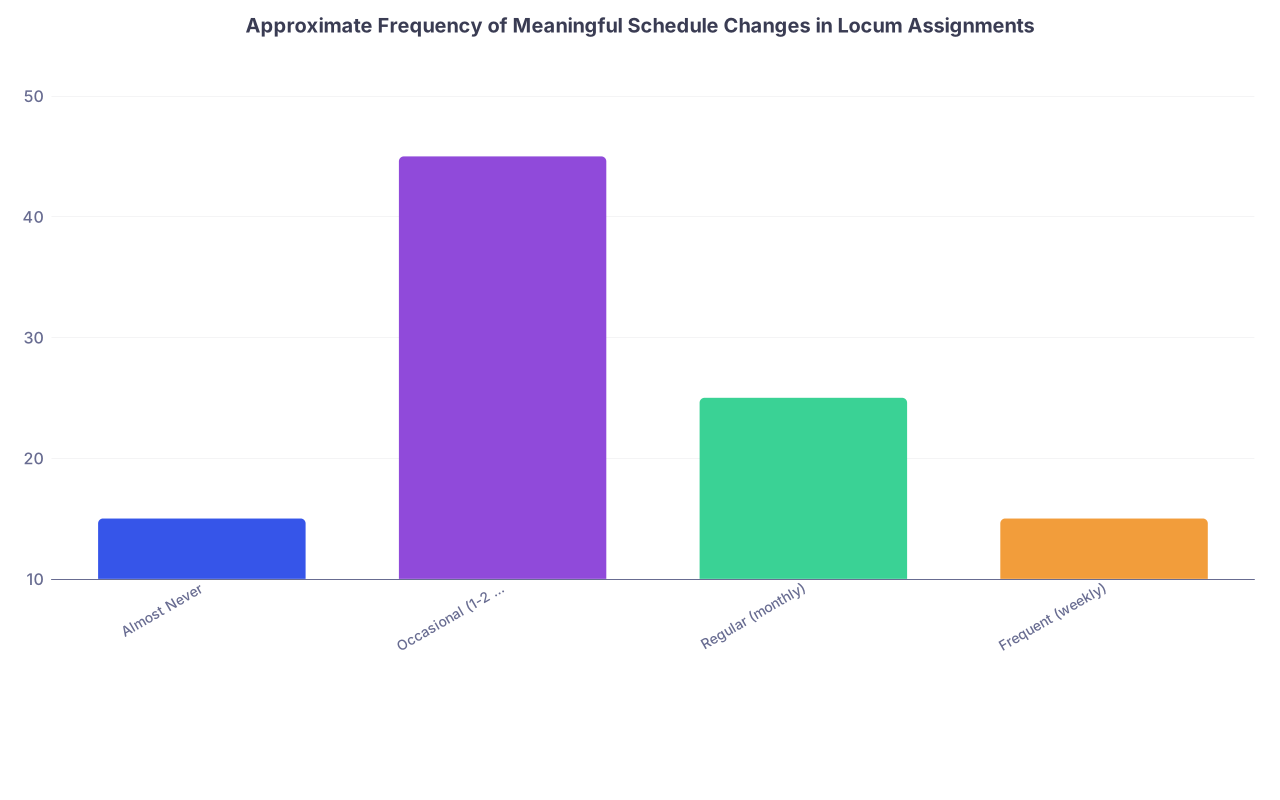
| Category | Value |
|---|---|
| Almost Never | 15 |
| Occasional (1-2 per contract) | 45 |
| Regular (monthly) | 25 |
| Frequent (weekly) | 15 |
Most physicians land somewhere in the middle: one or two annoying changes per contract, maybe a bigger headache every few months. The “constant chaos every week” stories exist, but they’re more likely when:
- You’re with a disorganized site
- You signed a vague contract
- You’re filling gaps at multiple locations with the same group
- Nobody is clearly “in charge” of scheduling
And here’s where your anxiety is actually useful: you should be suspicious of vague answers about scheduling. Hand‑wavey responses like “Oh, we usually figure the schedule out month to month” are exactly what lead to your life feeling like Jenga.
How To Protect Yourself (So You Can Sleep)
You can’t make locums perfectly stable. But you can stop volunteering to be the doormat.
1. Get the cancellation terms in writing
Not “They told me on the phone.”
In writing. In the contract. Specifically:
- How many days’ notice they must give to cancel a shift or block
- Whether you get cancellation pay (full, partial, or nothing)
- Whether they can reduce the number of shifts after you’ve agreed
You want clauses like:
- “Shifts canceled within 14 days of the date will be paid at 100% of the agreed hourly rate.”
- “The facility may not reduce the guaranteed minimum number of shifts per month without 30 days’ written notice.”
If that language makes the recruiter squirm or vanish, that tells you exactly how volatile they plan to be.
2. Ask brutally direct schedule questions before you sign
This is the part anxious people skip because they don’t want to be “difficult.” Then they pay for it later.
Questions to actually ask:
- “Who exactly makes the schedule? Name and role?”
- “How far in advance is the schedule published?”
- “How often do you cut shifts due to low census? Last 6 months?”
- “Have any locums had their contracts shortened or canceled early?”
- “Is there any guarantee on minimum monthly hours or shifts?”
If they give vague PR answers, assume the worst.
You’re not being rude. You’re interviewing them. If they’re defensive about straightforward questions, your future schedule is already on fire.
3. Don’t rely on one site for your entire income
Yes, this is exhausting. Yes, it’s safer.
If volatility terrifies you, the worst thing you can do is put all your income in one hospital’s hands with zero backup. Instead:
- Aim for 2 main sites once you’re established, even if one is your “primary”
- Or one main longer-term gig plus prn shifts somewhere else you’re credentialed
- Or combine locums with telemedicine or per diem work for a hospital system
You want at least one other place that can feed you shifts if Site A suddenly decides they’re “all set now, thanks.”
4. Budget like things will get cut
This is the unsexy part that actually lowers anxiety the most.
If you plan your life like every projected shift will definitely happen, you’re building your financial house on quicksand.
Safer mindset:
- Treat only 70–80% of your projected shifts as “real” income when planning fixed costs
- Build a 3–6 month cash buffer as fast as humanly possible
- Avoid tying yourself to massive new fixed expenses (giant mortgage, luxury car) in your first year of full‑time locums
Your brain calms down a lot when a canceled block means “Ugh, annoying” instead of “How do I pay rent?”
5. Know which red flags to walk away from
If any of this shows up early, you’re not “overreacting” if you bail:
- The site keeps changing proposed dates before you even sign
- They delay the schedule repeatedly with no real explanation
- They refuse any cancellation pay clause, even minimal
- Other locums tell you, “Yeah, they’re always changing the schedule last second”
Your future mental health is more valuable than a “meh” contract in a random town.
What It Feels Like Day-To-Day (Good and Bad)
Locums can feel like this continuous low‑grade buzzing in the background: “Am I sure my schedule is safe? What happens next month?” Even when things are fine, your brain is scanning for the next problem.
But the flip side is real too:
- When a hospital is desperate and short‑staffed, they treat you like gold and beg for more shifts.
- Once you find a stable site that likes you, they start building schedules around you.
- You have exit options. If the schedule chaos goes nuclear, you’re not stuck in a 3-year contract begging leadership to listen.
For some people, that freedom offsets the volatility. For others, the unpredictability isn’t worth it, no matter the money.
Here’s a quick snapshot of risk vs control:
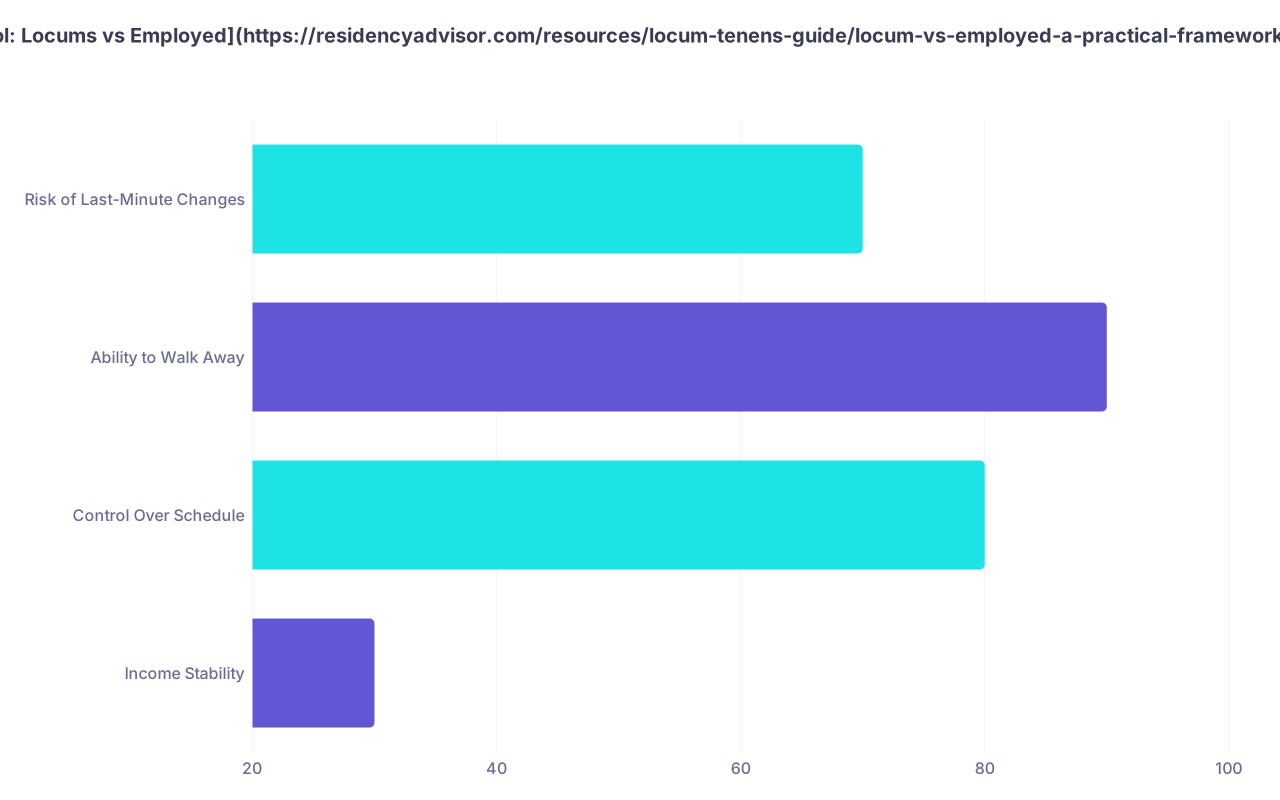
| Category | Value |
|---|---|
| Income Stability | 30 |
| Control Over Schedule | 80 |
| Ability to Walk Away | 90 |
| Risk of Last-Minute Changes | 70 |
(Think of 100 as “max for locums” compared to a typical employed job: more control and walk‑away power, less stability, more risk of changes.)
Who Should Probably Avoid High‑Volatility Locums
If you read all this and your heart rate doubled, let’s be honest: some situations make last-minute changes a lot harder to tolerate.
Locums—especially in volatile services—may not be for you (or not yet) if:
- You’re the sole income source for a family with very tight finances
- You have severe anxiety that’s triggered by uncertainty and lack of structure
- You’re caring for kids/parents and need locked‑in days for childcare coverage
- You truly need stable monthly income to sleep at night, no matter what
That doesn’t mean “no locums ever.” It might just mean:
- You pick low‑volatility settings: outpatient, psych, long‑term rural
- You use locums as a side gig, not your entire income
- You stack locums after securing a part‑time employed role
You don’t get a prize for tolerating chaos. You’re allowed to choose stability on purpose.
What a “Safer” Locums Setup Can Look Like
Here’s a more structured, less-hair-on-fire version of locums that I’ve seen people settle into after the early chaos phase:

| Step | Description |
|---|---|
| Step 1 | Permanent or 0.5 FTE job |
| Step 2 | Primary long term locum site |
| Step 3 | Secondary backup site or telemedicine |
| Step 4 | 3 to 6 month cash buffer |
| Step 5 | Selective about new contracts |
You’re not bouncing between 12 hospitals, refreshing your inbox for scraps. You’re:
- Anchored by either a part‑time job or a steady, renewing locum contract
- Backed up by another site if shifts get cut
- Financially buffered so a bad month hurts but doesn’t destroy you
Is it still more volatile than a vanilla employed job? Yes. But it’s a controlled burn, not an explosion.
The Bottom Line: How Scared Should You Be?
You’re right to be wary of last‑minute schedule changes in locums. They happen. Sometimes they’re minor annoyances; sometimes they’re catastrophic income hits if you weren’t prepared.
But “volatile” doesn’t mean “uncontrollable.” It means you have to:
- Ask uncomfortable questions up front
- Refuse vague contracts that treat you as disposable
- Diversify sites and income streams
- Budget like things will go wrong occasionally
You don’t need to become this fearless cowboy who “loves the flexibility.” You just need to decide whether the trade‑off—more autonomy, more pay, more exit power—is worth living with some uncertainty.
Years from now, you probably won’t remember every canceled shift or schedule reshuffle. You’ll remember whether you built a career life that felt like it belonged to you, or one where you stayed because you were too scared of what might change.
FAQ (Exactly 6 Questions)
1. Can a hospital just cancel my entire locum contract at the last minute?
Yes, they can, and they sometimes do. That’s the nightmare scenario everyone pretends won’t happen. Your only real protection is what’s in the contract: termination notice requirements and whether there’s any penalty or guaranteed pay for short‑notice cancellations. If the contract says they can terminate “at will” with minimal notice and no obligation, believe them—they will do exactly that if their staffing or finances change.
2. How far in advance do locum schedules usually come out?
For decent sites, 1–3 months in advance is common once you’re established. Some hospitalist and ED schedules are built 6–8 weeks out. Red flags are places that can’t give you a schedule more than a couple of weeks ahead, or act like it’s totally normal to “see what volume looks like” and finalize later. The earlier they commit to a written schedule, the less day‑to‑day chaos you’ll deal with.
3. Do locums ever get guaranteed shifts or minimum hours?
Yes, but you have to push for it. Some contracts will specify a minimum number of shifts per month or a minimum daily guarantee (e.g., you’ll be paid for at least 8 hours even if volume is low). Many default contracts are written to favor maximum flexibility for the facility, which means zero guarantees for you. If your stability anxiety is high, this is one of the most important things to negotiate.
4. Are agencies honest about how stable a site’s schedule is?
Sometimes. Sometimes not. Recruiters are incentivized to fill the position, not to walk you through every horror story from previous locums. That’s why you should never rely only on the recruiter’s description. Ask to talk to another locum who’s worked there. Ask very specific questions about recent cancellations and how far in advance schedules are locked. If they dodge giving you another physician’s contact info, be suspicious.
5. Is locums a bad idea if I have kids and tight childcare needs?
Not automatically, but you’ll need to be extremely selective. You’d want sites with stable, predictable schedules—clinic-based, psych, long-term coverage—rather than high-volatility hospitalist or EM gigs that flip days/nights and add shifts last minute. You also need backup childcare plans for when (not if) things shift. If you need clock‑like consistency, a standard employed job plus occasional locums may be safer than full‑time locums.
6. Can I try locums “part-time” to see how I tolerate the volatility?
Yes—and that’s smarter than diving in headfirst if you’re already anxious. Some people keep a 0.5–0.8 FTE employed job for baseline stability, then add locums on top. Others do locums on vacation weeks or as weekend moonlighting to test the waters. You’ll get a feel for how chaotic—or not—scheduling feels in real life without gambling your entire livelihood on it right away.



| Category | Min | Q1 | Median | Q3 | Max |
|---|---|---|---|---|---|
| Traditional Employed | 10 | 15 | 20 | 25 | 30 |
| Employed + PRN | 15 | 20 | 30 | 35 | 40 |
| Hybrid Job + Locums | 25 | 35 | 45 | 55 | 65 |
| Full-time Locums | 40 | 55 | 70 | 80 | 90 |