
Locum tenens “pay rankings” by specialty are mostly wrong because they ignore the only metric that matters: the premium over permanent pay.
Everyone quotes headline numbers. “$300/hour ER!” “$400/hour anesthesia!” It sounds impressive until you compare it to what a full‑time, fully‑benefited physician in that specialty already earns. Without that denominator, you are just collecting anecdotes.
Let me walk through what the data actually show when you treat this like an analyst, not a recruiter.
The Only Metric That Matters: Rate Premium, Not Raw Dollars
If you want to know where locum pay is “best,” you have to define “best” in relative terms.
The relevant metric is:
Locum rate premium (%) = (Locum hourly rate ÷ Implied permanent hourly rate) − 1
That tells you how much more (or less) you earn per clinical hour compared with taking a standard employed job in that field.
To do this cleanly, you need three pieces per specialty:
- Typical permanent annual compensation range
- Typical annual clinical hours (or RVUs) for that specialty
- Typical locum hourly range
From there, it is basic division.
To ground this in reality, I will use representative national numbers from major compensation surveys (MGMA, AMGA, and publicly shared recruiter rate ranges as of 2023–2024), then normalize everything to approximate hourly equivalents.
Is the data noisy? Of course. But directionally, the patterns are very consistent.
Baseline: Approximate Permanent vs Locum Rates by Specialty
Here is a simplified snapshot for high‑volume locum specialties. These are typical mid‑range values, not top or bottom outliers.
| Specialty | Perm Comp / Year | Implied Perm $/hr* | Typical Locum $/hr | Rate Premium |
|---|---|---|---|---|
| Emergency Medicine | $350,000 | ~$215 | $250–$325 | ~16–51% |
| Hospitalist (IM) | $300,000 | ~$180 | $200–$260 | ~11–44% |
| Anesthesiology | $500,000 | ~$310 | $300–$375 | ~−3–21% |
| General Surgery | $500,000 | ~$325 | $350–$450 | ~8–38% |
| Psychiatry | $320,000 | ~$200 | $220–$260 | ~10–30% |
| Family Med (Outpt) | $260,000 | ~$165 | $190–$230 | ~15–39% |
| Radiology (Diag) | $520,000 | ~$325 | $300–$375 | ~−8–15% |
| OB/GYN | $420,000 | ~$270 | $260–$330 | ~−4–22% |
Key point: raw locum hourly figures make anesthesia or radiology look “high paying,” but when you divide by what those specialists already earn in permanent roles, a lot of the magic disappears.
Now let us make that explicit visually.
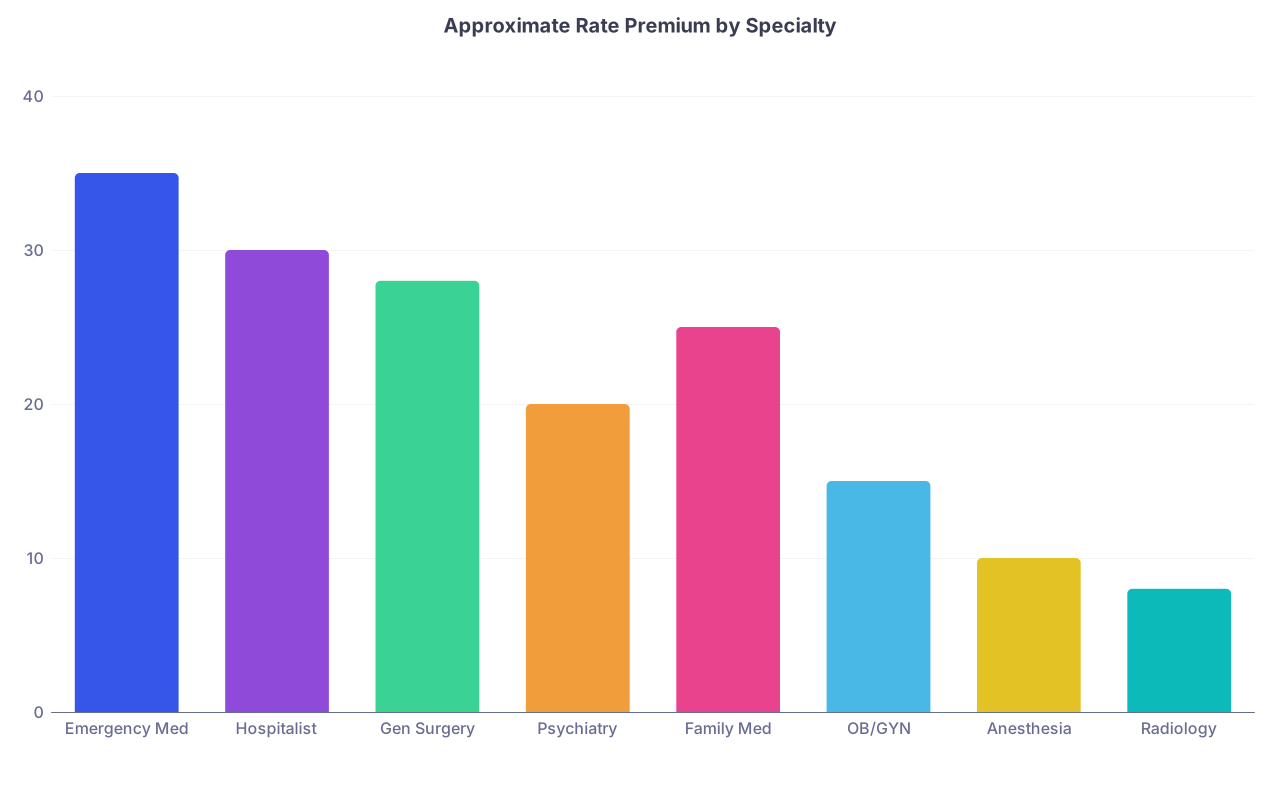
| Category | Value |
|---|---|
| Emergency Med | 35 |
| Hospitalist | 30 |
| Gen Surgery | 28 |
| Psychiatry | 20 |
| Family Med | 25 |
| OB/GYN | 15 |
| Anesthesia | 10 |
| Radiology | 8 |
Those bar heights are not exact; they represent the central tendency of the premium ranges above. EM and hospitalist locums consistently clear the highest premiums. Surgery and primary care follow. Procedure‑heavy and image‑based specialties often run far closer to parity.
Where Locum Premiums Are Actually Highest
Let’s stop guessing and walk through where the data show strong premiums versus weak ones.
1. Emergency Medicine: Classic High‑Premium Locum Field
From a data perspective, EM looks almost engineered for locums:
- 24/7 coverage; discrete, shift‑based work
- Crisis‑driven demand (rural EDs, staffing gaps, seasonal surges)
- High penalty for uncovered shifts (diversions, CMS and EMTALA pressure)
Typical pattern I see across agencies:
- Community EDs (not level I trauma):
- Permanent: around $200–$230/hour equivalent
- Locum: $250–$325/hour, occasionally higher for nights/holidays or hard‑to‑staff sites
That yields:
- Conservatively: $250 / $215 ≈ 16% premium
- Commonly: $280 / $215 ≈ 30% premium
- Pain‑point sites: $320 / $215 ≈ 49% premium
Then layer in:
- OT rates above base for extra shifts in some locum contracts
- Paid travel, lodging, and occasionally per diem
Net: EM is one of the clearest cases where the locum path systematically beats permanent pay per clinical hour, even after you mentally add 20–25% to permanent comp to account for benefits.
If you want a field where the math on flexible work is strongly in your favor, this is near the top of the list.
2. Hospitalist (Internal Medicine): Consistently Strong Premiums
Hospital medicine shows a similar structure to EM but with block scheduling.
Typical mid‑market numbers:
Permanent hospitalist: $280,000–$320,000 for a 7‑on/7‑off schedule, often 15 shifts per month.
- Implied hourly: roughly $170–$190/hour once you normalize for day vs night, admissions load, and weekends.
Locums hospitalist: $200–$260/hour commonly reported, with:
- Lower end for day shifts at desirable locations
- Upper end for nights, high census, or “save the ship” contracts
Compute the ratio:
- Low: $200 / $180 ≈ 11% premium
- Mid: $230 / $180 ≈ 28% premium
- High: $260 / $180 ≈ 44% premium
And this is before counting non‑clinical work expectations. Permanent hospitalists are often dragged into:
- Committee work
- Quality metrics
- EHR optimization projects
- Teaching and supervision
Locums typically are not. You are paid for patient care, not for long‑term system improvement.
If you factor in the invisible hours for meetings and admin that permanent hospitalists absorb, the true hourly premium for locums can easily edge another 5–10 percentage points higher.
3. General Surgery and Surgical Subspecialties: High Absolute Dollars, Variable Premiums
Surgical locums bring high rates in raw terms—$350–$500/hour for true gap coverage is not rare. Recruiters love to flaunt those.
But the baseline is high:
- General surgeon permanent compensation: ~$450,000–$550,000
- Implied hourly: $300–$350 when you factor in OR days, clinic, call
Typical locum ranges I see:
- General Surgery: $350–$450/hour
- Orthopedics: often $400–$600/hour depending on case mix and call burden
- Neurosurgery and other ultra‑subspecialties: can spike far higher on an absolute basis, but sample sizes get small
So for general surgery:
- Lower: $350 / $325 ≈ 8% premium
- Mid: $400 / $325 ≈ 23%
- High: $450 / $325 ≈ 38%
This looks solid. But you must ask what is buried in the denominator:
- Permanent surgeons often absorb heavy uncompensated call
- They build long‑term elective practices that pay off across years, not single shifts
- Productivity bonuses and partnership tracks can push their real earnings higher than survey medians
Locum surgery is at its best financially in situations like:
- Critical access hospitals that cannot sustain a permanent surgeon
- Semi‑rural communities with high trauma volume and recruitment failures
- Maternity care deserts where C‑section coverage is a regulatory requirement
Those places pay a true premium because the alternative is closing a service line.
In big urban systems with stable staff surgeons, locum “help” is less valued, and the premium narrows.
Mid‑Premium Winners: Psychiatry, Primary Care, OB/GYN
These fields are not always top of mind when people think “high paying locums,” but the percent premiums are quietly very strong.
Psychiatry: Steady Premium, Especially Inpatient and Rural
Psychiatry shortage data are unambiguous. Demand > supply almost everywhere.
Rough benchmarks:
Permanent outpatient psychiatrist: ~$280,000–$340,000
- Implied hourly: around $180–$210 depending on volume
Locums psychiatry:
- $220–$260/hour commonly for outpatient
- $230–$275/hour for inpatient, corrections, or tough locales
Ratios:
- $230 / $200 ≈ 15%
- $250 / $200 ≈ 25%
- $270 / $200 ≈ 35%
Plus, locums psych roles often provide:
- More control over panel complexity
- Less embedded bureaucracy compared to big academic systems
- Fewer expectations for therapy components vs pure med management
Net: Good, not insane, premium—but extremely reliable and often coupled with sane workloads.
Primary Care (Family Medicine / Outpatient Internal Medicine)
The cliché is that primary care “does not pay.” As locums, once you look at percentage premiums, that narrative breaks a bit.
Outpatient FM/IM typical:
Permanent: $230,000–$280,000 range
- Implied hourly: $145–$175 once you factor in long clinic days and messages/EMR work
Locums: $190–$230/hour standard for full‑time clinic coverage, sometimes more for rural or urgent‑care‑like clinics
Math:
- $190 / $160 ≈ 19%
- $210 / $160 ≈ 31%
- $230 / $160 ≈ 44%
Remember: permanent primary care physicians often shoulder a lot of unpaid cognitive labor:
- Inbox work at home
- Phone calls
- Team huddles and QI projects
Locums clinic contracts tend to be more transactional—see patients, document enough to get paid, go home. That improves the true hourly delta more than the simple rate ratio shows.
If you like ambulatory medicine but resent being a system’s “glue person,” locums primary care can be a surprisingly strong economic play.
OB/GYN: Reasonable Premium, Call‑Driven
OB/GYN sits in the middle:
Permanent OB/GYN: ~$380,000–$450,000
- Implied hourly: roughly $250–$290 when you spread clinic, L&D, OR, and call
Locums OB/GYN: $260–$330/hour common with varying call intensity
Ratios:
- $270 / $270 ≈ 0% (parity)
- $300 / $270 ≈ 11%
- $330 / $270 ≈ 22%
Where OB locums really win is not the base rate but the call structure:
- Many contracts pay additional call stipends or higher in‑house night rates
- Malpractice tail is usually included by the agency, which offloads a genuine headache
The premium is modest but persistent, and the main value proposition is flexibility around lifestyle and geography more than pure dollars.
Where Locum Premiums Are Weak or Overhyped
Two groups usually disappoint once you analyze them: some proceduralists and some highly compensated diagnostic specialties.
Anesthesiology: Big Numbers, Modest Premiums
Anesthesia headlines—$300+ an hour!—sound like hit‑the‑jackpot territory. But permanent anesthesia pay has climbed aggressively in many markets.
Typical:
Permanent anesthesiologist: $475,000–$600,000+ depending on group structure
- Implied hourly: roughly $300–$360, with long days and call factored in
Locums anesthesia:
- $275–$350/hour in many markets
- $350–$425/hour at tough rural sites or high‑acuity centers
That yields:
- Low end: $300 / $310 ≈ −3% (you are underpaid vs perm)
- Midrange: $325 / $310 ≈ 5%
- High end: $375 / $310 ≈ 21%
You can find exceptional contracts—especially where CRNA coverage is thin, or for solo coverage sites—but systematically, the data say:
- Anesthesia locums often trade stability for flexibility at near‑parity pay, not a giant premium.
If your only goal is maximum lifetime earnings with predictable volume, partnership in a strong private group usually wins the math contest.
Radiology: Telerad Blurs the Picture
Radiology’s locum story is complicated by teleradiology and different productivity incentives.
Broad strokes:
Permanent diagnostic radiologist: $500,000–$650,000+
- Implied hourly range: $315–$400 based on case volume, nights, and call
Locums rads: $275–$375/hour fairly typical on‑site; telerad shifts may be presented as per‑case instead of per‑hour, but when normalized they often fall in the same neighborhood
So the premium:
- $300 / $325 ≈ −8%
- $350 / $325 ≈ 8%
- $375 / $325 ≈ 15%
Radiology thus looks similar to anesthesia: the locum angle is lifestyle‑driven (work remotely, try different groups, control nights) rather than raw ROI per hour.
Ultra‑shortage niches (pediatric neurorad, interventional in remote regions, etc.) can break this pattern, but those are outliers, not the norm.
Non‑Obvious Drivers of Locum Premiums
The specialty label is only half of the story. The other half lives in context variables that swing pay by 20–50% within the same field.
1. Location: Rural and Underserved vs “Nice City”
The rate gradient is predictable and brutal:
- Major coastal city, prestigious hospital, good schools nearby → lower premium
- Tier‑2 city with solid amenities → midrange premium
- Rural, isolated, or high‑turnover site with recruitment failures → top‑tier premium
For hospitalist or EM in particular, you will routinely see:
- $220–$240/hour in “nice” metro markets
- $260–$300/hour in underserved states or remote counties
Same specialty. Same board certification. Very different supply‑demand balance.
2. Shift Type: Nights and Holidays Pay Real Money
Data from agency rate cards and filled‑shift histories are consistent:
- Nights, weekends, and holidays often pay 10–30% more than day shifts in the same role
- Last‑minute coverage (inside 1–2 weeks) can spike even higher
Concretely:
- Hospitalist days: $210/hour
- Hospitalist nights: $240–$260/hour
Run that against the same permanent baseline and your premium spread widens purely by choosing when you work.
3. Contract Length and Commitment
Hospitals pay higher premiums for risk and uncertainty:
- Short‑term or “gap bridge” contracts (3–8 weeks) → higher hourly
- Long‑term block arrangements (6–12 months) → lower hourly but more predictability
I have seen EM contracts like this:
- 6‑month block: $260/hour guaranteed 12 shifts/month
- 4‑week urgent coverage: $310/hour, 14+ shifts/month, nights included
Your blended effective rate over a year depends on how aggressively you cherry‑pick these short, high‑premium stints.
4. Malpractice, Travel, and Hidden Costs
Comparing rate premiums without cost structure is sloppy.
Most mainstream locum roles include:
- Malpractice with tail
- Travel (flight or mileage)
- Lodging (hotel or apartment)
If you tried to replicate that as a 1099 contractor independently, you would eat $15,000–$30,000 per year in expenses easily.
From a data perspective, you should mentally add 10–15% of base pay to permanent comp to account for benefits, then subtract typical locum perks from your own mental P&L. Once you do this, the specialties with shallow raw premiums (anesthesia, radiology) often drop to true parity or even a slight disadvantage.
How to Use These Numbers to Plan Your Post‑Residency Path
Let’s get practical. You are post‑residency, staring at a very lopsided choice matrix. How do you translate all this into a decision?
Here is a concrete framework.
Step 1: Approximate Your Permanent Hourly Baseline
Take realistic permanent offers in your specialty and calculate:
perm hourly ≈ (base comp + average bonus) ÷ (true annual hours)
Be honest about the hours. If you work 7‑on/7‑off hospitalist with 14 shifts/month at 12‑hour days, that is:
- 14 × 12 × 12 ≈ 2,016 clinical hours
- Add 10–15% for meetings, admin, and extra tasks → call it 2,200 hours
A $300,000 job in that scenario is not $180/hour. It is closer to $136/hour all‑in.
Step 2: Compare Locum Offers Using the Same Denominator
For locums, track every hour you are actively doing clinical work during a block and divide:
locum hourly effective = (total locum pay over a block) ÷ (clinical hours in that block)
Ignore your off‑block time. That is the whole point of locums: gaps are optional and unpaid. You compare hour for hour, not year for year.
When physicians finally do this honestly, they often discover:
- EM and hospitalist premiums are even higher than advertised
- Primary care and psychiatry look surprisingly strong
- Anesthesia and radiology are “fine” but not a slam dunk
Step 3: Layer in Risk and Preference
Data will not tell you what you value. But they will tell you the cost of your preferences.
Examples:
- You want to live in a major coastal city and never work nights. Data say: expect lower locum premium, regardless of specialty.
- You are willing to chase rural night shifts for 3–4 months a year. Data say: you can meaningfully beat permanent pay in EM, hospitalist, primary care, and surgery.
Once you see that explicitly—10% vs 30–40% premium—you can decide if the money is worth the tradeoff.
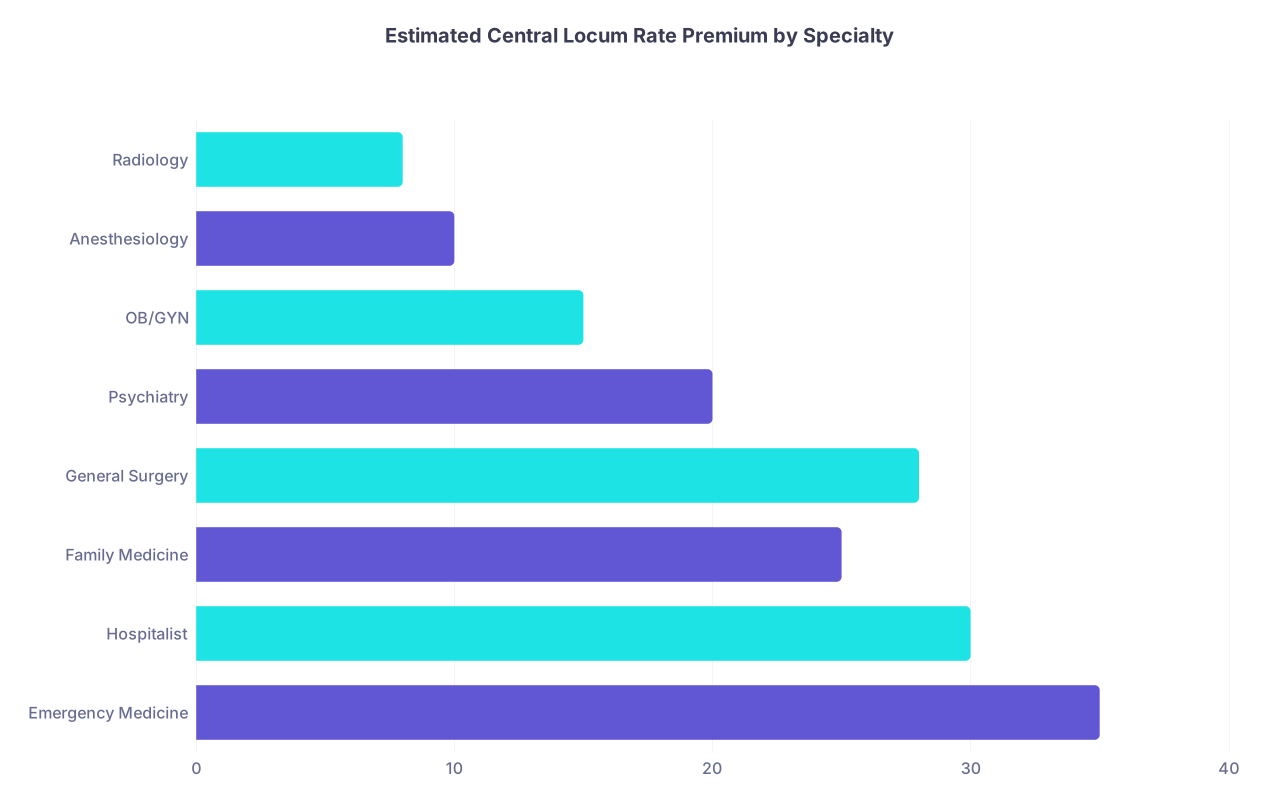
A Quick Visual: Which Specialties Actually Win?
To wrap the numbers into a single picture, here is an approximate central rate premium by specialty for commonly encountered, mid‑difficulty locums roles:
| Category | Value |
|---|---|
| Emergency Medicine | 35 |
| Hospitalist | 30 |
| Family Medicine | 25 |
| General Surgery | 28 |
| Psychiatry | 20 |
| OB/GYN | 15 |
| Anesthesiology | 10 |
| Radiology | 8 |
Interpretation, bluntly:
- Top tier premium: Emergency Medicine, Hospitalist
- Strong but variable: General Surgery, Primary Care (FM/IM), Psychiatry
- Moderate: OB/GYN
- Thin edge / parity: Anesthesiology, Radiology (outside rare niches)
If your entire strategy is “maximize earnings per clinical hour using locums,” you should be very skeptical of people telling you anesthesia or radiology are the “best” locum fields unless they show you denominator‑aware numbers.
Final Takeaways
The data show that the highest locum pay premiums are not always in the highest absolute‑pay specialties. Emergency medicine, hospitalist medicine, and even primary care often beat anesthesia and radiology on a percentage basis.
You cannot judge locum offers by dollar per hour alone. You need to benchmark against realistic permanent compensation and real working hours in your specialty to see the true premium.
Location, shift type, and contract length shift pay almost as much as specialty. If you understand those levers and are willing to flex them, you can reliably extract 25–40% premiums in the right fields while keeping your schedule under your own control.